-
-
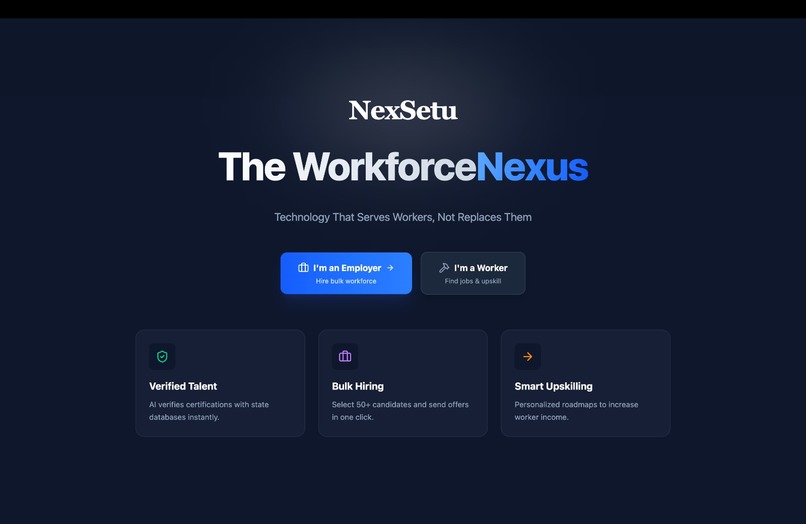
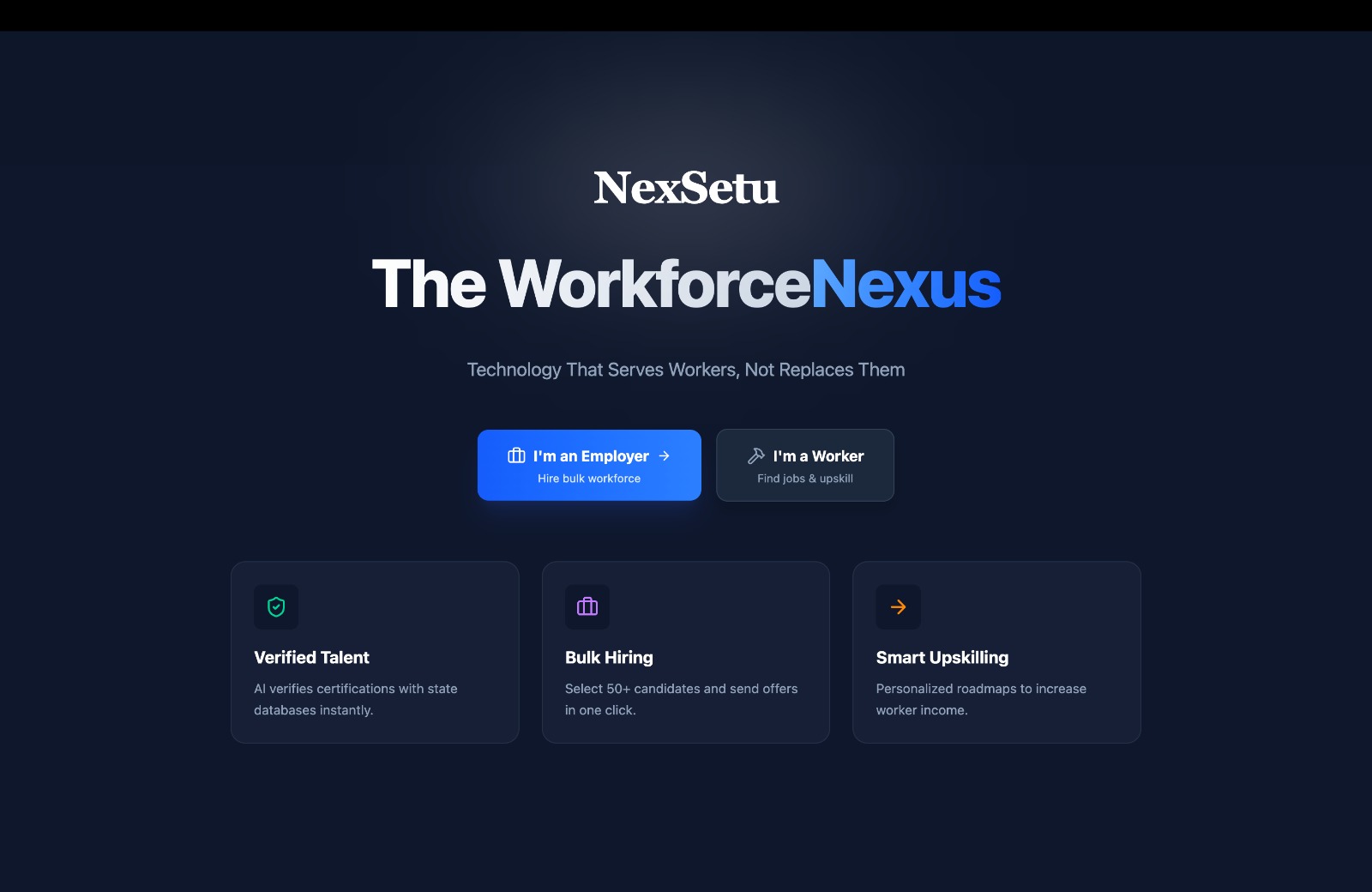
Landing page
-
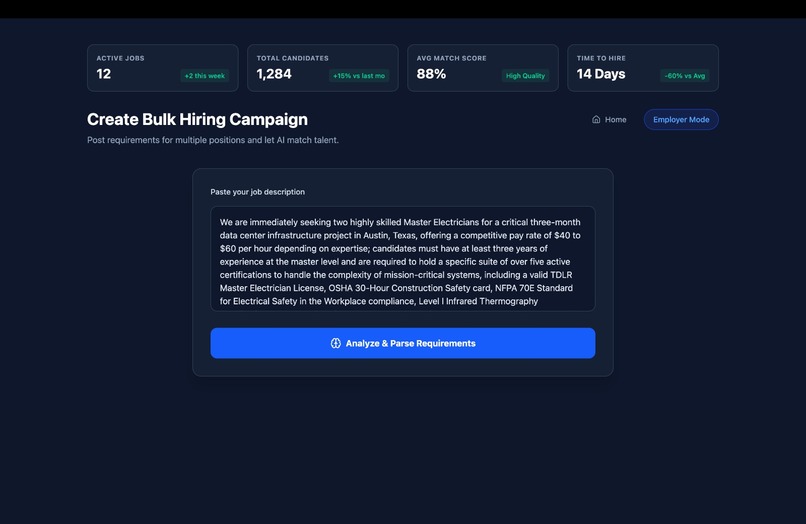
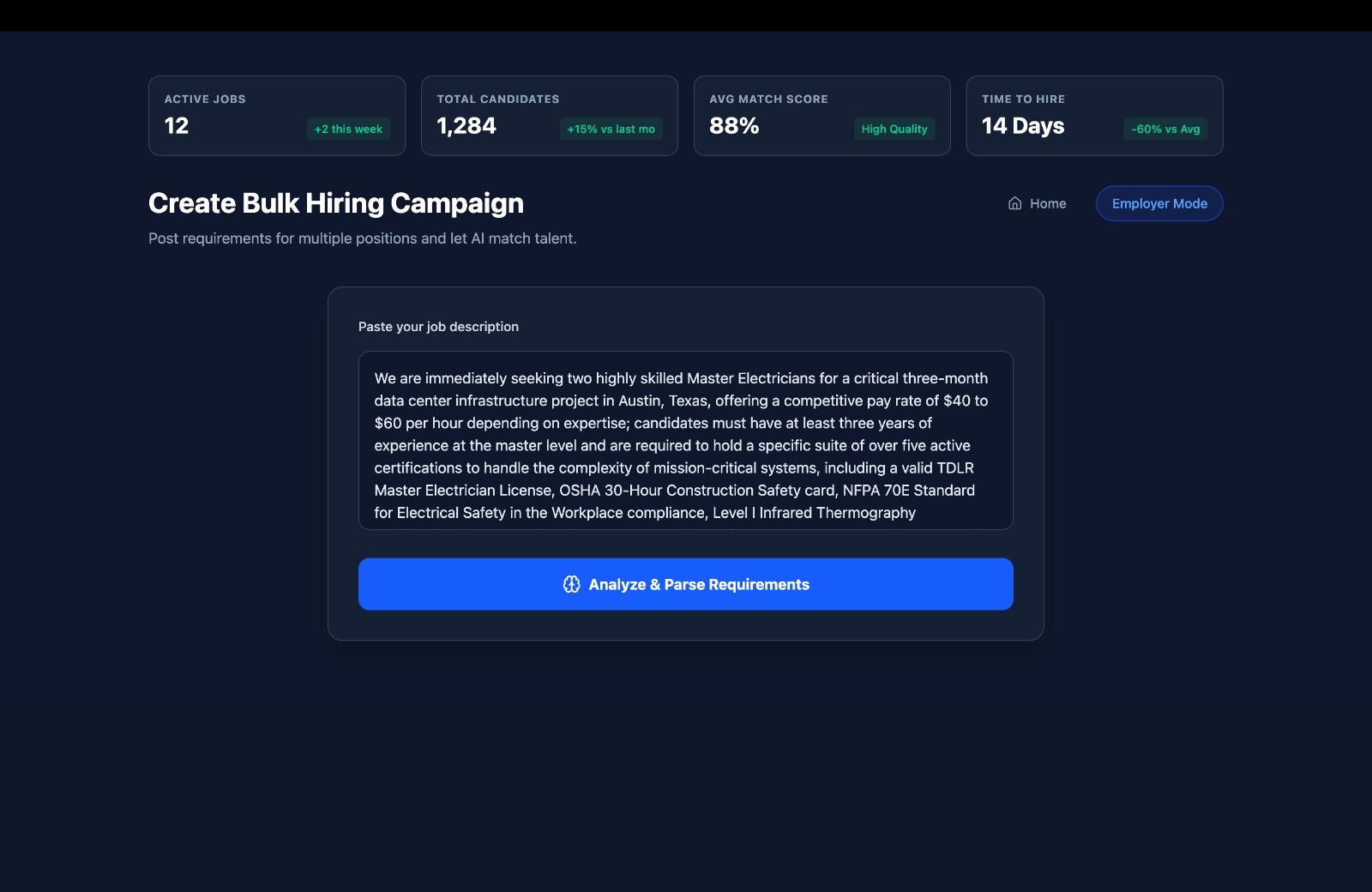
AI parser
-
-
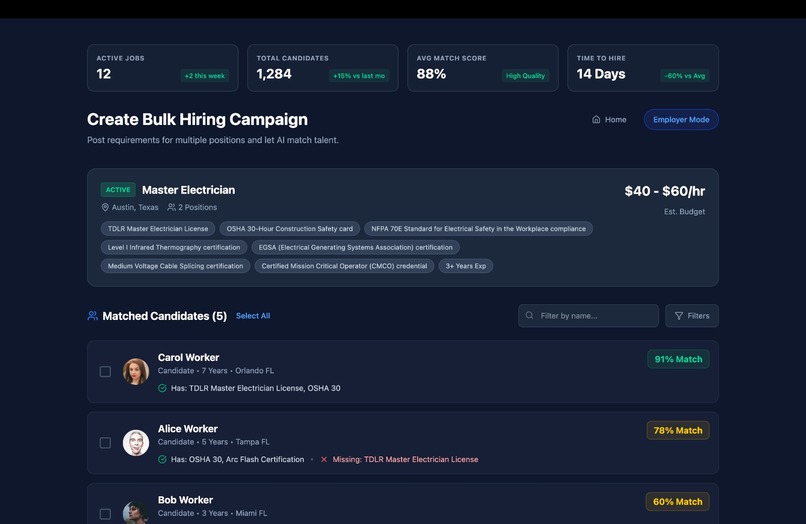
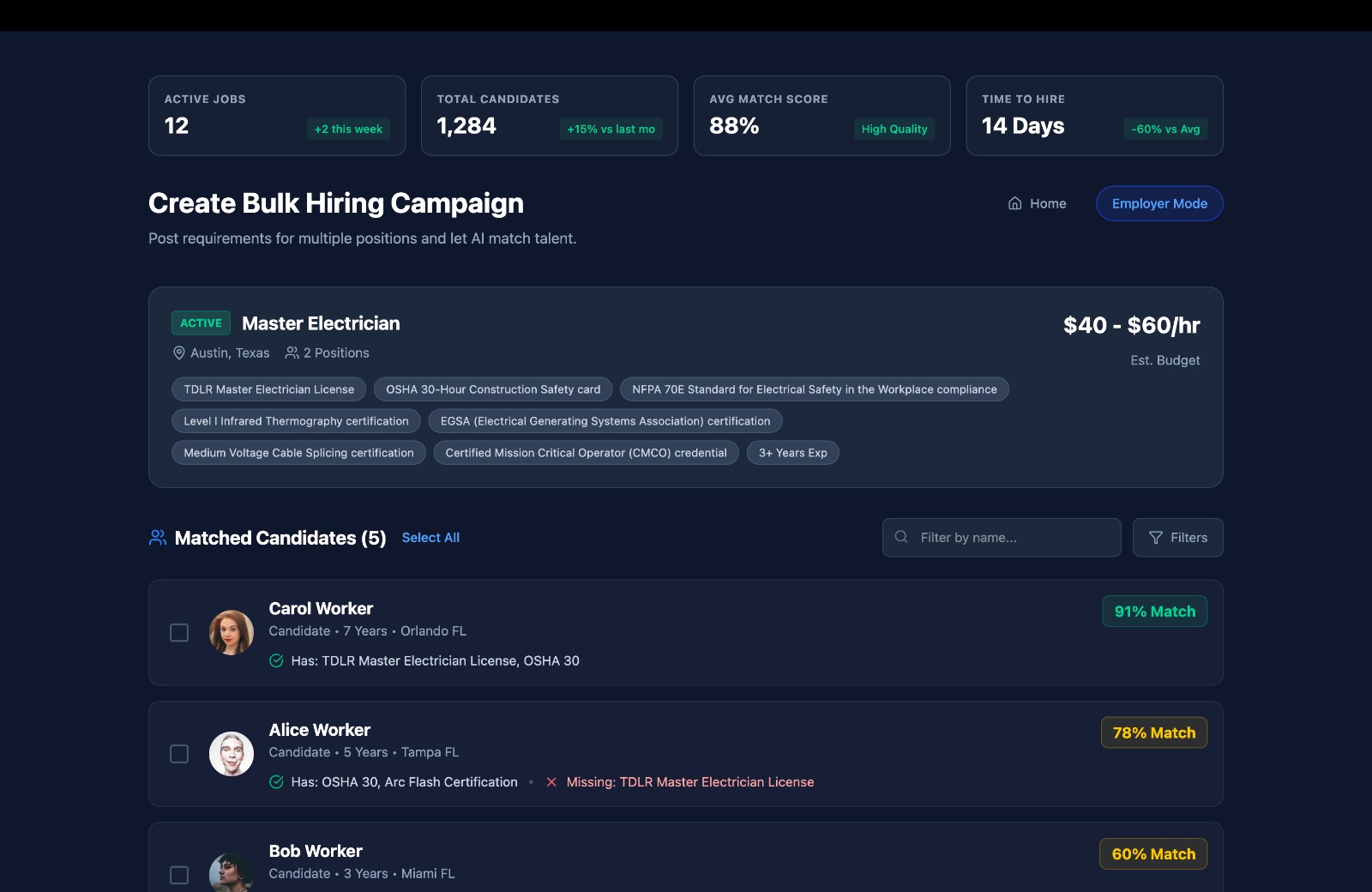
Recruiting page
-
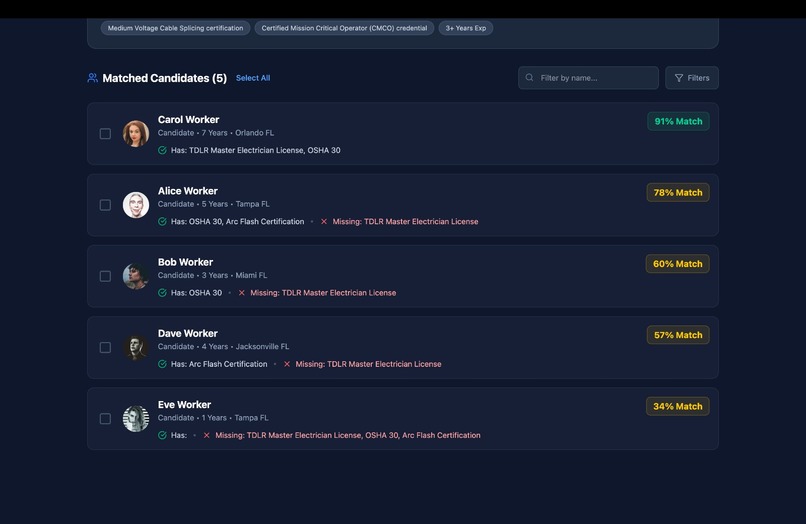
Candidate Profiles
-
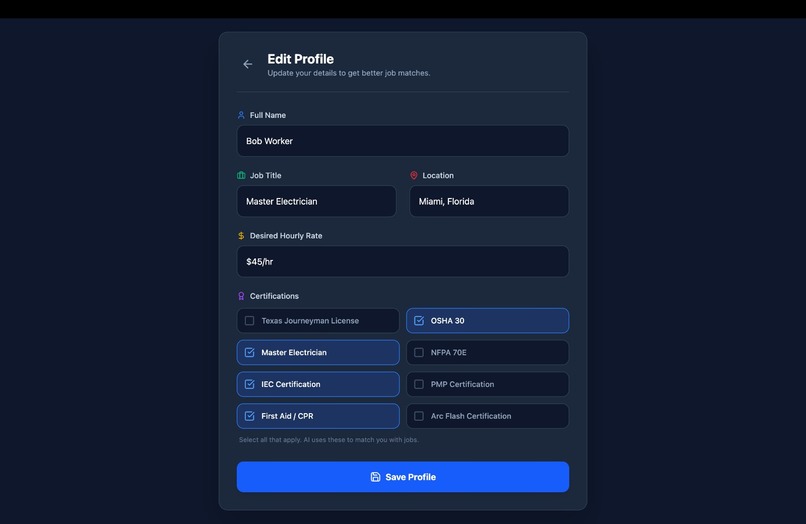
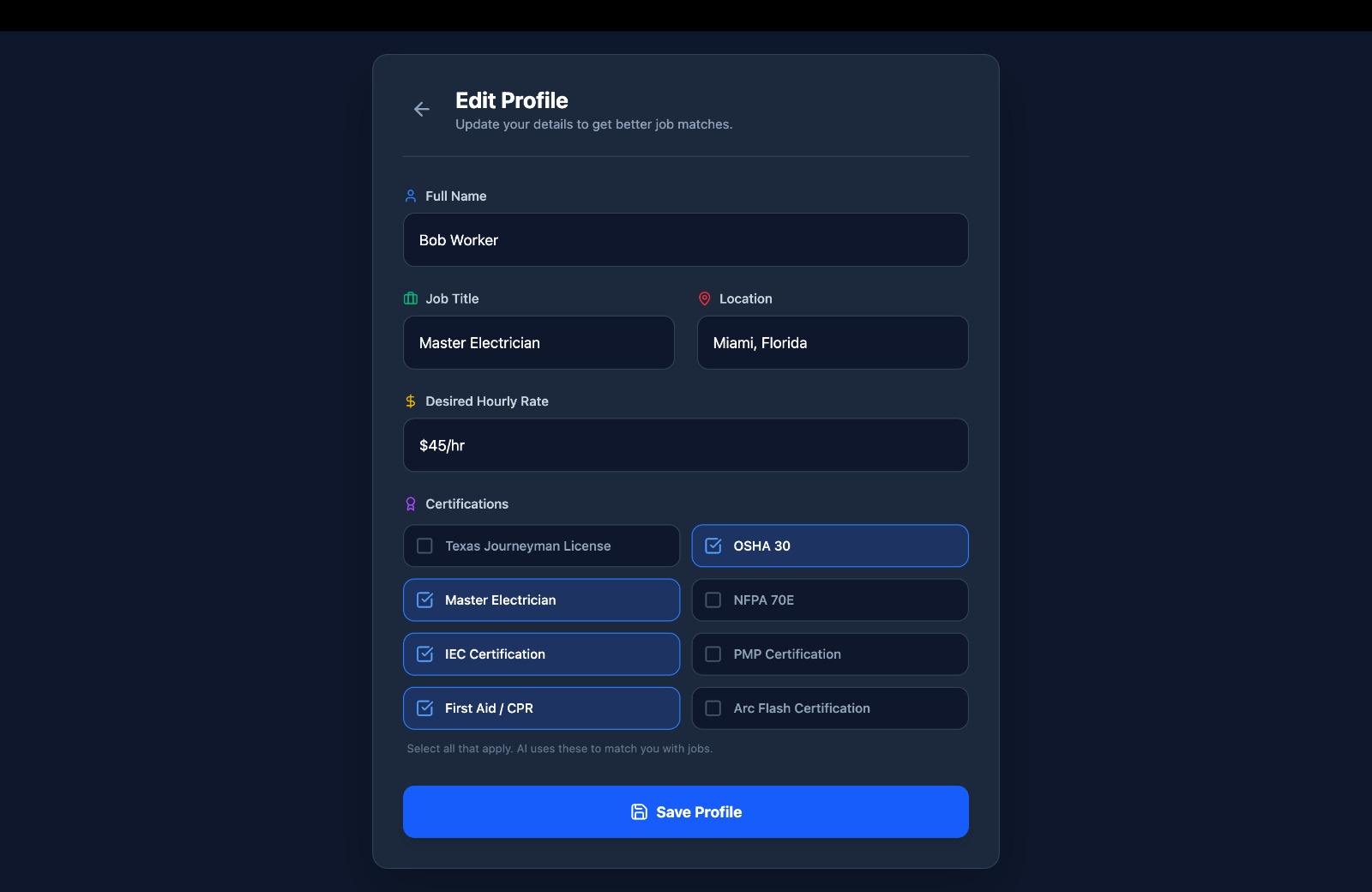
Profile setup
-
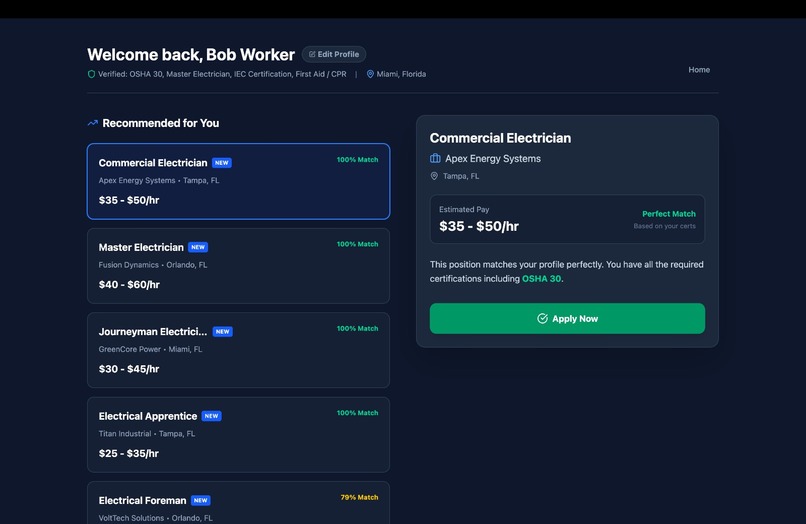
Job Postings
-
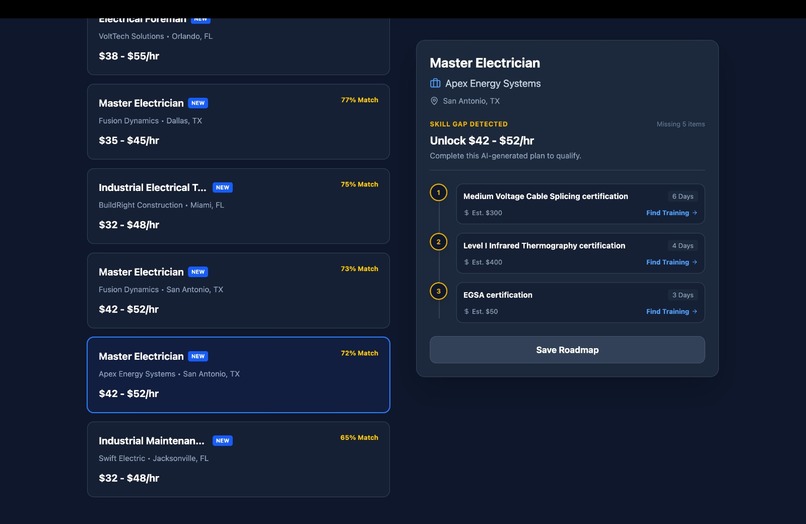
Upskilling Flow
Inspiration
The inspiration for NexSetu came from a striking contradiction we noticed in today's job market. When BlackRock's CEO Larry Fink announced that the U.S. needs 500,000 more electricians to support AI data centers and infrastructure projects, something clicked for us.
While the tech world obsesses over AI replacing jobs, there's this massive irony: AI can't touch blue-collar work, yet companies are desperately struggling to find these workers fast enough. We started researching and discovered that:
• Hiring Lag: Companies take 60-90 days to hire 100 skilled workers through traditional methods.
• Cost of Delay: Every week of delay costs them $50,000 to $200,000 in project delays.
• Worker Loss: Electricians sit unemployed for 6-10 weeks between gigs, losing $8,000–$15,000 annually.
• Agency Fees: Staffing agencies extract 30–50% of what companies pay, leaving workers with only 70% of their value.
The real kicker? Jensen Huang said blue-collar jobs will remain untouched by AI for decades. So we thought: what if we use AI not to replace these workers, but to empower them? That's how NexSetu was born—a nexus (connection point) that bridges skilled workers to infrastructure opportunities.
What it does
NexSetu streamlines the hiring and career growth process through four key pillars:
•Instant Requirement Extraction: Companies paste a job description and our AI extracts requirements in 5 seconds—no forms to fill out.
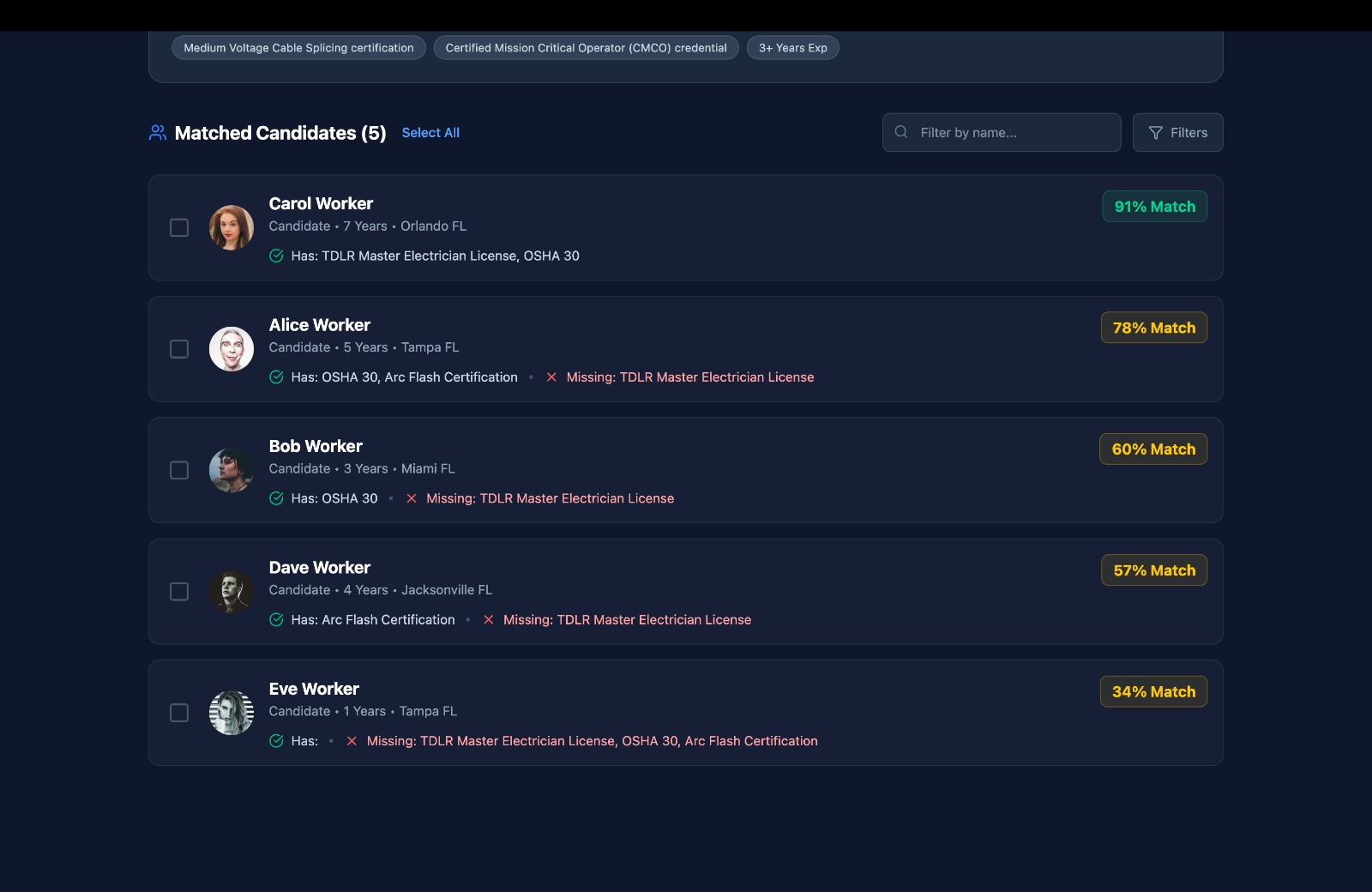
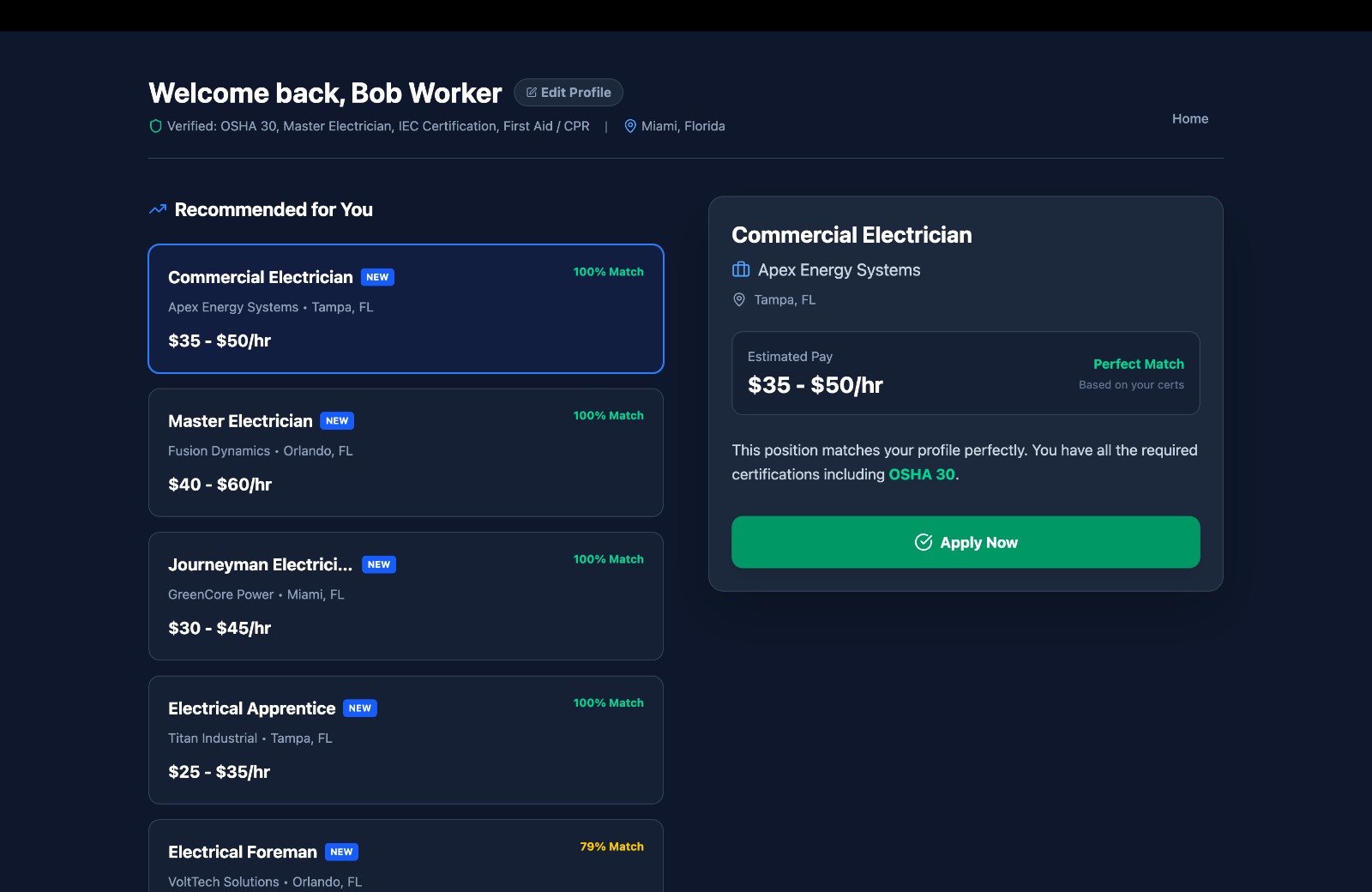
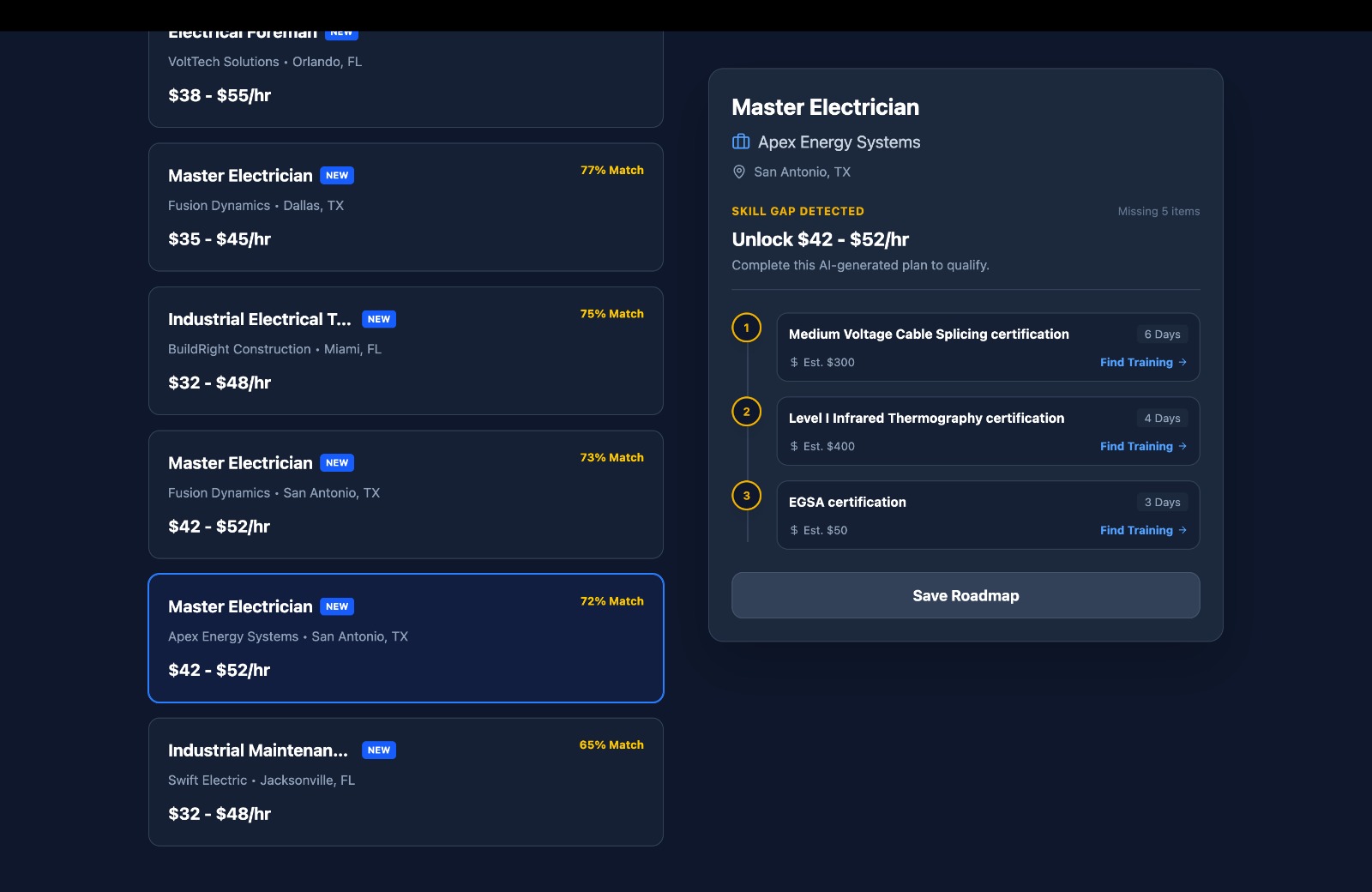
• Smart Match Scores: We show ranked candidates with match scores. A 95% score means they are ready to go; a 78% score means they are missing one certification, and we show exactly how to get it in 2 weeks.
•AI Upskilling Roadmaps: We generate roadmaps like: "Get Arc Flash certification for $750, qualify for 45 jobs paying $15K more per year."
•Bulk Hiring Tools: Employers can select 50 candidates and send interview invites with one click. What took 3 months now takes 3 weeks.
How we built it
Built collaboratively during SwampHacks 2026:
• Backend: FastAPI with SQLAlchemy ORM. AI logic is centralized in a dedicated ai_service.py .
• Frontend: React + TypeScript SPA with Vite for high-performance UI/UX.
• AI Integration: Custom LLM prompt engineering to transform unstructured job data into validated Pydantic schemas.
Challenges we ran into
1. Pricing Model Uncertainty
We settled on a hybrid model to ensure sustainability and worker accessibility:
• Workers: Free forever.
• Employers: $2,000/month + 5% placement fee.
The Revenue Formula: $$Annual Revenue per Client = (12 \times \$2,000) + (0.05 \times Avg Placements \times Avg Salary)$$
2. Competing With "Good Enough" Solutions
We realized our true competitors aren't job boards like LinkedIn, but staffing agencies. Our value lies in replacing the "middleman" fee with an automated, high-speed matching engine.
What we’re proud of
- Identified a massive, underserved market — a $2T infrastructure boom that will need millions of skilled workers.
- Built AI that empowers rather than replaces blue‑collar workers.
- Created a true win‑win model: companies save $1M+ while workers earn 25% more.
- Designed thoughtful AI applications: job parsing, upskilling roadmaps, and smart matching.
- Validated everything through real user research (20+ interviews).
- Positioned correctly — competing with staffing agencies, not job boards.
- Demonstrated concrete financial impact: $10.4M revenue potential with near‑zero marginal costs.
Most importantly: we’re building technology that creates economic opportunity for the people who build America’s infrastructure — and that’s what we’re proudest of.
What we learned
1. The Economics are Broken: By eliminating agencies, we found that companies save roughly $832,000 per 100 hires, while workers gain $1.4M in total wages.
2. Matching vs. Searching: The bottleneck isn't finding people; it's the 1,000+ manual resume screens. AI solves this instantly.
3. Pathway Frustration: Workers want to know which certifications actually increase their paycheck.
What's next for NexSetu
• Next 30 Days: Integrate Texas TDLR API for automated license verification.
• Months 1-3: Pilot with 3 data center contractors and expand to HVAC/Welding.
• Goal: Nationwide expansion across all 50 states within 12 months.
• One-Click Compliance: A value-driven feature that automates insurance coverage and IRS paperwork for a nominal fee. We aim to provide the utmost convenience by making legal and administrative tasks a one-click experience.
Built With
- alembic
- artificial-intelligence
- async
- axios
- bcrypt
- fastapi
- jwt
- lucid
- openai
- postgresql
- pydantic
- python
- react
- router
- sqlalchemy
- tailwind
- typescript
- vite


Log in or sign up for Devpost to join the conversation.