
Inspiration
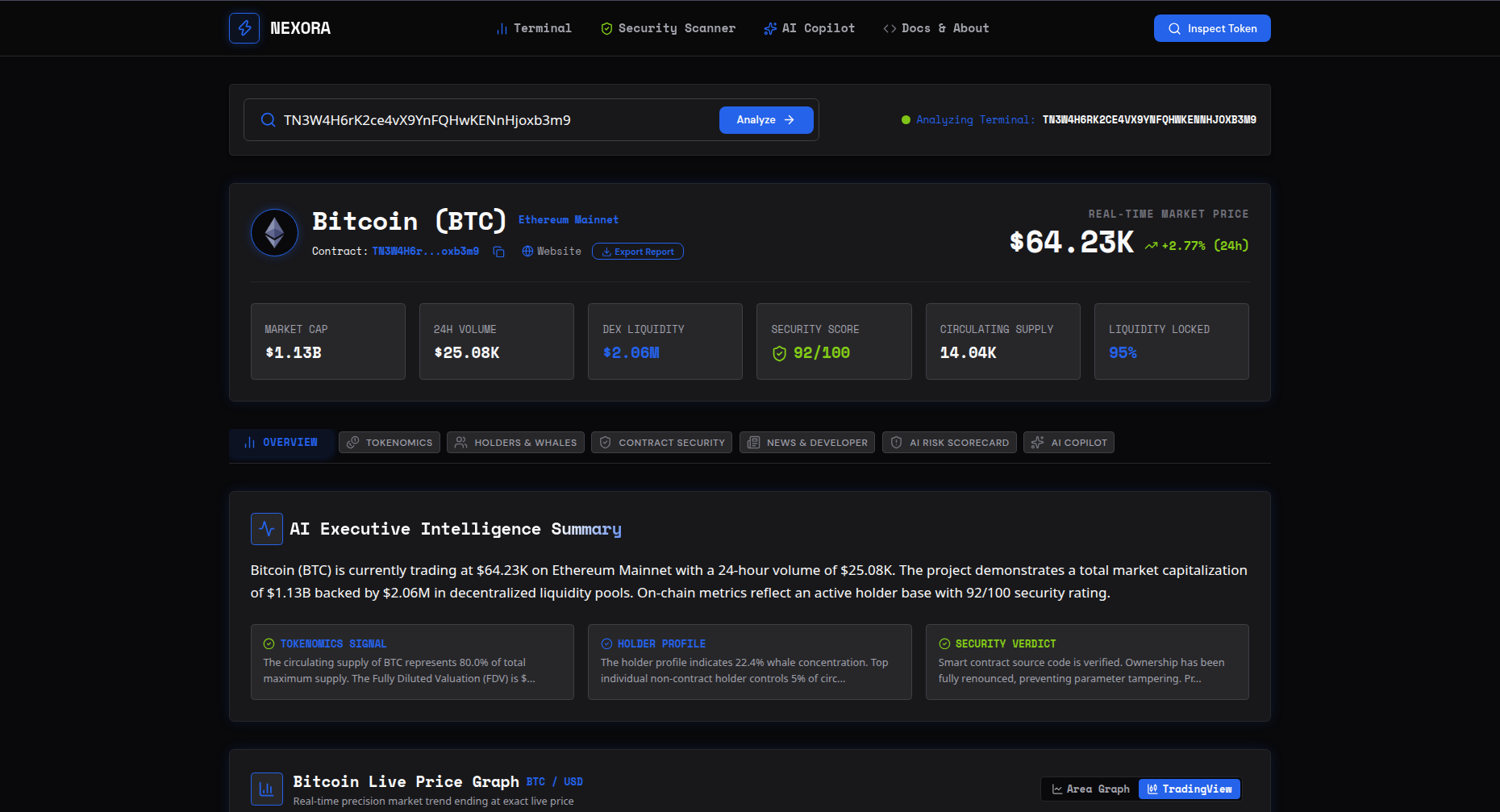
Researching cryptocurrency projects can be overwhelming. Information is spread across block explorers, DEXs, security scanners, analytics platforms, and social media, making it difficult to get a complete picture of a token. Most tools focus on raw data instead of helping users understand what that data actually means.
I built Nexora to simplify Web3 research by combining blockchain analytics, market data, security insights, and AI explanations into a single platform. Instead of switching between multiple websites, users can get everything they need in one place.
What it does
Nexora allows users to search any cryptocurrency token by name, ticker symbol, or contract address across Ethereum, Solana, Polygon, Arbitrum, and BNB Smart Chain.
It provides:
- AI Token Reports: Generates easy-to-understand summaries explaining a token's purpose, use case, risks, and market activity using Google Gemini.
- Live Market Data: Displays real-time token prices, liquidity, trading volume, and price movements from decentralized exchanges.
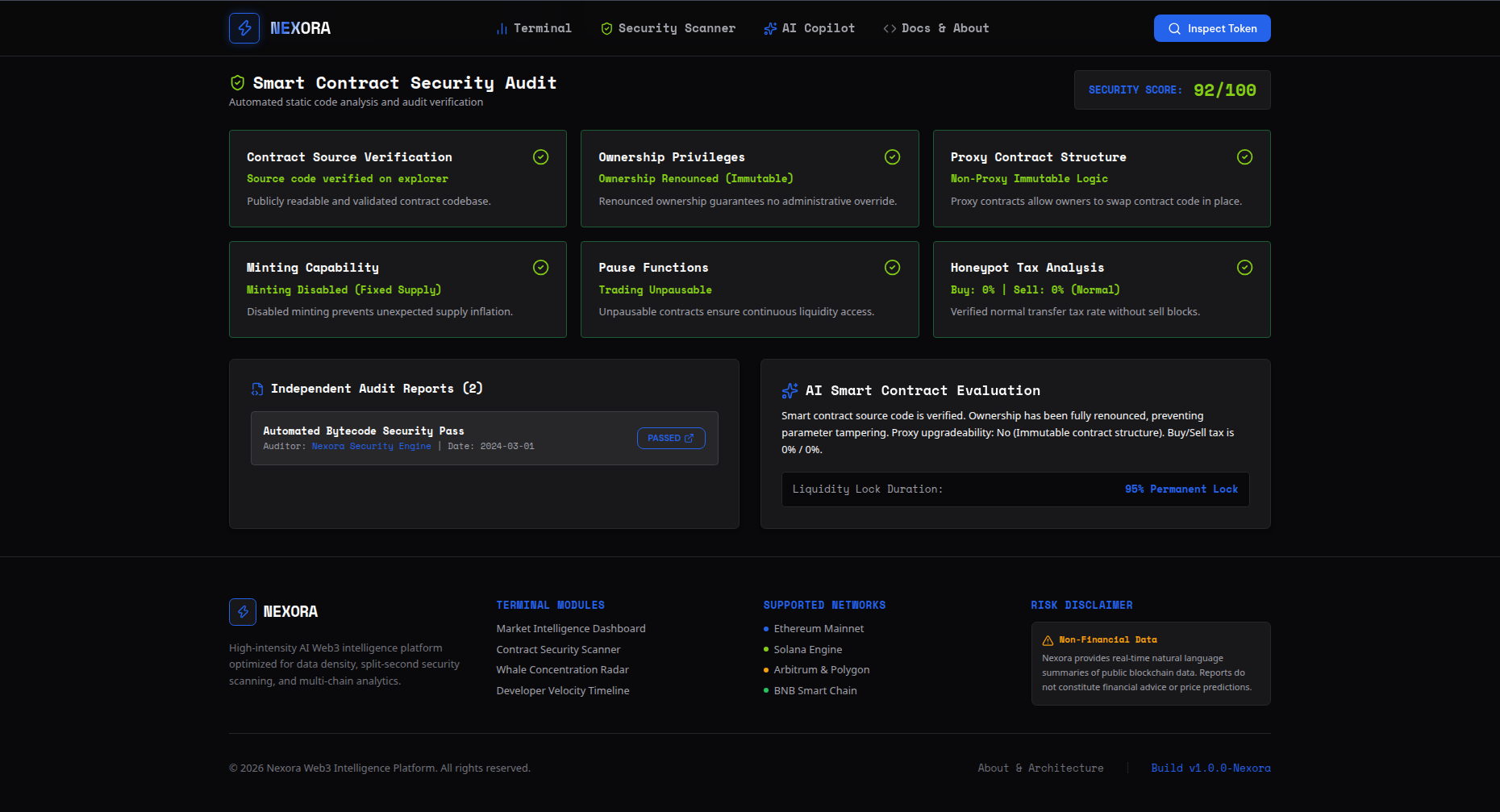
- Smart Contract Analysis: Checks contract ownership, minting permissions, proxy contracts, and common security risks.
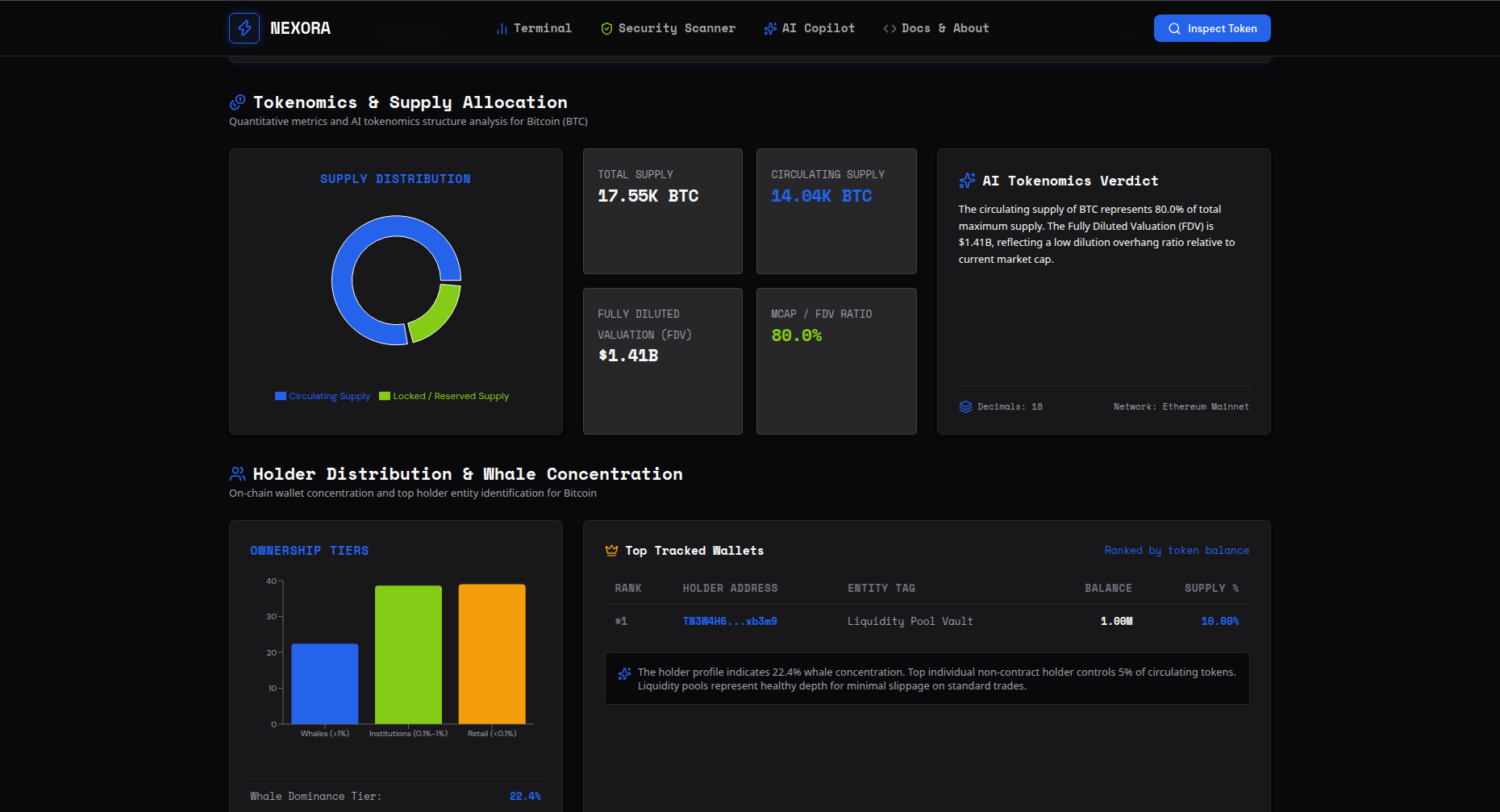
- Holder Distribution: Visualizes whale concentration and token distribution through interactive charts.
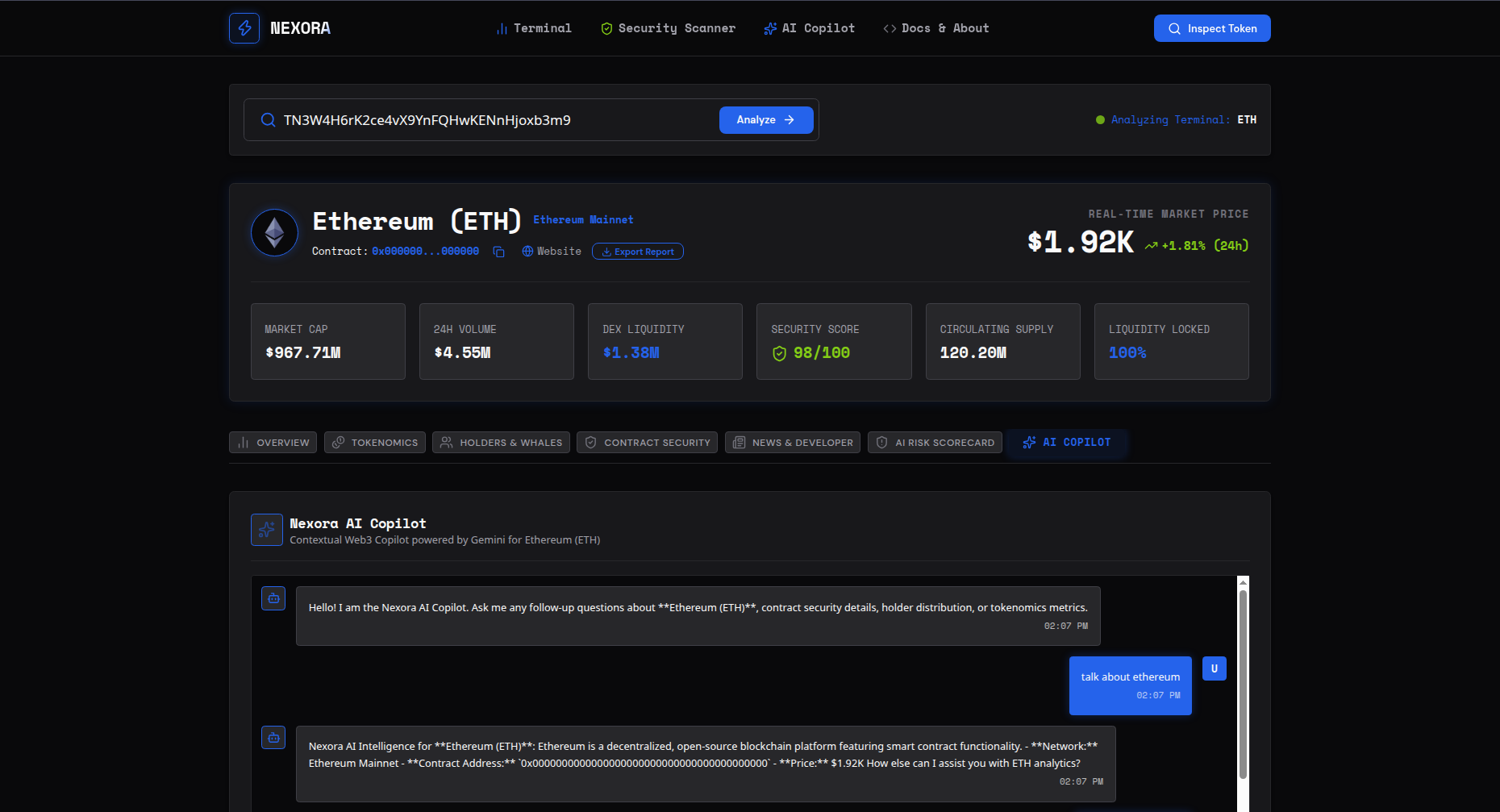
- AI Chat Assistant: Lets users ask follow-up questions about the selected token using its live on-chain and market data.
How I built it
I built Nexora as a full-stack web application from scratch.
- Frontend: Built with Next.js (App Router), TypeScript, Tailwind CSS, and Recharts for an interactive and responsive user interface.
- AI Integration: Used Google Gemini 1.5 Flash to generate token reports and power the conversational AI assistant.
- Blockchain Data: Integrated Blockchair for on-chain information and DexScreener for live market and liquidity data.
- Backend: Created secure API routes to process requests, combine data from multiple sources, and protect API keys.
- Database: Used PostgreSQL with Prisma ORM to store cached reports and conversation history.
Challenges I ran into
- Working with multiple blockchain APIs: Each provider returns data differently and has different rate limits, so I implemented fallback logic to keep the application reliable.
- Real-time updates: I wanted prices and charts to update every few seconds without causing flickering or unnecessary page reloads.
- Combining AI with live blockchain data: Preparing structured prompts and consistent data for the AI required careful processing to generate accurate and readable reports.
Accomplishments that I'm proud of
- Built the entire platform as a solo developer.
- Combined AI, blockchain analytics, and market data into a single application.
- Implemented smooth real-time updates without disrupting the user experience.
- Designed a clean and responsive interface optimized for desktop and mobile devices.
What I learned
- How to integrate AI into real-world applications using structured prompts.
- Working with multiple blockchain APIs and handling different response formats.
- Building responsive dashboards that display live market data efficiently.
- Managing a full-stack application with Next.js, PostgreSQL, and Prisma.
What's next for Nexora
- Wallet Tracking & Alerts: Monitor selected wallets and notify users about important transactions.
- Cross-Chain Analytics: Track token movement across different blockchain networks.
- Portfolio Dashboard: Allow users to save watchlists and monitor their favorite tokens.
- Smarter AI Analysis: Expand the AI assistant with deeper security analysis and contract insights.
Built With
- artificial-intelligence
- blockchair-api
- css3
- dexscreener-api
- ethereum
- google-gemini-ai
- html5
- javascript
- json-api
- lucide-react
- multi-chain
- next.js
- node.js
- postgresql
- prisma
- react
- react-query
- recharts
- rest-api
- smart-contracts
- solana
- tailwind-css
- typescript
- vercel
- web3


Log in or sign up for Devpost to join the conversation.