-
-

Beex Track — Private AI insights for better daily decisions
-
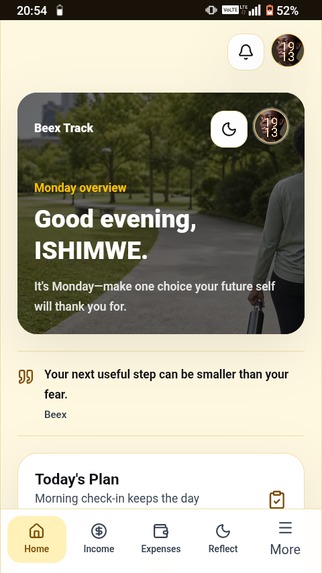
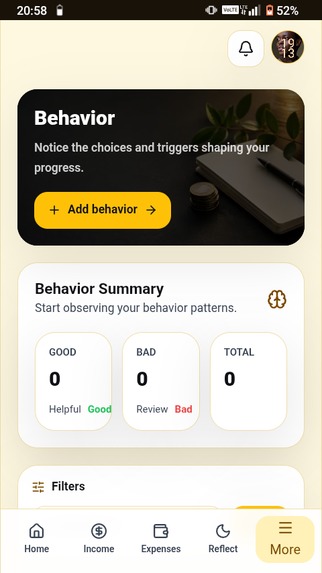
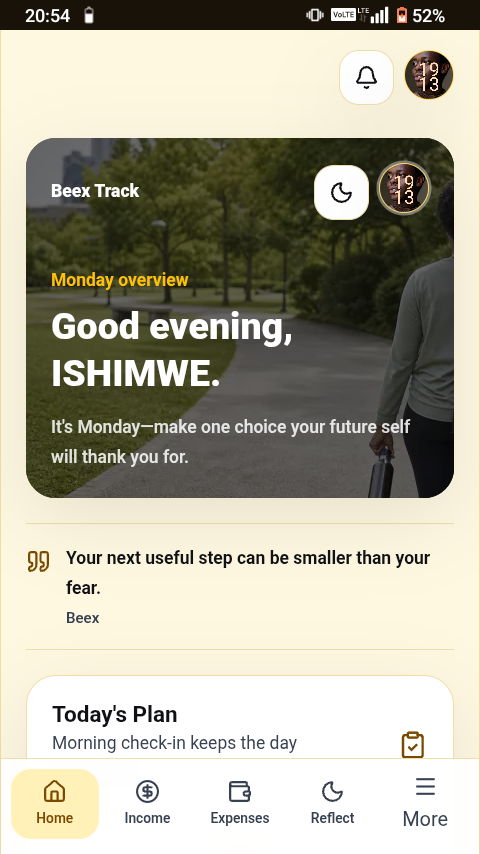
A private, mobile-first dashboard connecting money, habits, mood and personal progress.
-
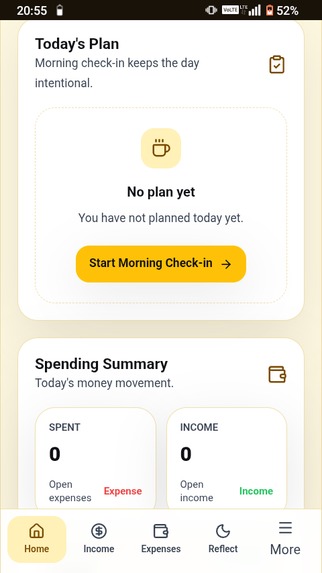
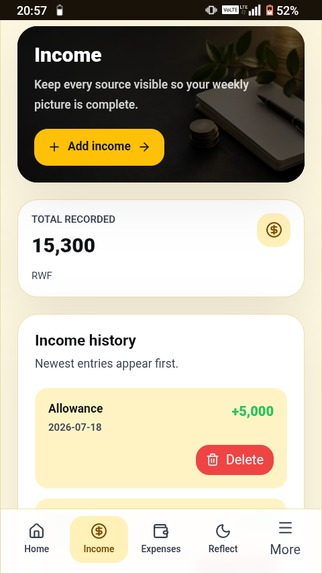
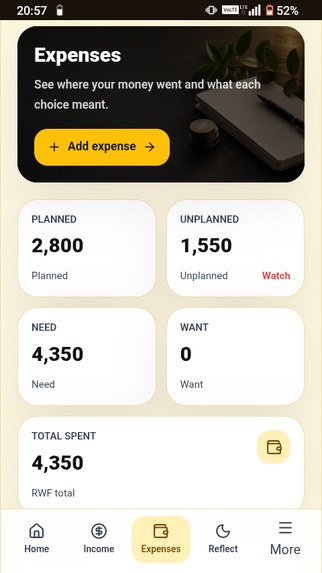
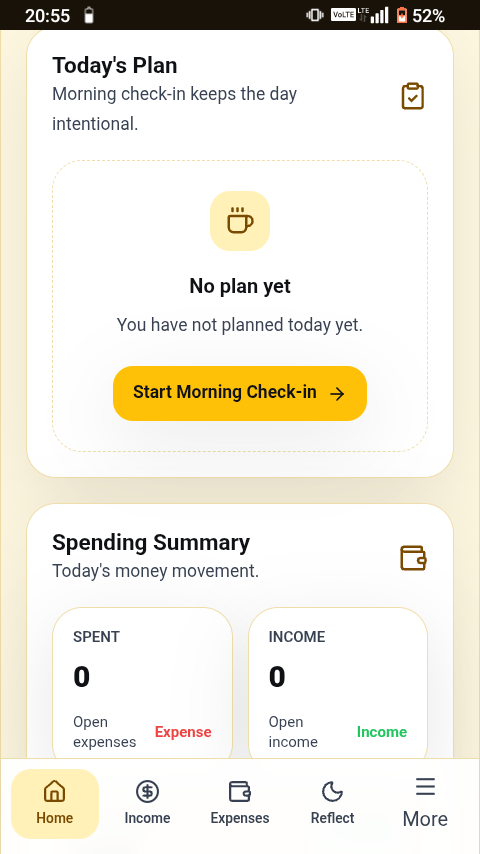
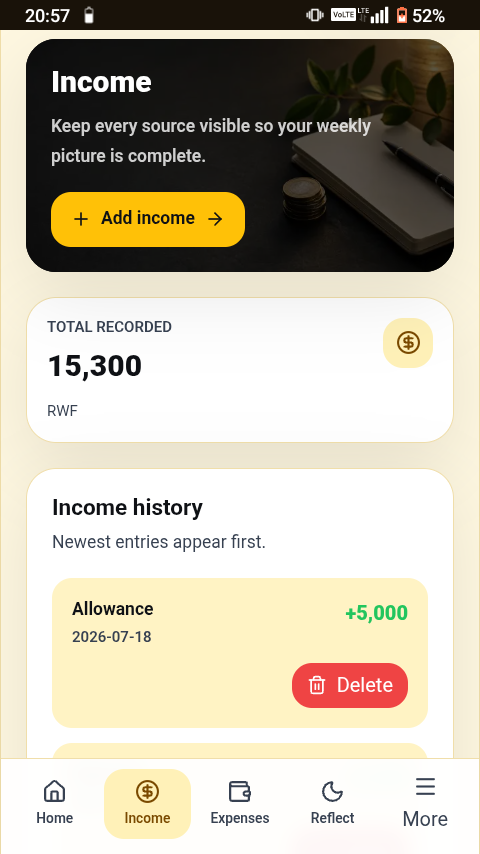
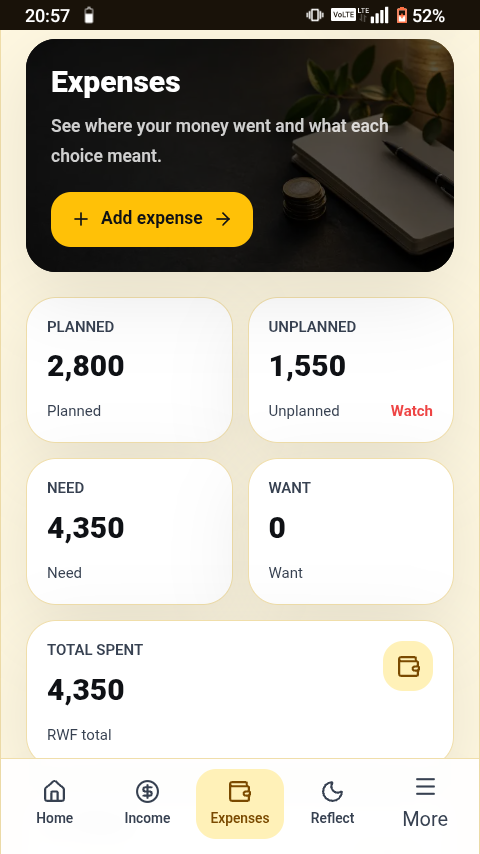
Understand not only how much you spend, but whether each expense was planned, unplanned, needed or wanted.
-
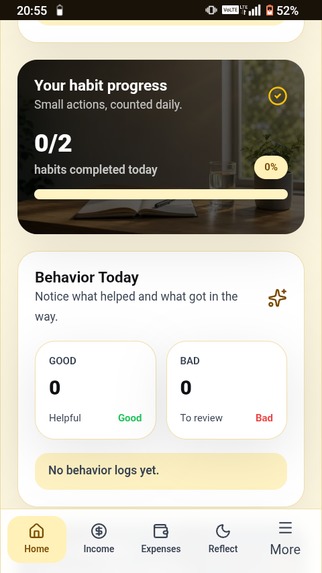
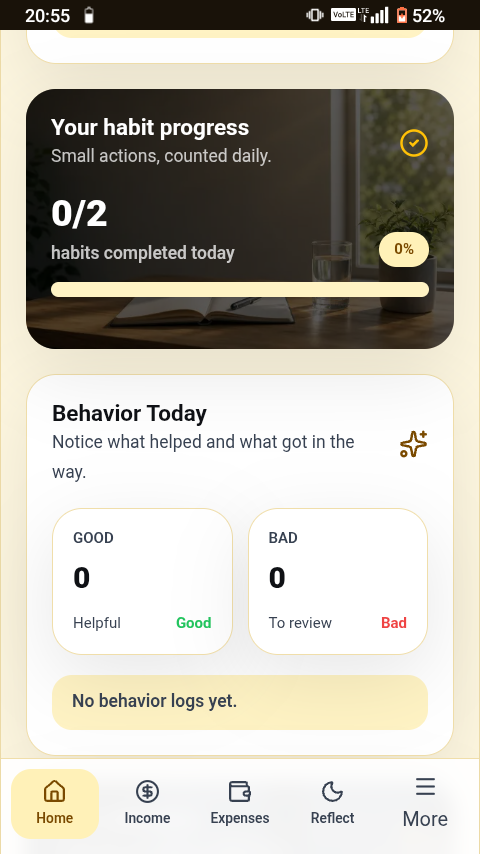
Track daily habits, mood and energy through a simple and accessible experience.
-
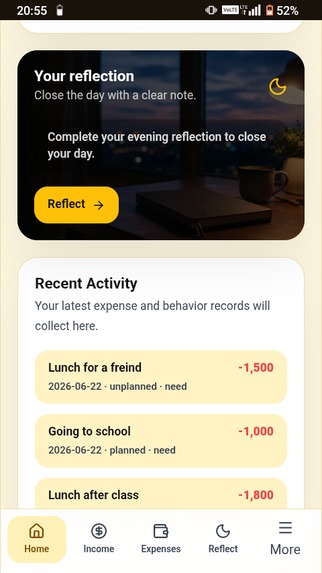
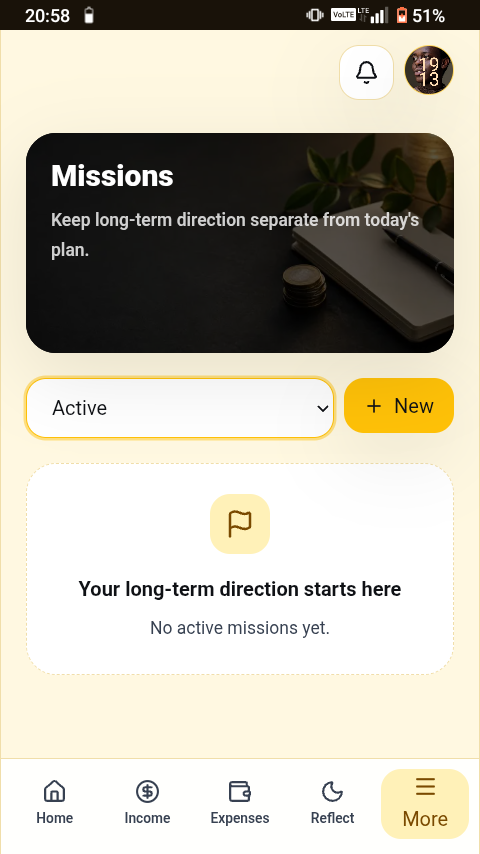
Turn long-term intentions into clear Missions with progress, target dates and reminders.
-
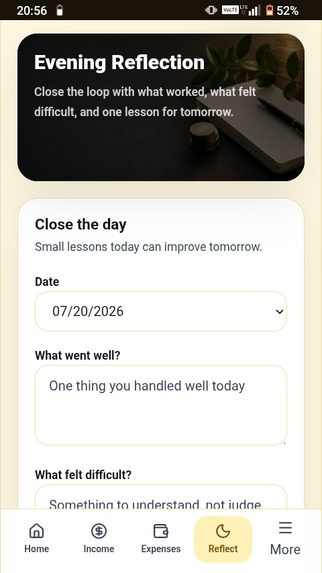
Daily records become an organized weekly report before AI analysis begins.
-
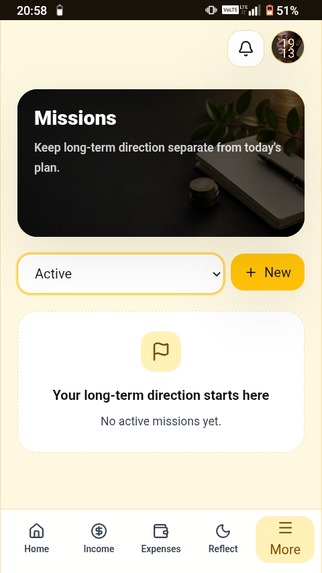
Beex sends only summarized weekly metrics to GPT-5.6 while excluding passwords, email, sessions and raw reflection text.
-
GPT-5.6 transforms weekly patterns into practical, supportive actions for the week ahead.
-
Private profile photos are securely stored in Cloudflare R2 and delivered through authenticated endpoints.
-
Beex Track combines a Next.js PWA, Hono Worker API, Cloudflare D1 and R2, and the OpenAI Responses API.
-
Daily records become an organized weekly report before AI analysis begins.
Inspiration
Beex Track was inspired by a simple problem: people often track their money, habits, moods, goals, and daily experiences in different places—or do not track them at all.
A person may know how much they spent but not understand what influenced the spending. They may set goals but fail to notice which daily habits are helping or delaying their progress. They may also complete a difficult week without taking time to reflect on what went well and what should change.
We wanted to create one private, mobile-first space where people could connect these parts of everyday life. Instead of only recording data, Beex Track helps users understand the patterns behind their decisions and turn those patterns into practical next steps.
What Beex Track does
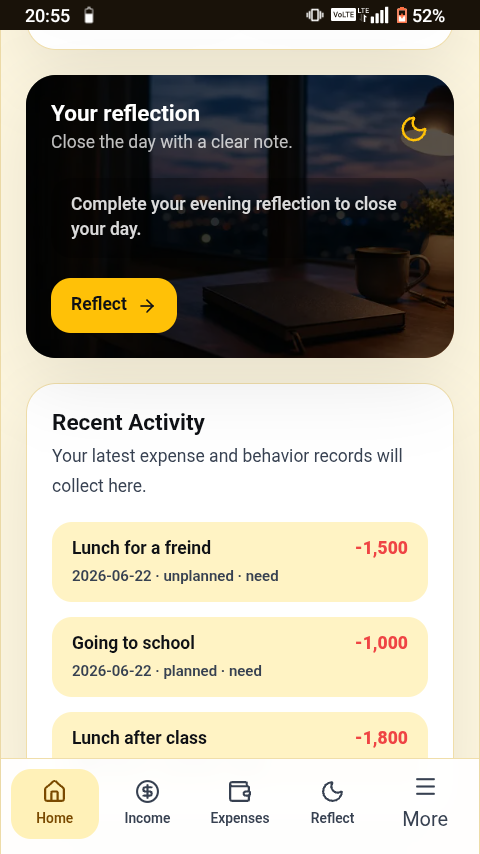
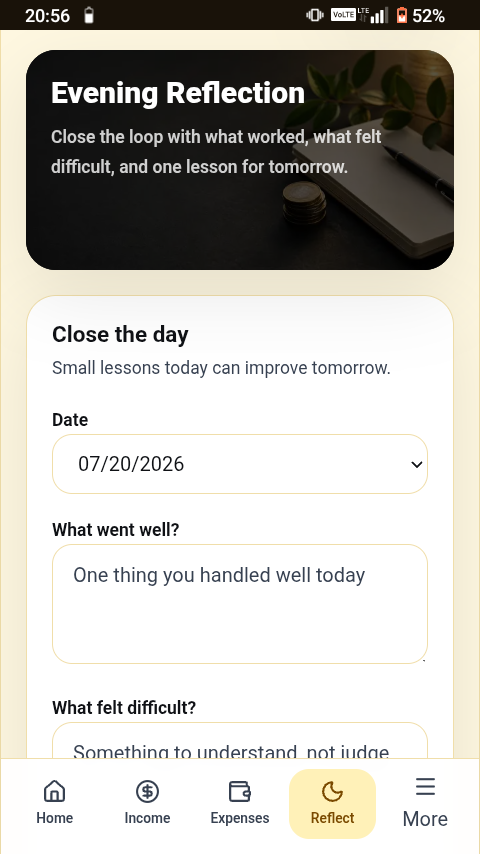
Beex Track allows users to privately manage:
- Income and expenses
- Planned and unplanned spending
- Needs and wants
- Daily habits
- Morning mood and energy check-ins
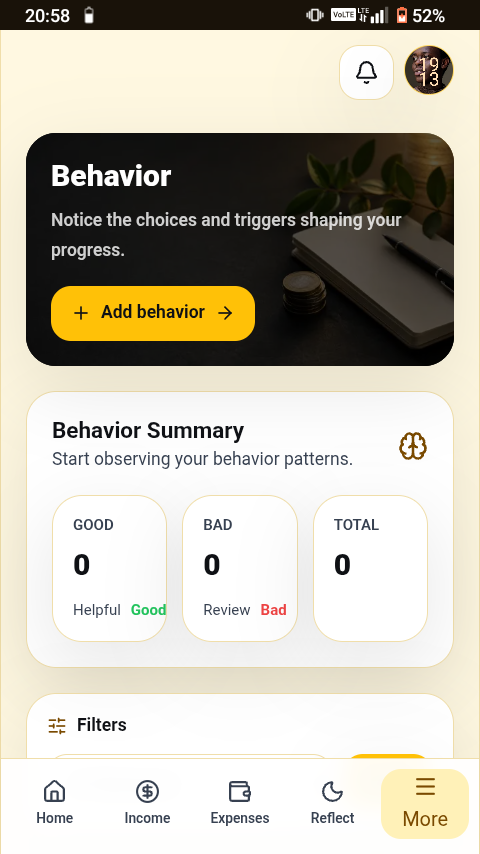
- Behavior logs
- Evening reflections
- Long-term Missions
- In-app notifications
- Daily and weekly reports
- AI-generated weekly insights
The main AI feature is Beex AI Weekly Insight.
It uses GPT-5.6 to analyze summarized weekly information such as financial totals, spending categories, habit completion, check-ins, and behavior patterns. It then produces:
- A weekly headline and summary
- Positive patterns
- Areas that need attention
- Financial observations
- Habit observations
- Three practical actions for the next week
- A short message of encouragement
The purpose is not to replace a financial adviser, therapist, or personal coach. It is designed to help users reflect on their own records and make clearer everyday decisions.
How we built it
Beex Track was built as a TypeScript monorepo using:
- Next.js and React for the mobile-first progressive web application
- Tailwind CSS for the interface and responsive design
- Hono for the Cloudflare Worker API
- Cloudflare D1 for structured user data
- Cloudflare R2 for private profile images
- Zod for shared request and response validation
- OpenAI GPT-5.6 through the Responses API
- Codex for repository auditing, implementation support, debugging, testing, and documentation
The frontend communicates with the Hono Worker through a same-origin API proxy. Every protected request is connected to an authenticated user session.
For AI insights, the backend retrieves the authenticated user's weekly data and converts it into a sanitized summary. The OpenAI API key remains on the Worker and is never sent to the browser.
The flow can be summarized as:
Next.js PWA
    ↓
Hono Cloudflare Worker
    ↓
Cloudflare D1 and R2
    ↓
OpenAI GPT-5.6
The model response uses a strict structured format and is validated before it is displayed. This makes the experience more reliable than returning unrestricted AI text.
Privacy and security
Privacy was one of our most important design decisions.
Beex Track does not send the following information to the AI provider:
- Passwords
- Email addresses
- Session tokens
- User IDs
- Avatar storage keys
- Feedback messages
- Raw evening reflection text
Only limited and summarized weekly metrics are used for the AI analysis.
The platform also includes:
- Backend-enforced authentication
- User-scoped database queries
- Protected R2 profile-image delivery
- Image-size and file-type validation
- Structured AI output validation
- Safe API error handling
- Cross-user access protection
How Codex helped us
Codex played an important role throughout the project.
We first used it to audit the existing repository and identify what was already working, what was incomplete, and what could be preserved. This helped us avoid rebuilding the application unnecessarily.
Codex then supported us in:
- Designing the GPT-5.6 weekly insight workflow
- Creating shared TypeScript and Zod schemas
- Building the backend AI service
- Connecting the frontend and backend
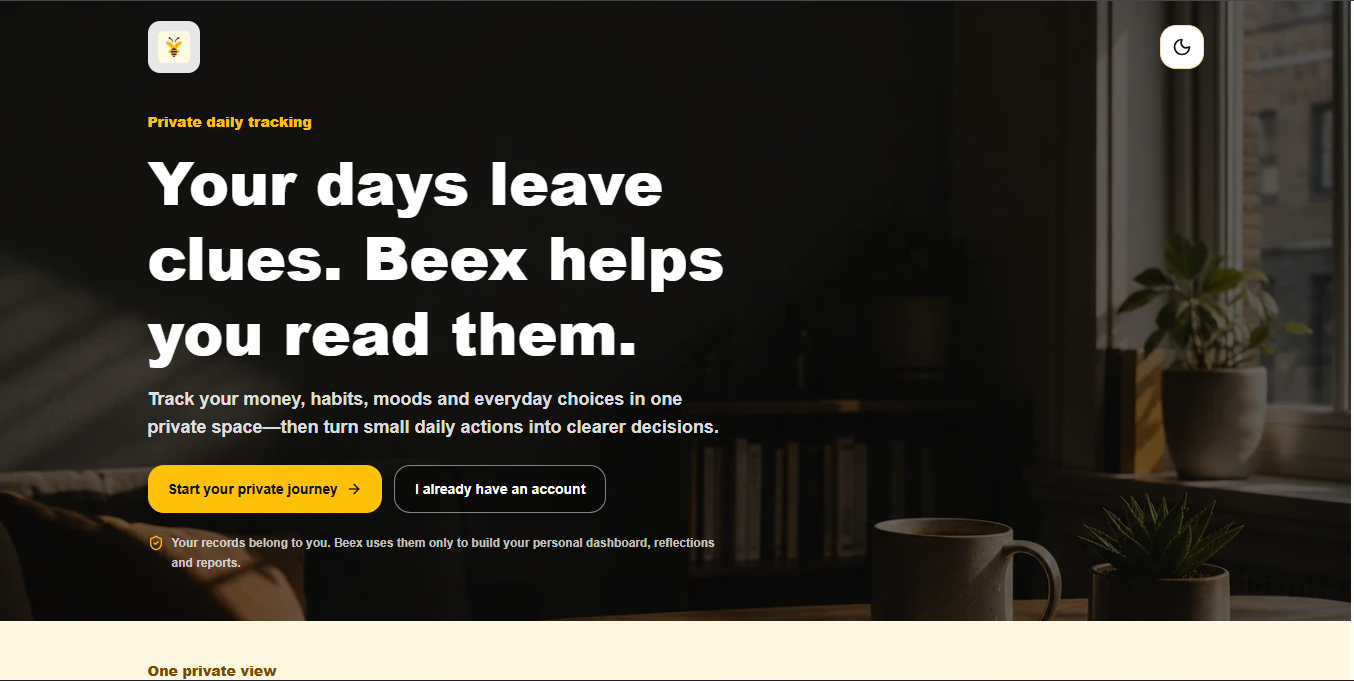
- Improving the landing page and authentication forms
- Redesigning the mobile dashboard and navigation
- Implementing profile images with Cloudflare R2
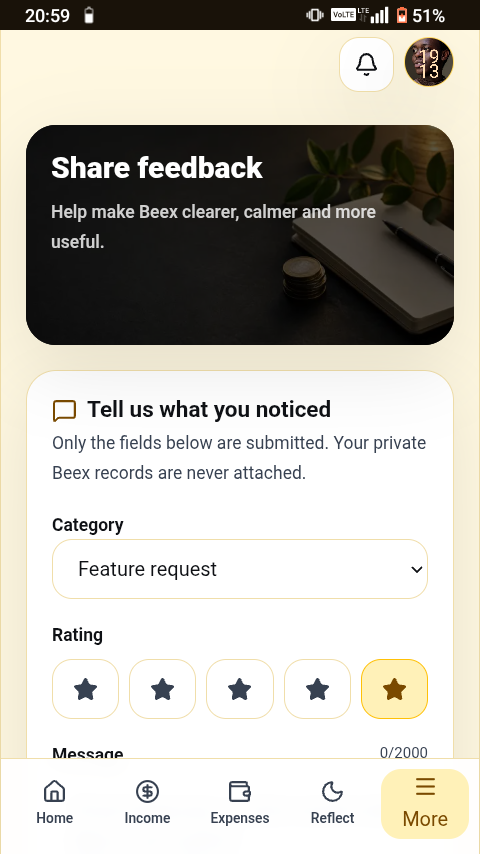
- Building Missions, notifications, and feedback
- Reviewing security and privacy risks
- Testing authentication and user-data isolation
- Preparing D1 migrations and production deployment
- Creating technical and submission documentation
We still made the major product decisions ourselves, including keeping the experience private, avoiding a broad chatbot, using summarized data, preserving the original architecture, and postponing the administration portal until after the submission.
Challenges we faced
Cloudflare Worker password hashing
Our original PBKDF2 password work factor created runtime problems during production registration on Cloudflare Workers. We investigated the issue and adjusted the production work factor while preserving secure random salts, generic authentication errors, and the existing verification flow.
Private profile images
We wanted users to upload profile pictures without exposing Cloudflare R2 credentials or public storage keys. We solved this by processing uploads through authenticated Worker endpoints and delivering images through a protected profile route.
Connecting multiple types of personal data
Financial activity, habits, moods, Missions, and reflections all have different structures. The challenge was to combine them into one weekly AI input without sending excessive or highly personal information.
We solved this by generating a limited aggregate object on the backend.
Reliable AI output
Unstructured AI text could make the interface unpredictable. We therefore created a strict response schema and validate the GPT-5.6 output before showing it to the user.
Mobile-first navigation
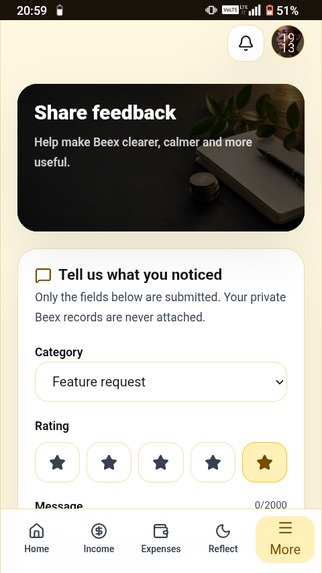
Beex Track contains several features, but displaying all of them in one navigation bar would make the interface crowded. We created five primary navigation items and an accessible “More” sheet for secondary features.
Preserving the existing project
The application already had working authentication, tracking, and reporting features. A major challenge was adding AI, new UI systems, R2 storage, Missions, and notifications without breaking the existing foundation.
What we learned
We learned that useful AI integration is not about adding a chatbot to every product.
The strongest AI feature is often a focused workflow connected to real user data and a clear decision. In Beex Track, GPT-5.6 does not replace the main application. The core reports remain useful without AI, while the AI insight adds interpretation and next-step guidance.
We also learned the importance of:
- Validating AI responses
- Keeping secrets on the backend
- Minimizing the data sent to external services
- Designing for error and low-data states
- Testing cross-user access
- Preserving stable architecture
- Building mobile interfaces with accessibility in mind
- Separating submission-critical features from future ideas
What is next
After Build Week, we plan to expand Beex Track with:
- User timezone preferences
- Scheduled habit and Mission reminders
- A secure feedback-management portal
- Admin-managed motivational content and imagery
- Privacy-preserving product analytics
- Audit logging
- Browser push notifications
- More advanced reporting and data export
Our long-term vision is for Beex Track to become a trusted private companion that helps people understand the relationship between their money, habits, behavior, and personal direction.
Closing
Beex Track helps users move from simply recording their days to understanding them.
It shows not only what happened during the week, but also what small, realistic decision the user can make next.
Built With
- accessibility
- ai
- cloudflare
- codex
- d1
- finance
- gpt-5.6
- habit
- hono
- mobile-first
- next.js
- openai
- outputs
- personal
- pnpm
- r2
- react
- recharts
- responses
- structured
- tailwind
- typescript
- vercel
- workers
- zod


Log in or sign up for Devpost to join the conversation.