-
-
Mission Statement
-
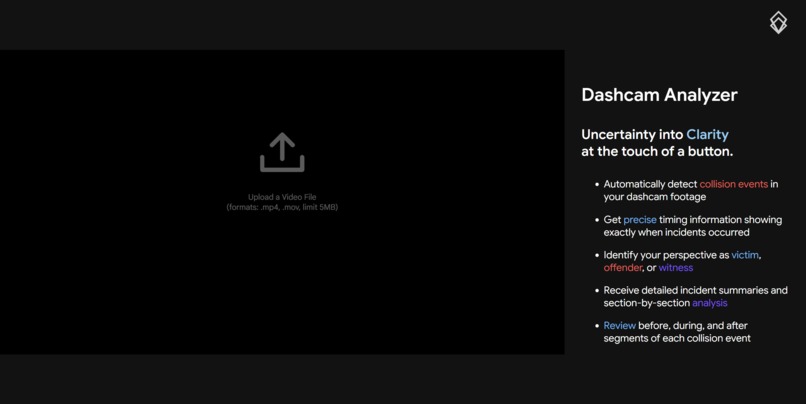
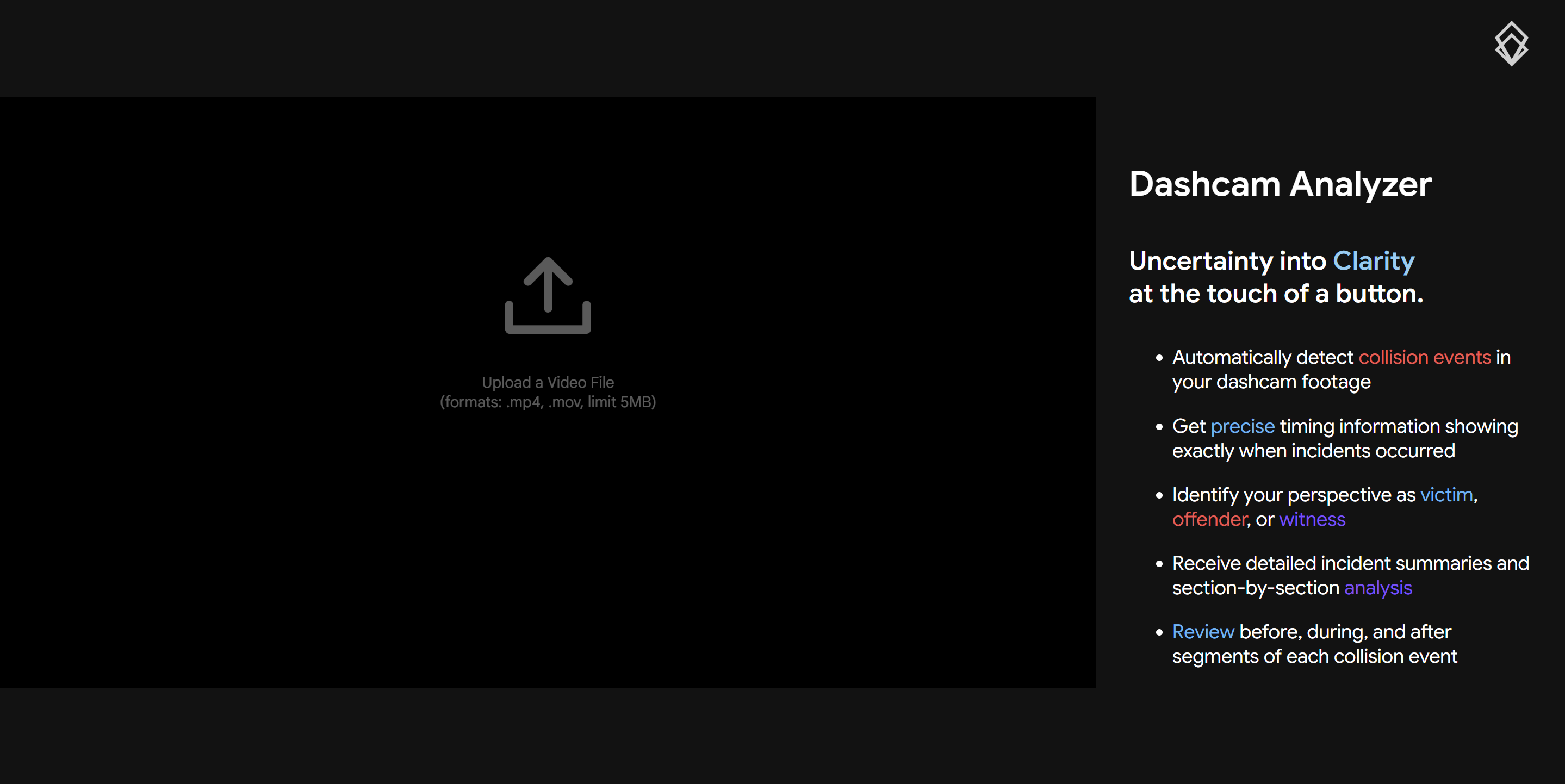
Upload System
-
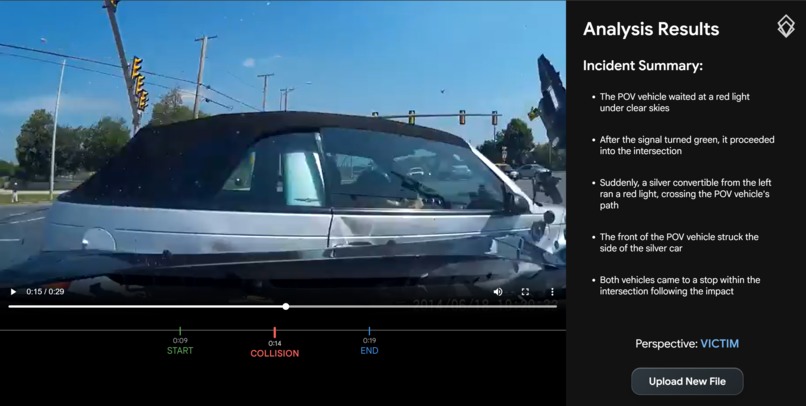
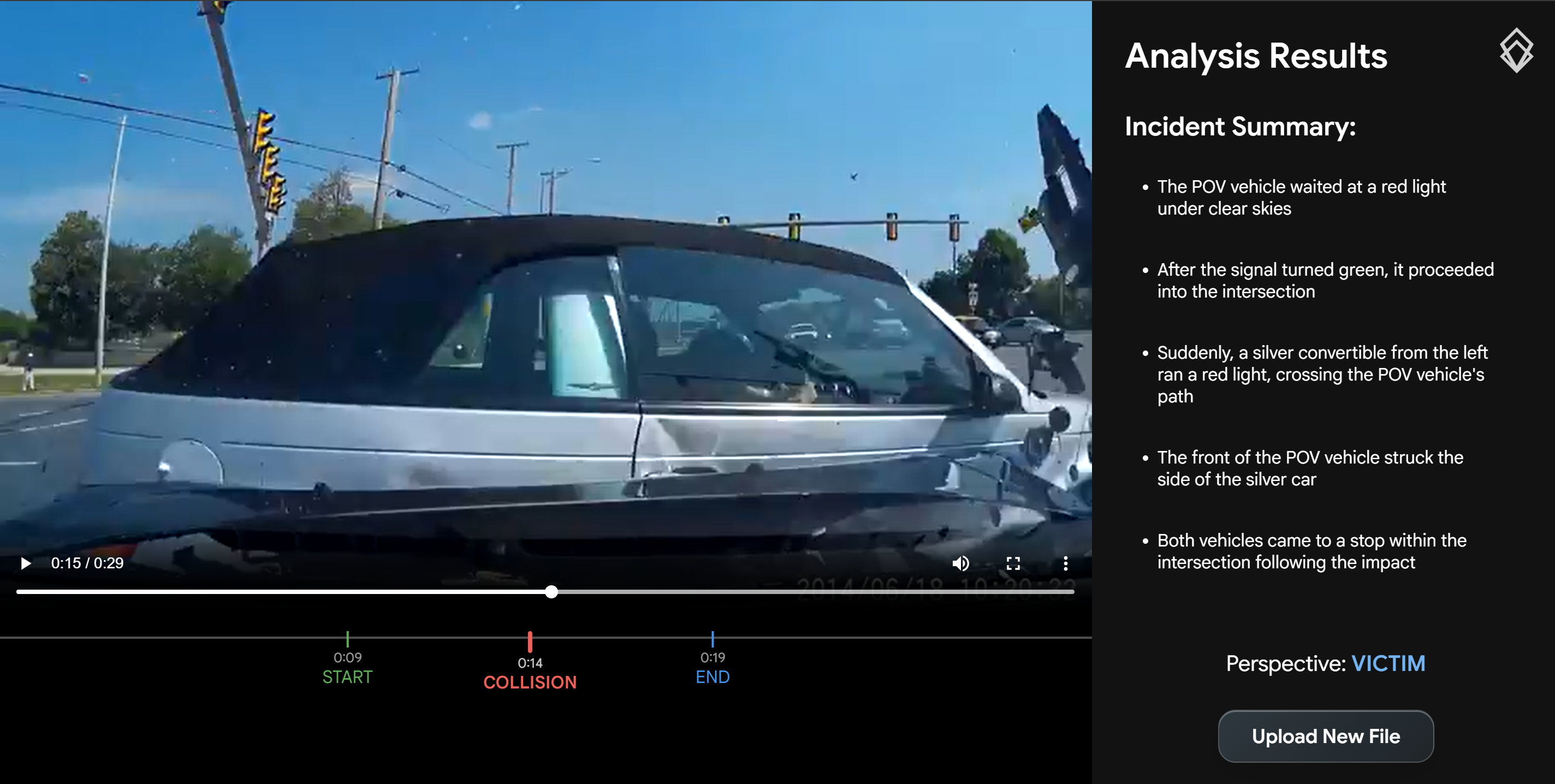
Crash and Fault Detection
-
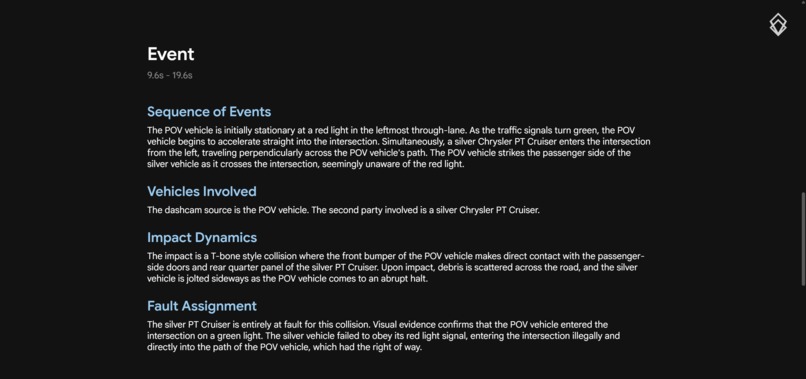
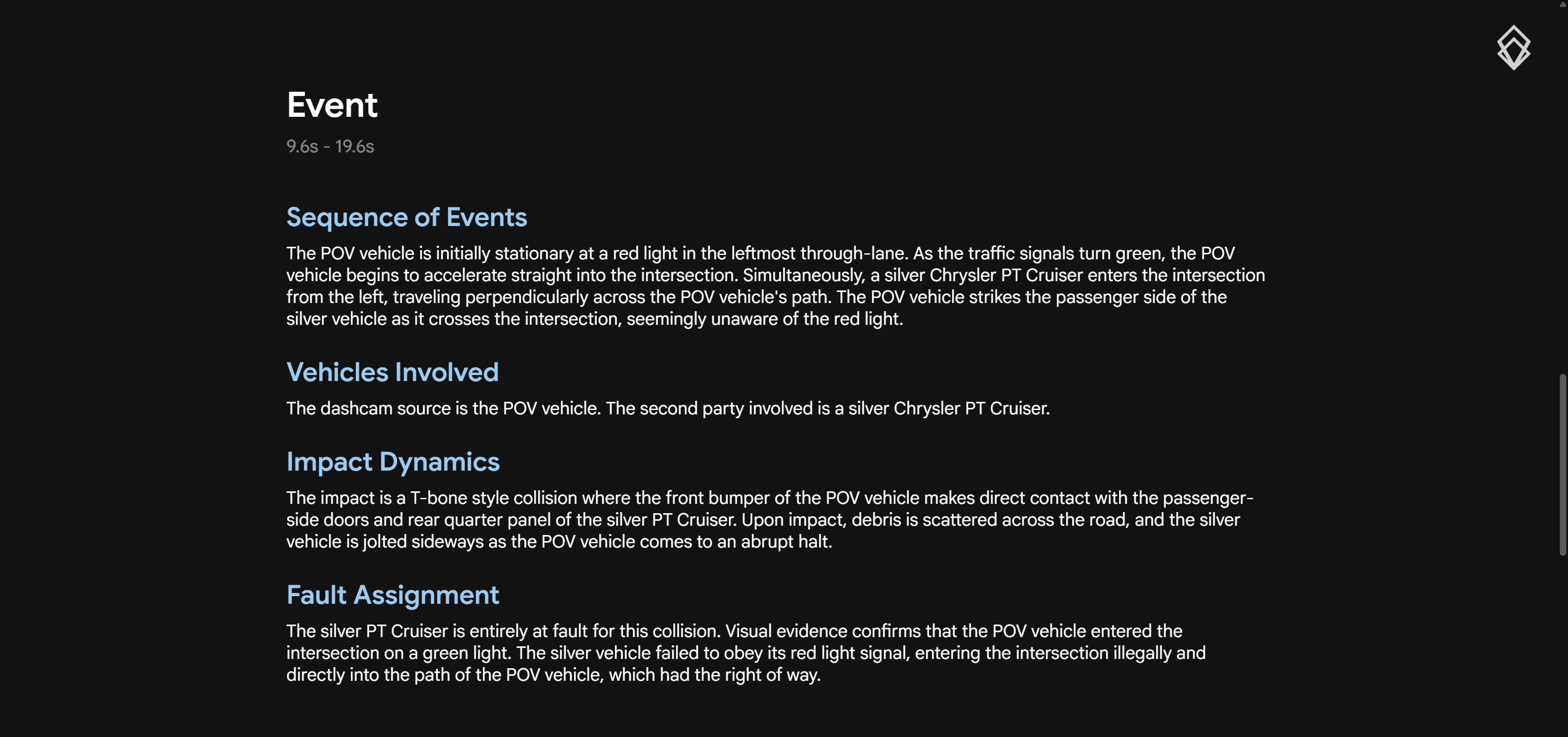
Crash Analysis
Inspiration
Car accidents are traumatic enough without the months of paperwork that follow. We saw how insurance claims can drag on for weeks, sometimes even months while victims wait for payouts, medical approvals, and resolution. Claims adjusters spend countless hours manually reviewing dashcam footage, and disputes over fault lead to even longer delays.
We asked: What if AI could turn dashcam footage into clear, objective evidence in seconds? DashGuardian was born from the belief that when paperwork decreases, people get help faster.
What it does
DashGuardian is an AI-powered dashcam analysis tool that transforms raw collision footage into actionable insurance data:
- Automatic collision detection - Pinpoints the exact moment of impact with sub-second precision
- Perspective classification - Objectively determines if the POV vehicle was the victim, offender, or witness
- Incident summarization - Generates concise, factual narratives of what happened
- Section-by-section analysis - Breaks down the Before, During, and After phases with detailed descriptions
- Visual timeline - Displays collision markers on an interactive timeline for quick reference
Upload a dashcam video, click analyze, and get a complete incident report with no manual review required.
How we built it
- Frontend: React + TypeScript + Vite for a fast, responsive single-page application
- AI/ML: Google Gemini 3 Flash Preview for multimodal video understanding
- Architecture: Direct Gemini API integration with parallel API calls (8 simultaneous analyses) for consensus-based fault determination
- UX: Snap-scroll full-page sections, animated transitions, and real-time progress indicators
We designed the analysis pipeline to make multiple independent API calls and aggregate results using median calculations and majority voting and improving accuracy over single-call approaches.
Challenges we ran into
- Video processing at scale - Base64-encoding dashcam videos for API transmission required careful handling of large file sizes and mime types
- AI consistency - Single API calls produced inconsistent fault classifications, so we implemented an 8-call deliberation system with 60% consensus thresholds
- Prompt engineering - Early prompts "pigeonholed" the AI into certain classifications; we rewrote them to be evidence-based and objective
- API migration - Mid-project, we switched from OpenRouter to the direct Gemini API, requiring a complete rewrite of request/response handling
- Filtering AI artifacts - The model sometimes prefixed responses with "thought" or "summary" so we added runtime filters to strip these
Accomplishments that we're proud of
- Sub-second collision detection - Our median-based timing algorithm consistently identifies impact moments within 0.1 seconds of ground truth
- High-confidence fault determination - The 8-call deliberation system achieves reliable consensus, significantly reducing false classifications
- Polished UX - Smooth page transitions, snap-scroll navigation, and real-time progress feedback make the tool feel production-ready
- End-to-end analysis pipeline - From video upload to structured incident report in under a minute
- Clean, maintainable codebase - Modular React components, TypeScript throughout, and clear separation of concerns
What we learned
- Multimodal AI is powerful but unpredictable - Video understanding models need careful prompt design and result aggregation to produce consistent outputs
- Consensus beats single inference - Running multiple parallel API calls and voting on results dramatically improves reliability
- UX matters for trust - Users need visual feedback (progress bars, timelines, clear perspective labels) to trust AI-generated conclusions
- API abstraction pays off - Designing our service layer cleanly made the OpenRouter -> Gemini migration straightforward
What's next for DashGuardian
- Recognizing Unsafe Driving - Adding separate detection for unsafe driving habits such as tailgating, lane-splitting, and distracted driving.
- Fleet management integration - Partner with commercial fleet operators to analyze incidents at scale
- Real-time dashcam streaming - Move from uploaded videos to live analysis for immediate incident response
- Multi-camera fusion - Combine footage from multiple vehicles involved in the same incident for 360 degree reconstruction
- Insurance API integrations - Direct submission to claims systems, eliminating manual data entry entirely
- Trend analytics dashboard - Aggregate anonymized data to identify dangerous intersections, common collision patterns, and driver training opportunities
Built With
- cloudflarepages
- css
- gemini
- html5
- javascript
- node.js
- react
- typescript
- vite


Log in or sign up for Devpost to join the conversation.