-
NEXGEN CITY
City problem
Cities mostly react to problems after they happen. A traffic jam is addressed once roads are already blocked. Heavy rain becomes an emergency after streets flood. When congestion, bad weather, road incidents and high demand happen together, emergency response can become slower and citizens have little warning.
The bigger problem is that cities generate enormous amounts of information, but this information is often fragmented across traffic systems, weather services, maps, public reports and infrastructure data. Cities need a way to understand these signals together and anticipate what may happen next, so they can act before small disruptions become major city-wide problems.
Detailed idea
NEXGEN City is an AI-powered predictive intelligence layer for cities. Instead of simply showing what is happening now, it asks: “What is likely to happen next, and what should we do about it?”
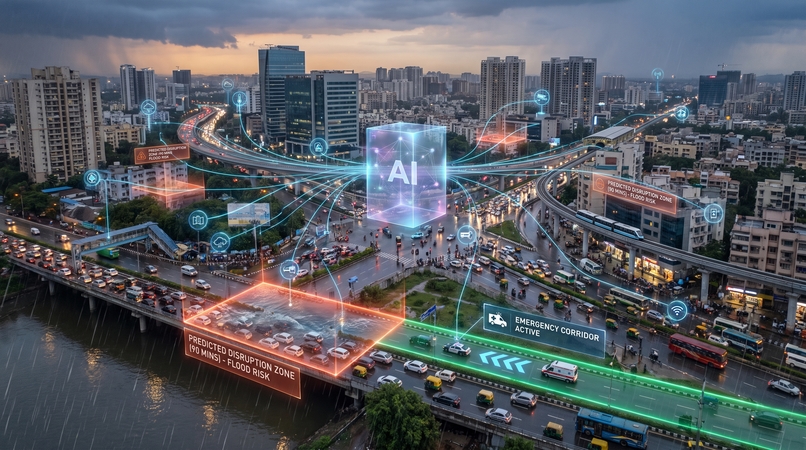
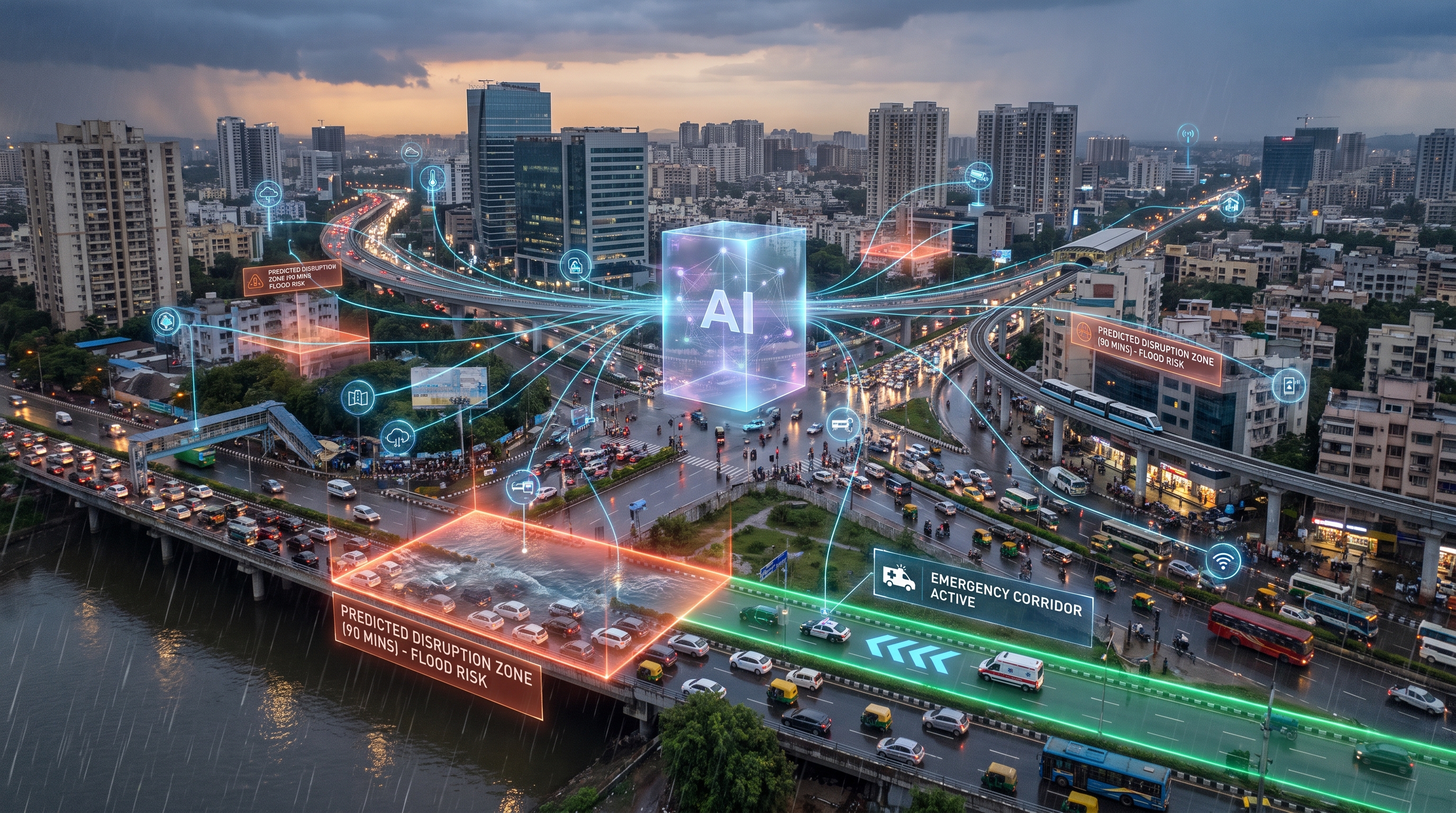
NEXGEN City combines signals such as traffic conditions, weather, road incidents, maps, public reports and historical patterns. Gemini acts as the reasoning layer, helping interpret these signals, identify relationships and explain emerging risks in simple language.
For example, if heavy rainfall, increasing traffic and a low-lying road are detected together, NEXGEN City can identify the area as a potential disruption zone. Gemini can explain why the risk is increasing, estimate the likely chain of events and recommend actions such as alternative routes, public alerts or emergency-route prioritization.
The system also includes a Future Simulator. City officials can ask “What if?” questions such as “What if rainfall increases?” or “What if this road is closed?” NEXGEN City visualizes possible outcomes and compares interventions.
The goal is to transform cities from reactive systems into anticipatory systems: sensing what is happening, predicting what could happen, and helping people act before a problem becomes an emergency.
3### Impact NEXGEN City can make everyday cities safer, faster and more resilient by helping people act before disruptions become emergencies. Predicting congestion can reduce wasted travel time. Identifying high-risk road conditions earlier can support safer transportation and faster emergency response. Early warnings can help citizens avoid dangerous or disrupted areas.
For city authorities, NEXGEN City turns fragmented information into understandable decisions instead of requiring teams to manually interpret multiple systems. Over time, the platform could expand from transportation into flooding, extreme heat, pollution, public events and infrastructure risks.
The larger impact is a shift from reactive cities to cities that anticipate problems and prepare for them.
Execution / feasibility
NEXGEN City can begin as a focused transportation intelligence MVP rather than attempting to control an entire city. The first version would combine mapping, traffic, weather and incident data through available APIs and public datasets.
A city intelligence dashboard would visualize current conditions, emerging risk zones and predicted disruptions. Gemini would provide the reasoning layer: interpreting multiple signals, generating explanations, answering “What if?” questions and producing recommended actions.
The system could initially focus on a few use cases such as traffic disruption prediction, weather-related road risk and emergency-route planning. Its architecture would remain modular so additional data sources and city problems could be added later.
The long-term vision is a city-scale intelligence platform that connects transportation, weather, infrastructure and citizen signals. With sufficient historical data and partnerships with municipalities, the predictive models could continuously improve and support increasingly proactive urban decision-making.


Log in or sign up for Devpost to join the conversation.