As Now a days software systems grow, and their real production architecture mostly becomes unclear. Teams no longer know how requests actually move through services, databases, and APIs. This actually makes it hard to find bottlenecks, fix performance issues, as well as decide how the system should be improved. Present time tools show logs and metrics, however they do not explain the system’s structure or guide about the architectural decisions.
In Short
Modern applications grow complex, but teams don’t truly understand their own architecture.Without clear insights,improving scalability, performance and cost becomes guesswork.
- Architecture invisibility
- Hidden dependencies
- Data-driven intelligence
- scaling issue
- manual anasylsis of system failure
- Poor design inflates costs
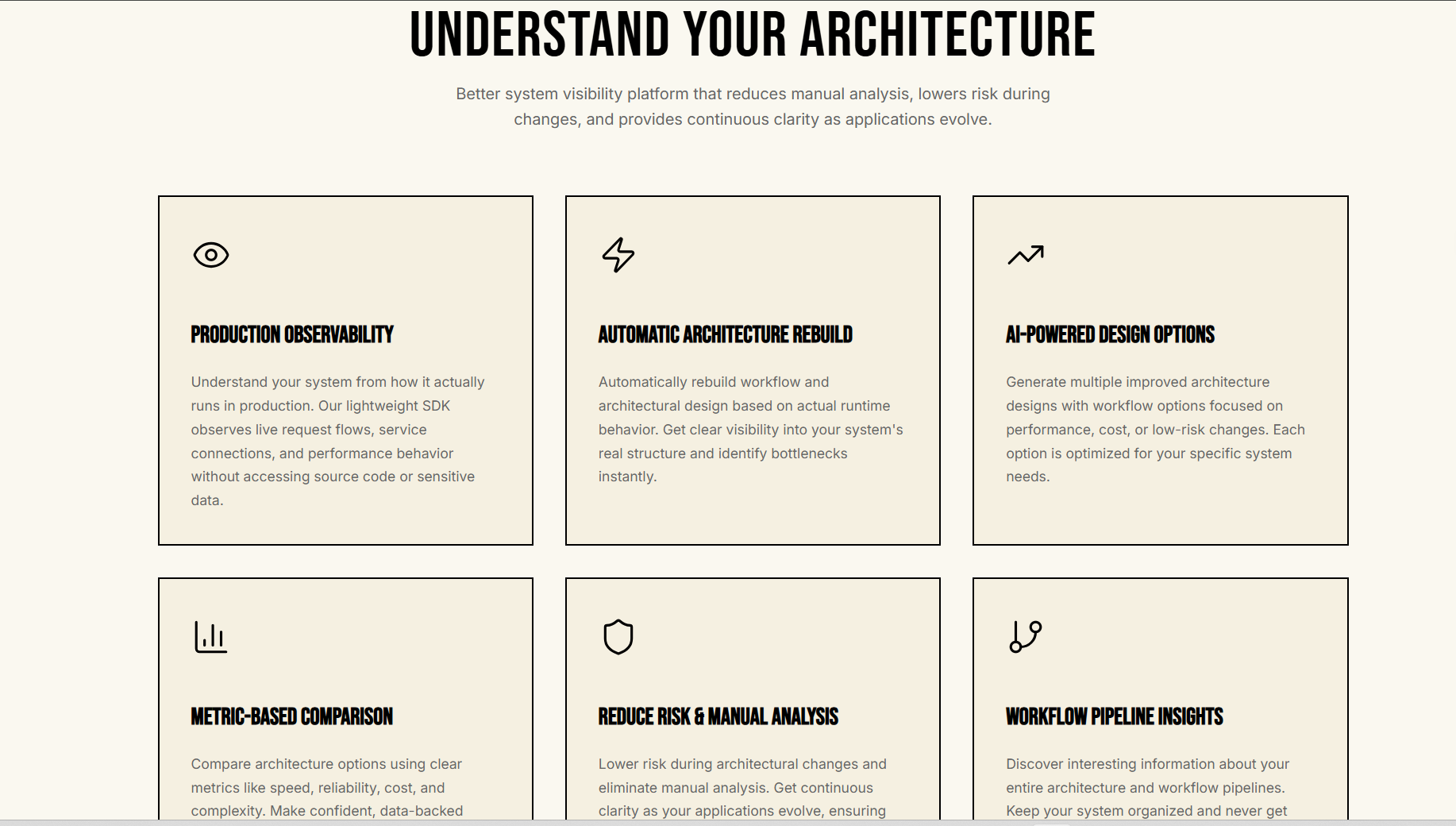
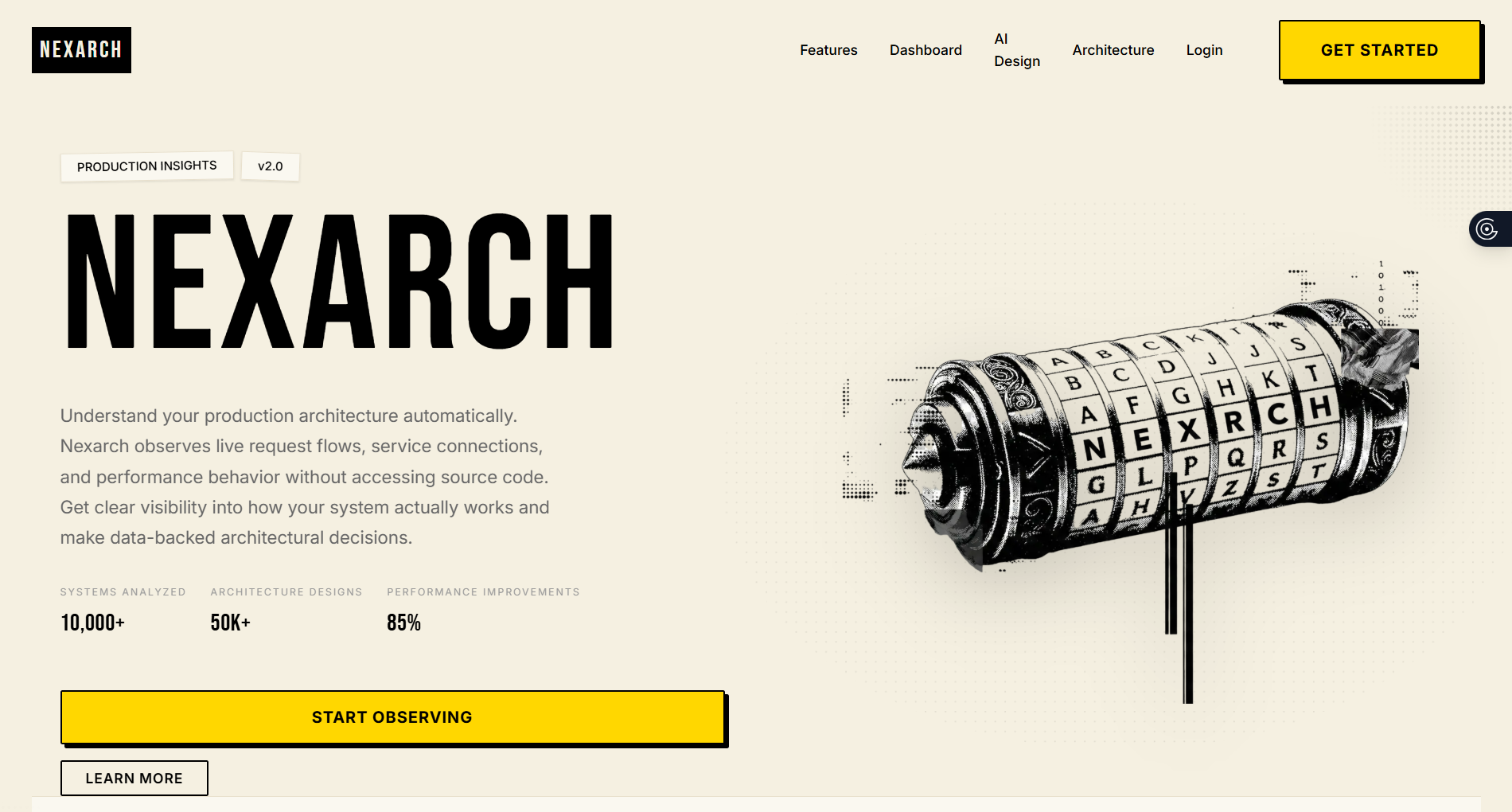
Nexarch solves this by understanding applications from how they run in production. By using our lightweight SDK, Nexarch observes live request flows, service connections, and performance behaviour without accessing source code or sensitive data. From this runtime information, it automatically rebuilds workflow of better architectural design based on the system’s actual architecture and highlights problem areas.
Nexarch then generates multiple improved architecture designs with workflow's options which actually focused on performance, cost, or low-risk changes. Each of the generated option is compared using clear metrics like speed, reliability, cost, and complexity. This helps teams make confident, data-backed architecture decisions faster, even helps to make a better production ready scalable system.
USP
**Suggesting System Architechture based on : -
Scalability Cost Performance and giving Alpha version of it**
Atlast user will get to know some interesting information about there whole architecture and workflow pipelines, so that there system never get messed up and work as production ready. It is actually a better system visibility platform, which reduce manual analysis, lower risk during changes, and continuous clarity as applications evolve so that in future if anything new came up which can help, then developers can evolve there architecture and workflow based on it.
Chalenges:
We have built MCP servers for each type of functionality so that we can implement them with LangGraph for non-linear, asynchronous workflows. While doing this, it was quite frustrating because our computational costs increased significantly, and we also hosted the backend on a cloud virtual machine. However, we managed these challenges and designed an efficient workflow for our platform. We then developed an SDK that allows users to directly access our services by integrating it into their applications. For this, we used MCP servers along with features like tracking and key-based cryptography, which took considerable time because we learned these new technologies in a single night and still managed to build a scalable product. Finally, we deployed the backend on the cloud with a custom domain and the frontend at run-time.in. For deployment, we used Azure Cloud App Service and Virtual Machines, which required additional time and effort, especially for SSL configuration and setup.


Log in or sign up for Devpost to join the conversation.