Inspiration
Most planning tools stop at the list. You write “study two hours this week,” feel organised for ten minutes, then the week happens — a late class, one free evening, a task that slips — and the list is fiction.
Chatbots will talk about the goal all day. Calendars will store whatever you type. Neither one looks at what is actually due, how much time you have tonight, and tells you the next honest move.
NEXA started from that gap, especially for students and anyone whose time comes in uneven blocks. The product we wanted was not another motivational chat. It was a coach that turns a sentence into a schedule, keeps that schedule honest when life changes, and always answers: what should I do now?
What it does
NEXA is a live personal execution system.
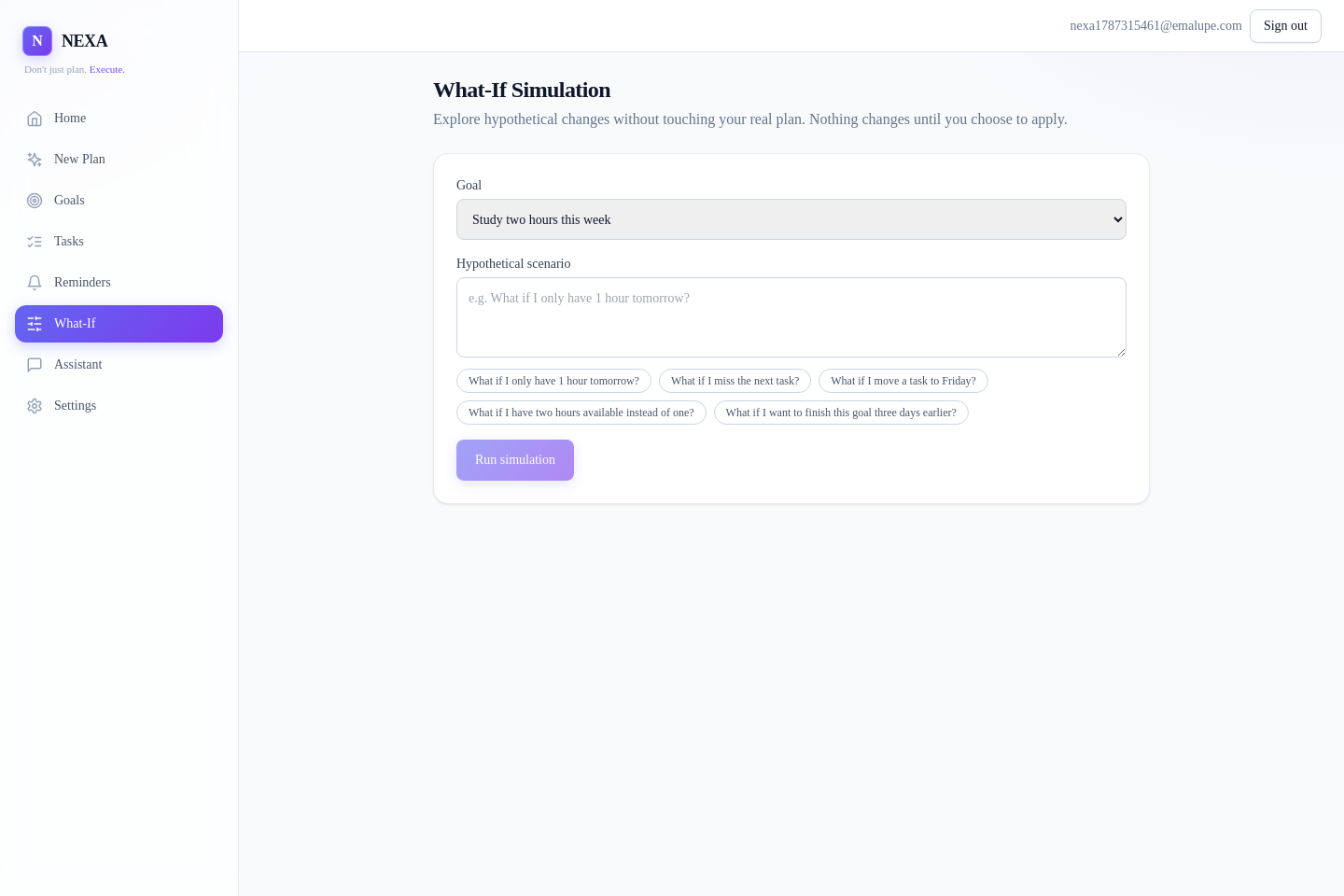
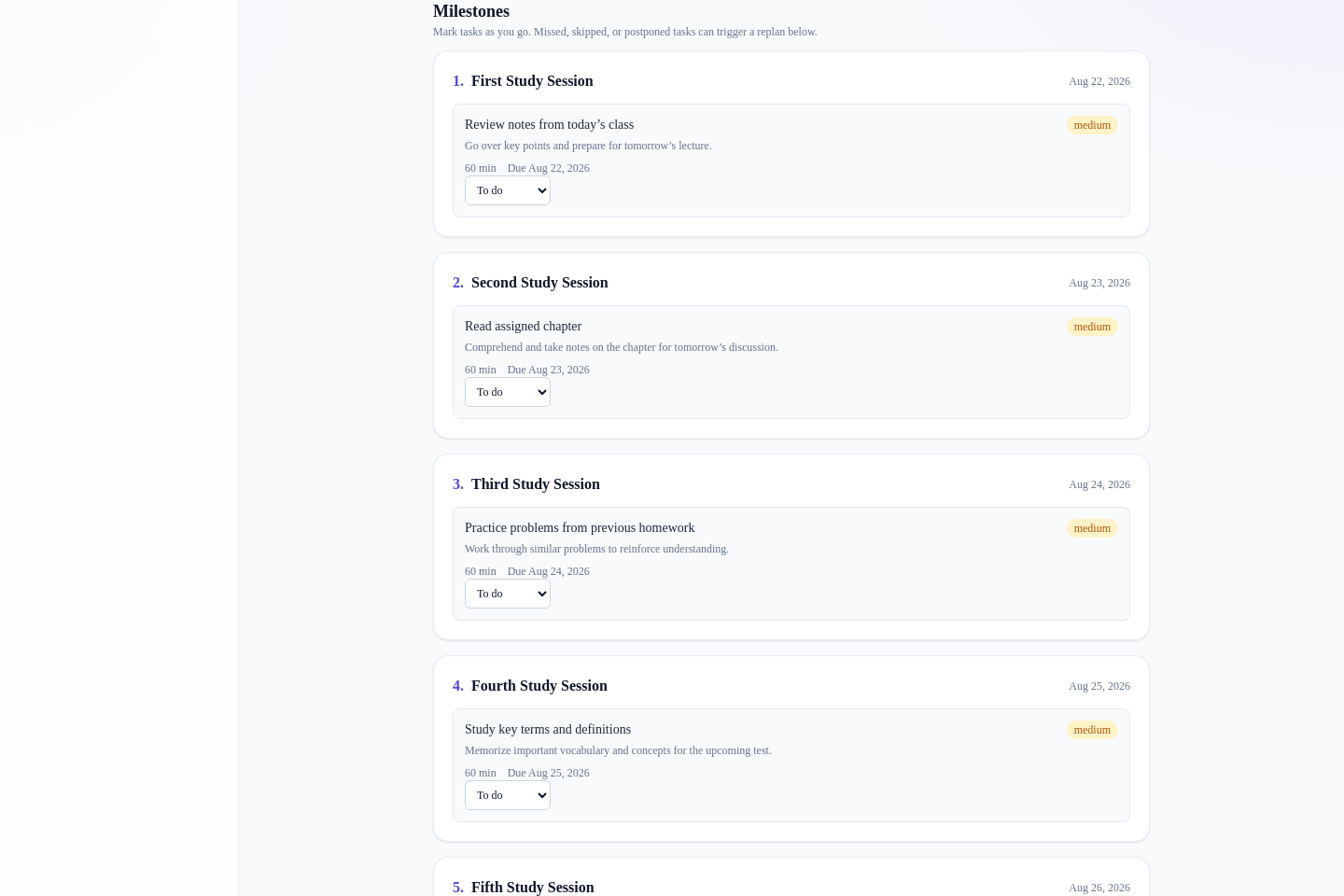
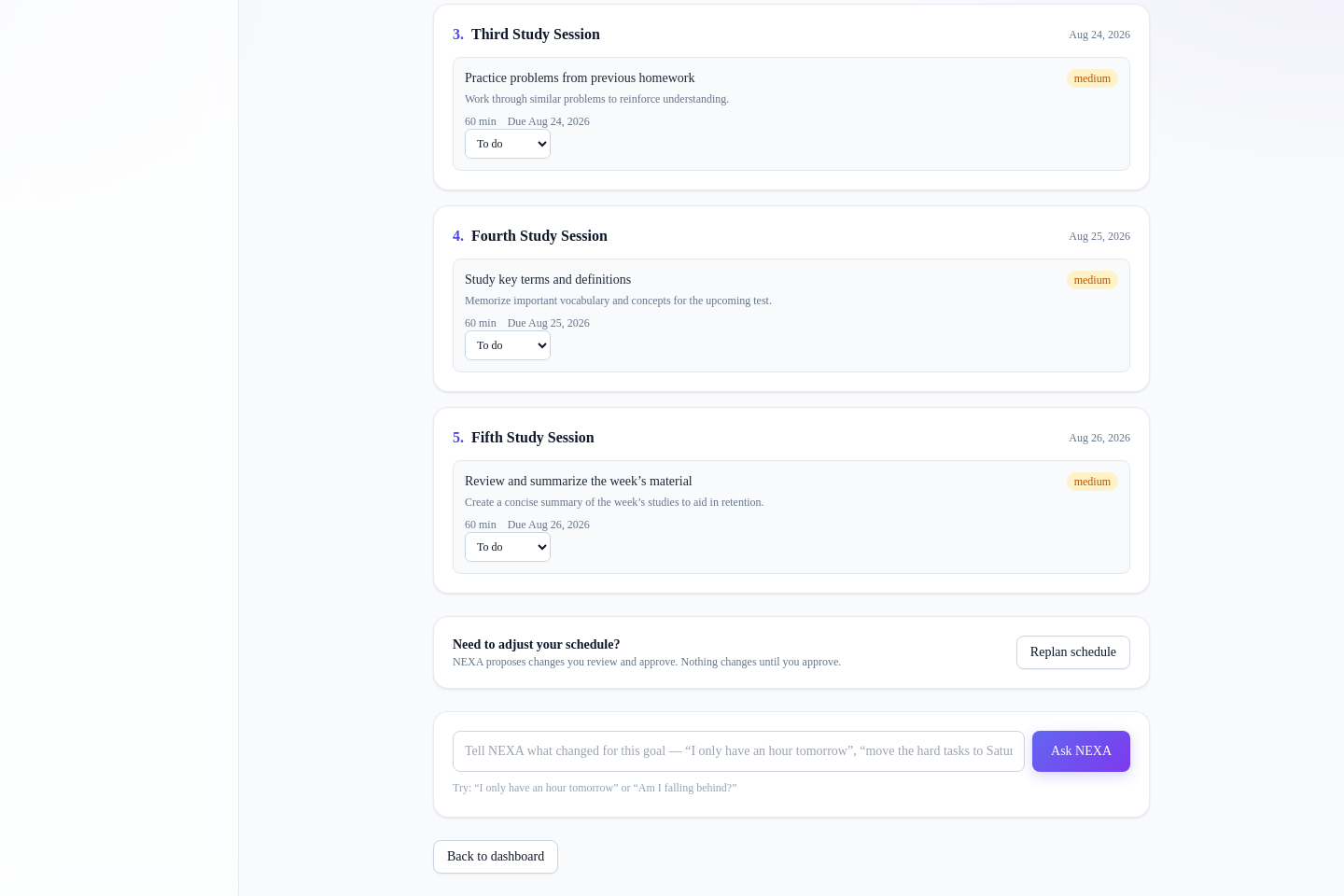
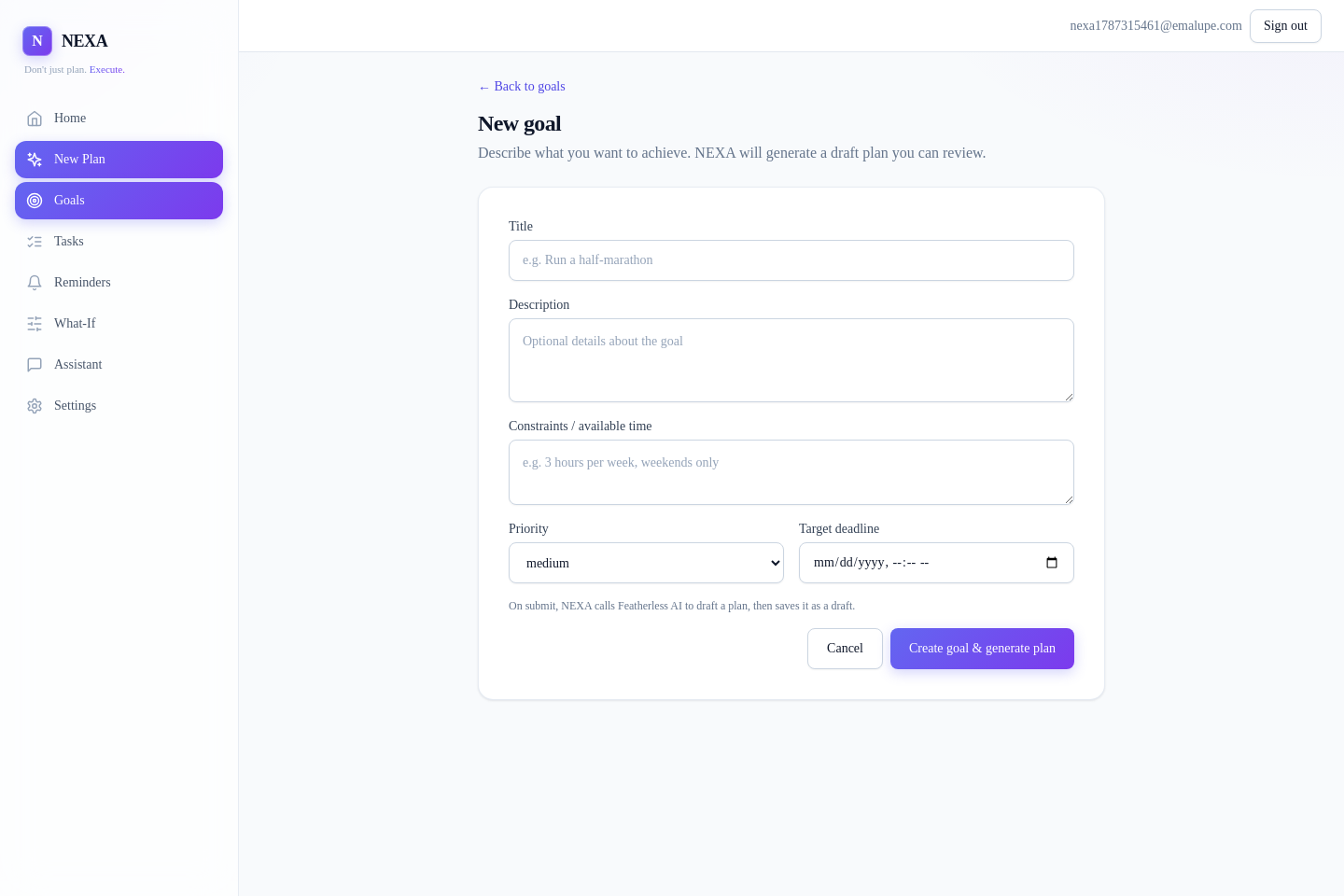
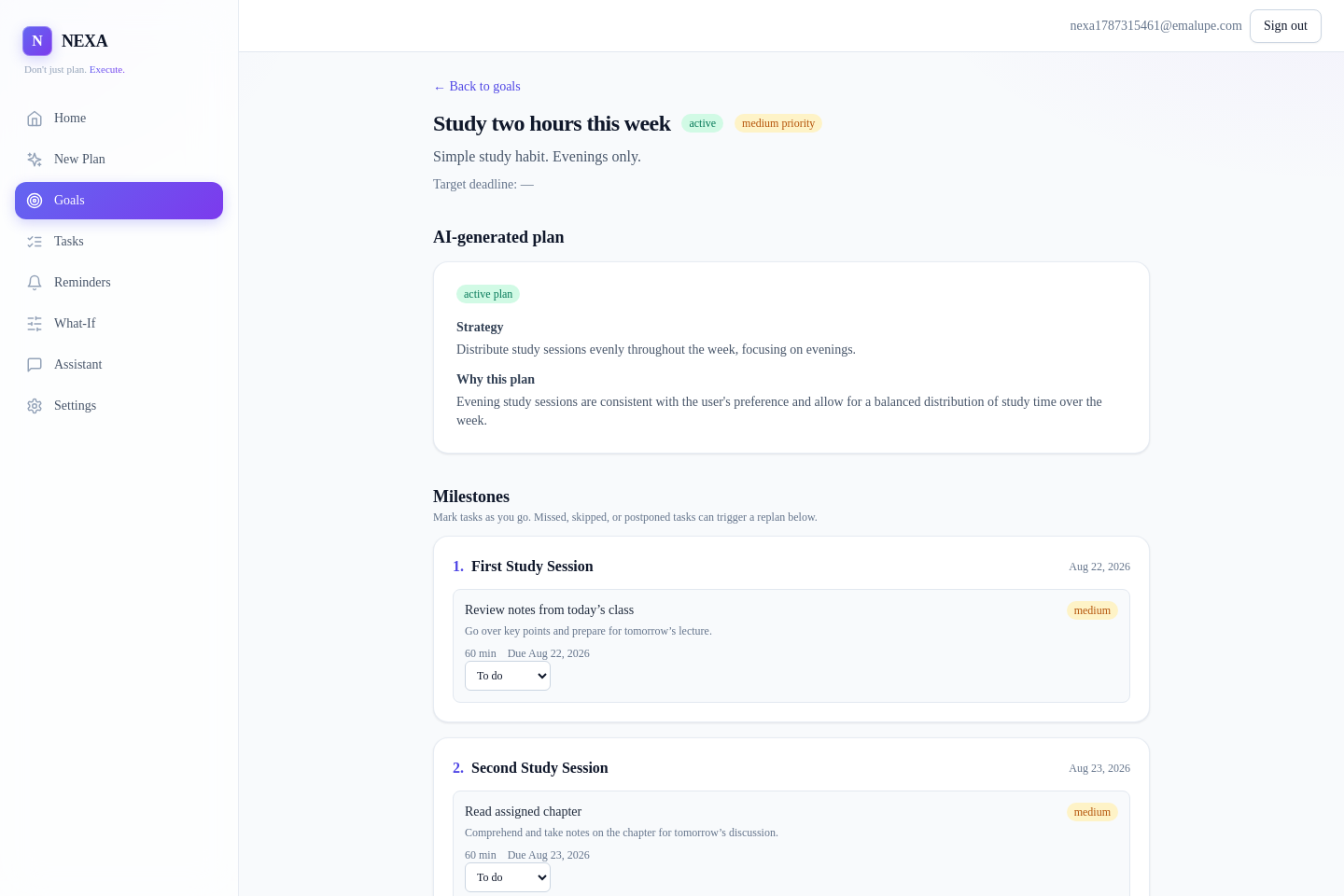
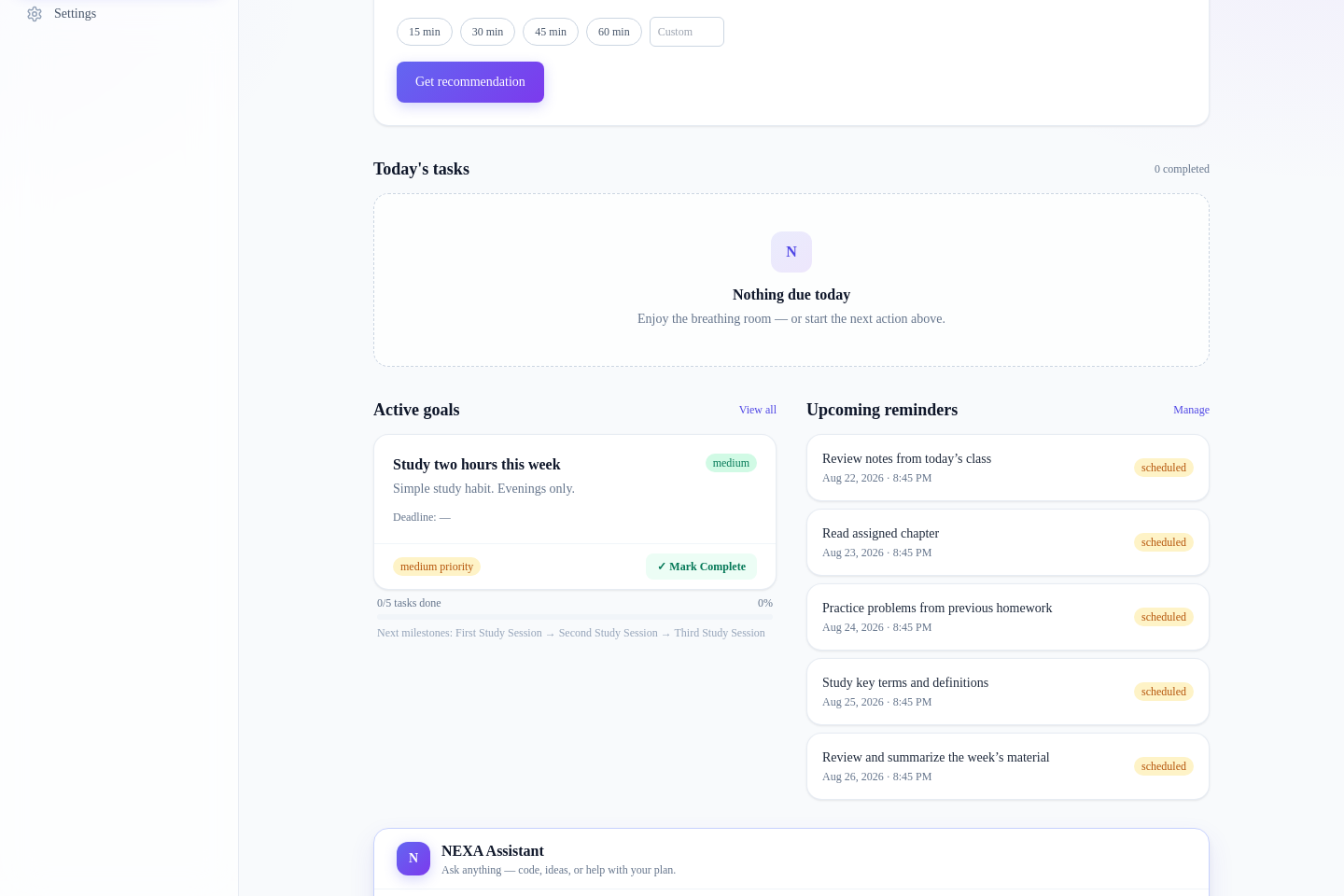
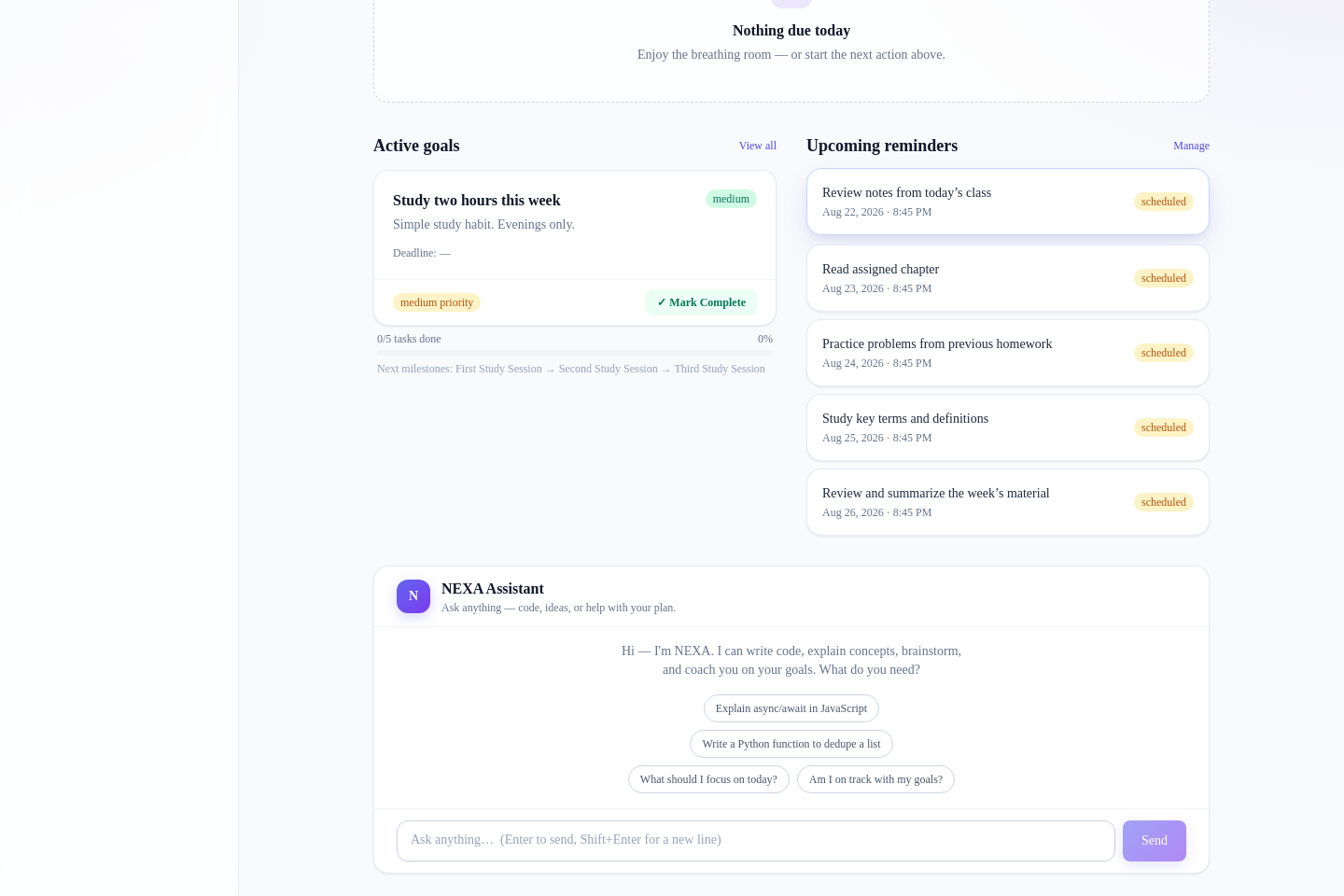
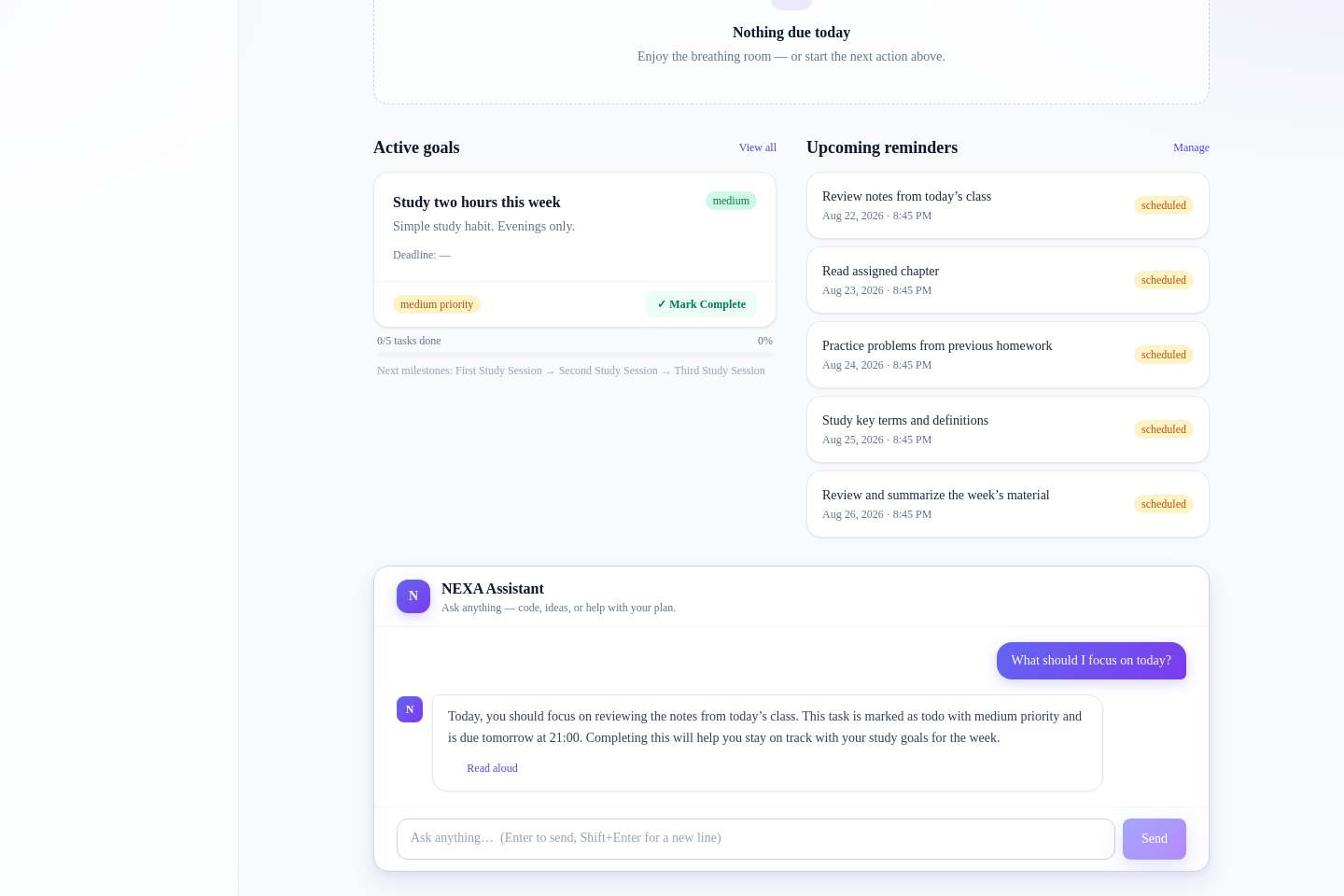
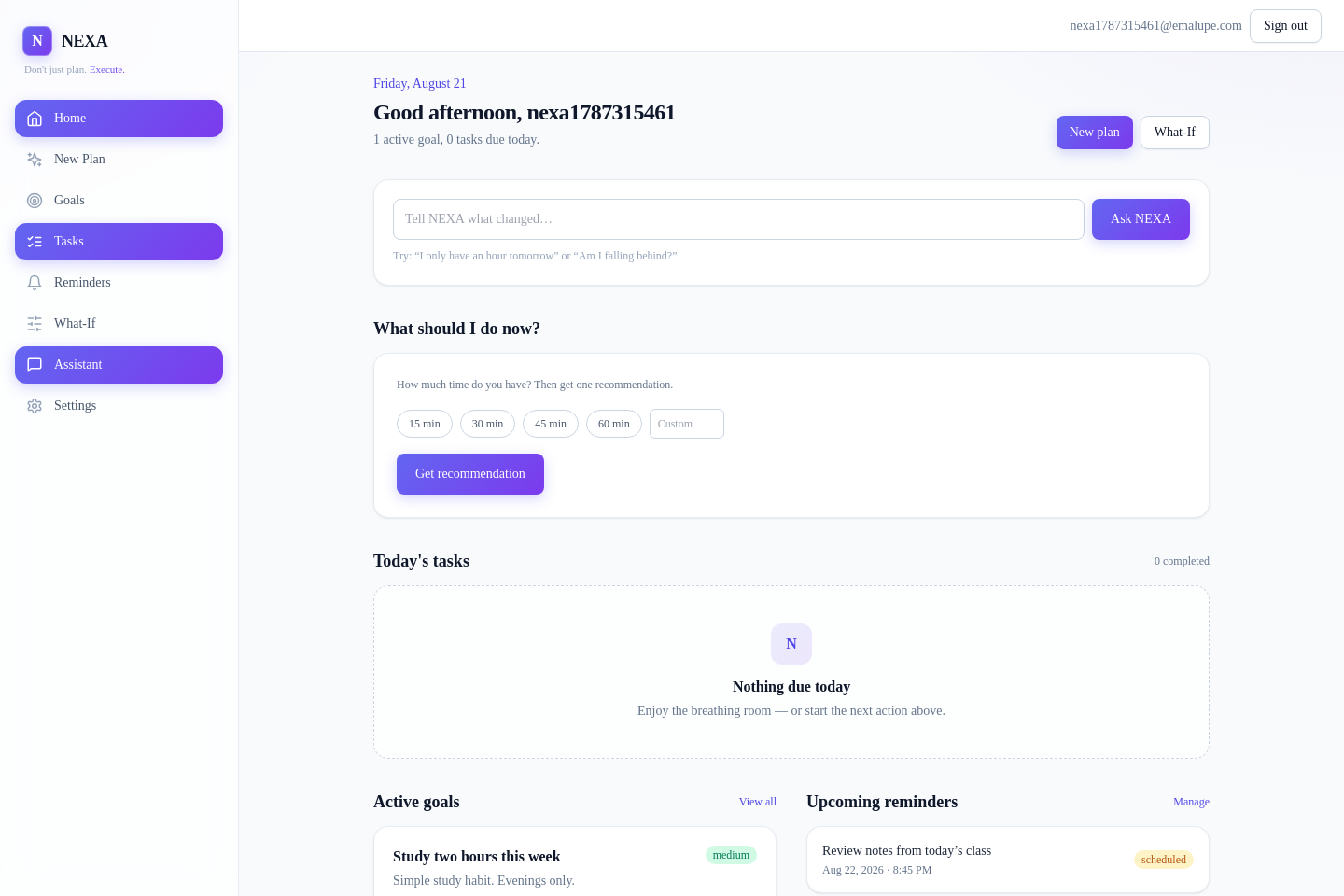
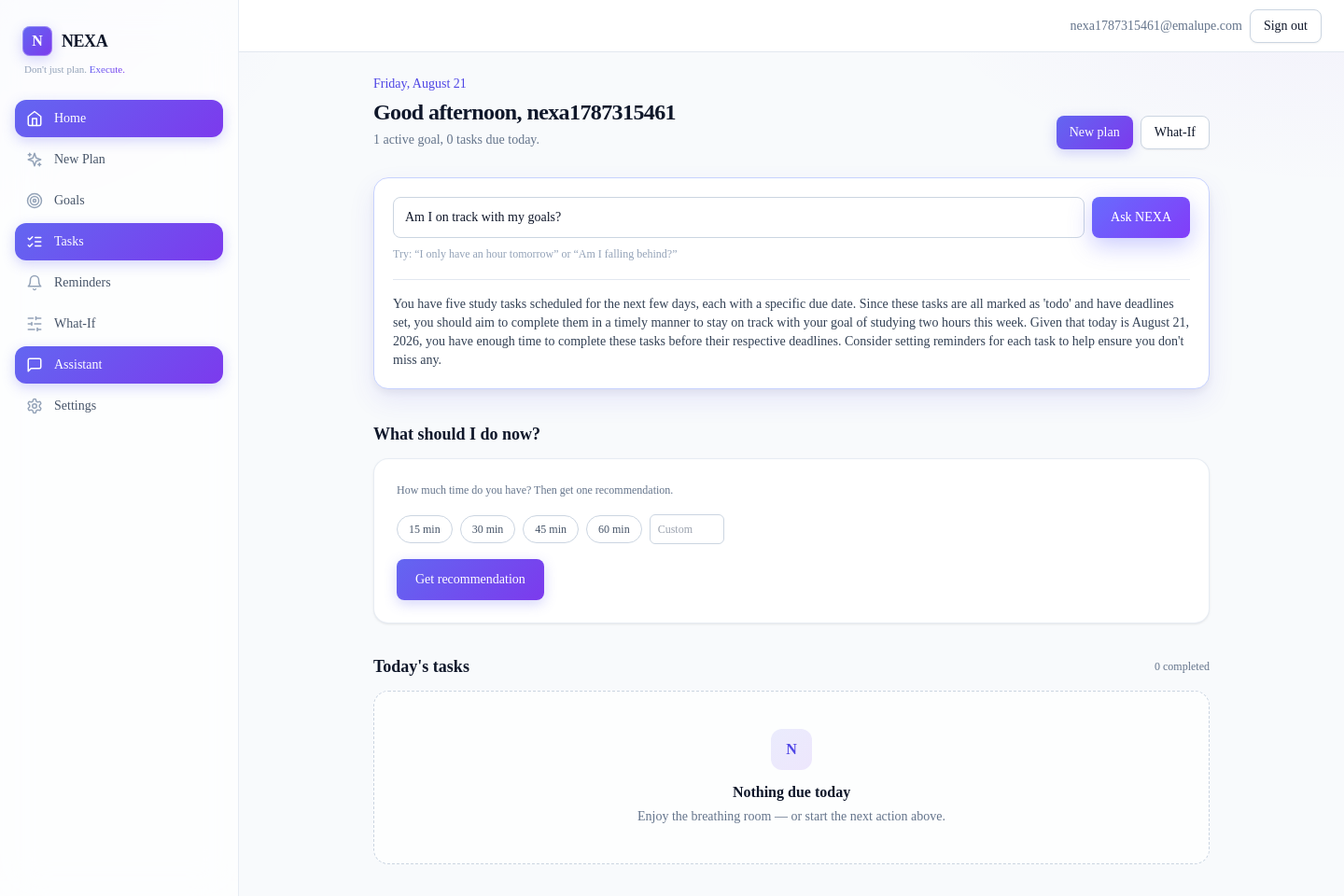
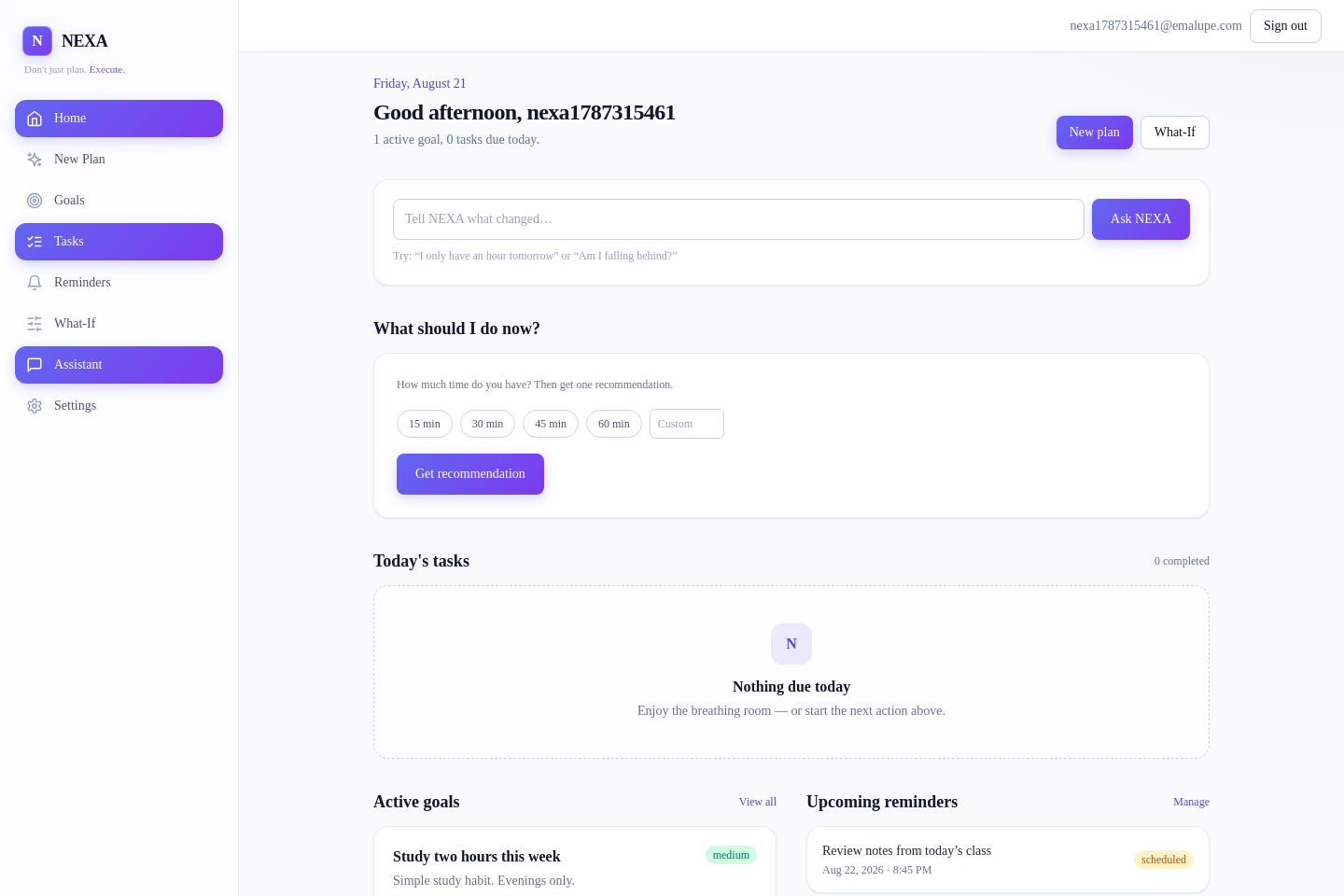
You describe a goal in plain English, with constraints (“evenings only,” “three hours a week”). Featherless AI drafts milestones and dated tasks. You review and accept — nothing silent. Home always shows the active goal, today’s load, and upcoming reminders. Ask NEXA takes a real question (“Am I on track with my goals?”) and answers from your live tasks, not a canned caption. What should I do now? takes how many minutes you have and returns one next action. The assistant already knows the plan, so “What should I focus on today?” comes back with the actual task, priority, and due time. What-if lets you rehearse “I only have an hour tomorrow” without touching the real plan. Apply only if you choose. Missed, skipped, or postponed tasks can trigger a replan proposal. You still approve the change.
The rule underneath all of it: the AI proposes, you dispose.
How we built it
A narrow stack so the product could ship in a week:
Next.js 14 (App Router, TypeScript) for the UI and API. Supabase for auth and Postgres with row-level security — every goal and task is owned by the signed-in user. Featherless AI (OpenAI-compatible, Qwen/Qwen3-32B) server-side only, for goal understanding, plan JSON, next-action, mentor chat, what-if, and replan proposals. The key never reaches the browser or the repo. Zod validates model output before anything is saved, so a bad completion cannot corrupt a plan. Render hosts the app; Prelint reviews PRs against the specs in /specs so the product does not drift. Reminders use in-app toasts plus Web Push while respecting browser limits.
Live: https://thenexa-ai.xyz Code: https://github.com/favour187/nexa-ai License: MIT FOR DEMO LOGIN Email: [email protected] Password: NexaDemo1234!
Challenges we ran into
Structured plans from a chat model. Featherless sometimes returned prose we could not parse. We tightened prompts, validated with Zod, and surface a clear retry instead of writing garbage to the database. Auth recovery. Password-reset links have to land on /reset-password, not the site root, and PKCE tokens are one-shot in the same browser. Getting that chain right took more time than the UI. Cold starts and waiting. Render and the model both need a few seconds. The UI has to show thinking states without looking broken. Not becoming a chatbot. The hard product work was keeping the assistant grounded in this user’s tasks, and never letting the model silently move a deadline.
Accomplishments that we're proud of
A hosted, usable app judges can sign up for and click through — not a slide deck. A real study plan on a real account: five evening sessions, reminders, Ask NEXA answers, and an assistant reply that cites the due task. Specs first (product, architecture, ai, notifications, prelint), then code that matches them. The propose/dispose rule actually held: drafts, what-ifs, and replans never mutate the live plan until the user says yes.
What we learned
Guardrails are the product. If the model cannot return usable JSON, the feature does not exist. Same-browser, one-shot auth tokens are easy to burn if you preview the email link in another tool. People do not need more text. They need one next action that matches the time they actually have.
What's next for NEXA
Calendar and email hooks so accepted tasks leave NEXA and show up where people already look. Stronger recovery plans when a week goes sideways. A tighter mobile layout and quieter reminder hours that feel native. Optional model choice so Featherless can swap in a faster or cheaper open model without changing the product contract.
Built With
- css
- featherless-ai
- javascript
- next.js
- plpgsql
- prelint
- render
- supabase
- typescript
- vapid
- zod

Log in or sign up for Devpost to join the conversation.