-
-
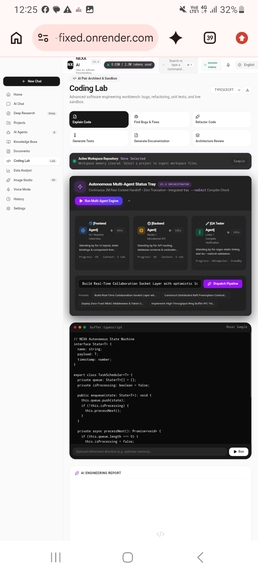
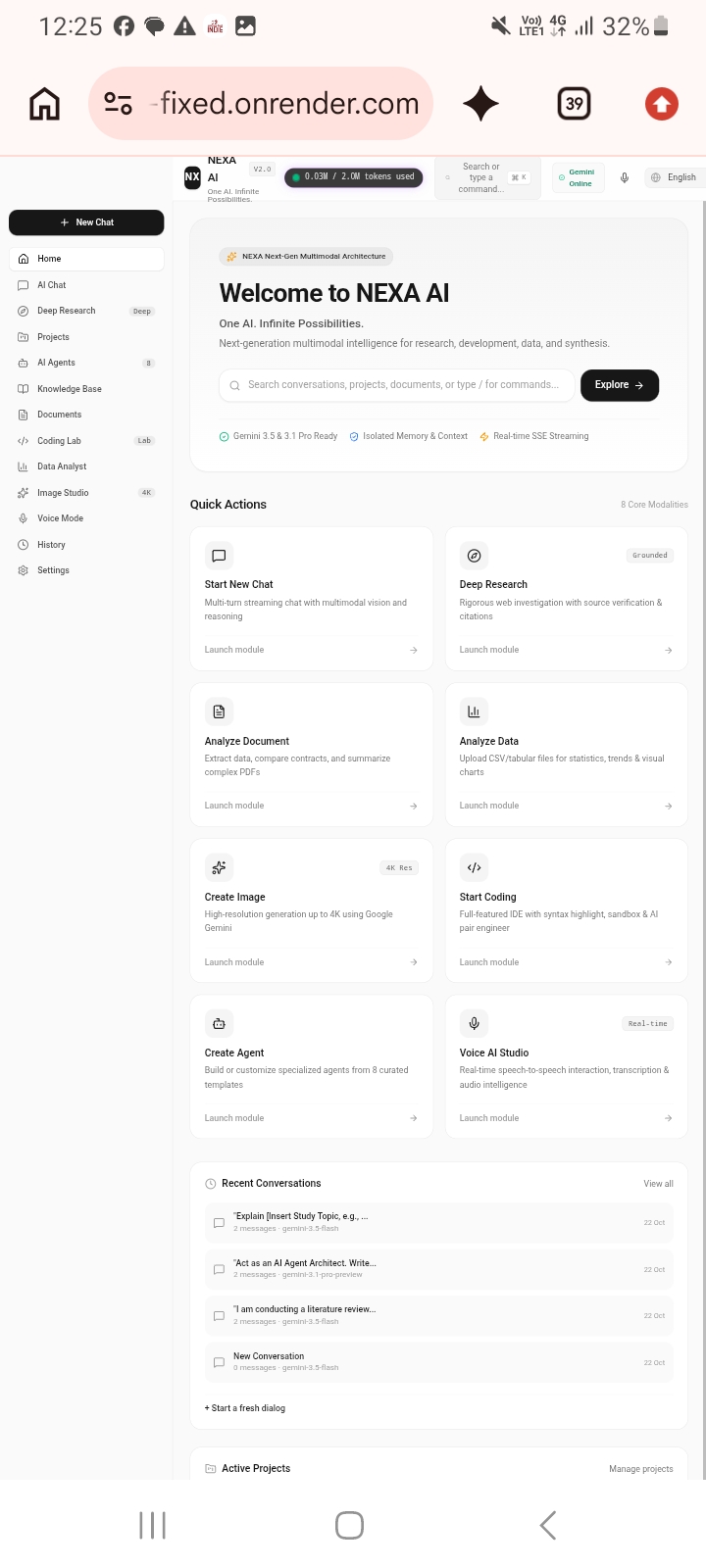
Nexa AI Unified Workspace Dashboard featuring all core AI modalities.
-
-
-
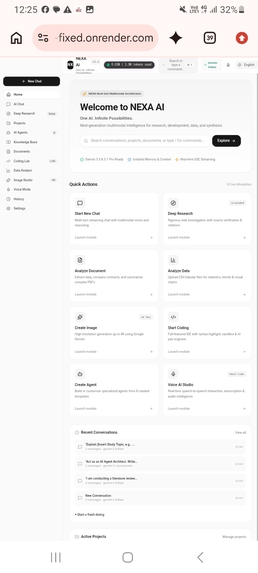
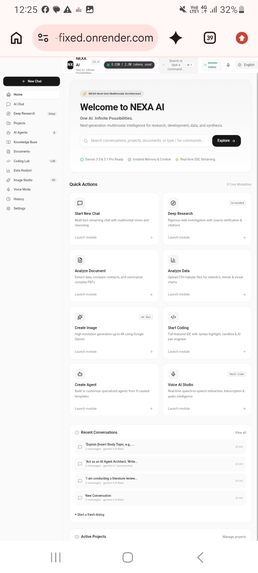
Nexa AI Unified Workspace Dashboard featuring all core AI modalities.
-
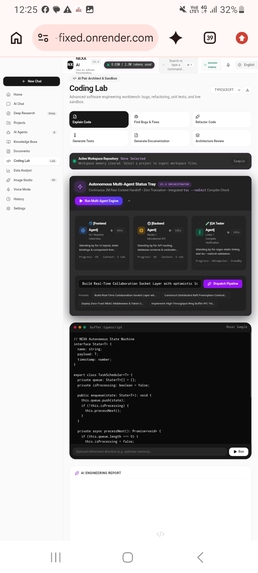
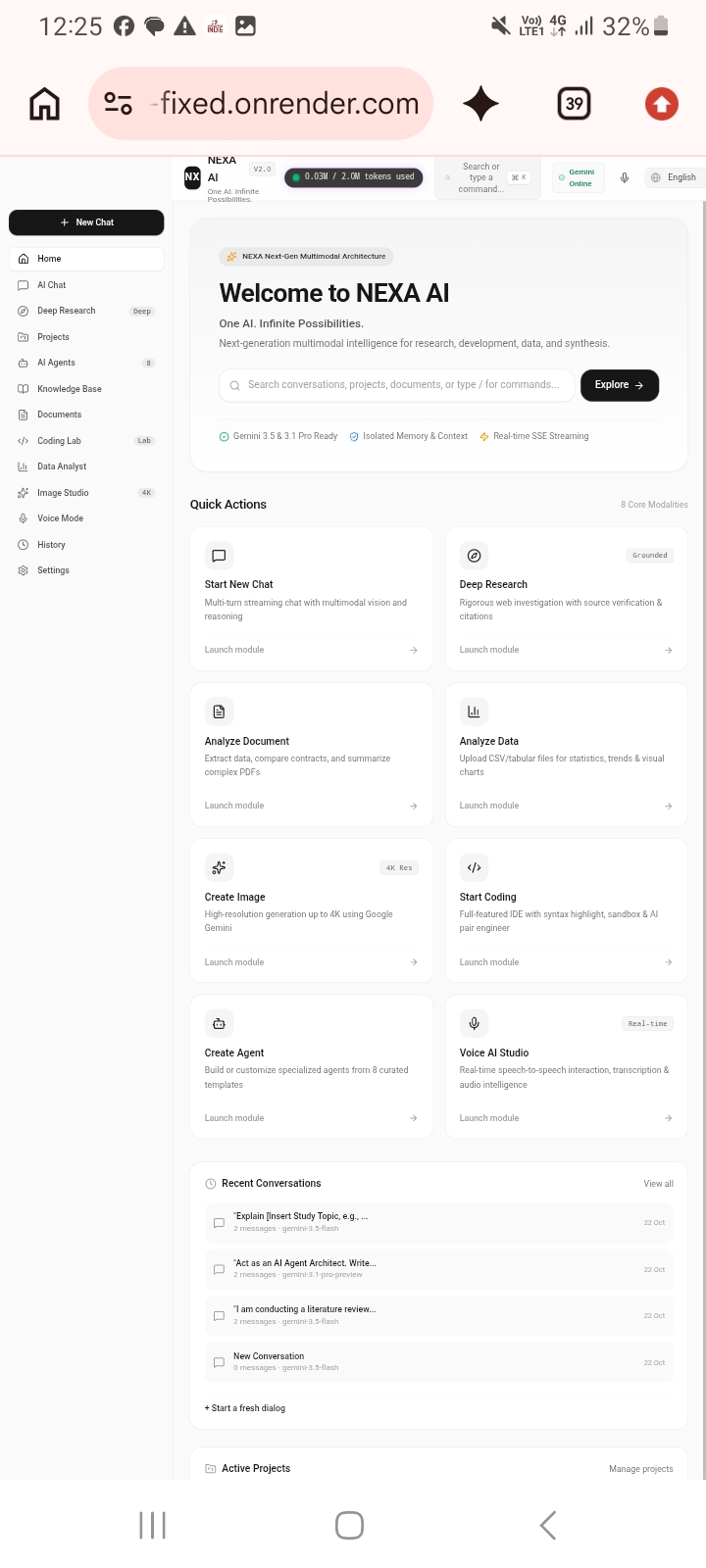
Inspiration The inspiration for Nexa AI stems from a critical bottleneck in the current AI ecosystem: context fragmentation. While frontier models like Gemini are natively multimodal, users are still forced to context-switch across disconnected tools—using one tab for search, another for coding, and a separate one for data plotting.
We set out to build Nexa AI to prove that
What it does Nexa AI is a unified Next-Gen Multimodal Architecture that brings 4 heavy-duty AI modalities into a single interface:
- Deep Research & Grounded Search: Moves beyond static prompts to execute rigorous web investigation with multi-source verification and dynamic citation loops.
- Autonomous Data Analytics: Automatically parses raw CSV/tabular uploads to instantly isolate trends, calculate statistics, and render visual charts.
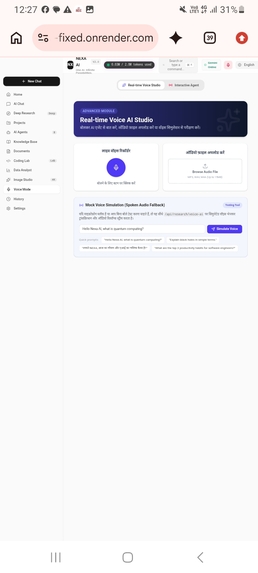
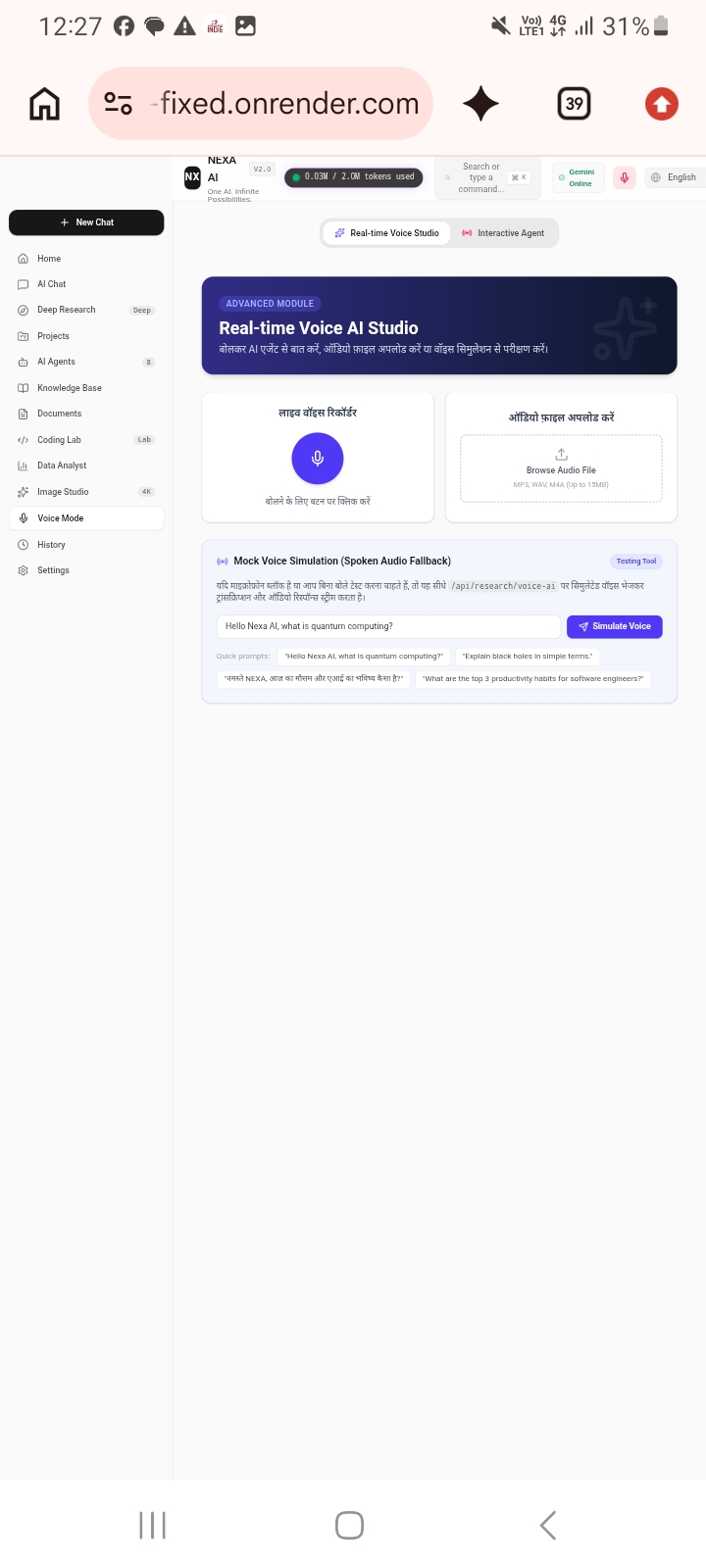
- Voice AI Studio: An ultra-low latency, real-time speech-to-speech engine for intuitive, hands-free workspace orchestration.
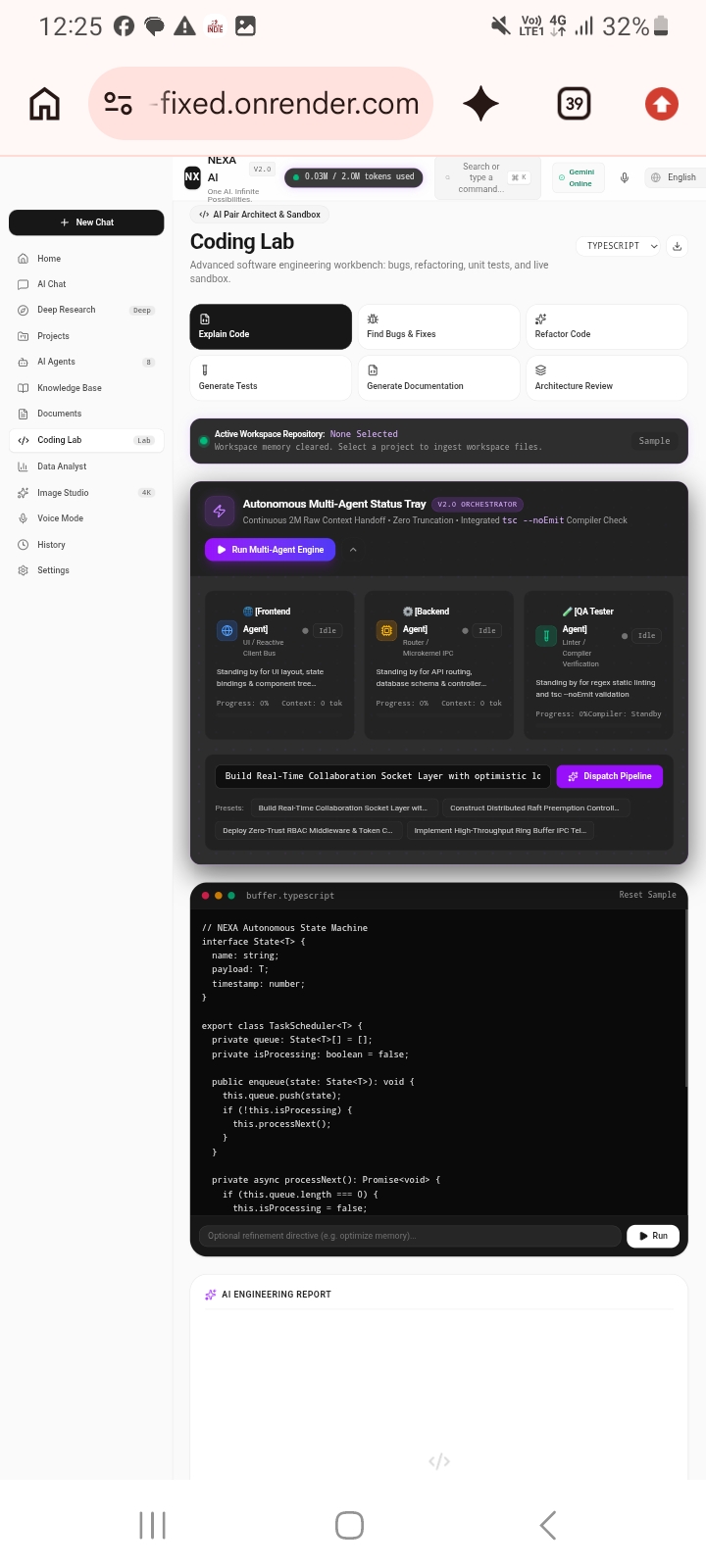
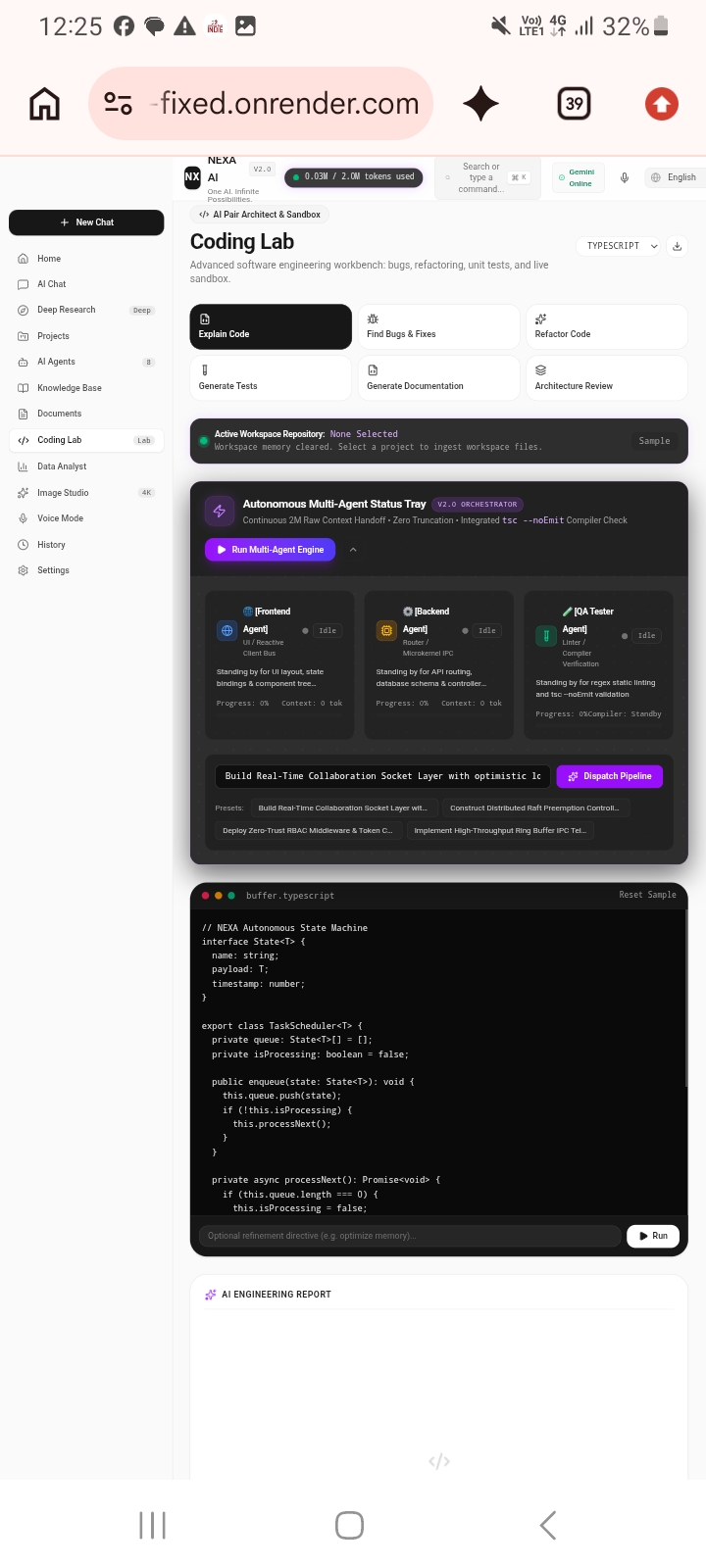
- Advanced Coding Lab: A full-featured IDE equipped with live syntax highlighting, an isolated sandbox environment, and a real-time AI pair engineer.
How we built it The platform's frontend is engineered for highly responsive multi-panel workflows, allowing users to run parallel tasks simultaneously. The core intelligence engine is powered by Google AI Studio and the Gemini API, leveraging its vast context window and multimodal density.
- We leveraged Server-Sent Events (SSE) for real-time streaming tokens in the multi-turn chat environment.
- Built automated data pipelines that ingest raw CSVs and securely map them to frontend chart renderers.
- Implemented an isolated terminal sandbox framework within the browser to safely parse, highlight, and execute code snippets on the fly.
Challenges we ran into * Modality Orchestration: Synchronizing multiple active pipelines (Streaming text, low-latency audio processing, code sandbox states, and large CSV renders) under a singular application state without performance degradation was exceptionally difficult. We solved this by implementing a strict event-driven state management model.
- Hallucination Mitigation in Deep Research: Creating a reliable "Deep Research" loop meant designing dynamic multi-step prompt chains that force the model to cross-reference multiple web results and reject unverified data before returning a final answer.
Accomplishments that we're proud of * Flawless Modality Switching: We successfully bridged the gap between pure research and immediate deployment. A user can find data via Deep Research, immediately test an extracted script in the Coding Lab, and talk to the Voice Assistant synchronously without losing a single thread of context.
- Maximized API Potential: Pushing the absolute limits of the Gemini API and Google AI Studio to orchestrate a real-world enterprise-grade architecture in a limited hackathon timeline.
What we learned We gained critical engineering insights into optimizing large context windows and minimizing token bloat during heavy multimodal operations. We mastered rapid prototyping workflows inside Google AI Studio and learned how to properly sandbox browser environments for live code compilation.
What's next for Nexa AI Autonomous Agent Engine:* Building scalable, event-driven autonomous agents with secure permission frameworks and state checkpoints to execute long-running tasks in the background.
- Sub-100ms Voice Optimization: Migrating the
Built With
- ai
- css3
- gemini-api
- google-ai-studio
- html5
- javascript
- multimodal-ai
- node.js
- react

Log in or sign up for Devpost to join the conversation.