Inspiration
As a freelance content marketer, I spent 10+ hours weekly curating links, writing commentary, and scheduling newsletters—time I could’ve spent on strategy. I saw peers in B2B and personal branding struggle with the same grind: great ideas, but no bandwidth to keep newsletters consistent. That’s when I realized: AI could turn this tedious workflow into an autonomous system, keeping newsletters personal but scalable.
What it does
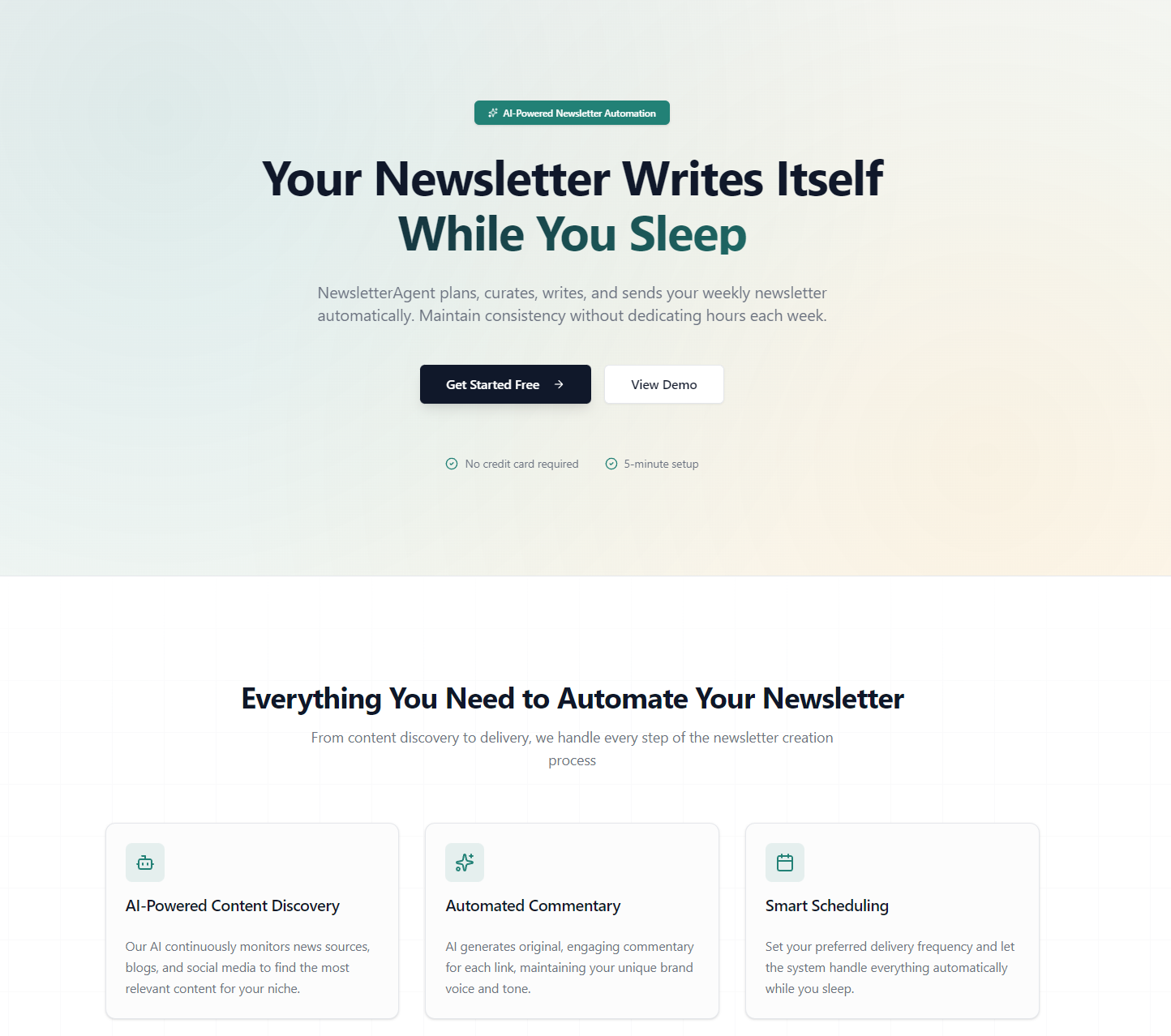
NewsletterAgent automates the entire newsletter lifecycle: it monitors niche-specific sources for fresh content, generates original, on-brand commentary for each link, writes personalized open/close sections, and sends newsletters on a set schedule via top email platforms. Users tweak preferences (tone, frequency, A/B testing rules) once—then let the AI handle the rest.
How we built it
We started with core AI logic (Python + OpenAI API) to filter/rank content and generate text aligned with user brand voices. For the frontend, we built a modern React UI with responsive card layouts and smooth animations. We integrated email platform APIs (ConvertKit, Mailchimp, Beehiiv) for authentication/delivery, and used AWS for cloud hosting + PostgreSQL for user preference storage. The scheduling engine (Node.js) ties it all together, with calendar APIs to sync delivery times.
Challenges we ran into
The biggest hurdle was tuning the AI to match diverse brand voices—generic commentary felt impersonal. We solved it by adding onboarding writing sample uploads and niche-specific tone parameters. We also faced API rate limits with email platforms, so we built a queuing system to ensure reliable delivery without timeouts. Finally, responsive design for the calendar/time picker took extra iteration to work across desktop/mobile.
Accomplishments that we're proud of
We created a tool that cuts newsletter creation time by 90% while keeping content authentic. The A/B testing feature has boosted open rates for early users by 15%, and the seamless email platform integrations mean zero manual export/import work. Most importantly, users tell us they’re re-engaging with their audiences instead of stressing over deadlines.
What we learned
AI works best when it augments (not replaces) human creativity—giving users control over edits and tone was non-negotiable. API integration requires flexibility (each email platform has unique auth flows), and UI polish directly impacts user trust. We also learned that small businesses and solopreneurs value simplicity over "all the features"—so we prioritized a streamlined onboarding flow over complex settings.
What's next for this project
We’re adding advanced analytics to track engagement at the link/section level, and expanding email platform integrations. We’ll also test multi-format content (short videos, infographics) in newsletters, and build a template library for niche-specific layouts. Long-term, we want to add team collaboration tools so content teams can edit and approve AI drafts together.

Log in or sign up for Devpost to join the conversation.