-
-
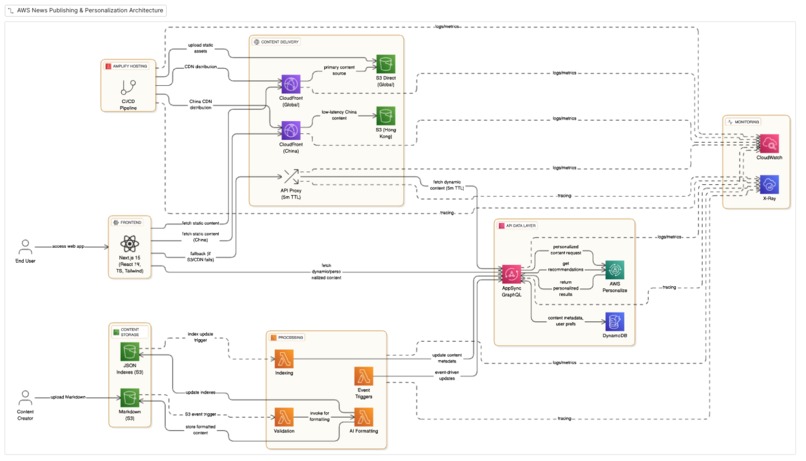
Data flow and AWS deployment architecture
-
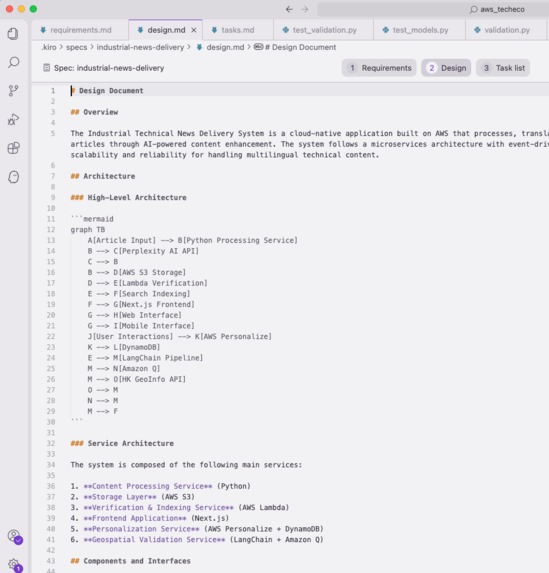
Kiro to build requirement, design, implementations
-
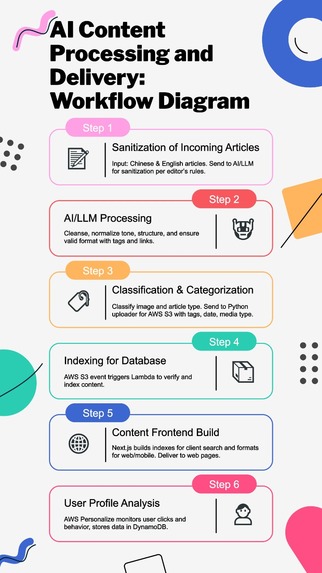
High level program design diagram
-
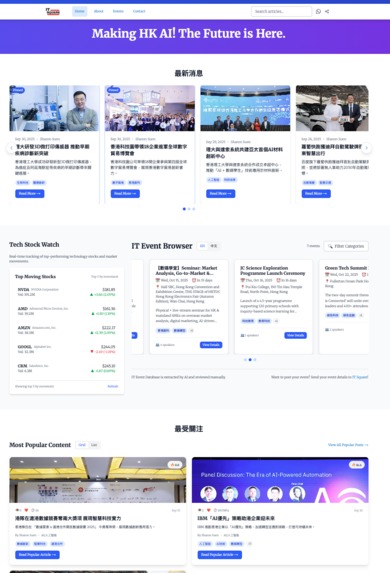
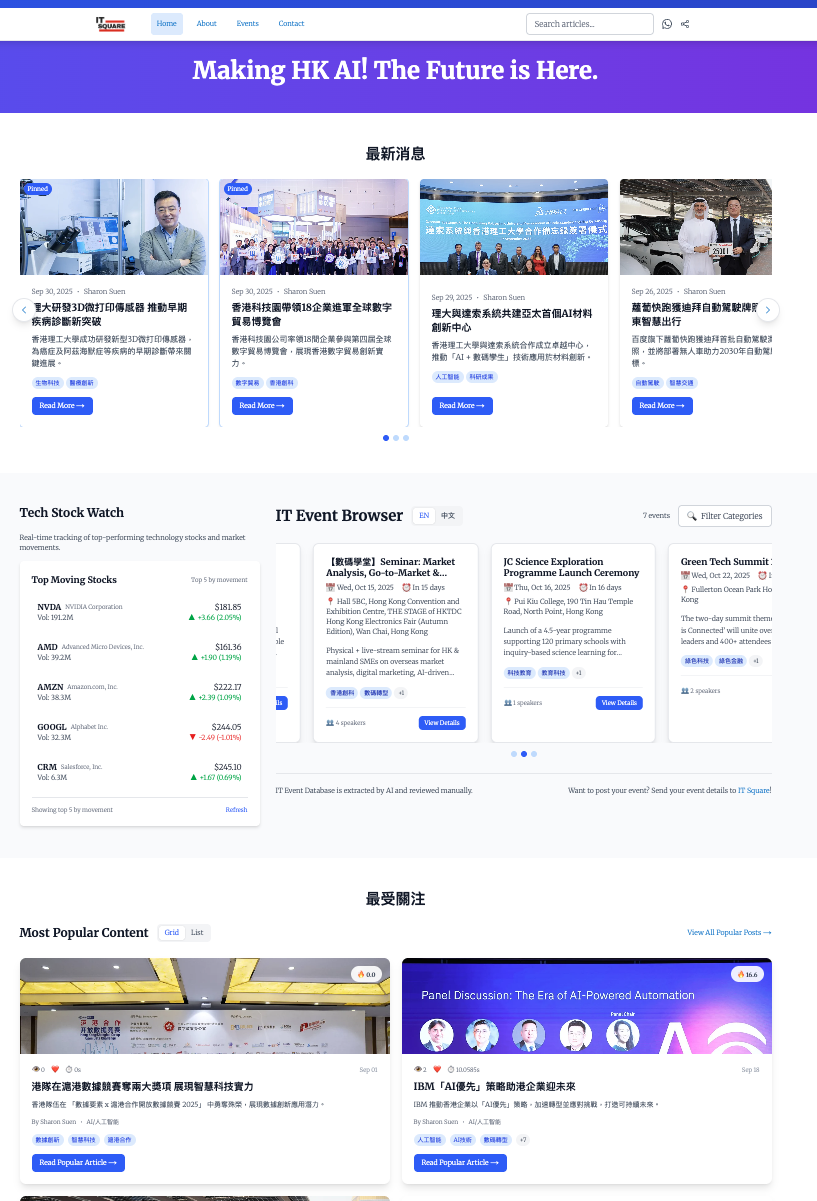
Project prototype website: it-square.hk


Inspiration
Hong Kong’s media industry faces a unique set of challenges:
Fragmented, Multilingual Sources
Editors receive press releases and event invites in Traditional Chinese, Simplified Chinese, and English—often as unstructured emails or images.
Limited Resources vs. High Volume
Small editorial teams struggle to localize, fact-check, classify, and publish quickly in a fast-moving tech ecosystem.
Legacy CMS Overhead
Systems like WordPress create security risks, require heavy maintenance, and slow down content delivery.
Demand for Real-Time Relevance
Readers expect up-to-date, mobile-first content and event listings, but current workflows can’t keep up.
Our Inspiration
We asked ourselves: “What if AI could handle the heavy lifting—so editors can focus on storytelling?” That question inspired us to build an AI-assisted content editing and publishing platform, leveraging AWS infrastructure for speed, security, and scalability.
What it does
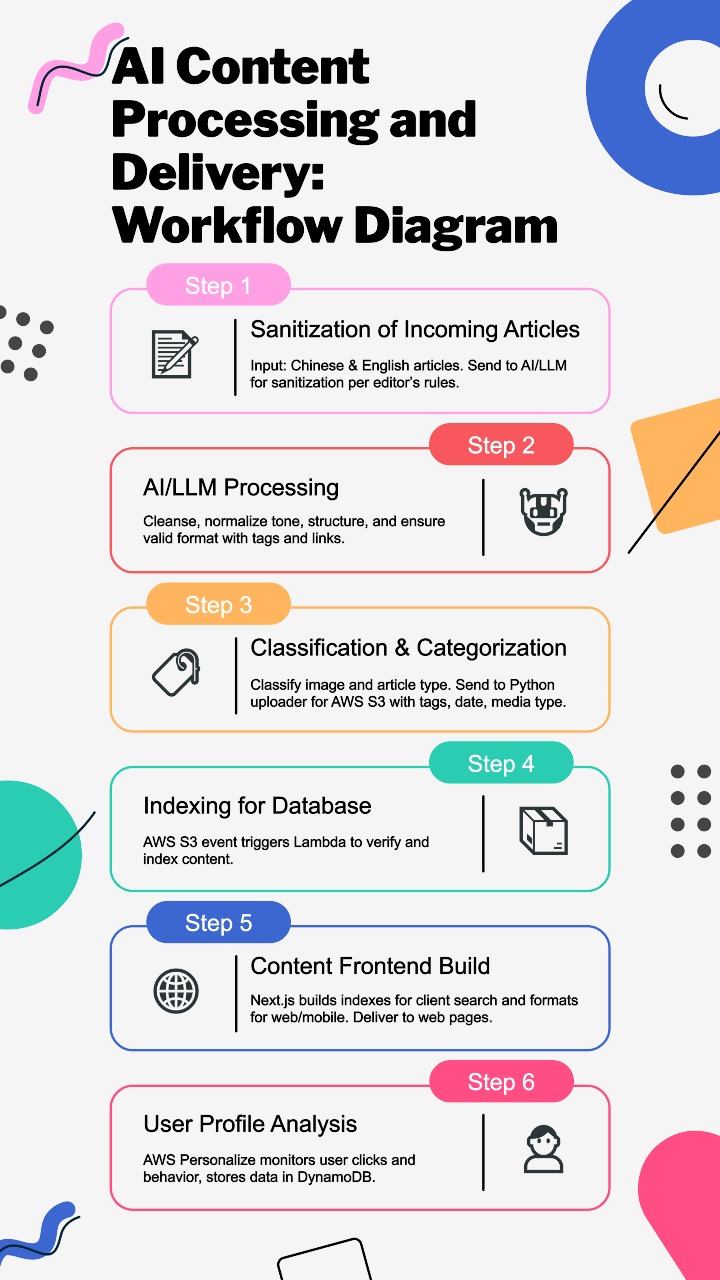
Our platform uses AI and AWS services to transform raw, multilingual content into validated, personalized news—delivered instantly across web and mobile.
How we built it
Utilize AWS Kiro and Q Developer for Python coding. Perplexity LLM for AI interface. AWS infrastructure for serverless components and Next.js integration for content rendering.
- Generated production grade code for AWS serverless components and Next.js integrations, reducing development time and enabling our small team to build enterprise-grade features that would be impossible without AI.
- Built an RPA like, multimodal extraction workflow: parses free form invitation emails and images, normalizes fields, verifies addresses with open data, and outputs canonical JSON for DynamoDB. This system handles Hong Kong's unique addressing system with building names, floors, and units, using spatial data from Hong Kong SAR Government.
- Integrated via MCP to interact with AWS services and Bedrock KB, automating all configurations and service settings, including API and database connections, without the headache of IAM, role, and permission settings. This was critical for our rapid development timeline
Challenges we ran into
Time-Critical Development
With limited time, defining a clear MVP scope is essential to deliver a functional prototype quickly.
Infrastructure Design
Building a flexible and scalable architecture is critical to ensure performance and future growth.
AI/LLM Evaluation
We need to test multiple AI/LLM models to verify that their logic and outputs meet editorial and compliance requirements.
Frontend Framework Selection
Choosing the right framework is key to achieving the desired UI/UX. After evaluation, we selected Next.js for its performance and developer experience.
Accomplishments that we're proud of
Despite a very short timeline, we successfully delivered a working prototype while simultaneously learning and adapting to a completely new development toolset and environment.
Why Our Solution Fits Hong Kong
Automates bilingual normalization and metadata so small teams can cover more HK specific news and events, with localization in style and news angles. Our system understands Hong Kong-specific terminology and adjusts tone for local audiences.
Extracts structured event data from messy media invites common in local PR workflows. The system automatically recognizes Hong Kong venues, districts, and transportation options. Serverless architecture lowers cost and attack surface, ideal for lean local publishers facing Hong Kong's high operational costs and competitive digital media landscape.
Personalization elevates relevant local content and events to readers, recognizing Hong Kong's diverse tech interests from fintech and Web3 to hardware manufacturing and mainland China tech giants.
What we learned
Rapid Prototyping Under Time Constraints
We learned how to define a clear MVP scope and prioritize features to deliver a working prototype within a very short timeline.
Building on AWS Infrastructure
Gained hands-on experience with AWS services such as S3, Lambda, AppSync, DynamoDB, and CloudFront, and learned how to integrate them into a scalable, secure architecture.
Leveraging AI/LLM for Content Processing
Explored multiple AI/LLM models to sanitize and structure multilingual content, and understood the importance of validating logic and compliance with editorial rules.
Adopting AWS Kiro for Development Acceleration
Learned how AWS Kiro streamlines development through spec-driven workflows, automated documentation, and enterprise-grade governance.
Frontend Framework Selection and Optimization
Evaluated different frameworks and finalized Next.js for its performance and developer experience, ensuring a responsive, mobile-first UI.
Collaboration and Adaptability
Improved our ability to adapt to new tools and environments quickly, while maintaining team alignment and delivering results.
What's next for NewsFlow AI
Enhanced AI Accuracy
Fine-tune LLM models for better multilingual handling and editorial compliance. Incorporate domain-specific training for media and event content.
Advanced Personalization
Expand Amazon Personalize integration for deeper behavioral insights and predictive recommendations.
Content Moderation & Compliance
Implement automated fact-checking and compliance validation using additional APIs and AI pipelines.
Scalability & Performance Optimization
Introduce serverless optimizations and caching strategies for high-traffic scenarios. Explore multi-region deployment for better latency and redundancy.
UI/UX Enhancements
Improve the Next.js frontend with richer analytics dashboards and editor-friendly tools.
Integration with External Platforms
Enable syndication to social media and enterprise communication tools (e.g., Slack, Teams).
Built With
- amazon-web-services
- amplify
- bedrockdb
- dynamodb
- kiro
- mcp
- normalizes
- perplexity
- personalize
- python
- q-developer
- s3

Log in or sign up for Devpost to join the conversation.