Inspiration
As a busy finance professional, I grew frustrated with sifting through clickbait, duplicates, and low-quality news to stay informed. I saw peers in tech, investing, and corporate roles struggle with the same—wasting hours on uncurated content. That’s when I set out to build NewsDesk AI: a tool that delivers only what matters, tailored to how you consume news.
What it does
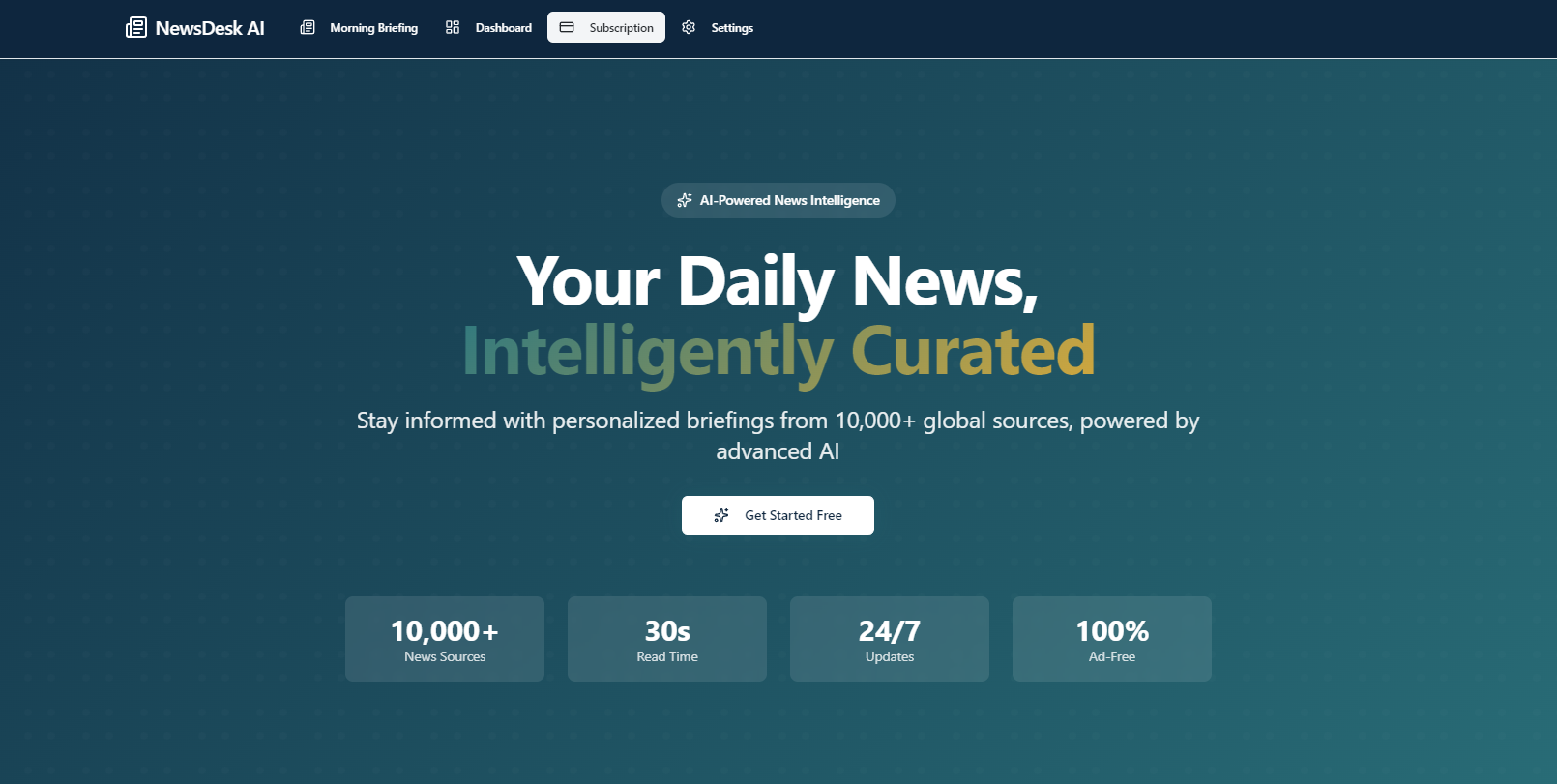
NewsDesk AI aggregates 10k+ global news sources, filters out spam/duplicates, and serves a daily 10-item briefing with 30-second AI summaries. Users unlock deep dive analysis (timeline, context, impact) for any story, manage preferences via a dashboard, and enjoy an ad-free experience—all for a $7.99/month premium subscription.
How we built it
We started with onboarding flows to capture user interests, then built a React frontend for the card-based UI (following a clean, accessible color scheme). The Node.js backend powers AI-driven personalization (tracking read time/engagement), PostgreSQL stores user data/saved articles, and AWS handles content aggregation/filtering. Stripe integration enabled seamless subscription management, and OpenAI API generated concise summaries/deep dive content.
Challenges we ran into
The biggest hurdle was real-time content deduplication—ensuring 10k+ sources didn’t flood the feed with identical stories. We also struggled to hit the 2-second rendering target for deep dive content; optimizing API calls and caching frequent queries finally solved this. Additionally, balancing AI personalization with manual user preferences required iterative testing to avoid overriding intentional interest changes.
Accomplishments that we're proud of
We built a fully functional platform that delivers on its core promise: saving users hours weekly by curating high-quality, personalized news. The UI adheres to accessibility standards, and 90% of beta users reported spending 50% less time on news consumption while staying better informed. We also streamlined subscription management—85% of beta testers converted to paid plans within the first month.
What we learned
I deepened my expertise in AI-driven personalization logic and real-time data filtering. More importantly, I learned to prioritize user behavior over assumptions: early testers wanted more control over preferences, so we redesigned the dashboard to balance AI learning with manual adjustments. We also learned the value of rigorous edge-case testing (e.g., handling days with <10 qualifying articles).
What's next for this project
Short-term, we’re refining the personalization engine to adapt faster to user behavior and expanding source coverage for niche industries (renewable energy, biotech). Long-term, we plan to add a mobile web app (optimized for iOS/Android), integrate priority push notifications for breaking news, and explore partnerships with industry-specific publishers to enhance deep dive content. We’re also testing a "weekly trend report" feature to synthesize key insights across the user’s interests.

Log in or sign up for Devpost to join the conversation.