-
-
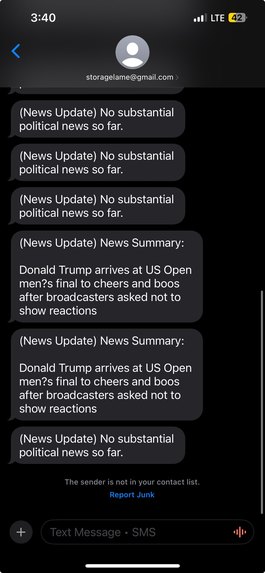
Text messages while texting
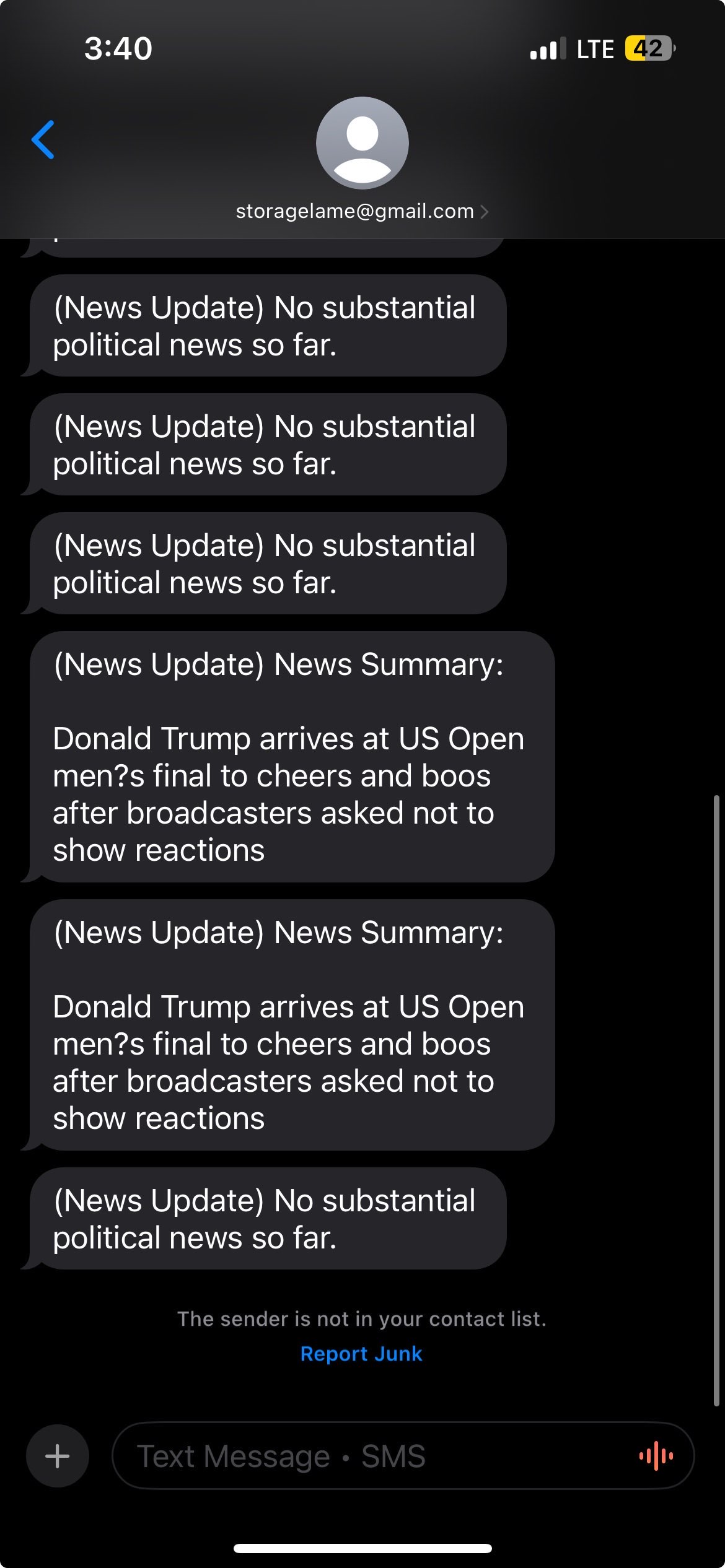
Inspiration
We were inspired by a simple but troubling truth: most of our generation isn’t reading the news. In a world shaped by complex geopolitical events and political decisions, being uninformed isn't just risky—it’s dangerous. Voting is one of the most powerful tools we have as citizens, but without understanding the issues, that power is lost. So we asked ourselves: how do we hack the system that’s failing to reach young people? The answer was right in front of us: our phones. More specifically, our messages. By delivering bite-sized, relevant news directly to the place teens check most—their texts—we’re reimagining how information is spread, one ping at a time.
What it does
Users choose their preferred news category, and our backend automatically fetches and sends curated daily headlines via SMS, delivering the news directly to where they’re most likely to see it.
How we built it
We built our project in Python, leveraging several key libraries including json, requests, smtplib, and sys. To gather news, we integrated the GNews API, which returns a JSON response of the latest headlines based on a chosen category. We parsed this response and stored the headlines in a list. Once the news was compiled, we used Python’s smtplib to connect to a Gmail account and send the headlines as an SMS to the user’s phone via their carrier’s email-to-text gateway.
Challenges we ran into
- Formatting messages so they display cleanly across different carriers and devices.
- Making sure the service is accessible regardless of cellular provider or plan.
- Dealing with email-to-SMS rate limits and preventing messages from being flagged as spam.
Accomplishments that we're proud of
- Successfully creating a working prototype that automatically fetches, formats, and delivers real news headlines to users’ phones.
- Building a tool that has real potential to increase civic engagement among young people.
- Learning how to integrate multiple APIs and libraries into a seamless pipeline.
- Designing an MVP that is both lightweight and impactful, while still leaving room for expansion.
What we learned
- How to interact with third-party APIs, parse JSON responses, and use the data in meaningful ways.
- How to use Python’s
smtplibto send messages through carrier gateways. - The importance of user-first design—ensuring that content is short, clear, and non-intrusive.
- How small technical details, like message length limits and formatting, can make or break the user experience.
What's next for News2Know
- Expanding beyond SMS to include delivery on platforms like WhatsApp, Discord, or Telegram, where many teens already spend their time.
- Adding customization features, such as allowing users to set delivery times or choose multiple categories.
- Incorporating AI summarization so that headlines are accompanied by one-sentence context blurbs.
- Exploring partnerships with educational organizations to distribute the service more widely in schools.
- Building analytics to better understand what categories resonate most with users and how often they engage with the service.

Log in or sign up for Devpost to join the conversation.