-
-
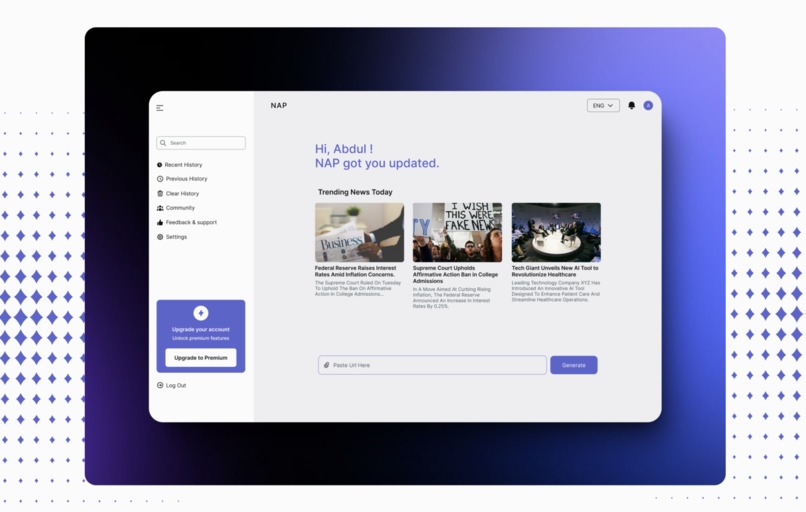
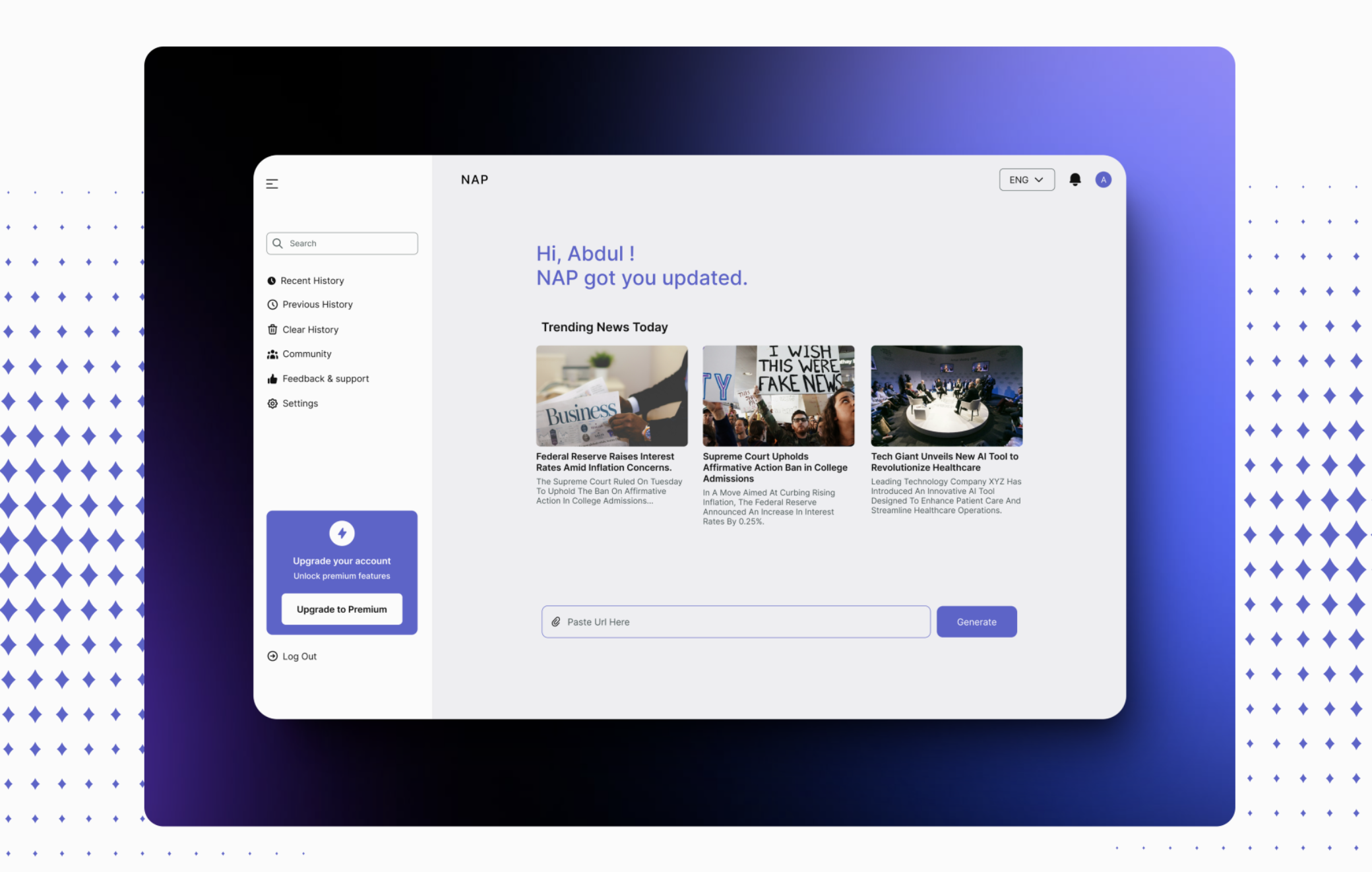
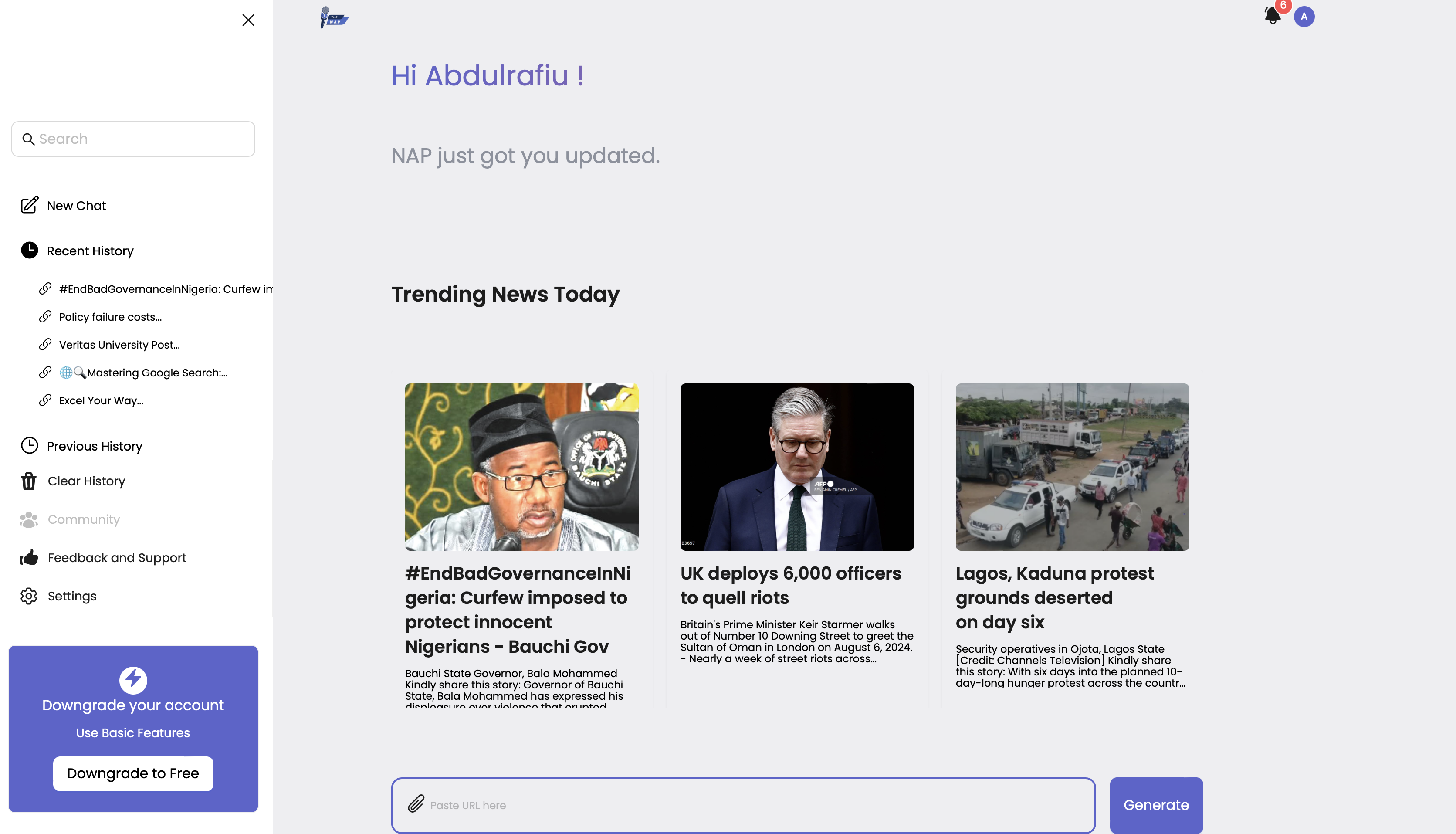
Dashboard pAge
-
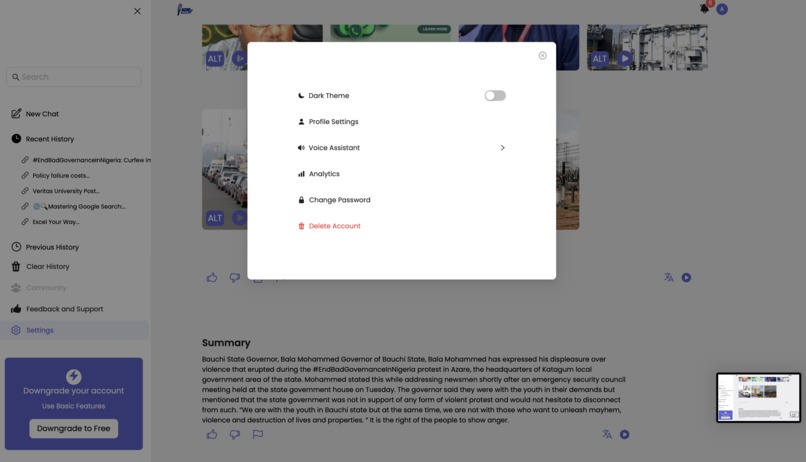
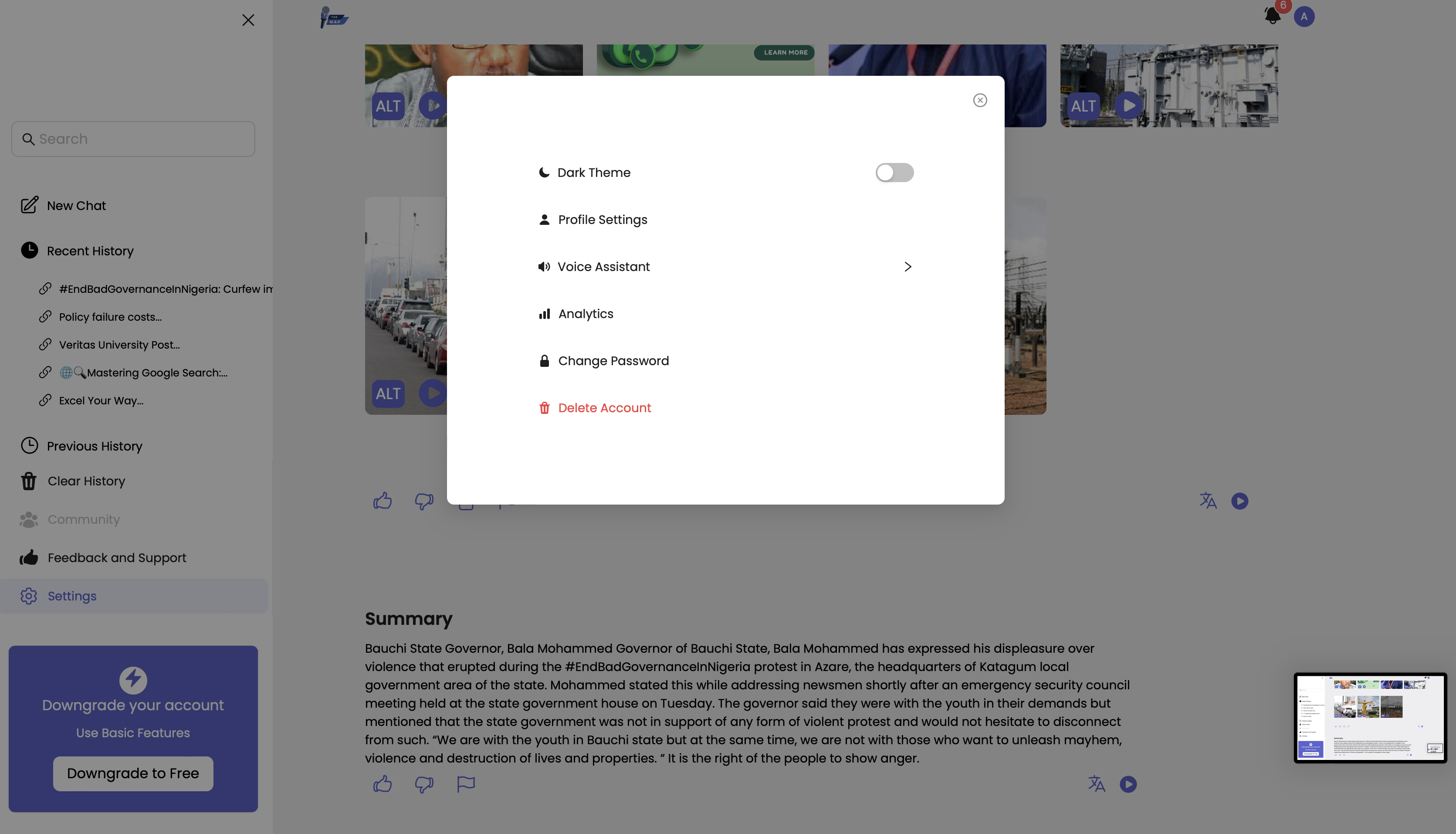
Settings Page
-
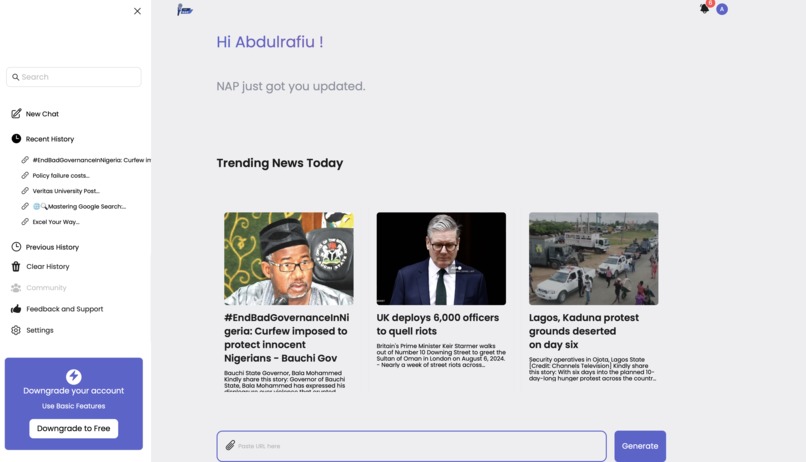
Dashboard Page
-
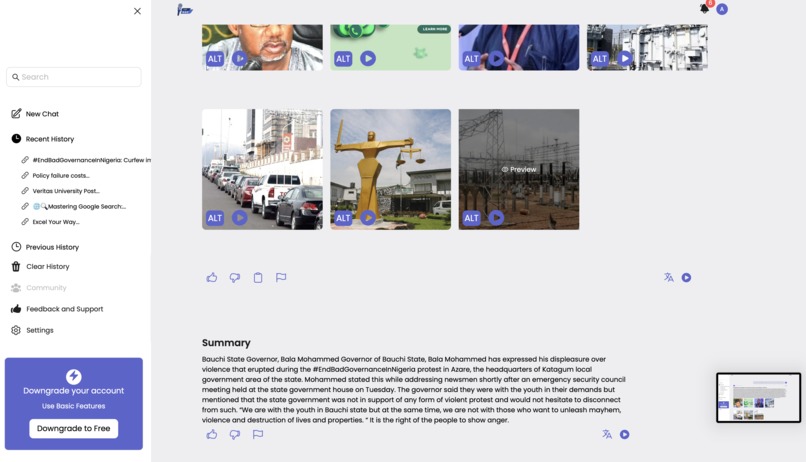
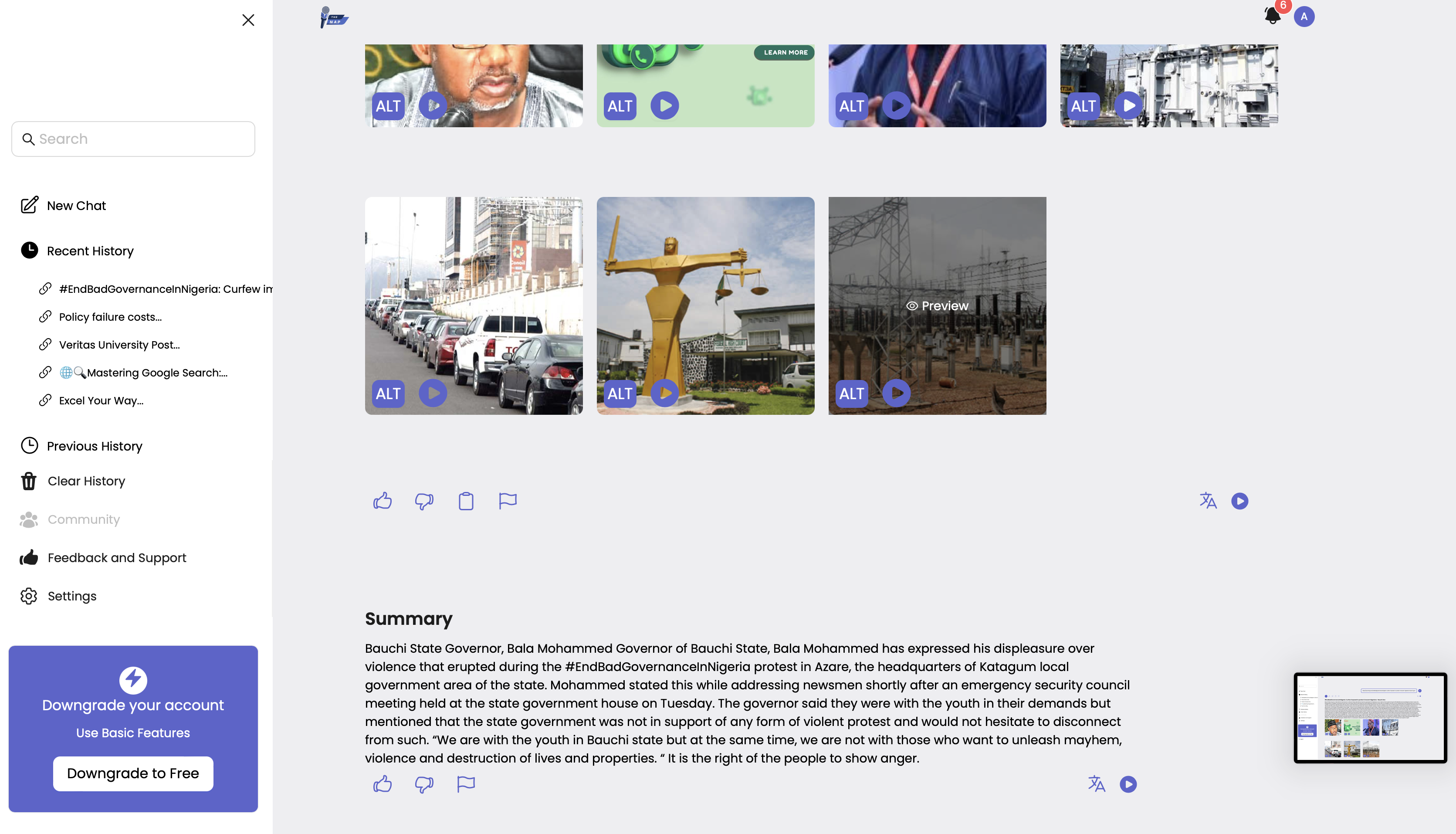
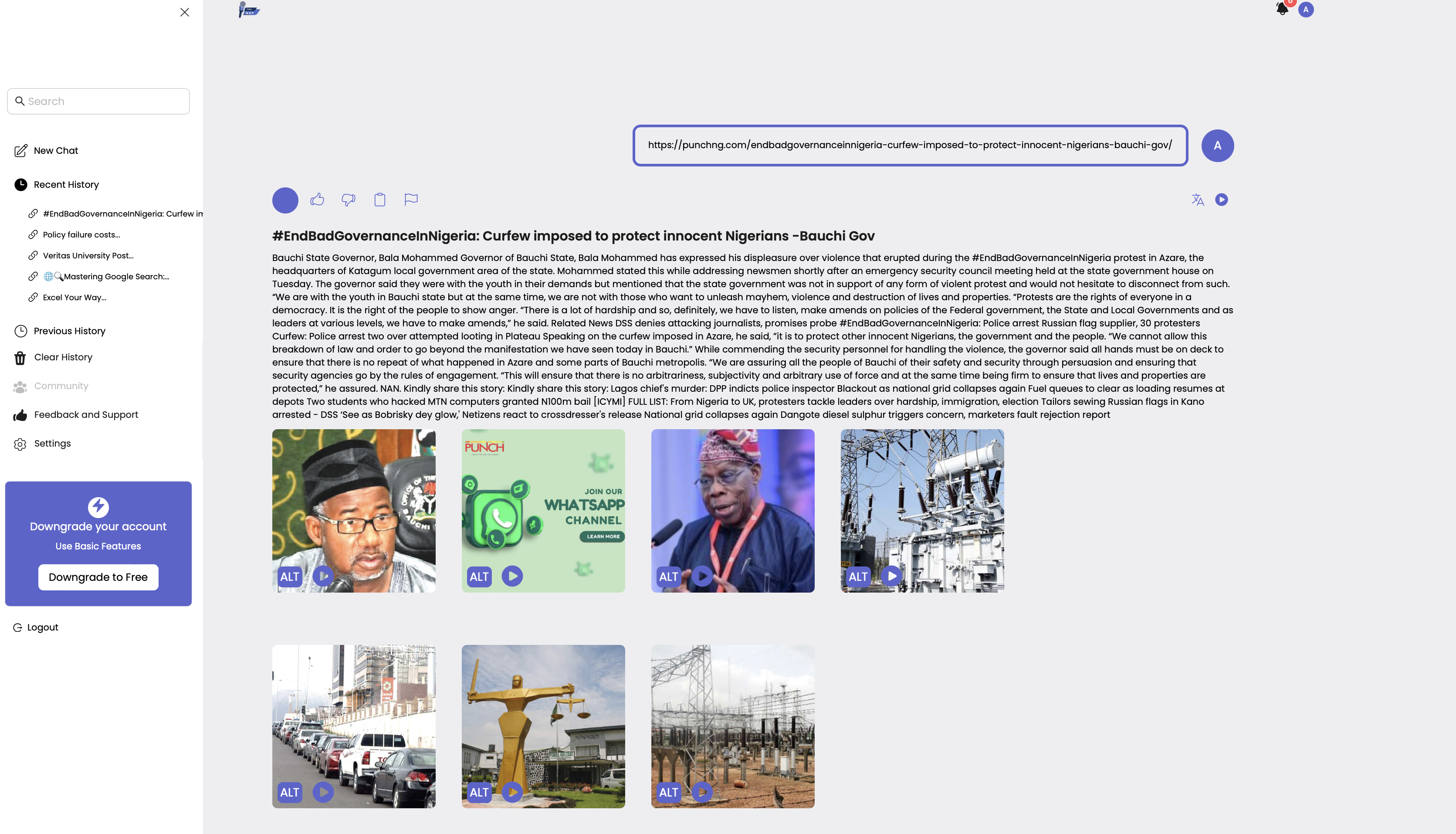
Article Accessibility Page
-
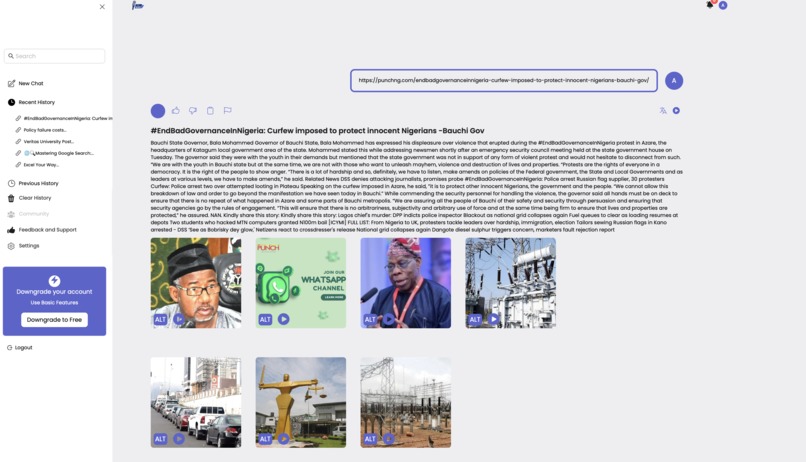
Article Accessibility Page
About the Project
The News Accessibility Platform (NAP) is a groundbreaking initiative designed to make news accessible to people with hearing and visual impairments. Inspired by the need for inclusivity in news consumption, especially in Nigeria, NAP aims to bridge the information gap faced by the deaf and blind communities.
Inspiration
The inspiration for NAP stemmed from the evident lack of accessible news content for people with disabilities in Nigeria. A team member's previous work with the Facts Inclusive project, which focused on making fact-checks accessible, highlighted the broader issue of news exclusion among persons with disabilities. Engagements with the deaf and blind communities further revealed the urgent need for a comprehensive solution. Additionally, global insights from sources like Neiman Lab Predictions for Journalism 2022 and the AccessAbility Innovation Challenge motivated us to create NAP.
What We Learned
Throughout the development of NAP, we gained valuable insights into the unique challenges faced by people with disabilities in accessing news. We learned about the importance of providing multiple accessibility features in one platform and the need for localized content to cater to Nigeria's diverse linguistic landscape. Our interactions with the target communities underscored the necessity for tailored solutions that address specific needs, such as visual descriptions and text-to-Braille conversions.
Building the Project
Building NAP involved several key steps:
Research and Planning: We conducted extensive research on accessibility features and the specific needs of our target audience. This phase included studying existing tools and identifying gaps that NAP could fill.
Technology Integration: Leveraging AI technologies, we incorporated features like text-to-speech, visual descriptions, local language options, and sentiment analysis. We used machine learning for text-to-audio conversion and Braille translation, and implemented sound and speech detection for detailed transcripts and closed captioning.
Collaboration: We partnered with newsrooms across Nigeria to promote NAP and ensure the tool's adoption. Collaboration with key disability groups, such as the National Association of Deaf and Blind Persons, was crucial for understanding user needs and raising awareness.
Development and Testing: The platform was built using a combination of HTML, CSS, and JavaScript. We conducted rigorous testing to ensure all features worked seamlessly and made necessary adjustments based on feedback from users and accessibility experts.
Challenges Faced
Developing NAP was not without its challenges:
Technical Hurdles: Integrating advanced AI features like facial detection and object recognition required significant technical expertise and resources.
User Adoption: Encouraging newsrooms to adopt NAP and convincing users to switch from traditional methods to our platform involved extensive outreach and education efforts.
Resource Constraints: Limited funding and resources posed a challenge in scaling the project and incorporating all desired features. Despite these challenges, our commitment to making news accessible for everyone kept us motivated. The positive feedback from the communities we aimed to serve reinforced our belief in the importance of NAP.
Conclusion
The News Accessibility Platform is a testament to the power of technology in fostering inclusivity. By addressing the needs of Nigeria’s deaf and blind communities, NAP not only enhances news consumption but also promotes a more informed and engaged society. Our journey in building this platform has been enlightening, and we are excited about the positive impact it will continue to have on journalism and accessibility.

Log in or sign up for Devpost to join the conversation.