-
-
Logo
-
Our Process
Inspiration
We knew that the media tends to broadcast only the flashiest and fanciest advancements in climate tech. What we also knew, was that often the most impact can be made by pursuing the direction people overlook. When we learned about the parallel effects of climate change induced extreme weather on Chad's soil health and the country's open defacation problem, the pieces clicked. Wind erosion is a huge problem in sub-saharan africa and one of the countries we looked at was chad. We wanted to start with Chad on this because 80% of chad’s labour force was from the agriculture sector and they’re making very little money because of this problem. Chad has huge issues with sanitation and 69% of chad’s population defecates openly. Our solution is to create artificial soil from that human waste. In a way, it helps solves two problems with one solution.
What if we could create a circular system between the food we grow, eat, and excrete?
How it works
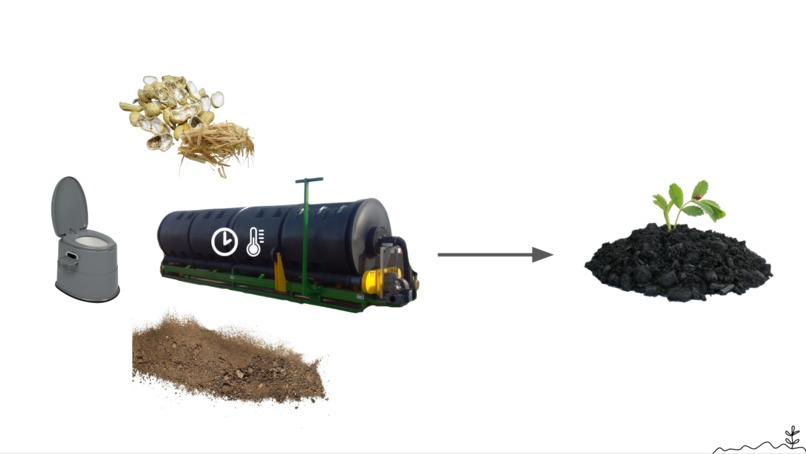
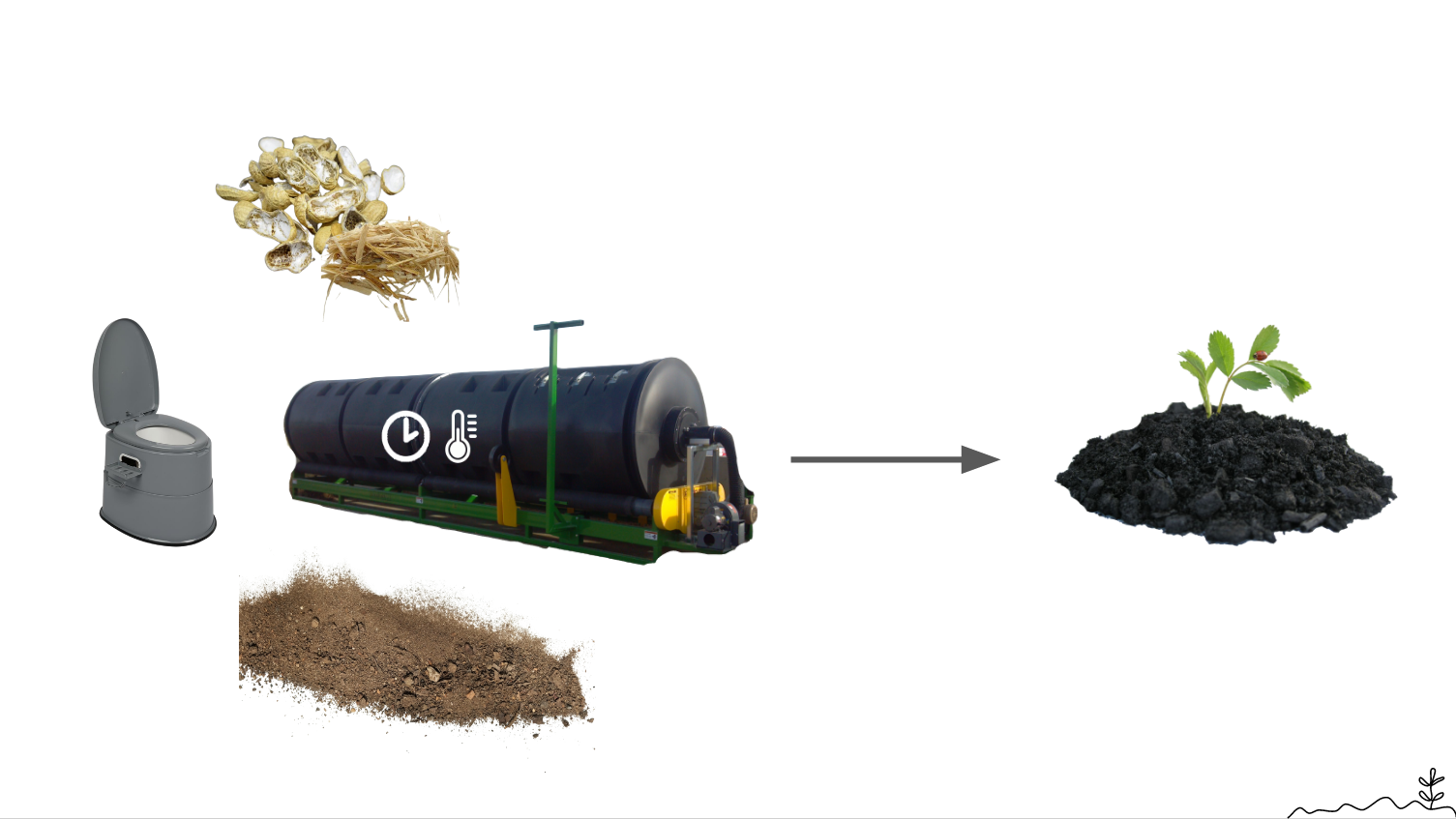
NewField provides and cleans portable toilets for citizens in exchange for their waste, which is sealed in buckets and collected by workers every month. The workers then bring the accumulated human waste to a central composter where its temperature and moisture content are closely monitored. For increased volume and nutrients and to mask the smell, peanut hulls and sugarcane waste are added to the mix; both plentiful as Chad's second and fifth largest crops. After 4 months, the contents of the bins are moved into windrows and mixed with subsoil for minerals where it will remain for another 4 months. This ensures all the organic matter breaks down and the harmful pathogens are killed. The newly created topsoil will then be distributed to citizens on the trips to collect more waste for the to use on their farms. Soil scientists report that for every 1 percent of organic matter content, the soil can hold 16,500 gallons of plant-available water per acre of soil down to one foot deep. In other words, the more organic matter soil has, the more water it retains contributing to better yield and decreasing the need for Chad's farmers to use dwindling water. Soil made from human waste has been extensively tested for safety and efficacy. It's also already used in countries like Ghana, Japan, Haiti, and even the US.
Risks
When dealing with human waste, the most important thing to consider is safety. The workers collecting the waste will be given the proper PPE and all soil will be tested for heavy metal content. Human waste sometimes contains pathogens such as E. coli, but as long as WHO guidelines are followed and the soil is kept at temperatures above 50 degrees C (122 degrees F) for at least one week, the soil will be safe.
Vision
NewField not only improves the health of citizens by removing hazardous human waste from the environment, but it ensures that Chad's food system is resilient in the face of climate change. Facing increasing climatic stress, Chad needs a radical shift in the way soil is treated to remain agriculturally viable for years to come. NewField can hit the restart button to give Chad a second chance at farming.
Accomplishments we're proud of
We knew from the beginning that we wanted to find a way to adapt to erosion. What we didn't realize was just how complicated it would be to find a solution that made economic sense, especially in a country where over half of the population lives in poverty. We're proud of our ability to extensively research the problems affecting Chad and connect the dots between two seemingly unrelated problems: soil erosion and open defecation.
What we learned
We had to pivot a lot during this hackathon and realized that your first idea is likely not going to be your last. As we learned more about our topic, we came to realize just how naive we were to start and were able to craft a much stronger solution by the end. We were also able to get in touch with one of the few soil scientists in the world who has created artificial soil and commercialized it. She was very helpful in directing us down the right path and we were reminded of the importance of getting external validation from mentors and seasoned professionals in the industry.
What's next for NewField
We hope to reach out to the Resilient Food Systems program to inquire about funding as well as connect with organizations with similar missions such as SOIL Haiti.
Our team
Klara and Varsha met through a virtual extra-curricular, the Knowledge Society, two years ago. We immediately bonded over a shared passion for sustainability and solving some of the world's biggest problems. We've worked on many research sprints and projects together in the past and love how we motivate and encourage each other to put our best work forward. We're particularly drawn to solving problems regarding food production in lower socioeconomic countries because we have family members who are affected by such issues. Although we live in different countries (US + Canada), we've grown to be very close friends.
Built With
- case-studies
- industry-validation
- passion

Log in or sign up for Devpost to join the conversation.