-
-
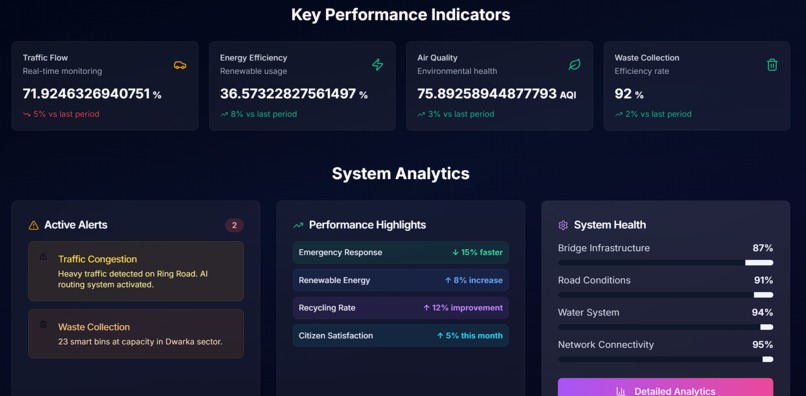
Dashboard
-
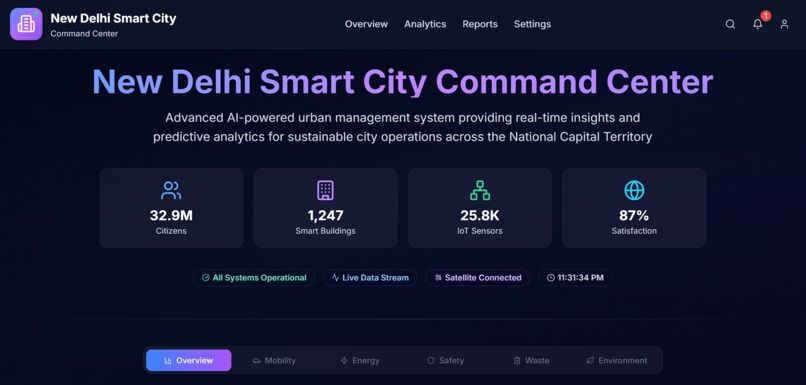
Command Center
-

Objectives
Inspiration
We were inspired by the urgent need for integrated urban governance solutions in fast-growing cities like Delhi. The goal was to leverage AI and IoT to build a centralized platform that empowers administrators with real-time insights and predictive analytics for better decision-making.
What it does
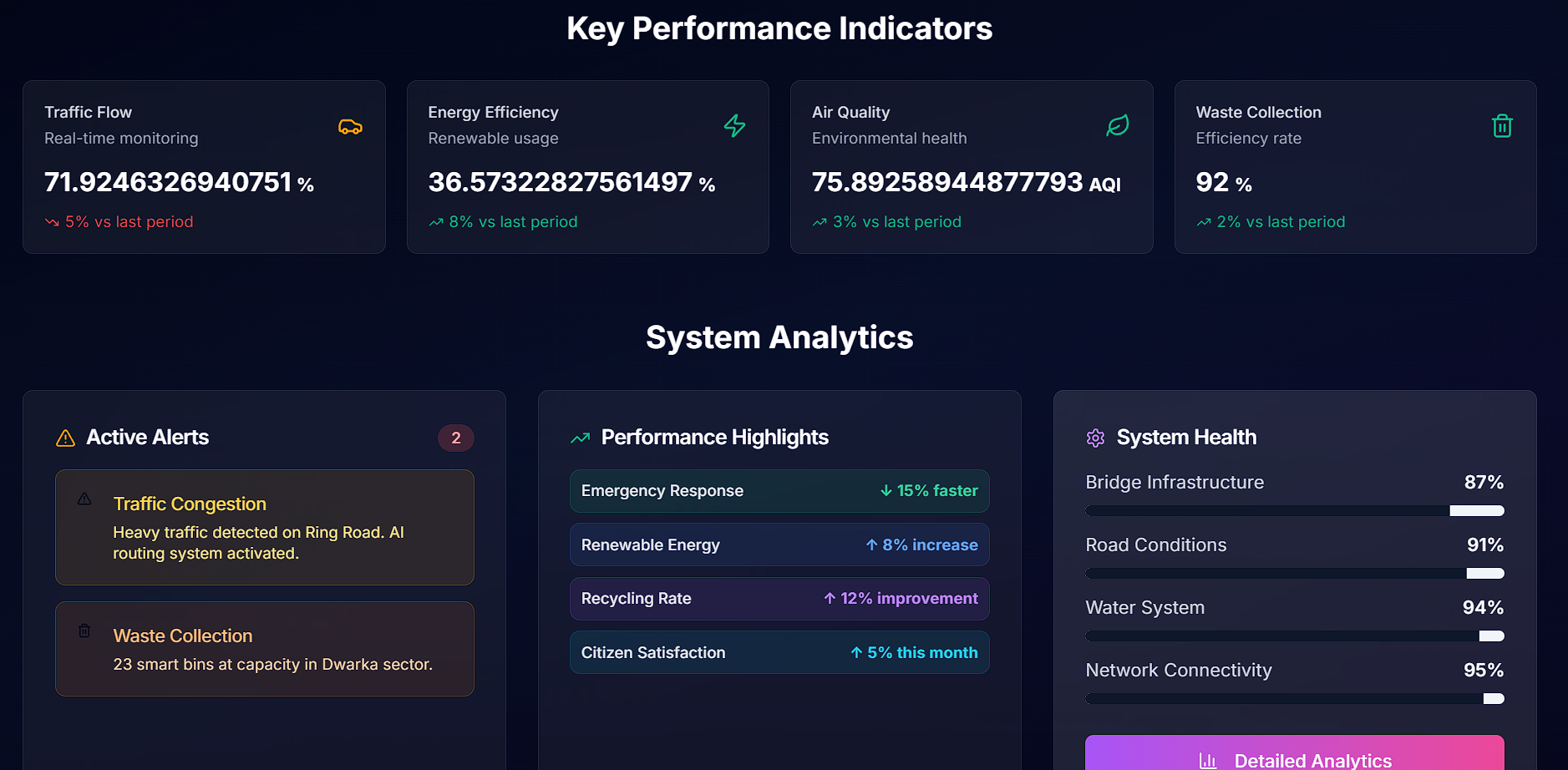
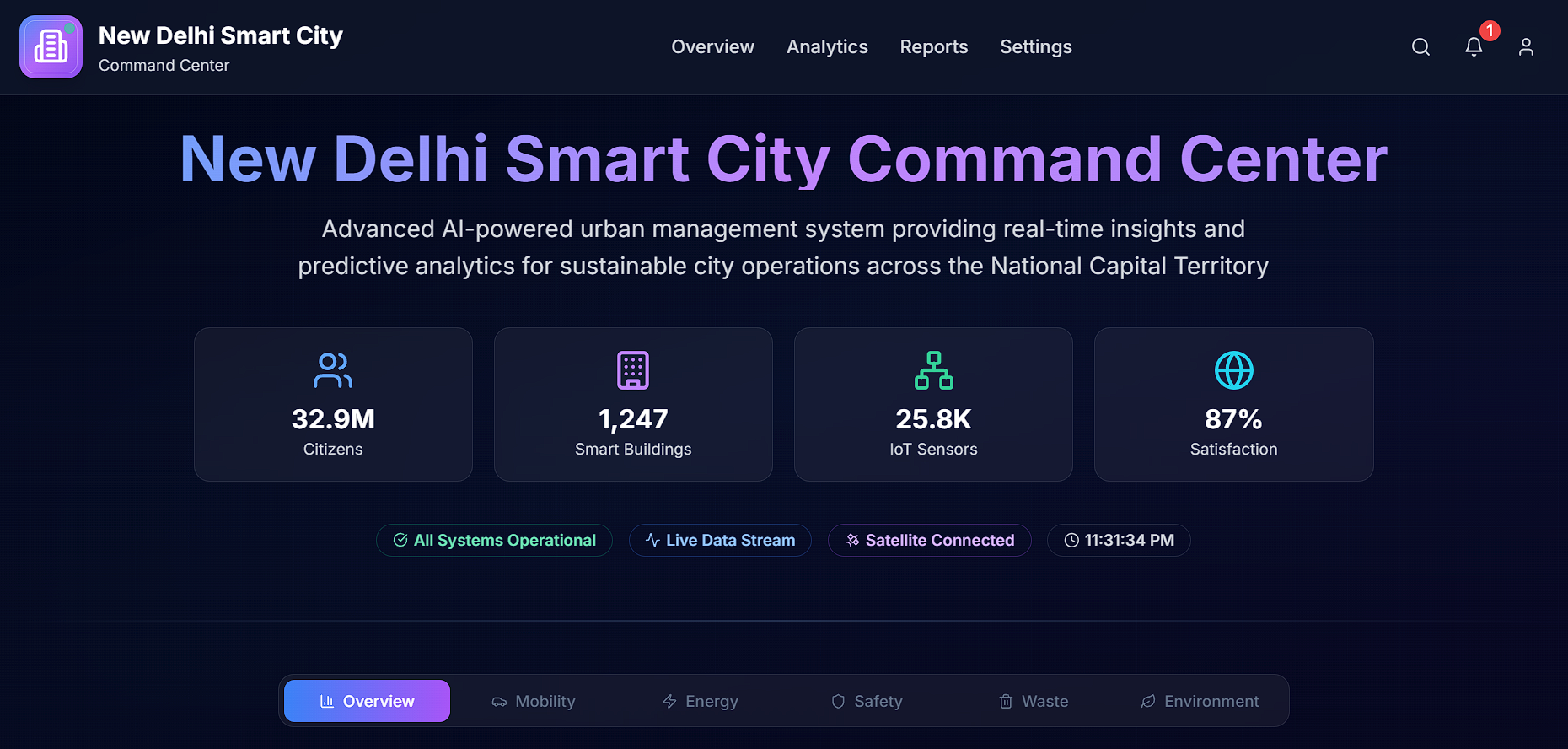
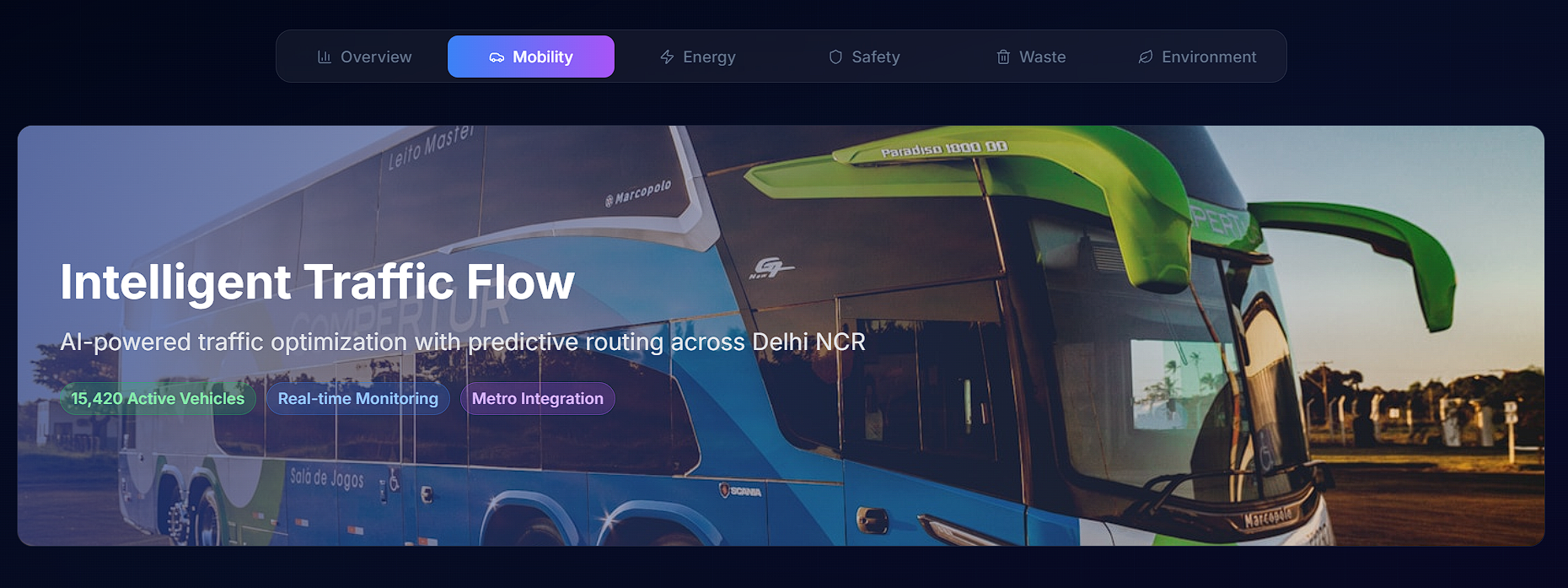
The Delhi Smart City Command Center is a web-based dashboard that unifies key urban operations—traffic, energy, safety, and waste—into a single, AI-powered platform. It enables real-time monitoring, 3D data visualizations, and actionable intelligence for sustainable urban management.
How we built it
We used Next.js with TypeScript and React to build a modular, performant frontend. The UI was designed with Tailwind CSS, Radix UI, and Lucide Icons, while React Three Fiber powered our 3D visualizations. We implemented dynamic imports for performance optimization and integrated predictive analytics to support smarter city operations.
Challenges we ran into
Integrating 3D visualizations without performance drops, Designing a responsive, accessible UI while maintaining high functionality, Coordinating modular components to work seamlessly in a unified dashboard and Simulating real-time data in the absence of a production IoT backend
Accomplishments that we're proud of
Successfully implemented an interactive 3D urban dashboard, Built a modular architecture that allows easy scaling and customization, Delivered a sleek, accessible, and responsive user interface and Simulated intelligent, real-time analytics workflows
What we learned
How to optimize performance for heavy visualization components in React, Advanced usage of React Three Fiber and dynamic imports and Best practices in modular design and accessibility in large-scale dashboards
What's next for New Delhi - Smart City
Integration with real-world IoT data feeds and government APIs, Expand analytics capabilities with ML-based forecasting, Enable mobile-first views for on-the-go city officials and Add citizen feedback loops and multilingual support for better public engagement.
Built With
- ai
- css3
- fibre
- javascript
- nextjs
- radix
- react
- react-three
- tailwind
- typescript


Log in or sign up for Devpost to join the conversation.