-
-
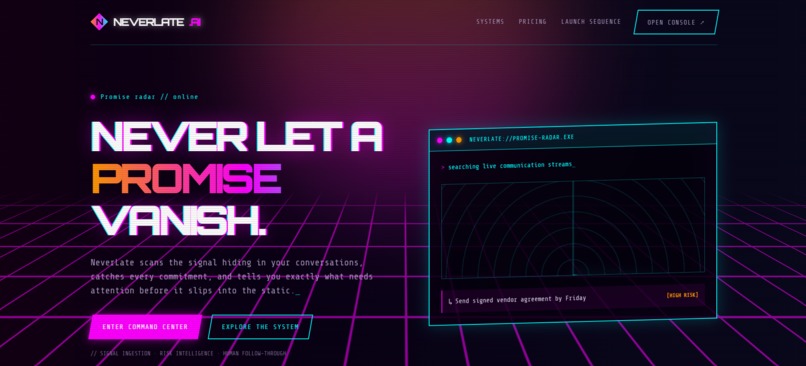
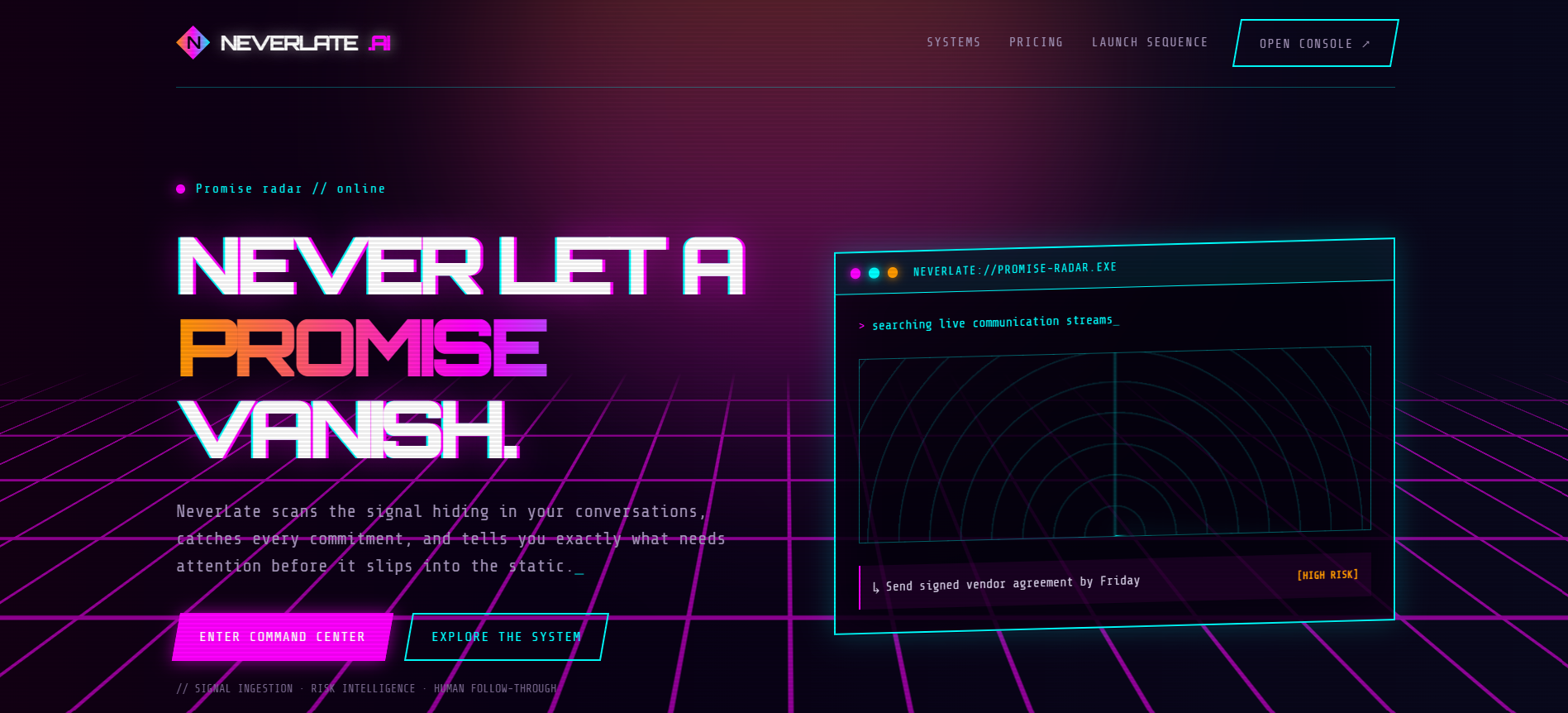
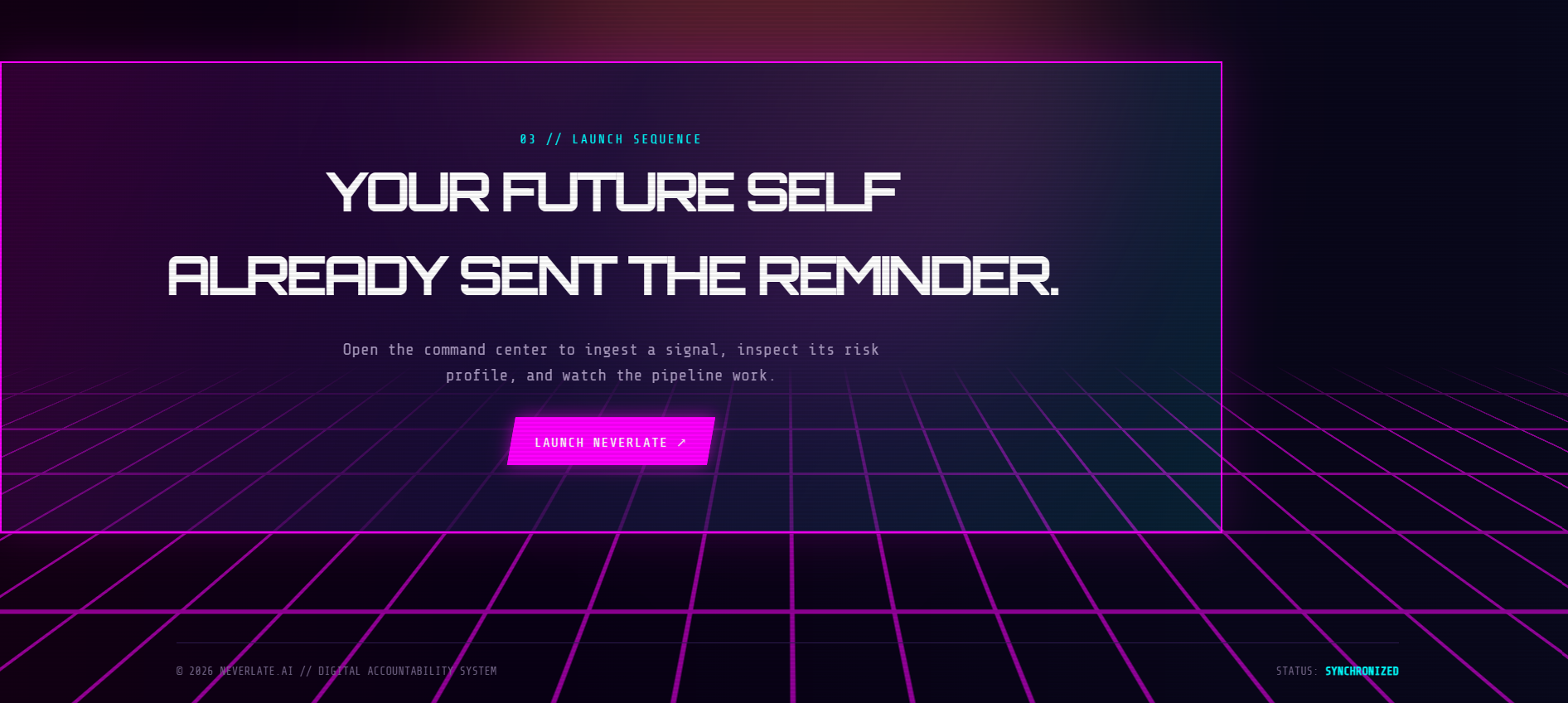
Landing page
-
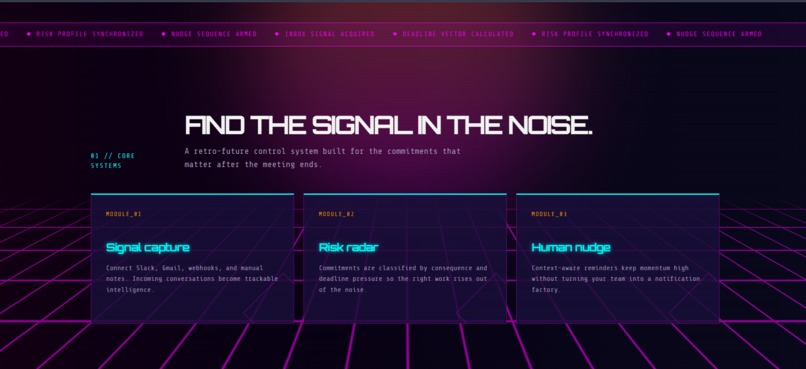
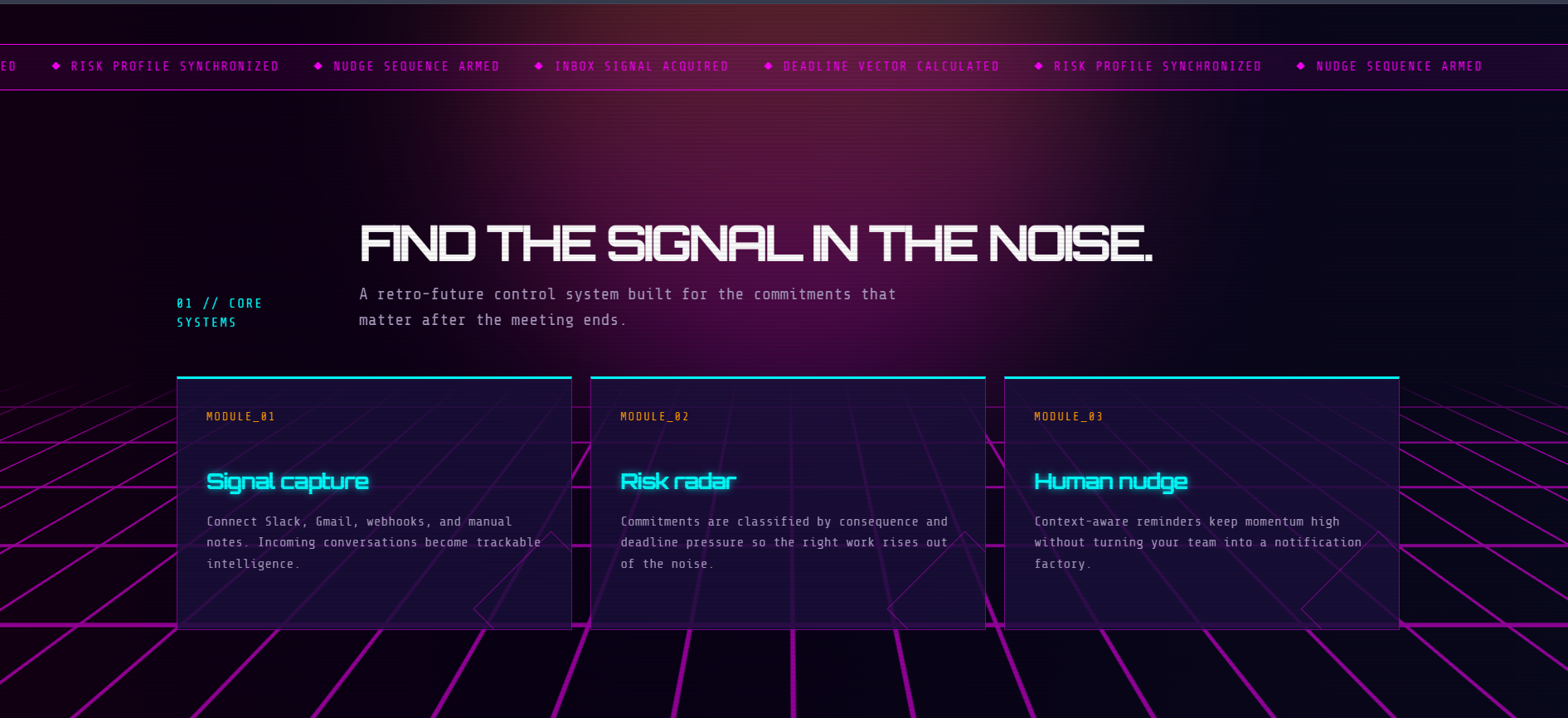
descript
-
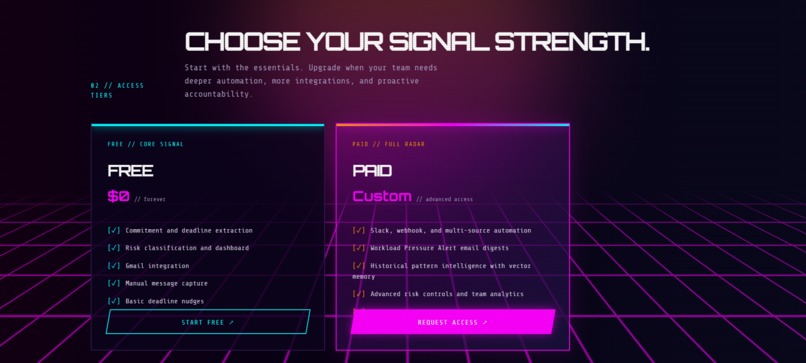
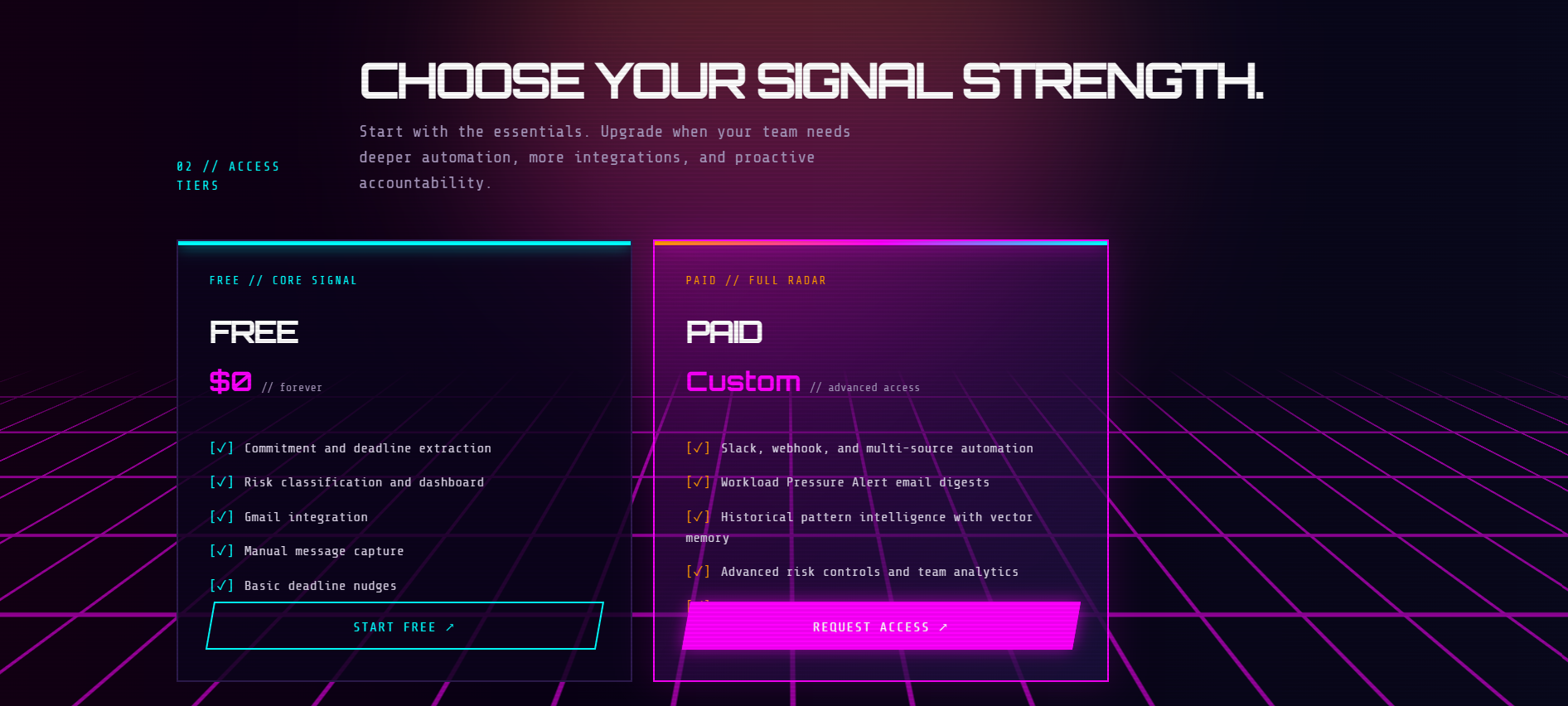
plans
-
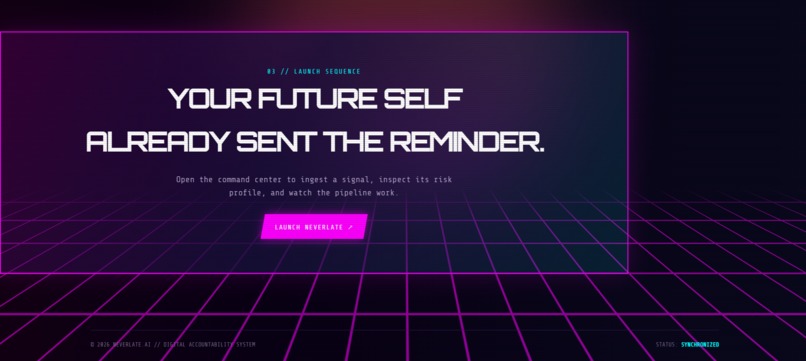
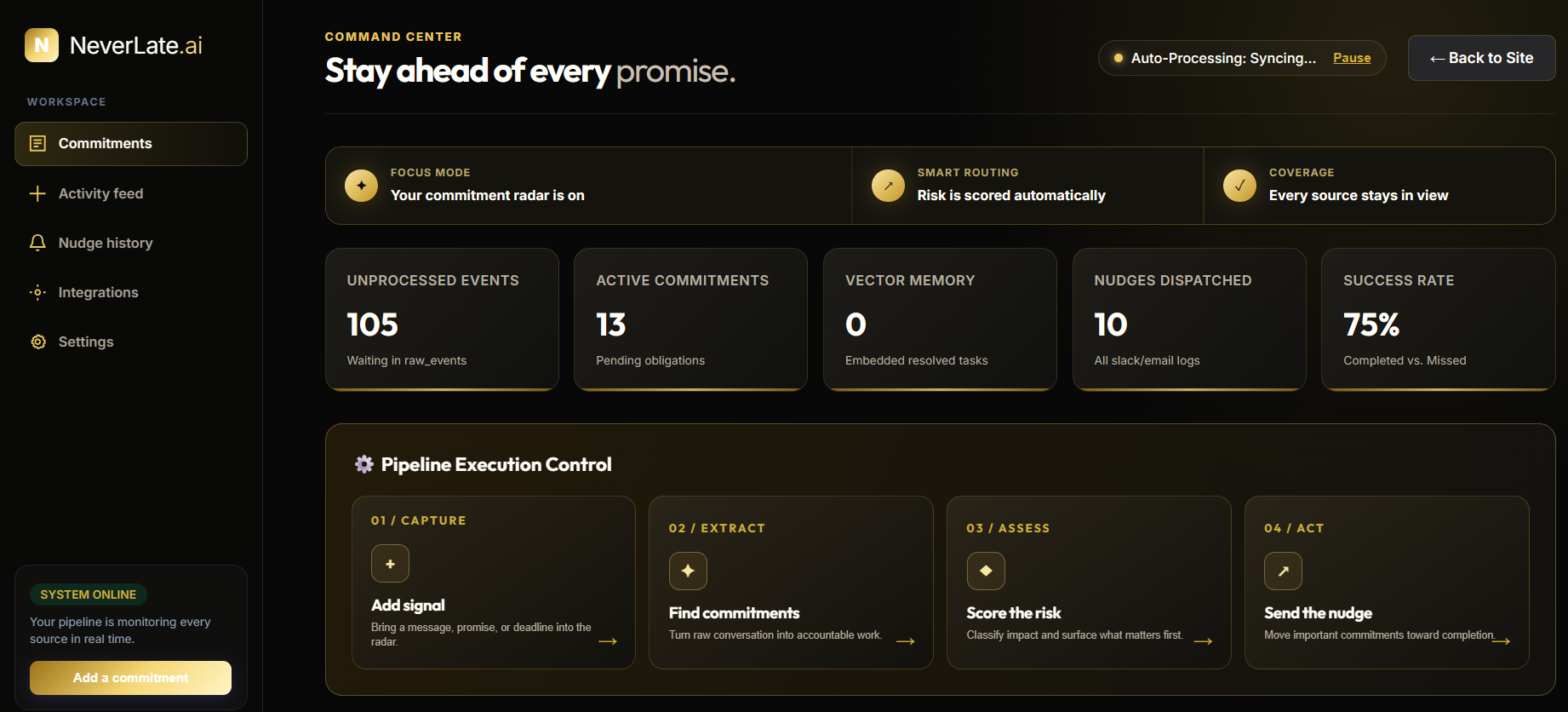
console page
-
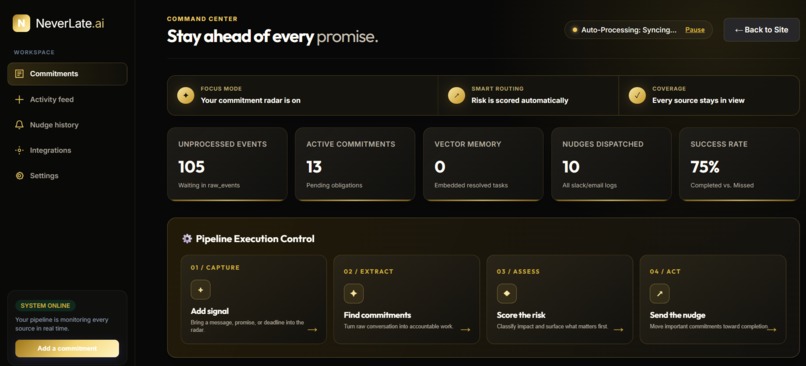
commitment logs page
-
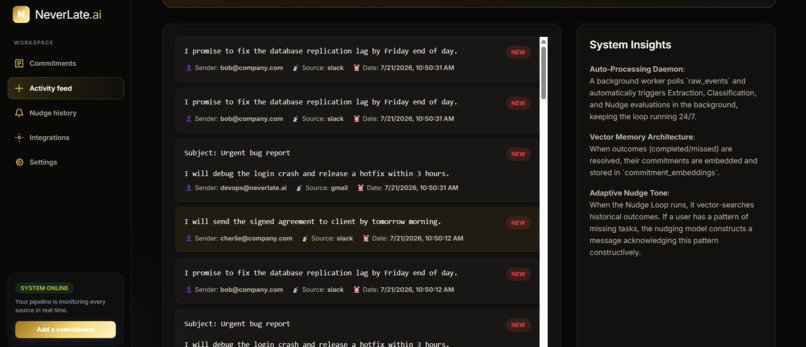
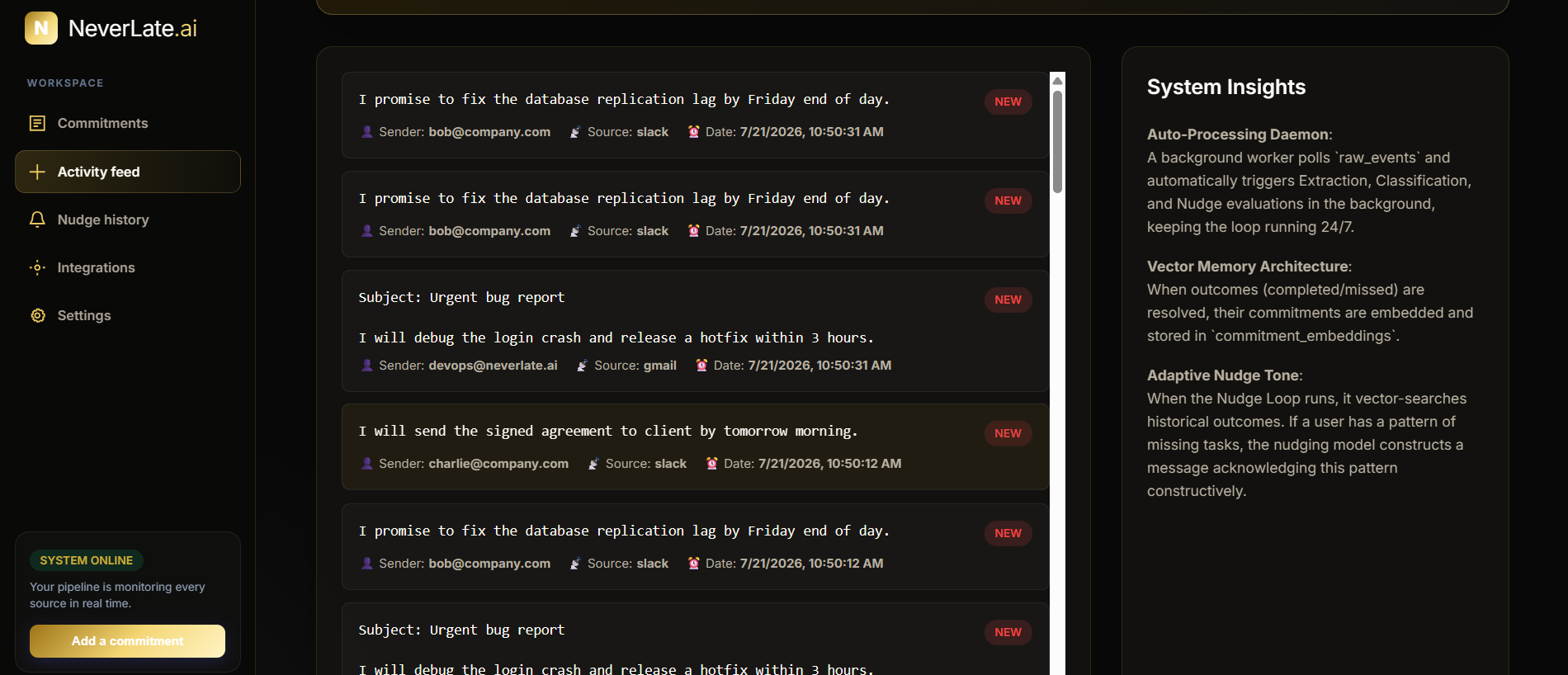
activity feed page
-
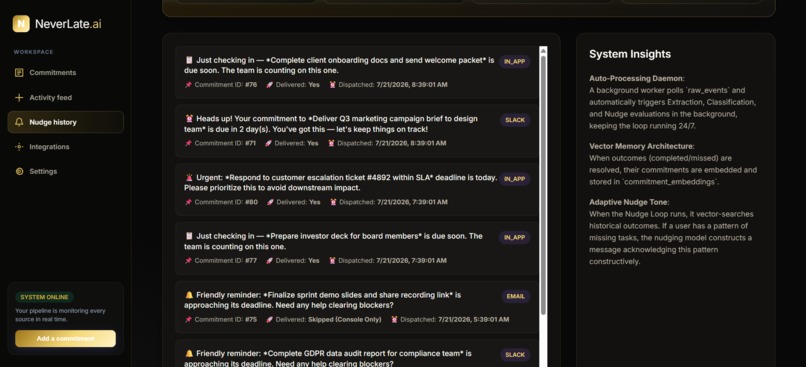
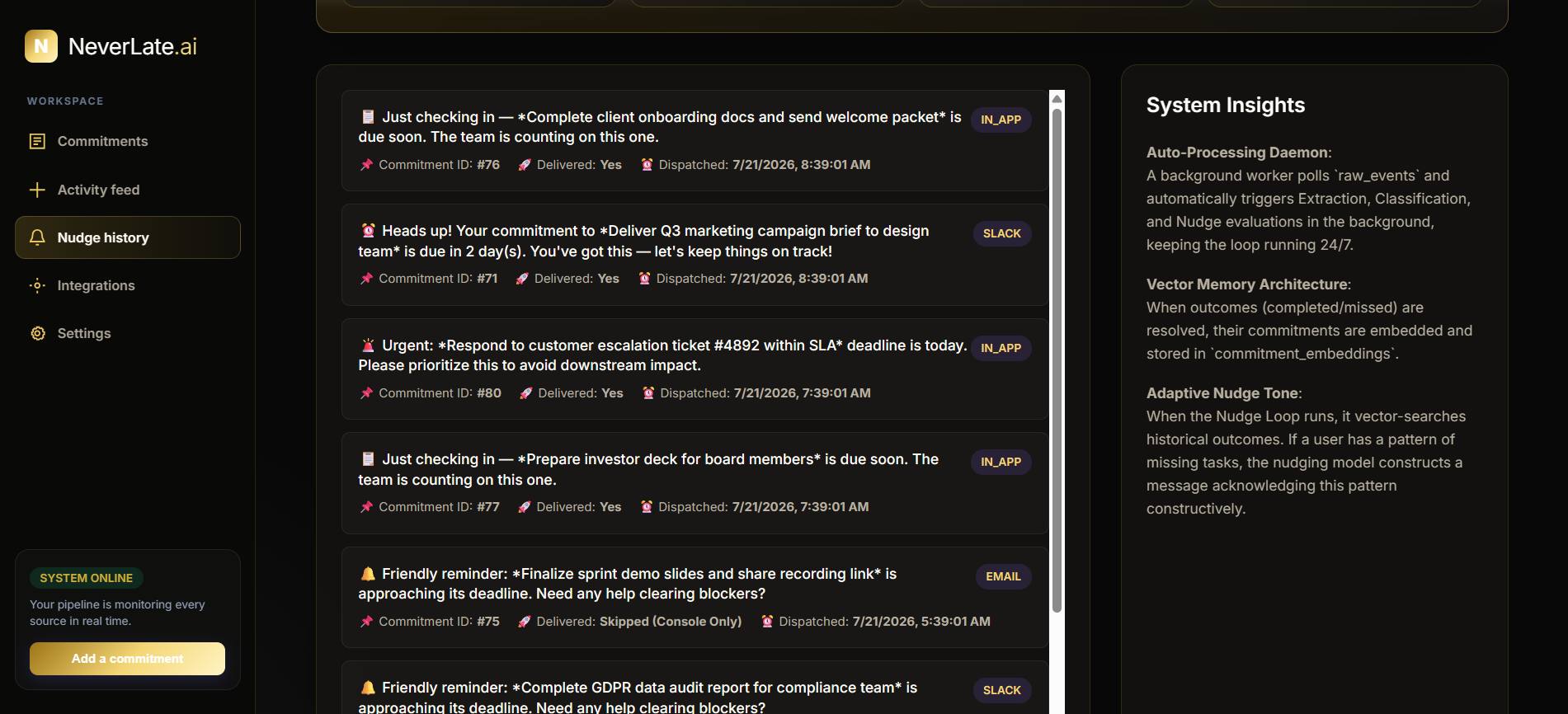
Nudge history
-
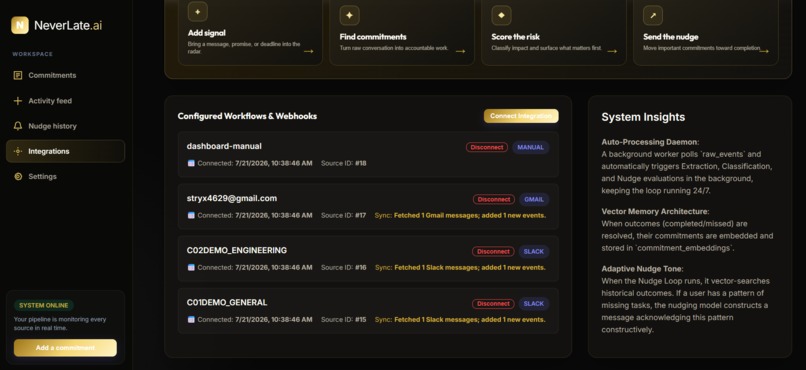
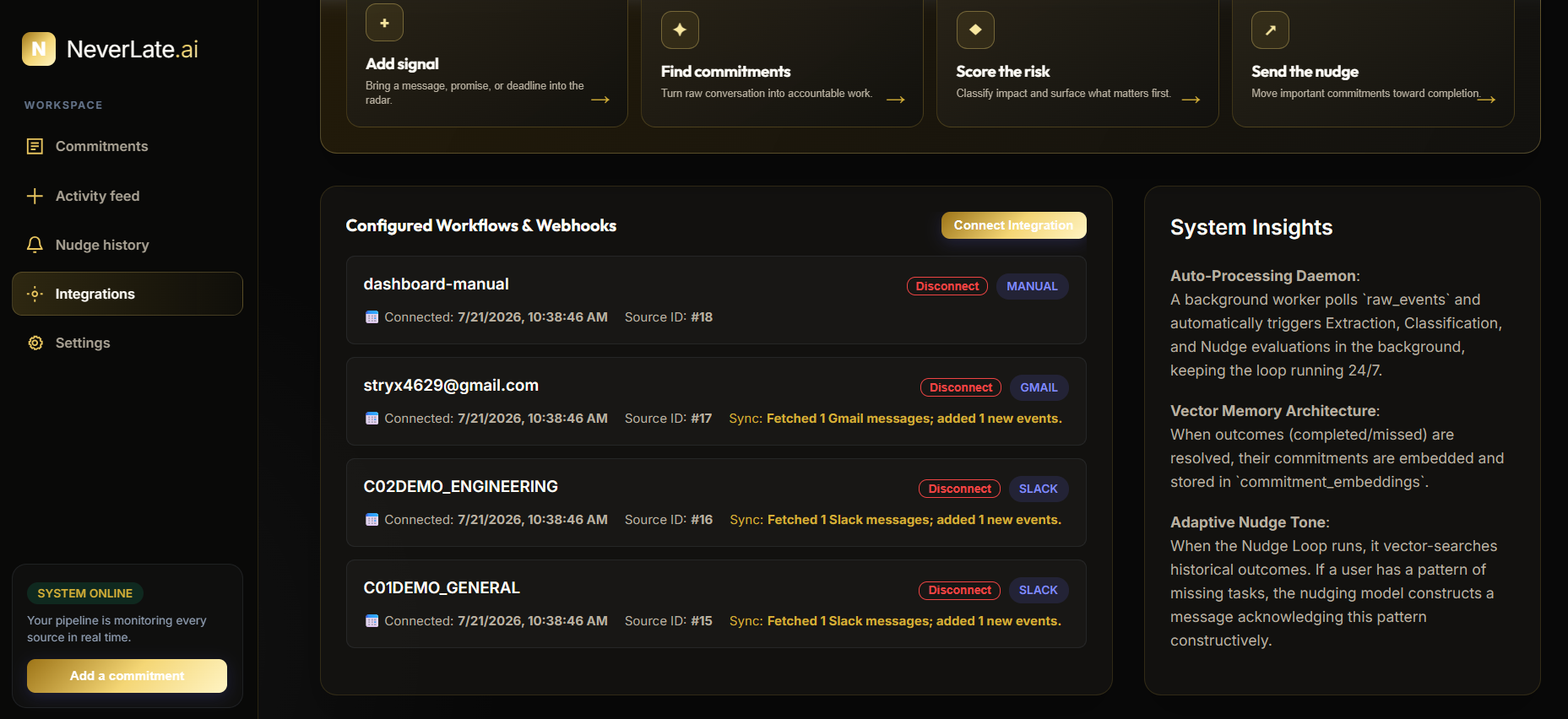
integrations
-
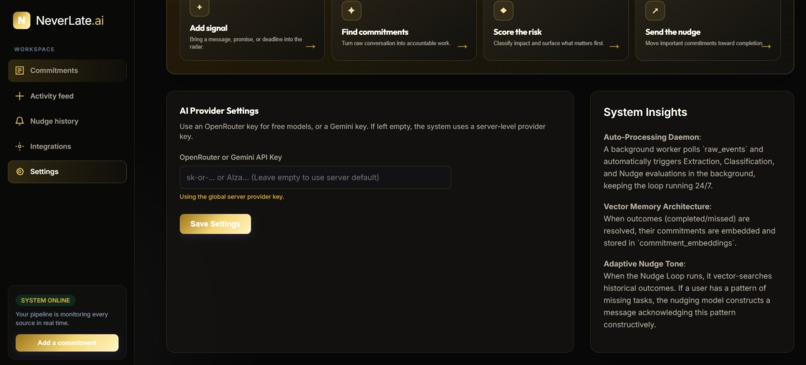
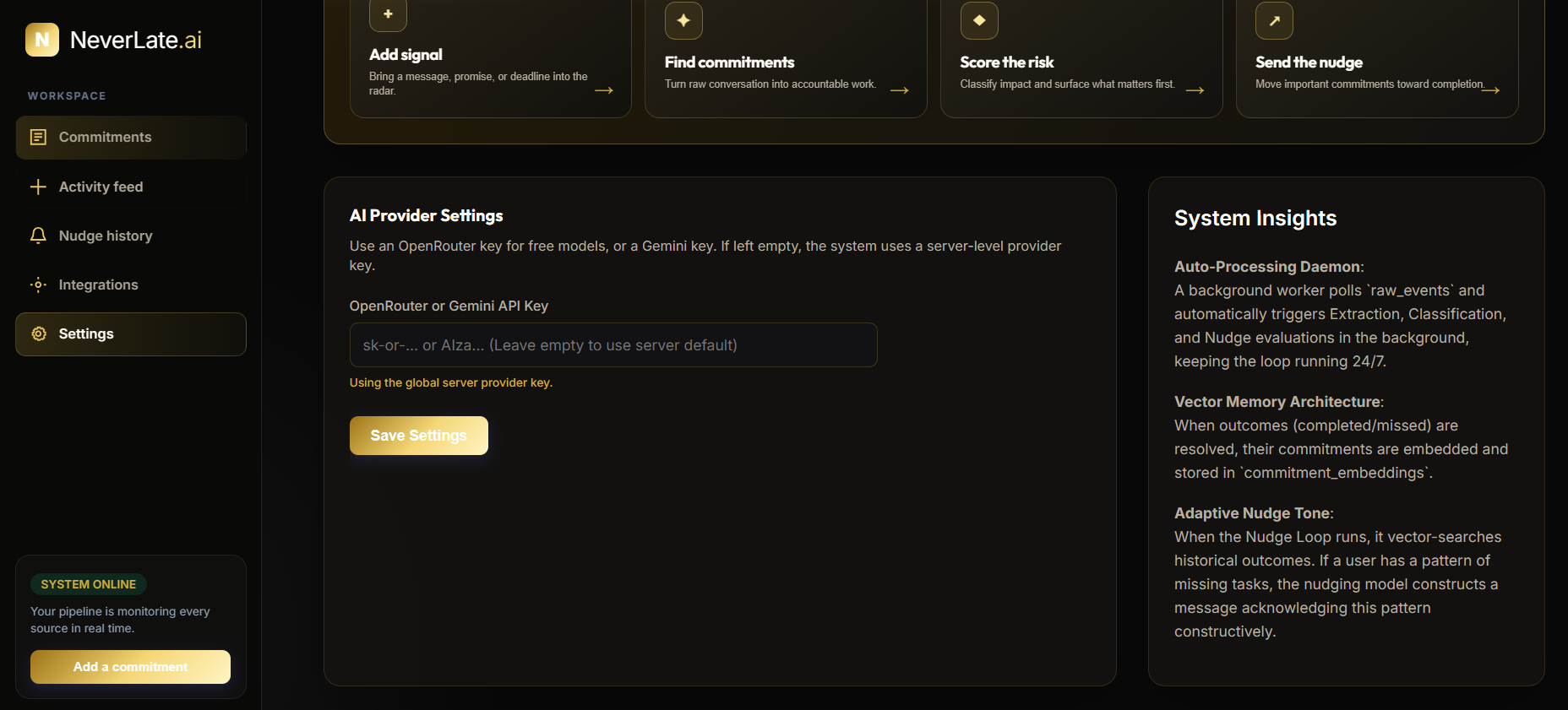
settings page
Inspiration
We all walk on eggshells when a deadline's coming — and when you're juggling multiple projects at once, that stress compounds fast. I kept wishing someone would just track my commitments and show me how often I was actually missing them. So I built NeverLate.ai as the project falling in category of work and productivity to manage the big headache of missing deadlines
What it does
An intelligent multi-agent system that listens to your meetings, emails, and chats, tracks every promise you make, and reminds you before you drop the ball — learning your patterns along the way, so next time it nudges you before history repeats.
How it works
Connect your workspace (Gmail, Slack, and more) and it automatically extracts commitments, classifies them by risk, and tracks them through to completion — no manual entry required.
Premium
- Pro: multiple simultaneous live integrations, deeper pattern history
- Team: shared visibility and tracking across your whole team
What makes it different
Most tools only warn you about what's pending — that's it. This one learns from your past behavior and tells you when you're repeating a pattern of missed commitments, so the reminder gets smarter every time, not just louder.
How we built it
This project backend pipeline is built with python 3.14,html css for ui design, flask and uses postgres database on neon as vector database and uses** pgvector** for vector embedding. The extractor , classifier and nudge agents work in sync in the background to deliever the results The integrations are not available via oauth yet and use IMAP access which means that you need to generate your app password to integrate workspace tools.
Challenges I ran into
one of the big challenges i ran into was deciding whether to make the logic formula based but i decided against it so that if any exception or variable arises the system would work fine and not give a some unwanted result. the next challenge which was really bugging me was which api to use as we were given sufficient codex credits but no api credits , so i had to jump from openai api to gemini api to openrouter api for getting the job done.
Accomplishments that we're proud of
i am proud to have completed this project , navigating through the problems and finding their solutions it was my first time working on codex , but it was simpler then it seems , the accuracy of executing prompts was really good and it was a great partner to work alongside google antigravity. worked solo on the project and made a fully functional project which is still rough around the edges.
What we learned
Building this project taught me many things like: -Working with vector databases and vector embeddings -Quick problem solving and brainstorming skills -Keep deterministic math out of the LLM's hands.** It's tempting to let a model "decide" urgency or scoring — but that produces inconsistent, unexplainable rankings. I split our scoring so the LLM only judges what genuinely needs judgment (risk category, severity), while urgency and final priority score are computed with plain code. That decision made the whole system explainable enough to actually defend in a demo. -Working within limited API credits and a Free-tier rate limit meant favoring small, checkpointed changes over large speculative ones — which turned out to also be better engineering practice, not just a budget compromise
What's next for NeverLate.ai
The features are limited, i plan on extending feature list and integrations to turn to turn it into enterprise level
The paid plan will consist of the new features and user based customization and other features
The agent system isnt suitable right now for business scale working, I will start working on scaling, latency
Built With
- gemini-api
- gmail
- neon
- openrouter
- pgvector
- postgresql
- python
- render
- slack-webhooks


Log in or sign up for Devpost to join the conversation.