-
-
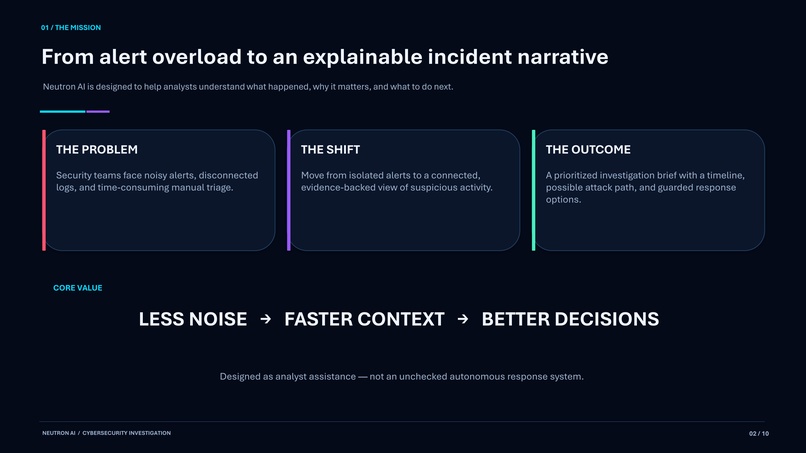
From Alert Overload to Incident Clarity
-
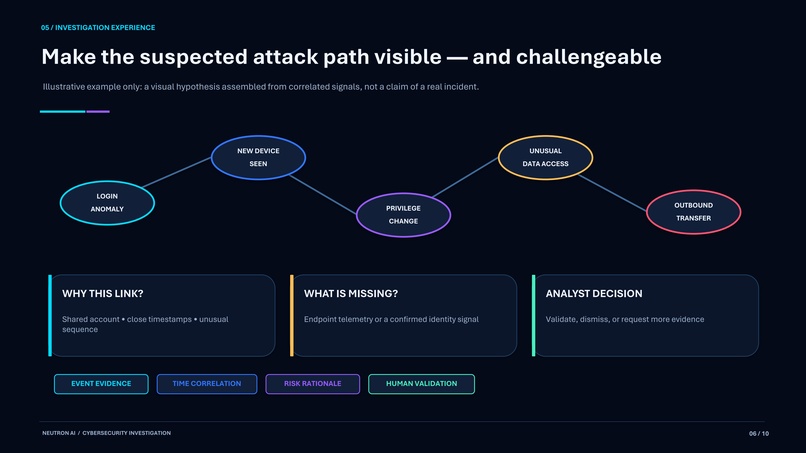
Trace Attack Paths. Uncover Suspicious Behavior
-
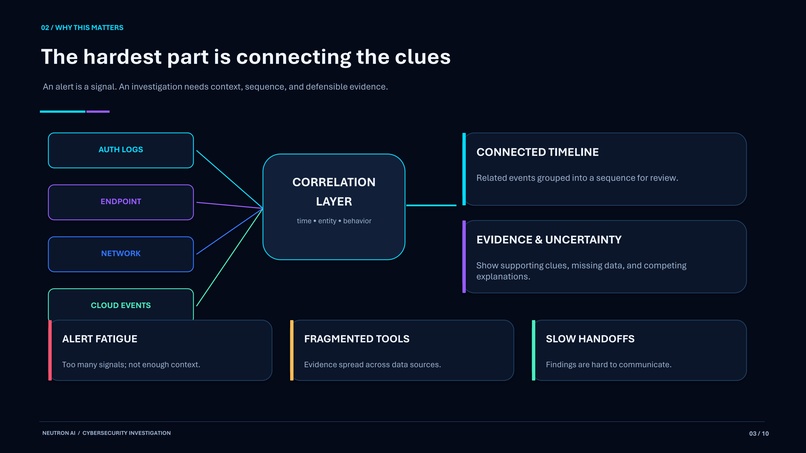
Connect Every Clue. Reveal Hidden Threats
-
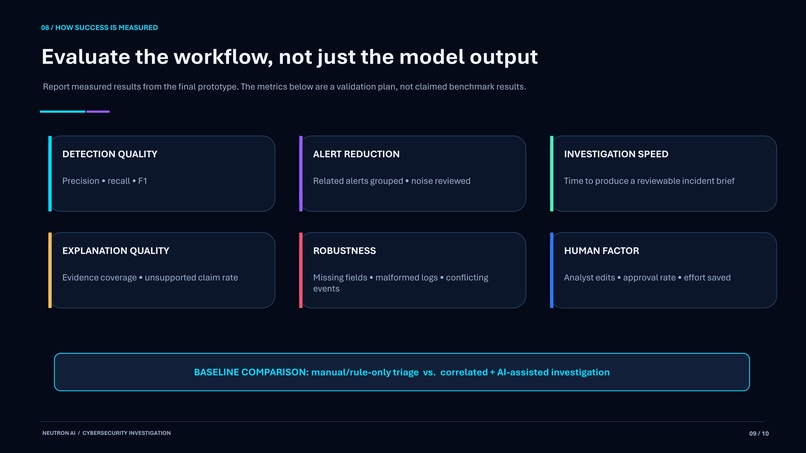
Measure Accuracy , Accelerate Investigations & Reduce Noise
-
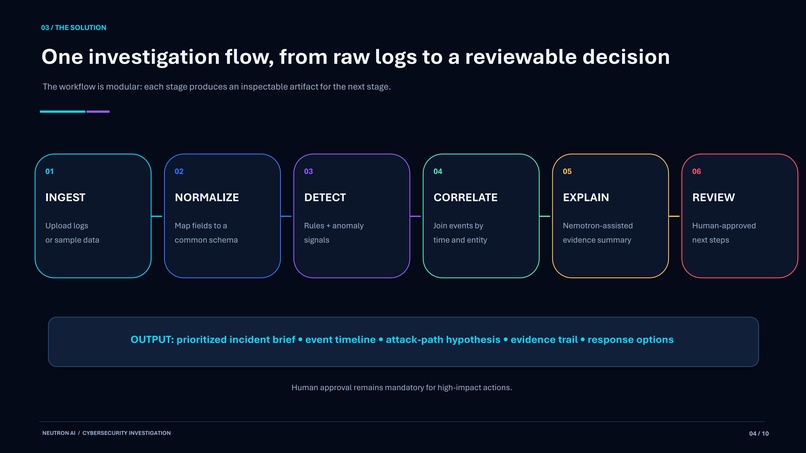
Transform Raw Logs Into Actionable Intelligence
-
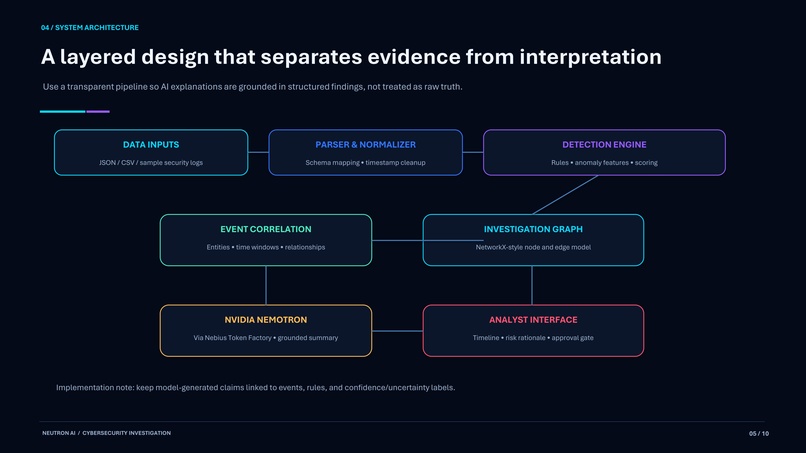
Evidence-Driven Architecture for Smarter Investigations
-
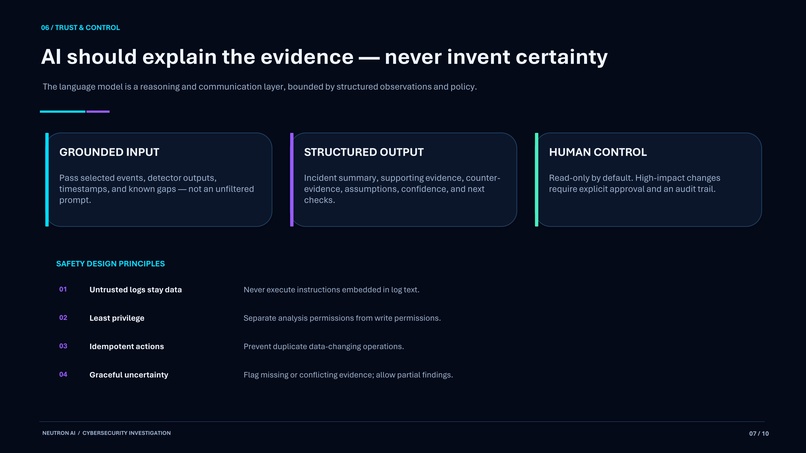
Explainable AI. Controlled Actions. Trusted Decisions
-
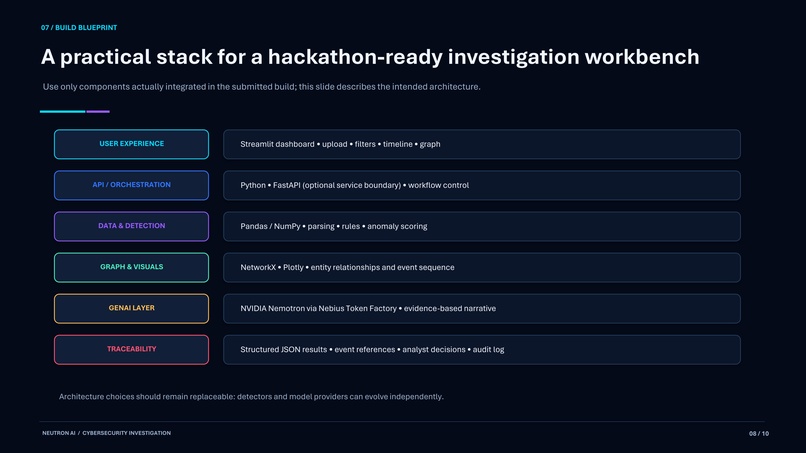
Human Oversight , Intelligent Technology & Autonomous Investigation
-
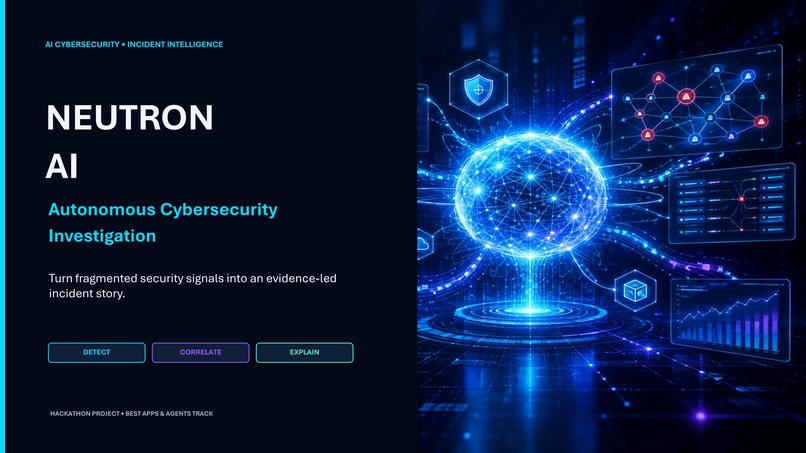
Neutron AI: Investigate Threats With Intelligence
-
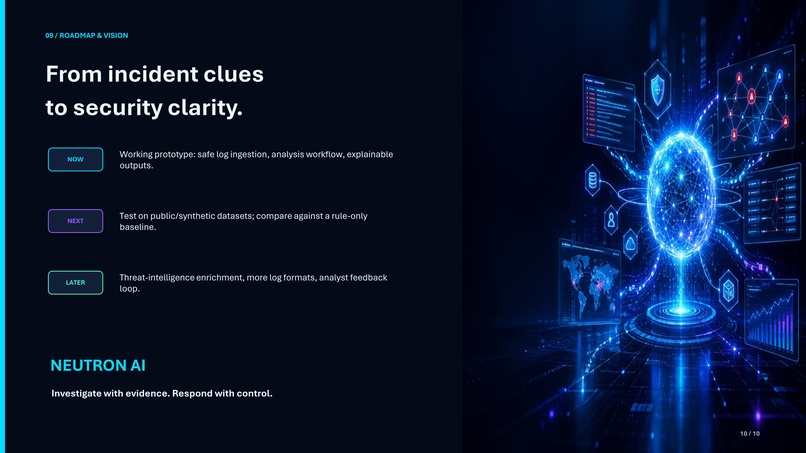
Investigate With Evidence & Respond With Control
Inspiration
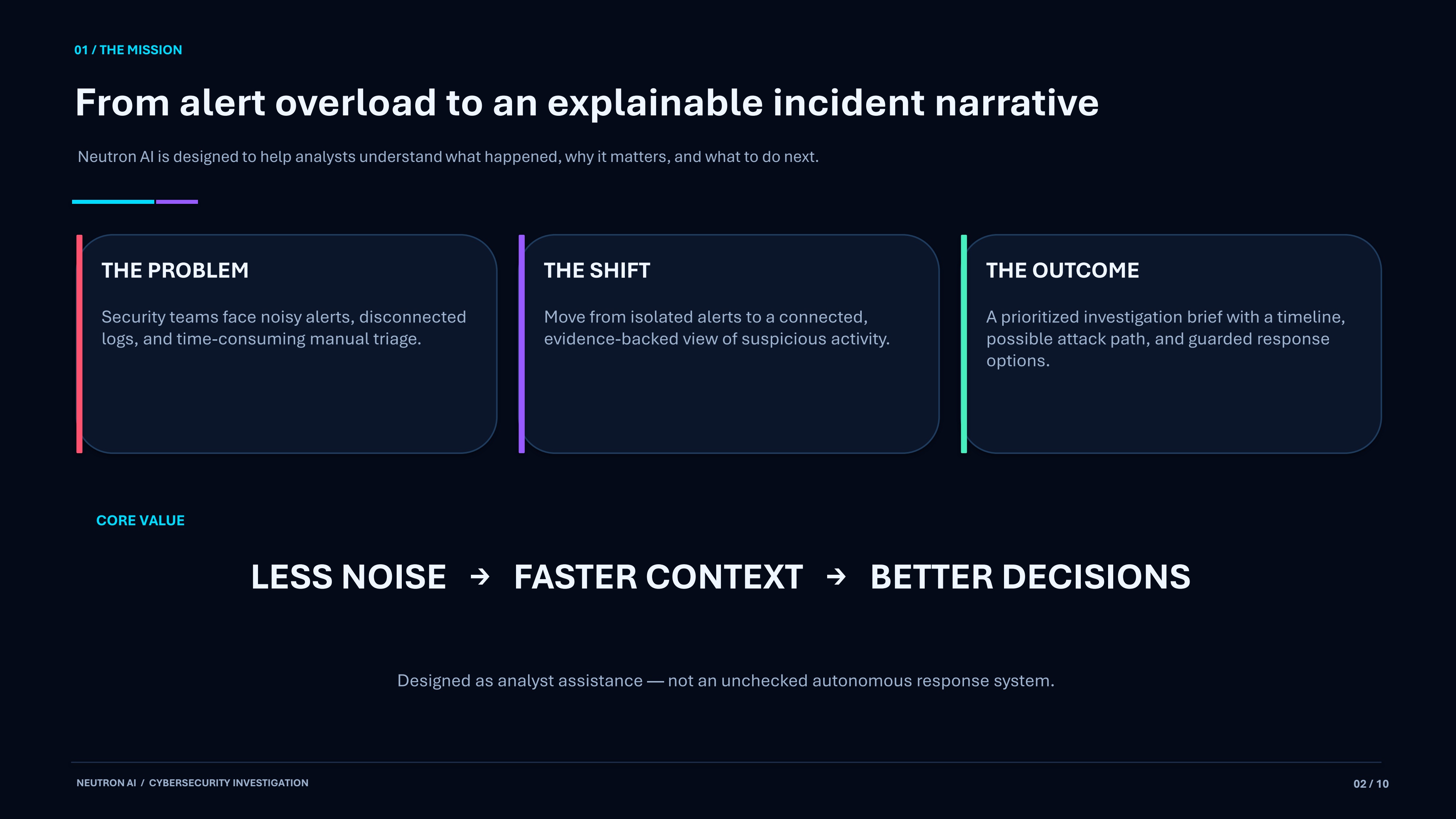
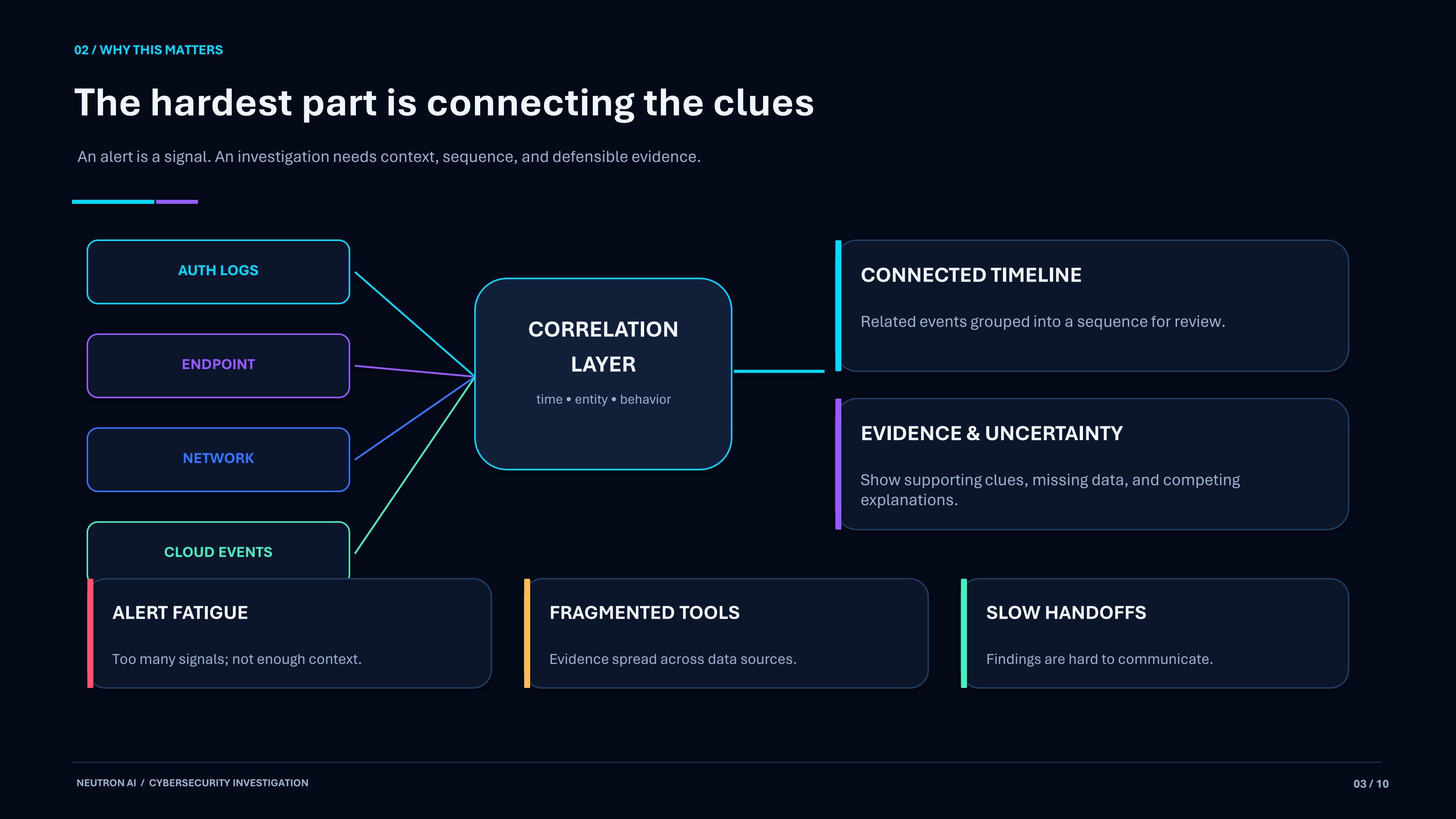
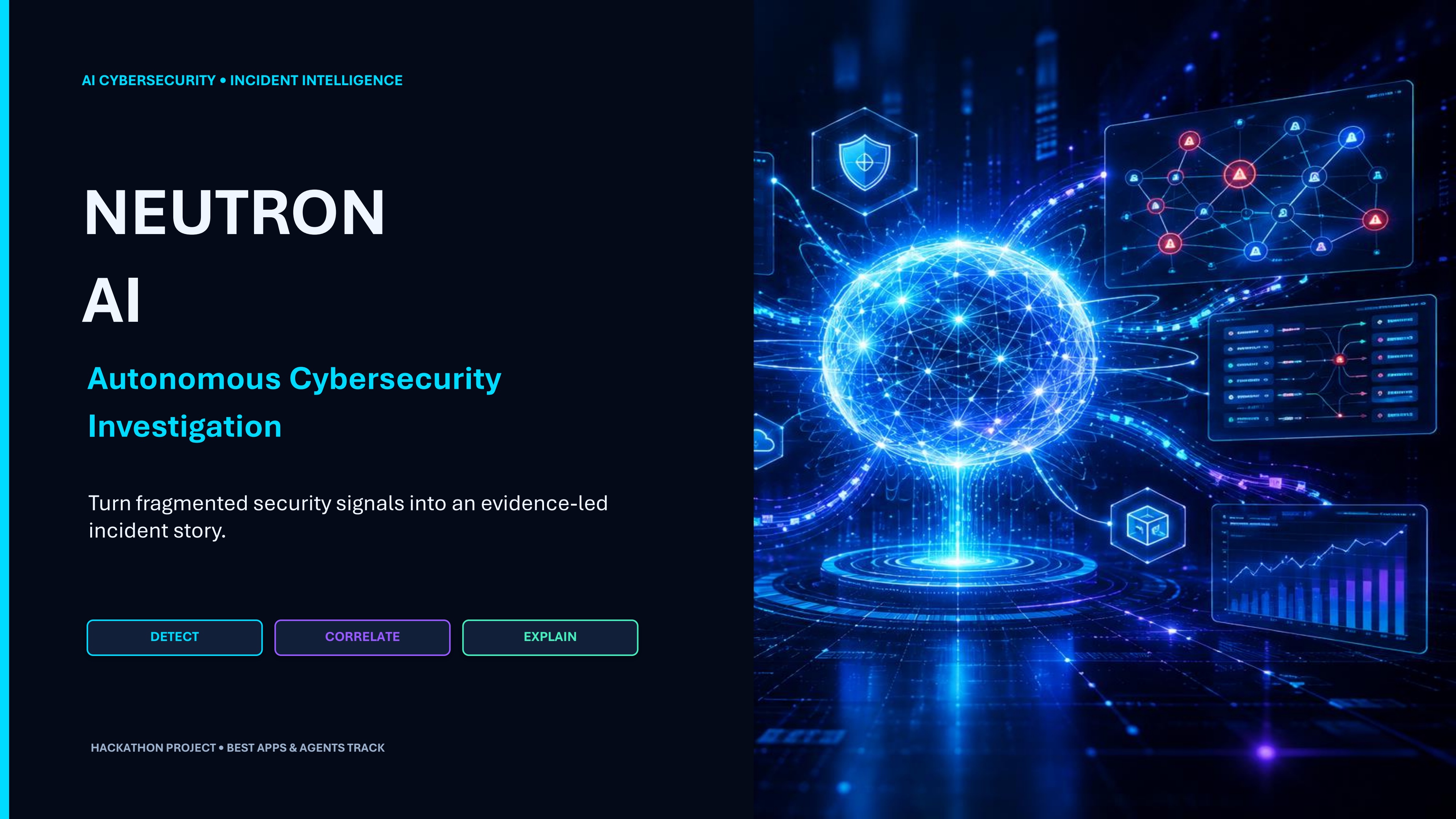
Cybersecurity teams face a growing volume of alerts from different systems. Investigating these alerts individually makes it difficult to identify connections, understand attack progression, and respond quickly. Neutron AI aims to transform fragmented security alerts into evidence-backed investigations using autonomous AI reasoning, automated tool execution, and attack-path reconstruction. Our goal is to build an AI investigator that does more than summarize alerts: it actively investigates suspicious activity, gathers evidence, verifies findings, and recommends appropriate responses.
What It Does
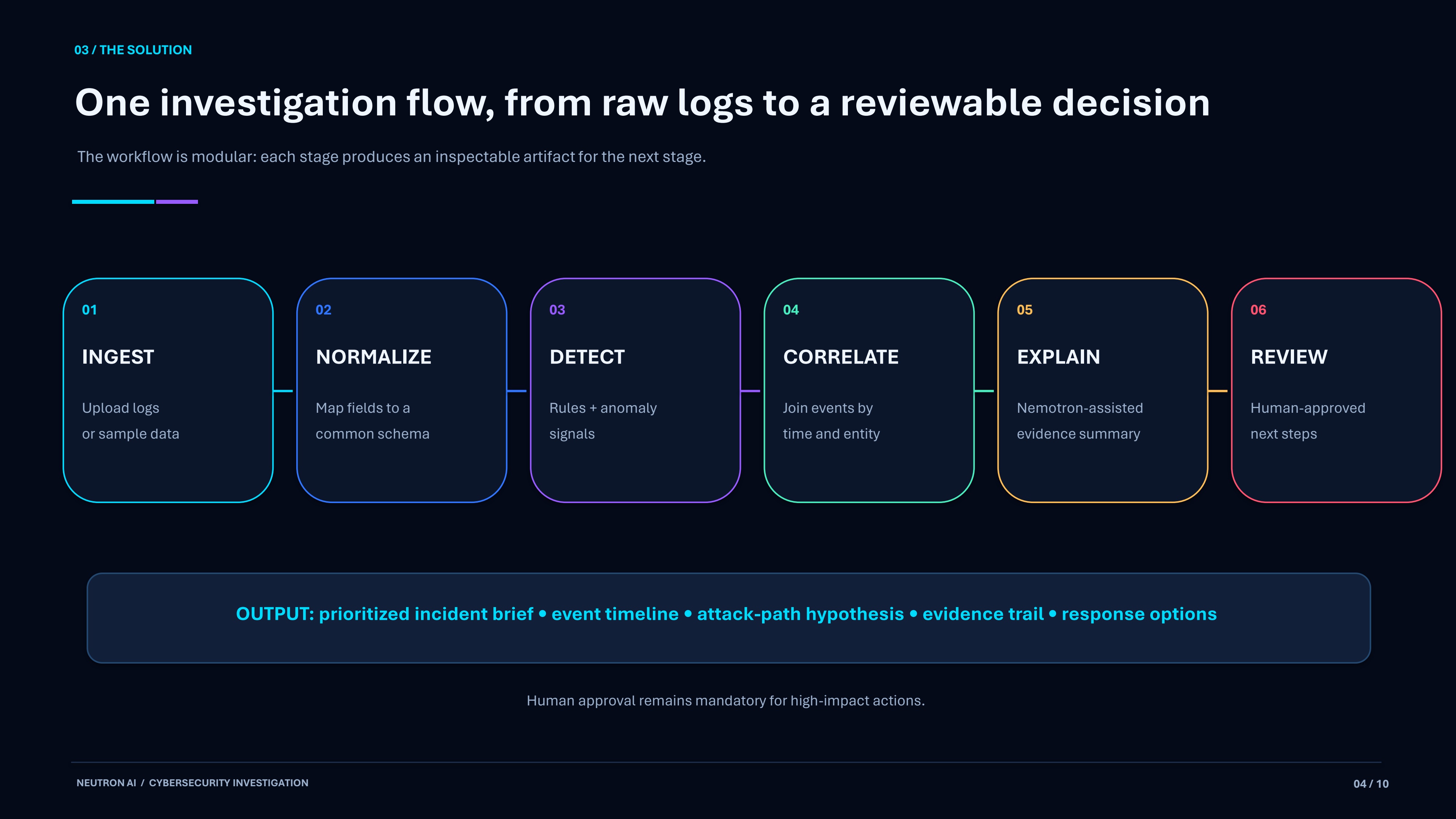
Neutron AI is an autonomous cybersecurity investigation platform that analyzes security logs to identify suspicious activities and investigate potential incidents. It combines machine learning, security rules, graph analysis, and NVIDIA Nemotron to help security teams understand potential attacks.
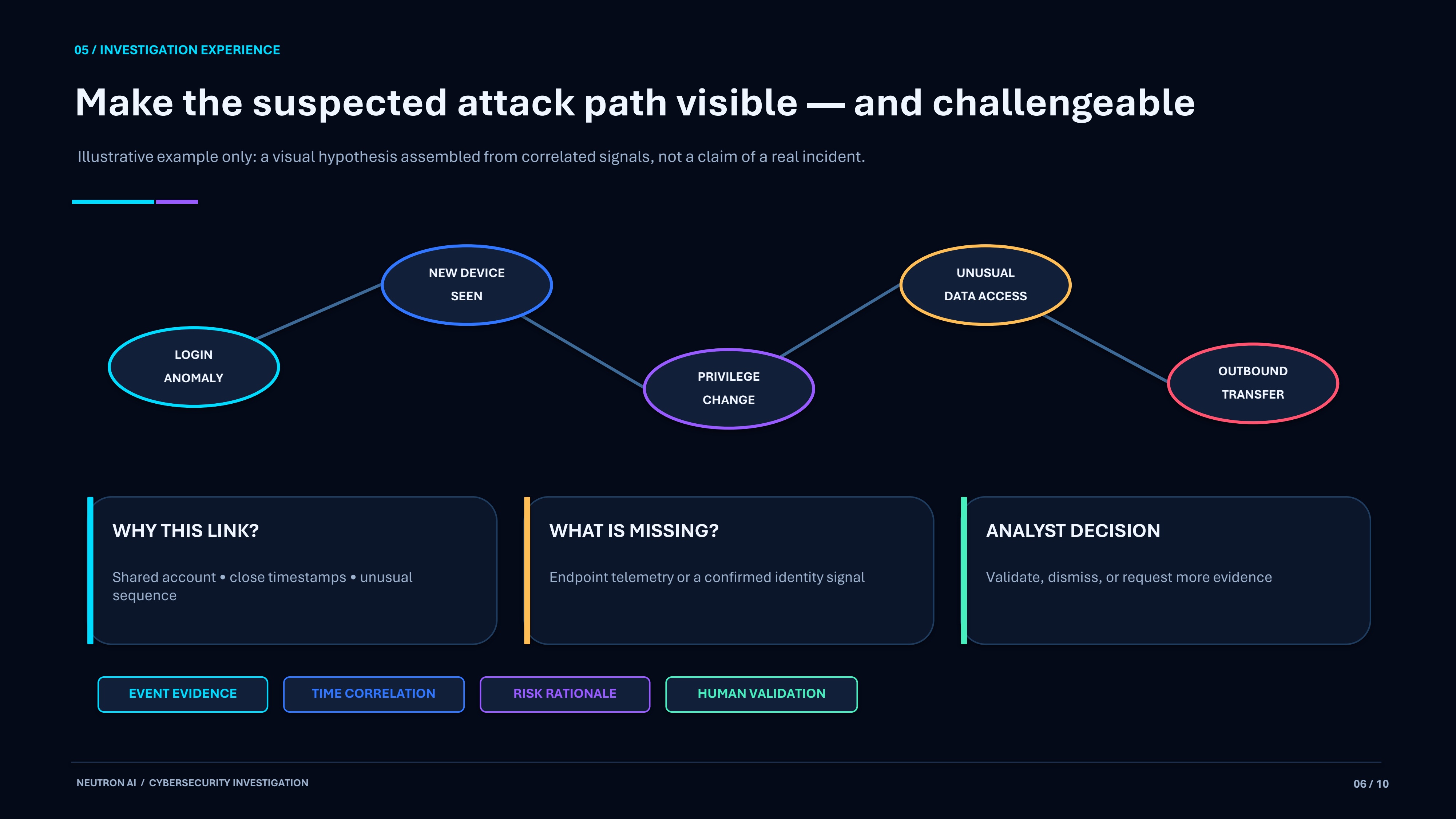
The platform detects suspicious events, correlates related alerts, reconstructs possible attack paths, generates evidence-backed explanations, assesses incident severity, and recommends response actions. It also identifies missing or contradictory evidence and distinguishes confirmed observations from potential attack hypotheses. High-impact response actions require human approval. Finally, it generates structured incident reports containing investigation findings, supporting evidence, attack timelines, and recommended next steps.
How We Built It
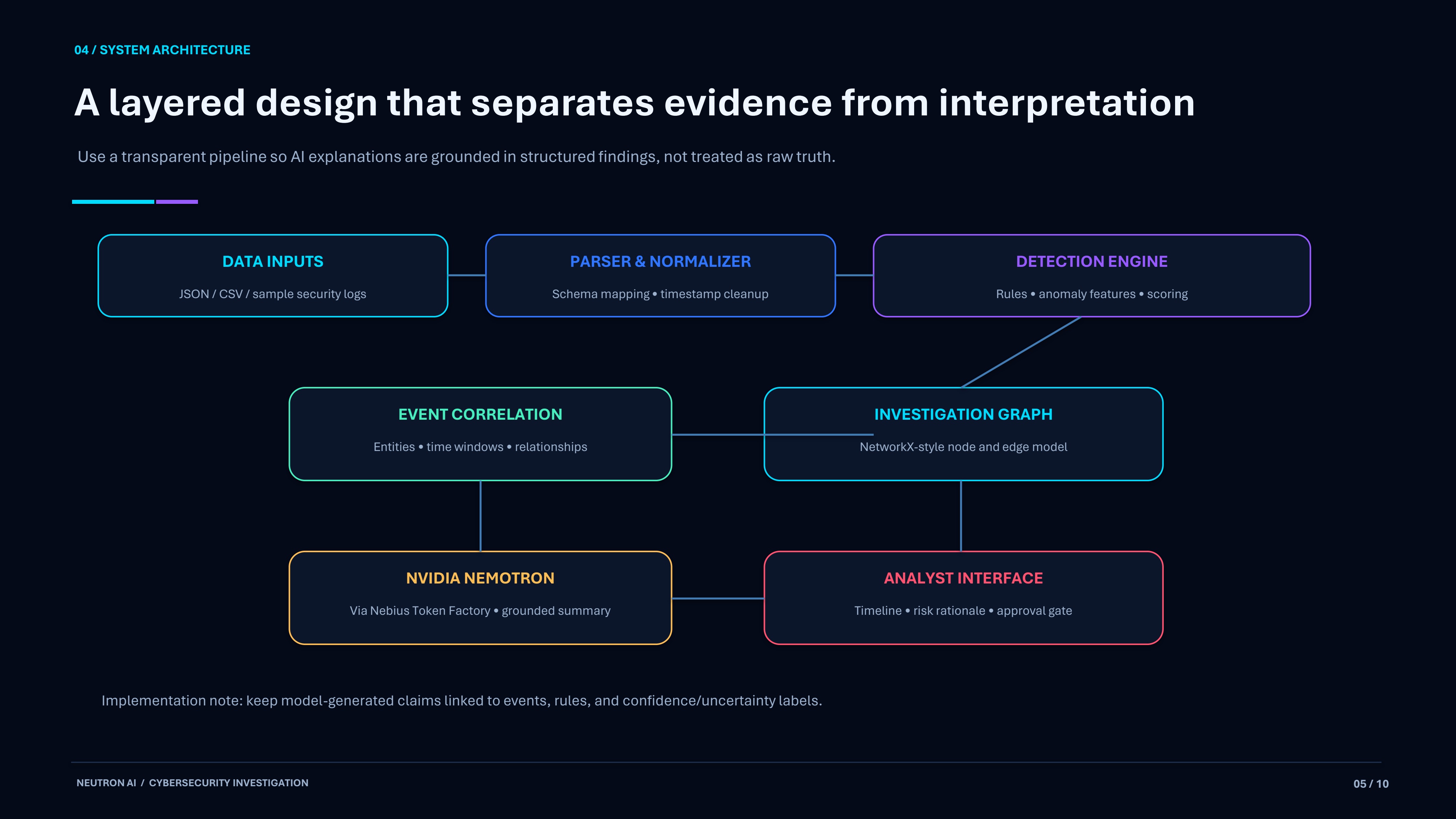
Neutron AI combines AI-agent orchestration, security analytics, graph analysis, and an interactive web application.
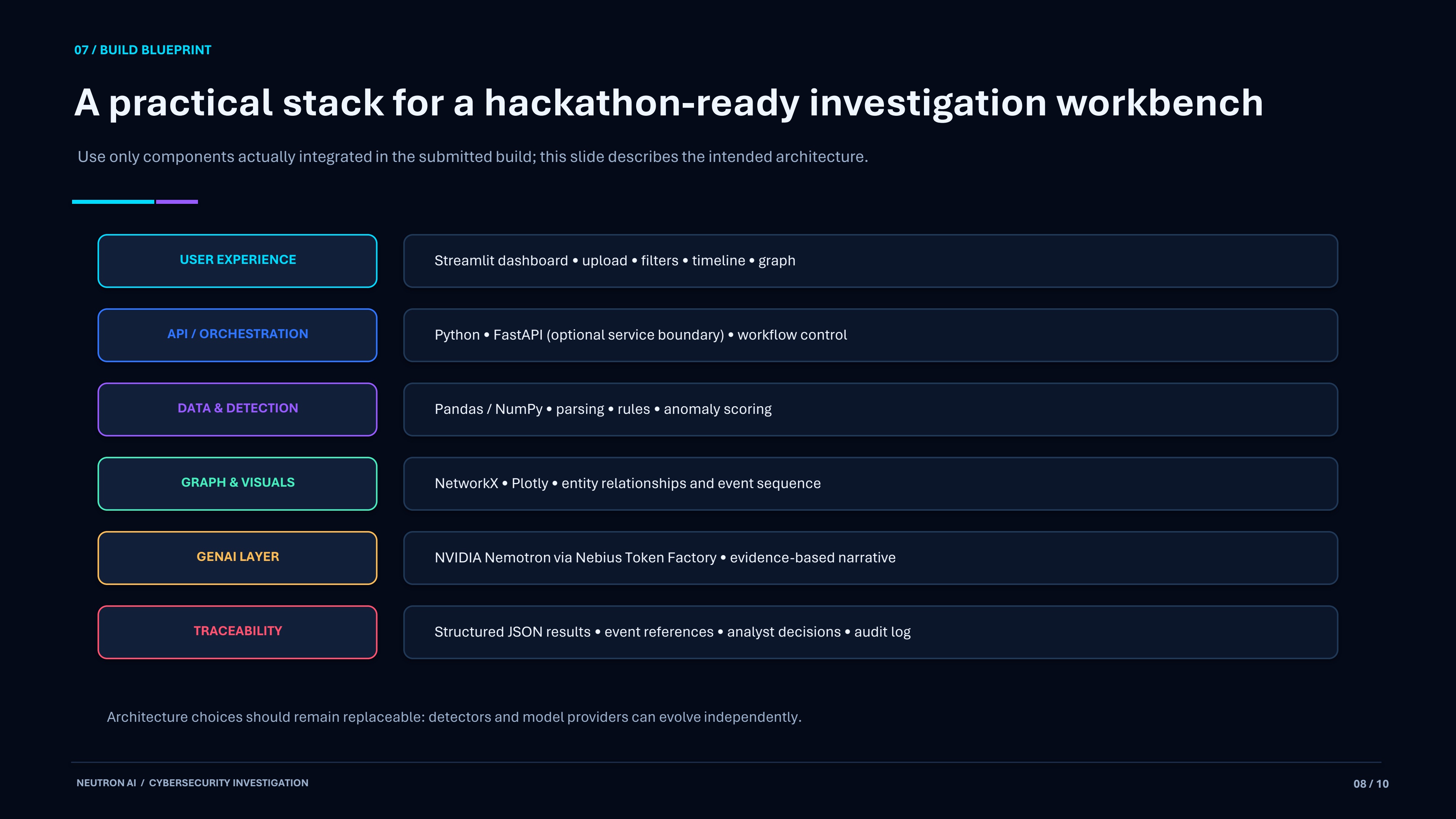
NVIDIA Nemotron, accessed through Nebius Token Factory, serves as the central reasoning engine. Rather than using the model only to generate summaries, the application uses it to plan investigations, select appropriate analysis tools, interpret tool results, identify missing evidence, and determine whether further investigation is necessary.
Python and Pandas support security-log processing, normalization, and feature extraction. Security rules and machine-learning models help identify suspicious patterns. NetworkX supports relationship analysis and attack-path visualization. FastAPI provides backend services, while Streamlit delivers the interactive dashboard.
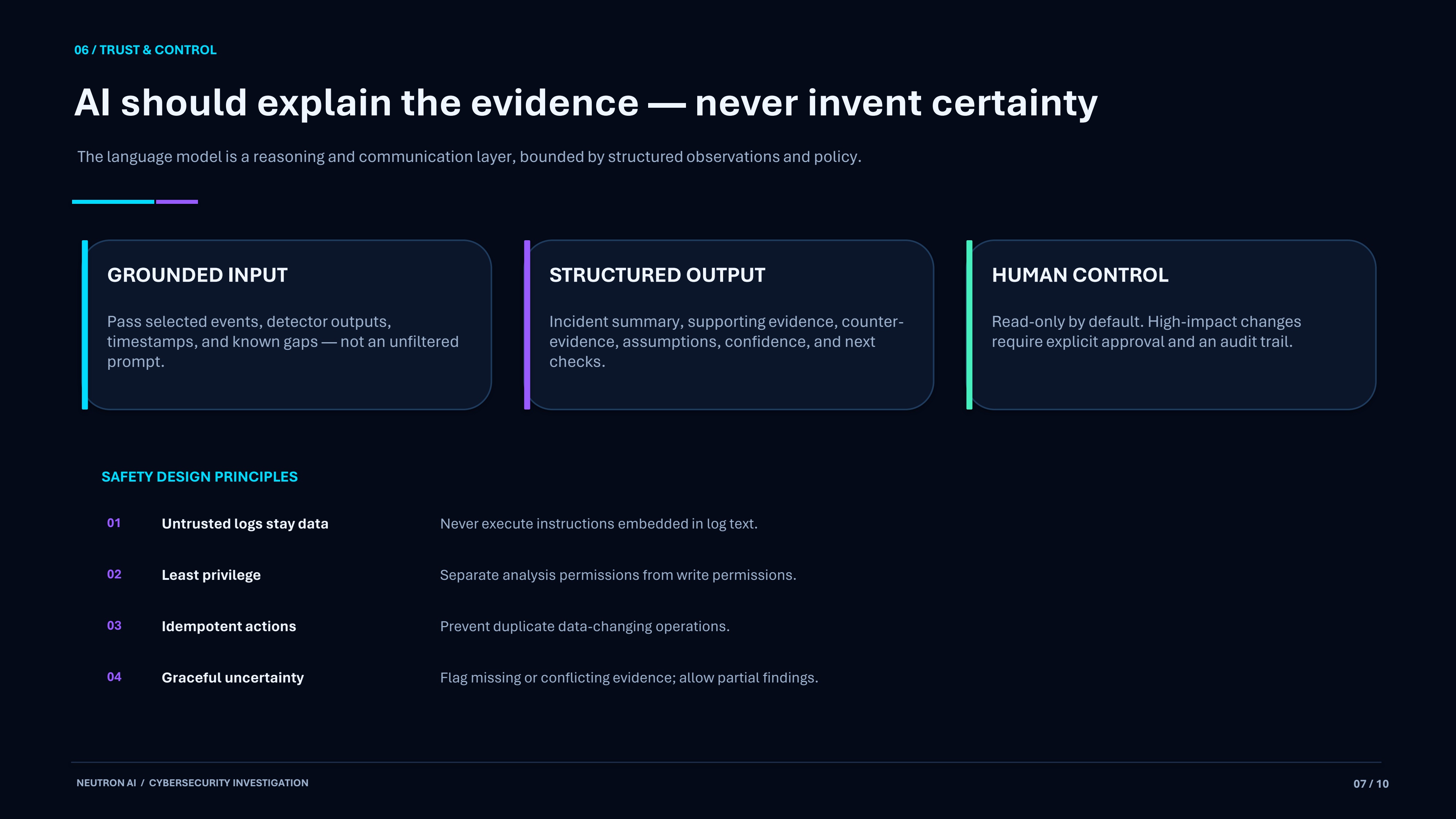
The investigation agent uses controlled tools to search logs, inspect related entities, correlate events, and construct investigation timelines. Its findings are checked against available evidence, and its tool calls and decisions can be recorded for review. Human approval is required before potentially disruptive response actions.
Challenges We Ran Into
Processing security logs from different sources presents challenges because formats, timestamps, and available fields can vary. Another major challenge is distinguishing genuine threats from legitimate but unusual activity.
Reconstructing attack paths is also difficult because incomplete logs can leave gaps in the sequence of events. A relationship between two events does not automatically prove that one caused the other. We therefore focus on evidence-based conclusions, transparent uncertainty, and clear separation between observed facts and inferred hypotheses.
We also considered the risks of autonomous AI, including unsupported conclusions and malicious instructions embedded in untrusted log data. Controlled tool permissions, evidence verification, execution limits, and human approval for high-impact actions are important safeguards.
Accomplishments That We're Proud Of
Neutron AI brings multiple stages of cybersecurity investigation into one workflow, connecting suspicious-event detection, event correlation, attack-path reconstruction, evidence verification, and response planning.
Our key innovation is using NVIDIA Nemotron as an investigation reasoning engine rather than merely a chatbot that summarizes security alerts. The agent is designed to choose investigative steps, execute analysis tools, evaluate the resulting evidence, and adapt its investigation accordingly.
We are particularly focused on transparency. Investigators should be able to understand why events were connected, inspect the evidence behind findings, identify uncertain conclusions, and review recommended actions. This approach combines AI reasoning with structured analytics to make cybersecurity investigations more understandable and auditable.
What We Learned
We learned that effective cybersecurity AI requires more than a language model. Reliable investigations depend on structured data, suitable detection methods, tool execution, evidence validation, and careful uncertainty handling.
We also learned that genuine autonomous behavior requires an agent to plan meaningful steps, use tools, evaluate their results, and adapt its next action. Generating an explanation alone is not enough.
Finally, security automation must balance efficiency with accountability. Clear permissions, recorded decisions, controlled execution, and human oversight are essential when AI recommendations could affect real systems.
What's Next for Neutron AI
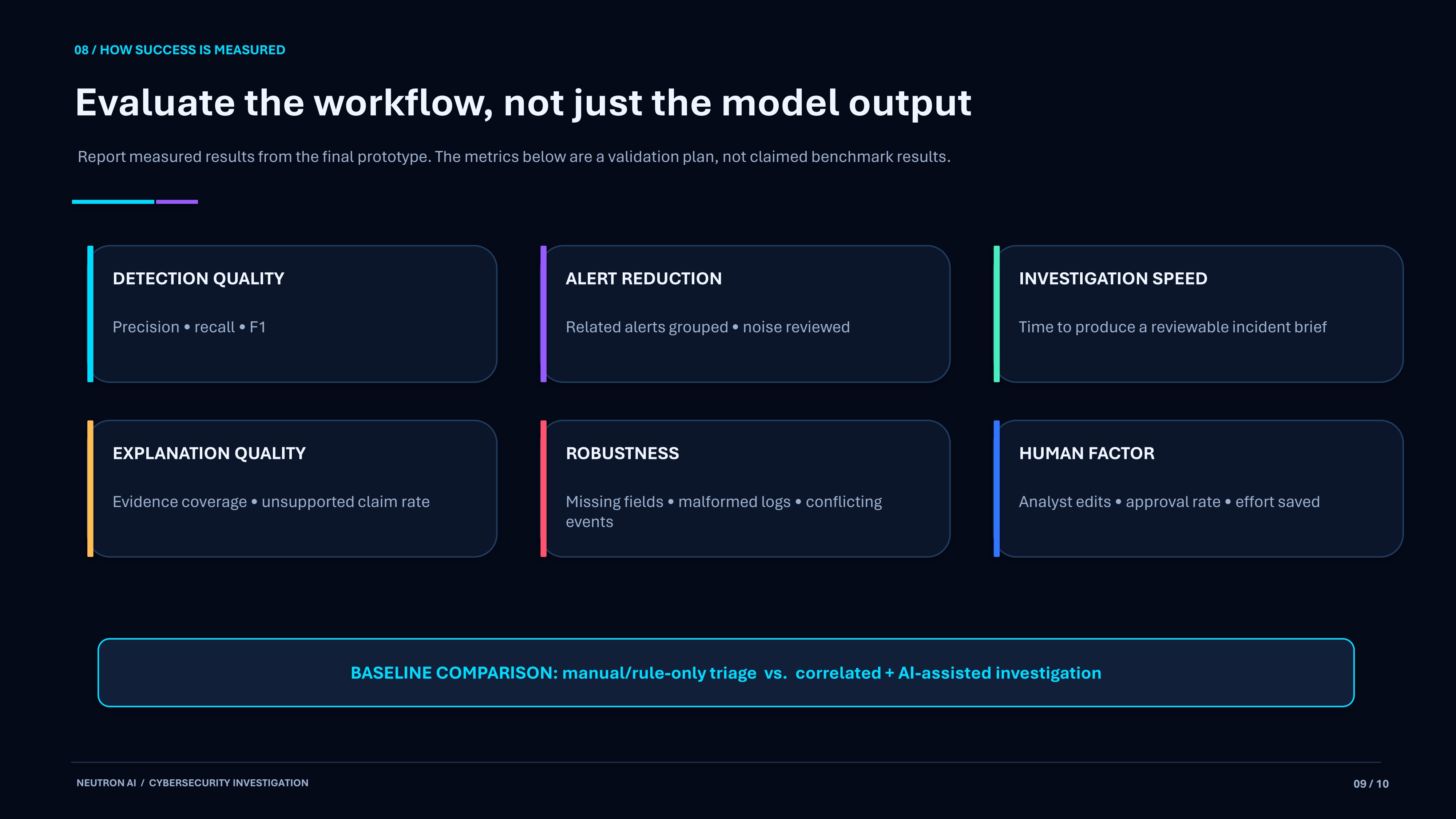
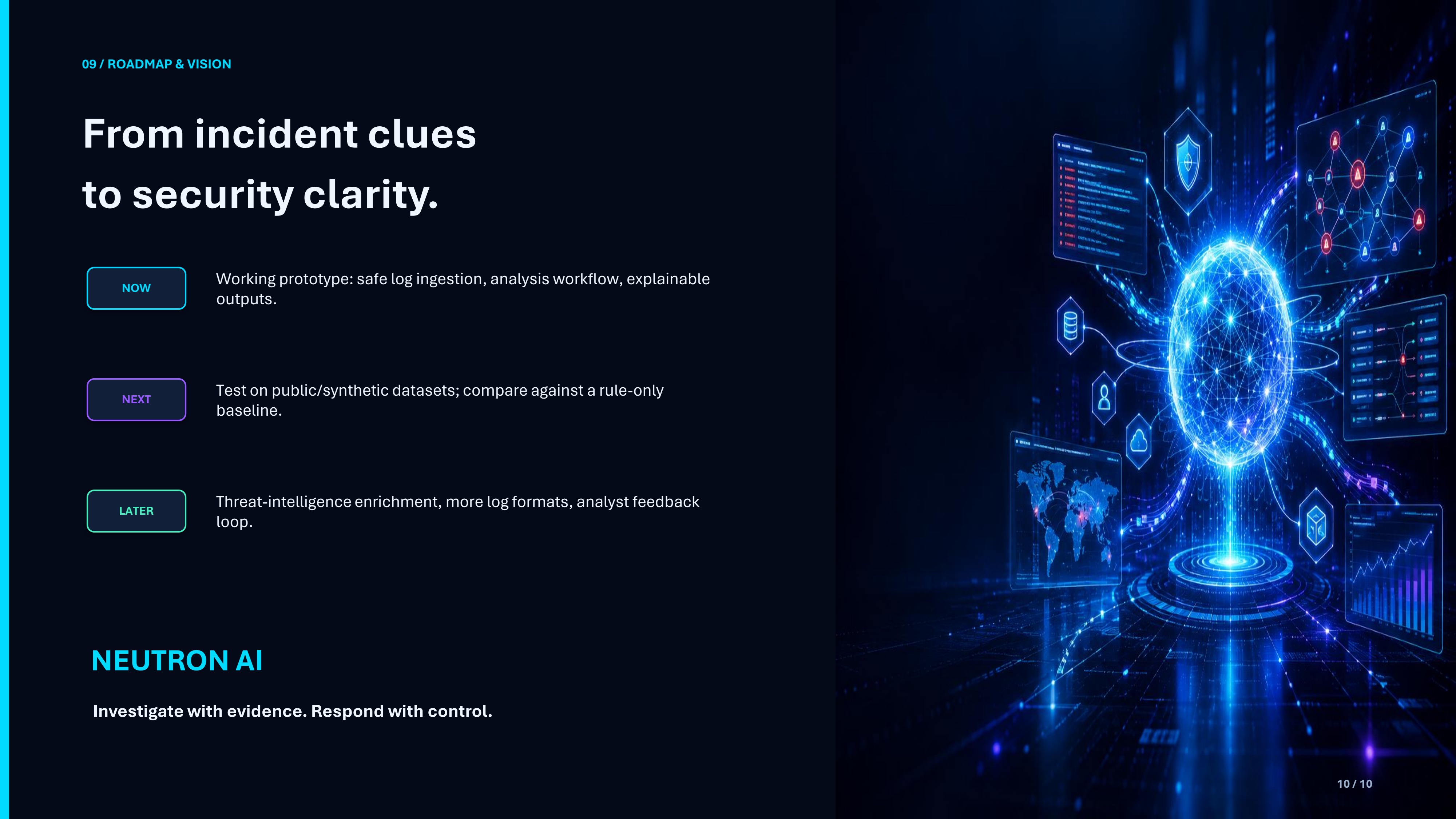
Our next steps include supporting additional security-log formats, improving investigation planning, strengthening attack-path reconstruction, and evaluating detection performance using public or synthetic security datasets.
We plan to compare Neutron AI against rule-based investigation workflows using detection quality, false-positive rates, investigation time, and analyst effort. We also aim to improve evidence tracking, incorporate relevant threat intelligence, and introduce carefully controlled response integrations.
Our long-term vision is an autonomous cybersecurity investigation partner that transforms initial security alerts into evidence-backed incident assessments while keeping security teams in control of consequential decisions.

Log in or sign up for Devpost to join the conversation.