-
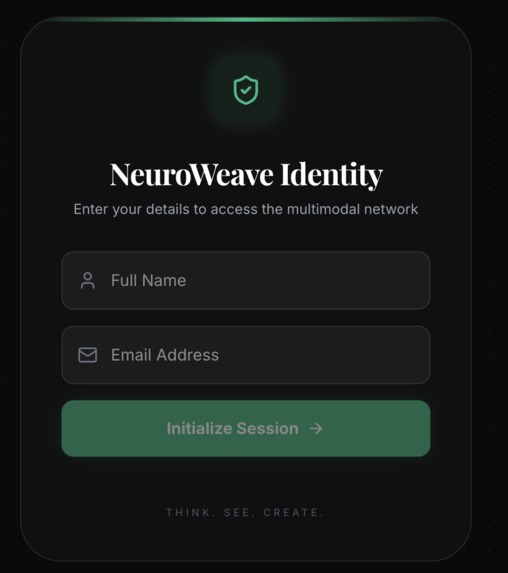
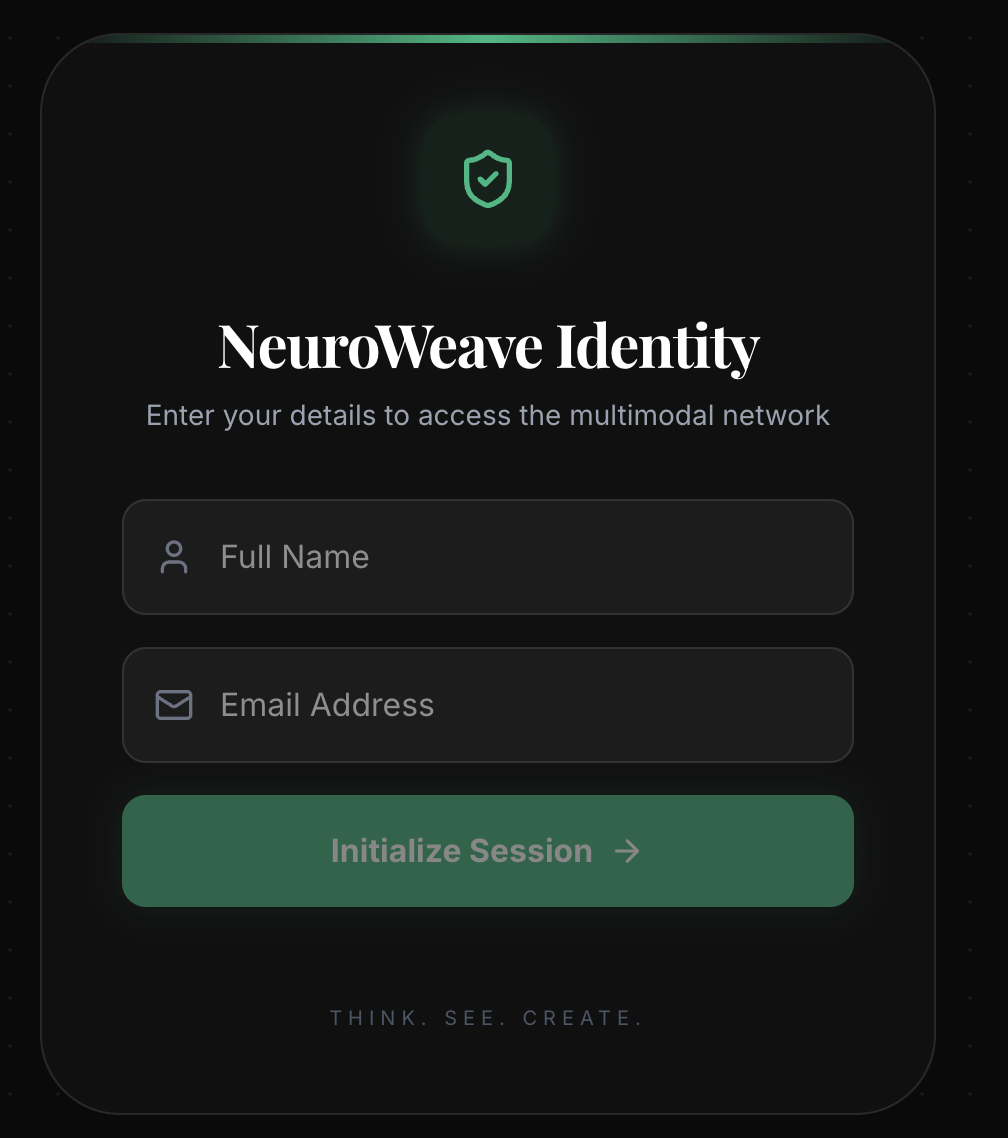
General Us Login Credentials
-
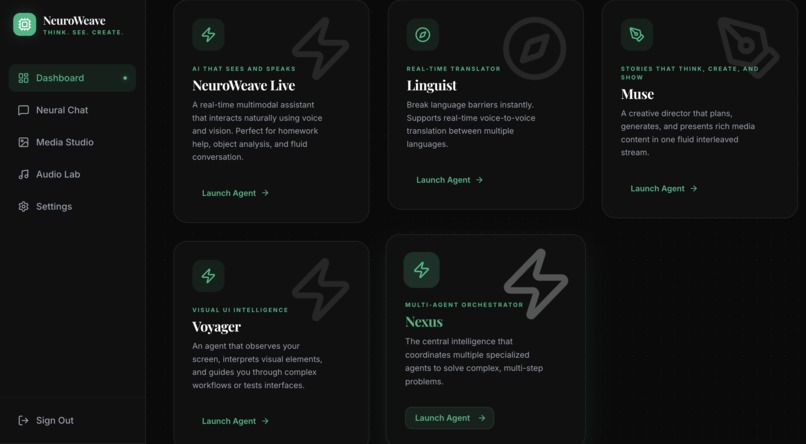
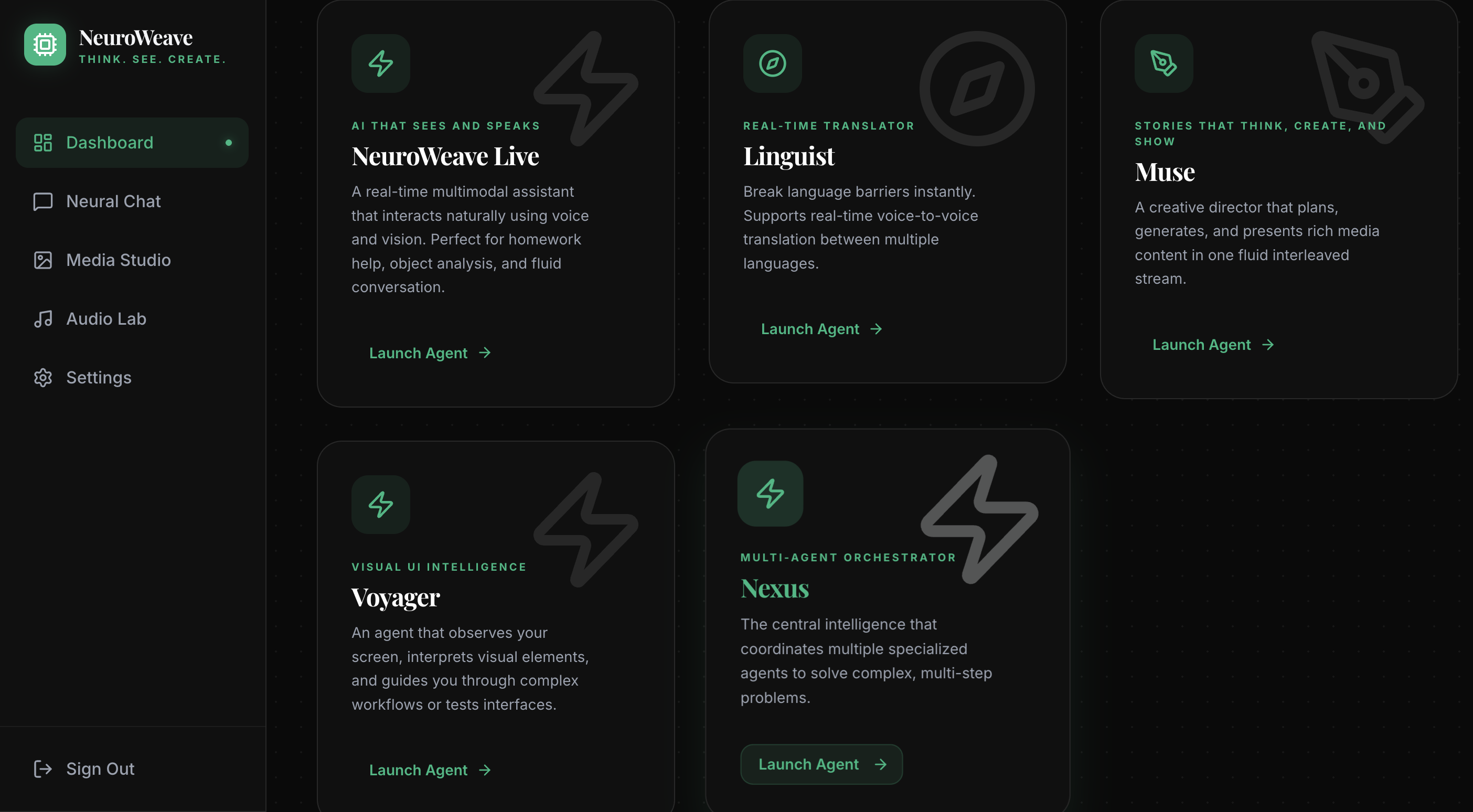
Dashboard Page 1
-
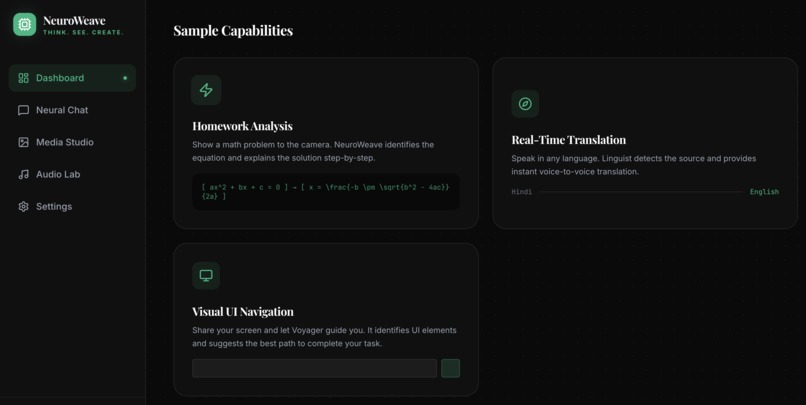
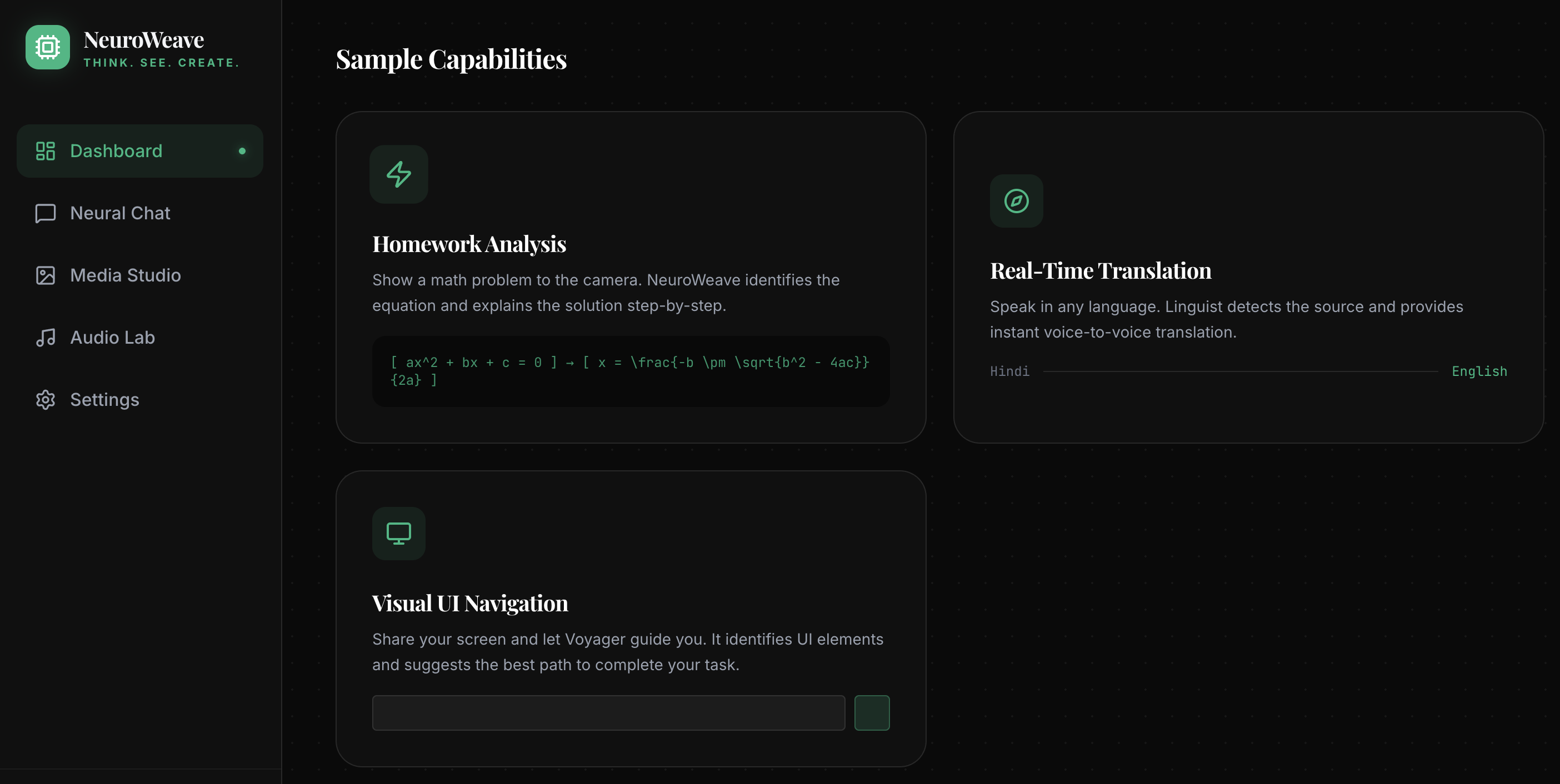
Dashboard Page 2
-
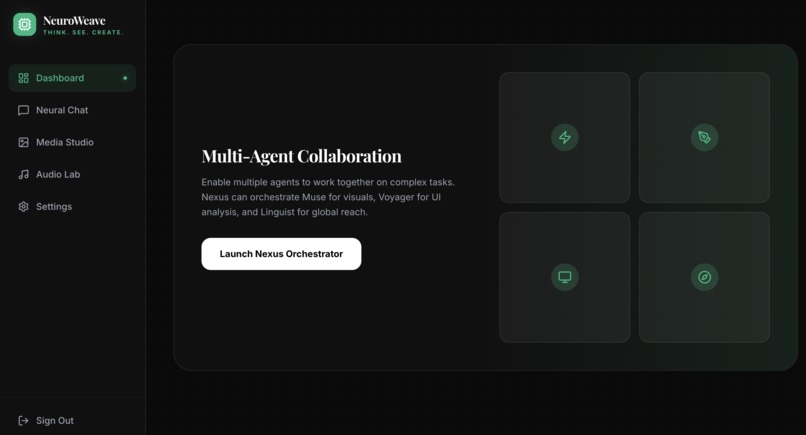
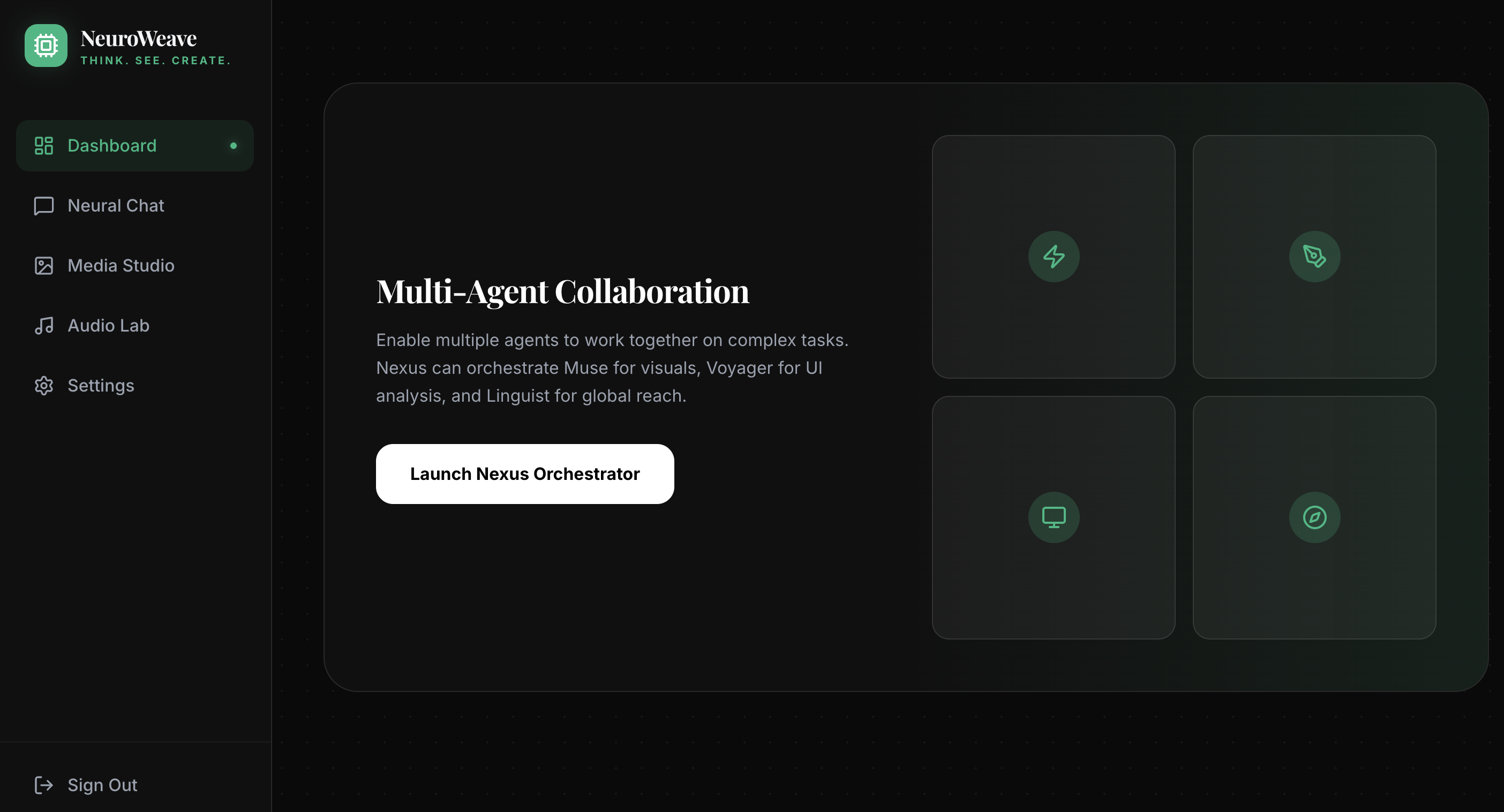
Dashboard Page 3
-
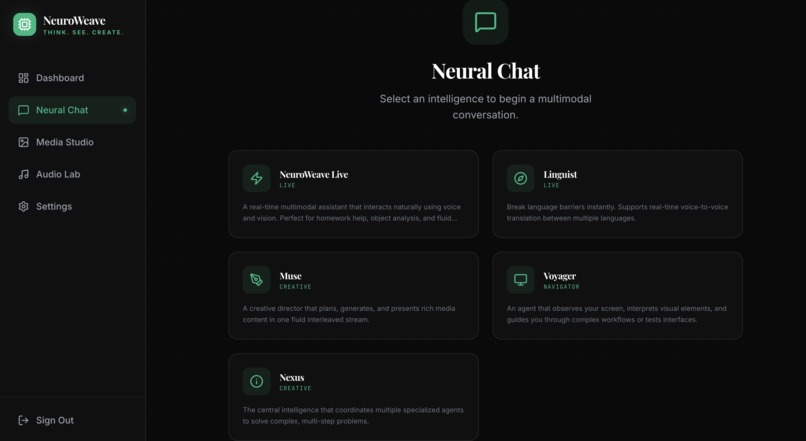
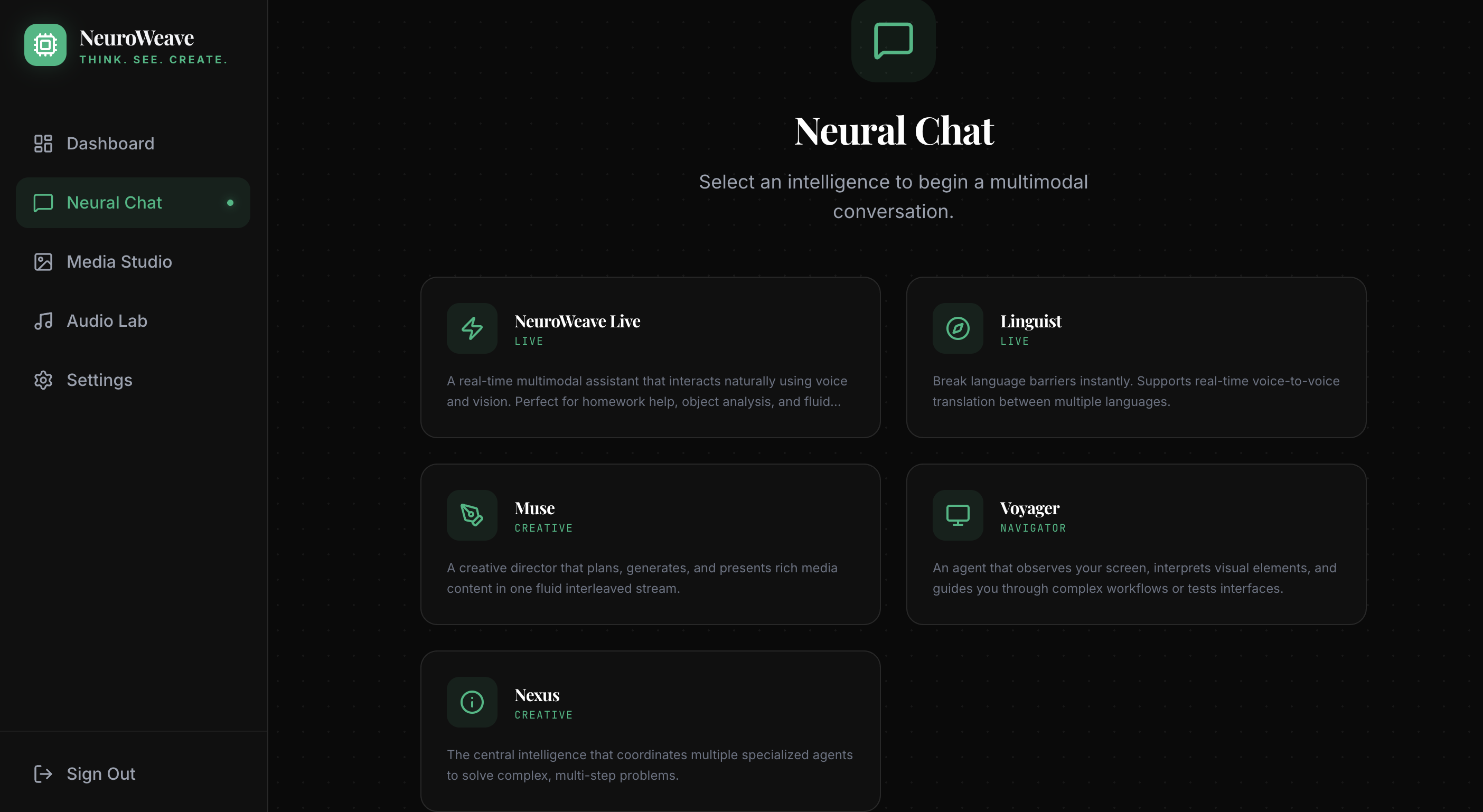
Neural Chat Page
-
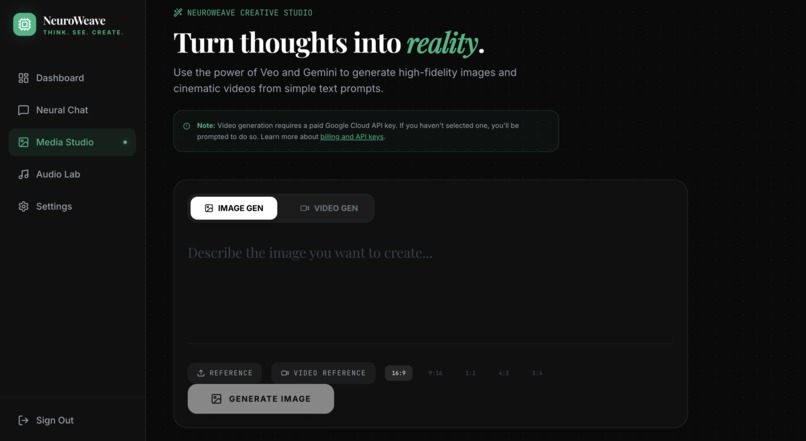
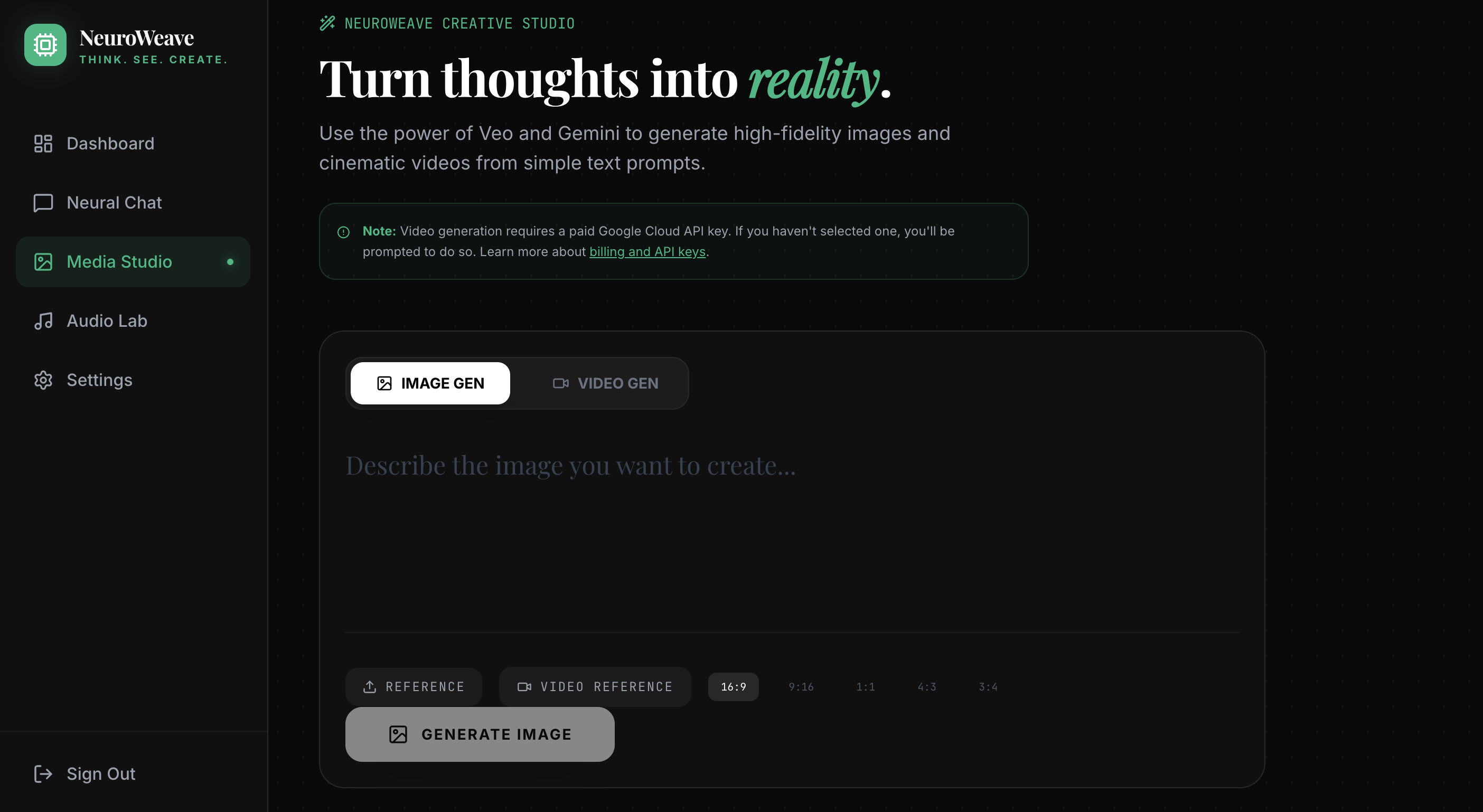
Media Studio Page
-
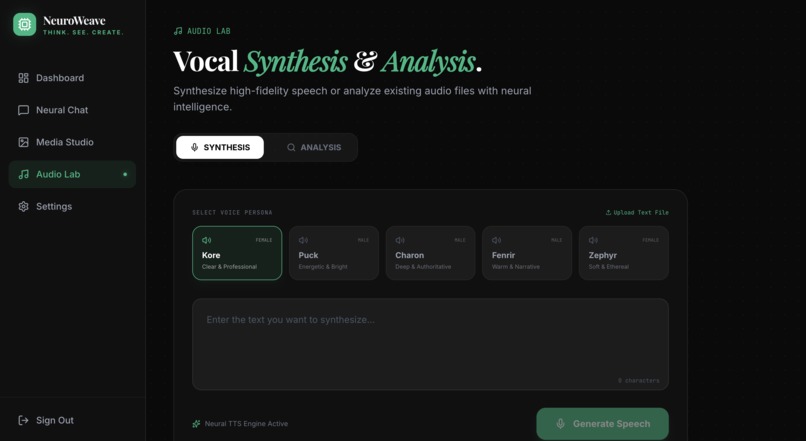
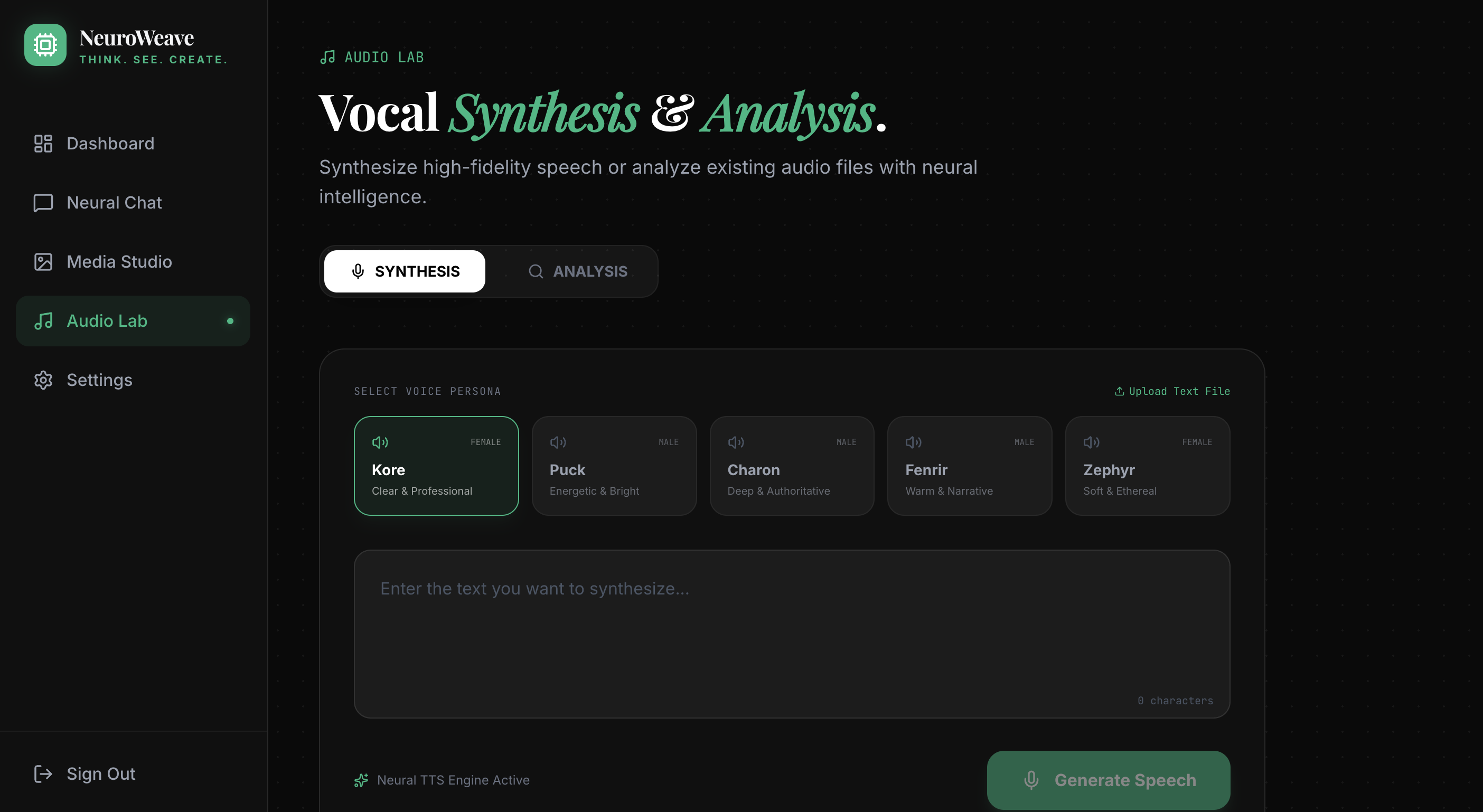
Audio Lab Page
-
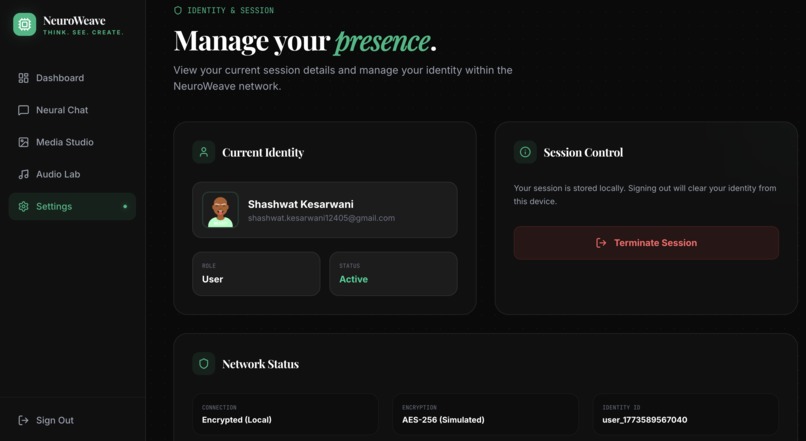
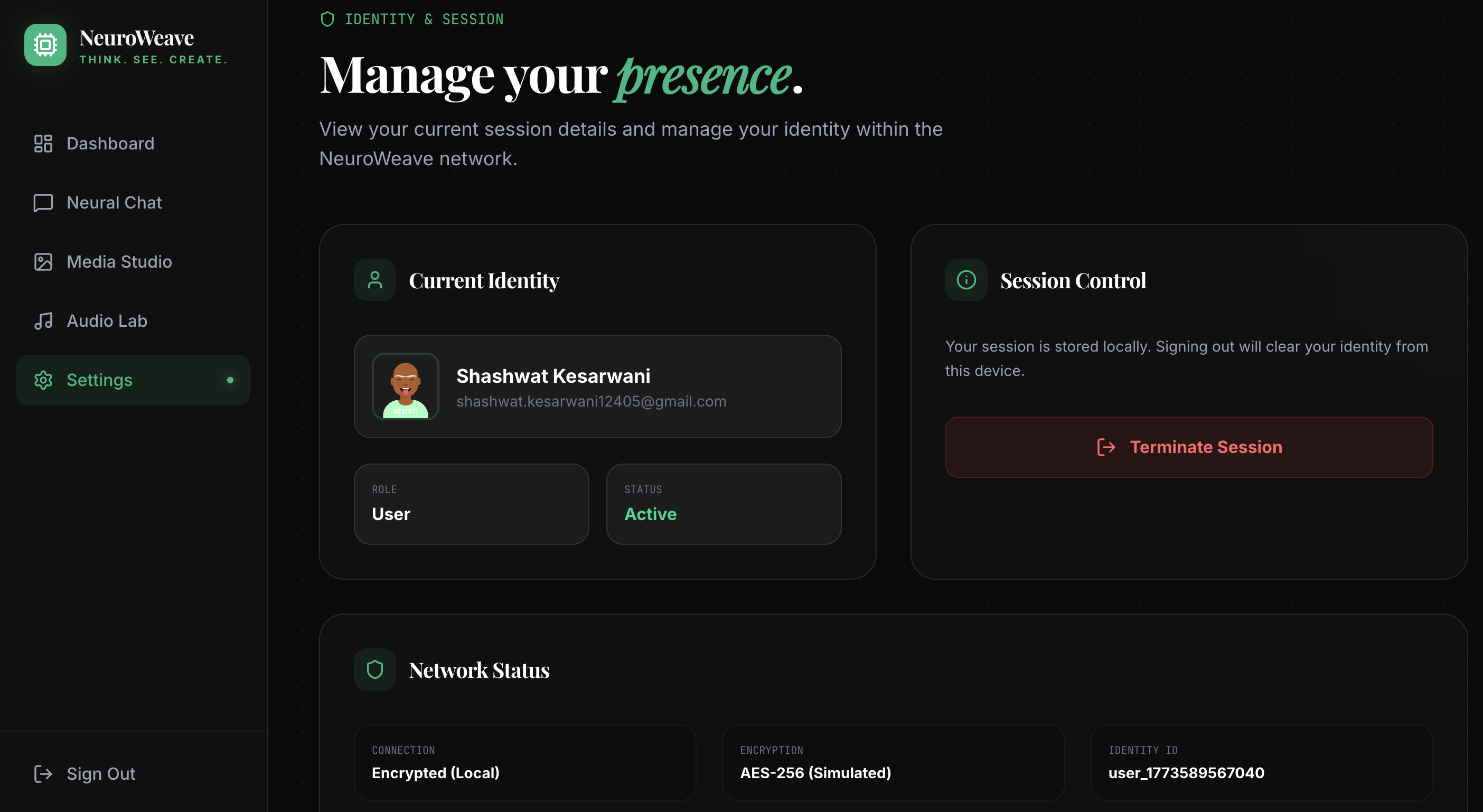
Settings Page
NeuroWeave AI: Weaving the Multimodal Future
The Inspiration
The inspiration for NeuroWeave AI came from a simple observation: humans don't just communicate through text. We see, we hear, and we create. Traditional AI interfaces often feel like a narrow straw through which we try to push complex human intent. I wanted to build a platform that felt like an extension of the human mind—a "Neural Fabric" where text, images, audio, and video are not separate features, but a single, interleaved experience. The goal was to move from "Chatbots" to "Multimodal Agents" that can truly understand the world as we do.
How I Built It
Building NeuroWeave required a sophisticated orchestration of modern web technologies and cutting-edge AI.
The Architecture
The platform is built on a robust full-stack architecture: Frontend: React 19 with Tailwind CSS for a "Technical Dashboard" aesthetic. Backend: Node.js/Express serving as the bridge between the client and the AI models. AI Layer: The heart of the system is the Google GenAI SDK, specifically leveraging the Gemini 3.1 series.
Multimodal Processing
To handle the interleaved output (text + images + audio), I implemented a custom ResponseViewer that parses model parts in real-time. For the "Live Agent" experience, I utilized the Gemini Live API to support low-latency voice interactions. One of the most interesting technical aspects was the token streaming logic. Instead of a simple "loading" state, I built a queue-based system to stream tokens with a variable delay. The perceived smoothness is a function of the incoming buffer:
What I Learned
During this journey, I learned that Multimodality is not just about features; it's about context. I discovered how to use System Instructions to shape agent personalities effectively. For example, the "Nexus Orchestrator" requires a different reasoning depth than the "Creative Storyteller." I also learned the intricacies of the Web Audio API for real-time visualization of neural frequencies. I also gained a deep appreciation for Identity over Authentication. By migrating from a rigid Firebase Auth system to a custom "Identity Initialization" flow, I learned to reduce friction while maintaining a personalized user experience.
The Challenges Faced
The path wasn't without its hurdles. Latency vs. Quality: Balancing the high-quality reasoning of Gemini 3.1 Pro with the need for real-time interaction was a constant challenge. I solved this by implementing dynamic Thinking Levels: For complex reasoning: For quick chats: State Synchronization: Managing the state of multiple agents (Live, Creative, Navigator) within a single React context required careful use of hooks to avoid infinite re-renders. The "Iframe Constraint": Since the app runs in a sandboxed environment, traditional pop-up-based OAuth was tricky. I eventually pivoted to a local identity system to ensure the app remains functional and accessible in any environment.
Conclusion
NeuroWeave AI is more than just a project; it's a proof of concept for the next generation of human-AI collaboration. By weaving together sight, sound, and thought, we are one step closer to an AI that doesn't just answer questions but understands our world. Think. See. Create.
Built With
- css3
- dicebear-api
- express.js
- firebase
- firebase-firestore
- googel-genai-sdk
- google-cloud-run
- lucide
- motion
- react19
- sqlite
- tailwind
- typescript
- vite6
- wavesurfer.js

