-
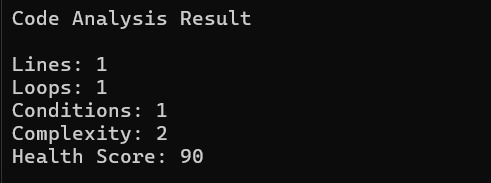
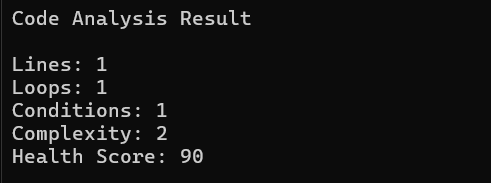
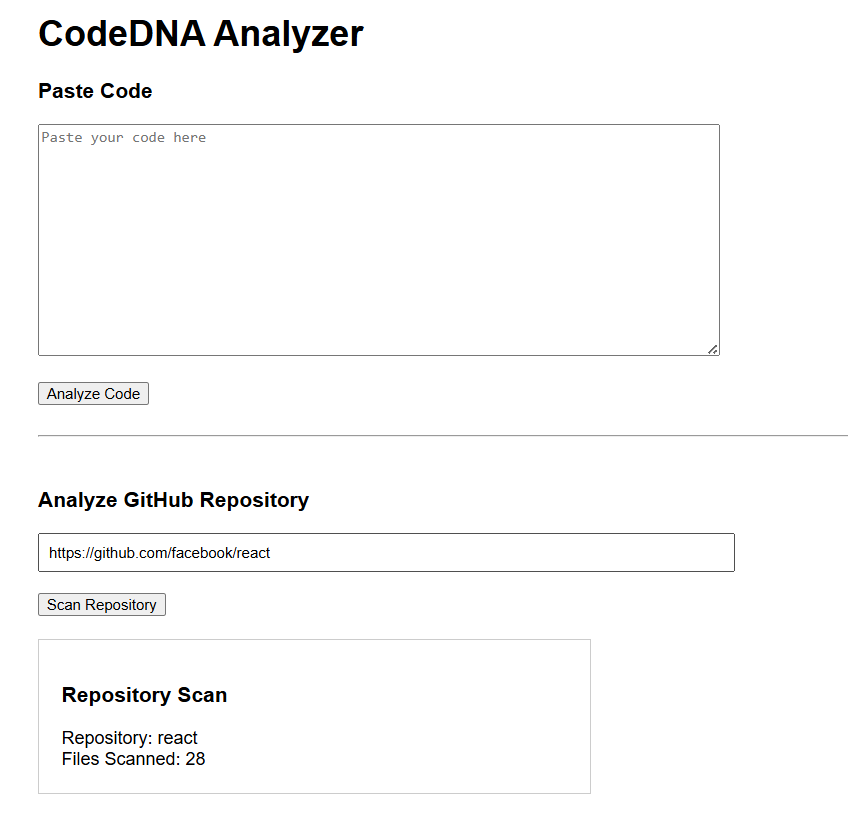
Simple Result Structure
-
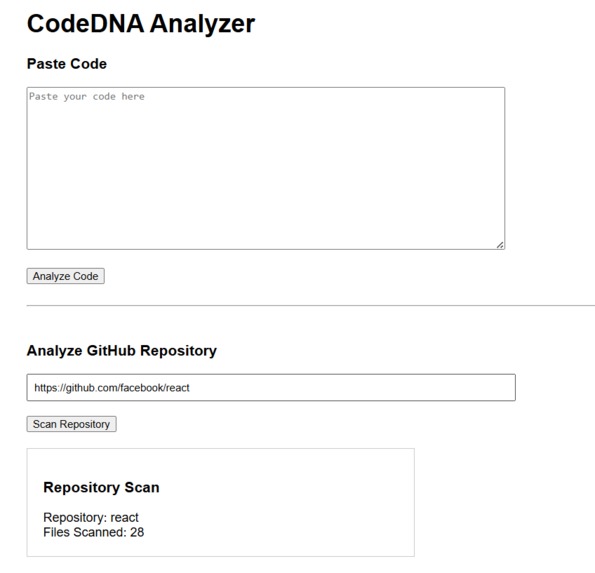
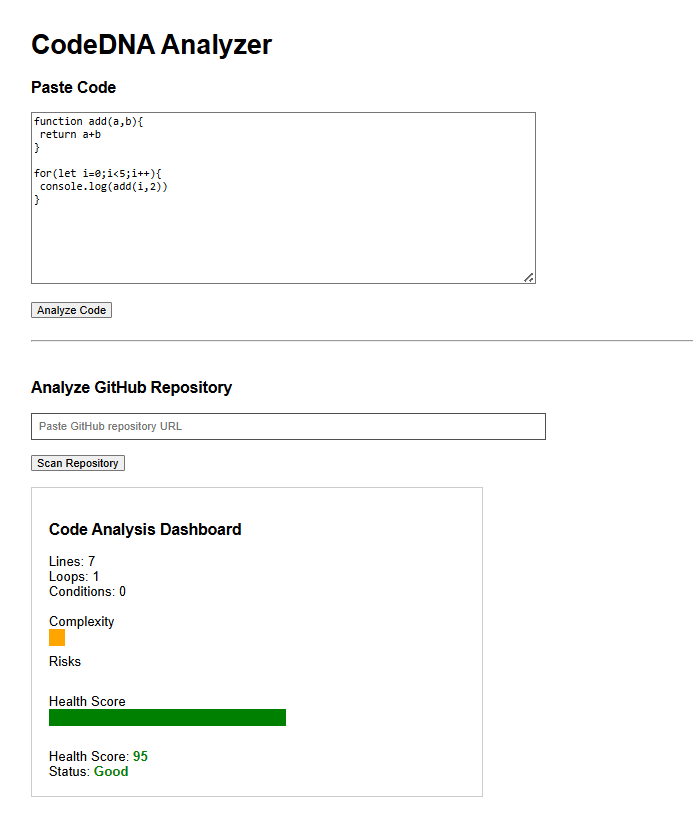
Code Analysis Dashboard
-
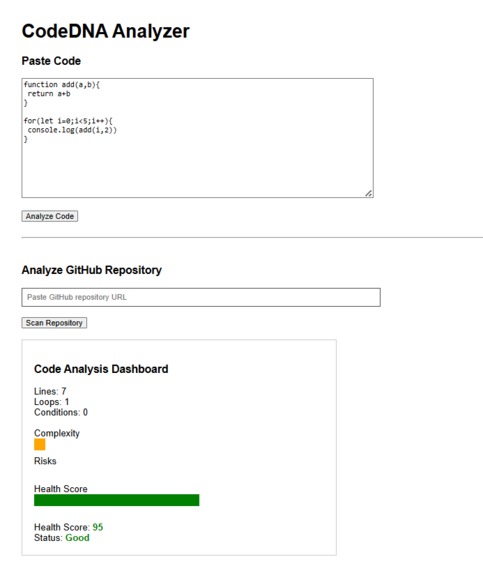
Complexity Visualization
-
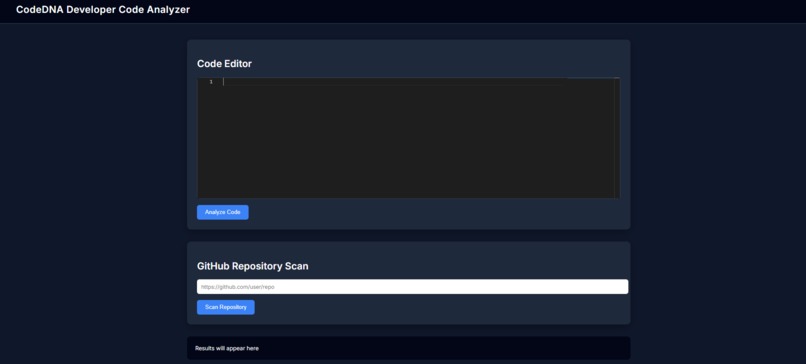
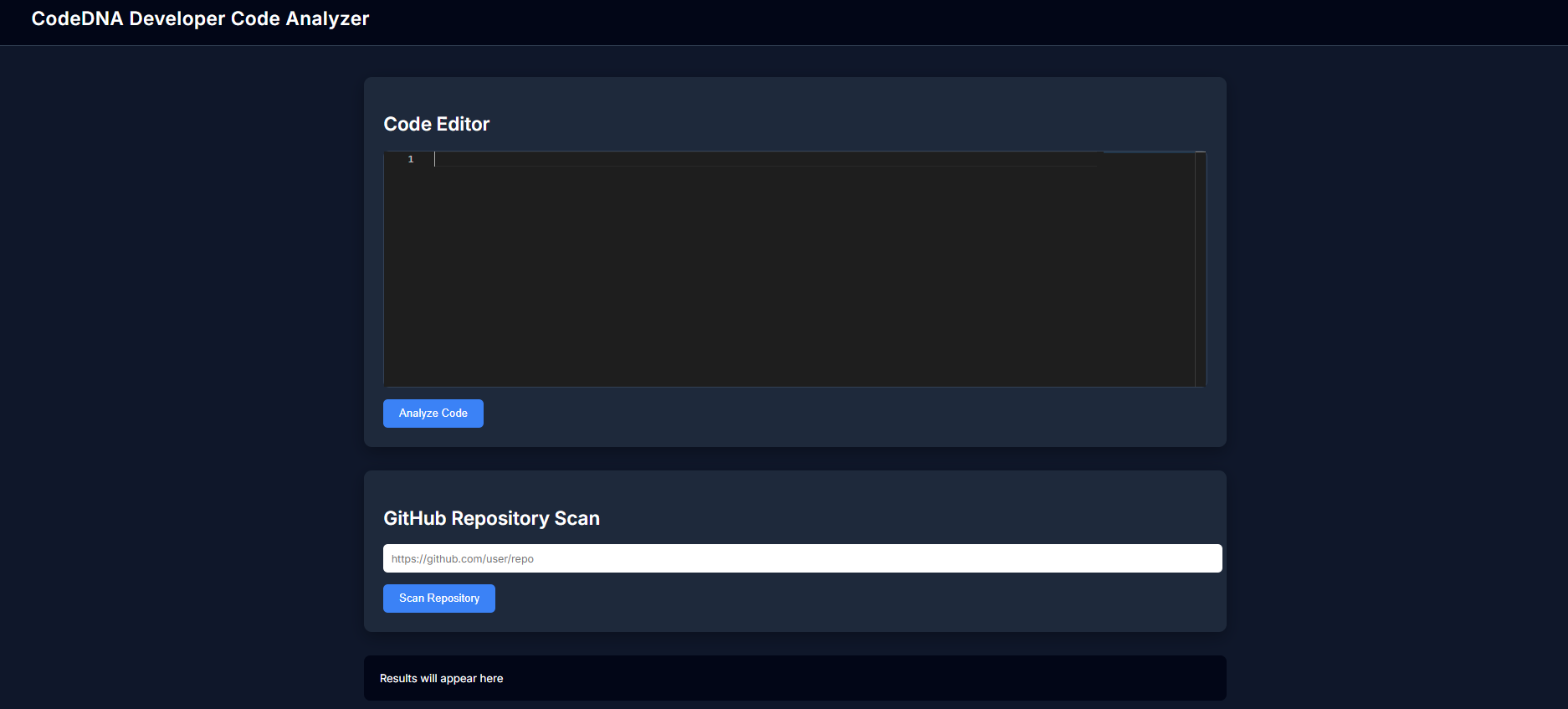
Devoped version
-
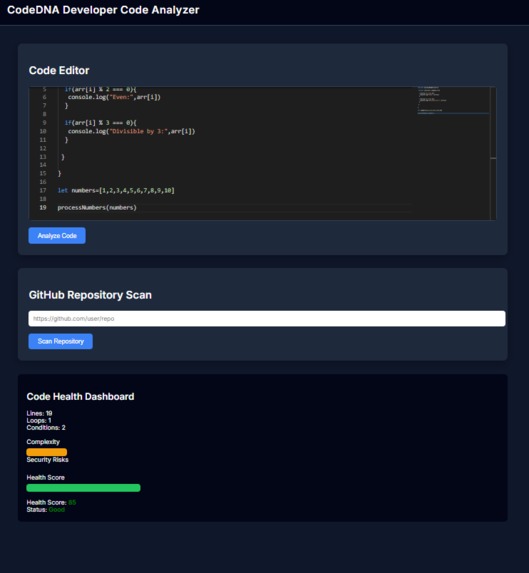
Repository File Metrics
-
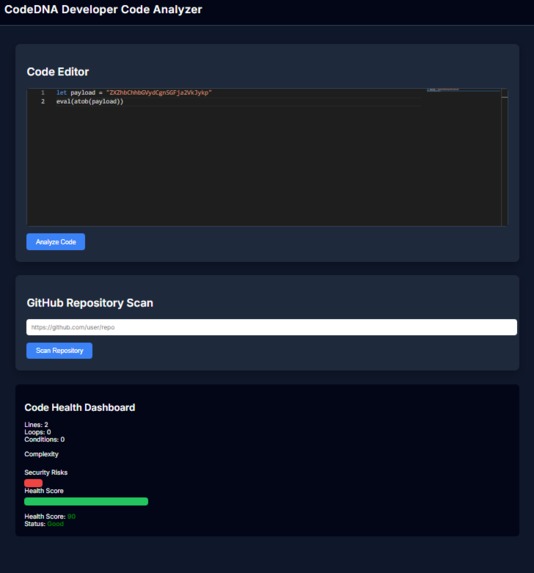
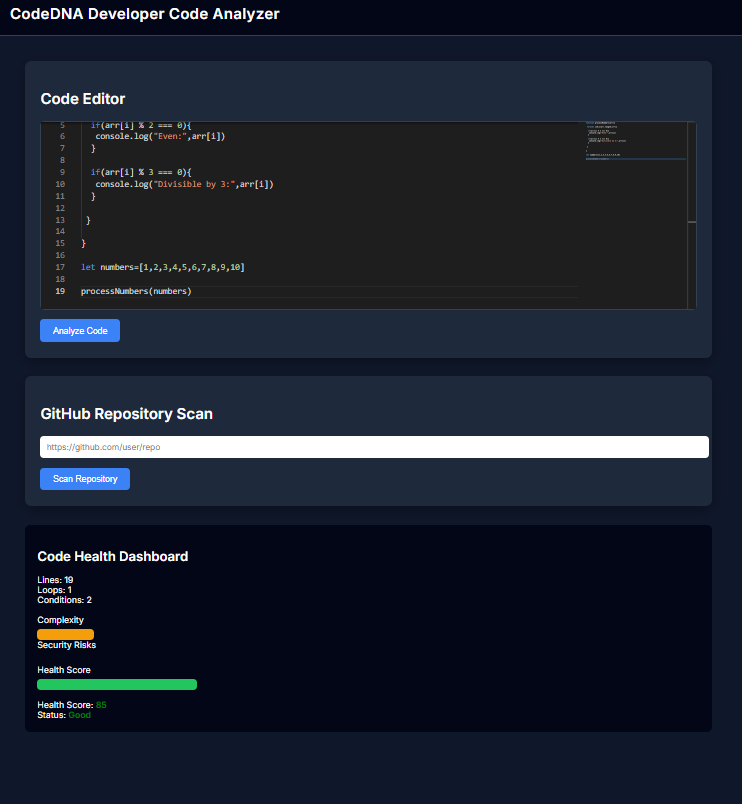
Visual Metrics Dashboard
-
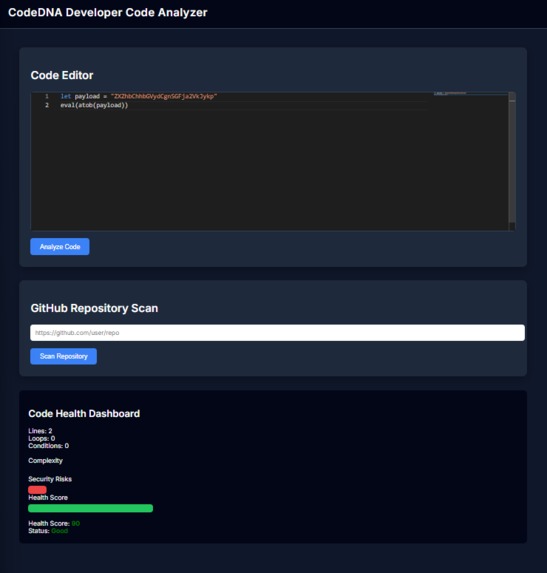
Final Analysis Result
Inspiration
Modern software projects often contain thousands of lines of code, making it difficult for developers to quickly identify complexity, hidden bugs, or suspicious logic. Most developers rely on manual code reviews or simple linters, which often fail to reveal deeper structural problems.
We were inspired by the idea that code behaves like DNA. Just as biological DNA reveals the structure and health of living organisms, the structure of code reveals the quality, complexity, and potential risks of a software system.
This inspired us to build CodeDNA, a platform that analyzes codebases and extracts insights about their health, complexity, and hidden risks.
What it does
CodeDNA is a code analysis platform that allows developers to submit:
- Manually typed source code
- A GitHub repository link
The system scans the codebase and generates a detailed report including:
- Code complexity analysis
- Code health score
- Potential bug detection
- Suspicious or malicious code detection
Code complexity is measured using metrics like Cyclomatic Complexity:
$$ M = E - N + 2P $$
Where:
- (M) = Cyclomatic complexity
- (E) = Number of edges in the control flow graph
- (N) = Number of nodes
- (P) = Number of connected components
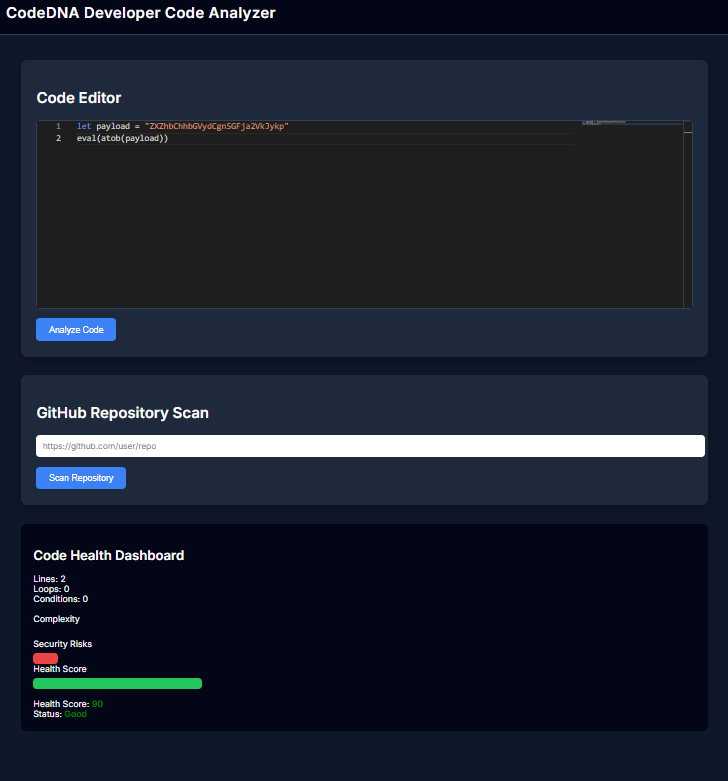
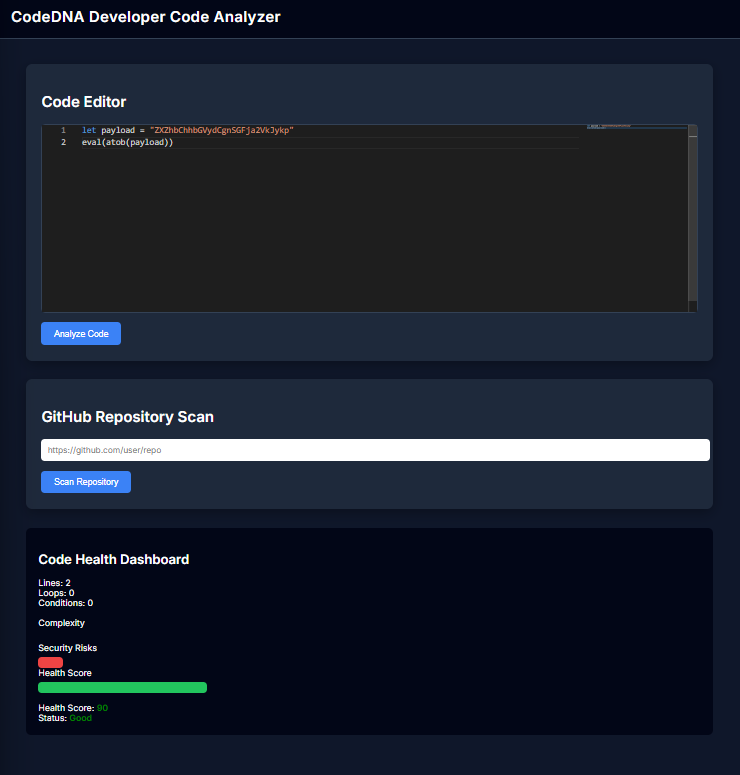
The results are displayed in a visual dashboard showing the overall health and security status of the codebase.
How we built it
We built CodeDNA using a full-stack architecture.
Frontend
- React.js
- Tailwind CSS
Backend
- Node.js
- Express.js
Code Analysis Engine
- Python scripts
- Abstract Syntax Tree (AST) parsing
- Static code analysis methods
Integration
- GitHub API for repository analysis
Database
- MongoDB
Workflow:
- User submits code or a GitHub repository link
- Backend retrieves and parses the codebase
- Static analysis algorithms evaluate complexity and patterns
- Security scanning checks for suspicious or hidden logic
- Results are displayed in a visual dashboard
Challenges we ran into
One major challenge was analyzing large codebases efficiently. Some repositories contain thousands of files, which required optimizing the scanning process.
Another challenge was detecting suspicious code patterns without producing too many false positives. Designing reliable detection rules required careful balancing.
Handling GitHub repositories also required managing repository structures, API requests, and large file processing.
Accomplishments that we're proud of
We are proud that we successfully built a system capable of:
- Scanning large codebases efficiently
- Generating clear code health reports
- Detecting potential bugs and suspicious patterns
- Creating a clean developer-friendly dashboard
Combining code quality analysis, security insights, and developer tooling into one platform was a major achievement for our team.
What we learned
During the development of CodeDNA we learned:
- Static code analysis techniques
- Abstract Syntax Tree (AST) parsing
- Code complexity measurement
- GitHub API integration
- Full-stack system architecture
We also gained deeper insight into how code structure can reveal both software quality and security risks.
What's next for CodeDNA
In the future we plan to expand CodeDNA with:
- AI-powered bug prediction
- Automated code improvement suggestions
- Team code collaboration insights
- Support for more programming languages
- CI/CD pipeline integration
Our long-term goal is to turn CodeDNA into a developer intelligence platform that helps engineers build cleaner, safer, and more maintainable software.
Built With
- abstract
- analysis
- api
- apis
- complexity
- css
- express.js
- github
- javascript
- mongodb
- node.js
- python
- react.js
- rest
- static
- syntax
- tailwind
- tree


Log in or sign up for Devpost to join the conversation.