🧠 Inspiration:-
Early screening tools for monitoring physiological changes are heavily restricted by specialized hardware costs, clinical access barriers, and steep language divides. Most global digital health monitoring solutions are designed exclusively around English-language interfaces. This systemic barrier isolates non-English speaking regional populations from accessing simple, non-invasive digital screening utilities. NeuroVoice was built to bridge this accessibility gap, turning any standard web browser into a culturally inclusive baseline trend-tracking workspace.🛠️
What it Does-
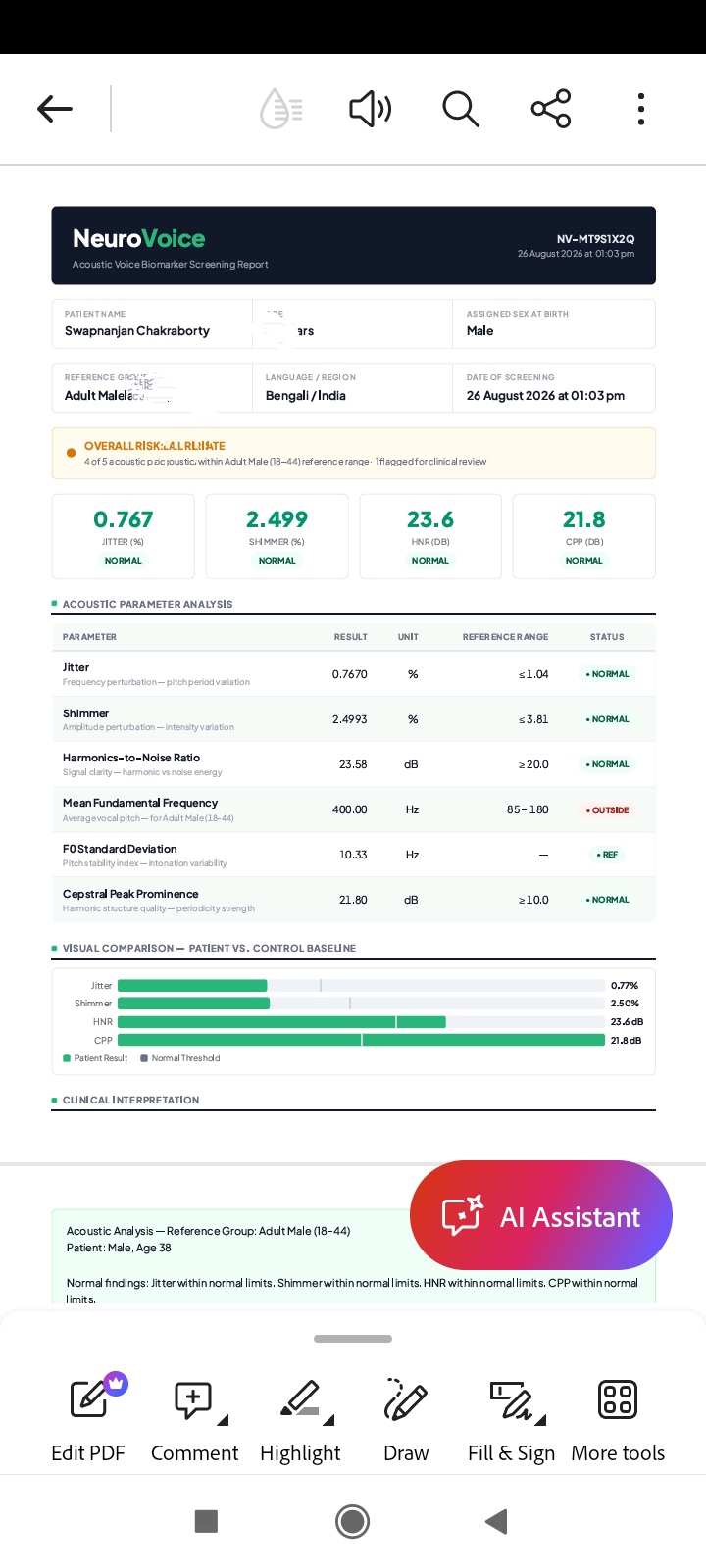
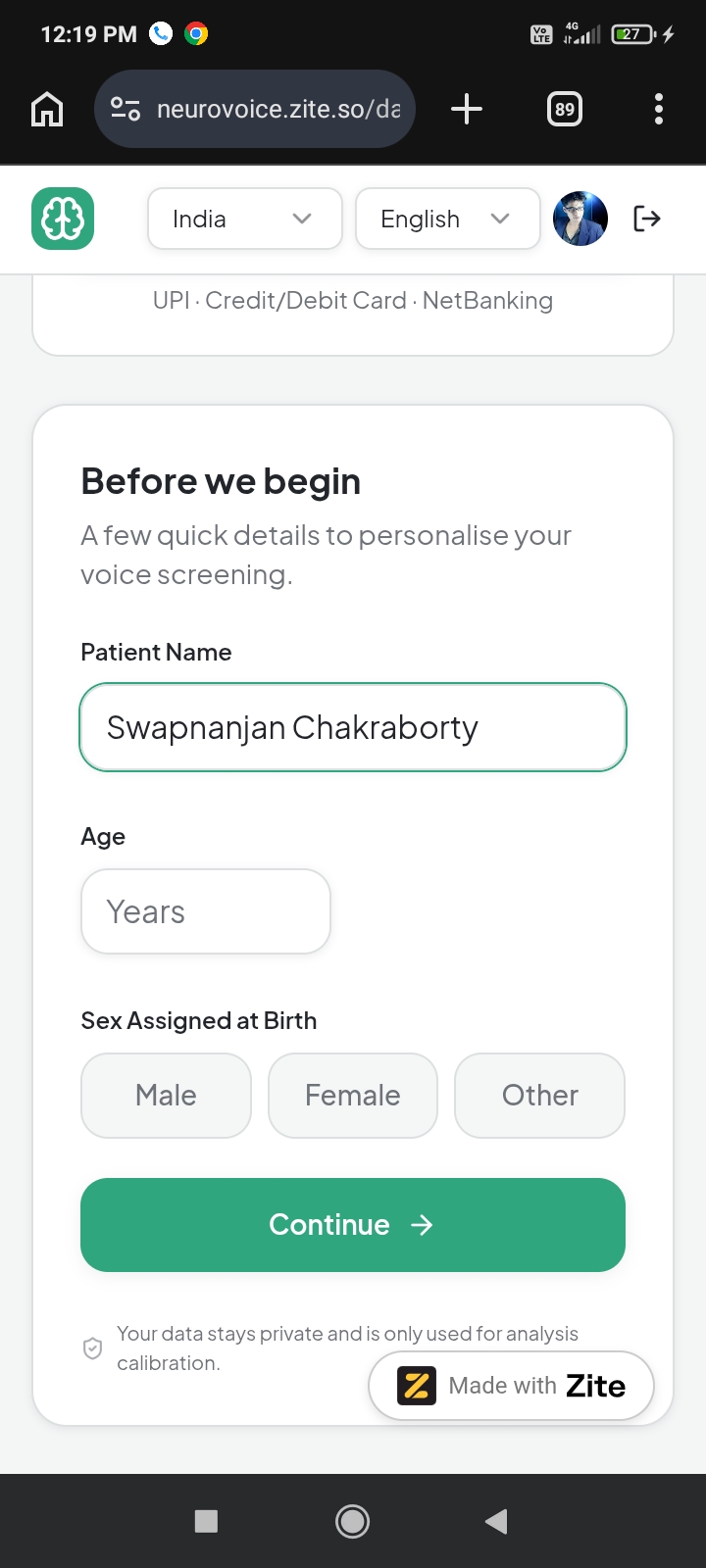
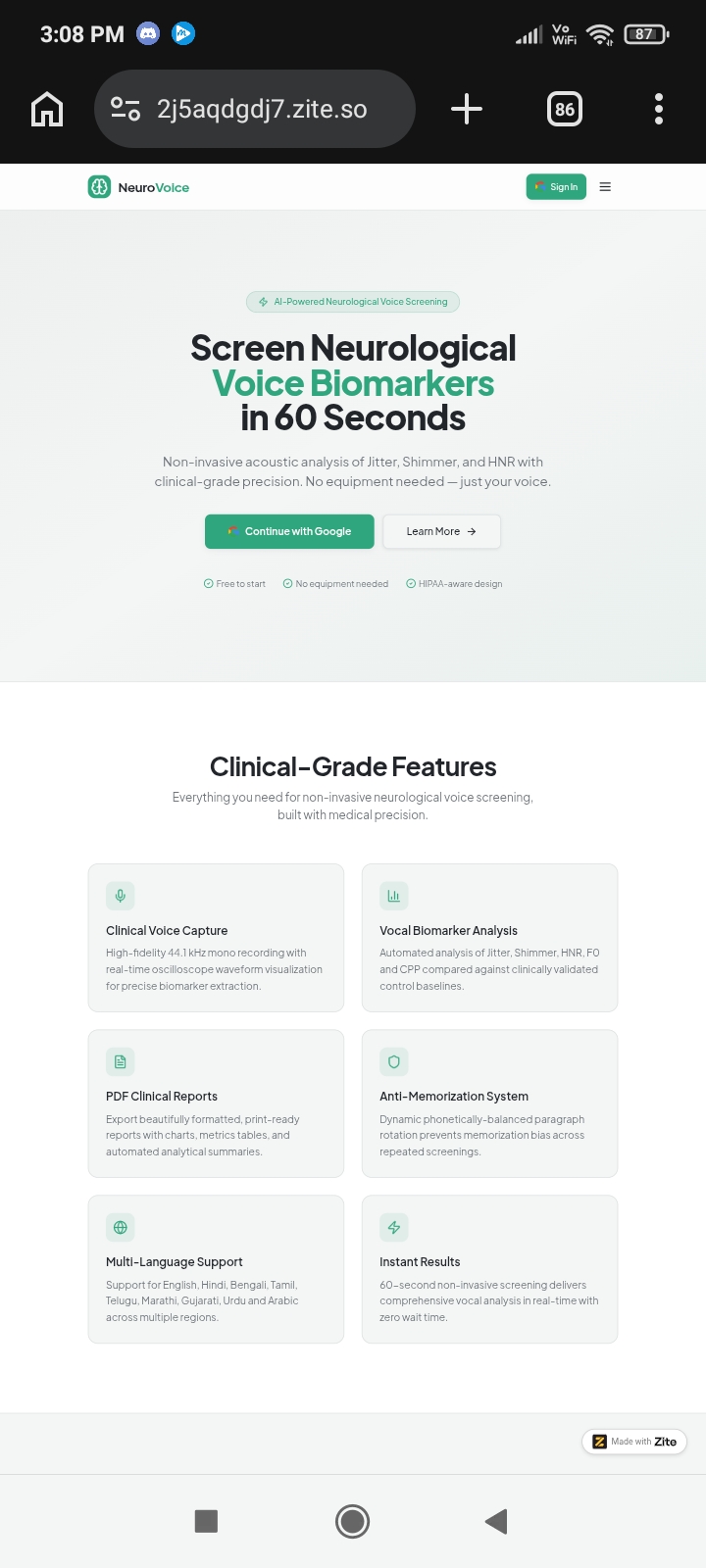
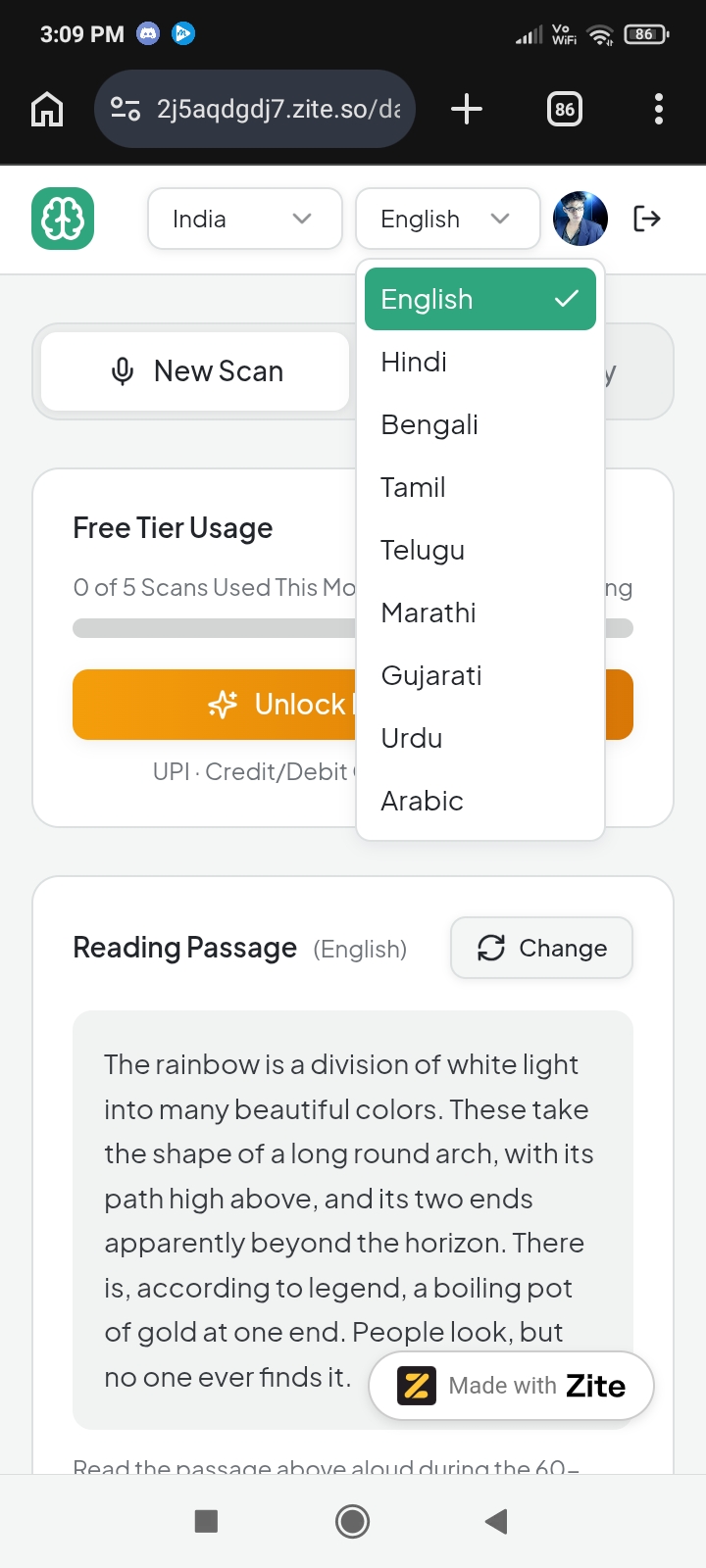
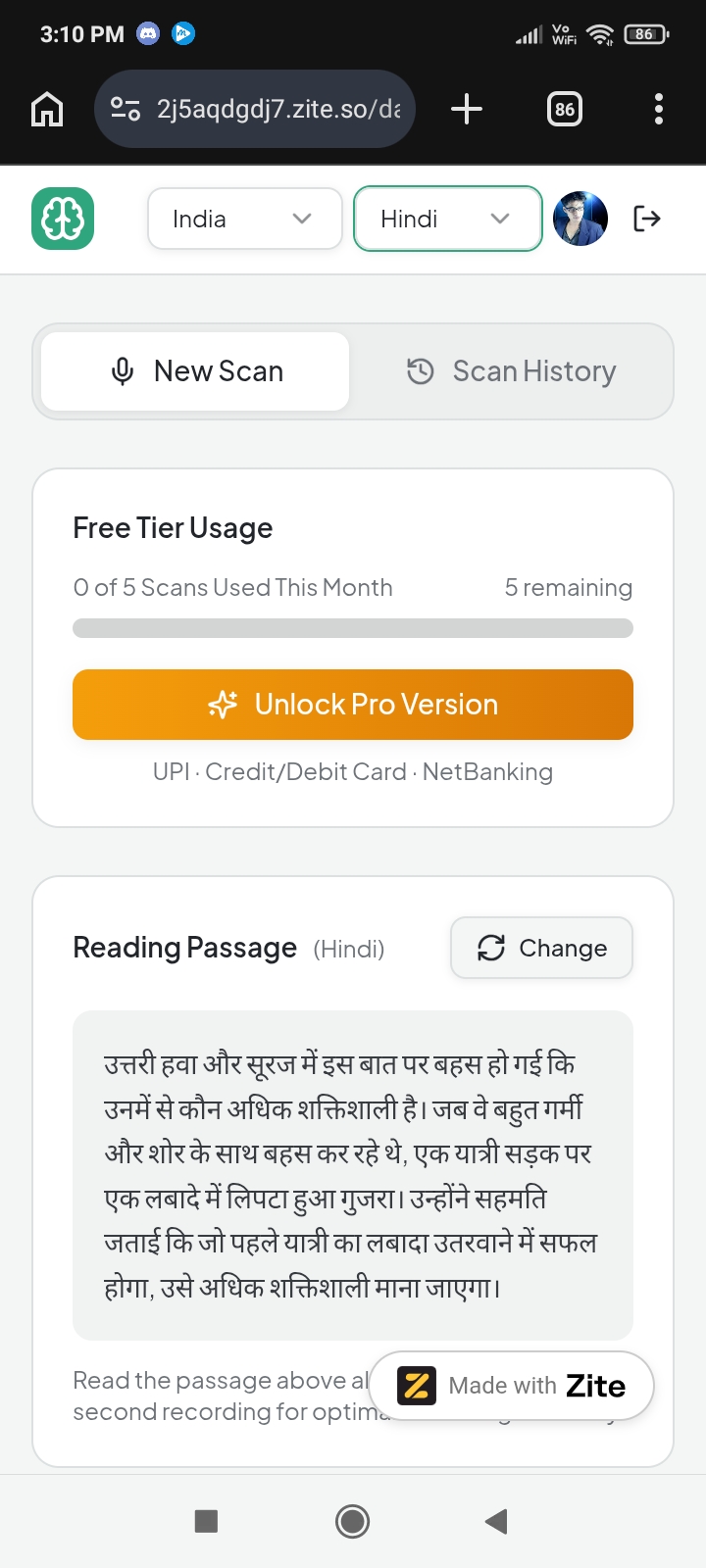
NeuroVoice provides a fully localized, web-accessible acoustic tracking dashboard that measures voice metrics in 60 seconds without requiring specialized diagnostic equipment. Users select their native dialect from an integrated regional drop-down menu and read a standardized text passage aloud. The system captures the voice stream, visualizes the input in real-time, and securely processes the acoustic file to map ongoing personal baseline trends over time.
⚙️ How We Built It:-
The application frontend is structured as a highly responsive web workspace built around an isolated audio capture engine.Audio Pipeline: Engineered a high-fidelity, 44.1 kHz mono channel recording architecture featuring a real-time oscilloscope visualizer to ensure clean, precise data input.Localization Routing: Programmed a dynamic script state framework that automatically swaps the reading passage based on user selection, with native support for Hindi, Bengali, Tamil, Telugu, Marathi, Gujarati, Urdu, and Arabic.SaaS Tier Architecture: Implemented an integrated freemium ledger model that limits heavy server-side computation to 5 initial baseline scans per month, featuring modular credit and upgrade triggers.
🛑 Challenges We Overcame & Compliance:-
Our core challenge was balancing deep data accessibility with transparent technical boundaries. Because acoustic fluctuations can easily be triggered by everyday non-neurological variables—such as localized throat irritation, common colds, or temporary vocal strain—it was mathematically and ethically vital to avoid false positives.To overcome this, we built a prominent, high-visibility warning notification system directly into the workspace layout. The platform enforces strict data transparency by clarifying that the software operates purely as an informational acoustic trend-monitoring aid. The system explicitly instructs users that the application must never substitute for a formal clinical checkup, official physician diagnosis, or laboratory evaluation.
HEALTH IMPACT, POPULATION TARGETS, & MEDICAL SYSTEM SAFETY:
NeuroVoice targets the global population of aging adults and individuals in remote or underserved settings who lack localized access to specialized diagnostic facilities. By providing early risk indicators across 9 major regional languages, it bridges critical screening gaps before advanced clinical symptoms manifest.
System Integrity & Safety Safeguards:
- Transparent Architecture: The platform incorporates clear user-facing system transparency layout cues to explicitly clarify that the software operates purely as a preliminary acoustic risk-tracking workspace.
- Boundaries of Use: NeuroVoice is strictly designed for non-diagnostic longitudinal monitoring. It explicitly implements an informational disclosure and data privacy layer instructing users that the application must never substitute for a direct, formal specialist evaluation, in-person clinical diagnosis, or medical treatment program.
🏆 Technical Resilience & Future Vision:-
To maintain maximum uptime and strict user data privacy, the software implements a client-side architecture where users can securely supply their own cloud credentials directly inside the interface component, shifting heavy computing overhead away from central servers. The next phase of development focuses on deploying localized offline processing modules, allowing users in remote, low-connectivity zones to capture clean acoustic samples and track their trends without data degradation.
📝 Lessons We Learned:-
Prioritizing Ethical UI Boundaries:
We learned that when building screening software, interface transparency is just as critical as technical execution. To prevent user misinterpretation, we had to deliberately design an inescapable, high-visibility warning banner directly in the primary workspace layout. This taught us how to balance clean application aesthetics with strict, compliant safety messaging.
Handling Variable User Tempos via Native Scripts:
Designing a voice capture engine with a fixed 60-second execution window taught us that different languages vary drastically in reading speed and syllable length. By implementing a dynamic, native-script prompt system (supporting regional languages like Hindi, Bengali, and Tamil), we learned how to standardize speech tempos across diverse dialects to keep raw audio inputs consistent.
Balancing Compute Costs via Freemium Restrictions:
Processing uncompressed 44.1 kHz mono audio streams can quickly strain server infrastructure. We learned how to protect our operational architecture by engineering a robust tier-logic mechanism that restricts heavy computing resources to 5 baseline scans per month, keeping the application scalable for solo professionals.
🌟 What We Are Proud Of-
Engineering a True Solo Professional MVP: We are proud of completely building, deploying, and styling a sophisticated health-tech dashboard entirely as a solo developer, proving that high-quality, production-ready SaaS platforms can be executed without massive team overhead.Breaking the Language Barrier in Digital Health: We successfully launched an operational, multi-dialect interface that natively supports 8 major regional languages (including Hindi, Bengali, Tamil, and Telugu), bringing inclusive screening access to underserved non-English speaking communities.
Executing High-Fidelity Signal Processing on the Web:
We successfully stabilized a raw 44.1 kHz mono audio capture engine directly within a mobile-responsive web browser, proving that precise acoustic parameter analysis doesn't require native desktop hardware.Deploying a Compliant, Responsible Workspace: We are incredibly proud of architecting this system with deep ethical guardrails—integrating a strict billing tier logic alongside a highly prominent compliance banner to protect user expectations from day one.
Disclaimer: This project narrative is structured strictly as technical documentation for a software development competition entry. It describes an informational screening aid and does not constitute medical advice, clinical validation, or a diagnostic protocol.
Built With
- css3
- gemini-1.5-flash
- google-gemini-sdk
- html5-audio-api
- javascript
- react
- serpapi
- zite


Log in or sign up for Devpost to join the conversation.