Inspiration
I was driven to build NeuroVitals AI after witnessing the staggering global bottleneck in neurological care. Millions face months-long waitlists just to get an initial neurological triage, while early signs of neurodegenerative conditions often go unnoticed. I wanted to leverage modern web technology and accessible consumer hardware—like standard webcams and microphones—to democratize preliminary screening and bridge the gap between patients and specialized care.
What it does
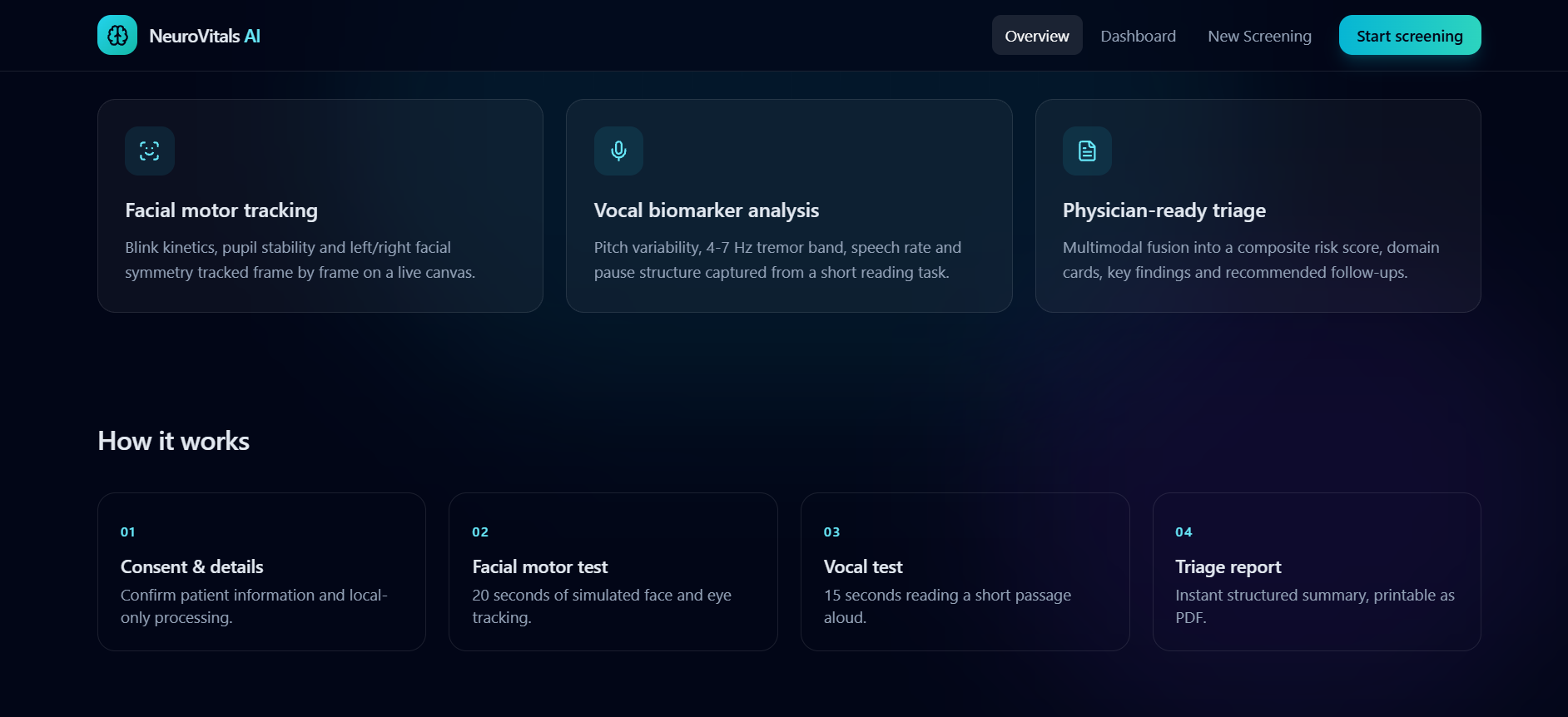
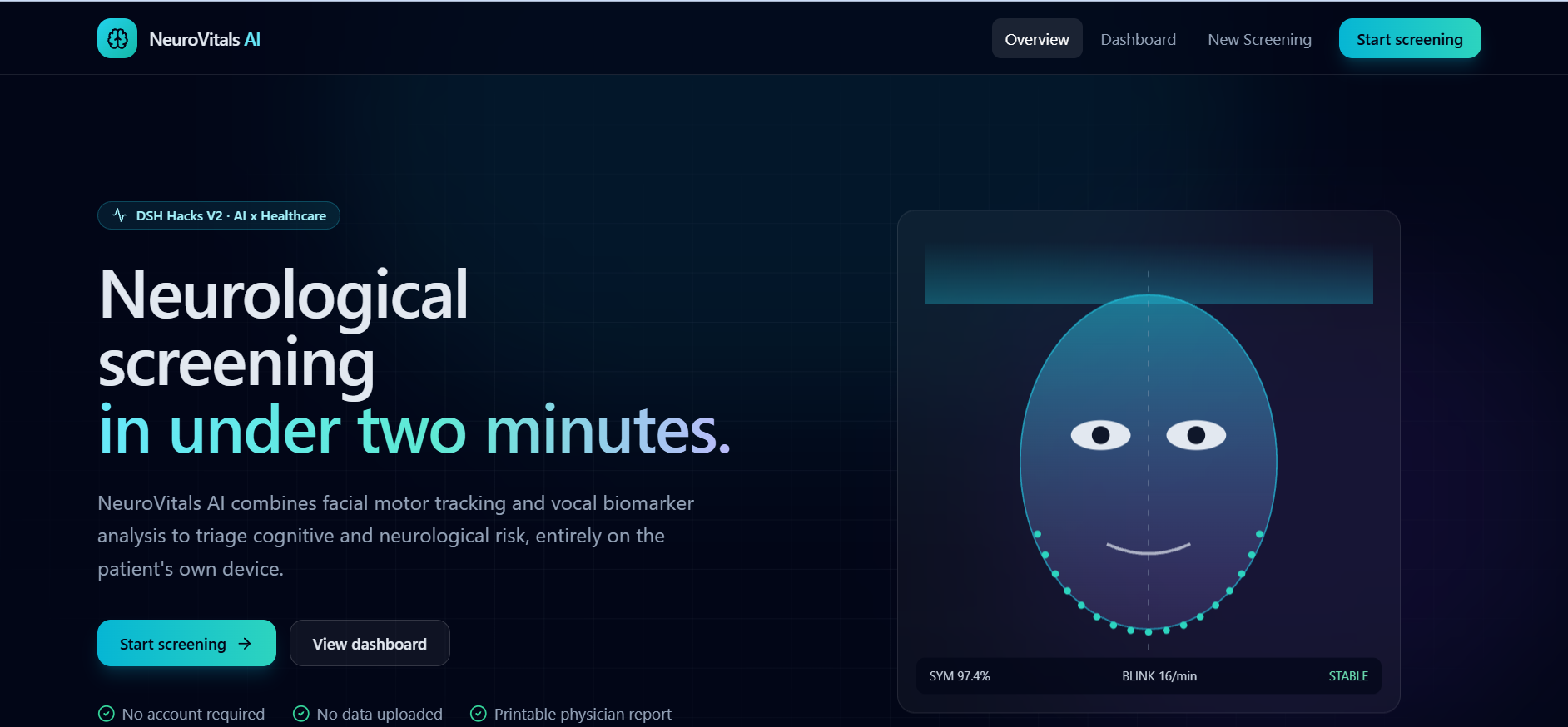
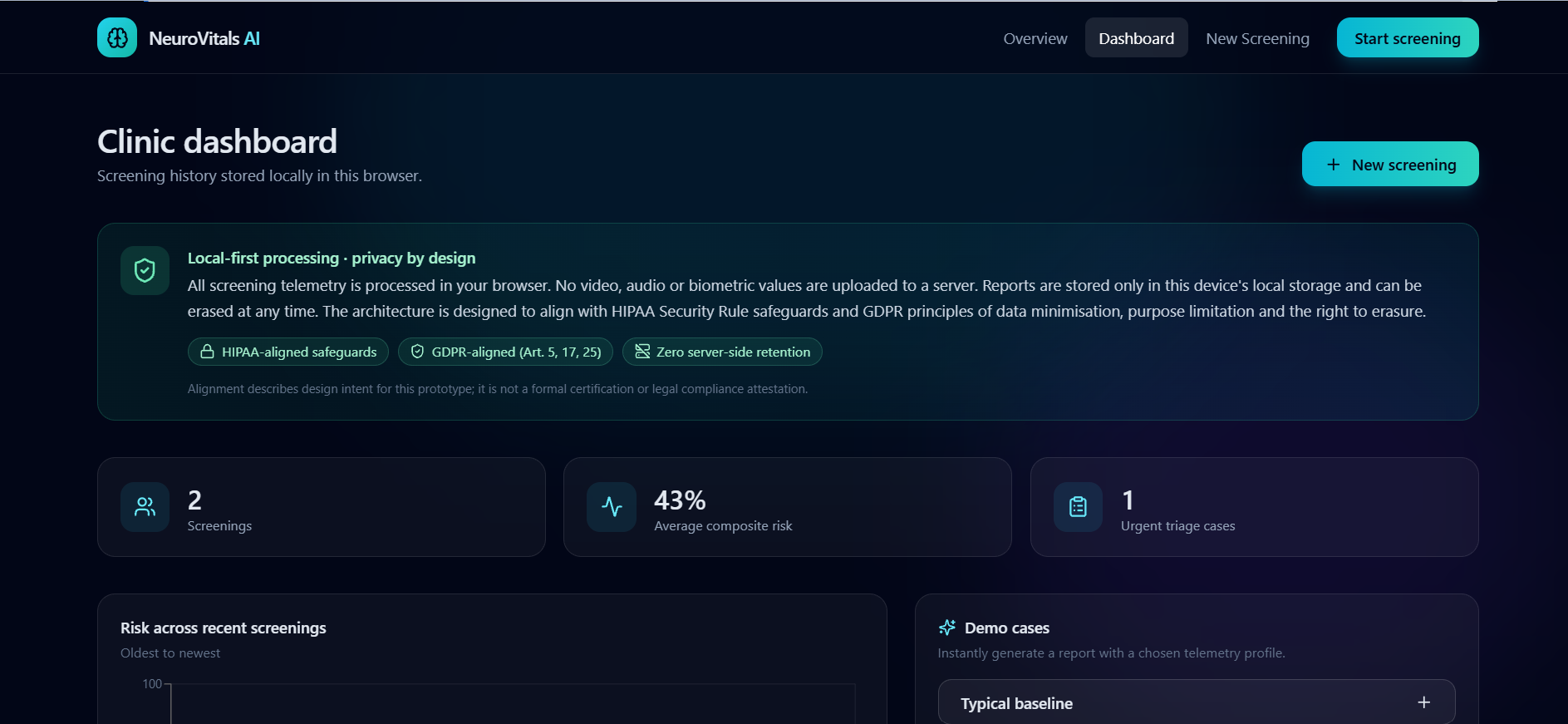
NeuroVitals AI is an advanced, multimodal neurological screening and cognitive triage platform. It guides users through an interactive, browser-based assessment that captures simulated visual biomarkers (facial symmetry, blink rate, and motor response via computer vision) and vocal biomarkers (pitch stability and speech cadence). The system processes these metrics locally to generate an instant, structured clinical report complete with risk scores and biometric breakdown cards.
How I built I
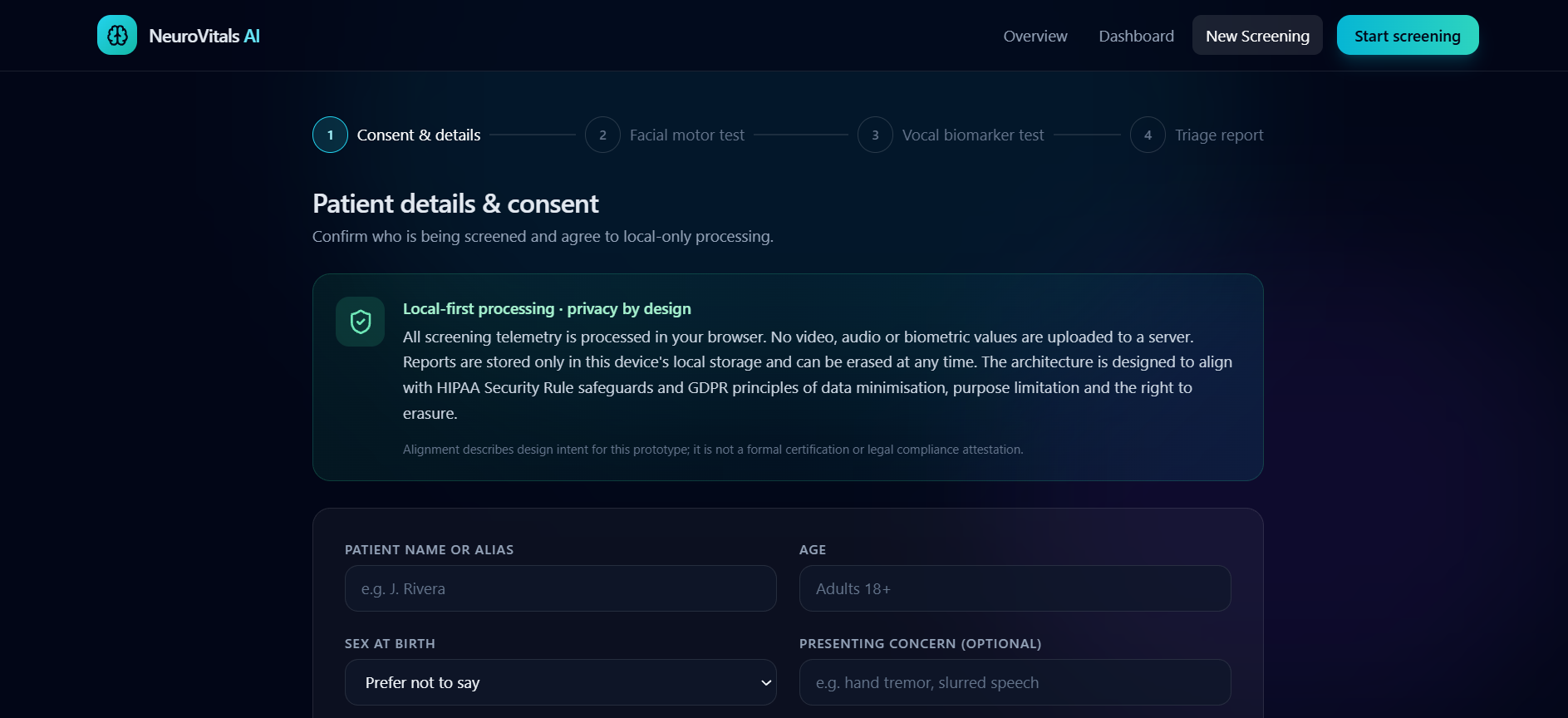
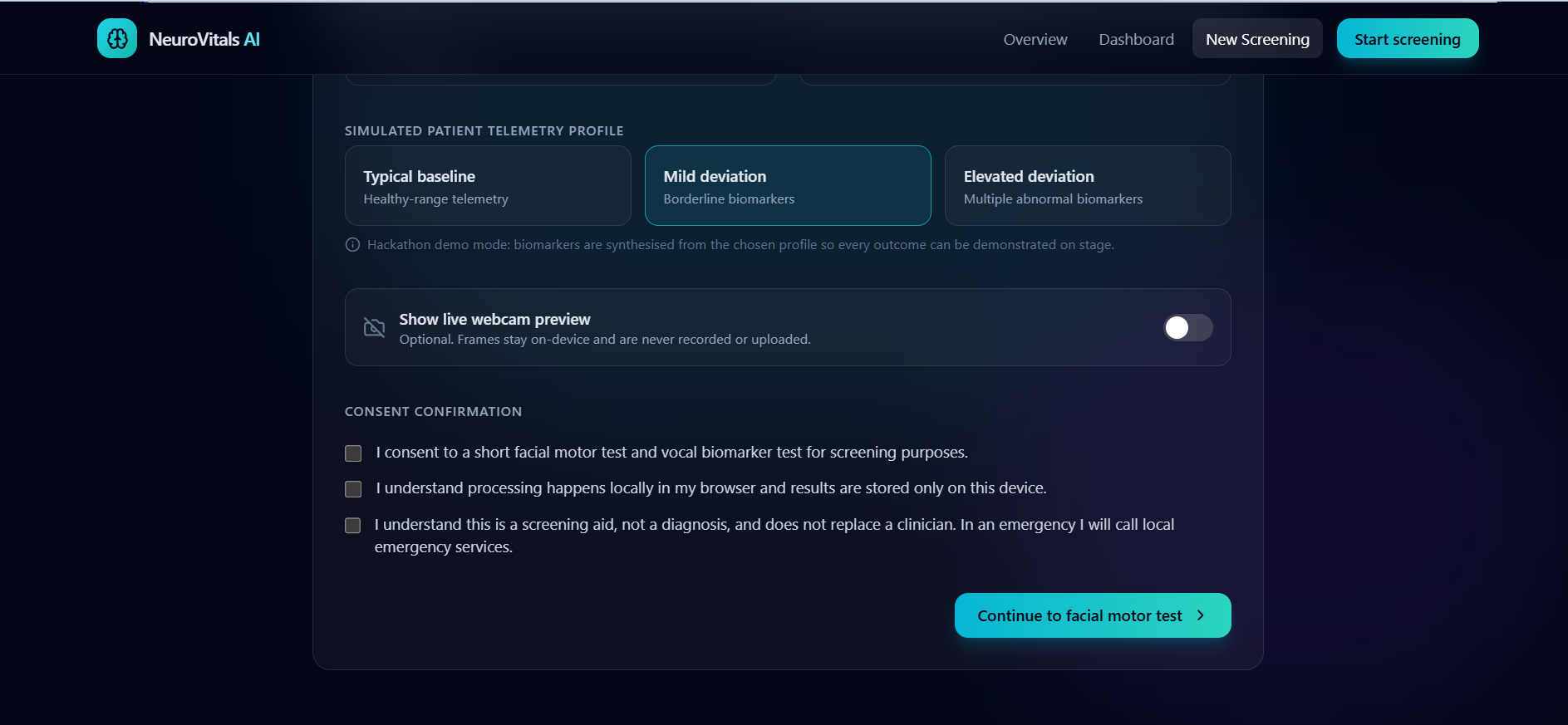
I engineered the platform using Next.js 14+ with the App Router, leveraging Tailwind CSS for a high-end, dark-mode medical SaaS aesthetic and Lucide icons for clean visual UI components. The architecture features multi-step dynamic state management to guide users seamlessly from metadata consent through webcam motor testing and audio biomarker recording, culminating in automated clinical triage calculations.
Challenges I ran into
Balancing technical depth with a clean, professional UI that looks like a commercial medical product was a major design hurdle. I also had to carefully structure the asynchronous state transitions between the webcam canvas tracking modules and the audio capture components to ensure a smooth user experience without dropping performance or breaking layout responsiveness.
Accomplishments that I'm proud of
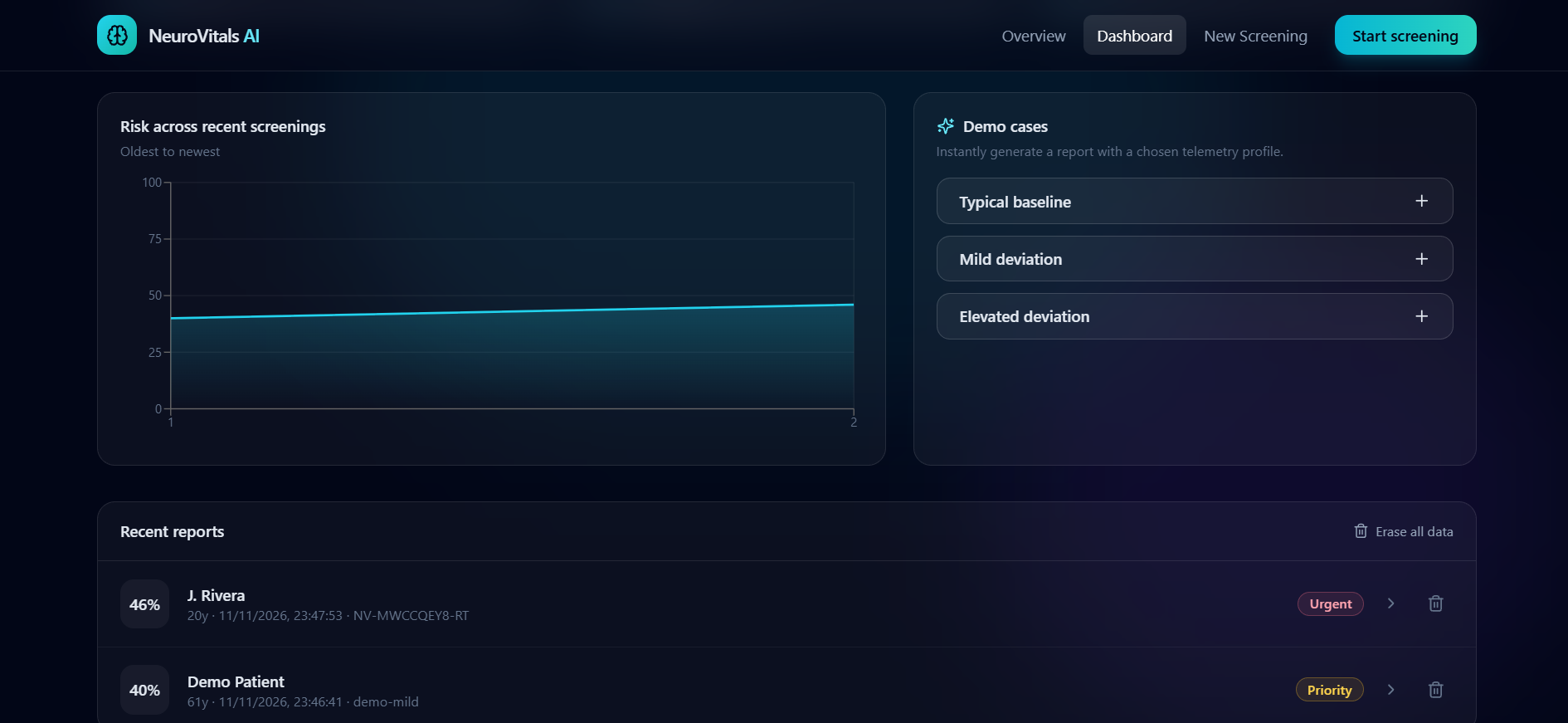
I am incredibly proud of designing a fully functional, production-grade multimodal screening interface that runs natively inside a web browser using standard consumer hardware. Successfully architecting a sophisticated medical triage dashboard layout and routing system entirely from scratch stands out as a major milestone.
What I learned
Building NeuroVitals AI gave me deep insights into designing accessible AI-driven diagnostic interfaces and optimizing client-side state handling for multi-step interactive workflows. I also learned how to package complex technical concepts into a sleek, physician-ready reporting format tailored for rapid evaluation.
What's next for NeuroVitals AI
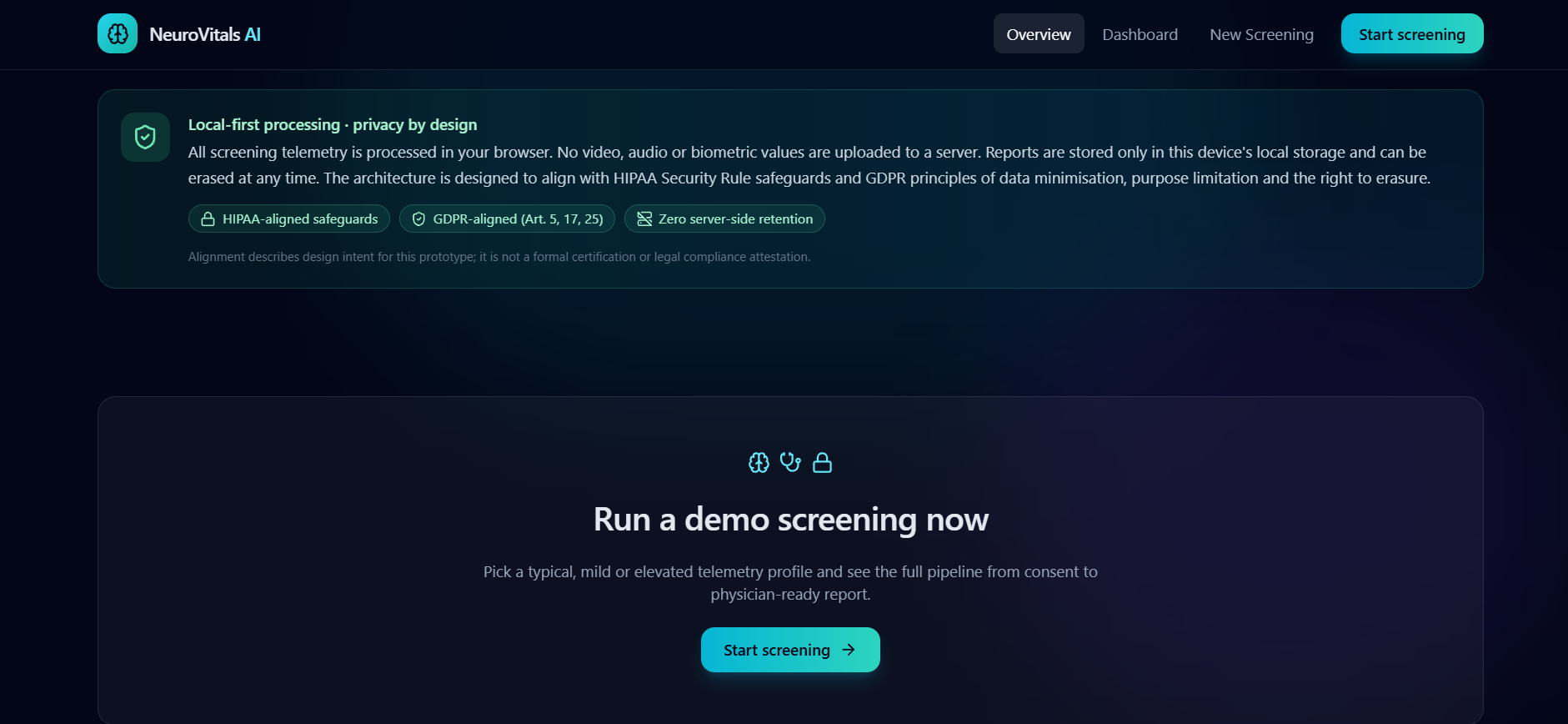
Moving forward, I plan to integrate true production-grade machine learning models (such as MediaPipe for real-time facial landmark tracking and lightweight audio feature extraction libraries) directly into the browser pipeline, alongside secure backend encryption for handling sensitive patient telemetry.

