-
-
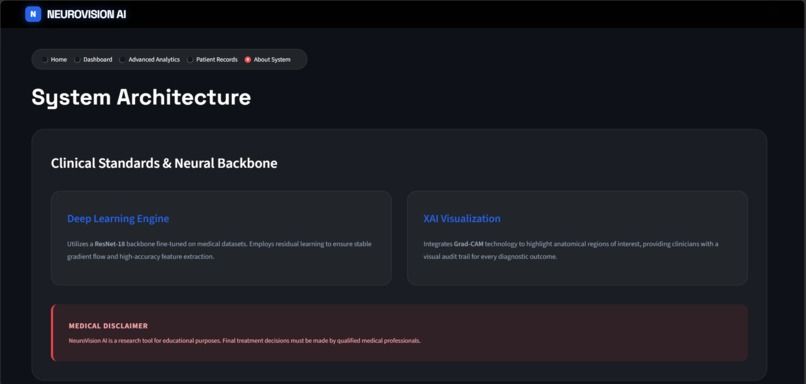
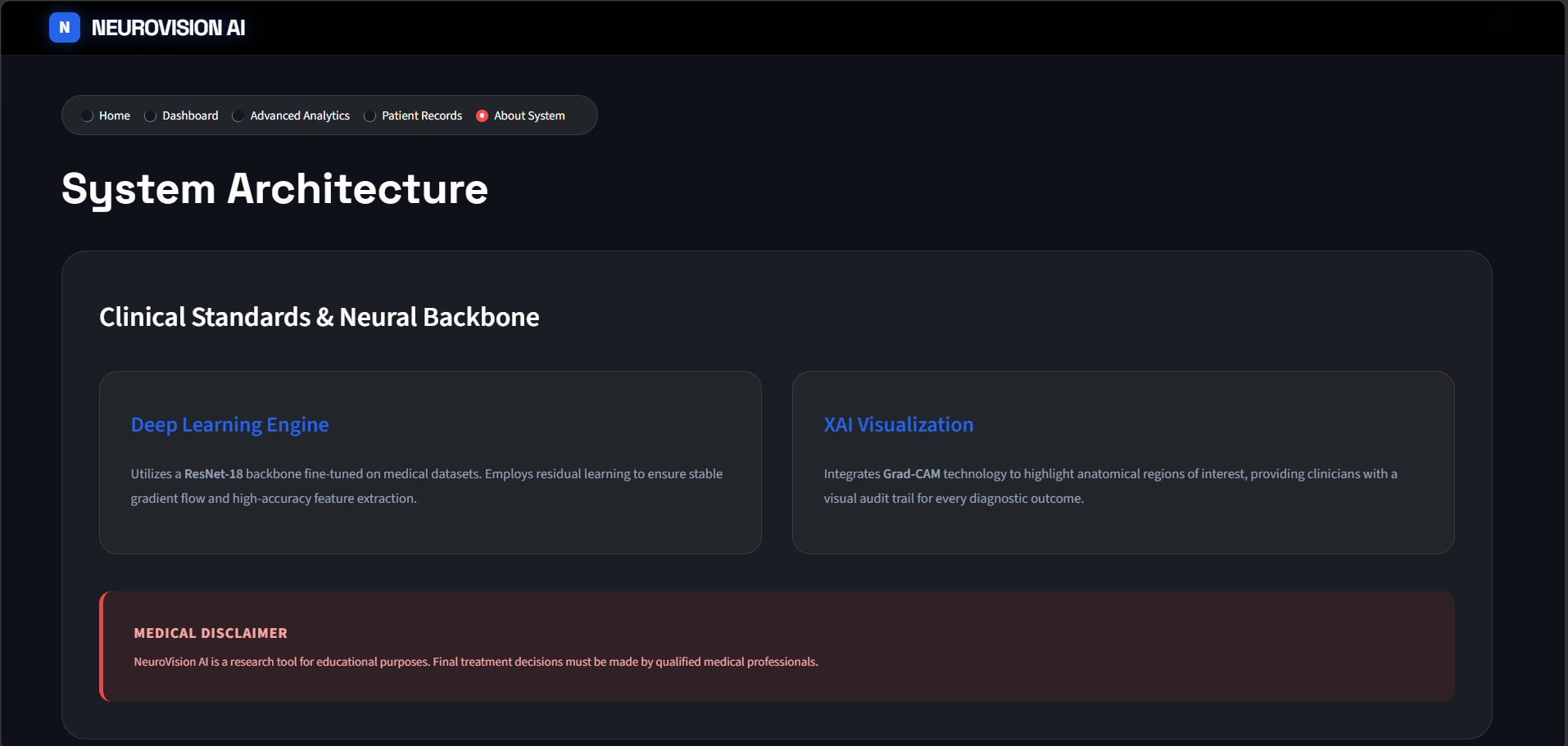
System architecture overview highlighting deep learning engine, XAI visualization, and clinical standards.
-
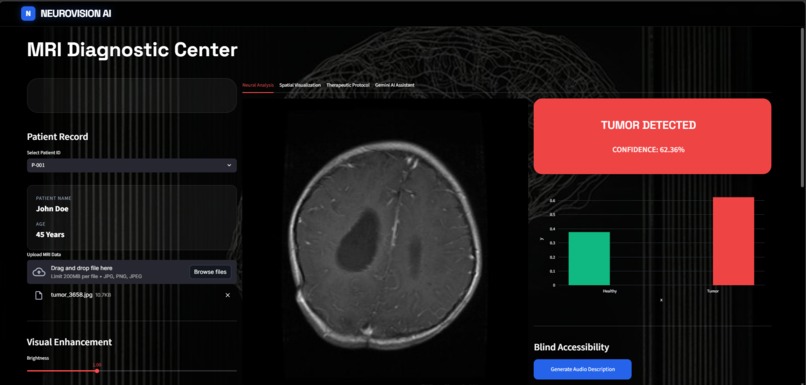
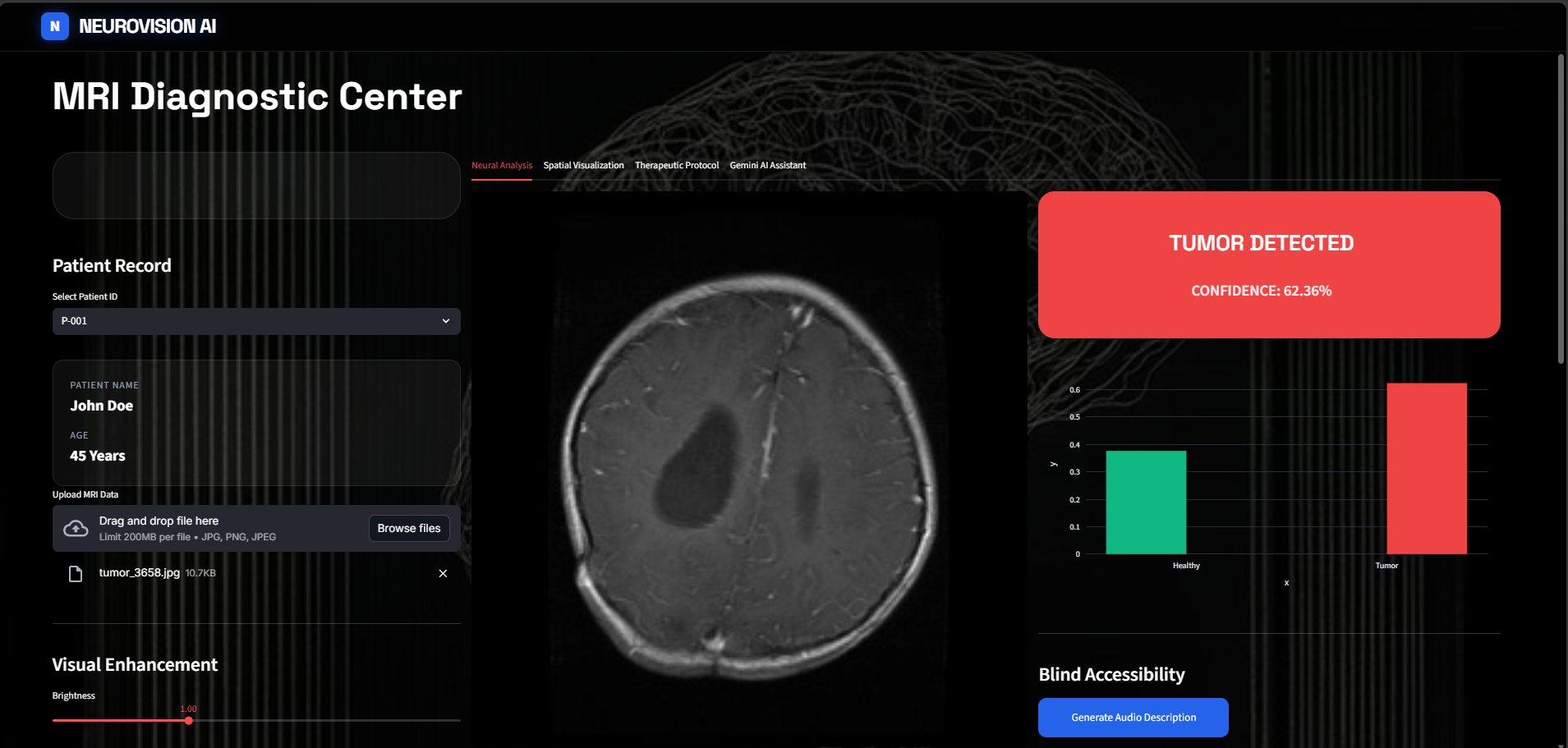
Dashboard displaying MRI scan with tumor detection and confidence score.
-
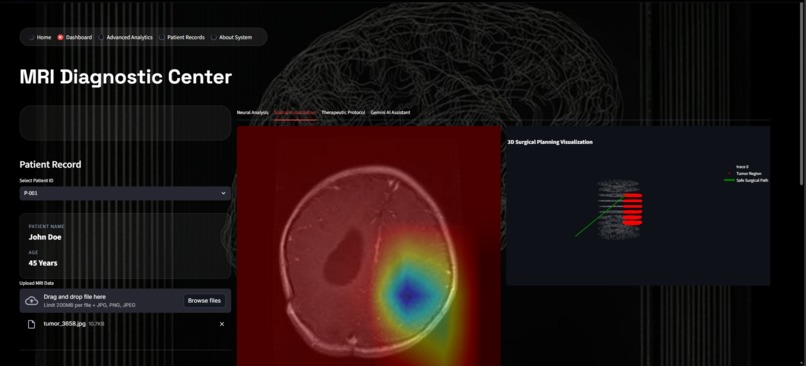
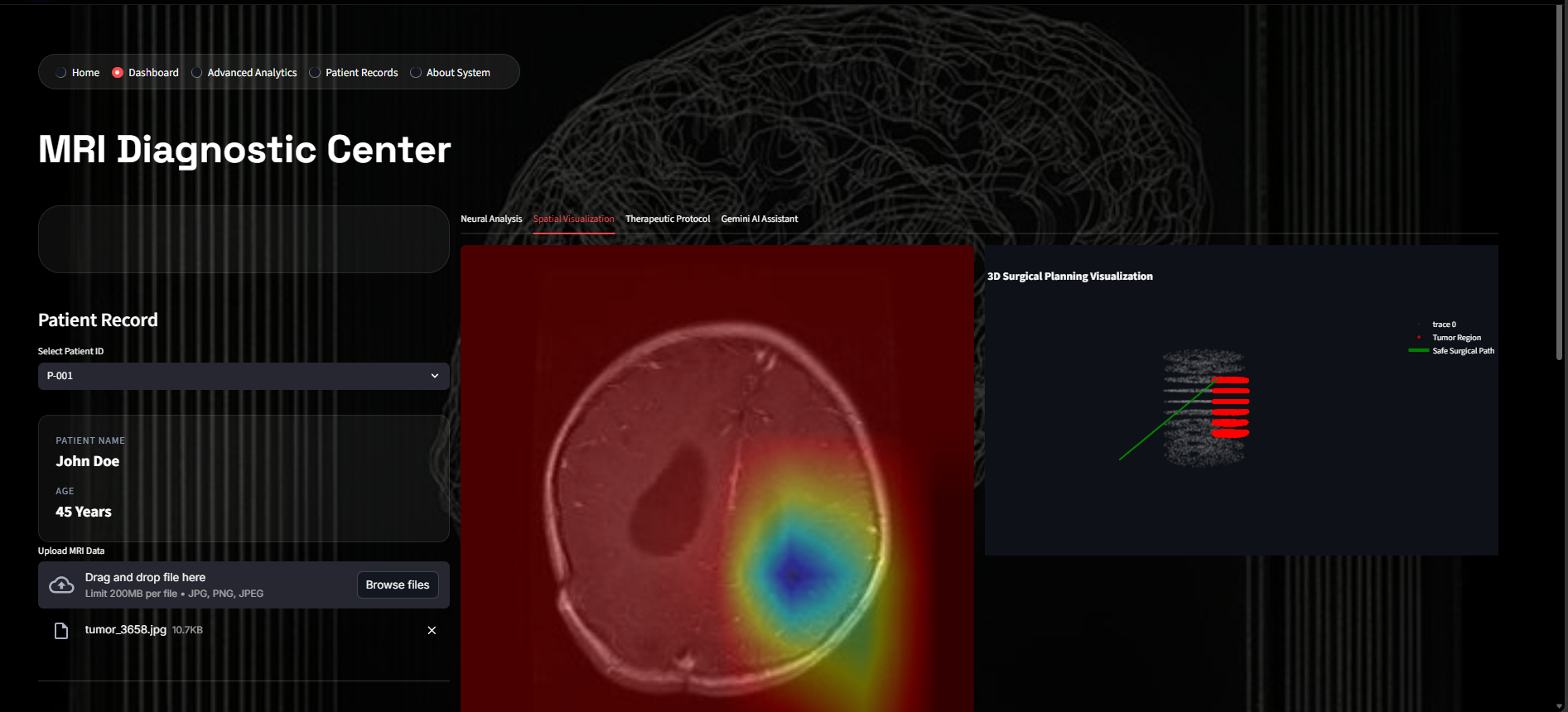
Grad-CAM heatmap with 3D visualization highlighting tumor region and surgical path.
-
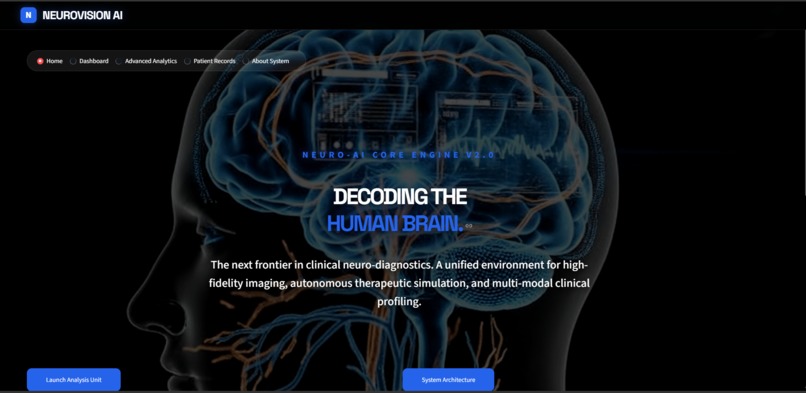
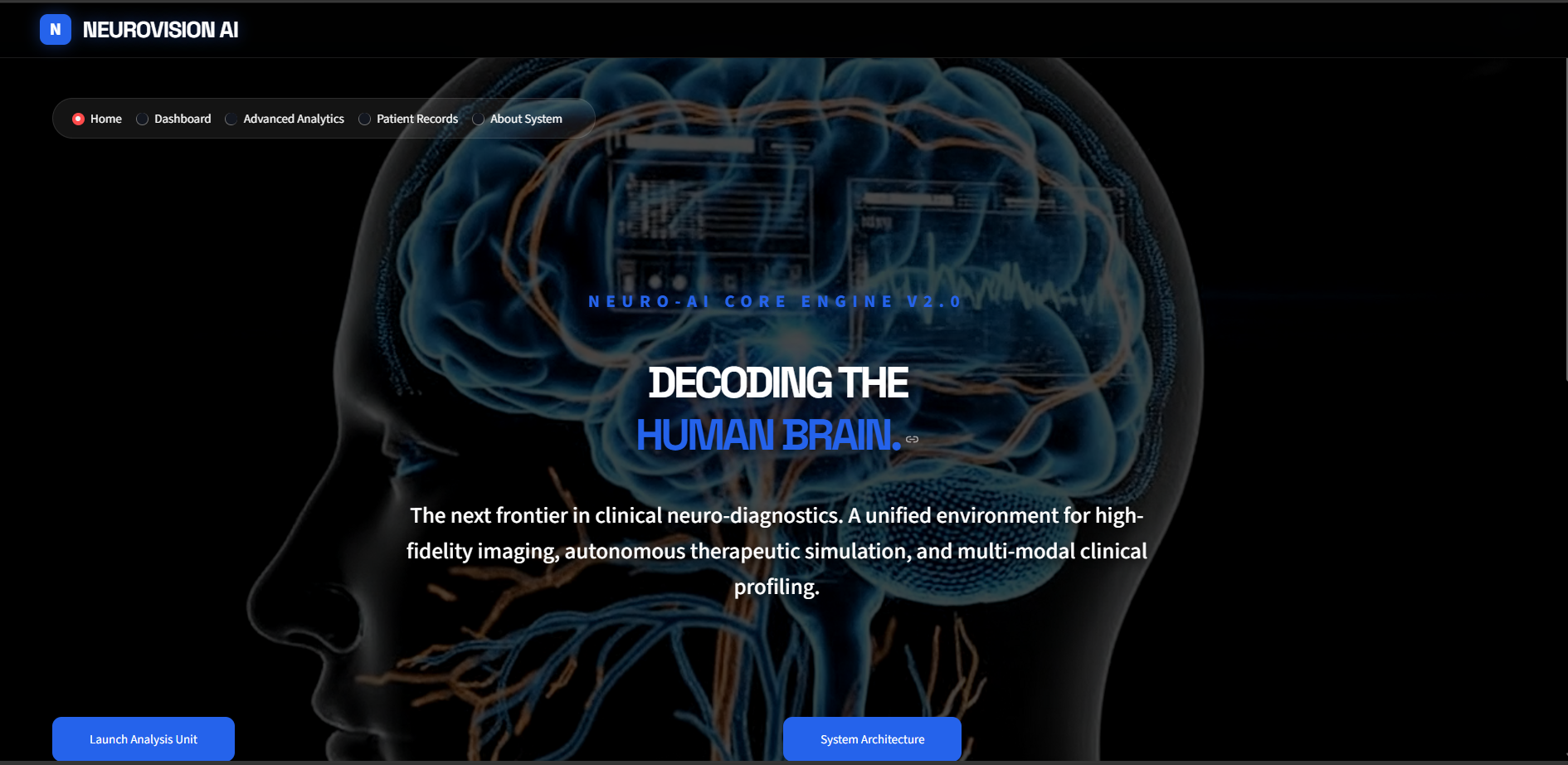
Homepage showing the problem that my model has solved and connecting all the pages for better performance
-
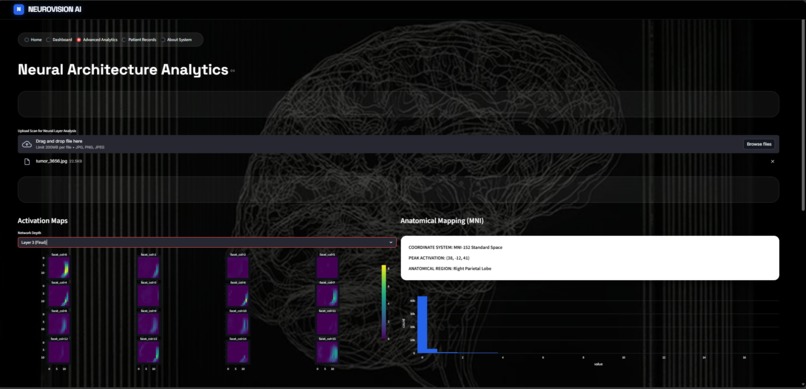
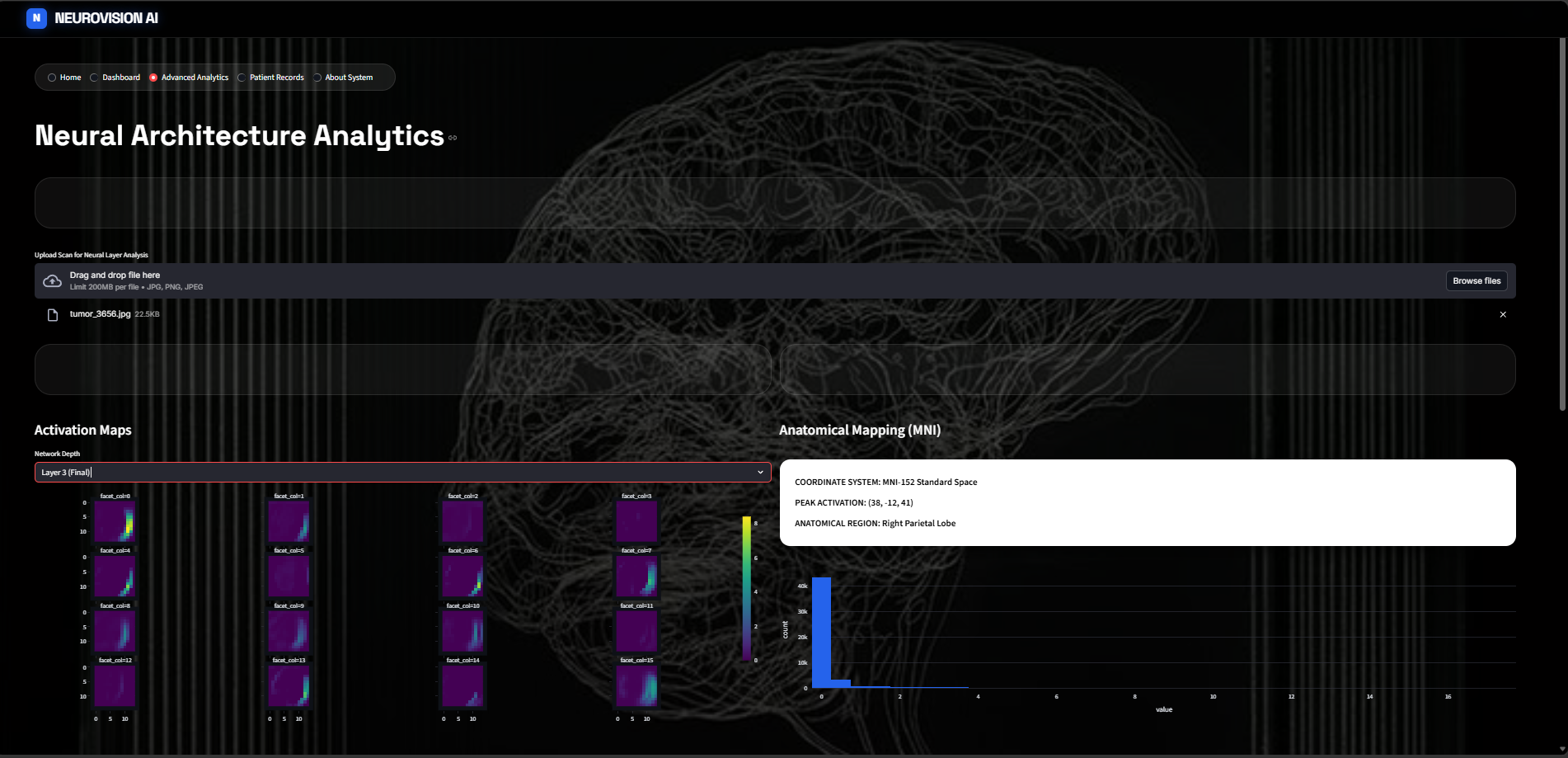
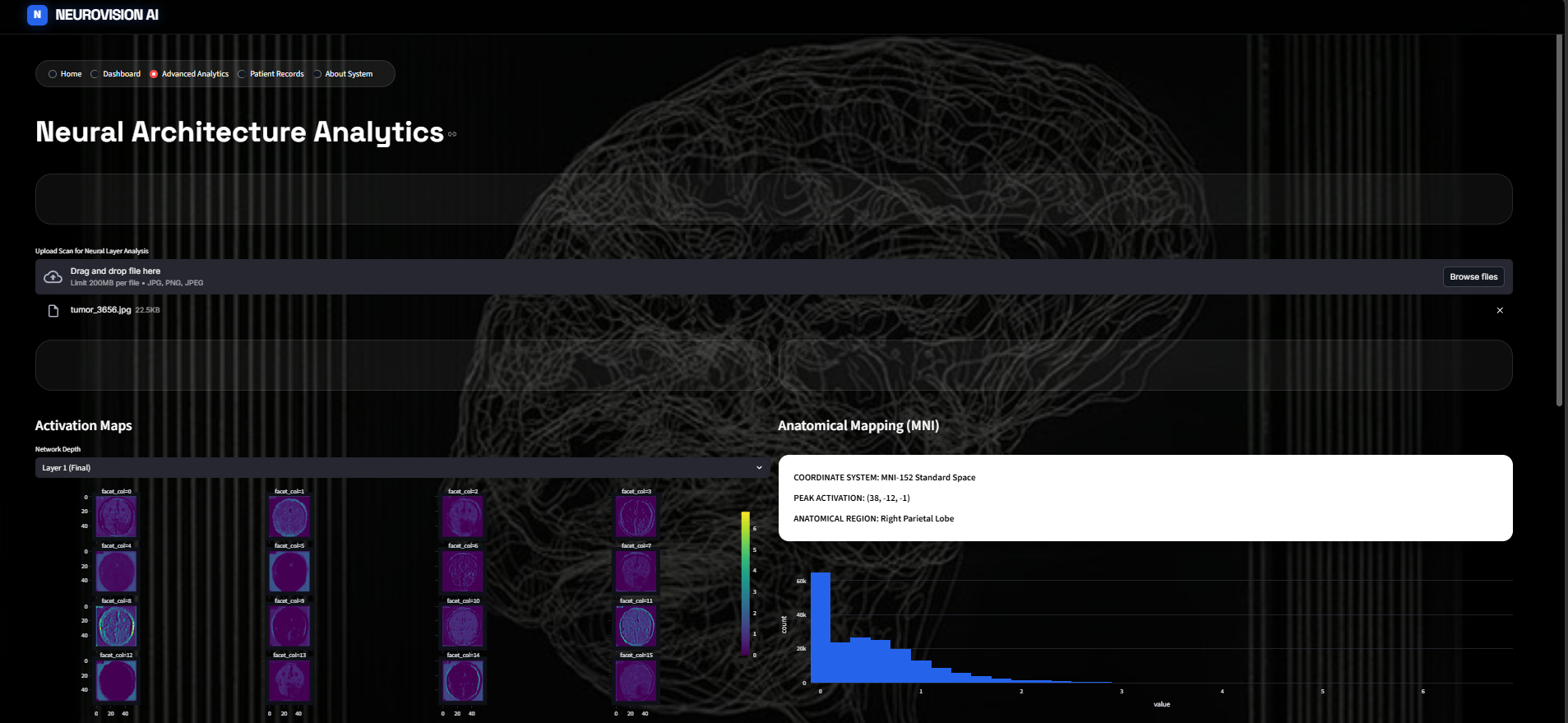
MNI-based anatomical mapping with activation distribution for precise localization.
-
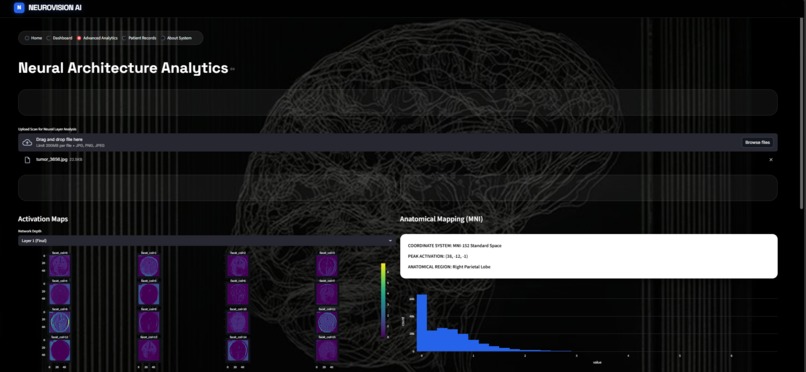
Neural architecture analytics showing CNN activation maps across layers.
-
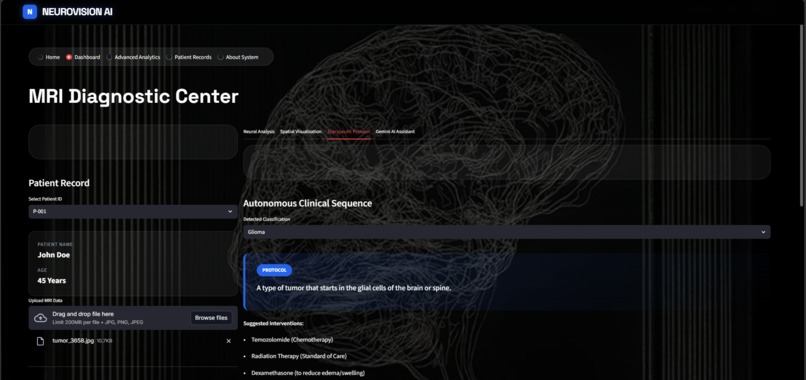
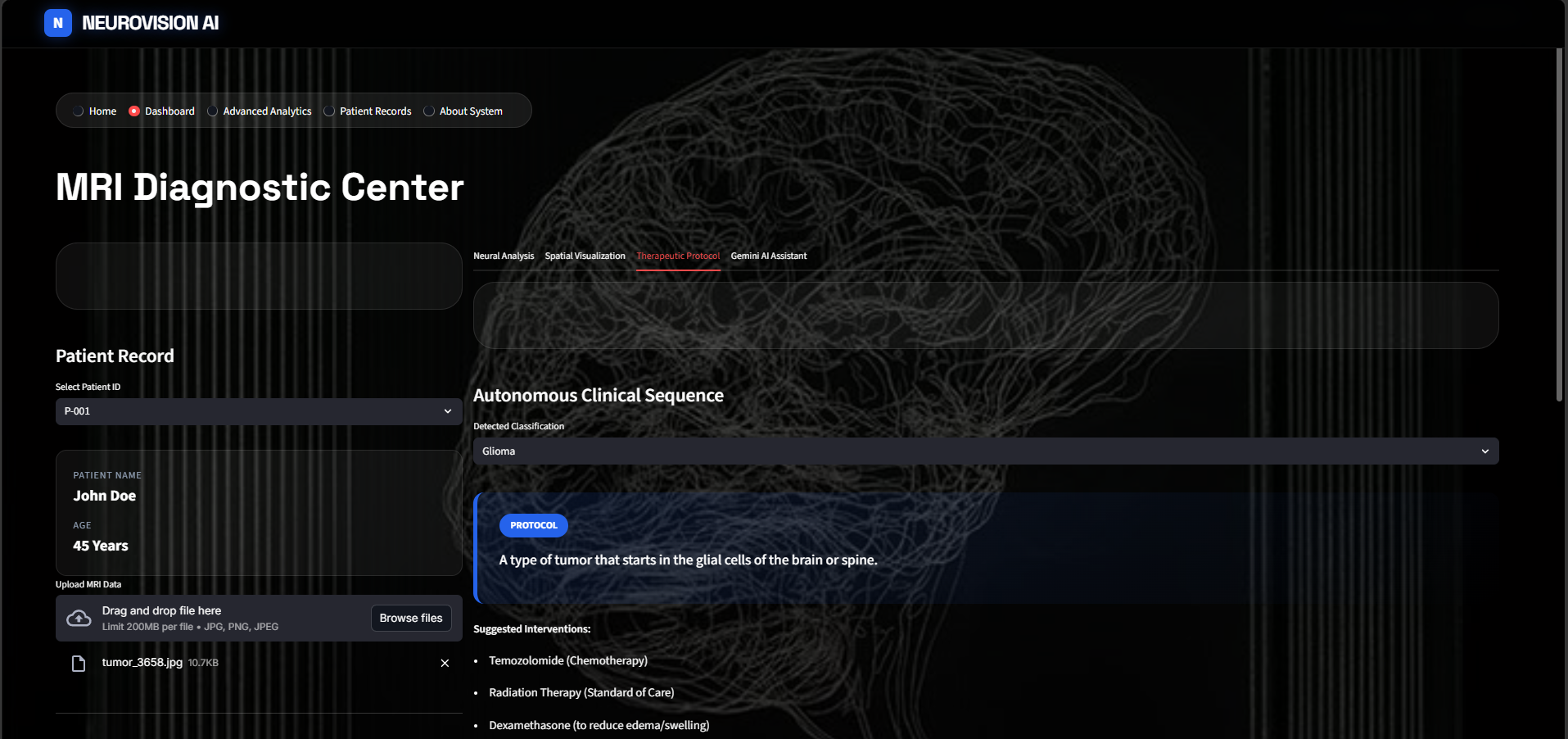
Automated therapeutic protocol with clinical recommendations based on tumor type.
💡 Inspiration
Every minute counts when diagnosing a brain tumor. Yet, MRI analysis often depends on expert availability, time, and subjective interpretation. Existing AI tools can detect abnormalities, but they fail to explain why a decision was made — creating a critical trust gap in healthcare.
We wanted to bridge this gap by building a system that doesn’t just detect tumors, but explains, visualizes, and supports real clinical decisions.
That’s how NeuroVision AI was born.
⚙️ What it does
NeuroVision AI is an intelligent medical imaging system that transforms MRI scans into actionable insights.
It:
- 🧠 Detects brain tumors with high accuracy
- 📍 Pinpoints tumor location using real-time object detection (YOLO)
- 🔥 Generates heatmaps (Grad-CAM) to explain AI decisions
- 📏 Estimates tumor size and spatial positioning
- 🧬 Visualizes tumors in a 3D context for surgical planning
- 💊 Provides treatment insights to assist doctors
👉 From a single MRI scan, the system delivers a complete diagnostic and visualization pipeline.
🛠️ How we built it
We combined multiple cutting-edge technologies into one unified pipeline:
- CNN / ResNet → Tumor classification
- YOLOv8 → Real-time tumor localization
- Grad-CAM → Explainable AI heatmaps
- OpenCV → Image preprocessing
- 3D Visualization Tools → Surgical planning interface
Pipeline:
MRI → Preprocessing → Classification → Detection → Heatmap → 3D Visualization → Report
The system is designed to be modular, scalable, and deployable as a web-based medical tool.
⚠️ Challenges we ran into
- 📉 Limited access to high-quality annotated MRI datasets
- 🎯 Achieving precise tumor localization using YOLO
- ⚖️ Balancing accuracy with real-time performance
- 🔍 Making AI decisions interpretable using heatmaps
- 🧩 Designing meaningful and usable 3D surgical visualization
🏆 Accomplishments that we're proud of
- 🚀 Built an end-to-end AI pipeline from detection to visualization
- 🎯 Achieved high accuracy in tumor classification and localization
- 🔥 Successfully implemented Explainable AI (Grad-CAM)
- 🧠 Introduced a surgical visualization concept
- 👨⚕️ Designed a system usable for both doctors and patients
- 🧬 YOLO Advanced 3D brain mapping & segmentation
- 🤖 Google Gemini AI-assisted robotic surgery guidance
📚 What we learned
- The importance of Explainable AI in healthcare
- Real-world challenges in medical data and model training
- How to integrate multiple AI models into a cohesive system
- Designing AI solutions with real-world clinical usability
- The gap between AI innovation and healthcare adoption
🚀 What's next for NeuroVision AI
We’re just getting started. Future plans include:
- 📊 Tumor type classification & stage prediction
- 📈 Tumor growth tracking over time
- 🏥 Integration with hospital systems (PACS)
- 🌐 Deployment as a full-scale healthcare platform
🌍 Impact
NeuroVision AI aims to:
- Reduce diagnosis time
- Improve accuracy and confidence
- Assist doctors in critical decision-making
- Make advanced diagnostics more accessible
Detecting Today, Saving Tomorrow.


Log in or sign up for Devpost to join the conversation.