-
-
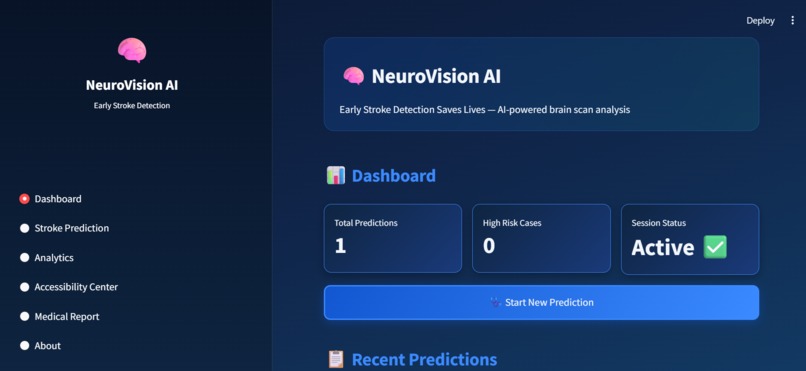
Dashboard
-
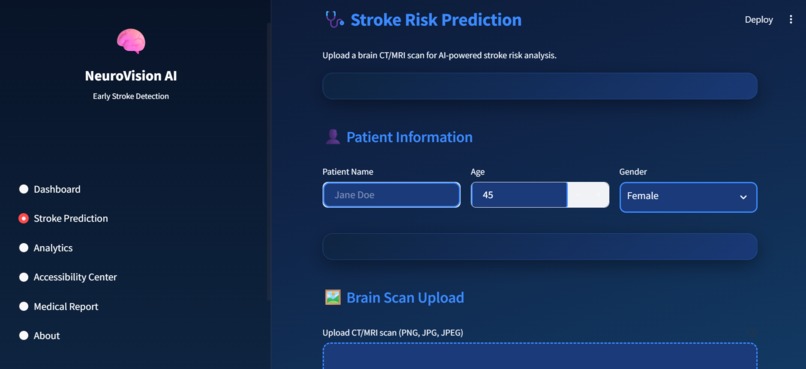
Stroke Risk Prediction
-
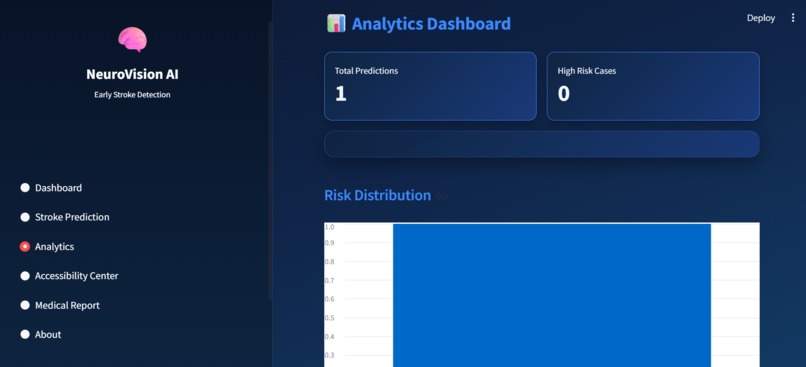
Analytics
-
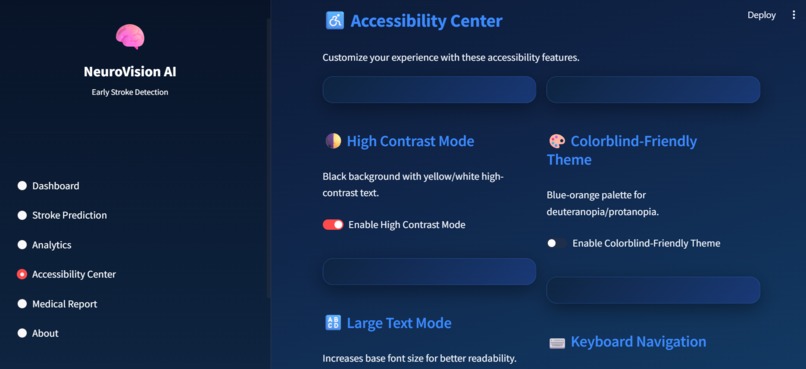
Accessibility Center
-
Medical Report
Inspiration
Every minute of stroke delay costs 1.9 million neurons, yet millions lack access to radiologists. We wanted to democratize stroke detection through accessible AI that anyone can use—regardless of visual ability, location, or technical expertise.
What it does
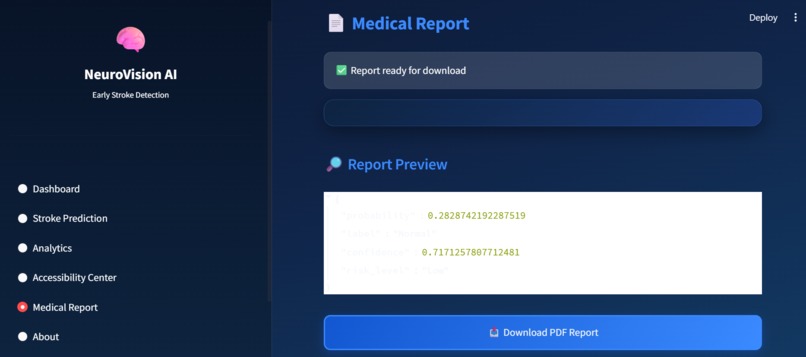
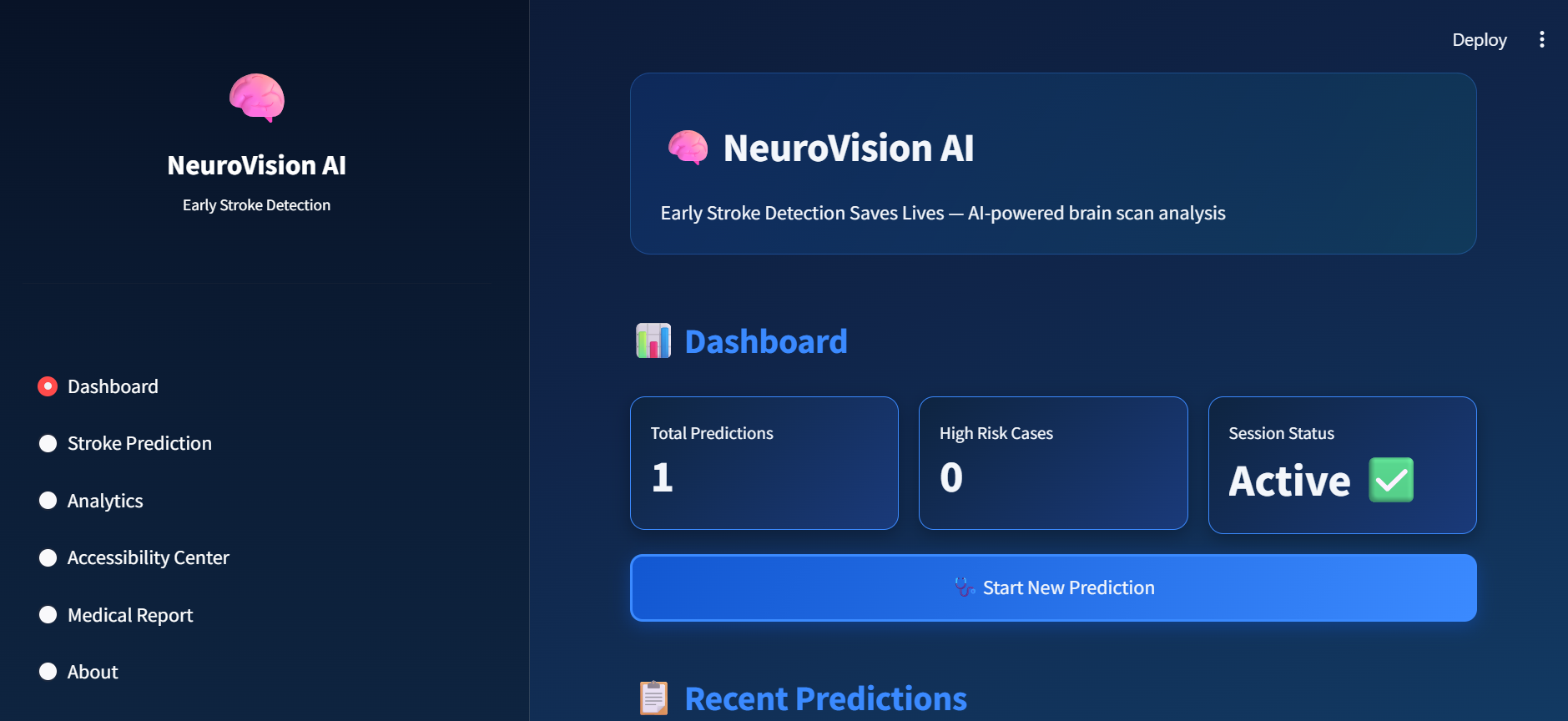
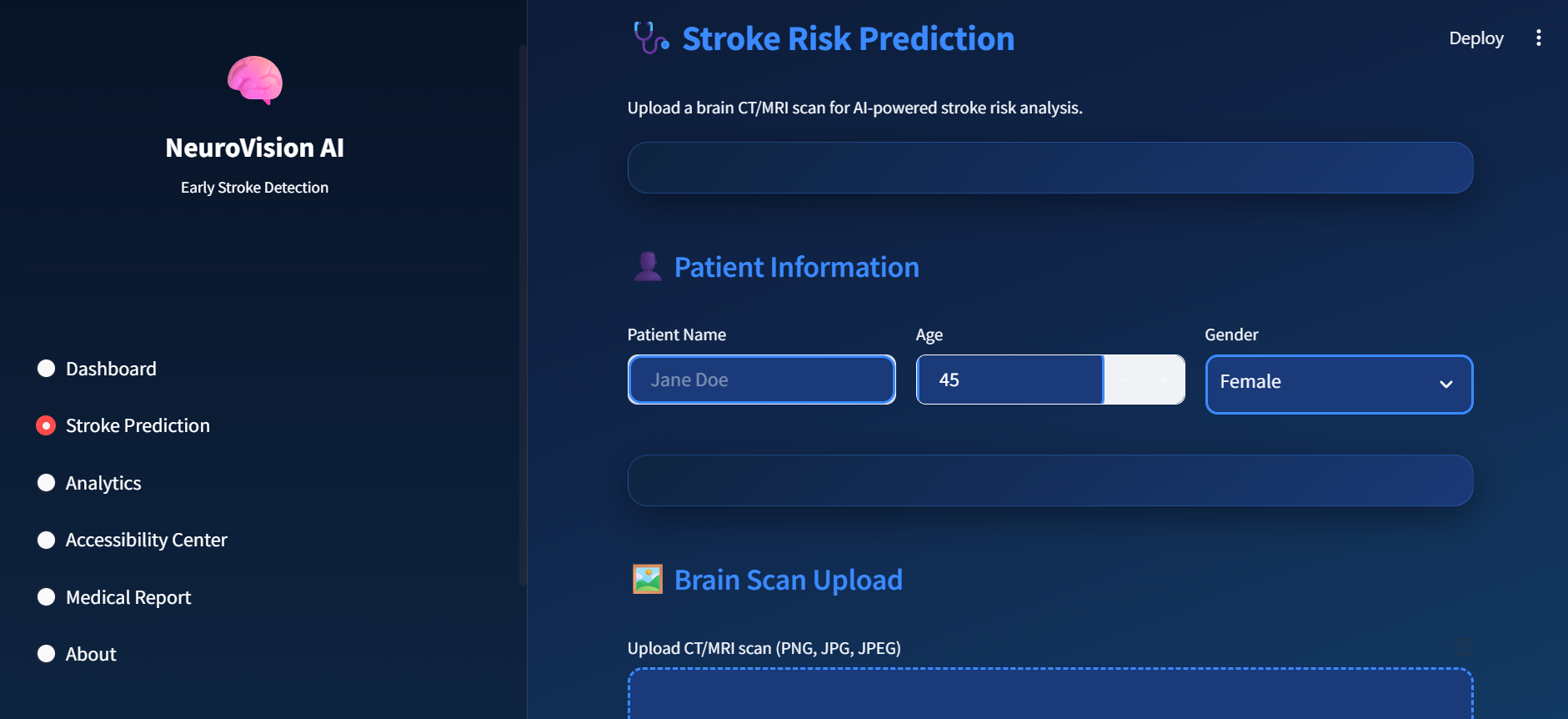
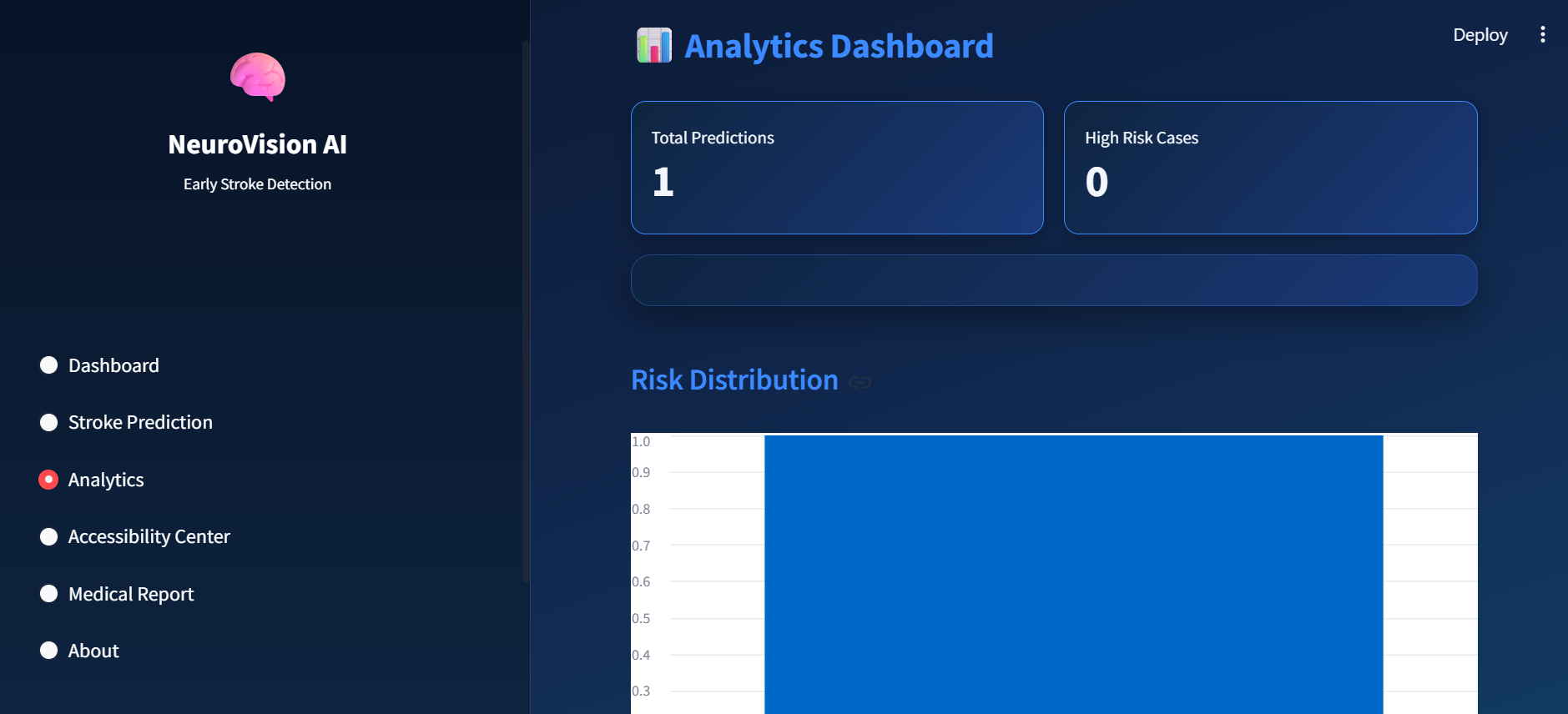
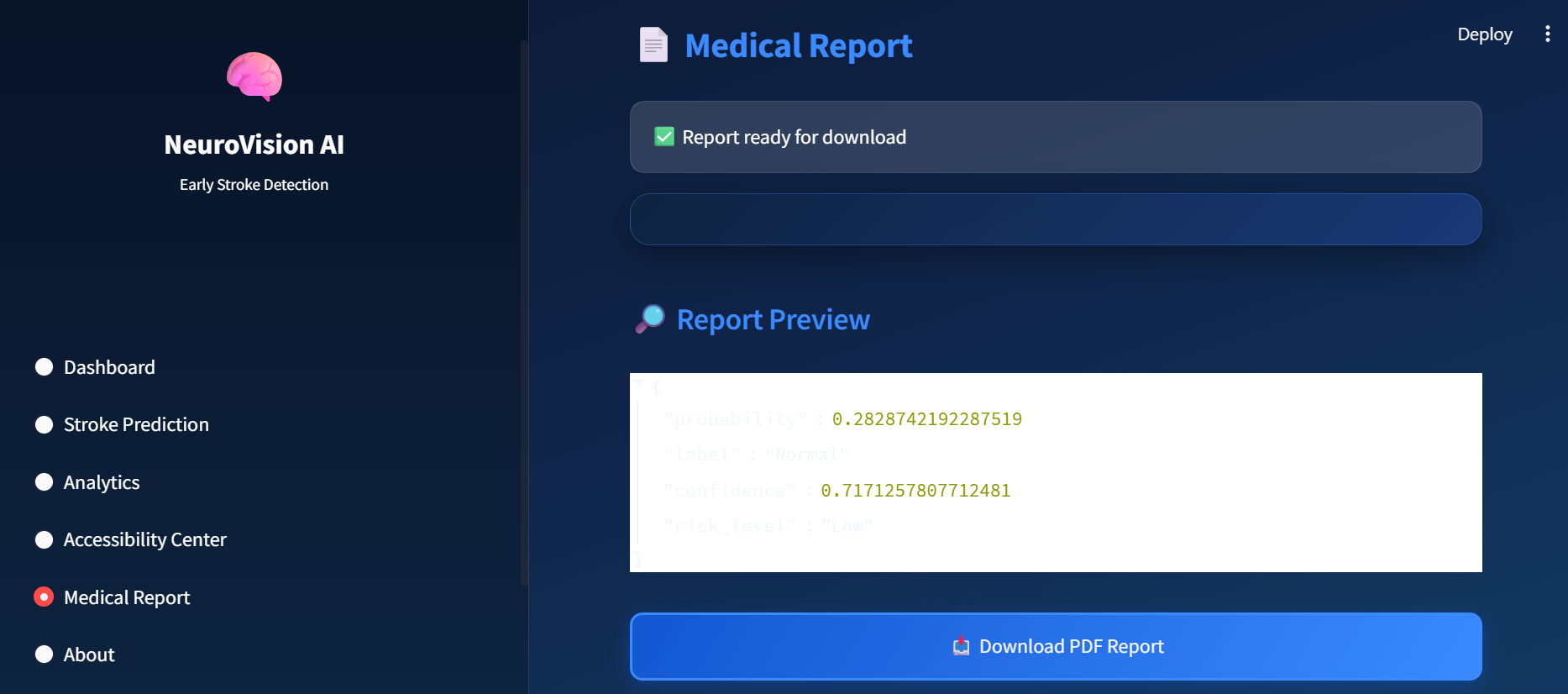
NeuroVision AI analyzes brain CT/MRI scans in seconds, providing instant stroke risk assessment (Low/Medium/High) with visual heatmaps explaining exactly where the AI is looking, plus generates clinical reports and personalized recommendations.
How we built it
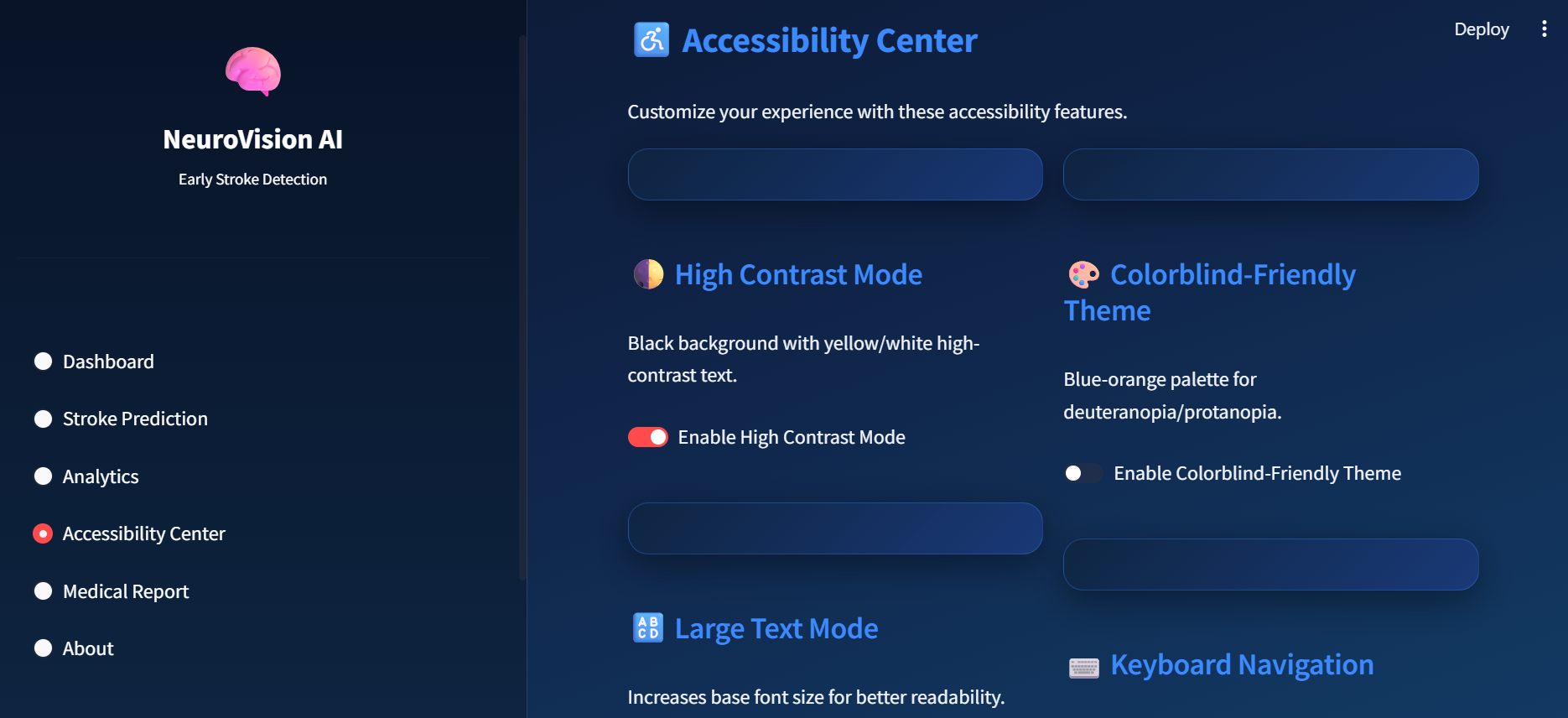
We trained a 4-block CNN with TensorFlow/Keras on brain imaging data, integrated Grad-CAM for explainability, and built a fully accessible Streamlit interface with high-contrast, large-text, and colorblind-friendly modes.
Challenges we ran into
Making complex AI explainability (Grad-CAM) visually intuitive while maintaining accessibility standards, and ensuring the interface remained fully keyboard-navigable while preserving a modern, professional medical aesthetic.
Accomplishments that we're proud of
Achieving a built-in accessibility score of 70-100/100 with six distinct accessibility features, while building an end-to-end clinical workflow—from scan upload to PDF report generation—in a single, beautiful interface.
What we learned
AI transparency through visual explainability transforms trust in medical AI, and accessibility isn't an add-on—it's fundamental to making technology truly serve everyone, especially in healthcare.
What's next for NeuroVision AI
Speech-to-text integration for voice-driven navigation, multilingual support, EHR system integration via FHIR, and multi-modal analysis combining CT, MRI, and patient vitals for even more accurate predictions.


Log in or sign up for Devpost to join the conversation.