Inspiration
Everywhere we look, the current cultural narrative paints artificial intelligence as a creative threat—a clinical, mechanical force destined to replace the unquantized soul of human musicians. For The Battle of Bands challenge, our crew rejected this cliché.
We were inspired by a simple, profound counter-question: What happens when technology stops acting as a replacement and begins acting as the ultimate amplifier of human vulnerability?
We set out to build NOVASYNC, a meta-conceptual hybrid band that uses Google's AI ecosystem to tell a story about the beauty of human-AI collaboration. Our goal was to push past basic campus tropes and engineer a stadium-ready aesthetic where carbon emotion and silicon logic lock into a single, triumphant frequency.
What it does
NOVASYNC is a fully realized, futuristic Electronic Rock/Synthwave music project designed for international festival main stages. It is a live creative experiment that synthesizes human performance and generative technology into a seamless 60-second audiovisual experience.
The project delivers:
- A studio-grade audio anthem that balances heavy, visceral rock drumming with complex, shimmering digital synth waves.
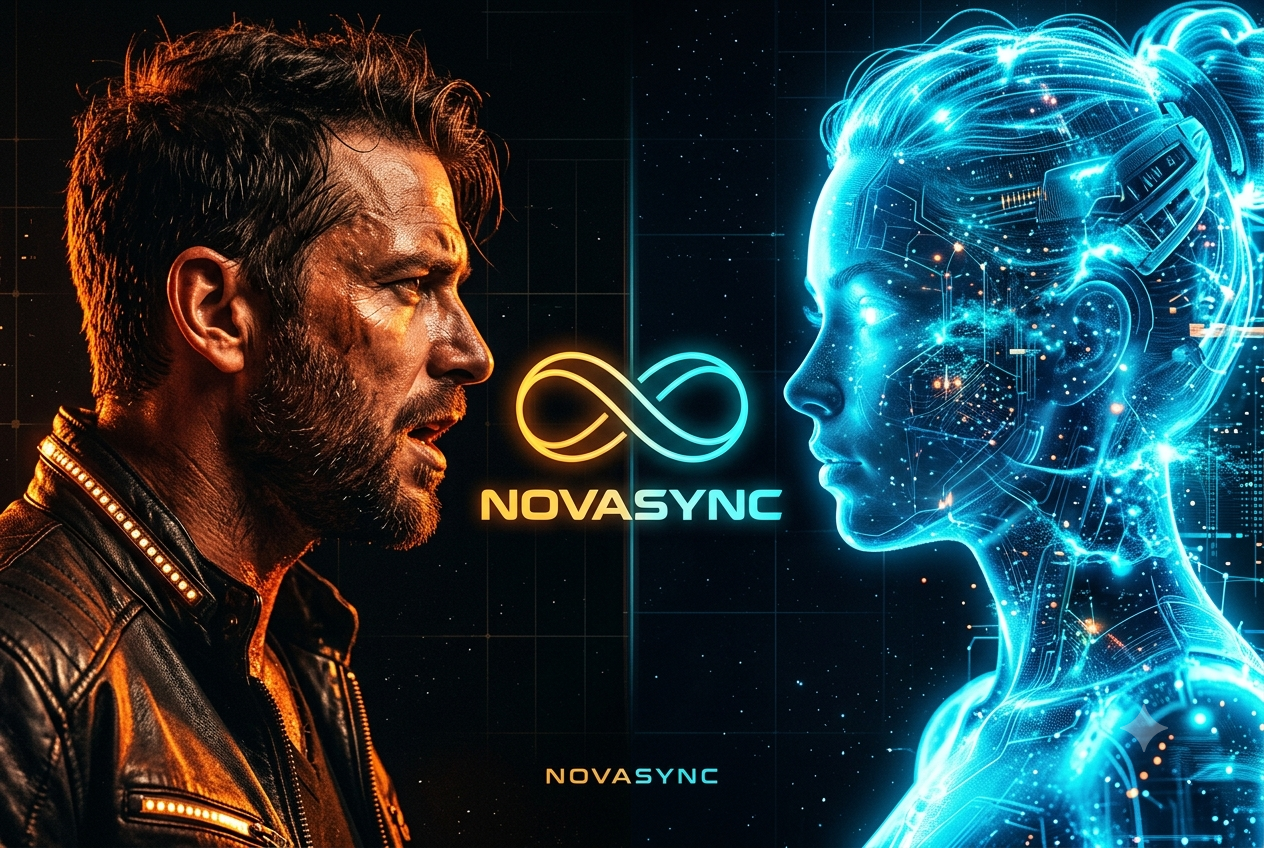
- A high-contrast, premium brand poster that introduces the band members: Elias (the human vocalist representing the Heart), Kael (the cybernetically augmented drummer representing the Pulse), and A.R.I.A. (the AI matrix representing the Mind).
- A synchronized, high-impact live pitch engineered to let the raw power of the AI-generated assets speak for themselves.
How we built it
Because external editing software was strictly prohibited, we relied entirely on highly specialized, iterative prompting to achieve production-grade results straight out of the box.
- Conceptual Architecture (Gemini Pro): We utilized Gemini Pro as our executive creative director to stress-test our narrative, design the distinct member personas, and time our live performance script down to the exact second.
- Sonic Engineering (Gemini Lyria): We translated our sonic vision into a high-fidelity prompt for Lyria, forcing a collision between raw, stomping electronic rock rhythms (inspired by Imagine Dragons) and soaring, wide-open cinematic melodies (inspired by Coldplay).
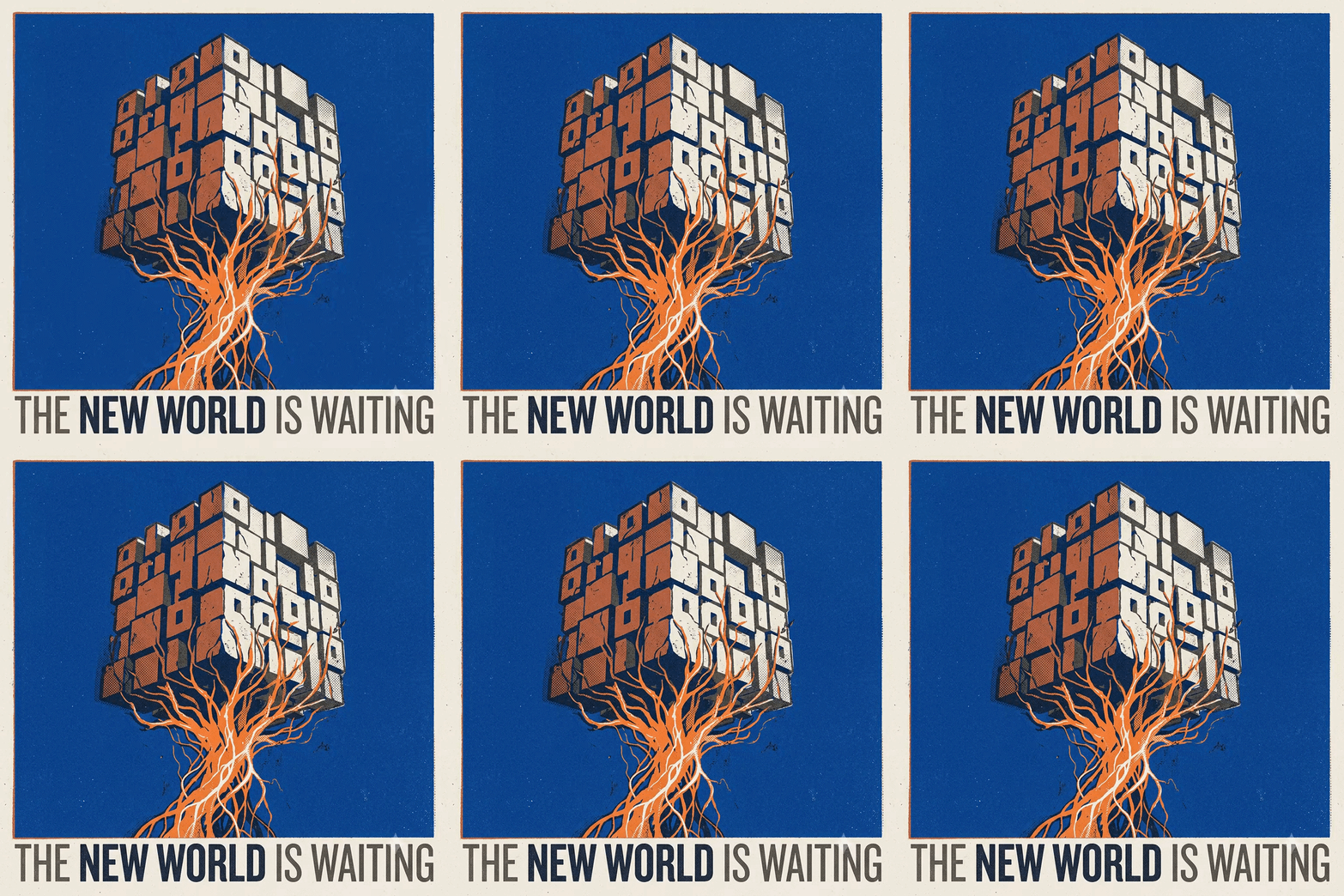
- Visual Identity (Nano Banana): We used Nano Banana to generate our official festival tour poster and media thumbnail. By enforcing a strict three-color identity—Bioluminescent Cyan for data, Arterial Amber for human vitality, and Obsidian Void for negative space—we built a visual layout clean enough for a global stage.
To ensure the music didn't sound overly robotic, we conceptualized the track's unified energy $E_{sync}(t)$ through a formal frequency relationship to mathematically model the sonic balance:
$$E_{sync}(t) = \alpha \cdot H(t) + \beta \cdot A(t) + \gamma \int_{0}^{t} \Phi(\tau) \, d\tau$$
Where $H(t)$ represents the raw variance of human emotion, $A(t)$ represents the AI’s generative precision, and $\Phi(\tau)$ represents live crowd feedback integrated over time. We used this logic to explicitly prompt Lyria for "unquantized live vocals" and "imperfect floor-tom grooves," protecting the human element ($\alpha$) from being overwhelmed by mechanical perfection ($\beta$).
Challenges we ran into
The absolute zero-tolerance policy for external software meant we couldn't rely on standard post-production crutches. We couldn't "fix it in post" using Photoshop or adjust vocal EQ inside a digital audio workstation.
This turned prompt engineering into our mixing console and paintbrush. If a drum hit was too weak or a visual texture glitched, we had to systematically alter our prompt syntax—adjusting lighting directions, atmospheric keywords, and musical parameters iteratively until the AI generated a flawless master asset. We also faced hurdles with AI text-rendering anomalies, which we overcame in Nano Banana by prioritizing a clean, minimalist layout that kept our branding sharp and readable at any scale.
Accomplishments that we're proud of
We are incredibly proud of building a 100% unified, cohesive brand identity within a tight competition timeframe. Instead of settling for a simple song, we delivered a complete commercial asset package. We successfully engineered a genuine "mic drop" moment in our live presentation script—structuring our pitch so that our voices cut out the exact second the explosive Lyria chorus drops, allowing the sheer scale of our AI-generated audio and visual assets to command the room.
What we learned
This challenge completely redefined our understanding of future tech. We learned that the true power of generative AI does not lie in automation, but in iteration velocity.
Tools like Gemini Pro, Lyria, and Nano Banana didn't replace our creativity—they unlocked it. They allowed a three-person crew to bypass traditional production bottlenecks and act simultaneously as a full-scale record label, a high-end design agency, and an international production house.
What's next for NOVASYNC
The 60-second festival cut is just the proof of concept. The next phase for NOVASYNC is scaling this project into a full-length, 45-minute live audiovisual experience.
We plan to explore real-time prompt manipulation, where live crowd biometrics (movement, volume, and body temperature) dynamically feed back into the generative audio matrix during a live show. NOVASYNC started as a challenge entry, but it has evolved into a blueprint for the next generation of global music touring.

Log in or sign up for Devpost to join the conversation.