-
-
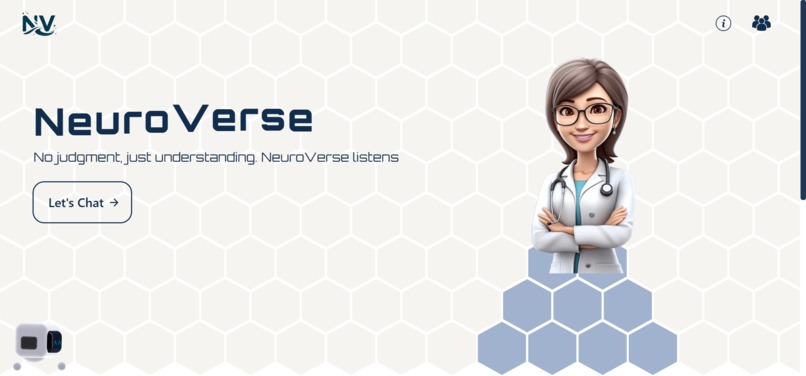
Landing Page
-
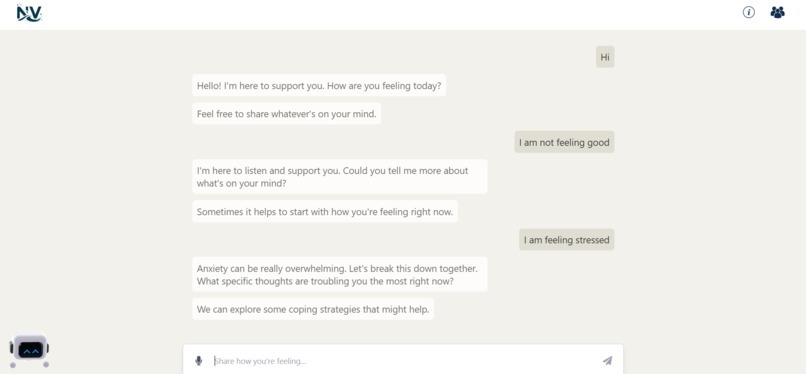
Chatbot for Mental Health Support
-
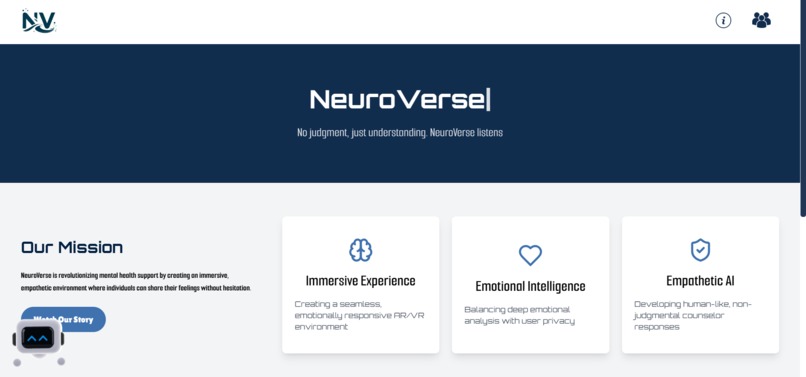
About NeuroVerse
-
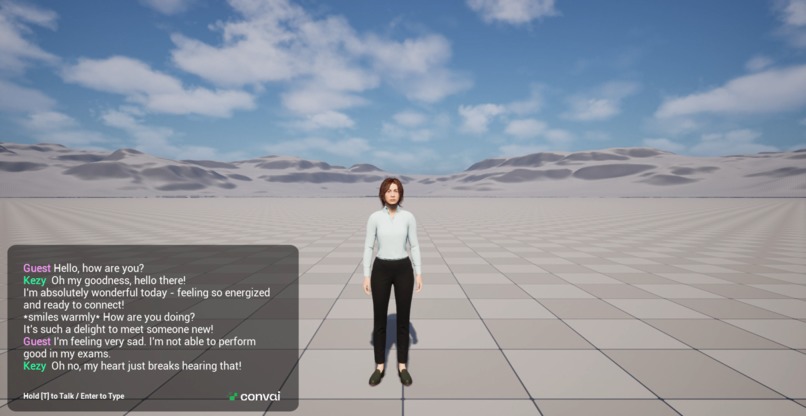
Healthcare Assistant
Inspiration
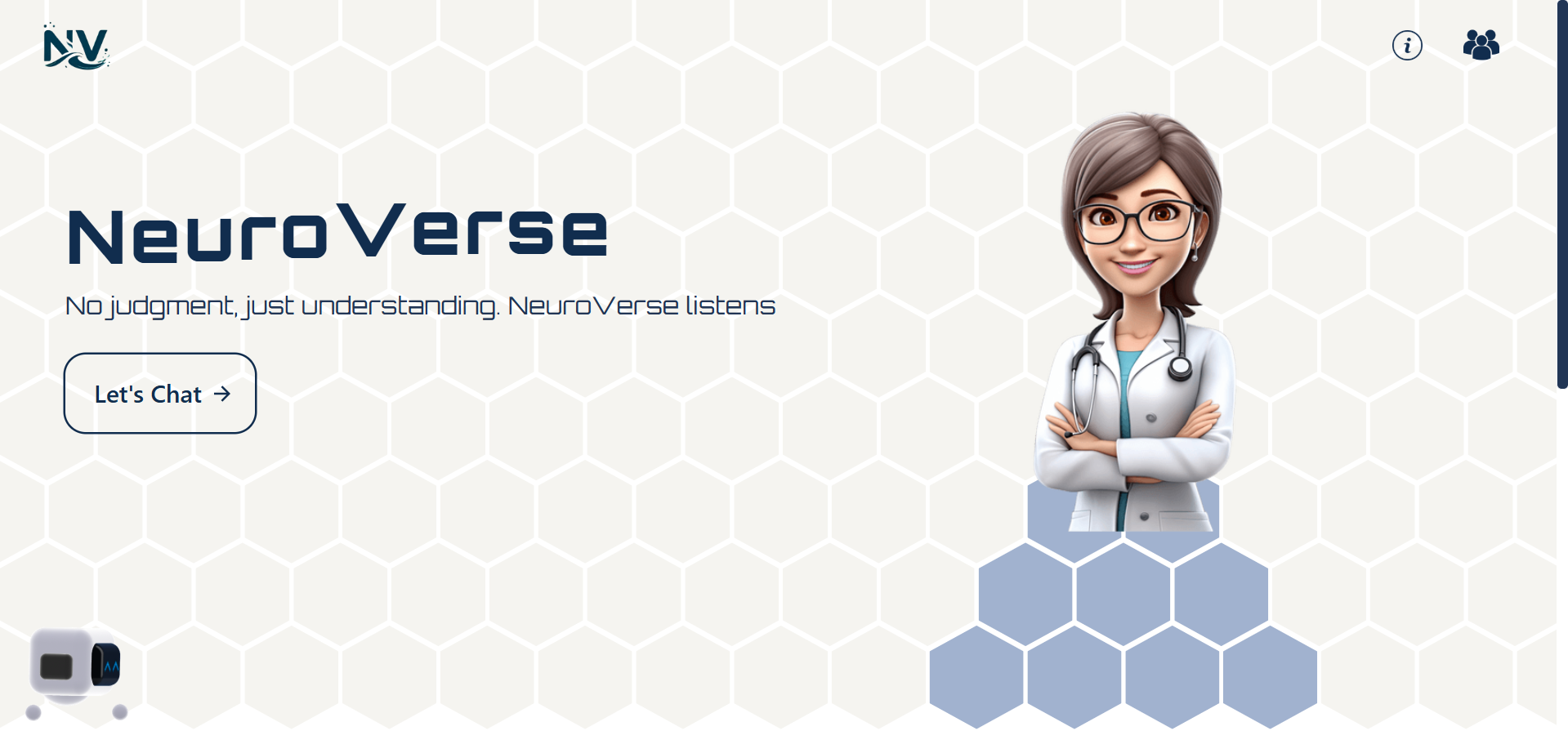
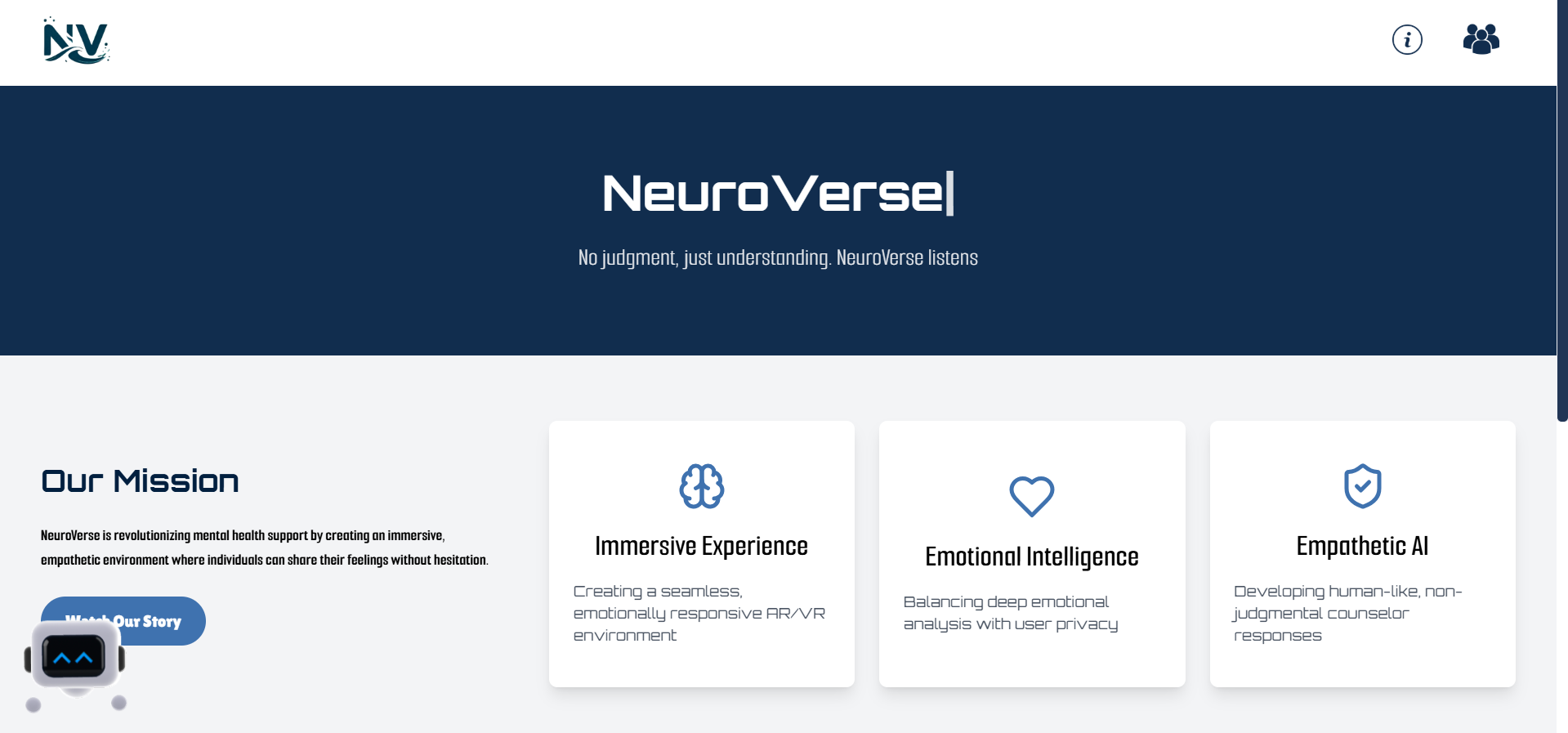
NeuroVerse is inspired by the need for a personalized, safe space where individuals can share their feelings without hesitation. Traditional therapy can feel intimidating, costly, or inaccessible. NeuroVerse bridges this gap by providing an immersive AR/VR-based virtual counselor that listens, understands, and responds empathetically, ensuring users feel heard and supported without discomfort.
What it does
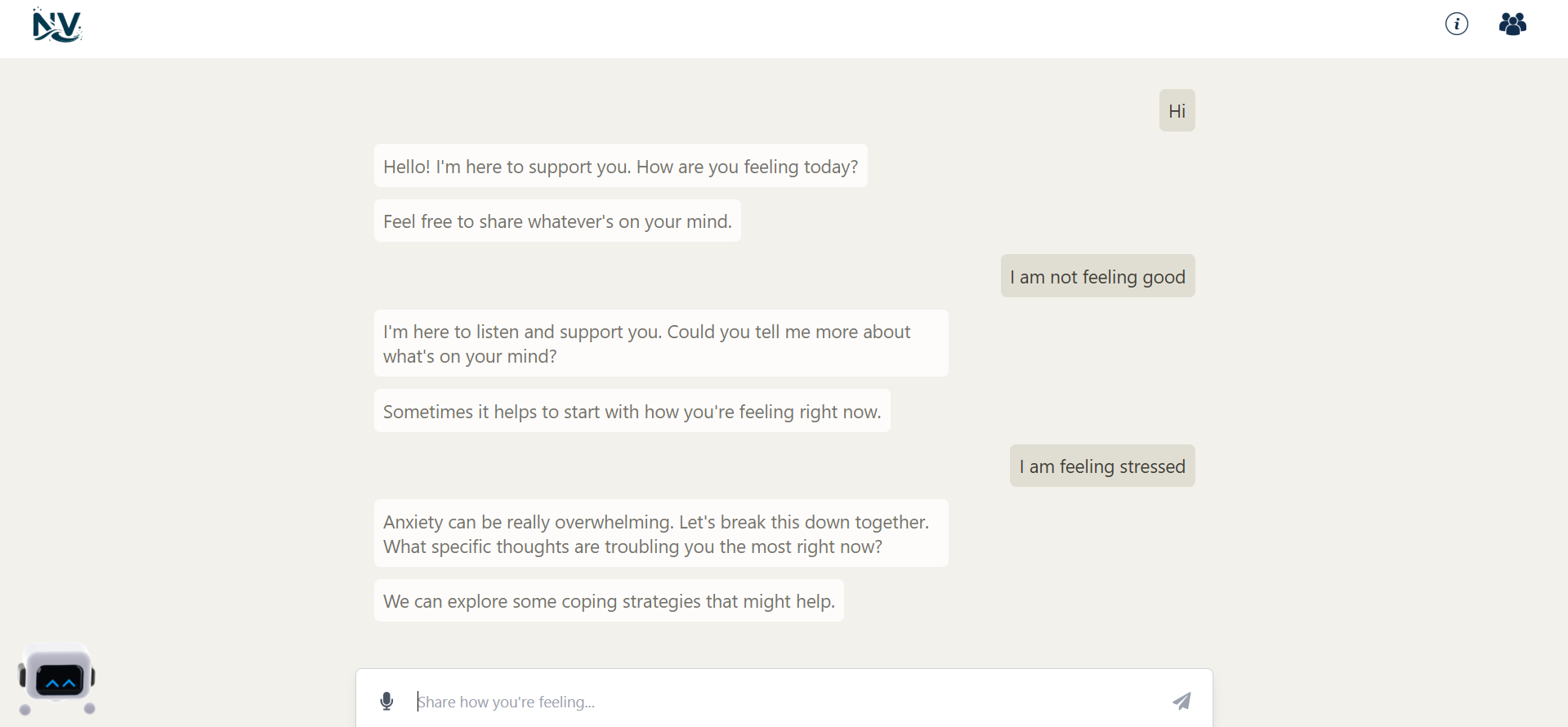
NeuroVerse offers a groundbreaking mental health support system by combining AI, machine learning, and immersive AR/VR technology. The virtual counselor adapts to users' emotional states, providing tailored guidance in calming environments. It analyzes emotional cues in real time, ensuring the experience evolves with the user's needs while maintaining a safe and judgment-free space.
How we built it
NeuroVerse leverages cutting-edge technologies to create an immersive and intelligent mental health support system.
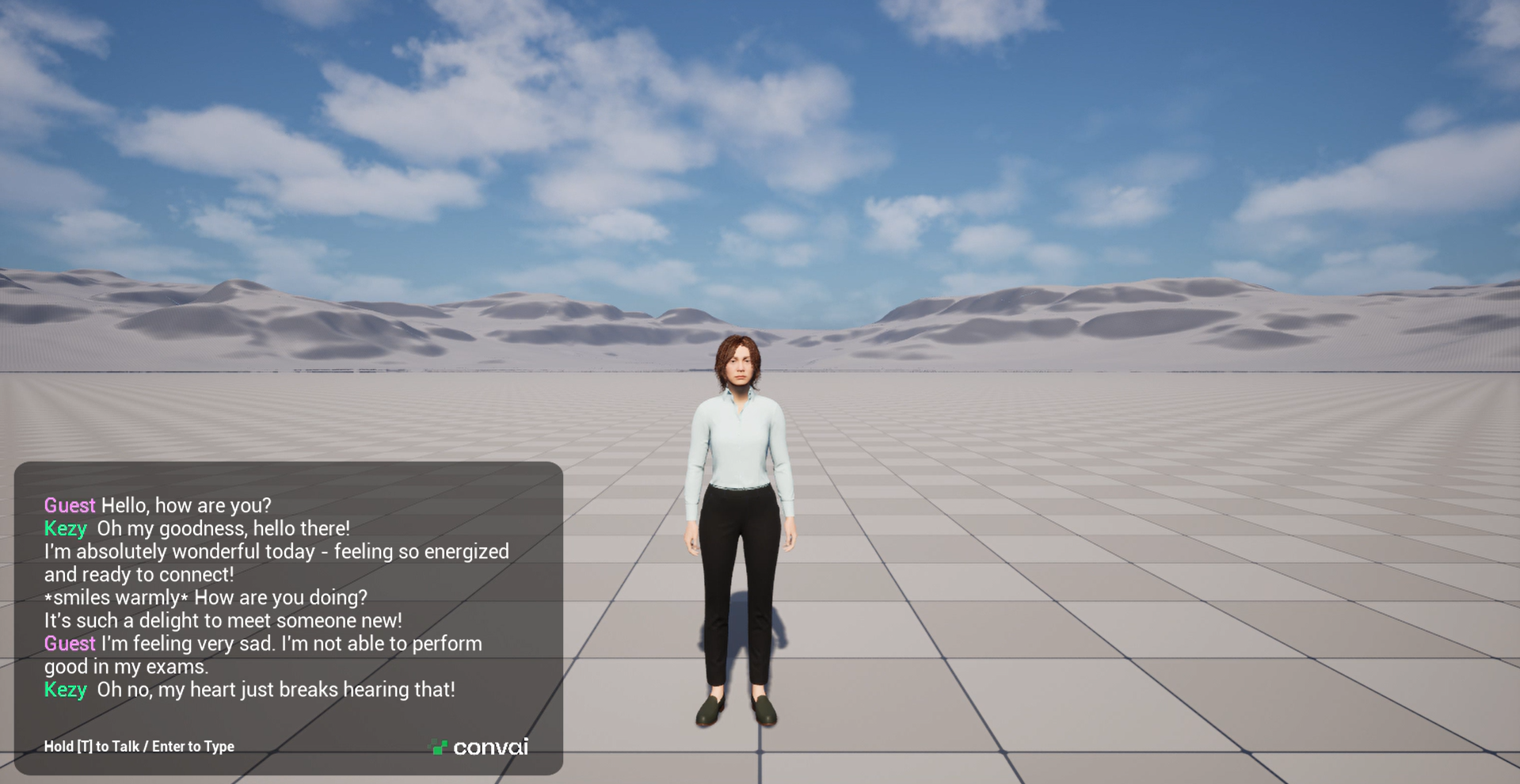
- Unity & Metahuman – We developed a 3D virtual counselor using Unity and Metahuman, ensuring a realistic and engaging experience. The AR/VR environment immerses users in a lifelike setting, making interactions more natural and effective.
- PyTorch & BERT – We trained and fine-tuned a BERT-based model using PyTorch to enhance natural language understanding, enabling the virtual counselor to comprehend user inputs and generate meaningful responses.
- Mistral 7B – Implementing Mistral 7B allowed us to create high-quality, context-aware conversations, ensuring that responses feel natural and empathetic.
- React.js – The frontend was built using React.js, ensuring a seamless and interactive user interface that enhances accessibility and engagement.
- Flask – We used Flask for the backend to process user data efficiently, ensuring smooth communication between the AI model and the frontend. By integrating these technologies, we built a virtual mental health assistant capable of understanding emotions, analyzing user inputs, and responding with empathy in an immersive AR/VR environment.
Challenges we ran into
Building NeuroVerse came with several challenges:
- Creating an immersive experience – Balancing realism and comfort in AR/VR environments.
- Emotion analysis and privacy – Ensuring accurate emotional recognition while maintaining user confidentiality.
- Human-like responses – Making the virtual counselor feel empathetic and natural rather than robotic.
- Seamless Integration – Combining various technologies to work together smoothly in real time.
Accomplishments that we're proud of
- Developing real-time emotional analysis that adapts to users' mental states.
- Designing a user-friendly interface that ensures accessibility and ease of use.
- Creating a safe space for users to open up without fear of judgment.
What we learned
- The power of AI-driven emotional analysis in mental health support.
- How to optimize AR/VR environments for a more engaging experience.
- The importance of privacy and ethical considerations in emotional AI applications.
- Seamless integration of multiple technologies to create a robust mental health platform.
What's next for NeuroVerse
- Expanding emotional recognition capabilities to detect and support a wider range of mental health conditions.
- Enhancing the AR/VR environment with more personalized and interactive elements.
- Partnering with mental health professionals to improve AI-driven therapy models.
NeuroVerse aims to revolutionize mental health support by making therapy more accessible, personalized, and immersive. With continuous improvements and technological advancements, we envision a future where mental health support is available to everyone, anytime, anywhere.


Log in or sign up for Devpost to join the conversation.