Inspiration
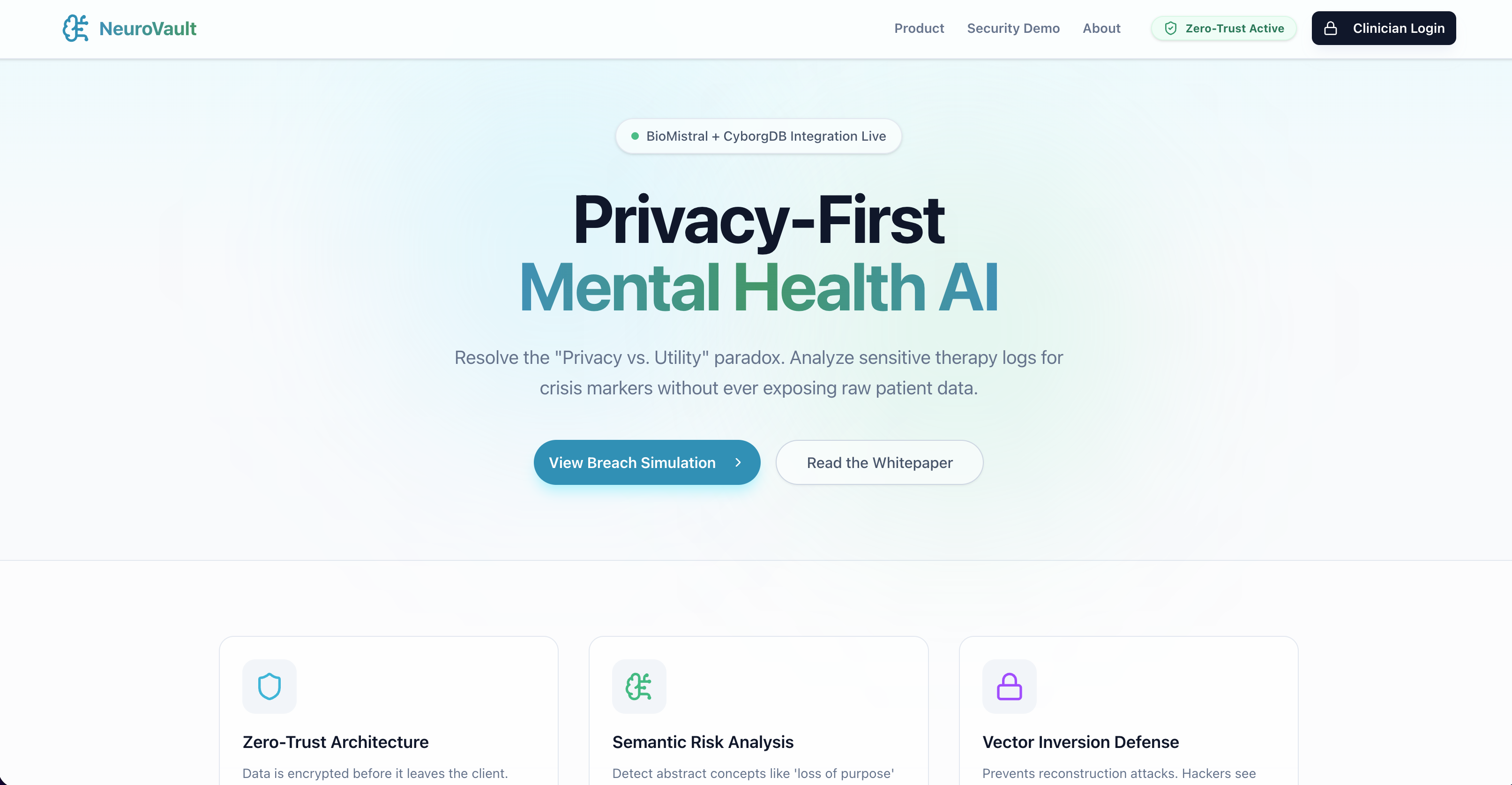
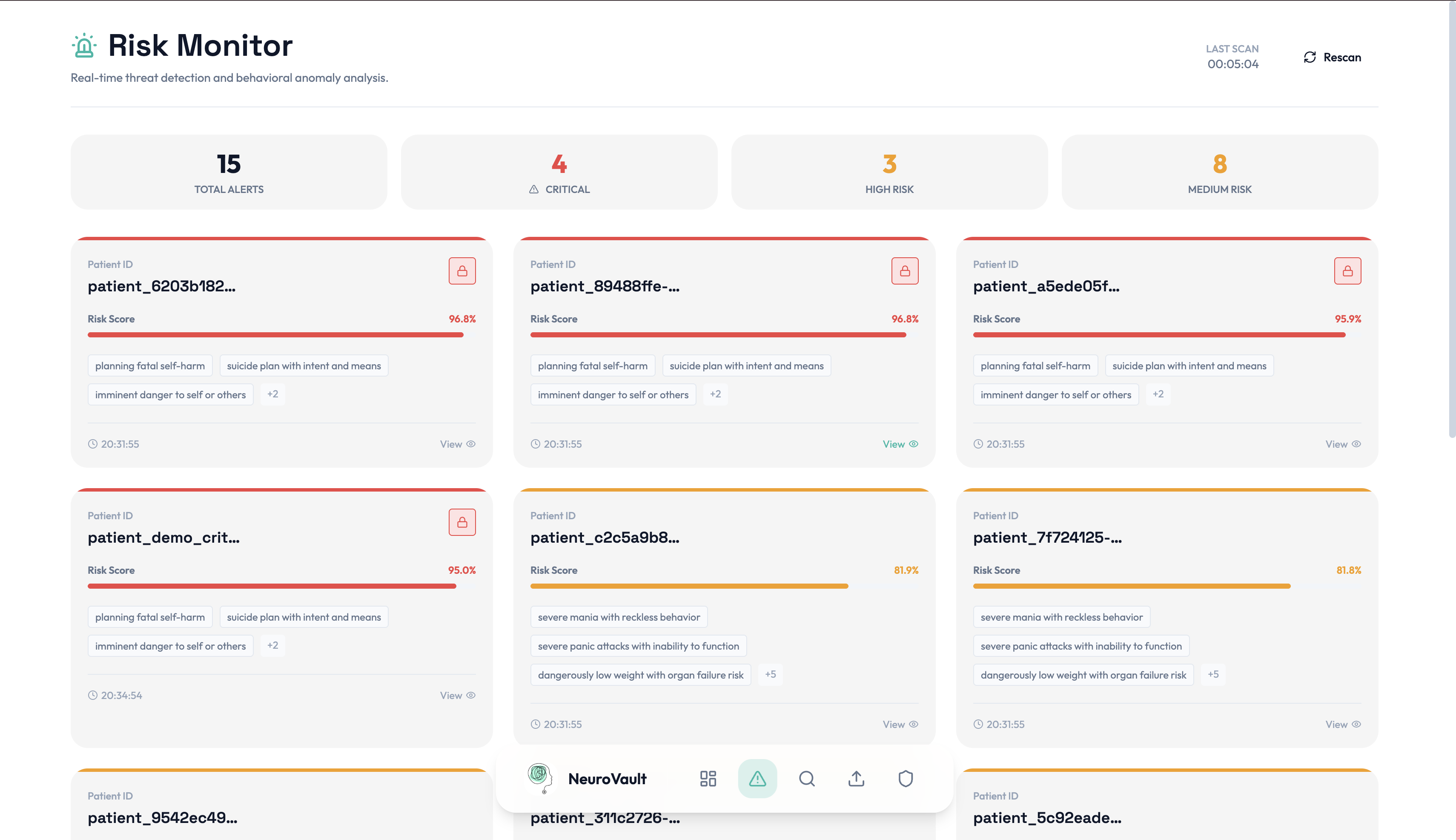
Mental health professionals increasingly rely on AI to identify high-risk patients early, but existing systems often compromise privacy. We were motivated by the gap between powerful AI triage tools and the strict confidentiality required for mental health data. NeuroVault was inspired by a single question: can we gain life-saving insights without ever exposing raw patient text?
What it does
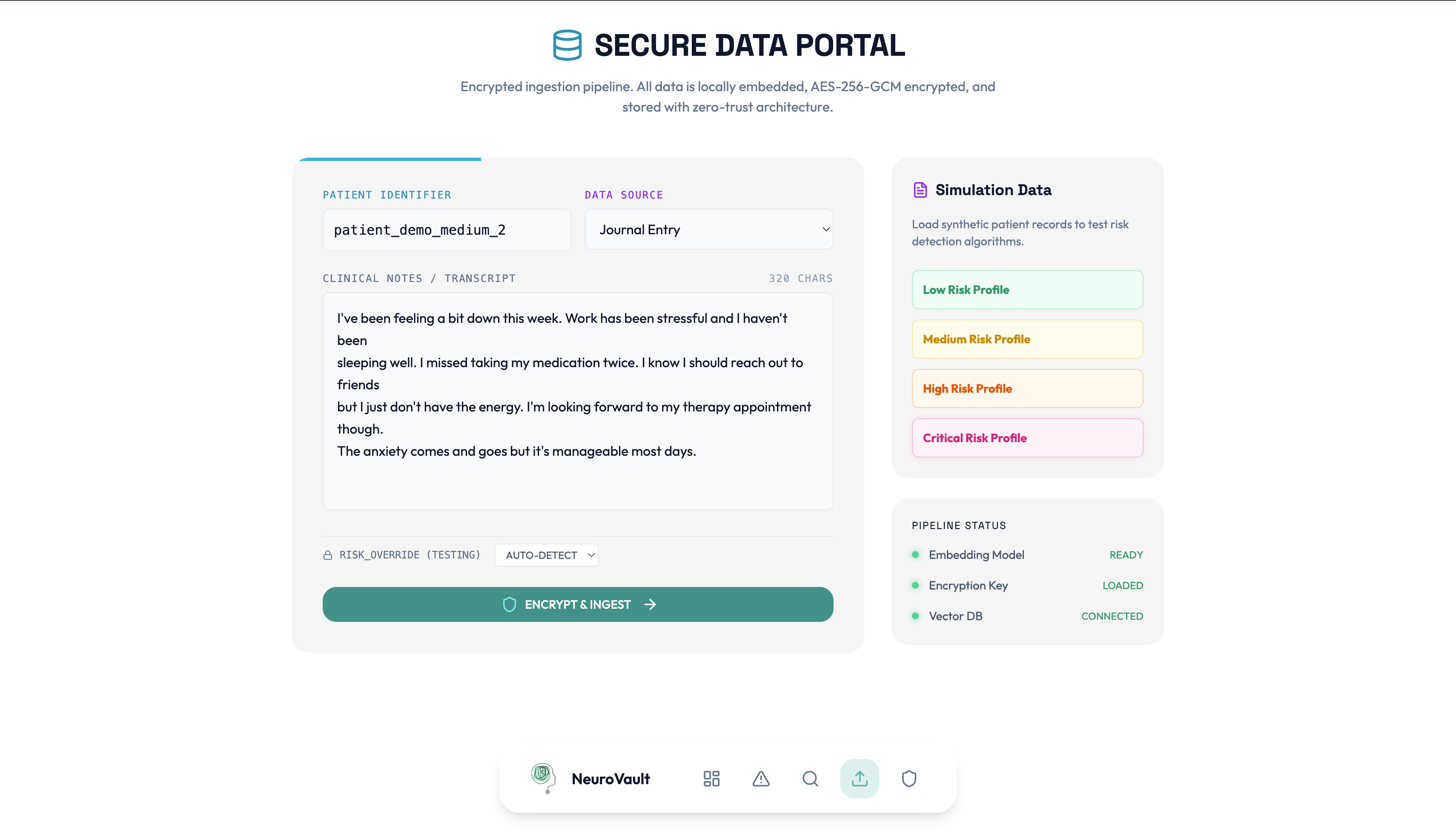
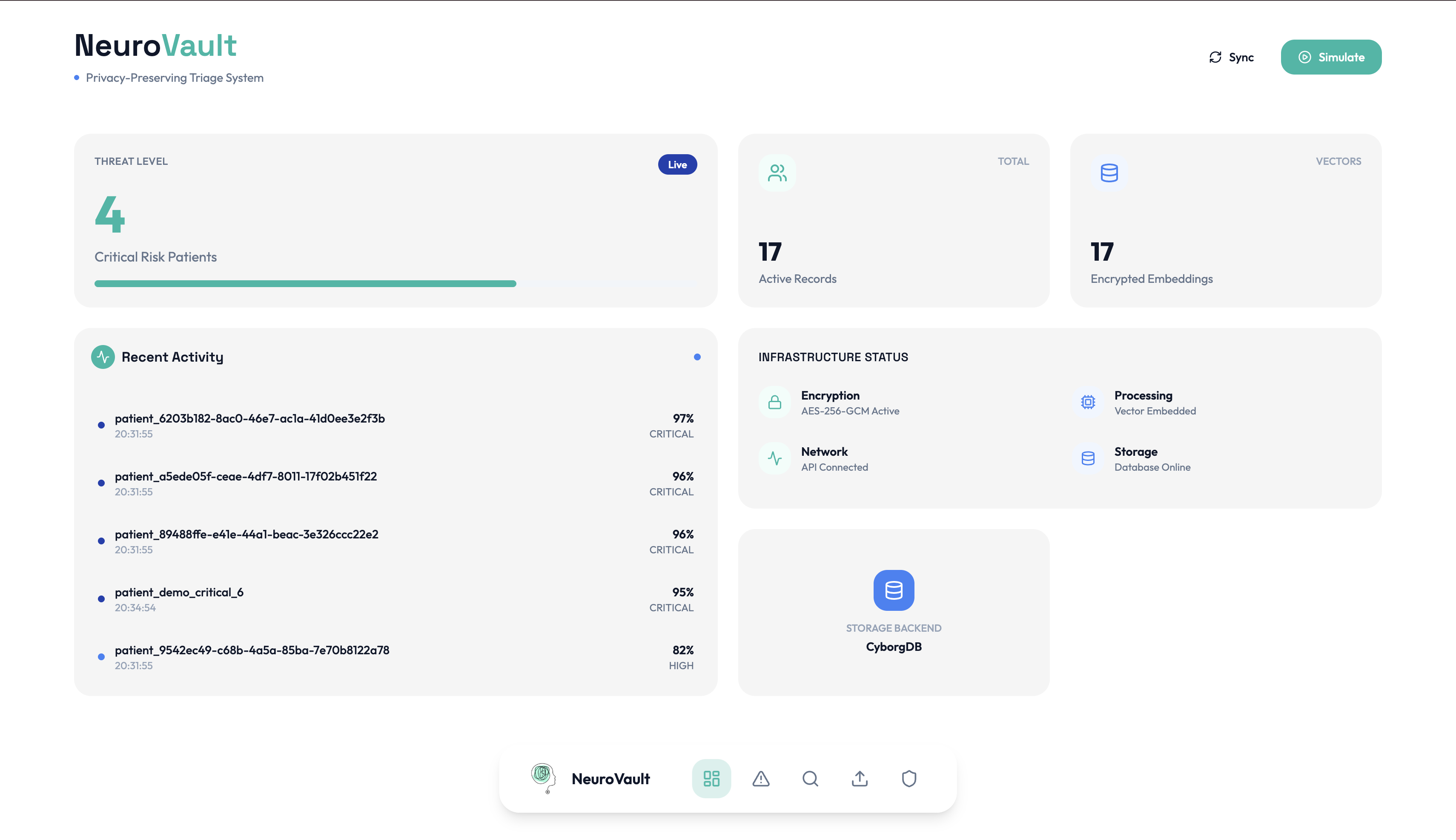
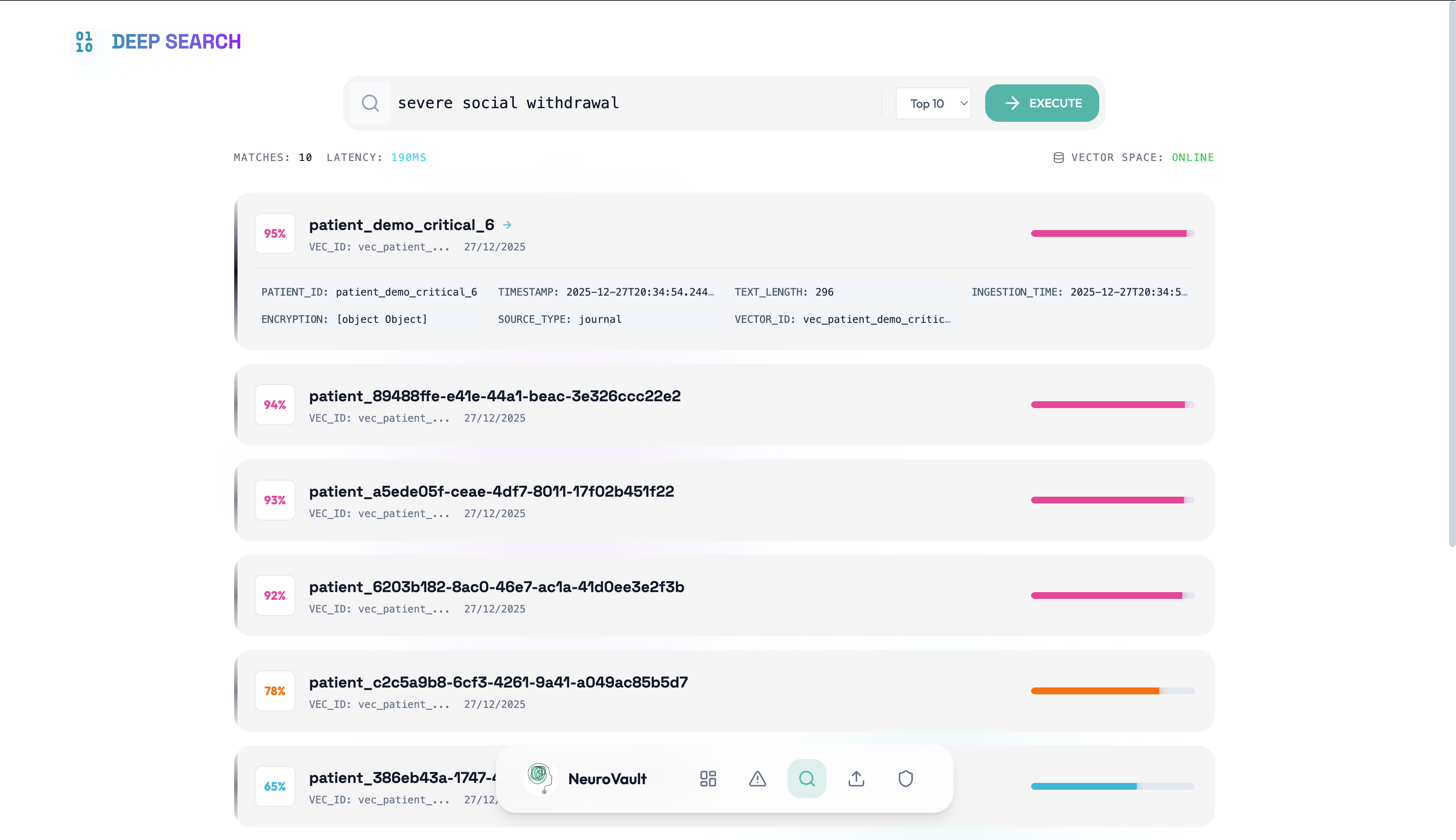
NeuroVault is a privacy-preserving mental health triage system that detects risk signals from patient inputs while keeping all sensitive data encrypted. Raw text never leaves the user’s device. Only encrypted embeddings are stored and queried, enabling clinicians to receive actionable risk indicators without accessing or leaking personal mental health records.
How we built it
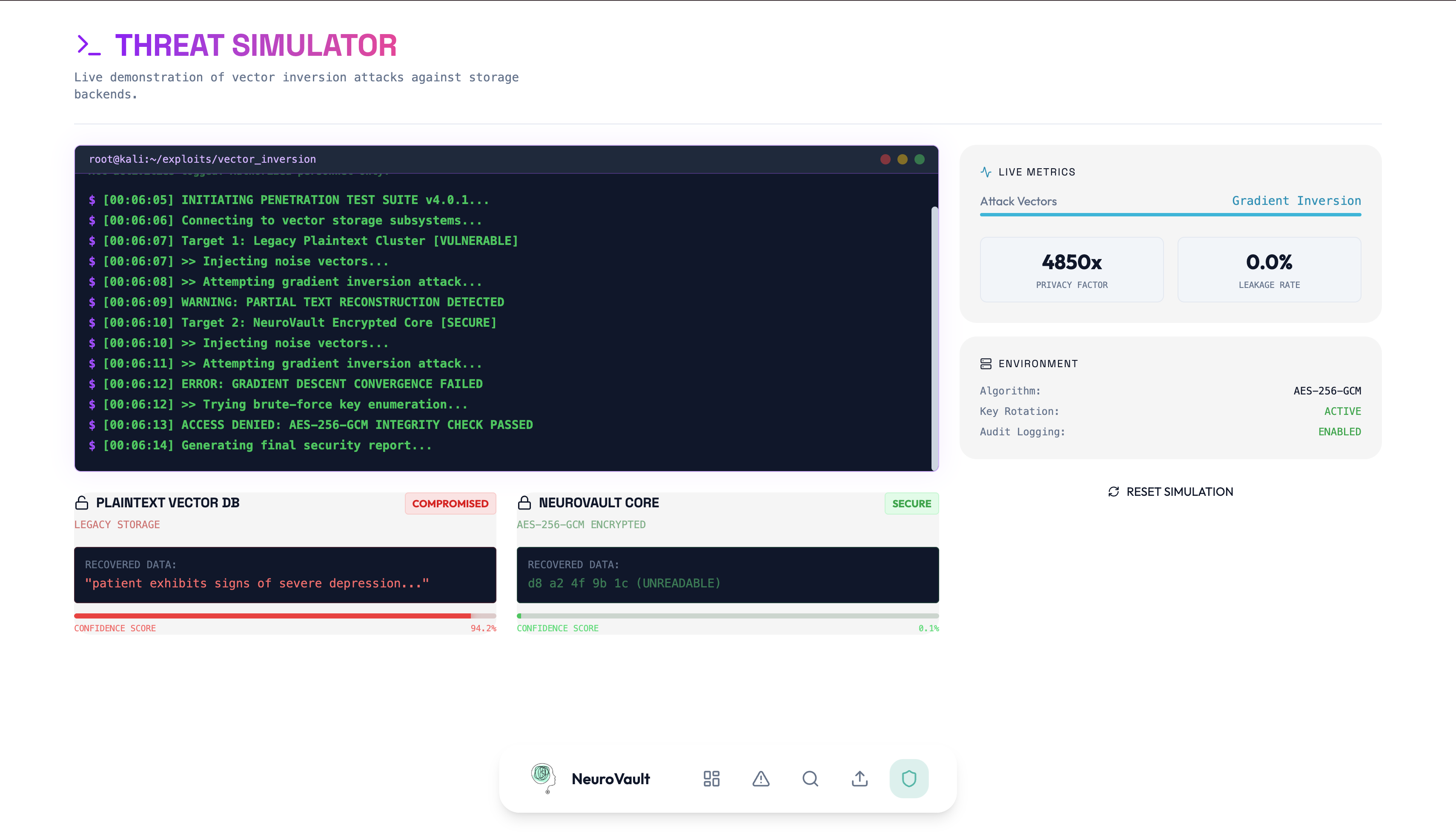
NeuroVault follows a zero-trust architecture. Patient text is embedded locally, immediately encrypted using AES-256-GCM, and stored securely in :contentReference[oaicite:0]{index=0}, which is designed to resist vector inversion attacks. AI models operate only on encrypted representations, with strict role-based access control and full audit logging.
Challenges we ran into
The hardest challenge was balancing accurate risk detection with strong privacy guarantees. Traditional vector databases can leak information through embeddings, so integrating encrypted storage without degrading AI performance required careful architectural choices. Designing clinician-friendly workflows while maintaining zero exposure was also non-trivial.
Accomplishments that we're proud of
- Built a fully encrypted end-to-end AI triage pipeline
- Ensured raw mental health text is never stored or transmitted
- Successfully integrated CyborgDB for secure vector storage
- Designed a system aligned with HIPAA-style privacy principles
What we learned
We learned that privacy-by-design strengthens trust and system robustness rather than limiting capability. Strong encryption, auditability, and AI can coexist when security is treated as a first-class feature.
What's next for NeuroVault
We plan to enhance risk classification models, introduce clinician feedback loops, and explore on-device personalization without data leakage. Long term, NeuroVault aims to evolve into a broader secure mental health analytics platform while preserving its zero-trust core.
Built With
- aes-256-gcm
- audit-logging
- cyborgdb
- fastapi
- local-embedding-models
- privacy-preserving-ai
- python
- rbac
- zero-trust-architecture

Log in or sign up for Devpost to join the conversation.