Inspiration
This project is personal. One of our teammate's (Adit Sangani) grandmother had two strokes, the second one wasn't caught in time because the early warning signs weren't obvious to the people around her. By the time it was identified, the damage was already done. We built NeuroTriage because we wanted a way to catch those signs early: something that could quietly track tremors and neurological markers day to day, so a second stroke or a first one doesn't go unnoticed until it's too late.
What it does
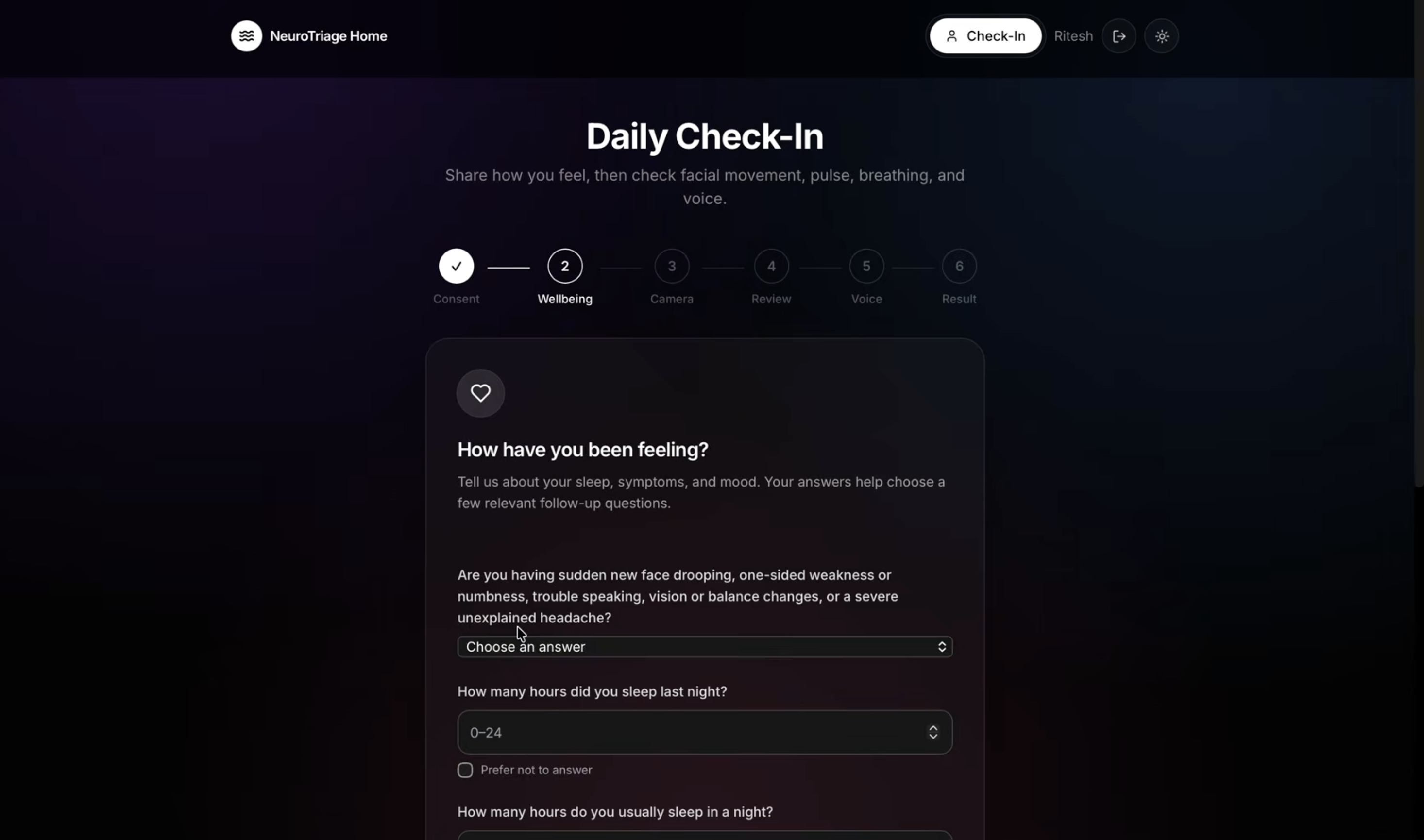
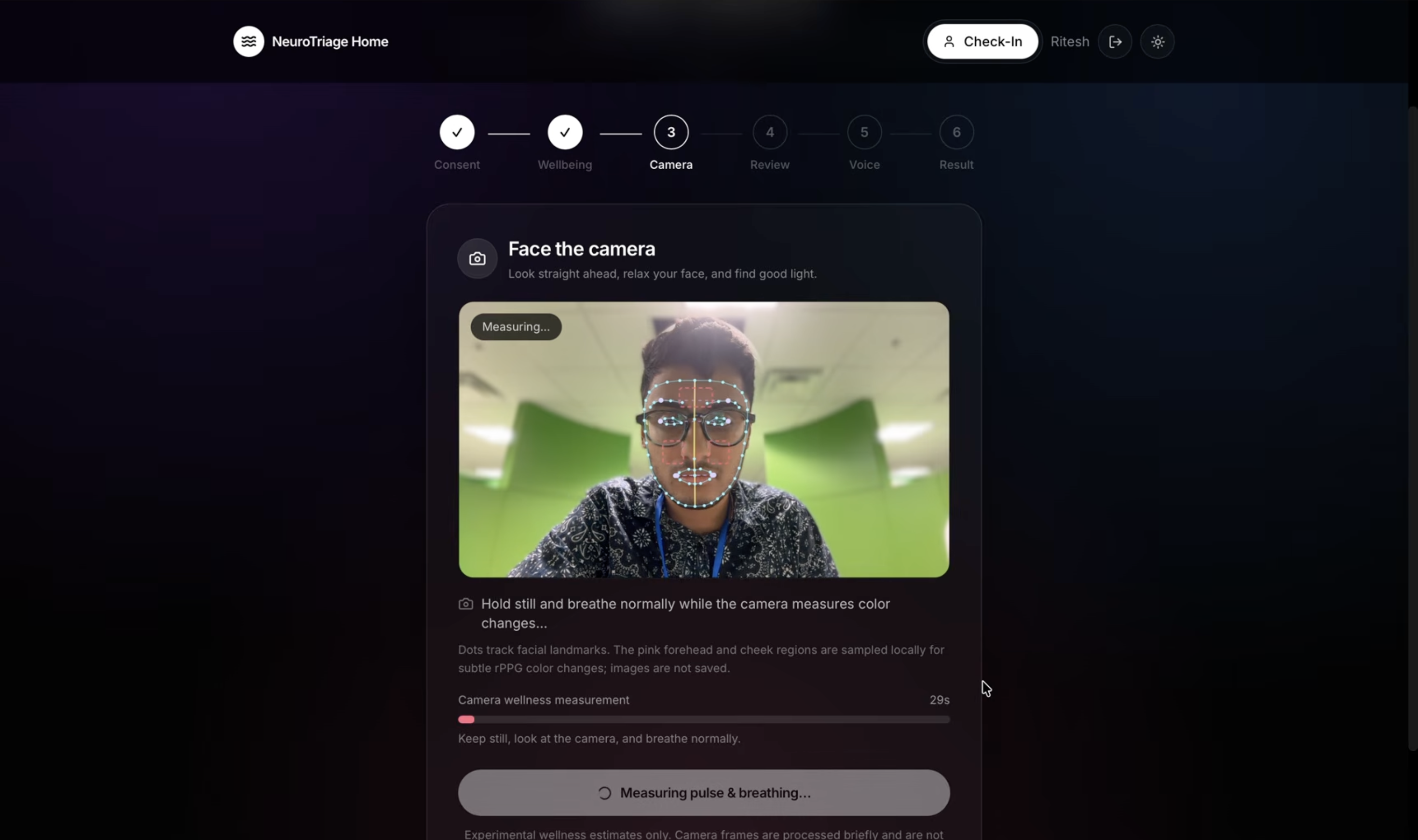
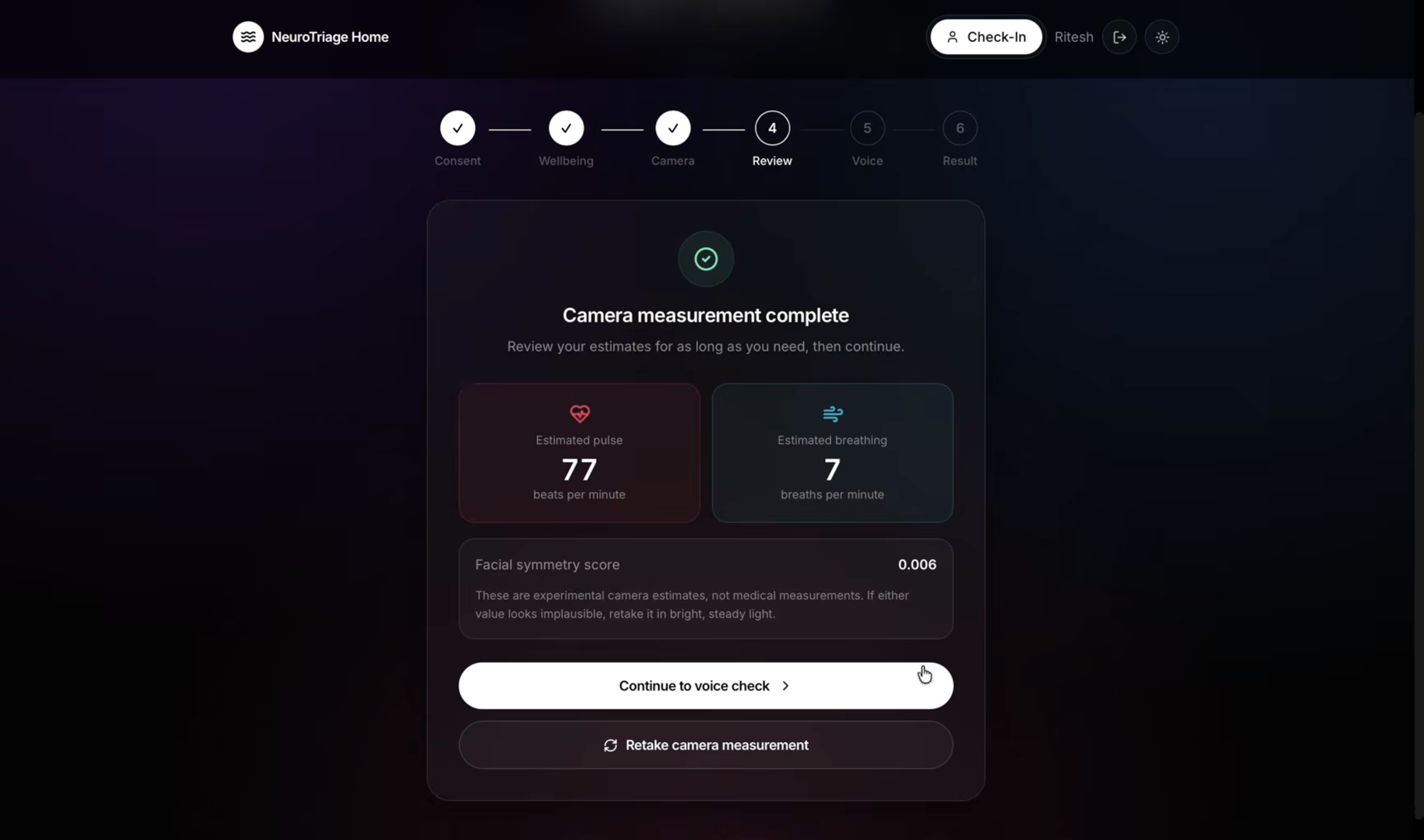
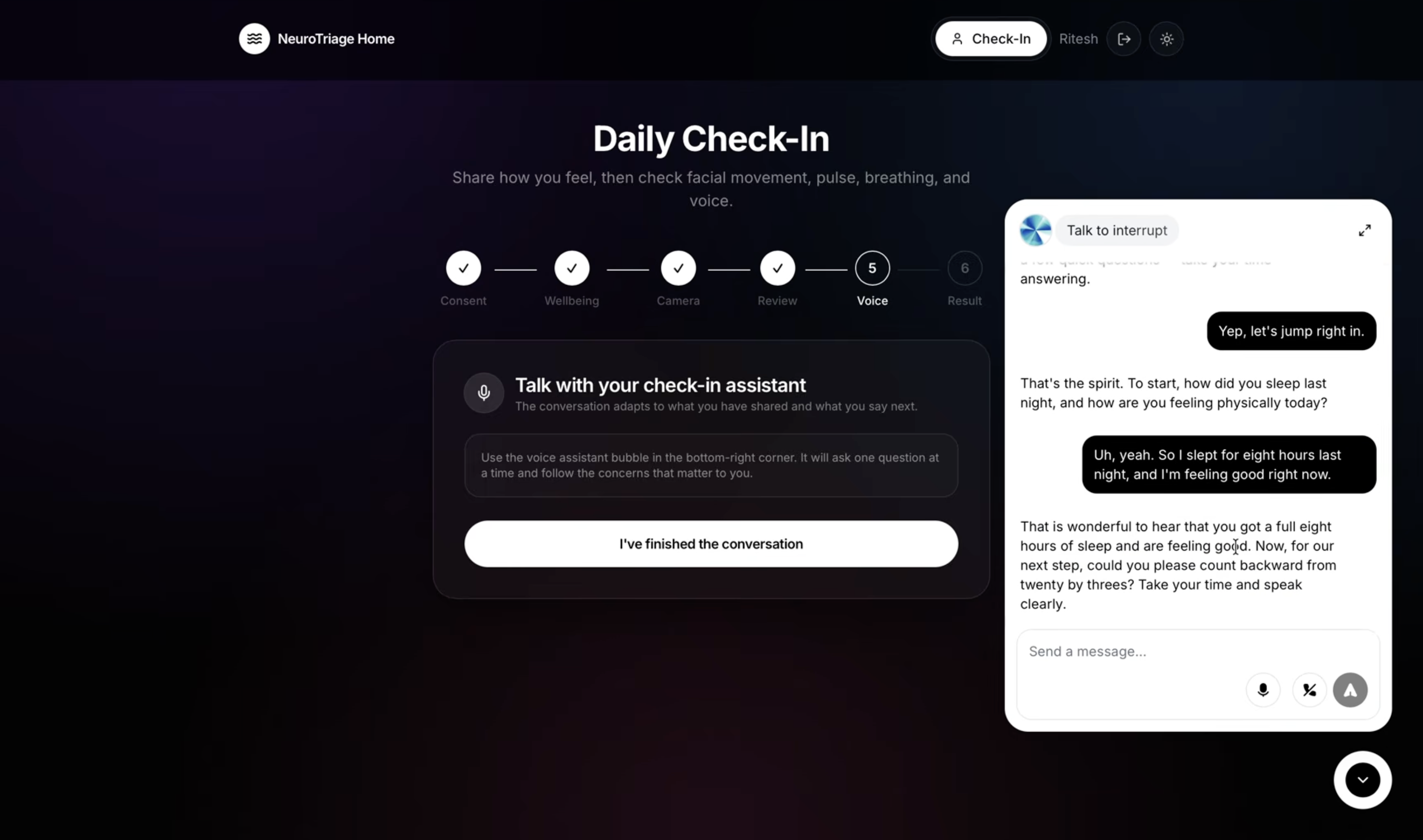
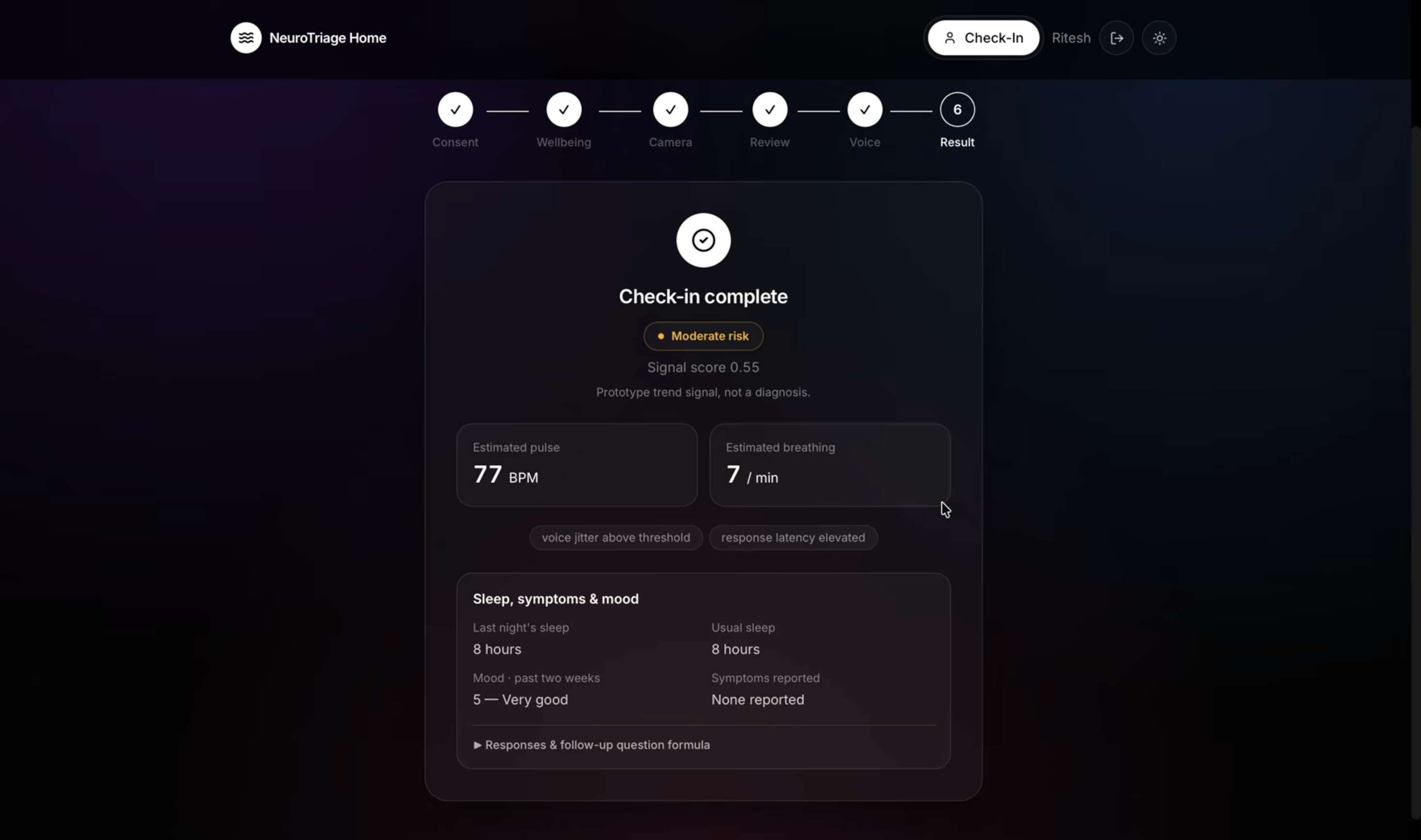
NeuroTriage lets patients do a quick daily check-in from their own device. The system analyzes tremor patterns and movement through the camera in real time, converts that into tokenized geometric and frequency data, and flags concerning changes for a clinician to review all without ever storing or transmitting raw video. NeuroTriage is a remote patient monitoring platform that turns daily at-home check-ins into proactive clinical triage for stroke and neurodegenerative recovery:
Hands-Free Daily Check-Ins: Guides patients through a simple morning assessment using an ElevenLabs voice agent, eliminating the frustration of tapping small screens for hands with tremors or weakness.
Real-Time Biomarker Tracking: Measures facial symmetry, eyelid droop, and micro-tremors via computer vision while gathering subjective wellness and medication timing.
Asynchronous Risk Scoring: Evaluates daily entries against the patient's historical baseline in the background using Render Workflows, sorting cases into clear stable, drifting, or acute alert tiers.
Actionable Clinician Triage: Prioritizes deteriorating patients at the top of the provider dashboard with one-click tools to launch telehealth visits, alert care coordinators, or export records to the hospital EHR.
Built-In Privacy by Design: Protects patient dignity and HIPAA standards by processing coordinate ratios instead of storing raw face video, pairing records to anonymous UUIDs, and tracking every clinician view with an immutable audit log.
How we built it
On the backend, we used token-based session verification (backend/auth.py) with strict route guards (ProtectedRoute.jsx) so patients can only ever access their own data, while clinician escalation tools and historical records stay locked behind a separate permission tier. All telemetry is tied to de-identified UUIDs in our PostgreSQL schema rather than patient identity, and every clinician view, query, and export is logged through an immutable audit trail (database/audit_log.py) to keep the whole system HIPAA-compliant by design.
Challenges we ran into
We ran into serious merge conflicts as multiple people worked on overlapping parts of the codebase at once, which cost us real time untangling changes. We also hit a wall getting Supabase authentication to load properly tracking down why sessions weren't persisting correctly ate up a big chunk of our build time before we found the fix.
Accomplishments that we're proud of
We're proud that we built a system that takes patient privacy seriously from the ground up rather than bolting it on afterward raw video never leaves the device, and every piece of sensitive data is de-identified and audit-logged. Turning a painful family experience into something that could genuinely help other families catch a stroke early feels like the real win here.
What we learned
We learned a lot about designing for compliance-heavy domains like healthcare, where privacy and auditability aren't optional add-ons but core architecture decisions. We also got a lot more comfortable debugging authentication issues and coordinating a codebase across a team without stepping on each other's work.
What's next for NeuroTriage
The biggest priority is turning NeuroTriage into a mobile app. Most people reach for their phone before their laptop, especially for something they need to do daily, so meeting patients where they already are will make consistent check-ins far more realistic long-term.


Log in or sign up for Devpost to join the conversation.