-
-
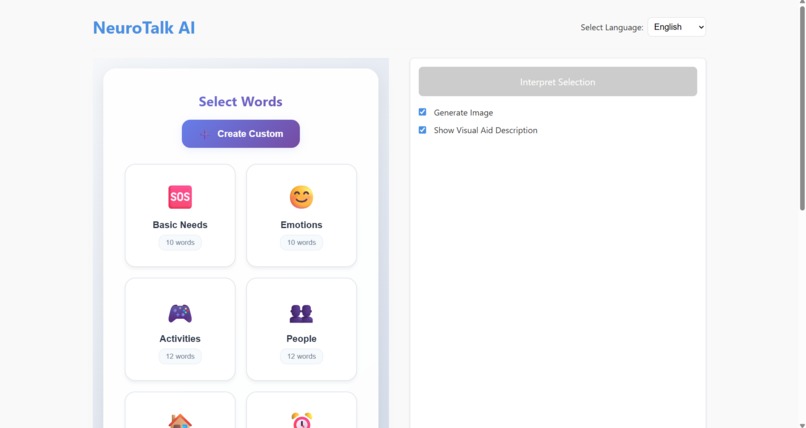
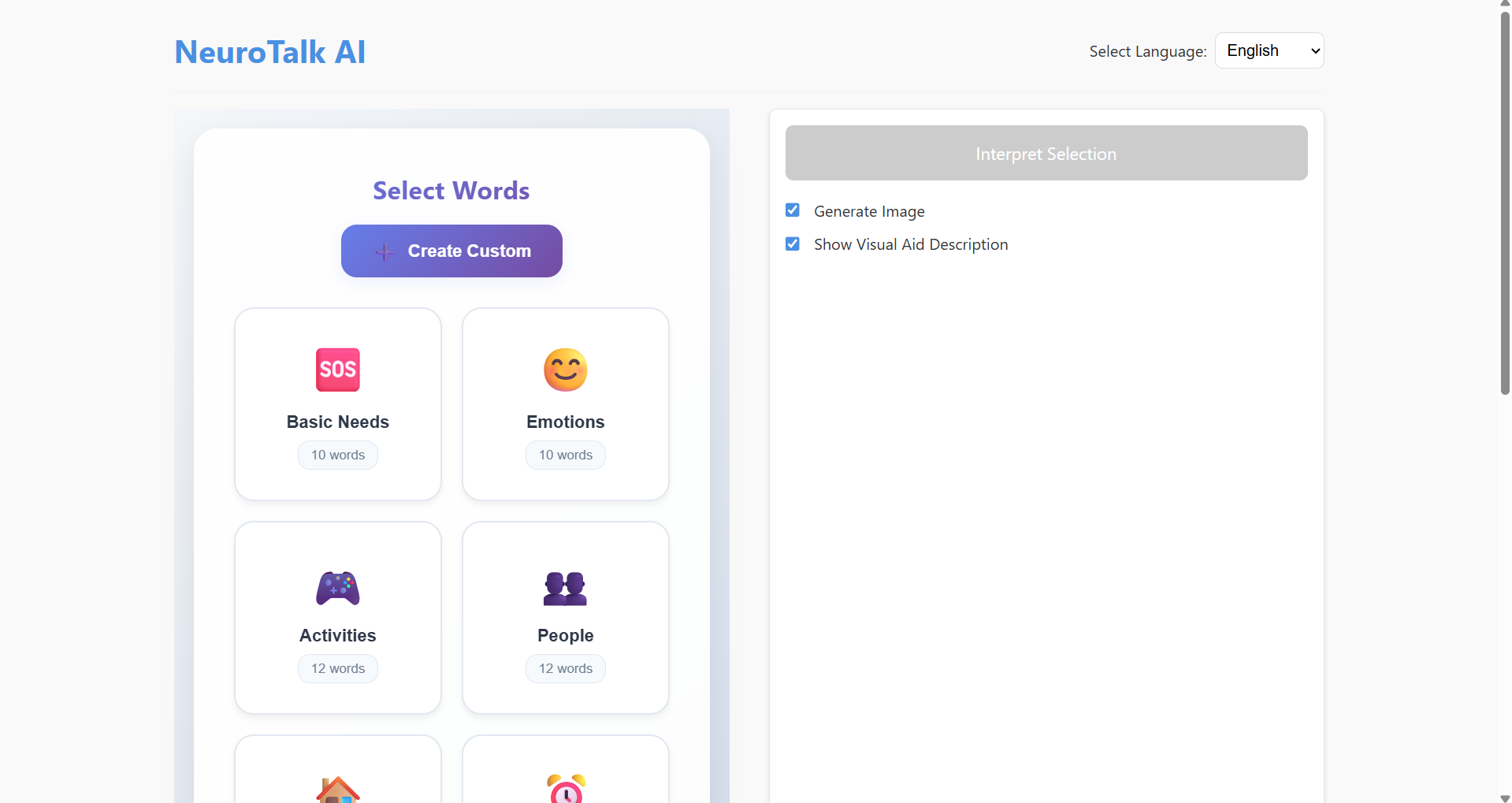
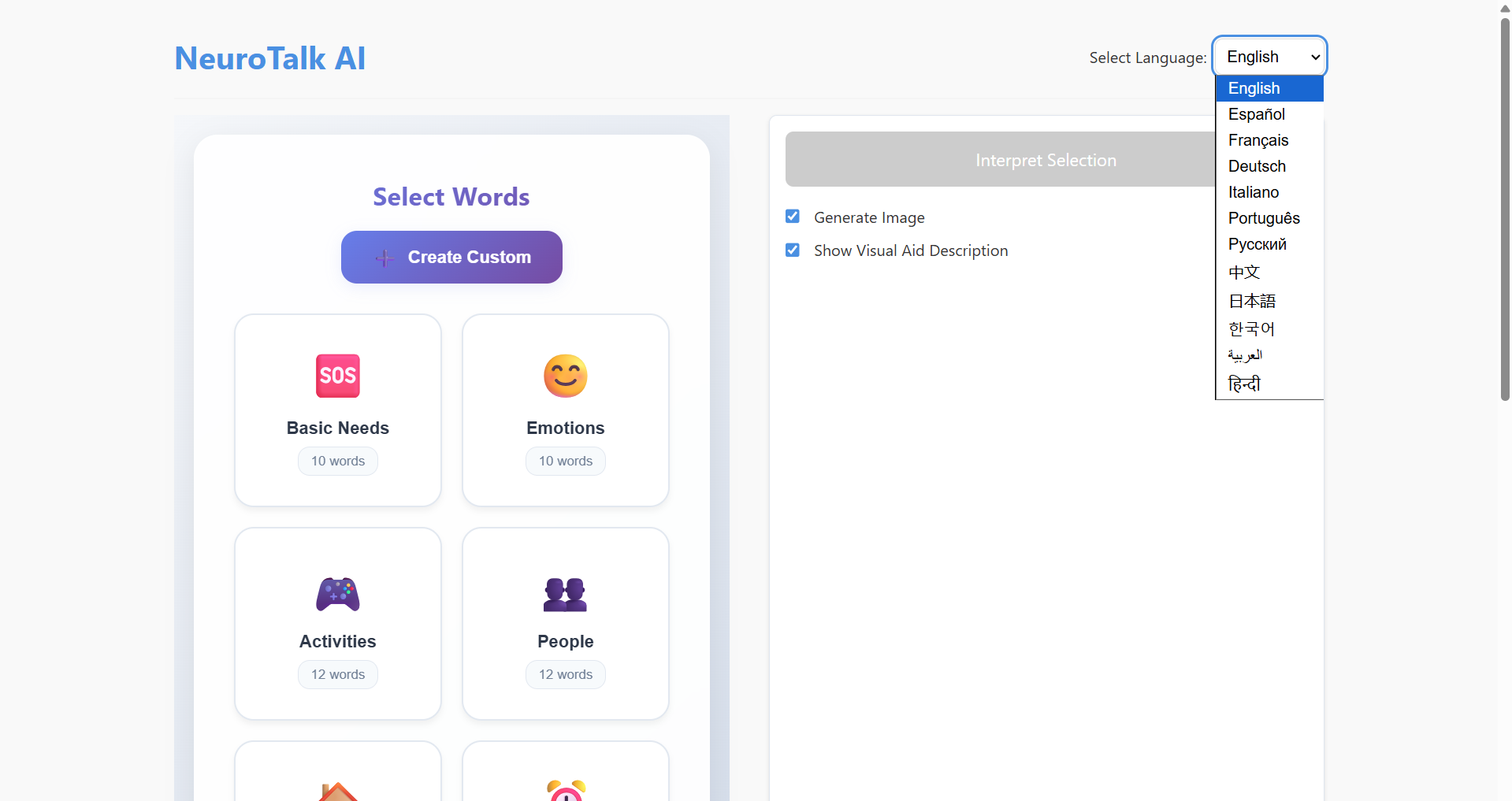
English home page
-
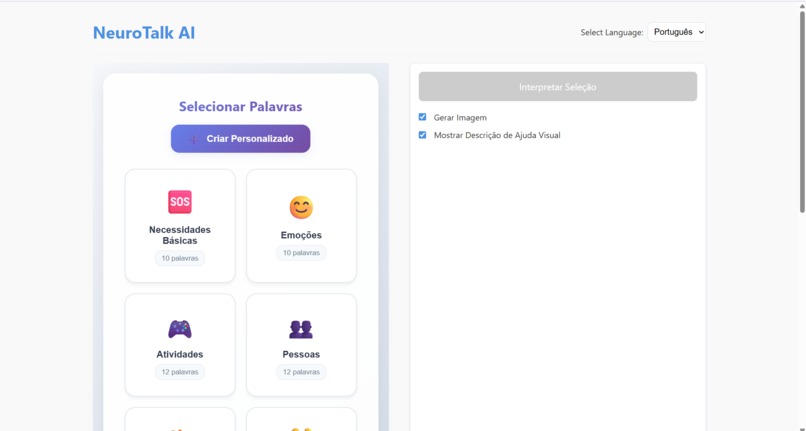
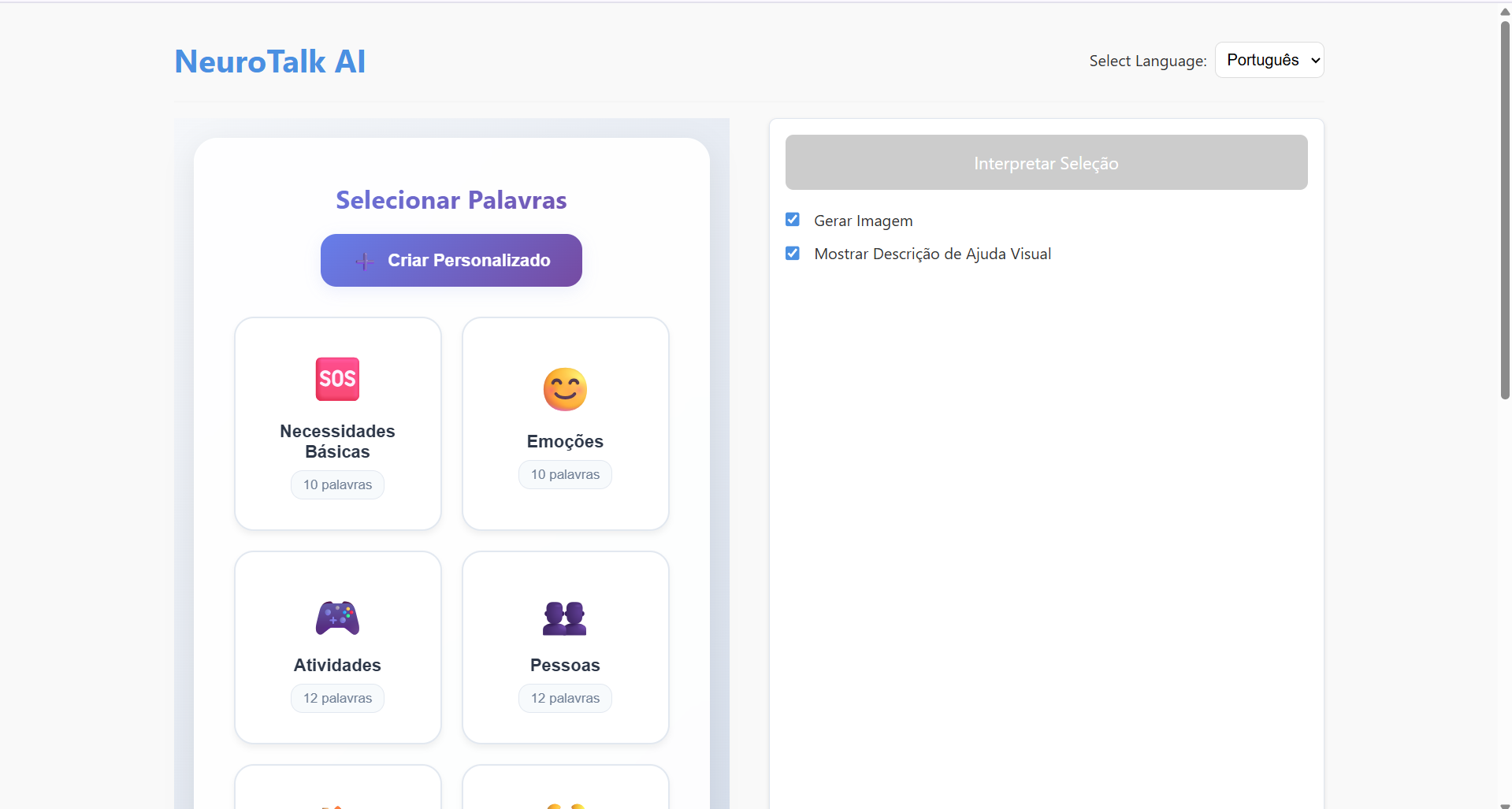
Different Language home page
-
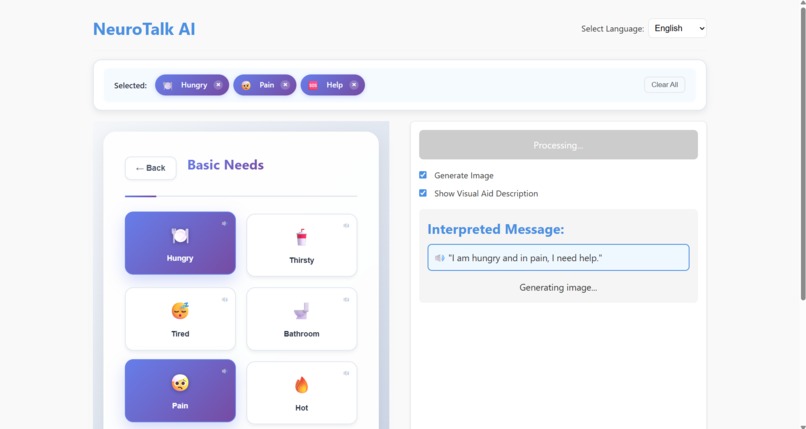
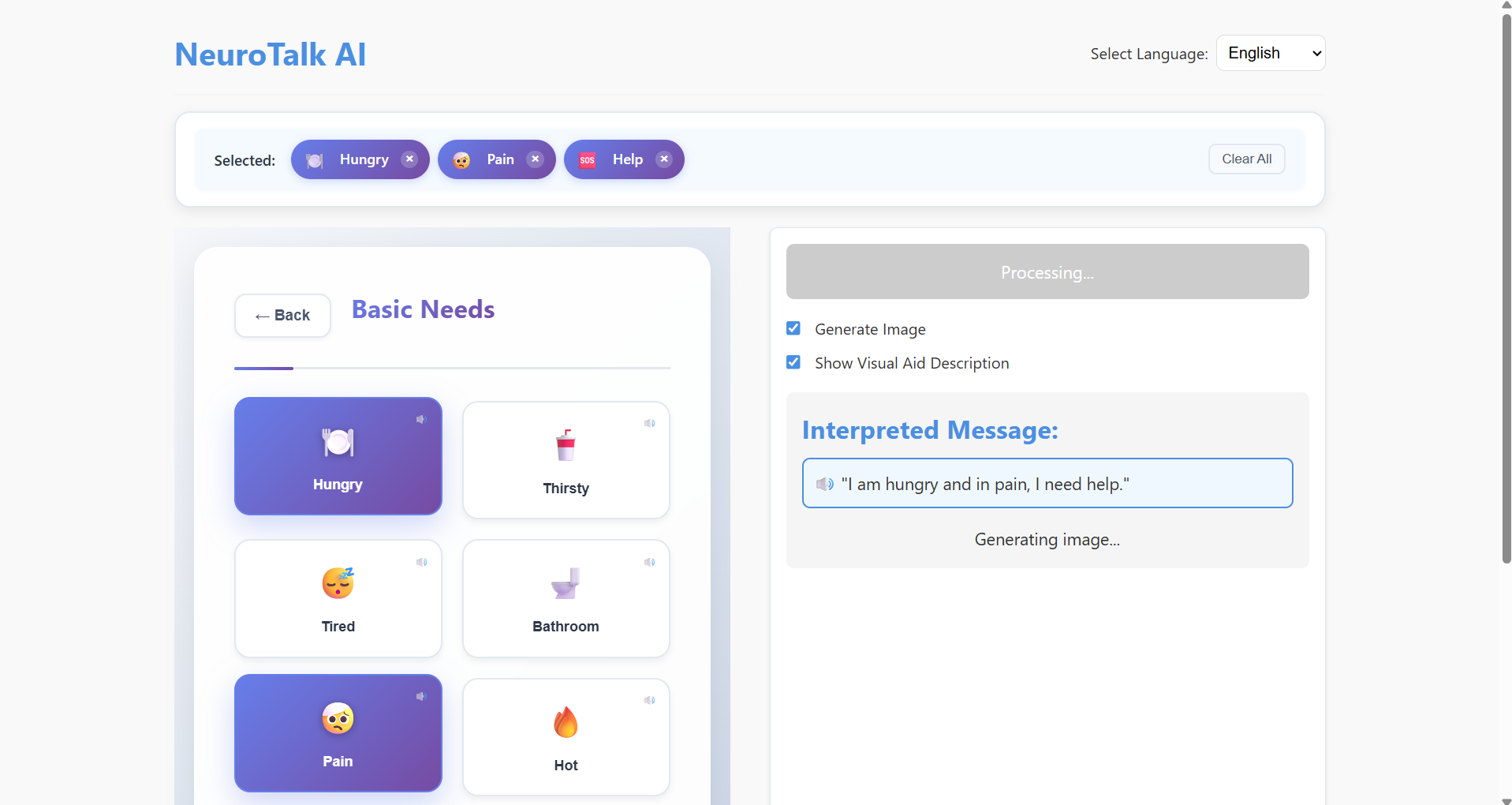
Generating Sentence
-
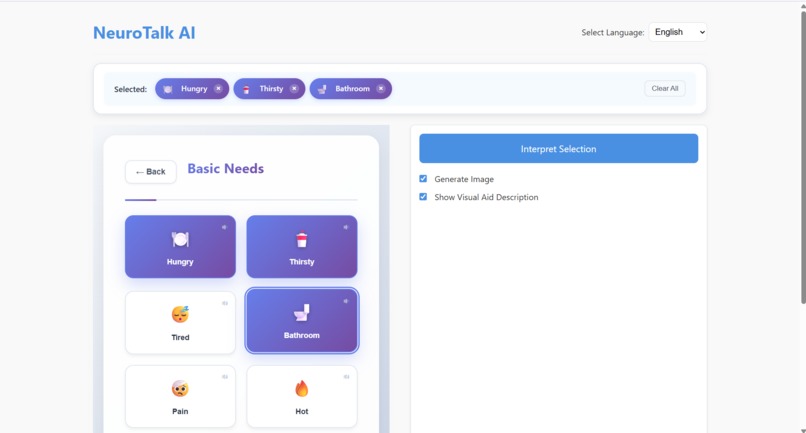
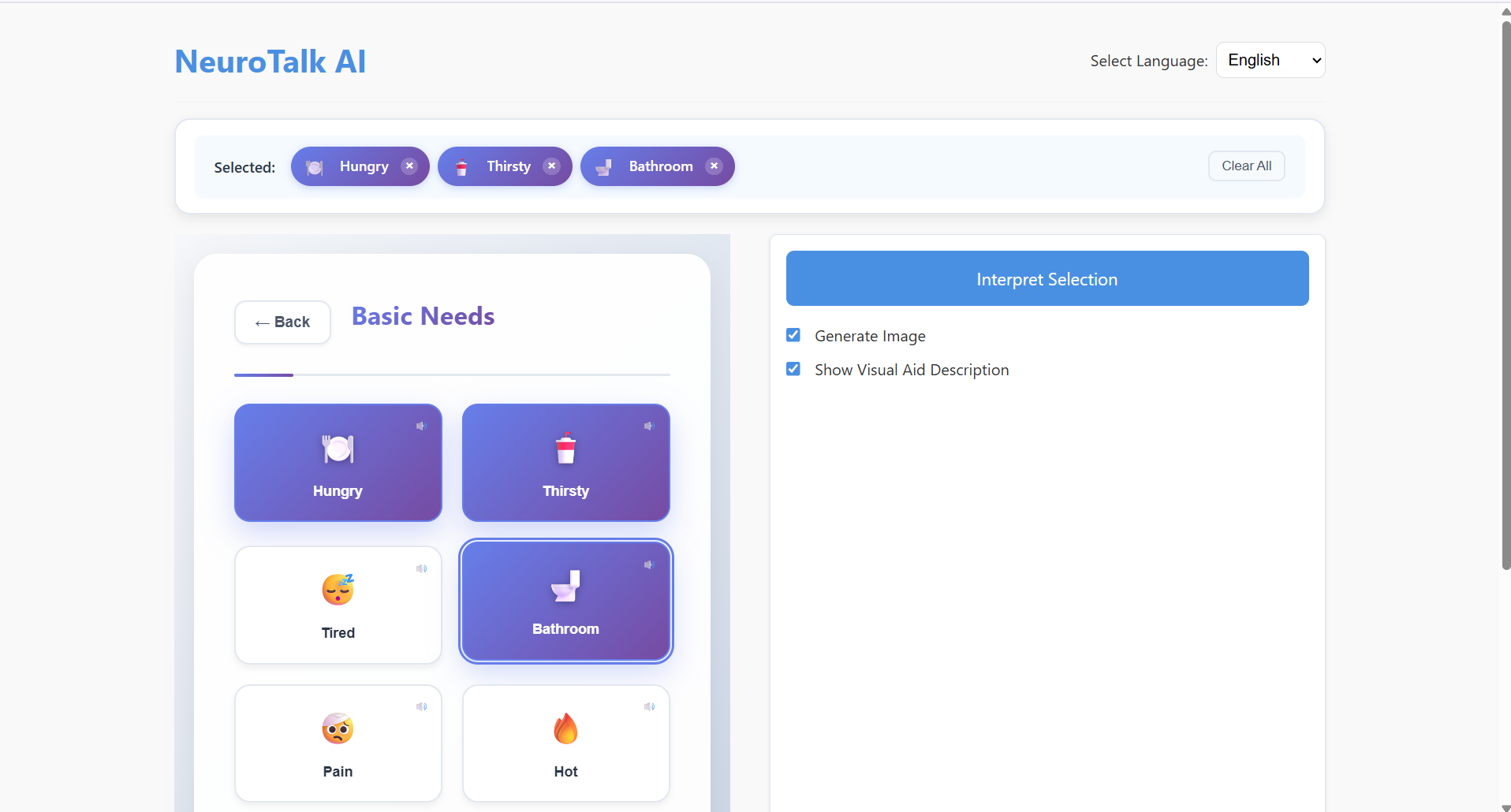
Choosing words
-
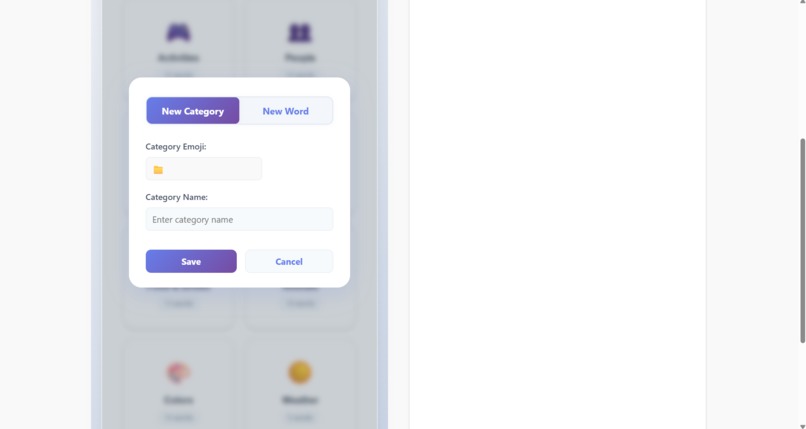
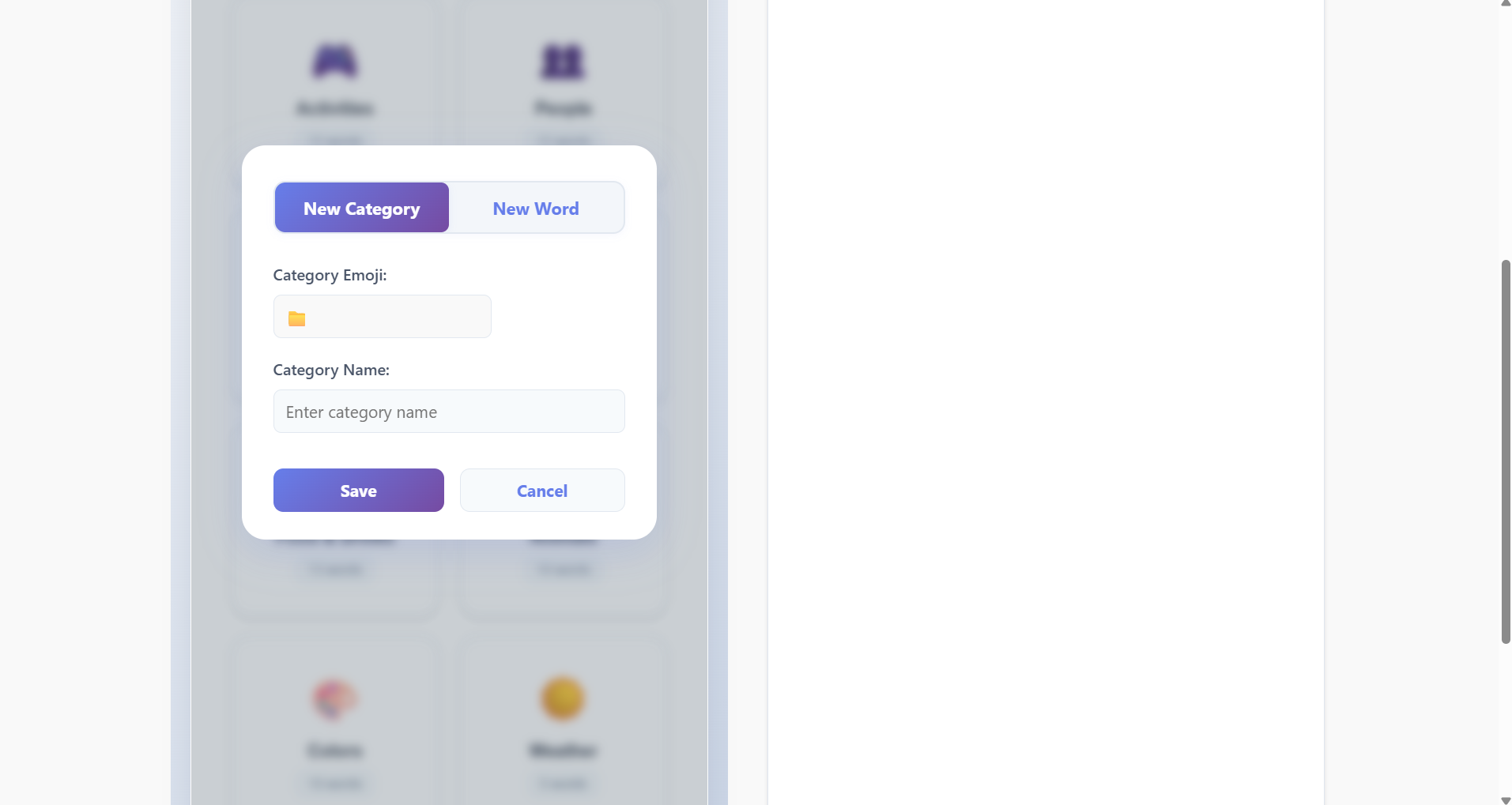
Creating custom words
-
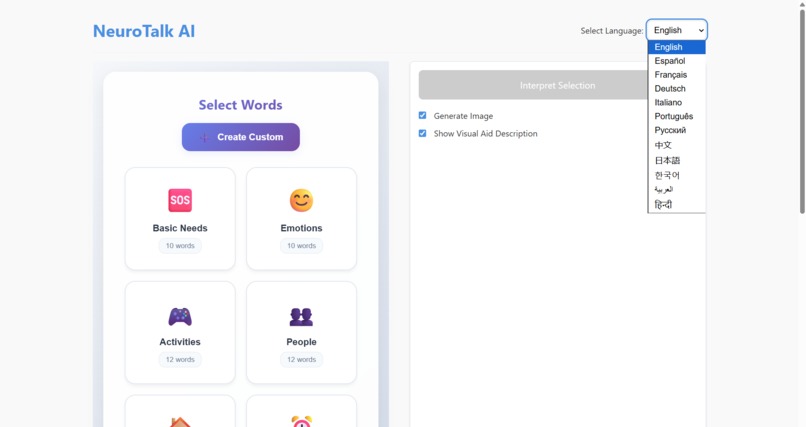
Different languages
Helping everyone find their voice - clearly, completely, and in their language.
📘 About the Project
🌟 Inspiration
NeuroTalk AI was inspired by my younger sister, who has autism. She used to rely on basic communication apps, but they often felt robotic, rigid, or simply frustrating to use — especially in a multilingual household like ours. I wanted to create something better: a smarter, more natural way for nonverbal individuals to express themselves and connect with others.
That’s what led me to build NeuroTalk AI — a tool that uses AI to turn simple word selections into fluid, personalized sentences, across over 10 languages.
🧠 What I Learned
Working solo on this project taught me how to:
- Design with accessibility and neurodivergent users in mind
- Use AI to generate natural-sounding, multi-language output
- Build a full-stack product from scratch with responsiveness and clarity
- Balance simplicity in UX with power in the backend
🏗️ How I Built It
I built the frontend using React.js and vanilla CSS, keeping the interface minimal and calming for a smoother user experience. The backend is powered by Node.js, handling input processing, sentence and image generation via the OpenAI API
Every part of the app — from sentence structure to save/load logic — was designed, developed, and refined by me during the hackathon.
⚔️ Challenges I Faced
- Generating context-aware, simple sentences using AI
- Handling multilingual grammar differences without making the output sound robotic
- Creating a layout that felt accessible without sacrificing functionality
- Managing the full development lifecycle solo — from backend routing to frontend polish
💭 Final Thoughts
This wasn’t just a coding project — it was personal. I built NeuroTalk AI not to win a hackathon, but to make something my sister — and people like her — could actually use every day. I truly believe this idea can scale and help people worldwide, and I’m excited to take it further.

Log in or sign up for Devpost to join the conversation.