-
-
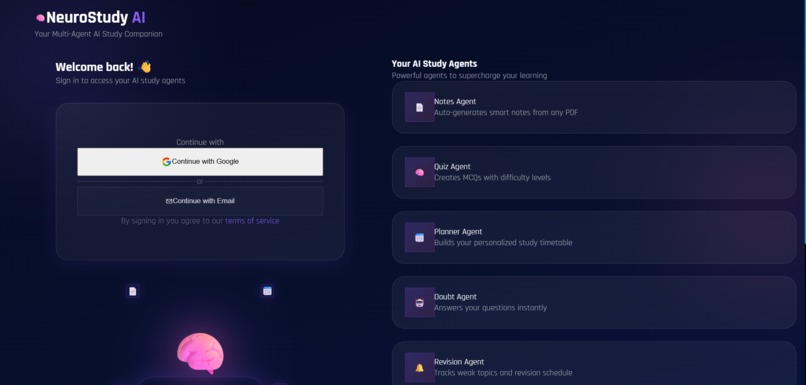
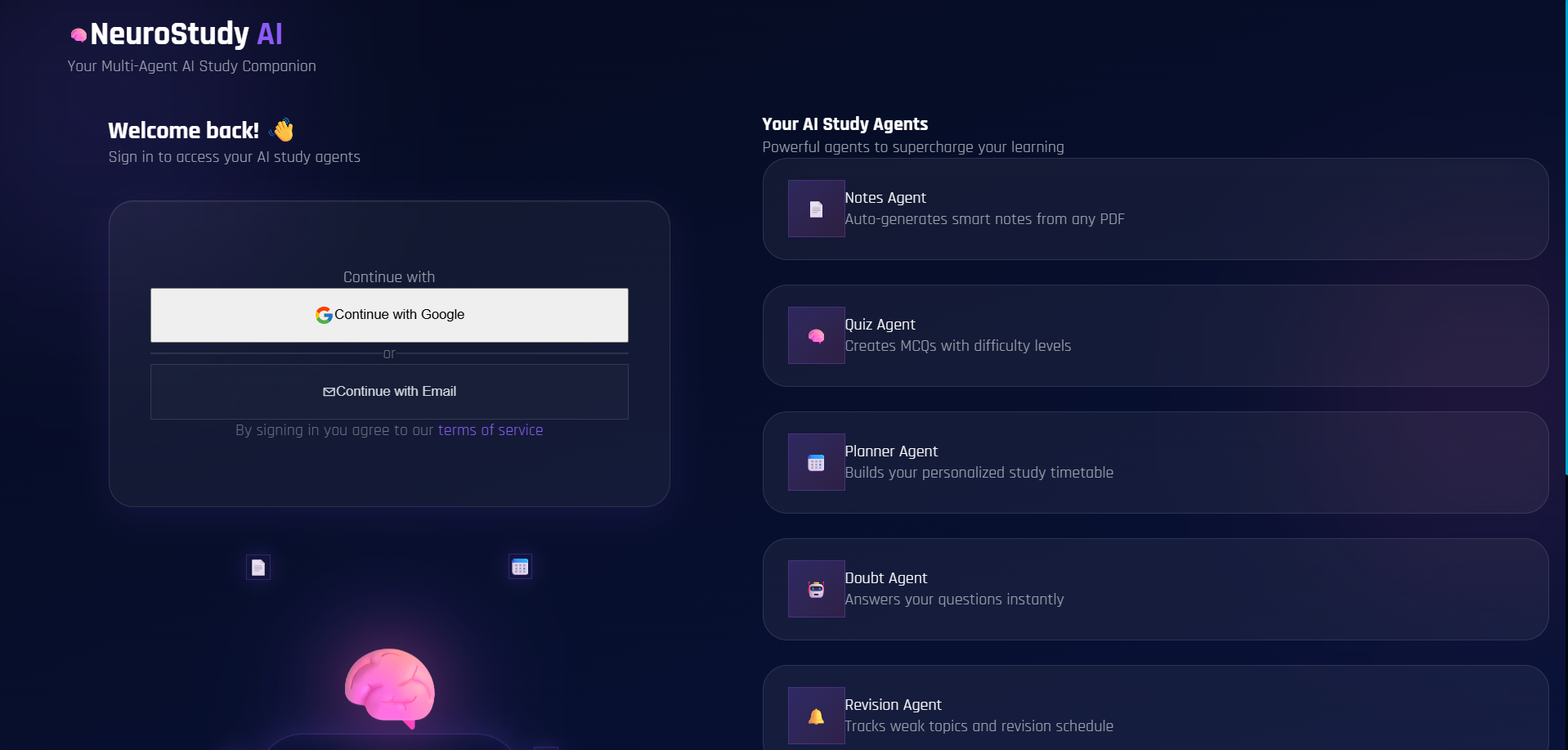
Login page
-
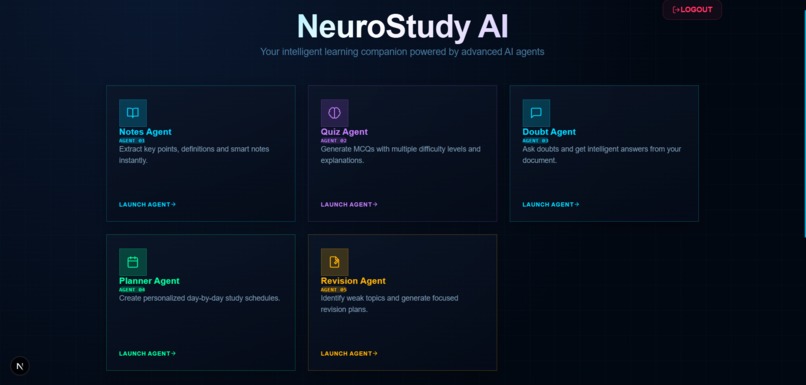
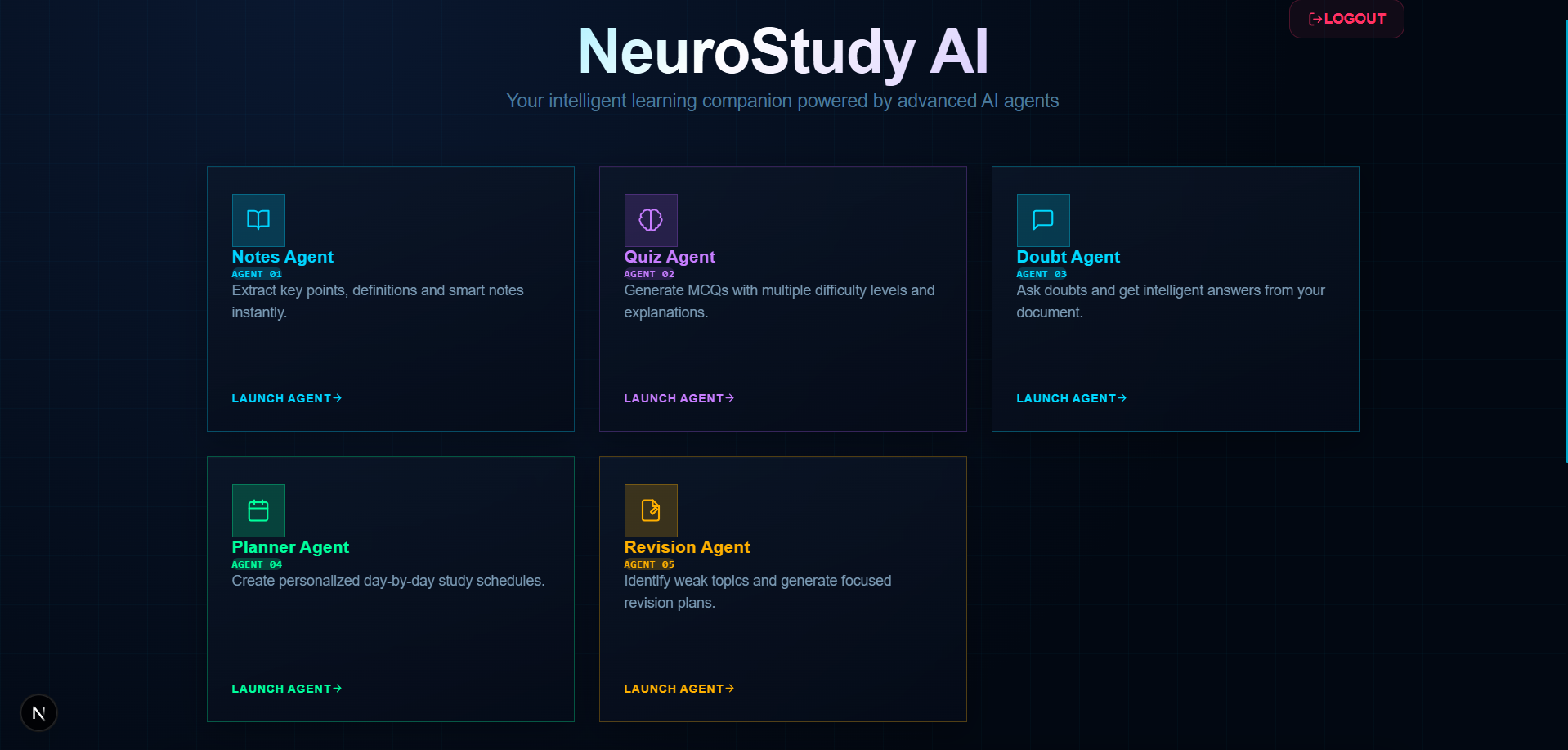
Dashboard
-
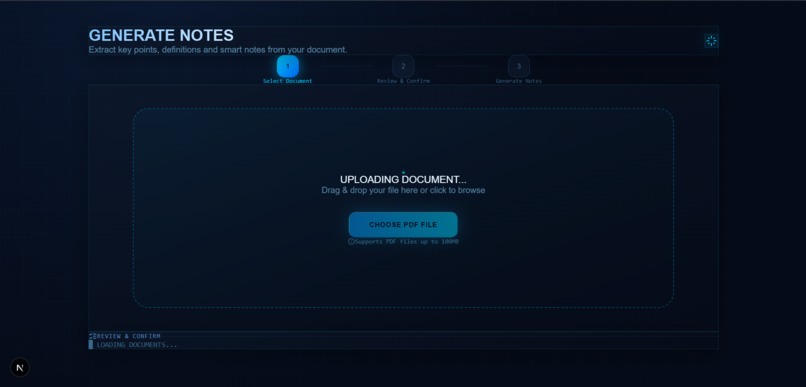
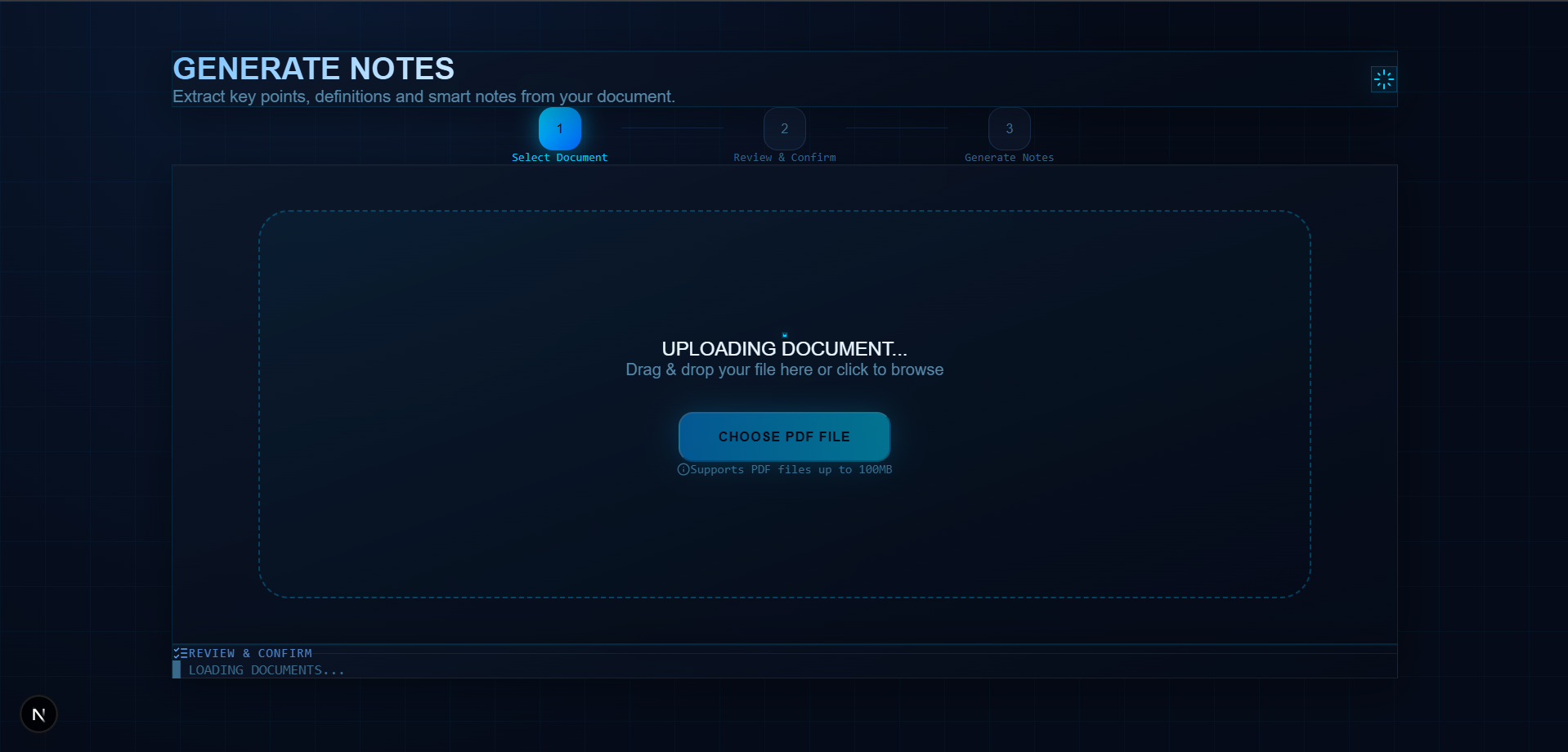
Notes Ai Agent
-
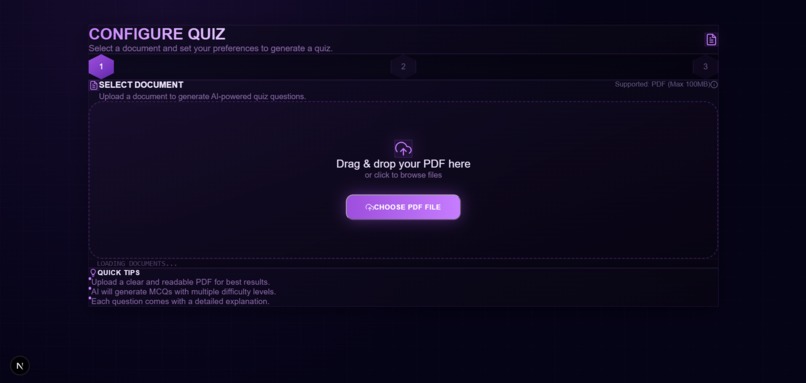
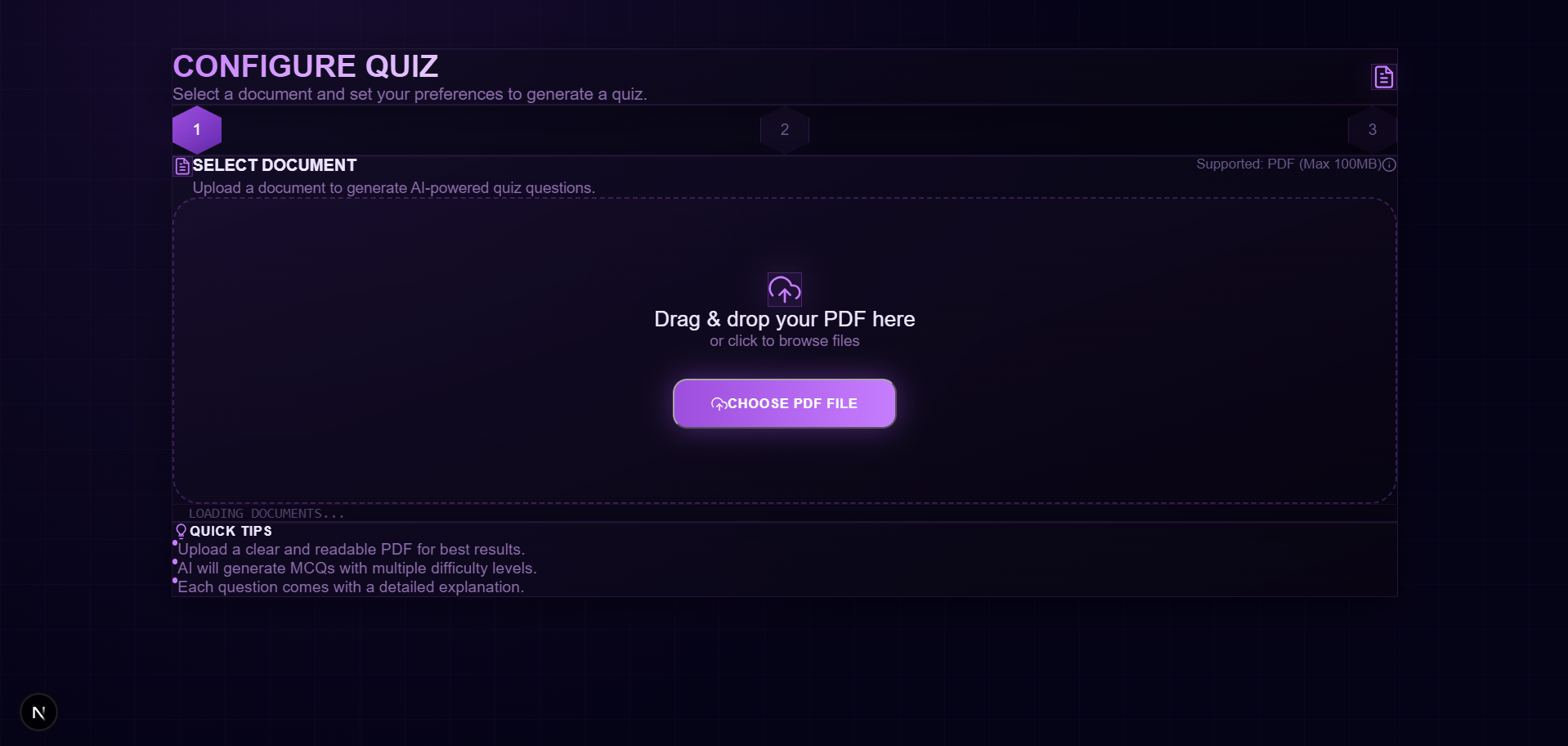
Quiz Ai Agent
-
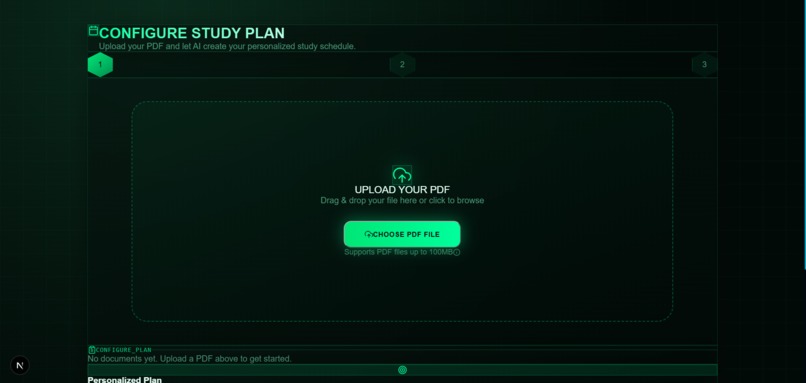
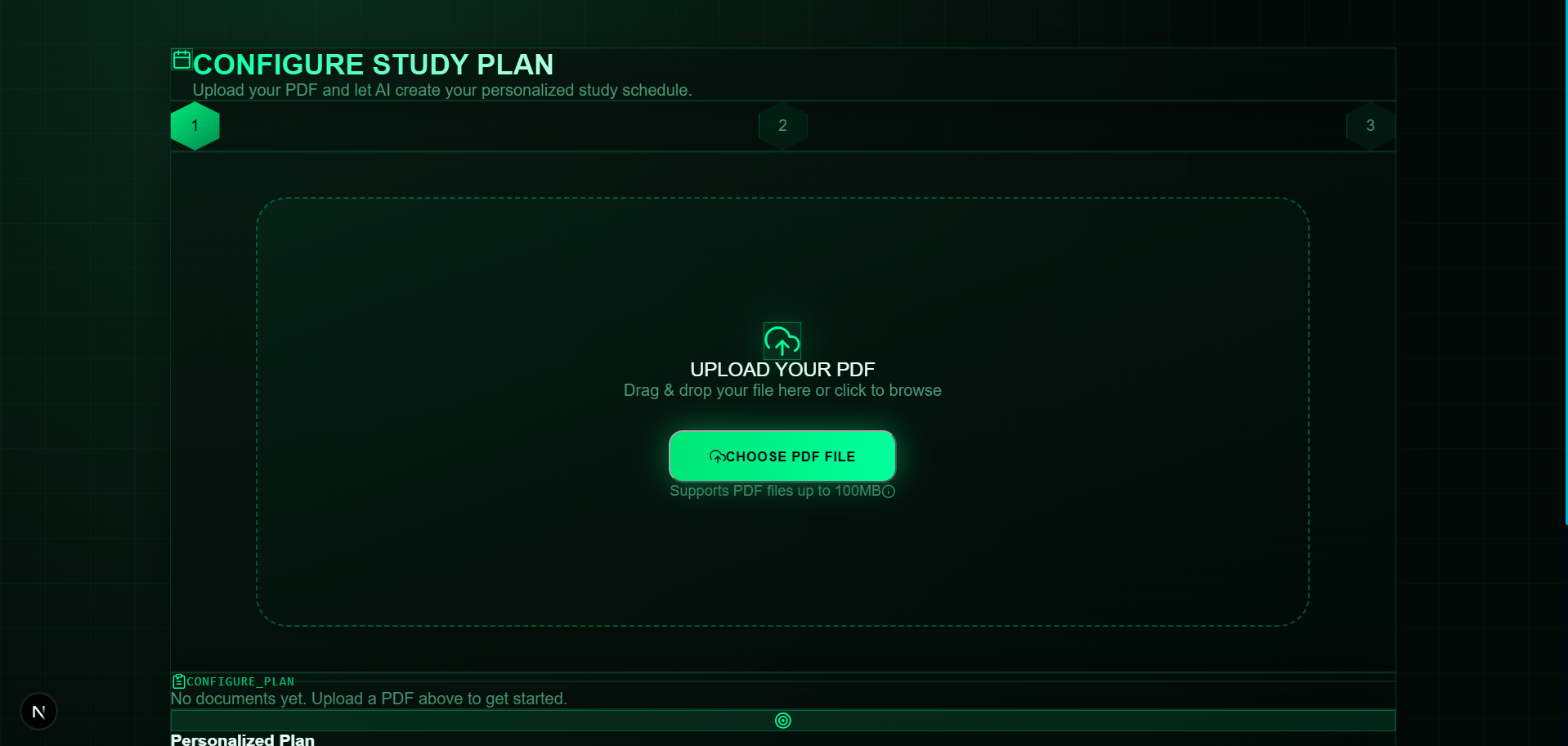
Study Plan Ai Agent
-
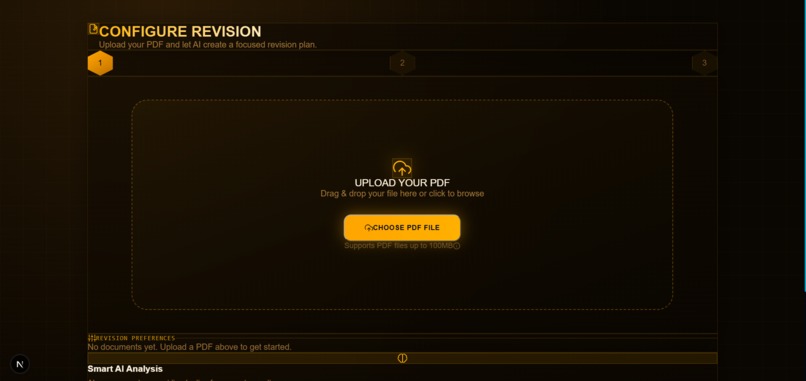
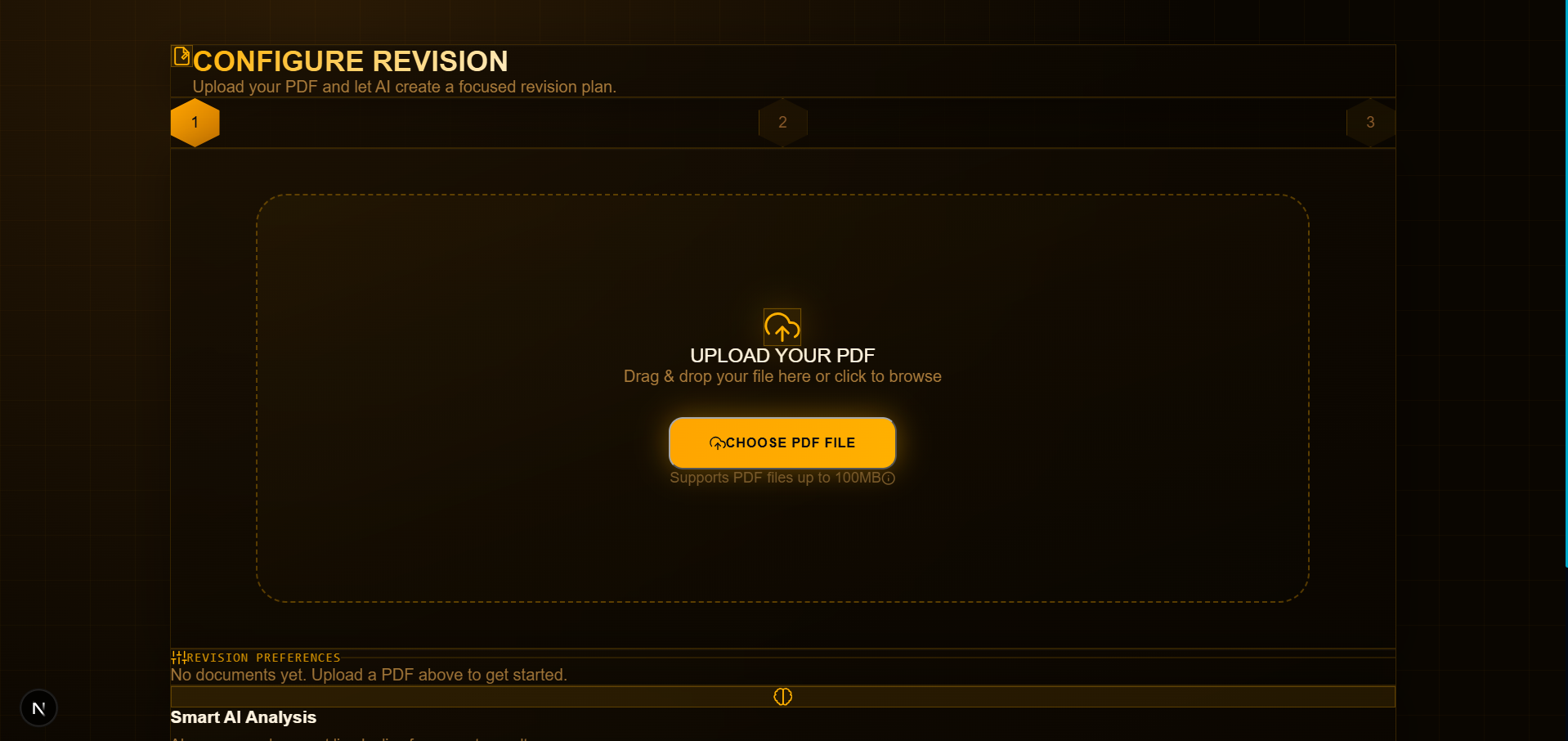
Revision Ai Agent
Inspiration
As a student, I constantly struggled with the overwhelming amount of study material. PDFs full of notes took hours to process manually. I wanted a smarter way to study — one that could read a document and instantly generate notes, quizzes, doubt answers, study plans, and revision strategies. That frustration became the foundation of NeuroStudy AI.
What it does
NeuroStudy AI is a multi-agent AI study assistant with 5 specialized agents:
- Notes Agent — Extracts key points, definitions, summaries, and topic tags
- Quiz Agent — Auto-generates MCQs with difficulty levels and explanations
- Doubt Agent — Chat-style Q&A where you ask anything about your document
- Planner Agent — Generates a personalized day-by-day study schedule
- Revision Agent — Identifies weak topics and creates a focused revision plan
How we built it
- Frontend: Next.js 16 + Tailwind CSS, deployed on Vercel
- Backend: FastAPI (Python) with 5 independent agent modules, deployed on Render
- AI: Groq API using llama-3.3-70b-versatile for fast structured JSON responses
- Database: MongoDB Atlas with pymongo for document storage
- Auth: Firebase Authentication with Google Sign-In
Challenges we ran into
- Groq API key incompatibility with Indian Google accounts — switched from Gemini to Groq
- Agents returning empty or malformed JSON — fixed with robust parsing and error surfacing
- Firebase auth loop on Vercel — signInWithRedirect failed due to cross-origin cookie restrictions, fixed by switching to signInWithPopup
- Vercel build failure due to JSX.Element type not resolving in strict TypeScript — fixed by importing ReactElement directly
- MongoDB sync vs async confusion causing silent failures across all agents
Accomplishments that we're proud of
- Built and deployed a fully functional multi-agent AI system end-to-end
- Designed a premium cyber-tech UI across 5 agent pages with unique per-agent color themes
- Each agent produces structured, genuinely useful output — not just raw text
- Successfully debugged and resolved 5+ distinct deployment, auth, and API issues
- Doubt Agent maintains full conversation history per document for true multi-turn chat
What we learned
- Multi-agent architecture requires careful per-agent prompt engineering for reliable structured output
- signInWithRedirect is unreliable in deployed environments — always use signInWithPopup
- Vercel's production TypeScript build is significantly stricter than local development
- Groq LLaMA 3.3 is fast for structured generation but requires explicit max_tokens and robust error handling
- Building a real full-stack AI product reveals layers of complexity tutorials never cover
What's next for NeuroStudy AI
- Voice input for the Doubt Agent
- Multi-document support across all agents
- Progress tracking and adaptive revision based on quiz performance
- Collaborative study rooms for group learning
- Mobile app using React Native
- Support for Word documents, PowerPoint slides, and YouTube transcripts


Log in or sign up for Devpost to join the conversation.