-
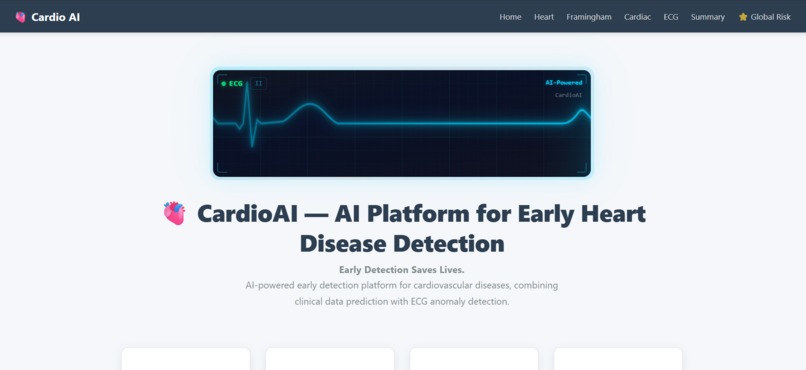
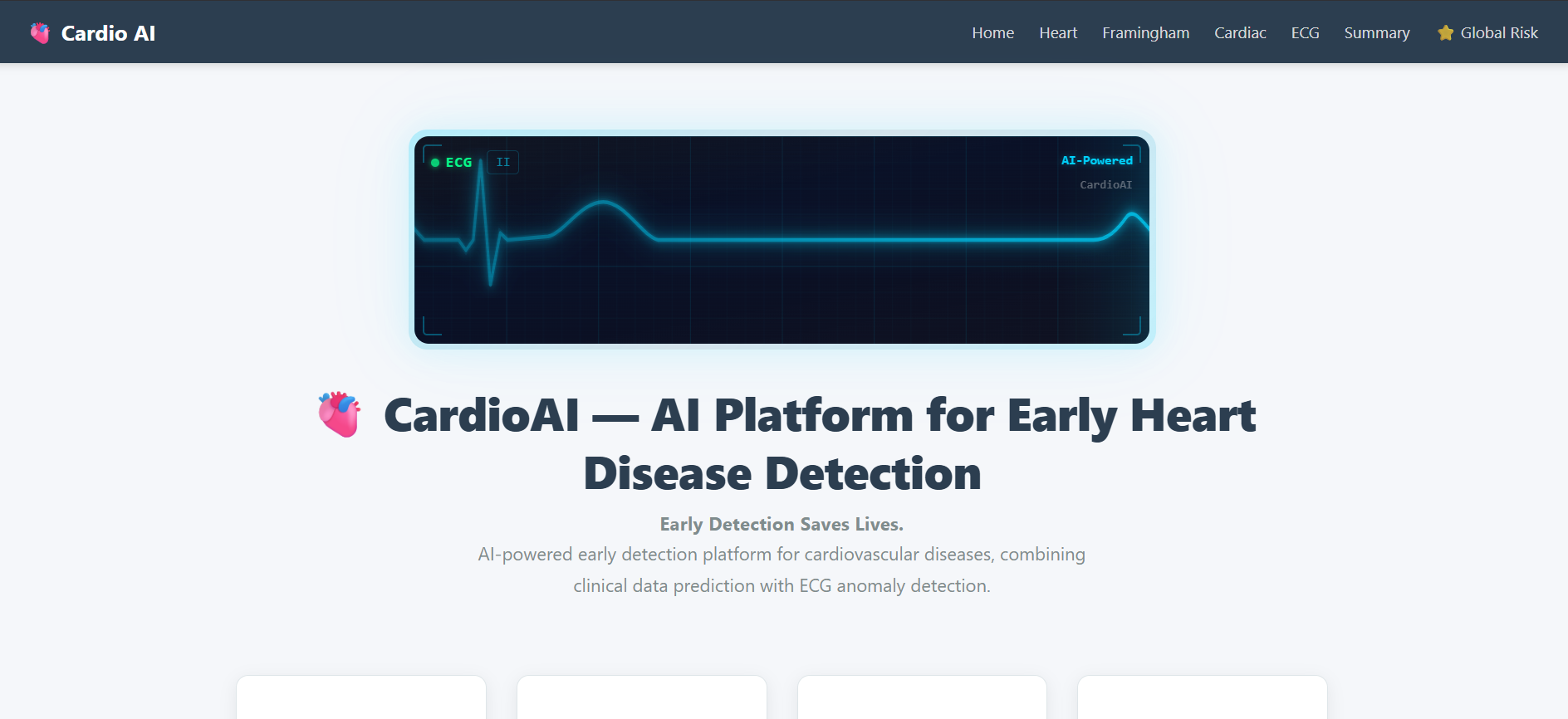
Home_page
-
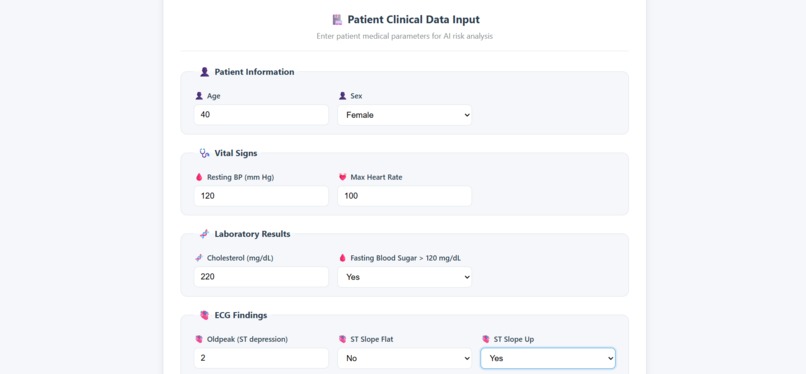
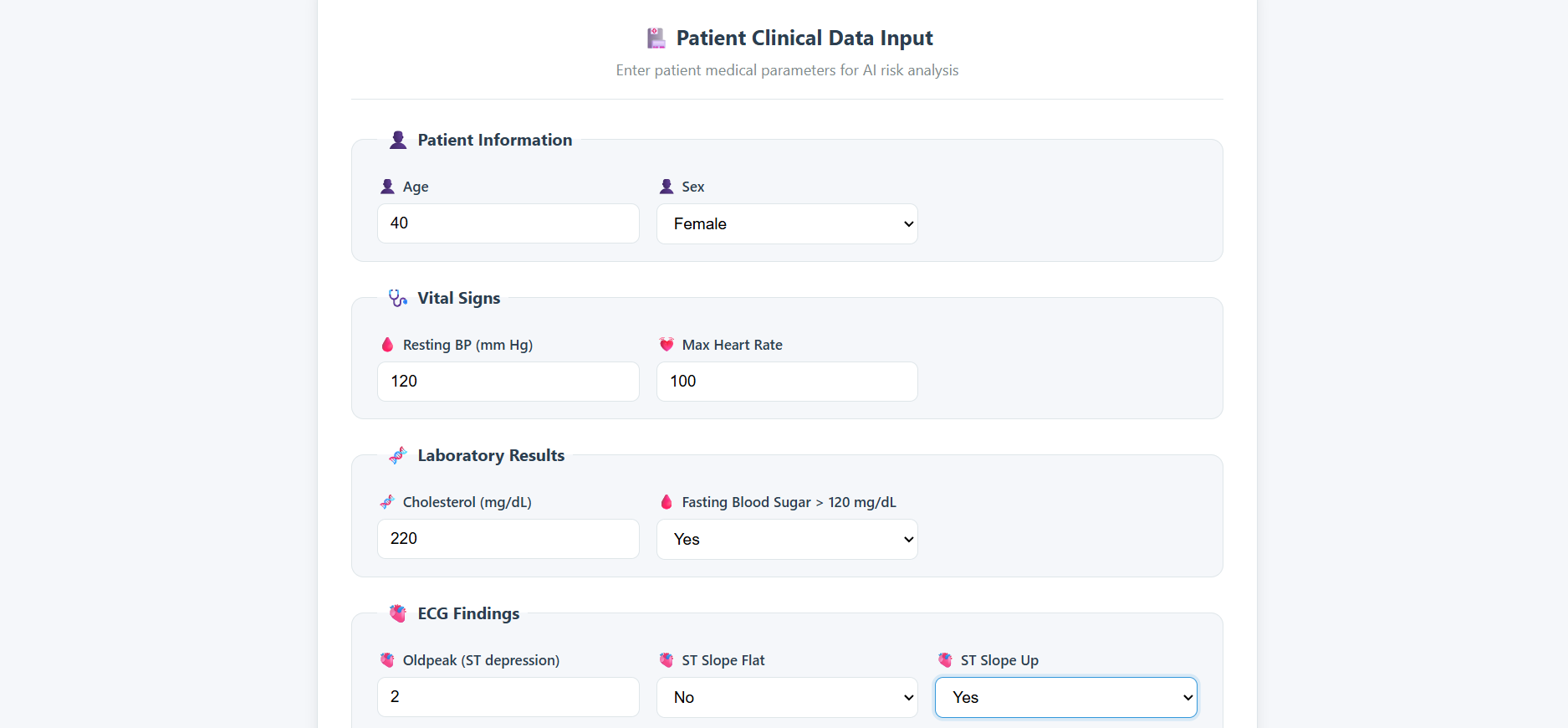
Patient_data_input
-
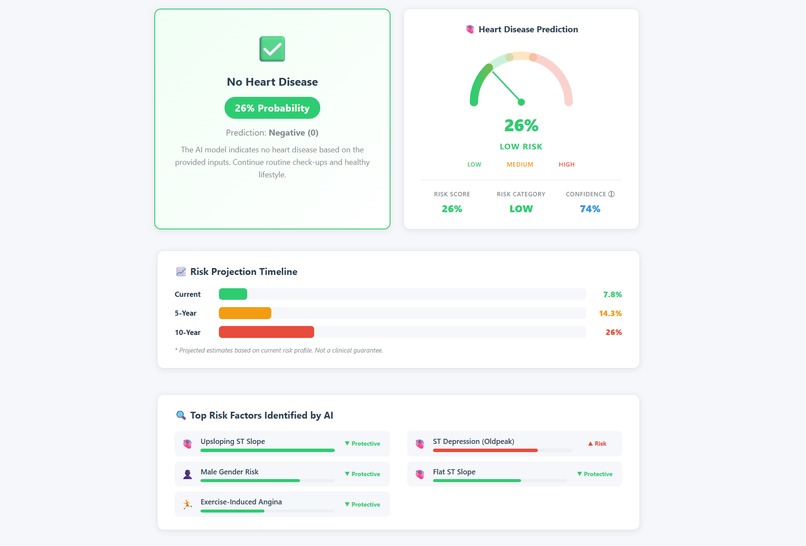
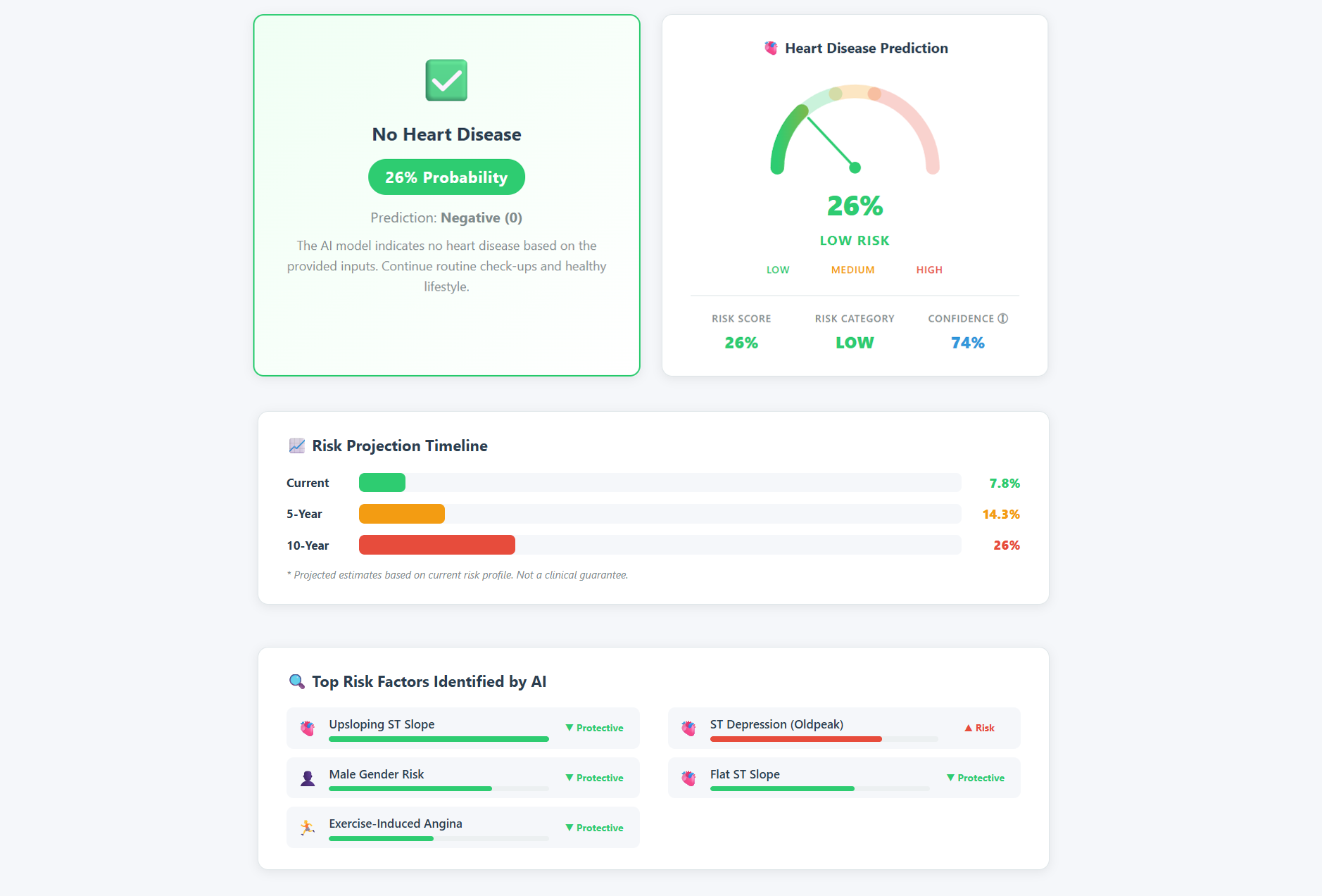
Heart_disease_prediction_result
-
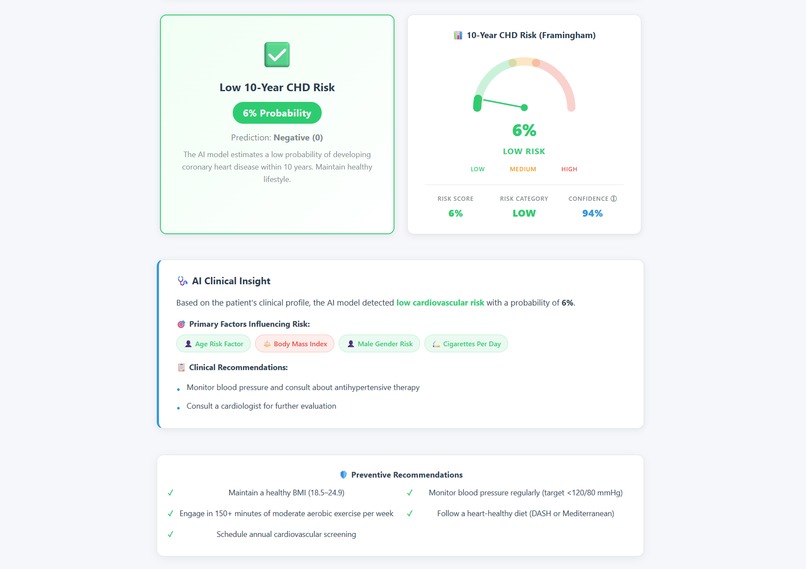
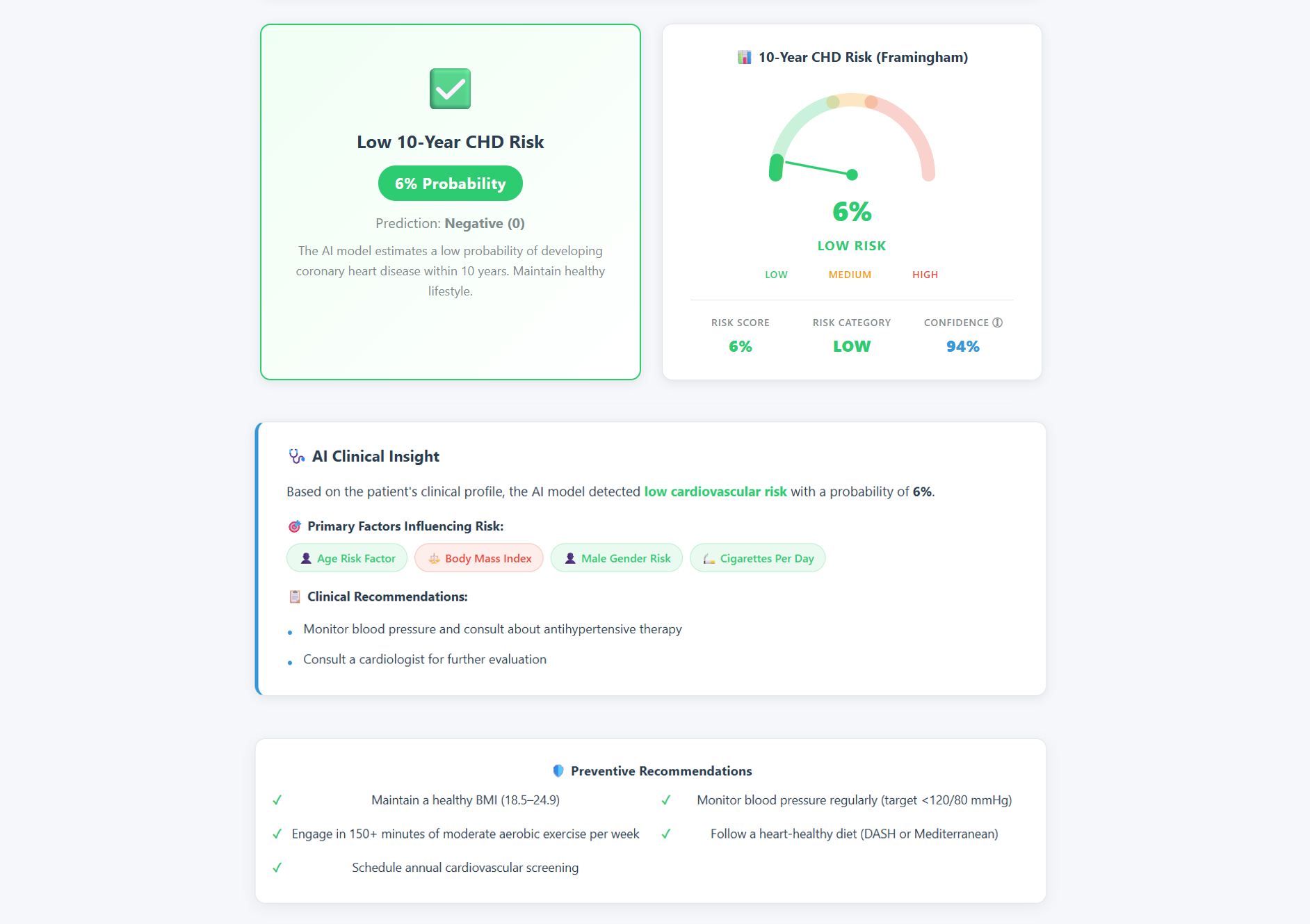
Framingham_risk_prediction
-
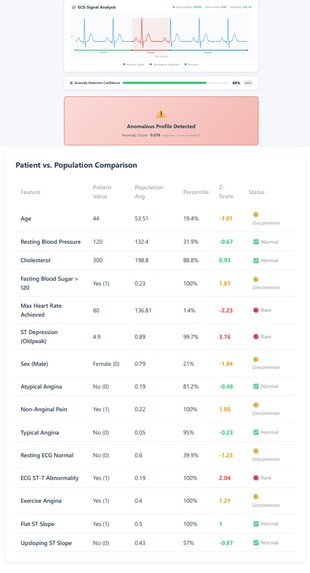
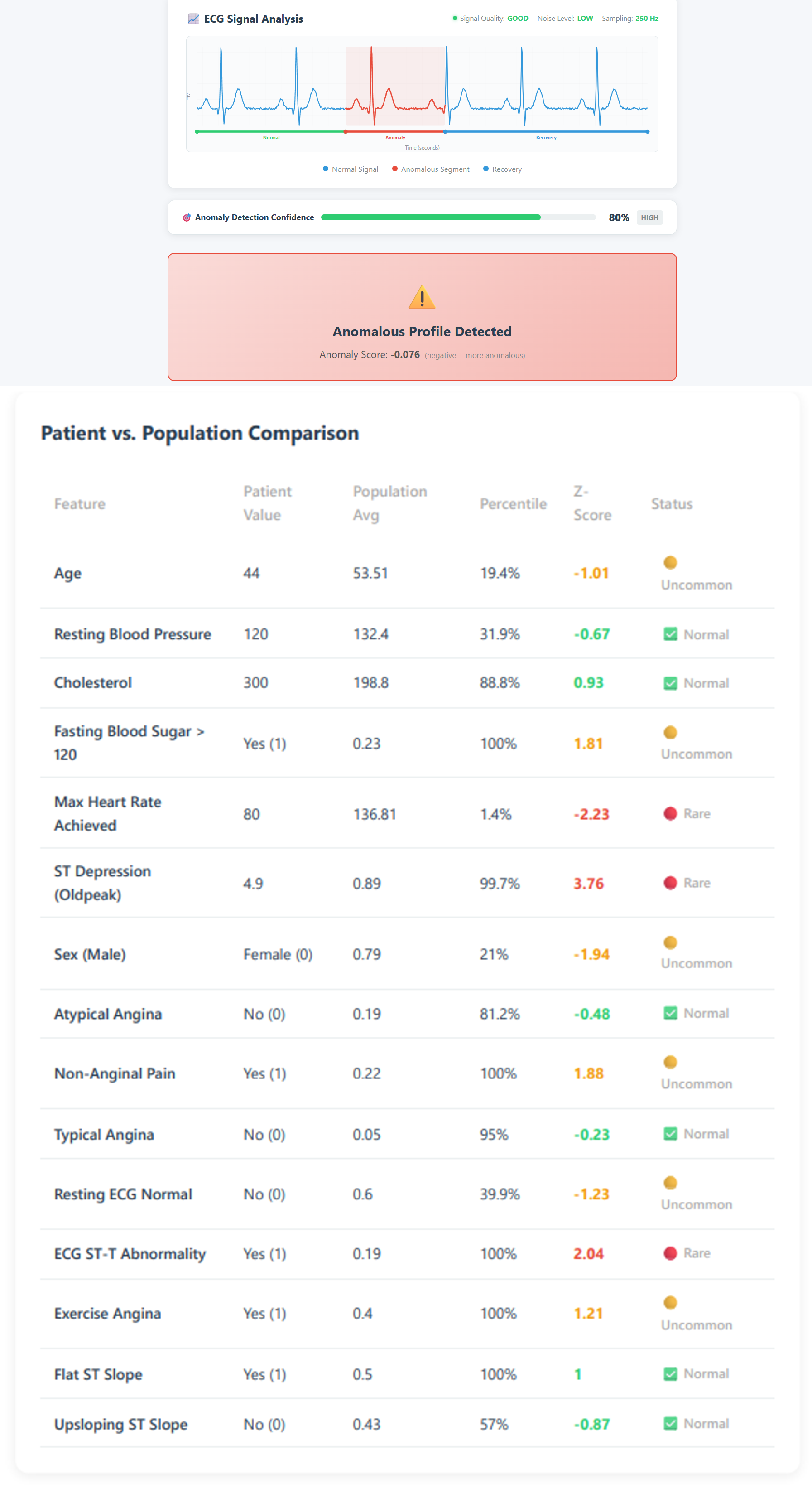
Ecg_signal_anomaly_detection
-
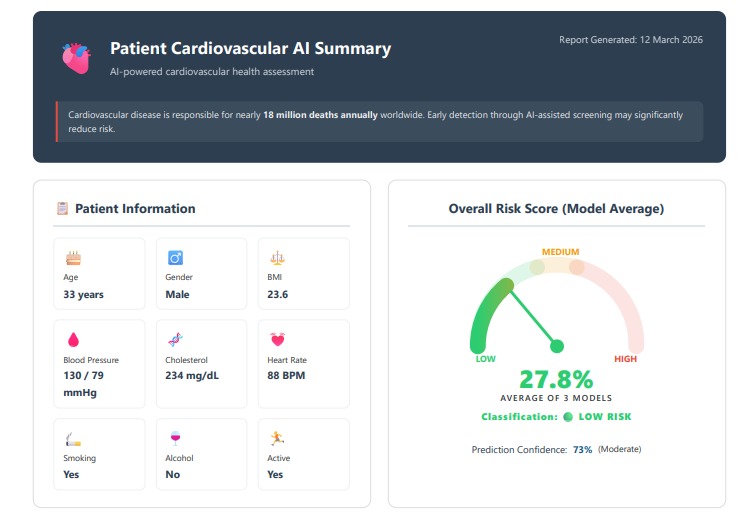
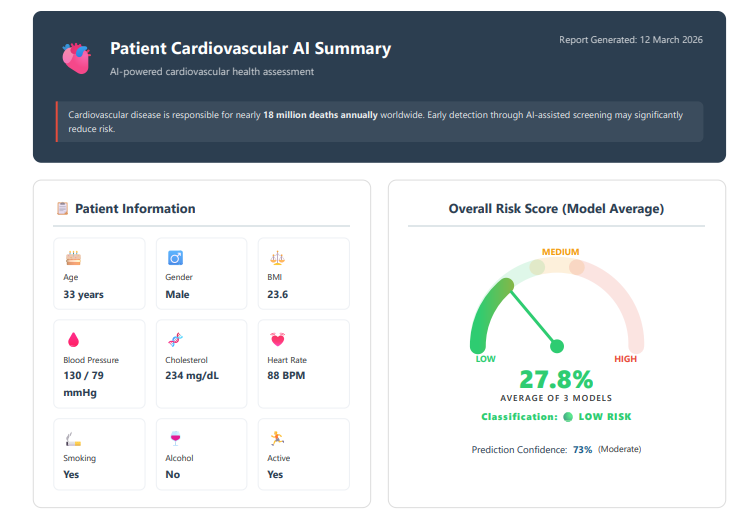
Global_cardiovascular_risk_summary
Inspiration
Cardiovascular diseases remain the leading cause of death worldwide, responsible for millions of deaths every year. Many heart conditions go undetected until they become severe because early symptoms are often subtle or ignored. We were inspired to build CardioVision AI to demonstrate how artificial intelligence can assist in early detection of cardiovascular risks using accessible clinical data and ECG signals. Our goal was to create an intelligent platform that can analyze patient health parameters and provide predictive insights, enabling preventive healthcare and supporting medical professionals in decision-making.
What it does
CardioVision AI is an AI-powered cardiovascular risk assessment platform that analyzes patient clinical data and ECG signals to predict potential heart conditions. The platform provides multiple predictive insights, including:
- Heart Disease Risk Prediction
- 10-Year Coronary Heart Disease (Framingham) Risk
- Cardiac Failure Risk Analysis
- ECG Signal Anomaly Detection
- Global Cardiovascular Risk Summary The system aggregates predictions from multiple models and presents them through an interactive dashboard with clinical insights, risk explanations, and preventive recommendations. This helps users and healthcare professionals better understand cardiovascular health and identify potential risks earlier.
How we built it
We built CardioVision AI using a combination of machine learning, data visualization, and web technologies. Machine Learning:
- Gradient Boosting Classifier for heart disease prediction
- Risk score calculation for Framingham CHD prediction
- Statistical anomaly detection for ECG signal analysis Data Processing:
- Clinical health datasets
- Feature engineering using patient health indicators such as blood pressure, cholesterol, and age Frontend:
- Interactive web interface for patient data input
- Visual dashboards displaying risk scores and ECG analysis Backend:
- Python-based ML inference pipeline
- Model predictions combined into a global cardiovascular risk score Deployment:
- The application is deployed online and accessible through a live web interface. The system integrates predictive analytics with explainable insights to make AI results easier to interpret.
Challenges we ran into
Building a multi-model healthcare prediction system presented several challenges. One of the main challenges was combining predictions from multiple cardiovascular models into a single interpretable risk score. Each model produces results in different formats and scales, so we had to normalize and aggregate them carefully. Another challenge was designing a clear and intuitive dashboard that could present complex medical insights in a way that users could easily understand. Additionally, implementing ECG signal anomaly detection and visualization required careful data processing and signal interpretation. Ensuring that predictions remained meaningful and medically plausible was also a key challenge during development.
Accomplishments that we're proud of
We are proud to have built a comprehensive AI cardiovascular risk platform that combines multiple predictive systems into one integrated solution. Some highlights include:
- Multi-model cardiovascular prediction system
- Interactive clinical dashboard for risk visualization
- ECG signal anomaly detection
- Global risk scoring across different cardiovascular indicators
- Explainable AI insights for patient risk factors We are especially proud that the platform demonstrates how AI can be used for preventive healthcare and early disease detection.
What we learned
Through this project, we gained valuable experience in several areas. We learned how to integrate machine learning models into real-world web applications, transforming raw predictions into actionable insights. We also learned how to design data-driven healthcare interfaces, balancing technical complexity with user-friendly visualization. Another key learning was understanding the importance of explainable AI, especially in healthcare applications where transparency and interpretability are critical. This project also strengthened our skills in data preprocessing, model integration, and full-stack AI deployment.
What's next for CardioVision AI — Smart Heart Risk Prediction System
We plan to further expand CardioVision AI by introducing additional capabilities to enhance its usefulness in real healthcare environments. Future improvements may include:
- Integration with wearable health devices for real-time monitoring
- Deep learning models for advanced ECG interpretation
- Personalized health recommendations using AI-driven insights
- Mobile application support for easier accessibility
- Integration with electronic health records (EHR) Our long-term vision is to develop CardioVision AI into a comprehensive AI-powered cardiovascular health assistant that supports early detection, preventive care, and smarter healthcare decision-making.
Built With
- css3
- fastapi
- git
- html
- javascript
- joblib
- matplotlib
- npm
- numpy
- pandas
- pip
- pydantic
- python
- react
- reactrouter
- render
- restful-api
- scikit-learn
- seaborn
- shap
- uvicorn
- vite


Log in or sign up for Devpost to join the conversation.