-
-
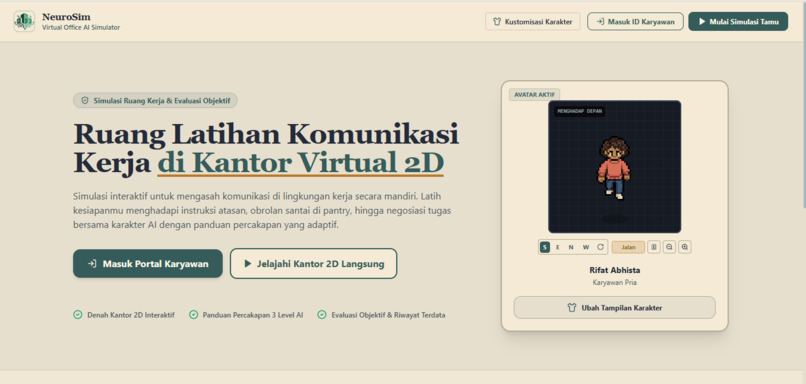
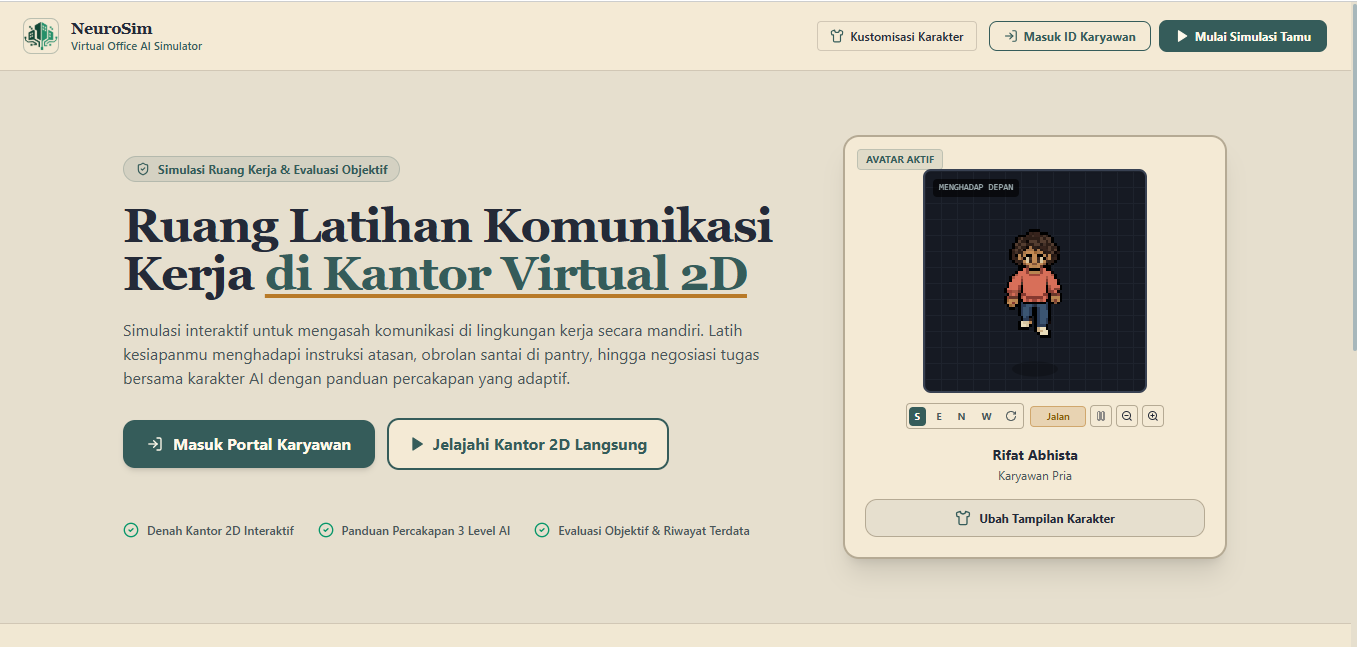
Landing Page
-
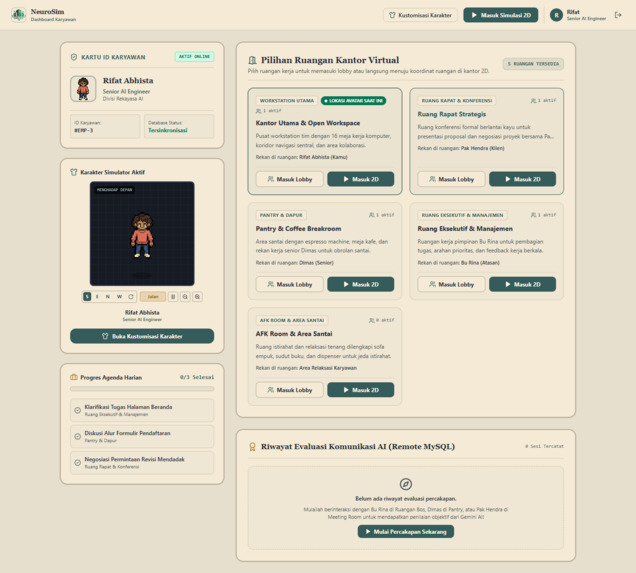
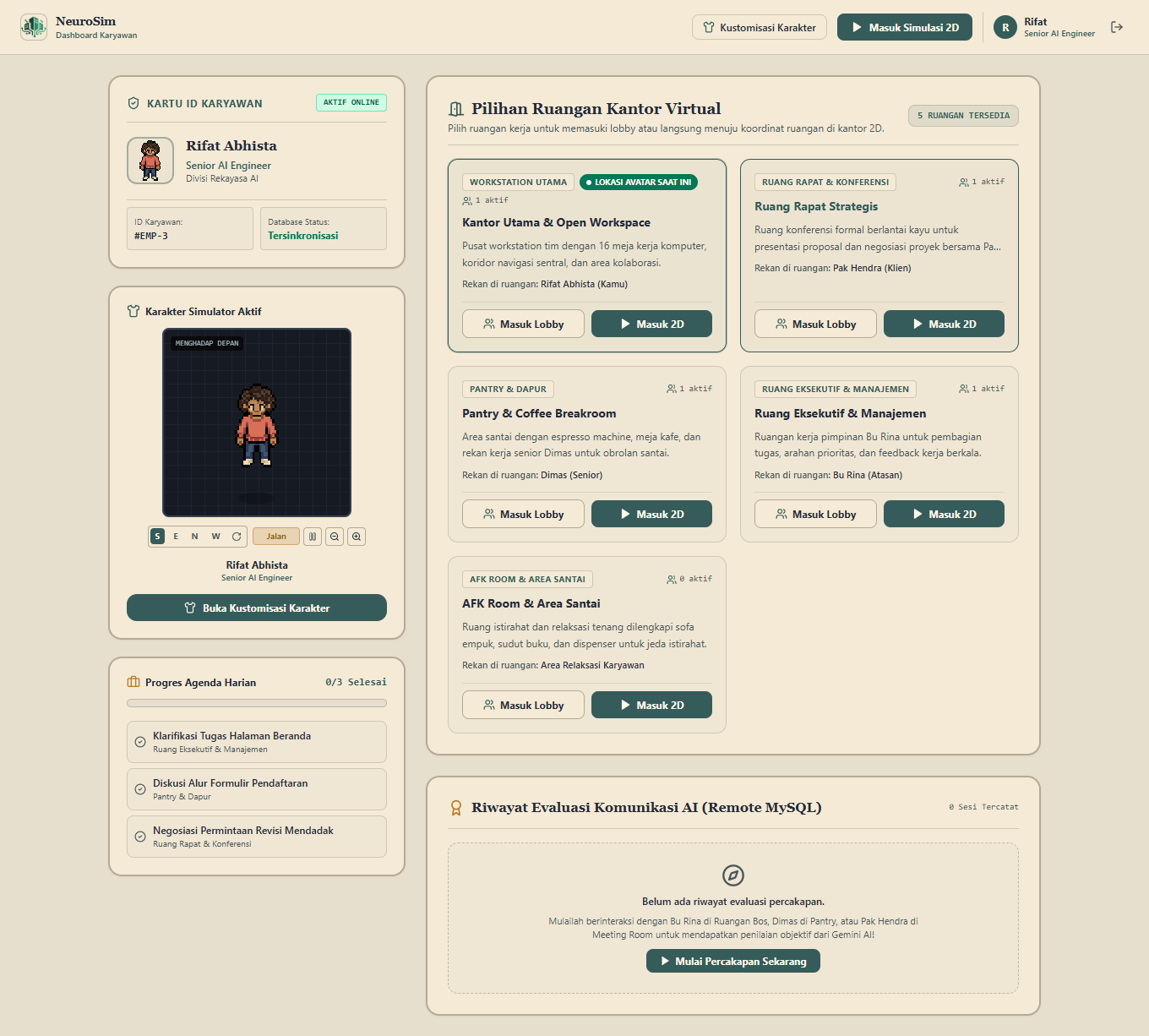
Dashboard Menu
-
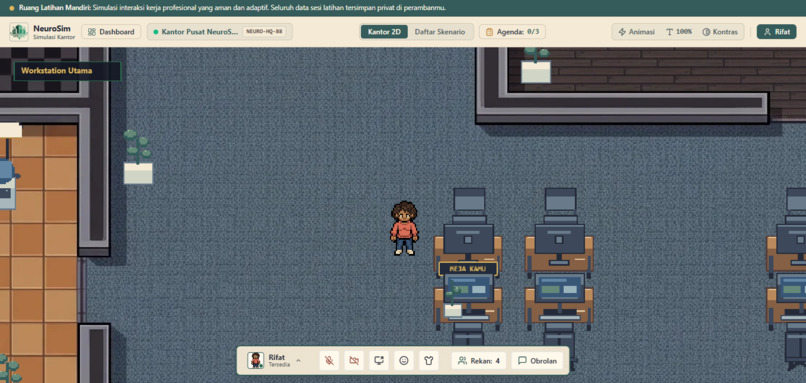
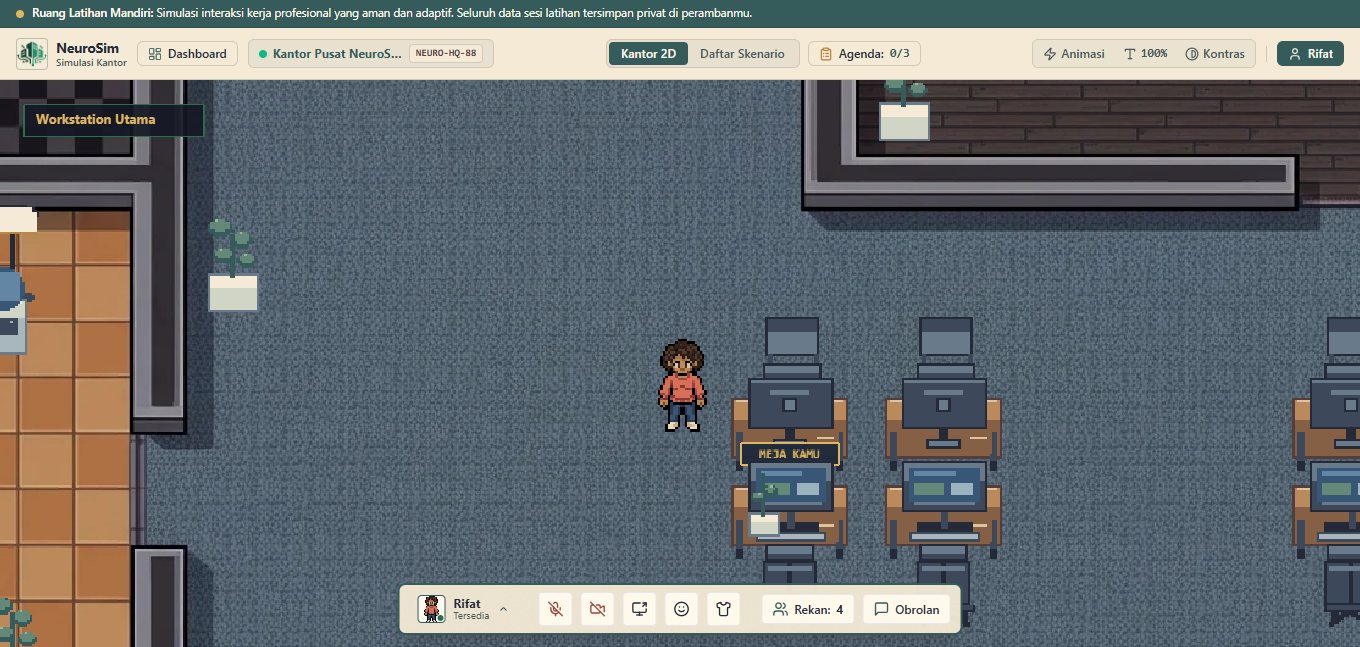
Virtual Office
-
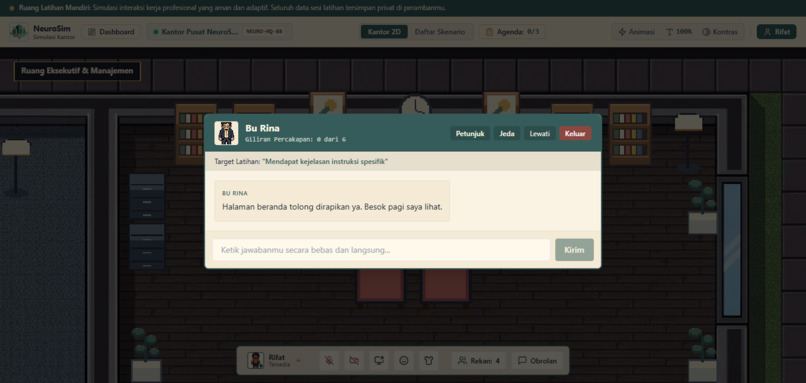
Scenarios Scene
-
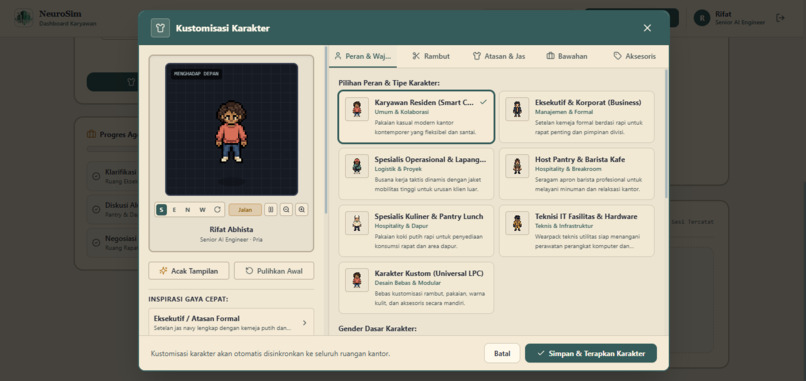
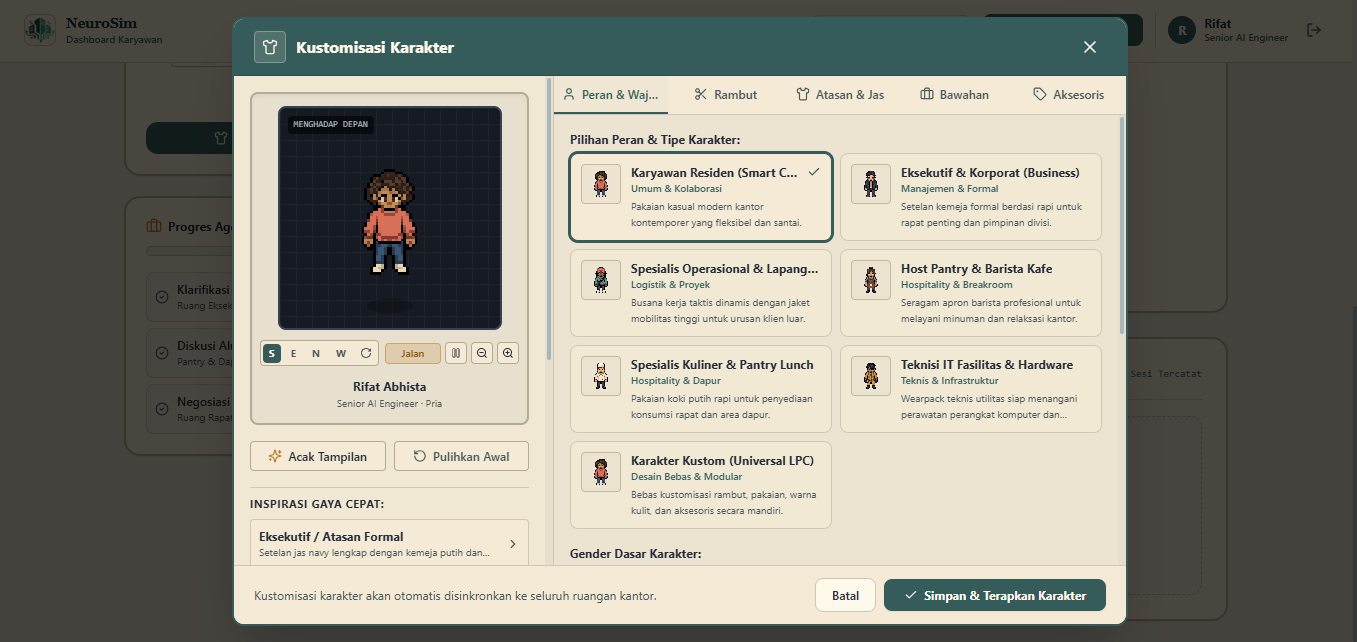
Character Customization
Inspiration
For millions of neurodivergent professionals (such as individuals with Autism, ADHD, or AuDHD), passing the technical interview isn't the hardest part of a career; surviving "The Hidden Curriculum" is.
The Hidden Curriculum refers to the unwritten rules of the workplace: reading between the lines of a manager's vague email, knowing when to push back in a meeting, navigating office politics, and decoding subtle social cues. While neurotypical workers often absorb these norms intuitively, neurodivergent talent frequently faces burnout, anxiety, and career stagnation simply because nobody explicitly taught them the rules of the game. We built NeuroSim to turn these invisible barriers into a safe, structured, and interactive learning ground, acting as a "flight simulator" for corporate social dynamics.
What it does
NeuroSim is an AI-powered workplace dynamics simulator that allows users to safely practice high-stakes corporate scenarios through realistic multi-agent roleplay:
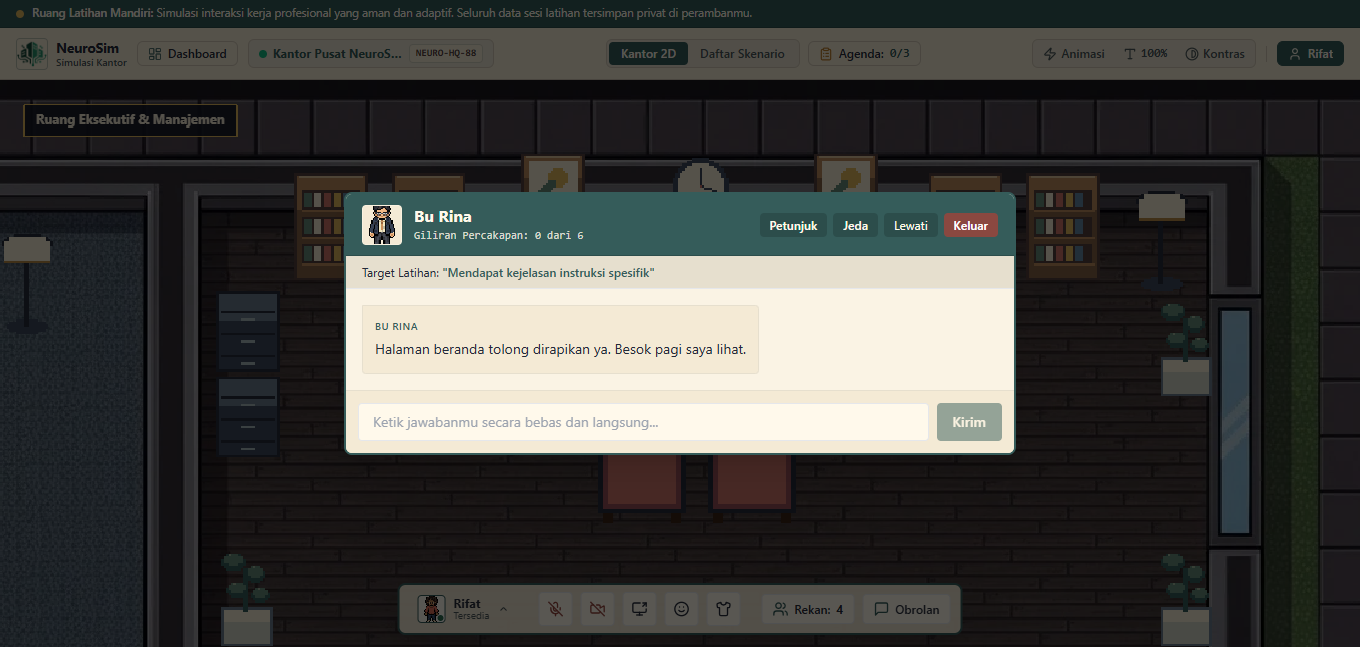
Multi-Agent Office Roleplay: Users step into simulated workplace channels (chat rooms, email threads, or 1-on-1 performance reviews) populated by distinct AI personas, ranging from a passive-aggressive project manager to an overly vague stakeholder.
Real-Time Social Cue Decoder ("The Subtext Lens"): Alongside the conversation, an AI Coach agent breaks down the actual meaning behind what AI coworkers say, highlighting unspoken expectations, tone shifts, and social nuances in real time.
Risk-Free Sandbox & Branching Scenarios: Users can test different responses, whether being direct, diplomatic, or assertive, and immediately see how the room dynamics react without real-world career consequences.
Actionable Post-Session Debrief: After each simulation, NeuroSim generates an objective scorecard analyzing tone, clarity, boundary-setting, and strategic alignment, complete with suggested phrasing alternatives.
How we built it
We designed NeuroSim with a modular, responsive architecture to handle low-latency multi-agent orchestration:
Frontend: Built with React.js, Vite, and Tailwind CSS, featuring a calm, distraction-free dark glassmorphism UI designed to minimize sensory overload while mimicking modern workspace tools (like Slack or Teams).
Multi-Agent AI Orchestration: Powered by [Google Gemini API / Groq API], we engineered a custom multi-agent system using structured system prompts and state management:
Persona Agents: Hold distinct personality traits, hidden agendas, and communication styles (e.g., The Micromanager, The Busy Tech Lead).
The Orchestrator Agent: Controls turn-taking, evaluates conversation tension levels, and dynamically triggers workplace curveballs.
The Coach/Decoder Agent: Operates out-of-character to analyze subtext and provide real-time neuro-affirming guidance.
Backend & Deployment: [Node.js / Laravel API / Supabase] for session state persistence and scenario management, deployed seamlessly on Vercel.
Challenges we ran into
Preventing AI "Over-Politeness": Standard LLMs are trained to be helpful and agreeable. Getting our Persona Agents to convincingly roleplay realistic workplace friction, such as subtle passive-aggressiveness, vague instructions, or corporate gaslighting, without breaking character or triggering safety refusals required careful prompt engineering and few-shot examples.
Multi-Agent Context Synchronization: Keeping multiple AI agents aware of the shared conversation state while ensuring the "Subtext Decoder" agent returned analysis with near-zero latency required optimizing our JSON schema outputs and parallelizing API calls.
Designing Without Patronizing: We wanted to ensure the feedback felt empowering and objective rather than clinical or condescending, framing workplace norms as "cultural translation" rather than forcing neurodivergent users to mask who they are.
Accomplishments that we're proud of
Successfully building a multi-agent loop where AI coworkers interact not just with the user, but also react to each other in group meeting simulations.
Creating the "Subtext Translator" feature, which instantly turns confusing corporate jargon (e.g., "Per my last email" or "Let's take this offline") into clear, literal action items.
Crafting an intuitive, low-friction UI that feels like a real enterprise workspace while keeping coaching insights just one click away.
What we learned
Prompt Engineering for Subtext: We learned how to separate an AI agent's internal monologue (hidden intent and mood) from its external output (what it actually says in chat) using structured JSON responses, making the simulation feel remarkably human.
- Accessibility in UX: Designing for neurodivergent users taught us the importance of predictable UI patterns, clear visual hierarchy, and customizable cognitive load (allowing users to toggle real-time hints on or off).
What's next for Neurosim
Voice & Meeting Simulator: Integrating Speech-to-Text and expressive Text-to-Speech so users can practice vocal tone, pacing, and verbal interruptions in simulated video calls.
Custom Scenario Builder: Allowing users to paste a real-life confusing email or chat thread from their actual job and spin up an instant simulation to rehearse their reply before hitting send.
Enterprise B2B Reverse-Mode: Creating a mode for neurotypical managers to practice communicating more clearly, directly, and inclusively with their neurodivergent team members.

Log in or sign up for Devpost to join the conversation.