-
-
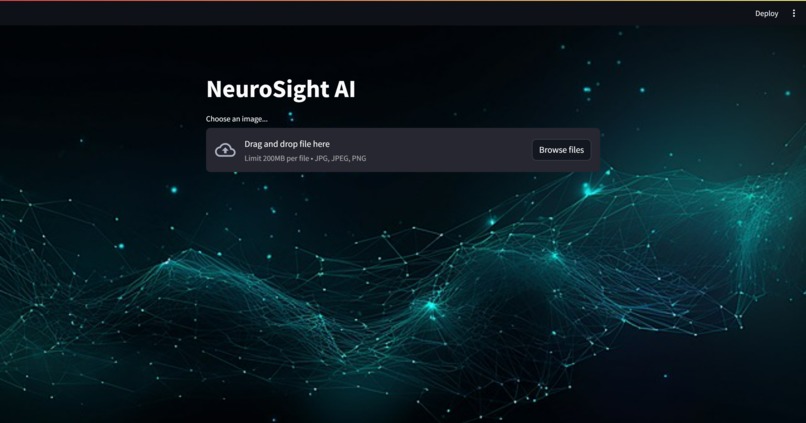
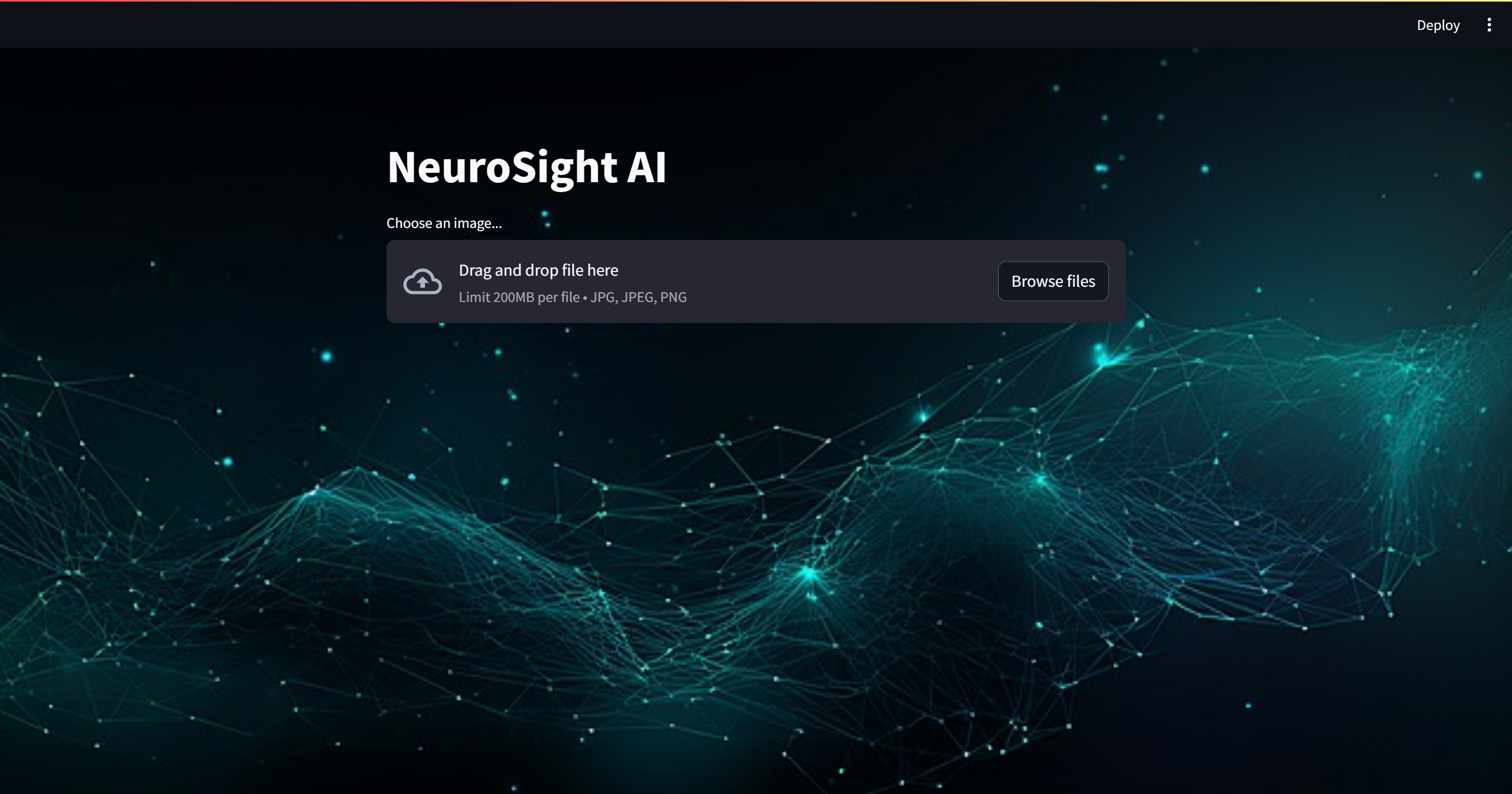
Streamlit App
-
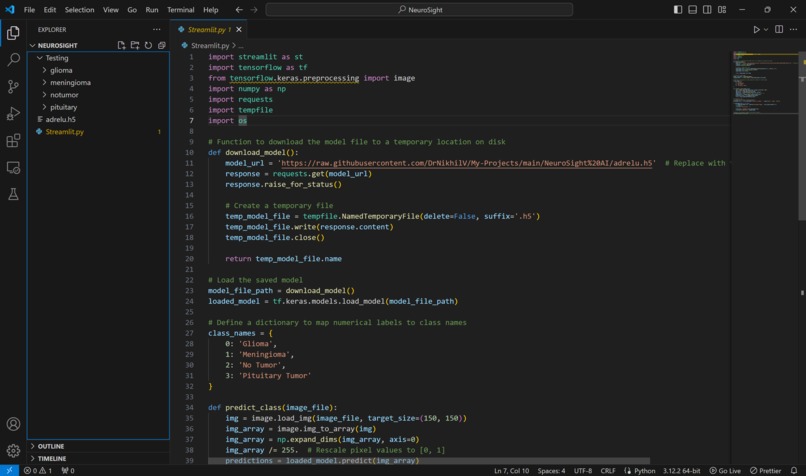
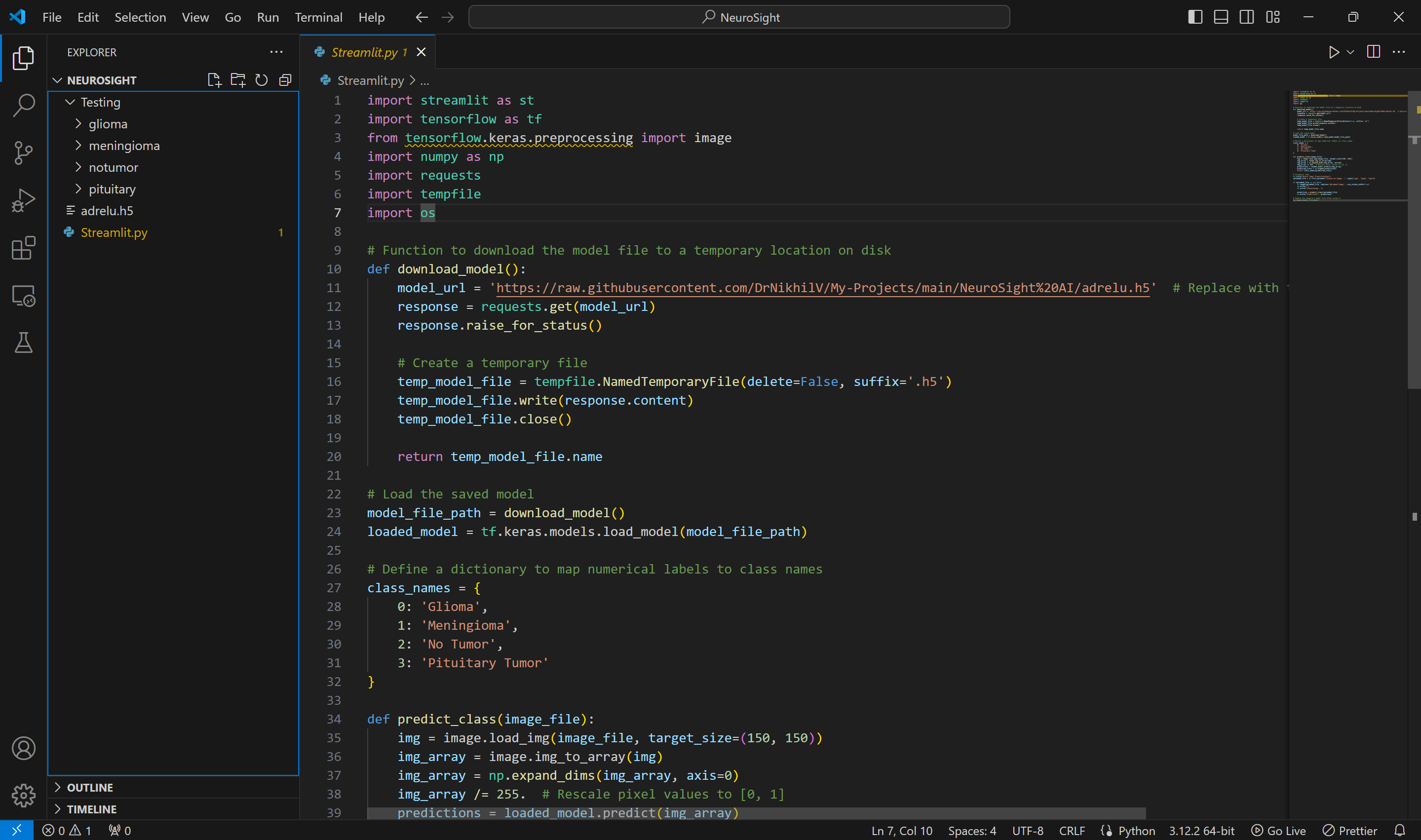
Streamlit Code
Inspiration
The increasing prevalence of brain tumors and the critical need for early detection inspired us to create NeuroSight AI. Early and accurate diagnosis can significantly improve treatment outcomes and survival rates. Leveraging the power of artificial intelligence, particularly convolutional neural networks (CNNs), we aimed to develop a tool that could assist radiologists and medical professionals in identifying and classifying brain tumors with high accuracy.
What it does
NeuroSight AI is an innovative application that detects and classifies four types of brain tumors from MRI images. By uploading an MRI scan, users can receive an instant analysis, detailing whether the scan shows a tumor and, if so, identifying its type. The four classes of brain tumors the app can detect are:
- Glioma
- Meningioma
- Pituitary Tumor
- No Tumor
How we built it
We built NeuroSight AI through a series of meticulously planned steps:
Data Collection and Preparation: We gathered a dataset of MRI images from a trusted medical database, ensuring a diverse and comprehensive set of examples for each tumor type.
Model Training: Using a convolutional neural network (CNN) architecture, we trained our model on the dataset. We employed techniques such as data augmentation, dropout, and transfer learning to enhance the model's performance and robustness.
Evaluation and Optimization: The model was rigorously evaluated using cross-validation and hyperparameter tuning to ensure high accuracy and generalization.
Deployment with Streamlit: We created a user-friendly interface using Streamlit, allowing users to upload MRI images and receive real-time predictions from our trained model.
Challenges we ran into
Data Quality and Quantity: Ensuring that the MRI images were of high quality and sufficient quantity for training the model was a significant challenge.
Model Complexity: Balancing model complexity and performance to avoid overfitting while maintaining high accuracy.
Integration with Streamlit: Seamlessly integrating the trained CNN model with the Streamlit app for smooth user experience required careful engineering.
Accomplishments that we're proud of
High Accuracy: Achieving a high level of accuracy in classifying the four types of brain tumors.
User-Friendly Interface: Developing an intuitive and easy-to-use application that can assist medical professionals in their diagnostic process.
Real-World Application: Creating a tool with potential real-world impact in improving brain tumor diagnosis and patient outcomes.
What we learned
Interdisciplinary Collaboration: The importance of collaborating across disciplines, combining medical knowledge with AI expertise.
AI in Healthcare: The potential and challenges of applying AI technologies to healthcare, particularly in diagnostic imaging.
Continuous Improvement: The necessity of continuous learning and model improvement to keep up with new data and technological advancements.
What's next for NeuroSight AI
Expanded Dataset: Incorporating more diverse and larger datasets to further improve the model’s accuracy and generalization.
Advanced Features: Adding functionalities like tumor segmentation and progression prediction.
Clinical Trials: Partnering with medical institutions to conduct clinical trials and validate the model’s performance in real-world settings.
Regulatory Approval: Working towards obtaining regulatory approvals to ensure the app can be used in clinical environments.
Educational Integration: Providing educational resources and training for medical professionals to effectively use AI tools in their practice.
Built With
- cnn
- dl
- kaggle
- python
- snowflake
- streamlit


Log in or sign up for Devpost to join the conversation.