-
-
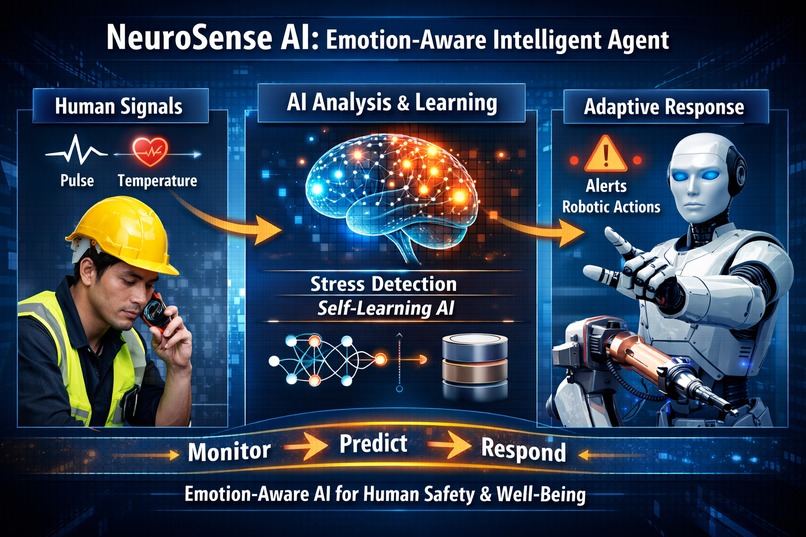
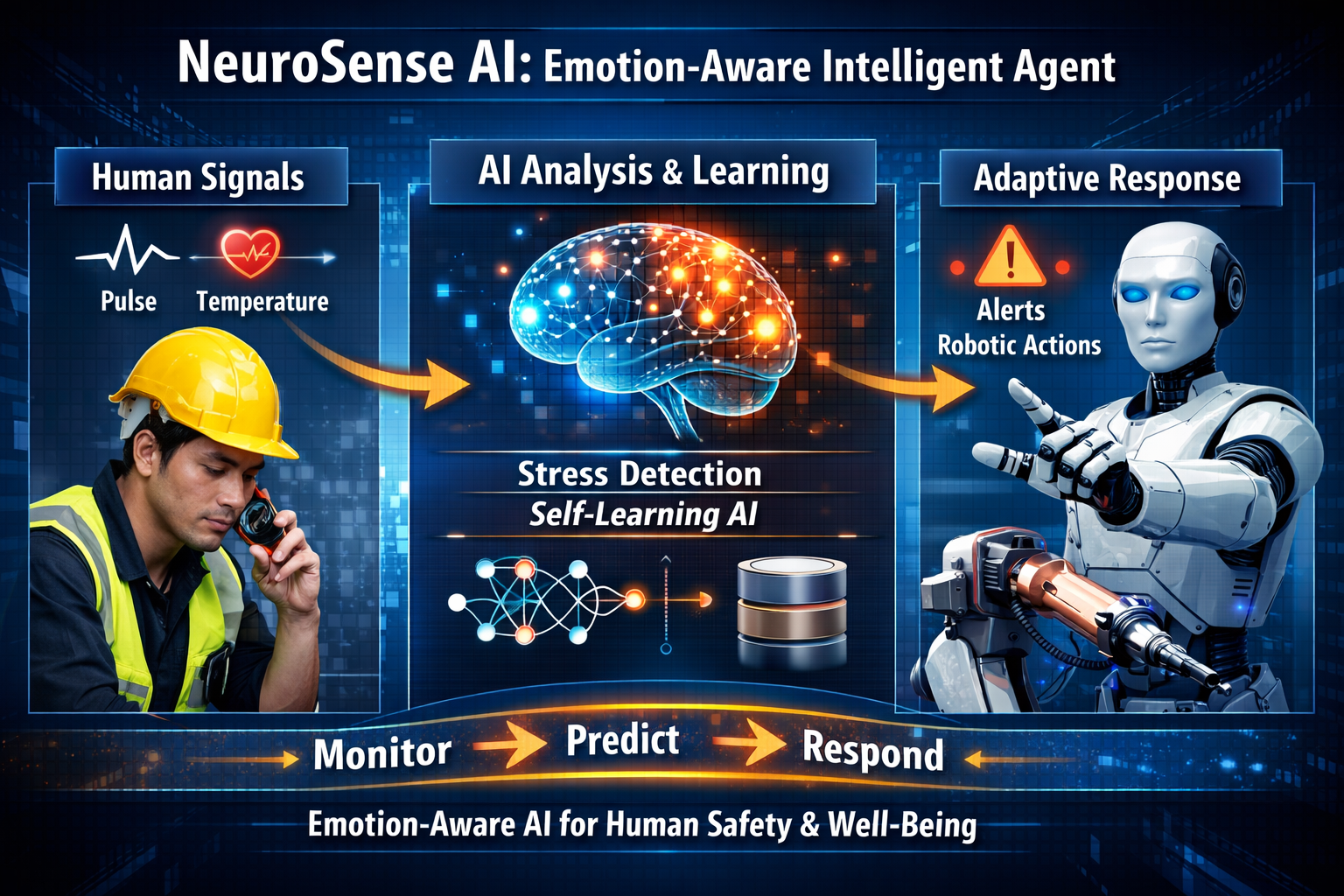
NeuroSense AI monitors human signals, predicts stress using AI, and triggers smart responses to improve safety and human–machine interaction
Inspiration
In many industries, hospitals, and daily environments, machines and robots are designed to perform tasks efficiently, but they rarely understand human condition. Workers often experience stress, fatigue, or physical discomfort, yet machines continue operating without awareness of these factors.
This inspired the idea behind NeuroSense AI — creating a human-centered intelligent system that can sense basic human signals and respond proactively. Instead of waiting for problems to occur, the goal is to build a system that predicts stress and supports human well-being in real time.
What it does
NeuroSense AI is an emotion-aware intelligent agent that monitors human physiological signals such as pulse rate and body temperature.
The system analyzes these signals using AI to estimate stress levels and detect abnormal patterns. When the system identifies potential risks, it can trigger preventive responses such as alerts, cooling mechanisms, or adaptive robotic actions.
By combining sensing, prediction, and response, the system transforms machines from reactive tools into proactive assistants that support human safety and comfort.
How we built it
The project integrates hardware sensing, AI analysis, and intelligent response systems.
System Components:
- Sensor Layer: Pulse sensor and temperature sensor collect physiological data.
- Controller Layer: ESP32 microcontroller processes real-time signals.
- AI Intelligence Layer: AI algorithms analyze patterns and predict stress levels.
- Memory Layer: A lightweight database stores previous sensor data for learning.
- Decision Engine: Evaluates risk levels and selects appropriate system responses.
- Response Layer: Activates cooling fans, buzzers, LEDs, or robotic movement.
- Dashboard Interface: Displays real-time monitoring and AI predictions.
A simple database simulation was implemented using Python to store and analyze sensor data.
import sqlite3
This prototype demonstrates how sensing, intelligence, and action can work together in a continuous adaptive loop.
Challenges we ran into
During development, several challenges were encountered:
- Designing a system that can interpret human physiological signals meaningfully
- Creating a simple yet effective AI logic for stress prediction
- Integrating hardware sensing with AI analysis
- Ensuring the system remains lightweight and scalable
Balancing simplicity with intelligent behavior was one of the key challenges in building the prototype.
What we learned
Through this project we learned:
- How human-centered AI systems can improve safety and interaction
- The importance of combining hardware sensing with intelligent software
- How predictive systems can detect early warning signs instead of reacting late
- The role of feedback-based learning in adaptive AI systems
This project also strengthened our understanding of AI-driven robotics and human-machine interaction.
What's next for NeuroSense AI
The current version is a prototype, but the concept can be expanded further. Future improvements may include:
- Advanced AI models for emotion and stress prediction
- Integration with wearable health sensors
- Voice and conversational AI interaction
- Real-time cloud analytics and mobile monitoring
- Deployment in industrial safety, healthcare, and elderly care systems
NeuroSense AI represents a step toward the future of human-aware intelligent machines that not only perform tasks but also understand and support human well-being.


Log in or sign up for Devpost to join the conversation.