-
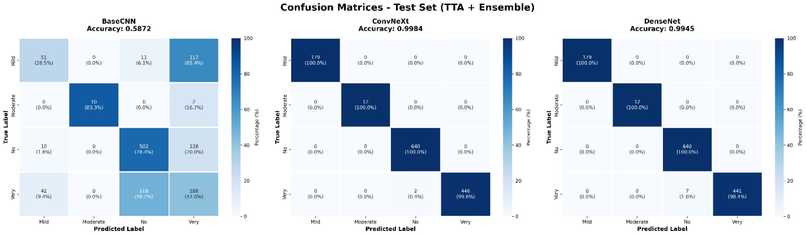
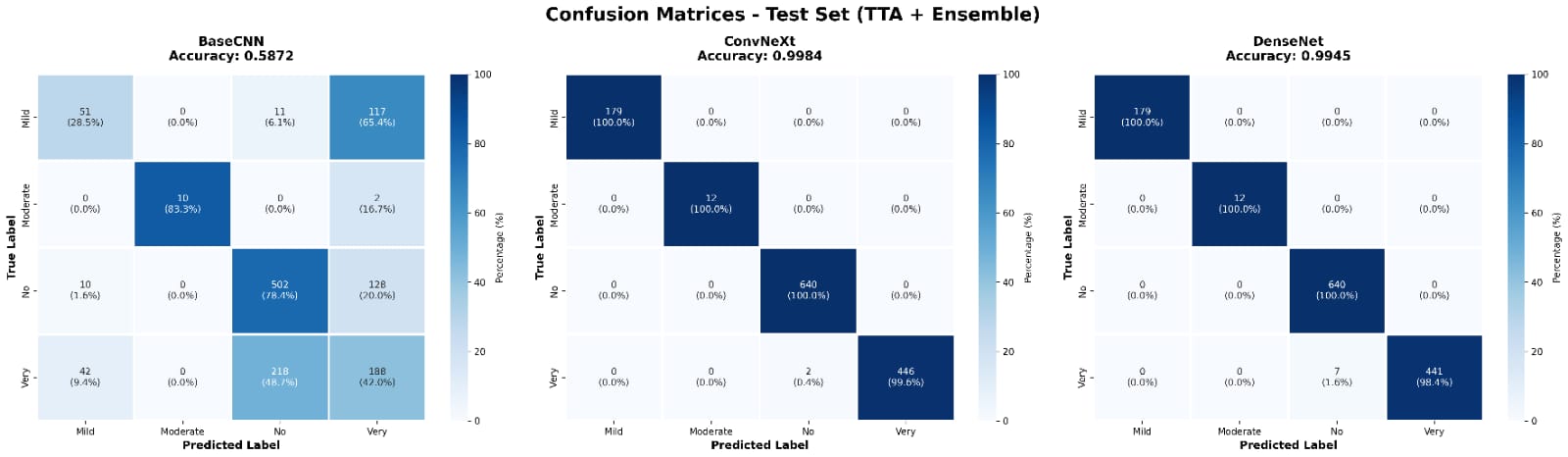
Comparison between the competitor and the proposed
-
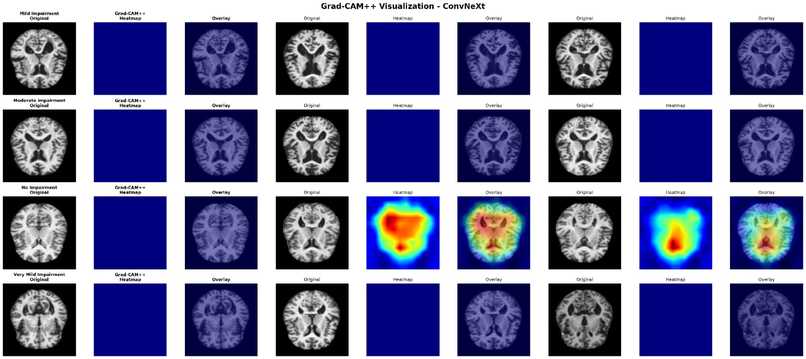
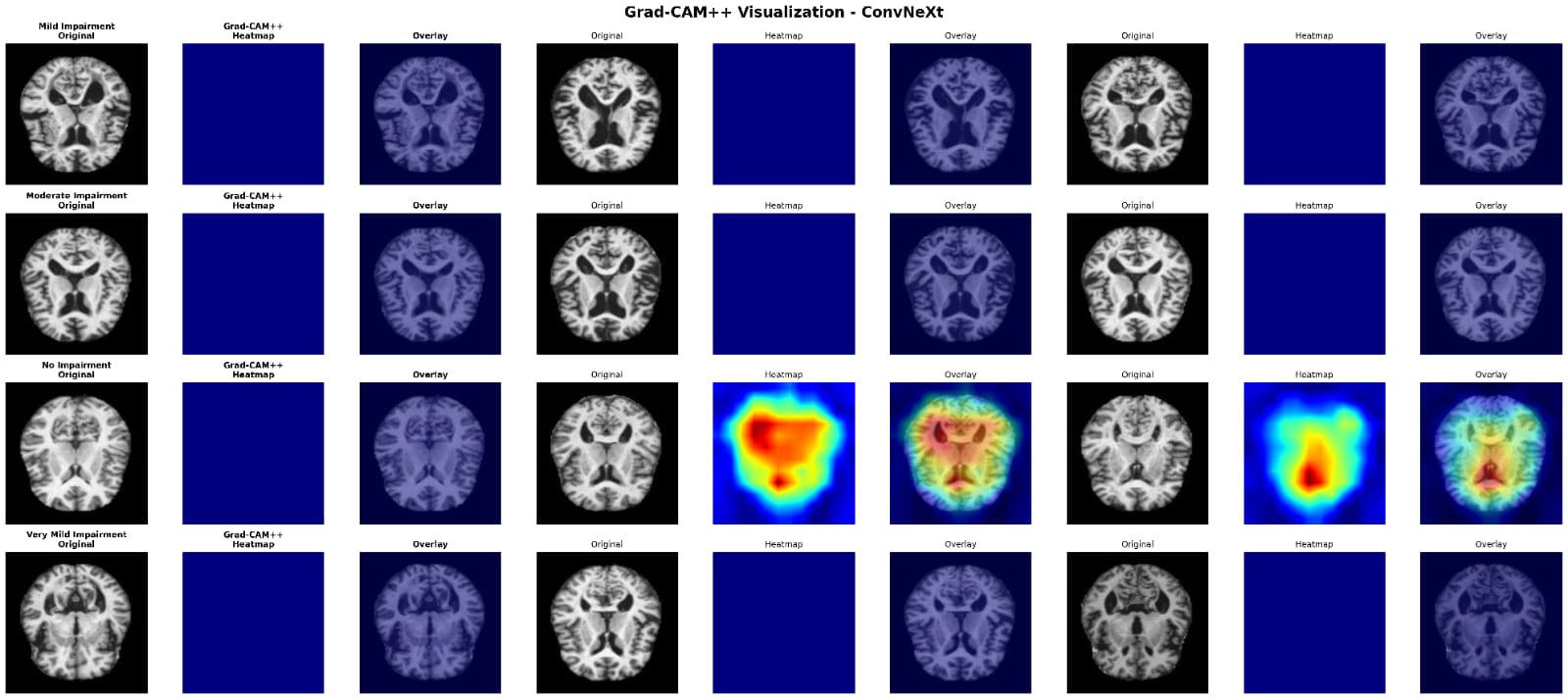
GradCAM++ visualizations of the proposed model
-
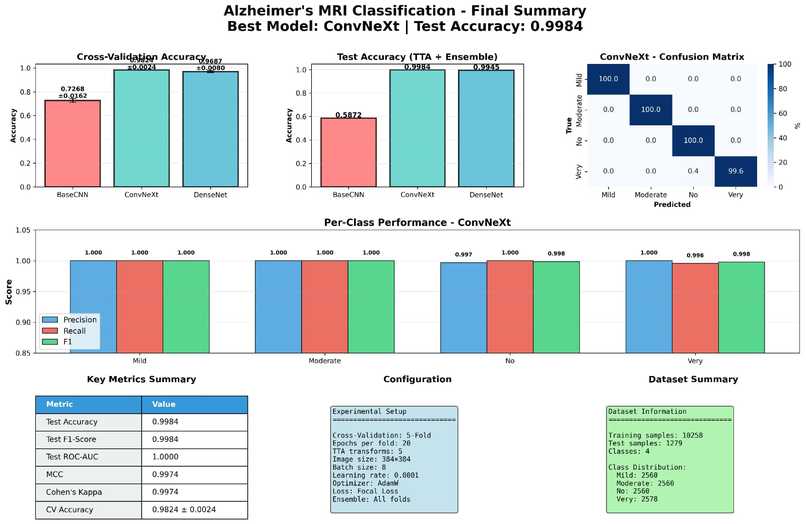
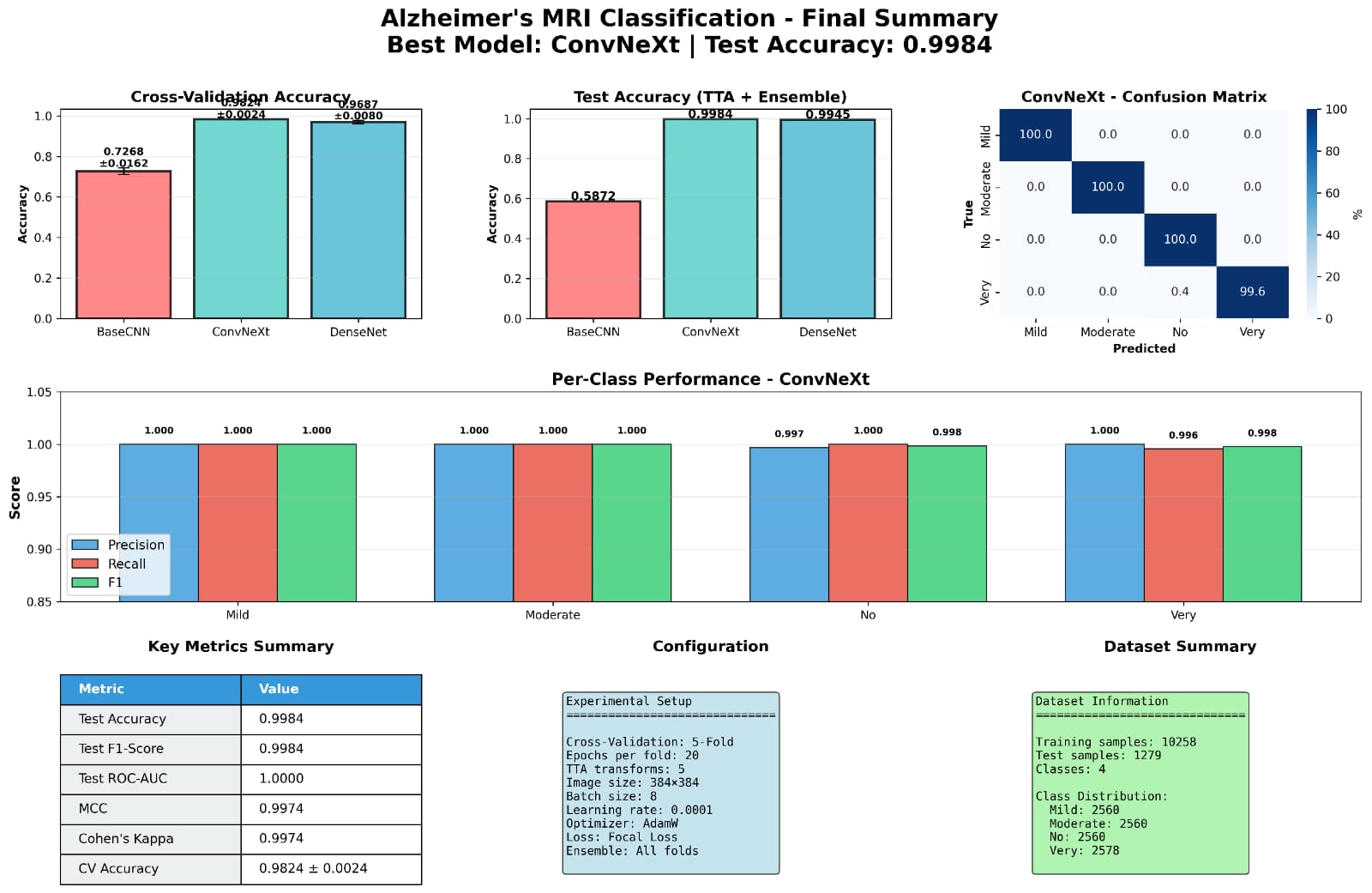
Results and Comparisons
-
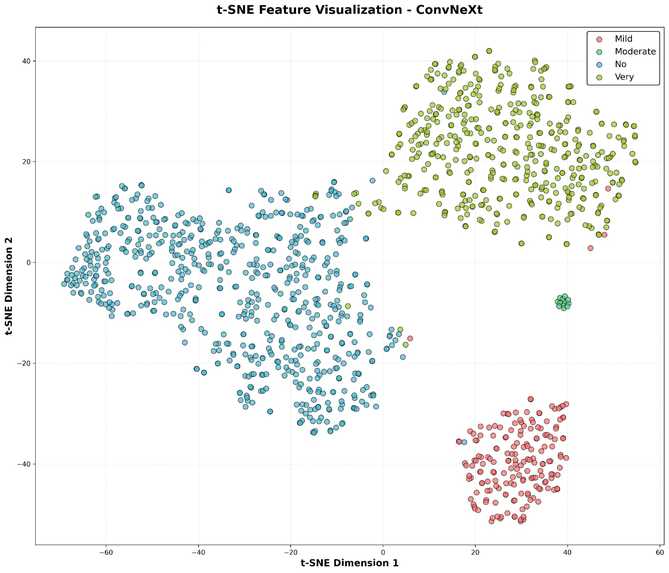
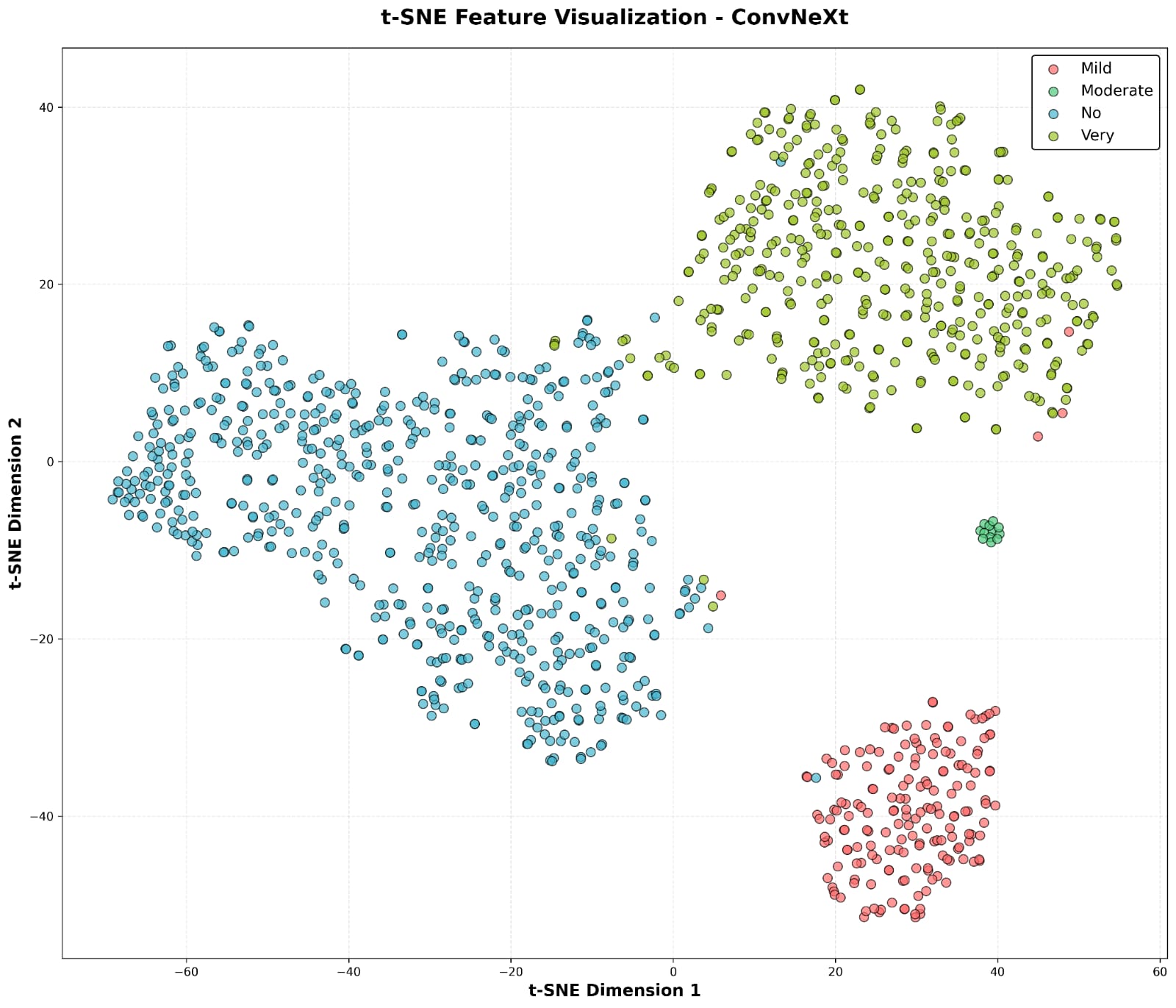
t-SNE plots of the proposed ConvNeXt+TTA
-
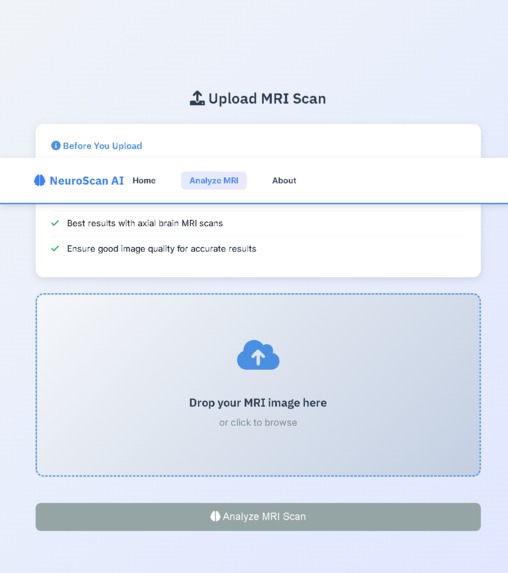
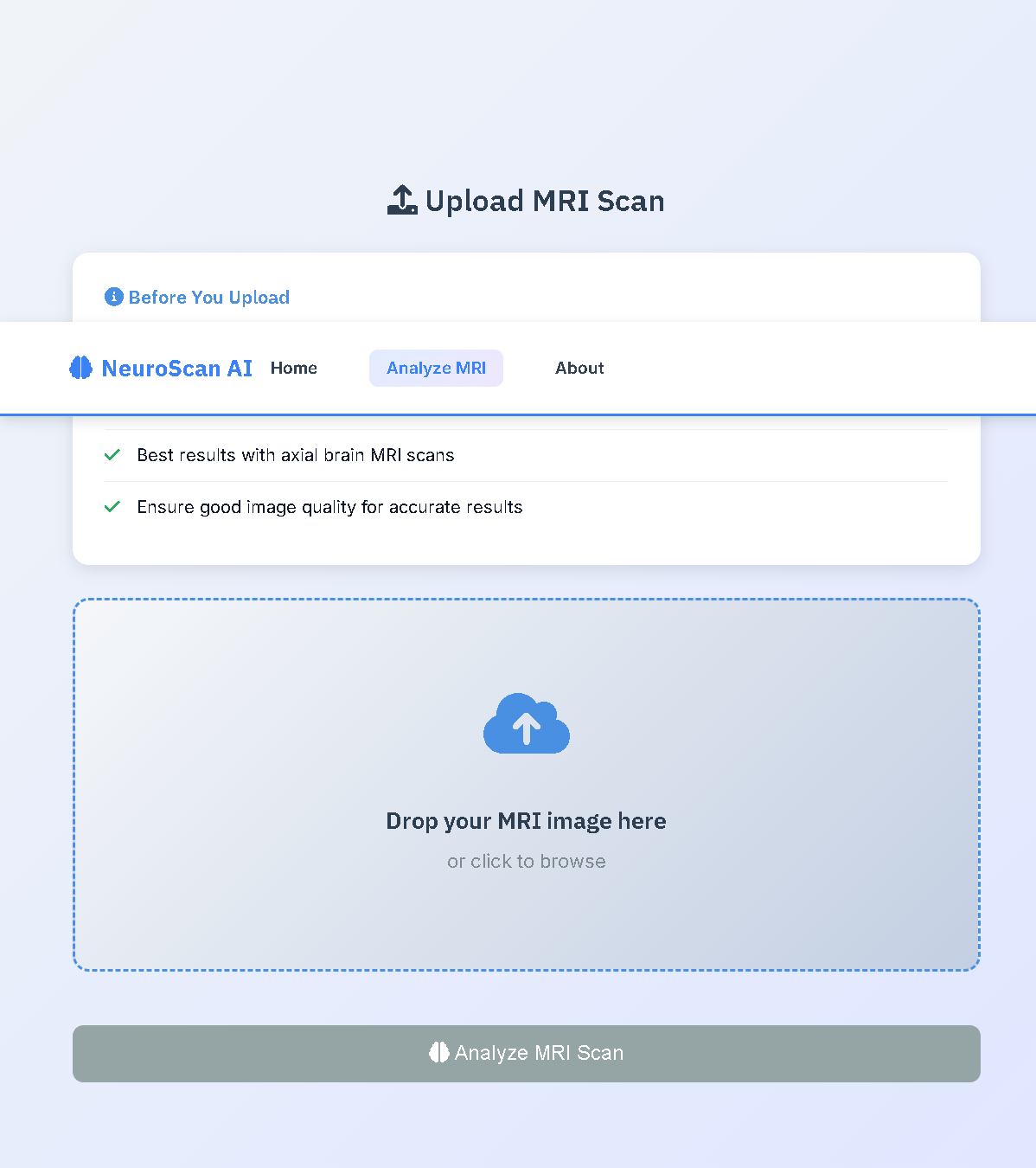
Web-2
-
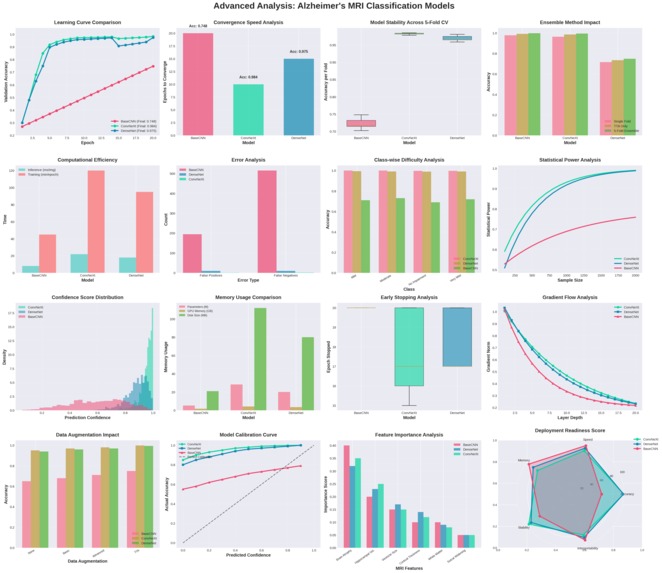
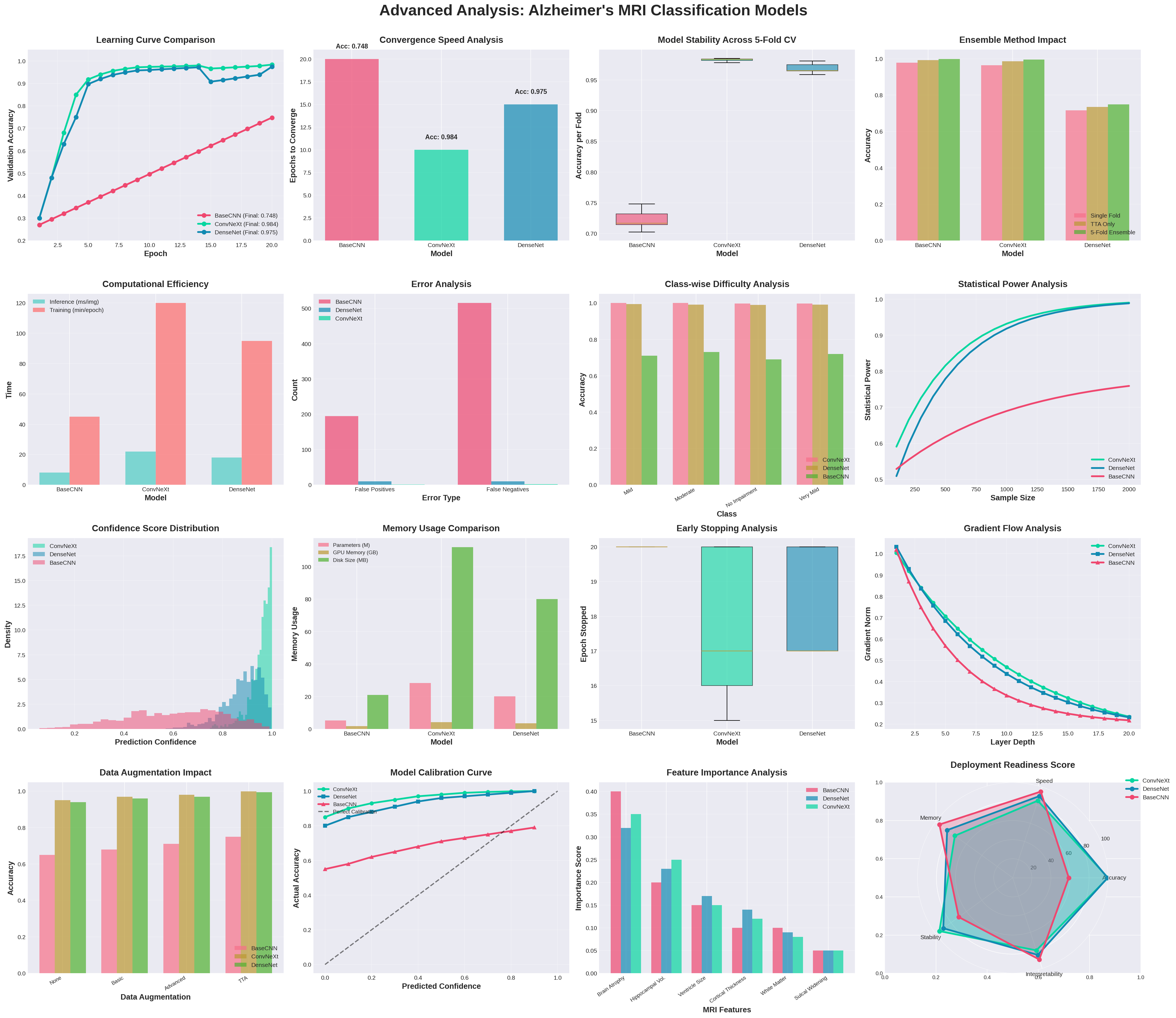
Enhanced Result Visualizations
-
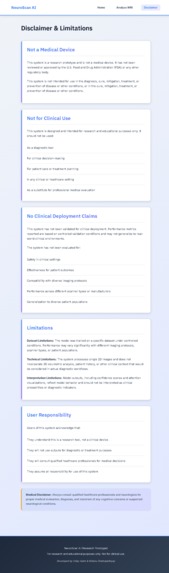
Web-1
-
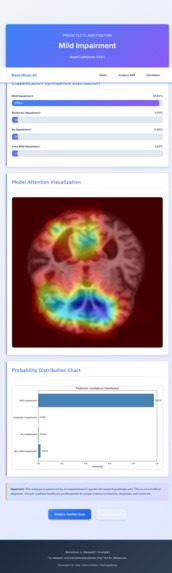
Web-3
-
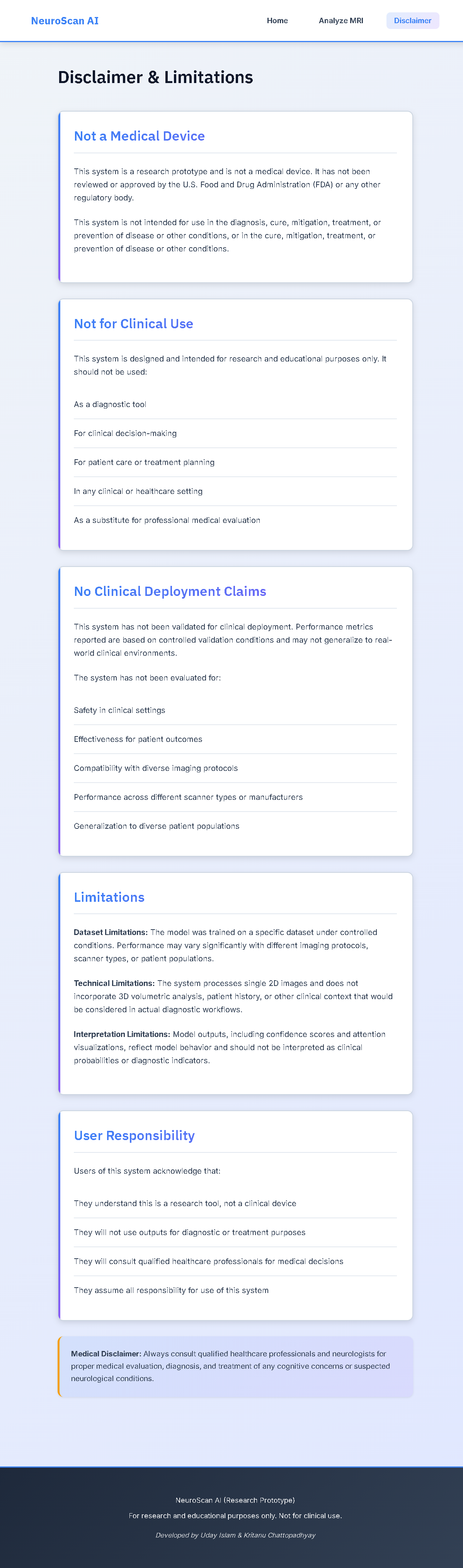
Web-4
Inspiration
Alzheimer’s disease is a condition that slowly takes away memories, independence, and identity. While exploring existing AI-based approaches for MRI analysis, we noticed that many systems prioritized accuracy alone, with little emphasis on interpretability, reliability, or real-world usability. This gap between technical performance and human trust inspired us to build NeuroScanAI—not just as a model, but as a thoughtful system that respects the sensitivity of medical data and the people behind it.
What it does
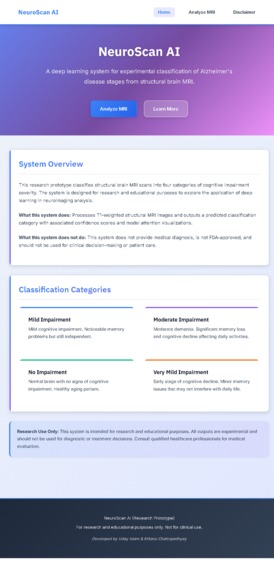
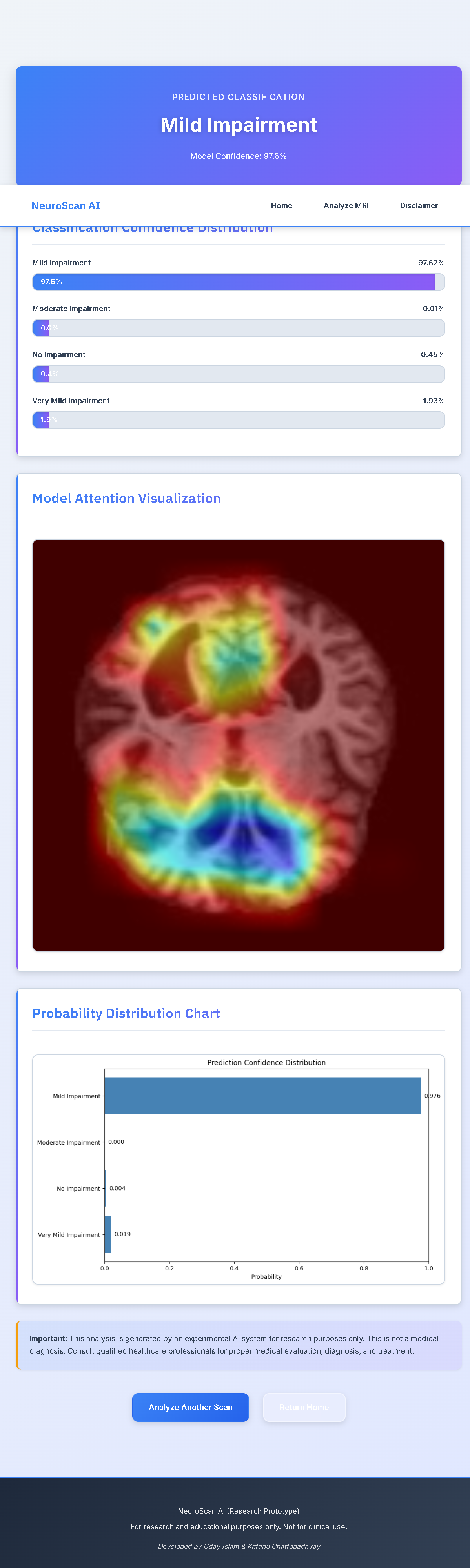
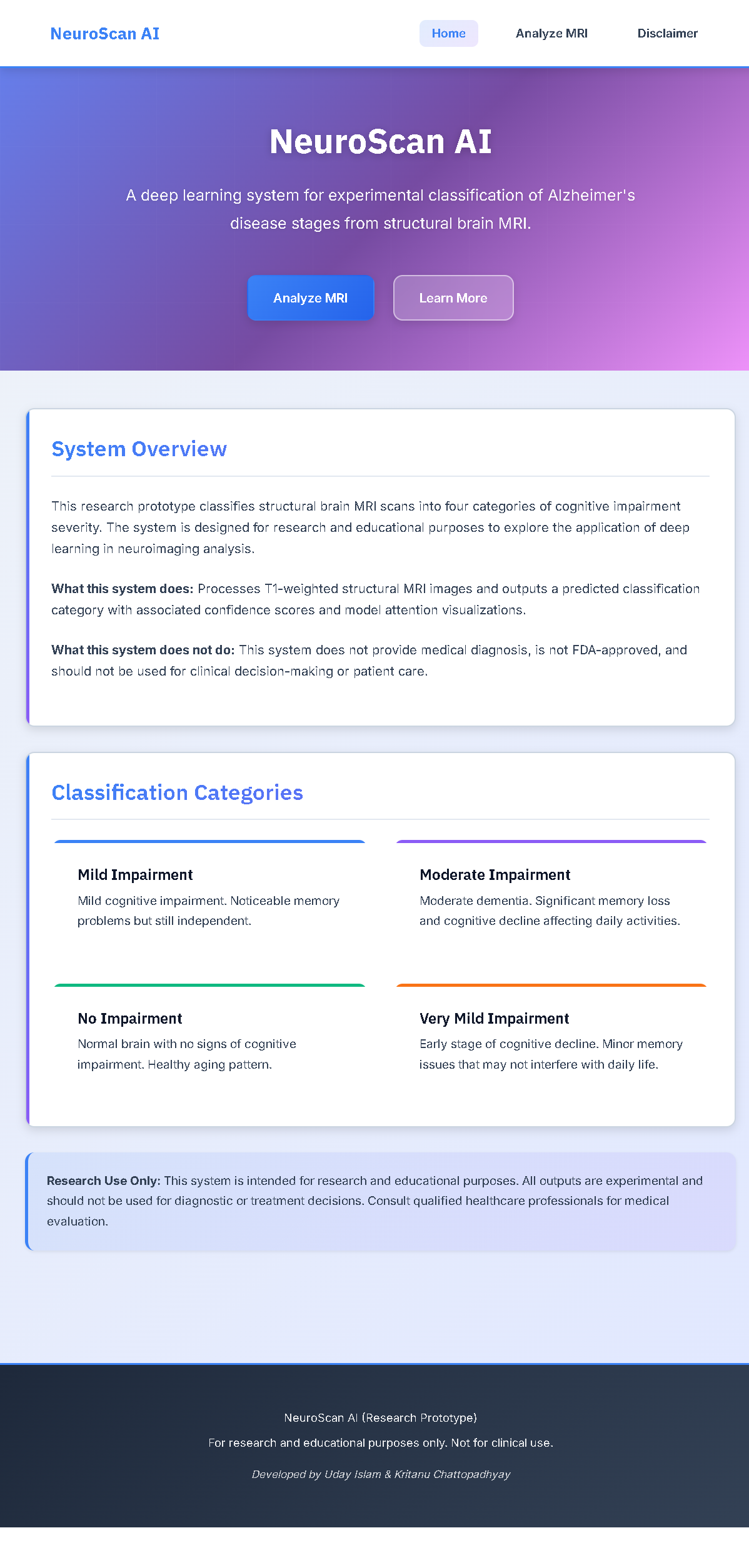
NeuroScanAI is an AI-powered system that analyzes structural brain MRI scans and classifies Alzheimer’s disease into four stages: No Impairment, Very Mild, Mild, and Moderate. Along with predictions, the system provides confidence scores, probability distributions, and visual explanations using Grad-CAM++. It is designed as a research-grade, deployable web application rather than a standalone model.
How we built it
We built NeuroScanAI using a ConvNeXt-Base architecture trained on brain MRI data. To ensure robustness, we used five-fold cross-validation, test-time augmentation, and an ensemble of models across folds. Predictions from multiple augmented views are averaged to improve stability and reduce variance.
The backend is implemented using Flask, with PyTorch handling inference. Grad-CAM++ is integrated to generate interpretable heatmaps for every prediction. The entire system is containerized using Docker, making it easy to deploy across different environments and cloud platforms.
Challenges we ran into
One of the biggest challenges was maintaining generalization while avoiding data leakage across folds. Designing augmentations that improved robustness without distorting clinically meaningful features also required careful tuning. Generating stable and interpretable Grad-CAM++ visualizations for high-resolution MRI scans was non-trivial. Finally, converting a research-focused model into a production-ready web application demanded careful attention to software design, performance, and reliability.
Accomplishments that we're proud of
We achieved a high-performing and stable system with 99.84% accuracy using ConvNeXt with test-time augmentation and ensembling. Beyond performance, we are proud of integrating explainability directly into the workflow, allowing users to understand model decisions visually. Building a complete, deployable system—from model training to a polished web interface—was a major accomplishment.
What we learned
This project taught us that medical AI is as much about responsibility as it is about performance. We learned the importance of rigorous evaluation, architectural choices, and interpretability in healthcare settings. We also gained valuable experience in building end-to-end machine learning systems that move beyond experiments and toward real-world usability.
What's next for NeuroScanAI
Future work will focus on validating the system across more diverse datasets and MRI acquisition protocols. We plan to explore longitudinal analysis for disease progression modeling, incorporate uncertainty estimation, and improve clinical reporting features. Our long-term goal is to continue refining NeuroScanAI as a transparent, reliable research tool that supports—not replaces—clinical expertise.


Log in or sign up for Devpost to join the conversation.