-
-
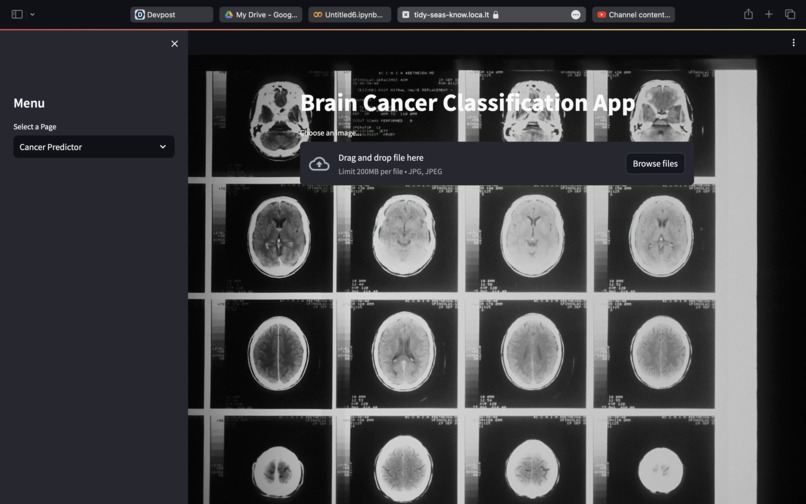
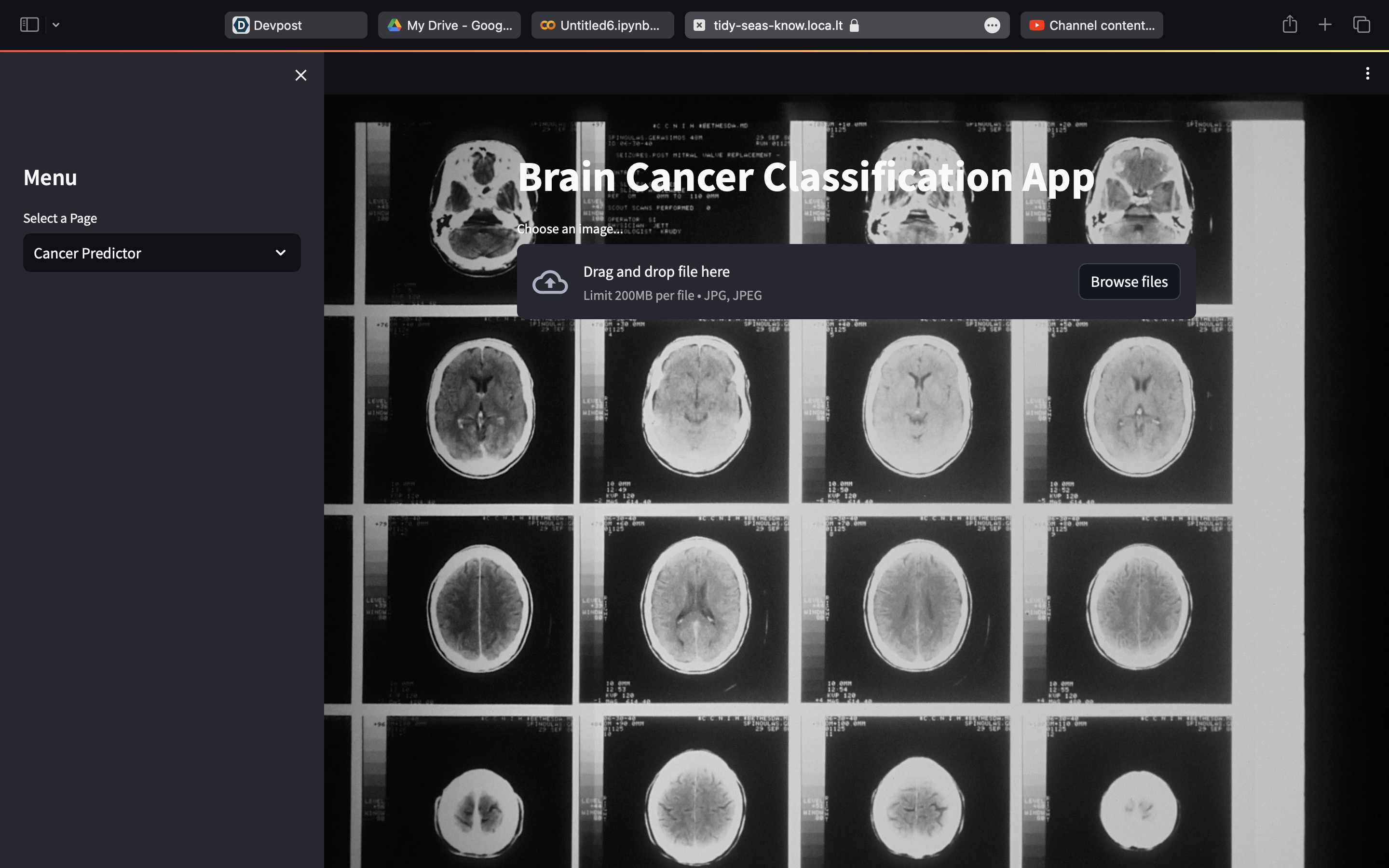
Main Page
-
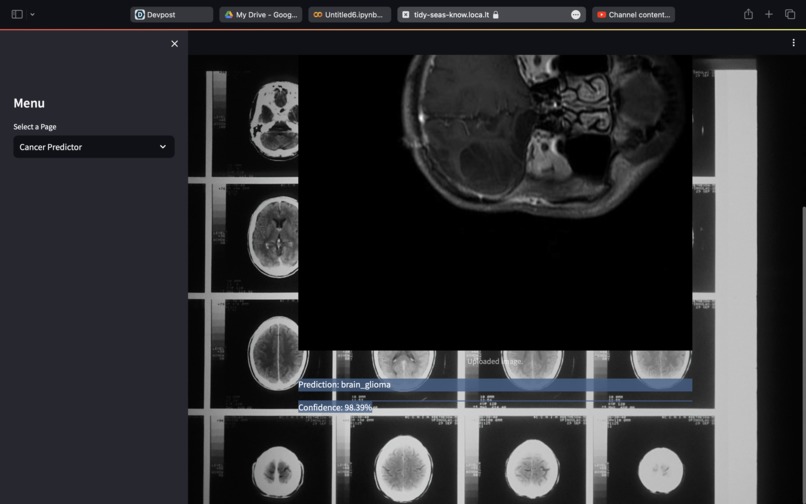
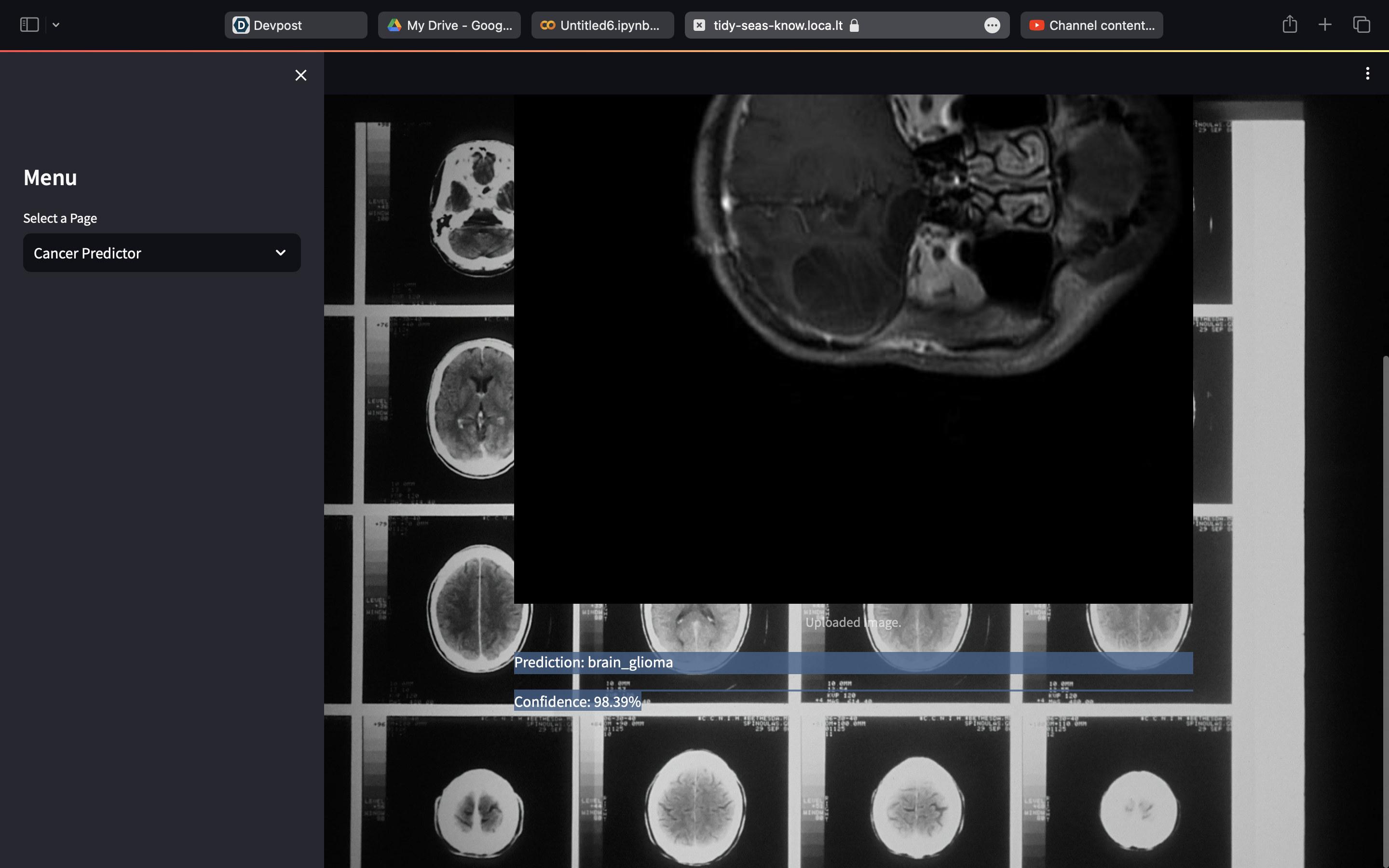
Prediction
-
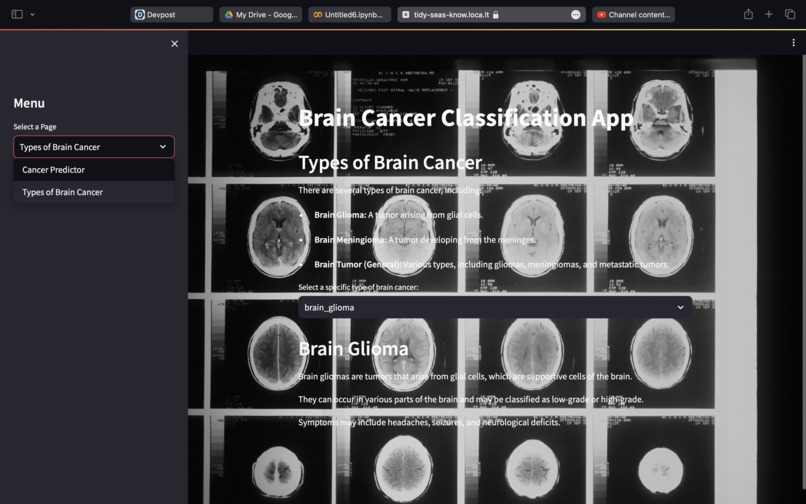
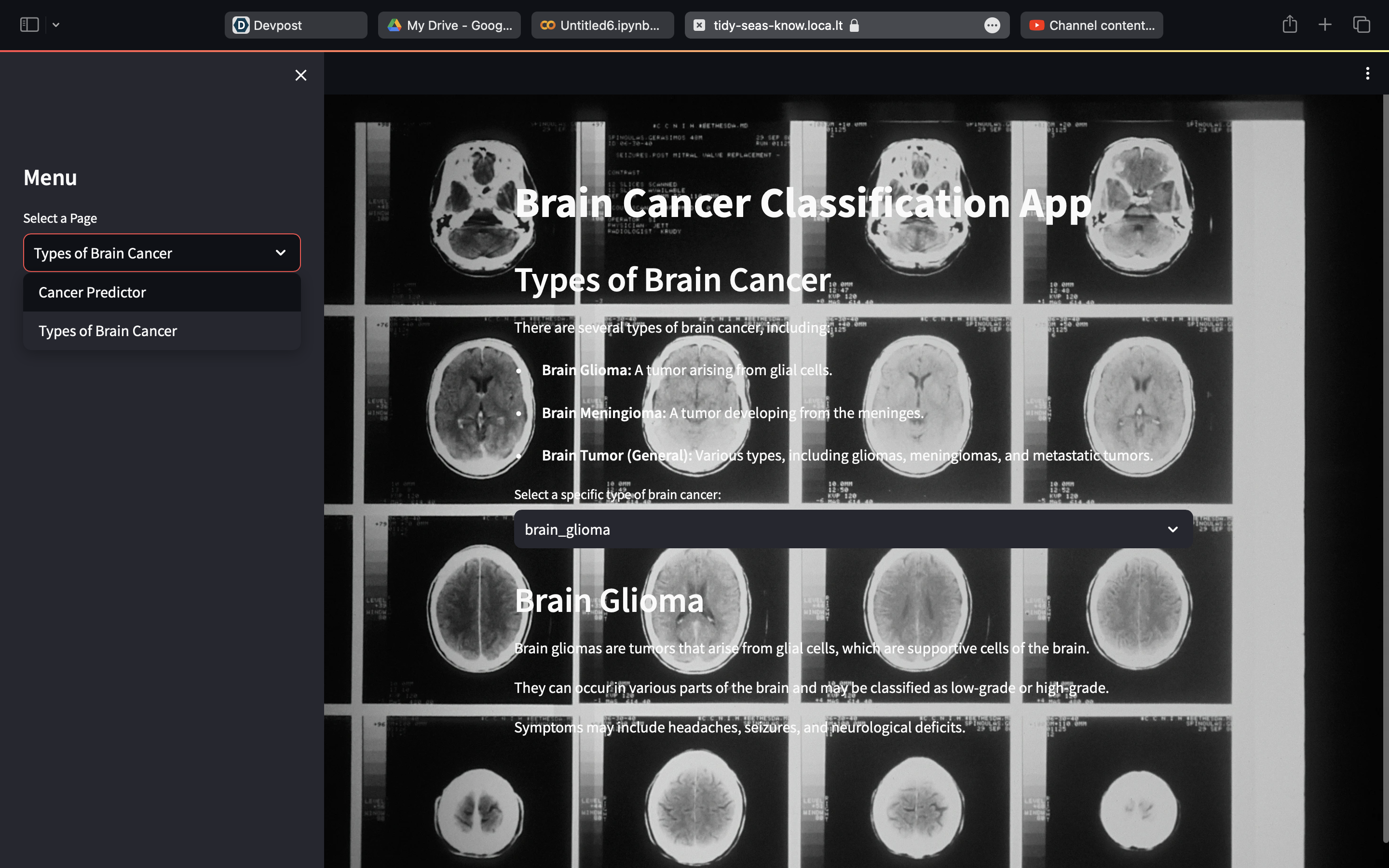
Other Menu
Inspiration
The inspiration for our project stems from the critical need for efficient and accurate cancer detection methods. Harnessing the power of advanced technology, we sought to develop a solution that utilizes X-ray images for early and reliable cancer diagnosis.
What it does
Our project employs cutting-edge transfer learning techniques, specifically leveraging the EfficientNet architecture, to analyze X-ray images for potential signs of cancer. By harnessing pre-trained models and adapting them to medical imaging, we aim to enhance the accuracy and efficiency of cancer detection.
How we built it
We built our project by first acquiring a diverse dataset of X-ray images representing various medical conditions. Utilizing the TensorFlow framework, we implemented transfer learning with the EfficientNet model, fine-tuning its parameters on our dataset. The integration of this model into a user-friendly interface ensures seamless interaction for healthcare professionals.
Challenges we ran into
Developing a robust model for medical image analysis posed several challenges. Acquiring a representative dataset, fine-tuning the EfficientNet architecture, and optimizing for real-time performance were among the hurdles we faced. Overcoming these challenges required collaboration, problem-solving, and a deep understanding of both medical imaging and machine learning.
Accomplishments that we're proud of
We take pride in successfully implementing transfer learning from the EfficientNet architecture, creating a reliable tool for cancer detection from X-ray images. Our accomplishment lies not only in the technical aspects but also in the potential positive impact on early diagnosis and improved patient outcomes.
What we learned
Through this project, we gained valuable insights into the complexities of medical image analysis and the significance of transfer learning in optimizing model performance. We deepened our understanding of the challenges within the healthcare domain and the importance of interdisciplinary collaboration.
What's next for NeuroScan
Our journey doesn't end here. The next steps involve refining and expanding our model's capabilities by incorporating more diverse datasets, exploring additional deep learning architectures, and collaborating with medical professionals for further validation. We aim to continuously improve and deploy our solution to contribute meaningfully to the field of early cancer detection.
Built With
- deep-learning
- machine-learning
- neural-network
- python
- transfer-learning


Log in or sign up for Devpost to join the conversation.