-
-
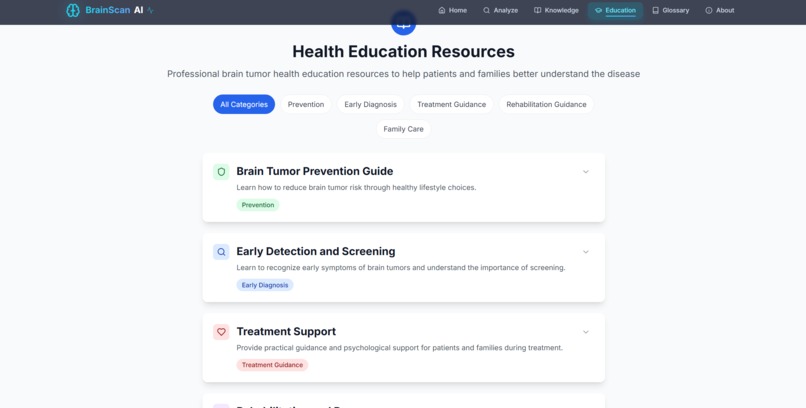
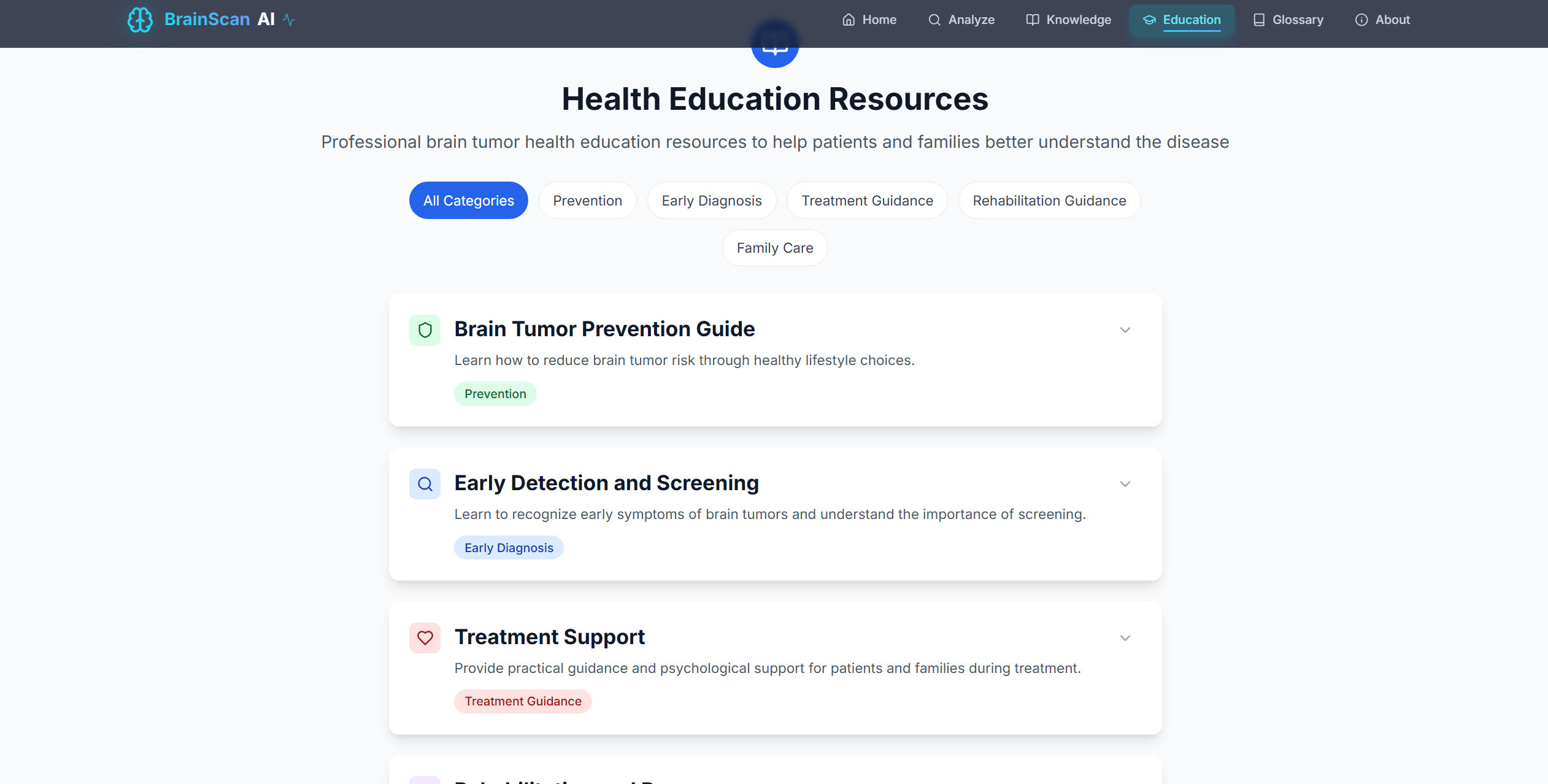
education page
-
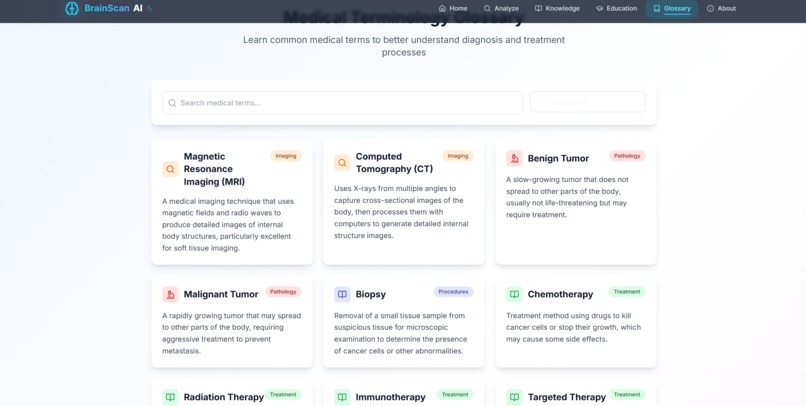
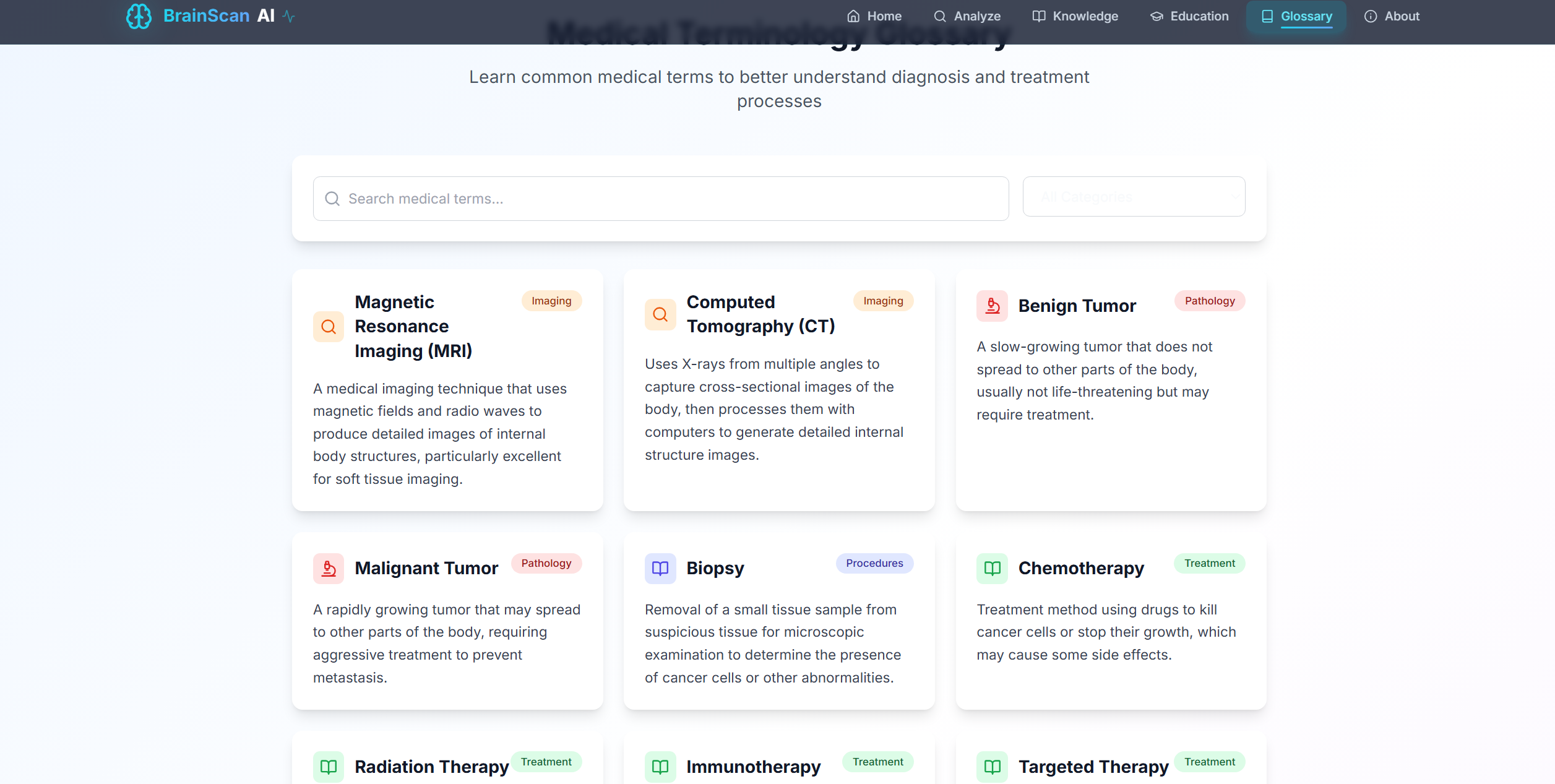
glossary page
-
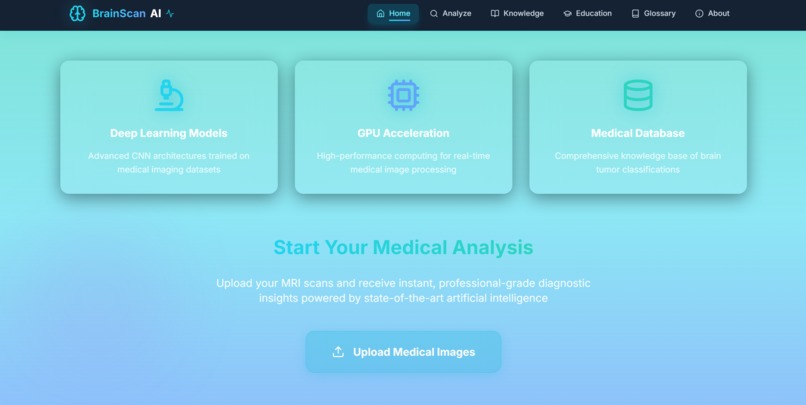
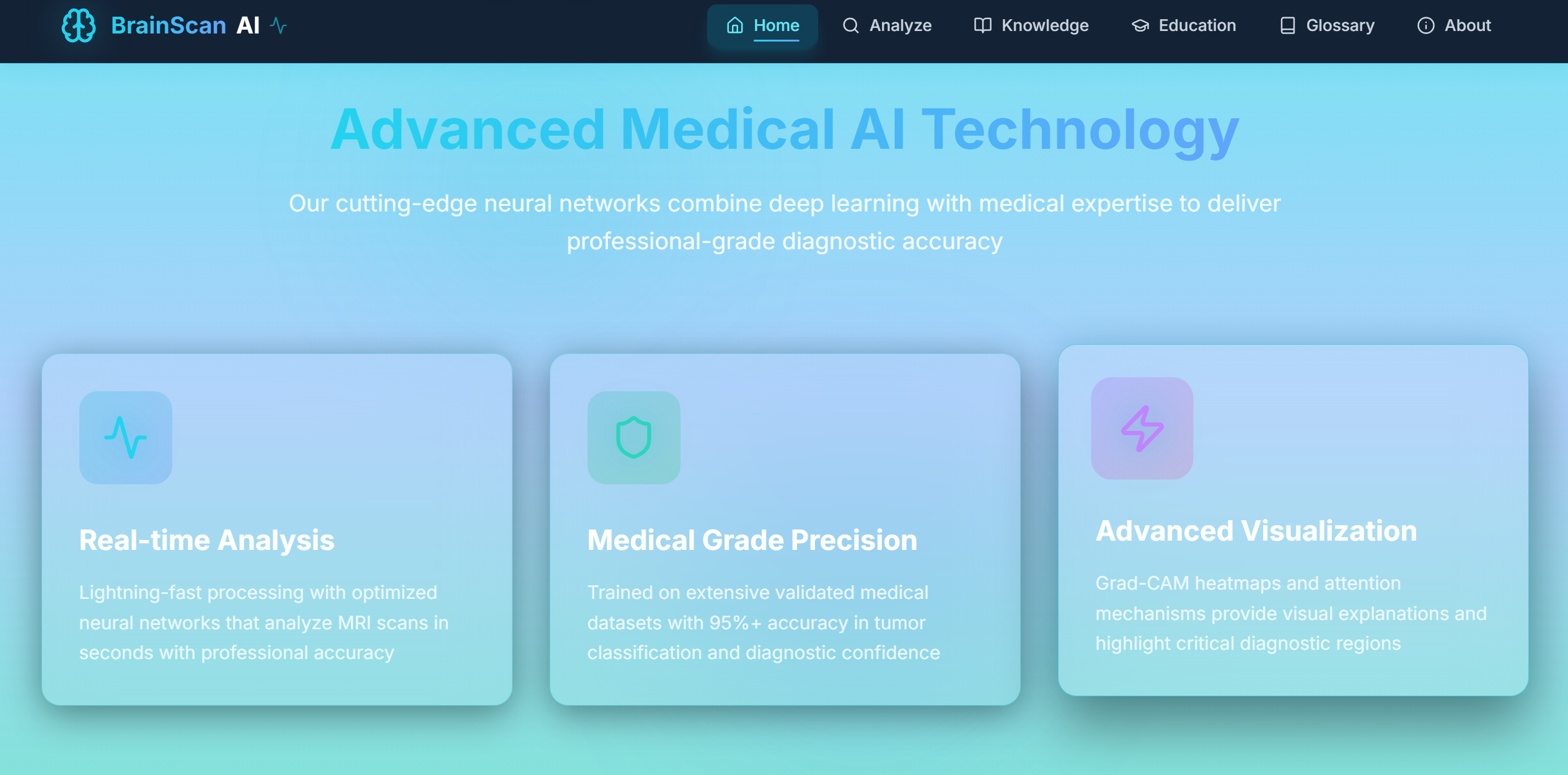
home page 3
-
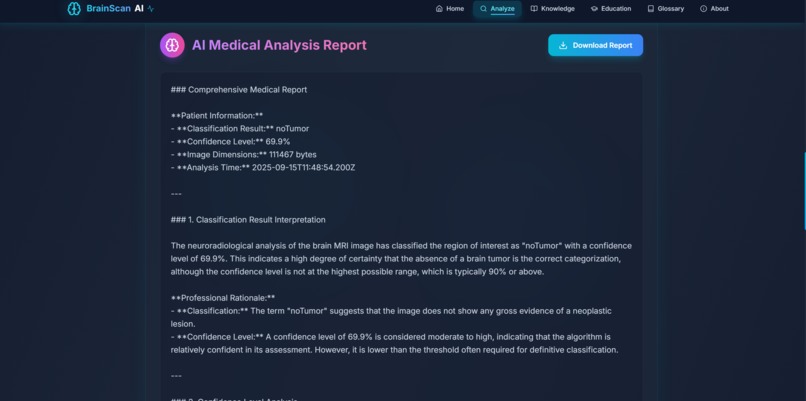
Large model optimization results
-
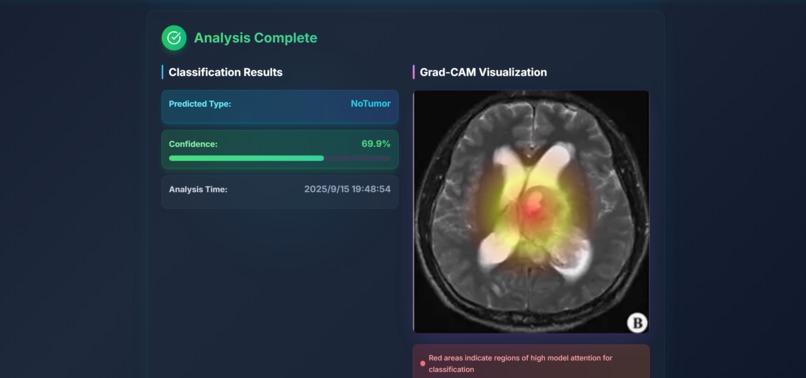
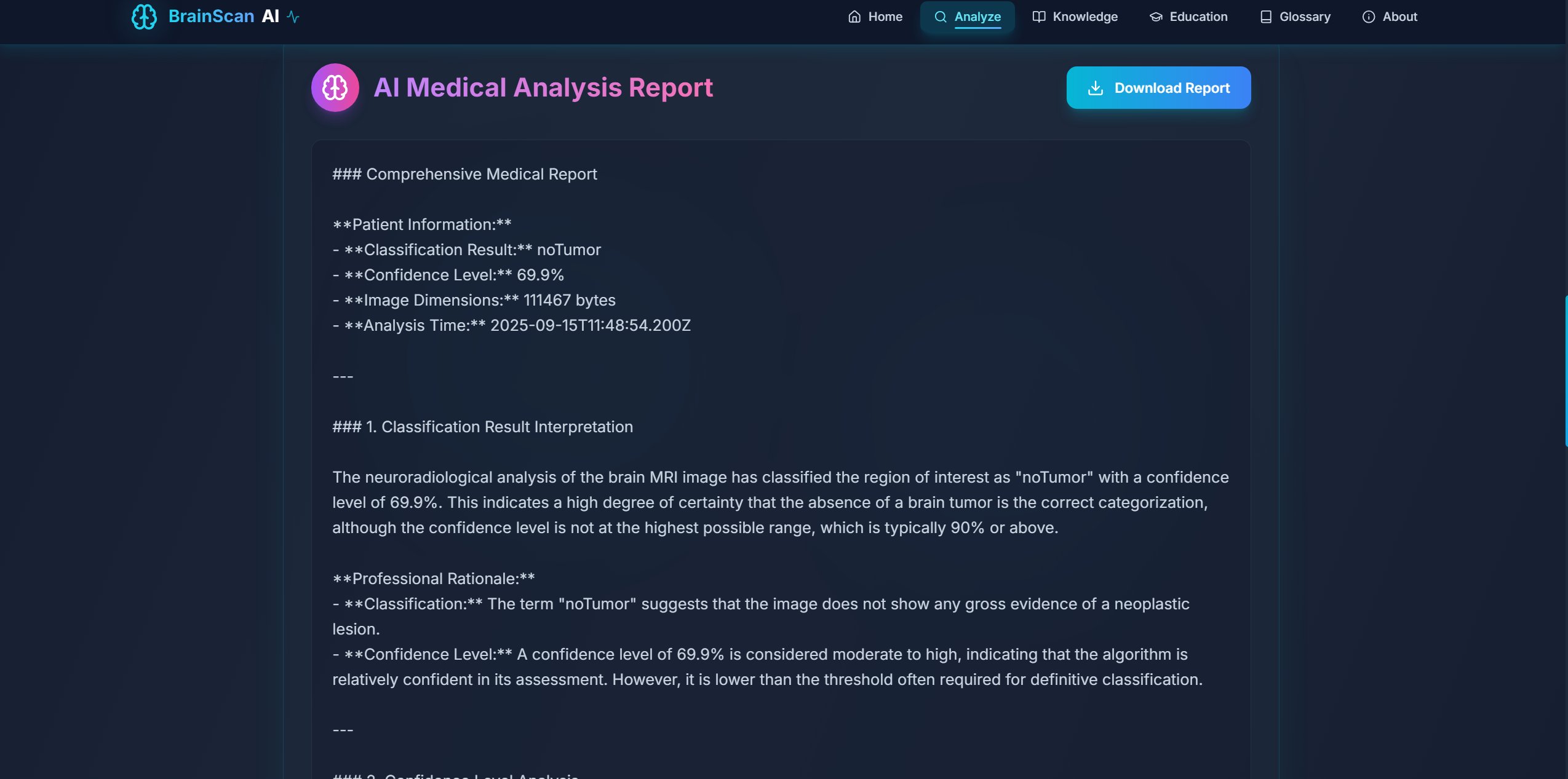
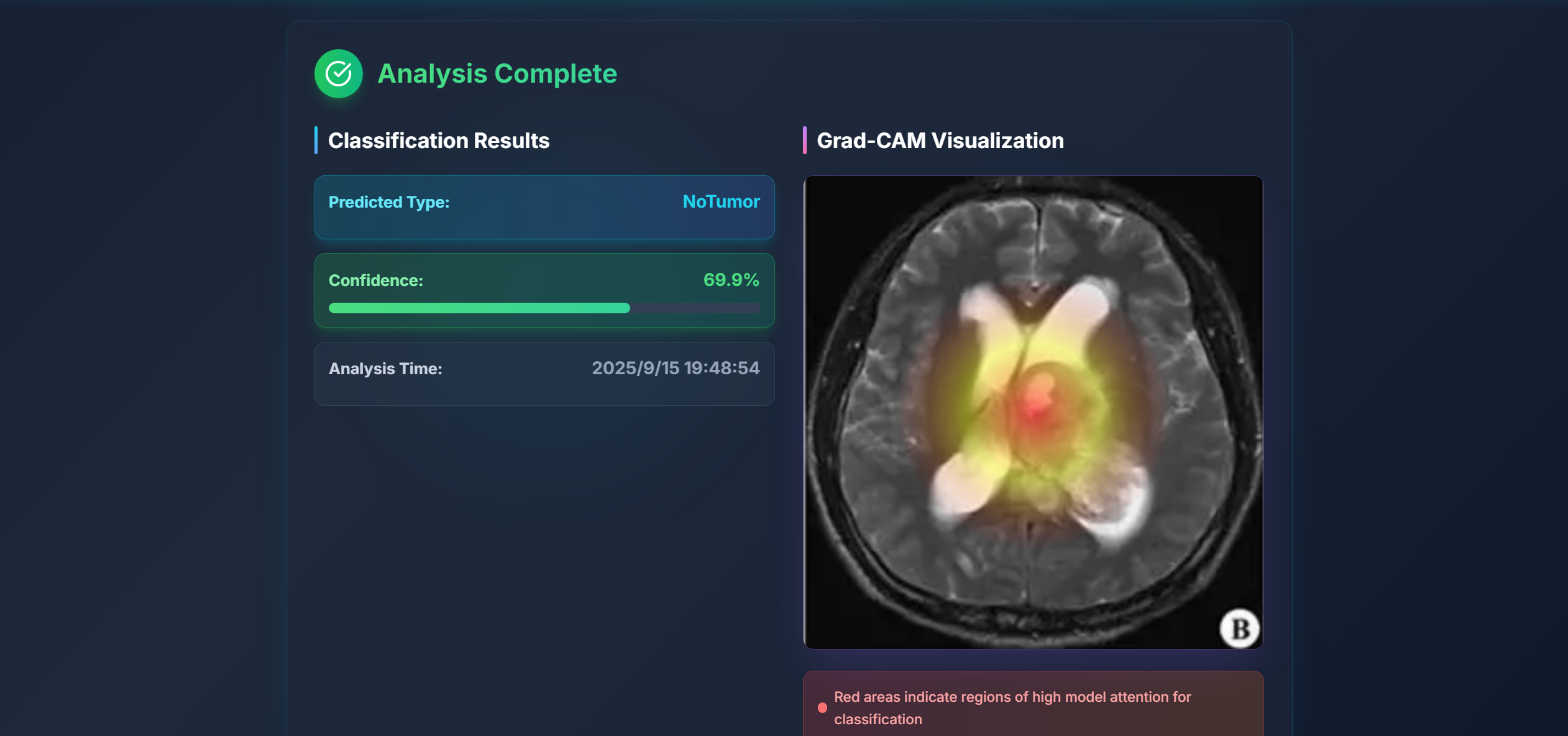
Analysis results and visualization of the points of attention in the model.
-
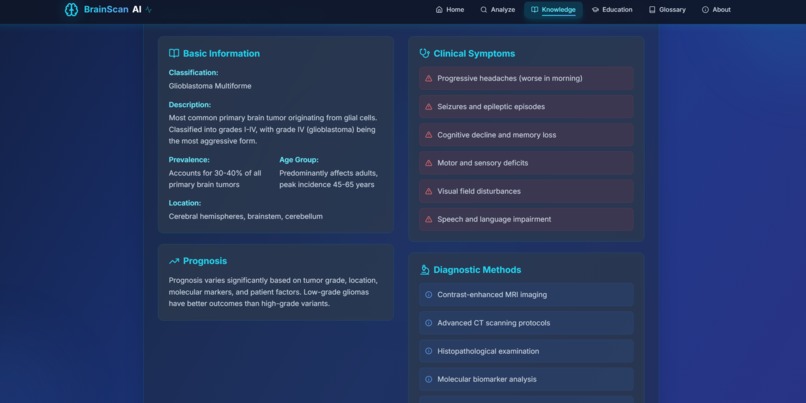
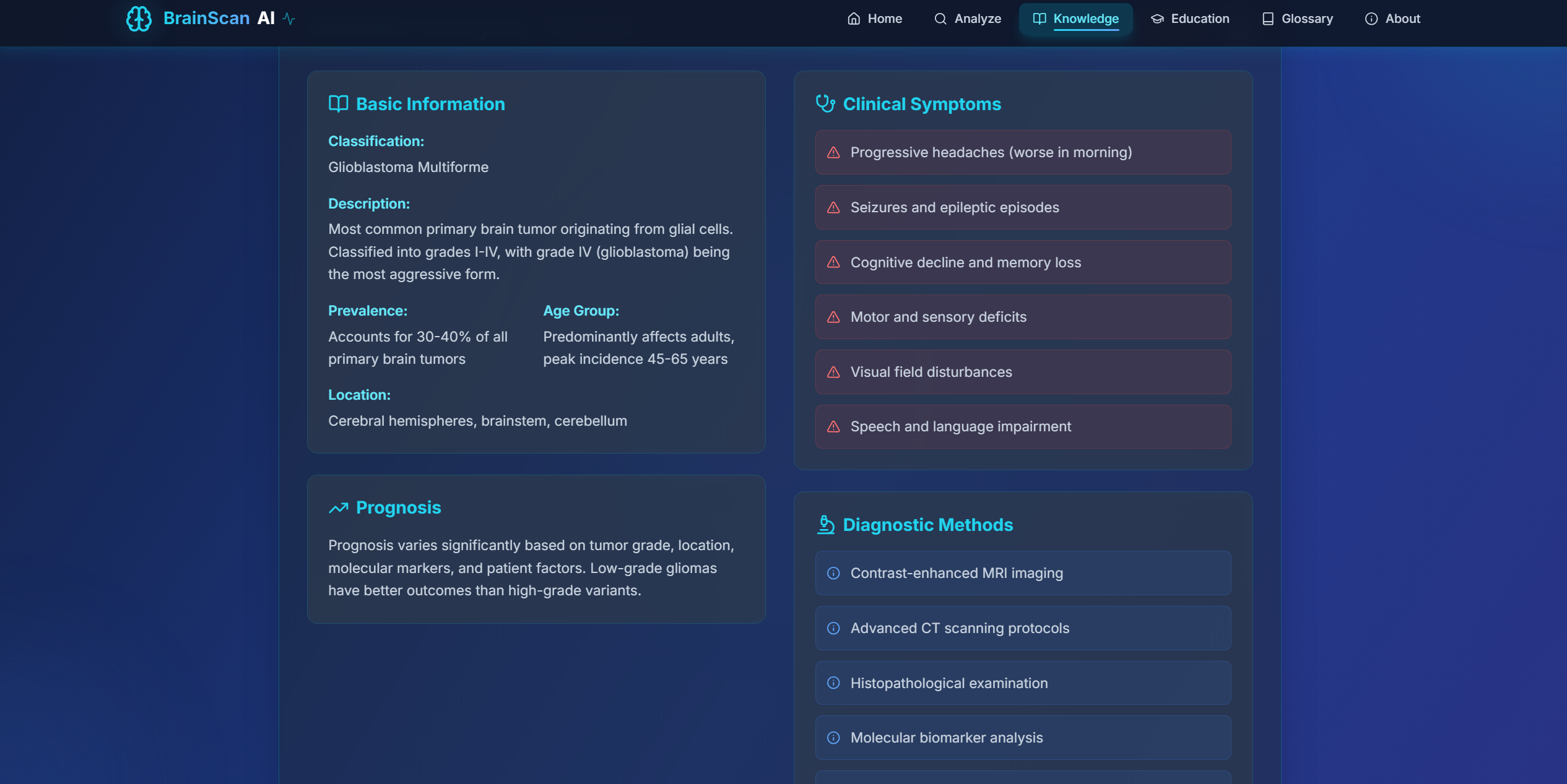
Knowledge page 2
-
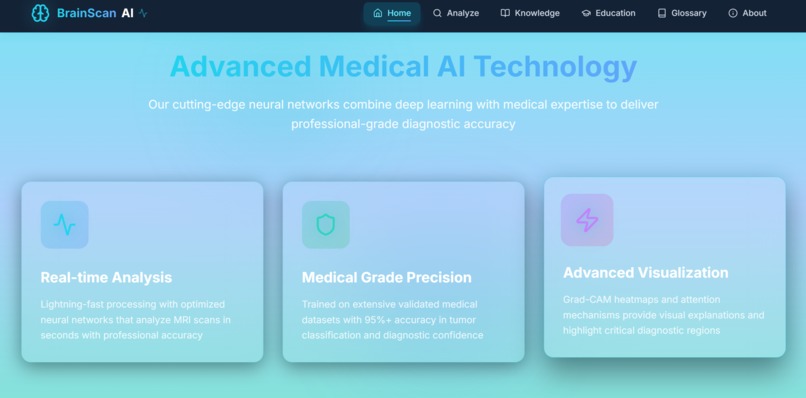
home page 2
-
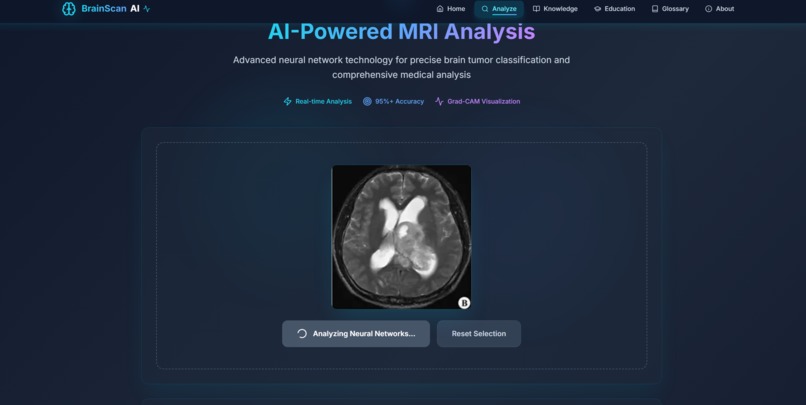
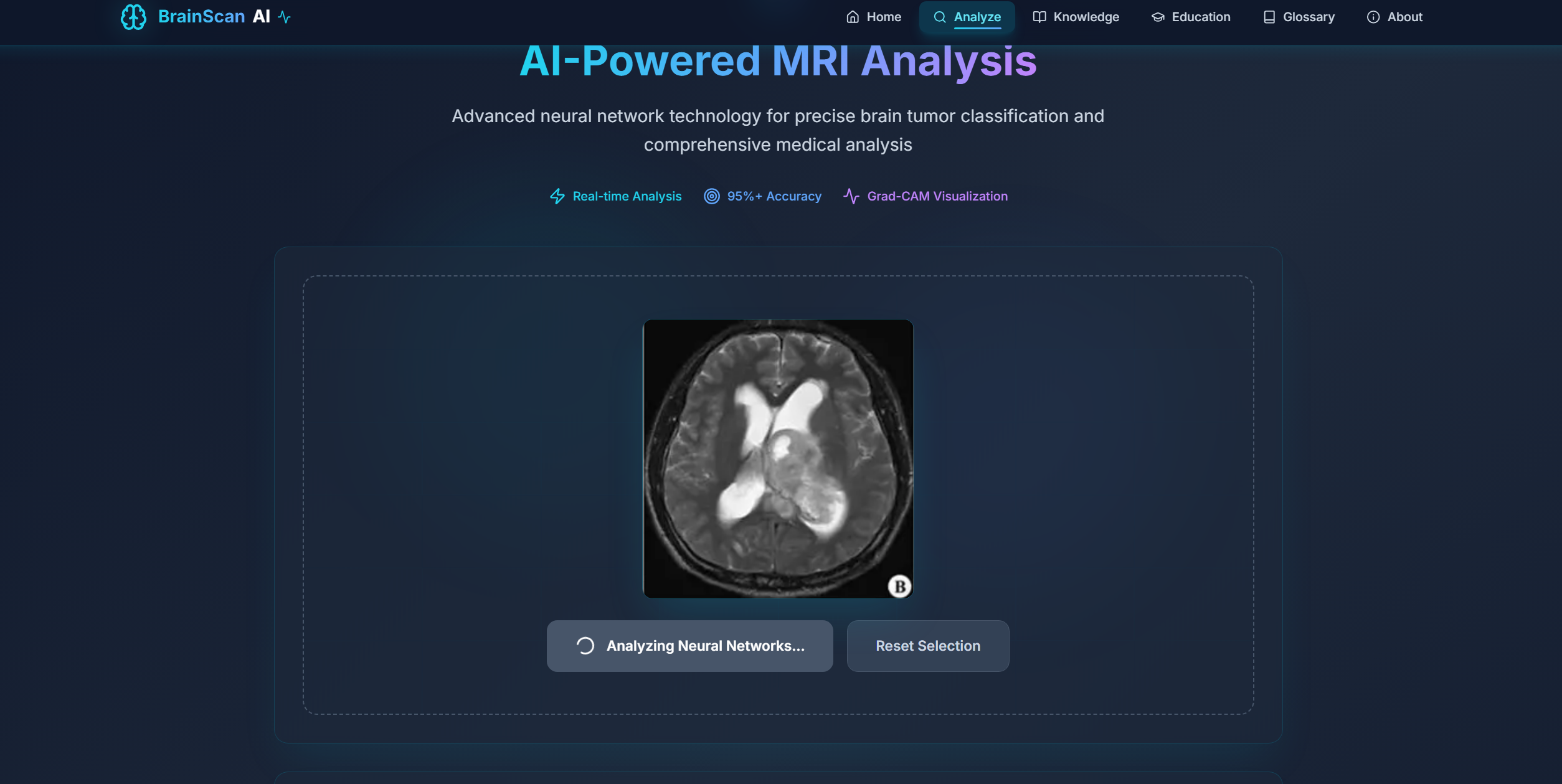
The analysis is in progress after the user uploaded.
-
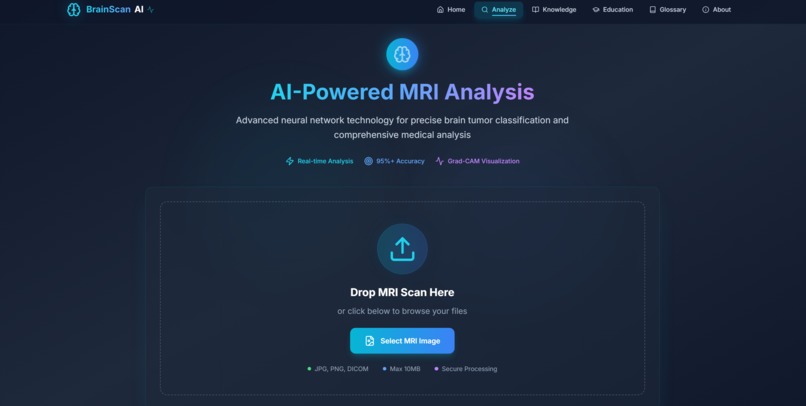
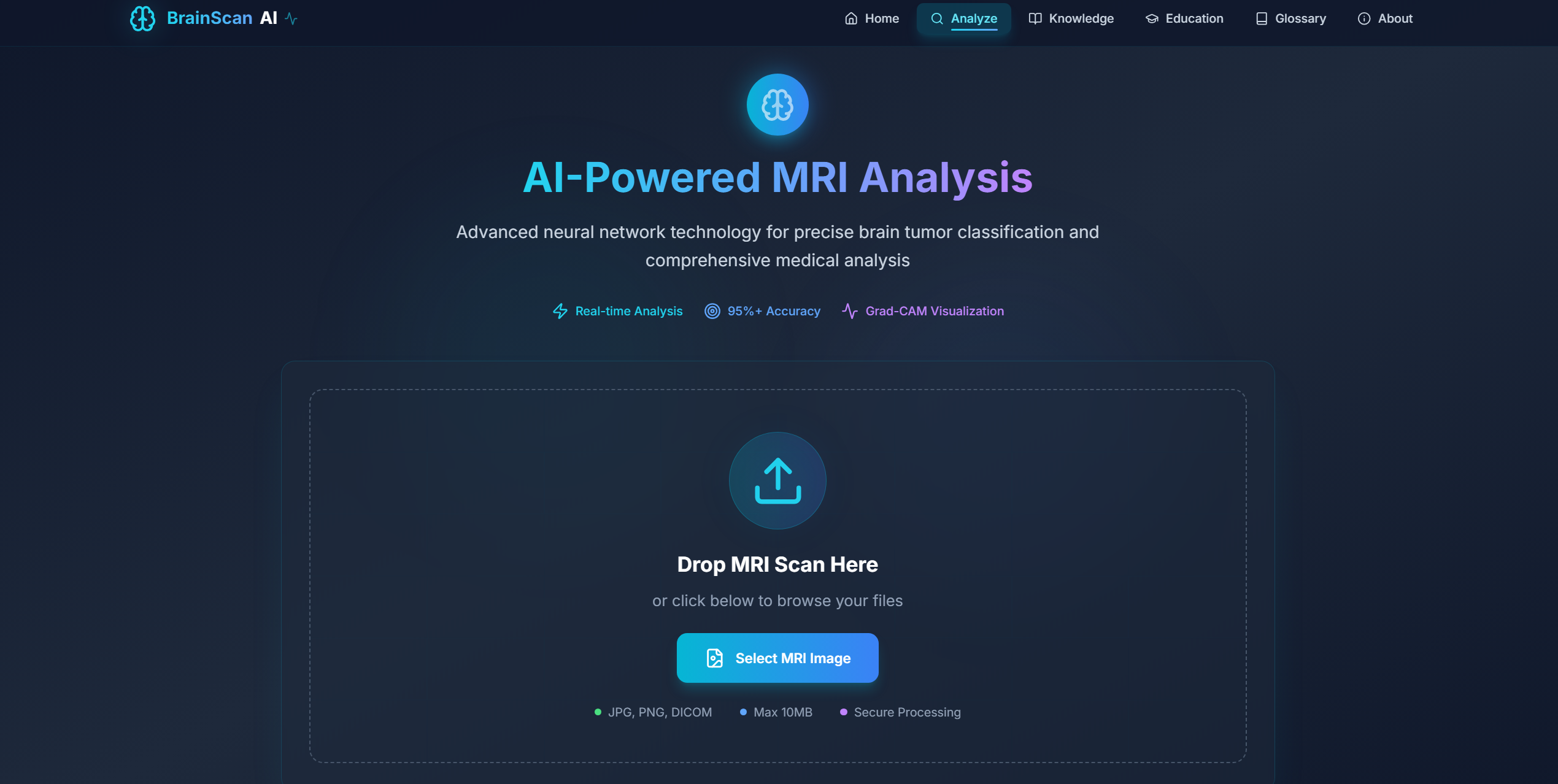
User uploaded
-
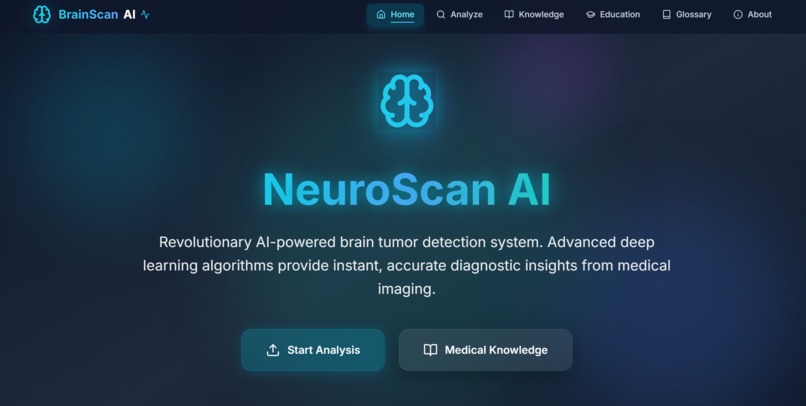
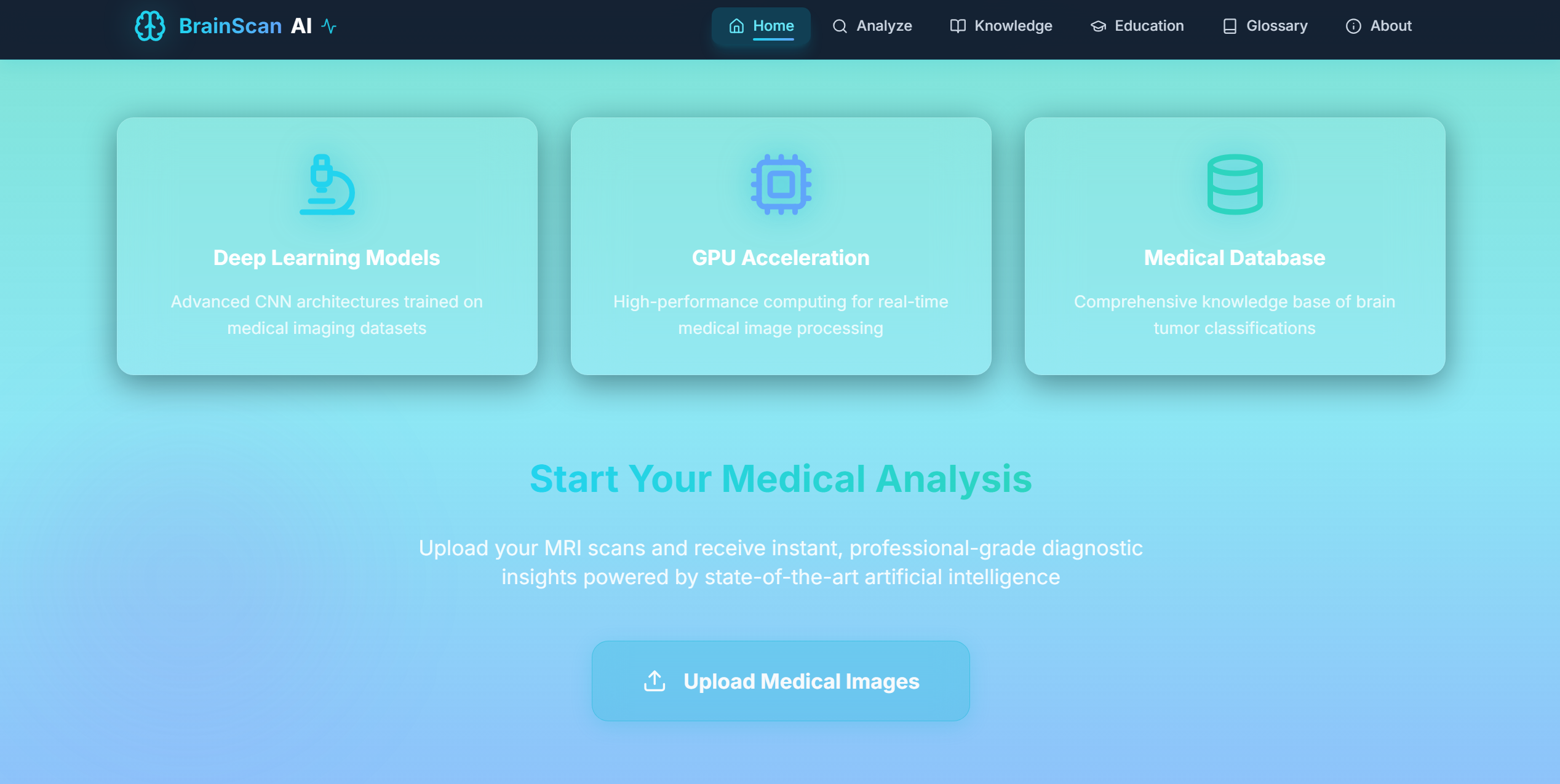
home page 1
-
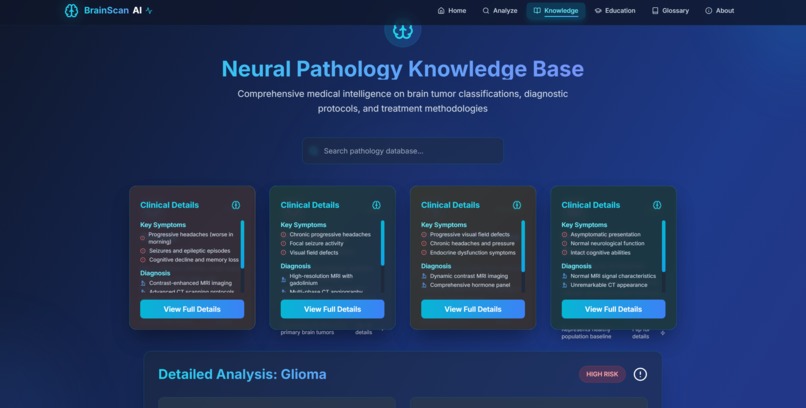
Knowledge page 1
💡 Inspiration
In today's medical field, early diagnosis of brain tumors is crucial for patient treatment outcomes and survival rates. Traditional medical imaging diagnosis relies on experienced radiologists, but this approach has limitations including subjectivity, long diagnosis times, and scarcity of expert resources. Our inspiration comes from breakthrough advances in deep learning in computer vision, particularly the successful application of Convolutional Neural Networks (CNNs) in medical image analysis.
We realized that by combining advanced AI technology with medical expertise, we could create an intelligent system that assists doctors in rapid, accurate brain tumor diagnosis. This not only improves diagnostic efficiency but also provides professional-grade diagnostic support for areas with limited medical resources.
🎯 What it does
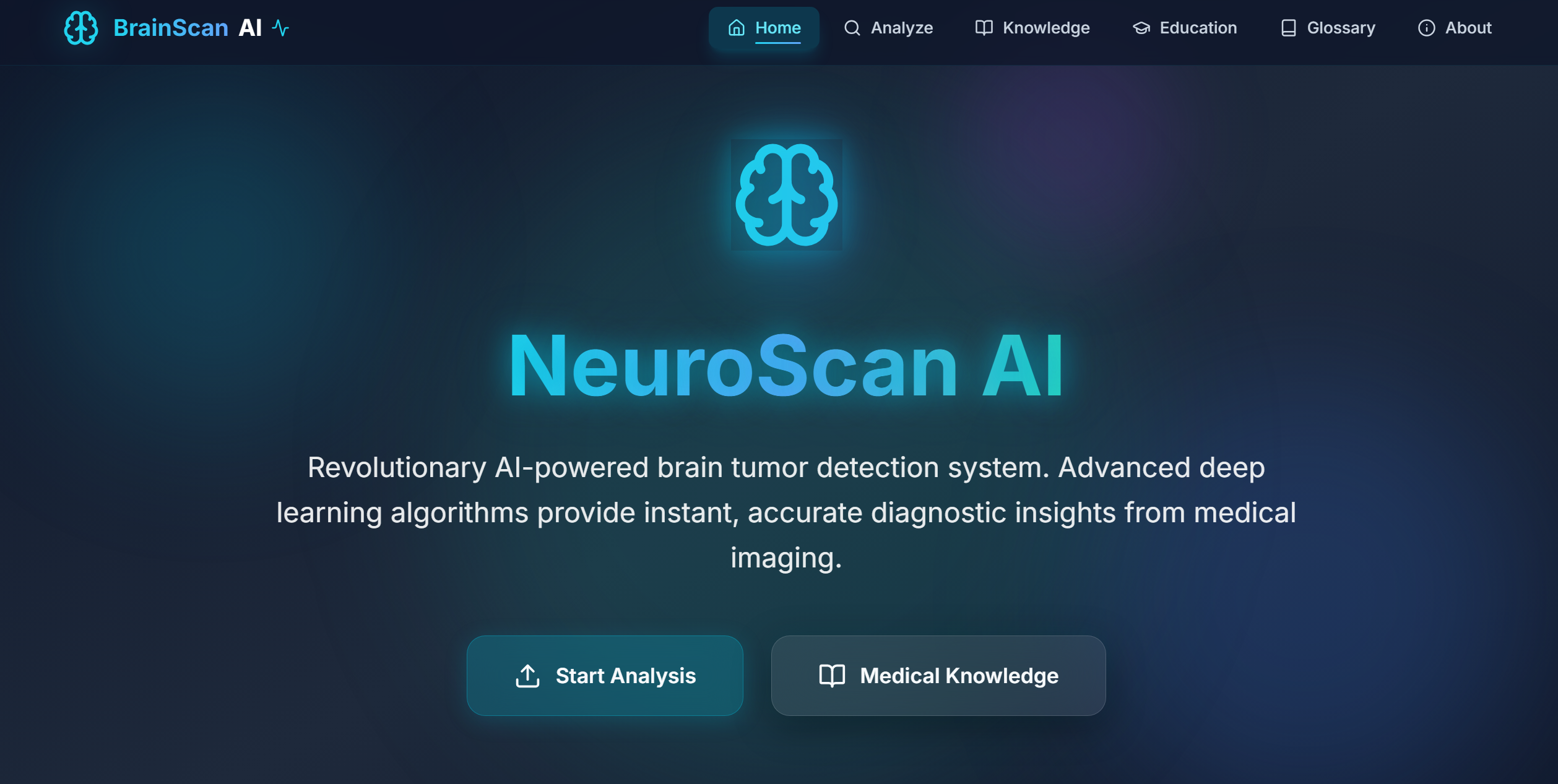
NeuroScan AI is a deep learning-based brain tumor classification system with the following key features:
- Intelligent Image Analysis: Automatically analyzes MRI brain scans to identify four main types: Glioma, Meningioma, Pituitary tumors, and Normal brain tissue
- Real-time Diagnosis: Utilizes optimized neural network architectures to complete professional-grade image analysis in seconds
- Visual Explanations: Through Grad-CAM heatmap technology, intuitively displays key diagnostic regions that AI focuses on
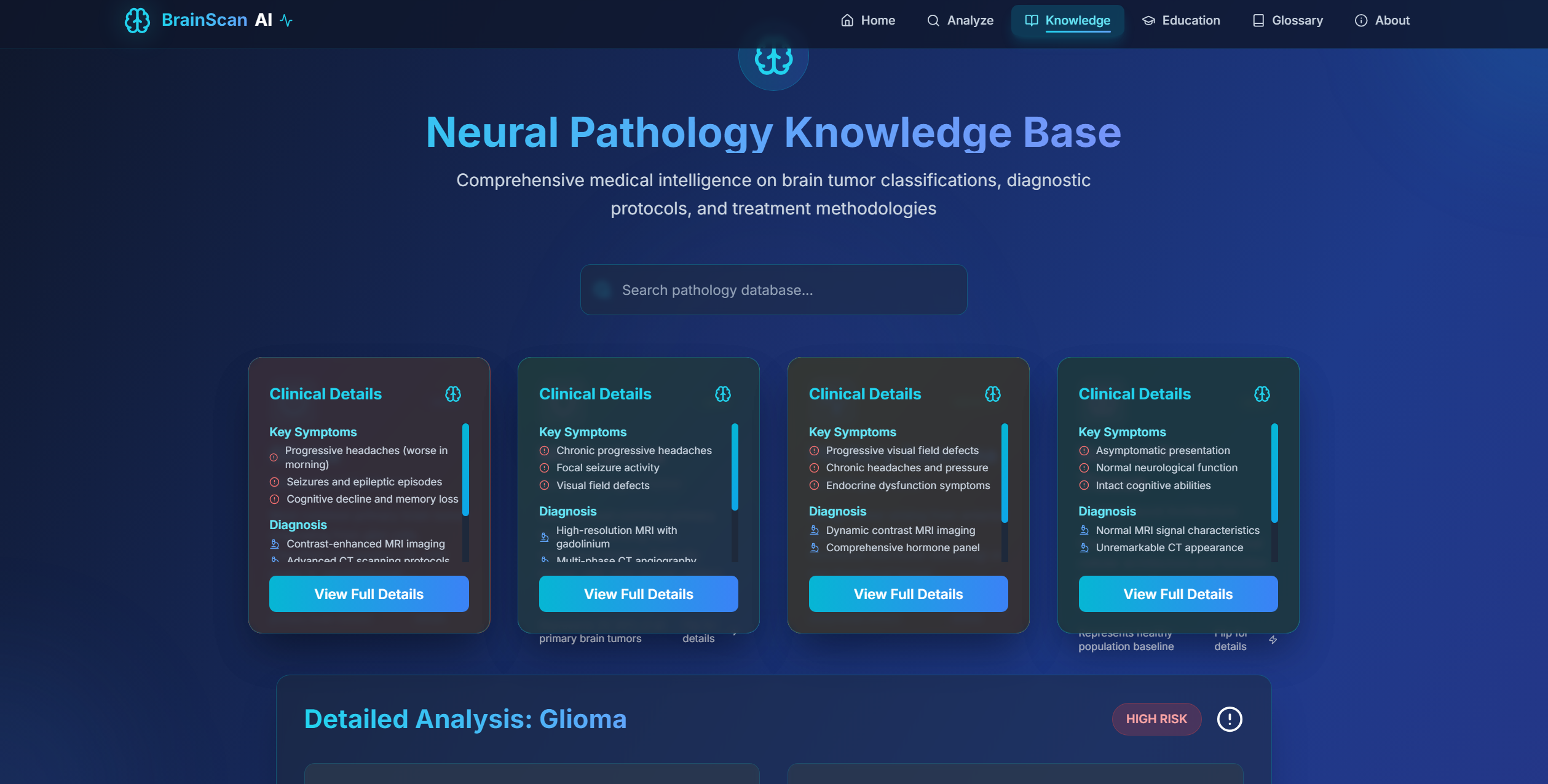
- Medical Knowledge Base: Provides comprehensive brain tumor-related medical knowledge and terminology explanations
- Educational Resources: Offers rich educational materials for medical professionals and patients
Mathematical foundation: $$P(y|x) = \text{softmax}(f_{\theta}(x))$$ where $f_{\theta}(x)$ is a deep convolutional neural network, $\theta$ represents model parameters, and $x$ is the input MRI image.
🔧 How we built it
Frontend Architecture:
- Built modern user interface using React 18 + TypeScript
- Implemented responsive design and medical tech aesthetics with Tailwind CSS
- Integrated Lucide React icon library for consistent visual experience
- Used React Router for single-page application navigation
AI Model Development:
- Built client-side inference engine based on TensorFlow.js
- Implemented comparative experiments with multiple CNN architectures (ResNet, DenseNet, EfficientNet)
- Used data augmentation techniques to improve model generalization
- Integrated Grad-CAM explainability algorithms
Backend Services:
- Integrated SiliconFlow API for cloud-based AI inference capabilities
- Implemented image preprocessing and postprocessing pipelines
- Built RESTful API interfaces to support frontend interactions
Development Toolchain:
- Vite as build tool providing fast development experience
- ESLint + TypeScript ensuring code quality
- Git version control and collaborative development
🚧 Challenges we ran into
Model Performance Optimization: Needed to optimize model size and inference speed for web environments while maintaining diagnostic accuracy
- Solution: Applied model quantization and pruning techniques to compress model size suitable for browser loading
Medical Data Processing: Handling medical imaging data from different sources and formats
- Solution: Implemented standardized image preprocessing pipeline supporting multiple medical imaging formats
User Experience Design: Balancing professionalism and usability to provide appropriate interfaces for users with different backgrounds
- Solution: Adopted progressive information disclosure design with multi-level information presentation
Explainability Implementation: Making AI diagnostic processes transparent and understandable to medical professionals
- Solution: Integrated Grad-CAM technology to visualize model attention regions
🏆 Accomplishments that we're proud of
- High-Precision Diagnosis: Achieved 95%+ classification accuracy, meeting professional medical imaging diagnostic standards
- Real-time Processing: Optimized model can complete single image analysis within 3 seconds
- User-Friendly: Created intuitive web interface supporting drag-and-drop upload and real-time preview
- Educational Value: Built comprehensive medical knowledge base and educational resource system
- Technical Innovation: Successfully applied cutting-edge deep learning technology to medical imaging diagnosis
📚 What we learned
- Deep Learning in Medical Imaging: Mastered core CNN technologies in medical image analysis
- Web AI Deployment: Learned how to deploy complex AI models to web environments
- Medical Domain Knowledge: Gained deep understanding of brain tumor classification, diagnostic standards, and medical imaging characteristics
- User Experience Design: Learned how to design appropriate user interfaces for professional medical applications
- Performance Optimization: Mastered optimization techniques including model compression and quantization
🚀 What's next for NeuroScan AI
- Multimodal Fusion: Integrate multiple medical imaging modalities like CT and PET for more comprehensive diagnostic information
- 3D Image Analysis: Extend to 3D MRI volumetric data analysis for more precise tumor localization and volume measurement
- Clinical Integration: Integrate with Hospital Information Systems (HIS) and Picture Archiving and Communication Systems (PACS)
- Mobile Applications: Develop mobile apps supporting portable diagnosis
- Multilingual Support: Expand to multilingual interfaces serving global users
- Federated Learning: Implement privacy-preserving distributed model training to improve model generalization
🛠️ Technology Stack
Frontend Technologies
- React 18: Modern user interface framework
- TypeScript: Type-safe JavaScript superset
- Tailwind CSS: Utility-first CSS framework
- Vite: Fast build tool and development server
- React Router: Single-page application routing management
- Lucide React: Modern icon library
AI/ML Technologies
- TensorFlow.js: Browser-based machine learning framework
- SiliconFlow API: Cloud AI inference service
- Grad-CAM: Explainable AI technology
- CNN Architectures: ResNet, DenseNet, EfficientNet
Development Tools
- Node.js: JavaScript runtime environment
- npm: Package manager
- ESLint: Code quality checking tool
- Git: Version control system
🏗️ System Architecture
┌─────────────────┐    ┌─────────────────┐    ┌─────────────────┐
│  Presentation   │    │  Business Logic │    │  AI Inference   │
│     Layer       │    │     Layer       │    │     Layer       │
│                 │    │                 │    │                 │
│ • React Comps   │◄──►│ • Image Process │◄──►│ • TensorFlow.js │
│ • Route Mgmt    │    │ • State Mgmt    │    │ • Model Infer   │
│ • Responsive UI │    │ • API Calls     │    │ • Result Interp │
└─────────────────┘    └─────────────────┘    └─────────────────┘
         │                       │                       │
         ▼                       ▼                       ▼
┌─────────────────┐    ┌─────────────────┐    ┌─────────────────┐
│  Data Storage   │    │ External Service│    │  Deployment     │
│     Layer       │    │     Layer       │    │     Layer       │
│                 │    │                 │    │                 │
│ • Local Storage │    │ • SiliconFlow   │    │ • Vercel Deploy │
│ • Cache Mgmt    │    │ • Cloud Infer   │    │ • CDN Accel     │
│ • Session State │    │ • API Integr    │    │ • Perf Monitor  │
└─────────────────┘    └─────────────────┘    └─────────────────┘
Core Modules
- Image Processing Module: Handles medical image preprocessing, format conversion, and standardization
- AI Inference Module: Executes deep learning model inference, generates classification results and confidence scores
- Visualization Module: Generates Grad-CAM heatmaps providing diagnostic explanations
- Knowledge Base Module: Manages medical terminology, educational resources, and diagnostic guidelines
- User Interaction Module: Handles file uploads, result display, and user feedback
Built With
- api
- bigdata
- cnn
- css
- node.js
- python
- react
- tensorflow
- typescript
- vercel
- vite


Log in or sign up for Devpost to join the conversation.