-
-
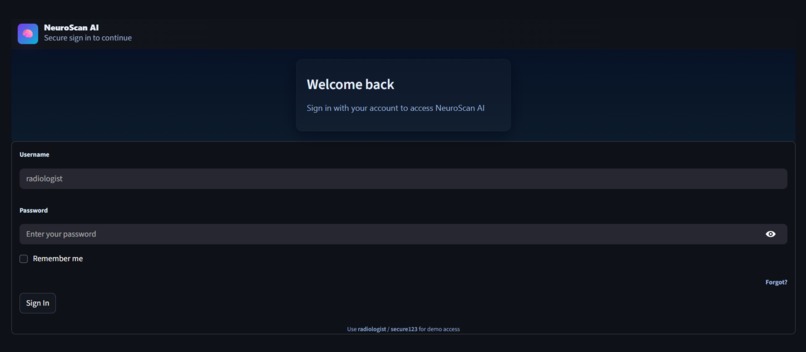
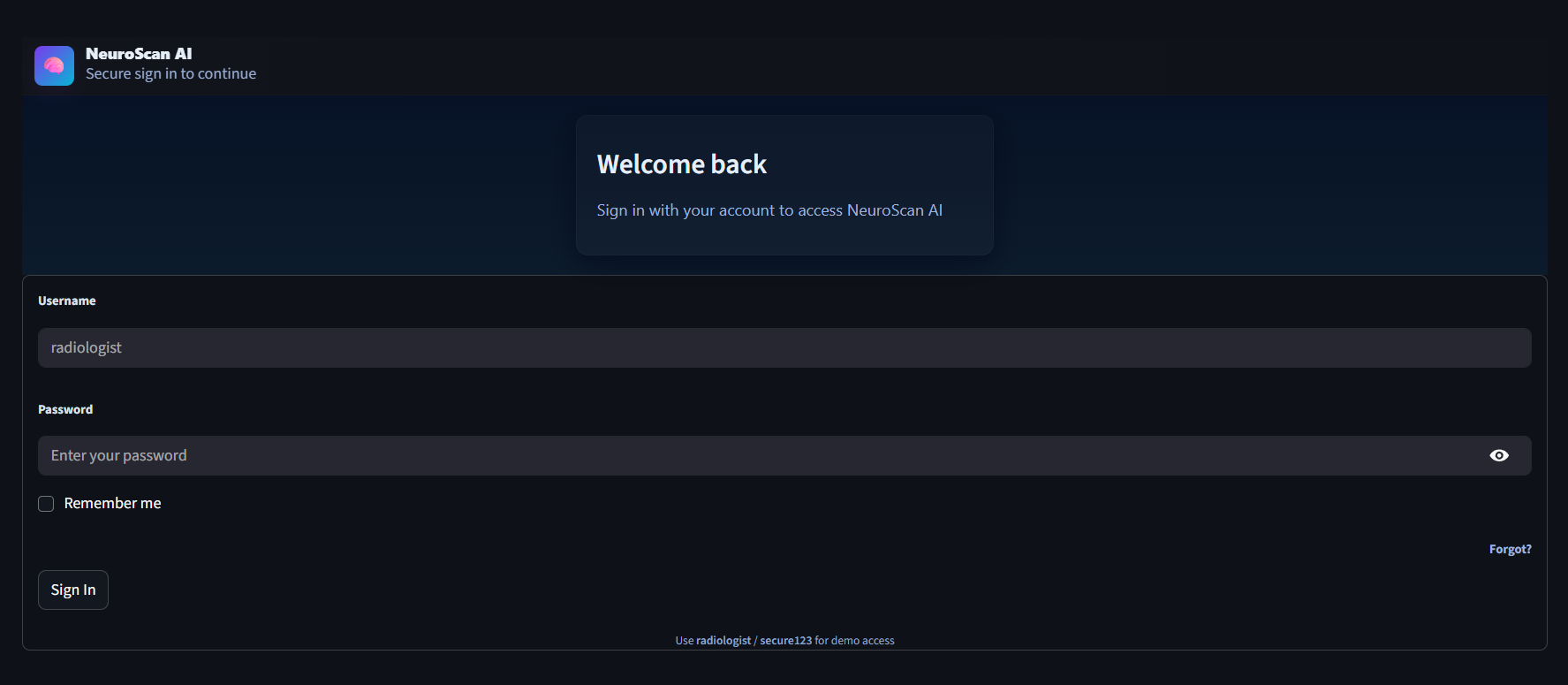
“Secure NeuroScan AI login screen for radiologists, with clean dark UI and demo credentials for controlled hackathon access.”
-
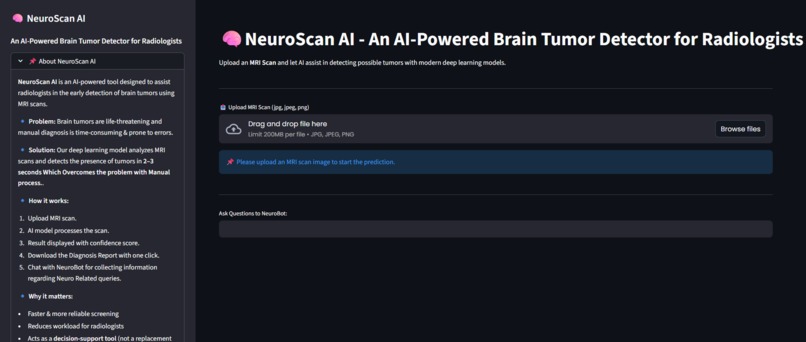
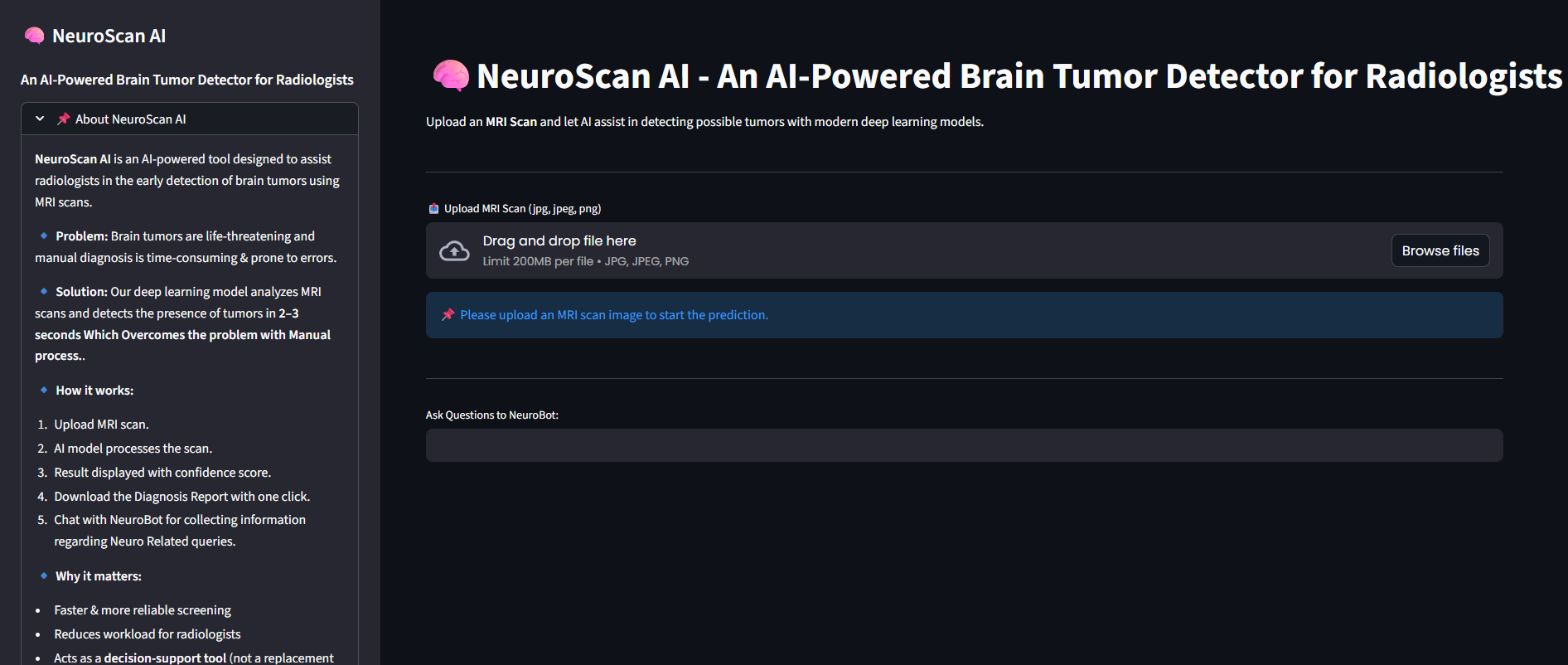
“NeuroScan AI main screen: upload MRI scans, view guidance, and interact with NeuroBot in one focused clinical workspace.”
-
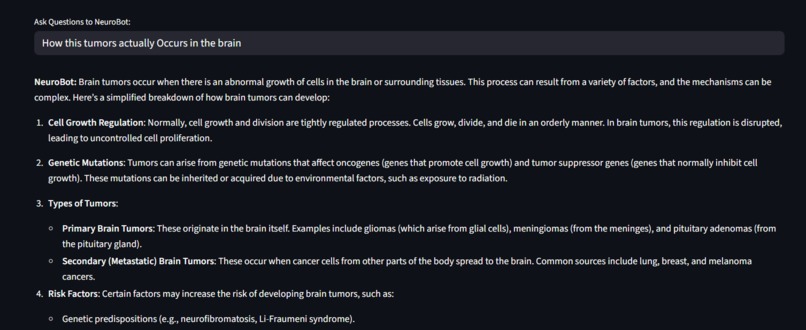
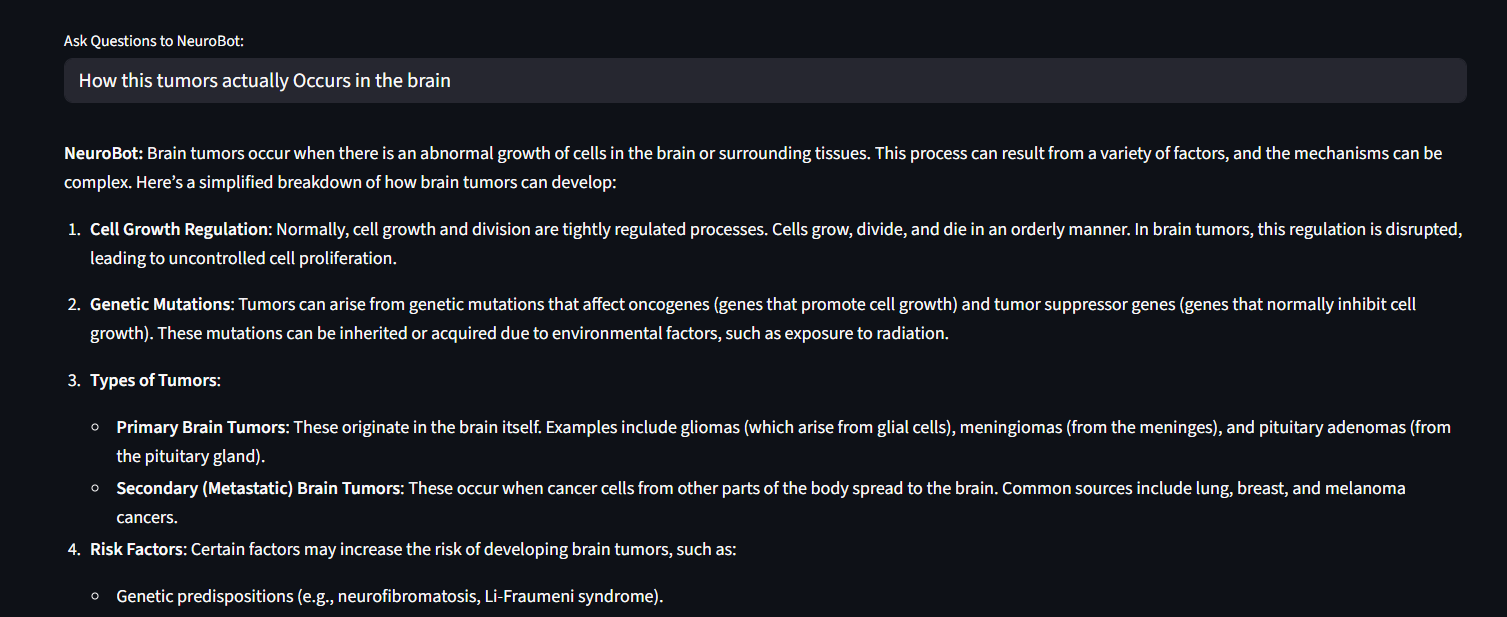
“NeuroBot Q&A panel where Radiologists ask neuroscience questions and get clear, structured explanations about brain tumors and the brain.”
-
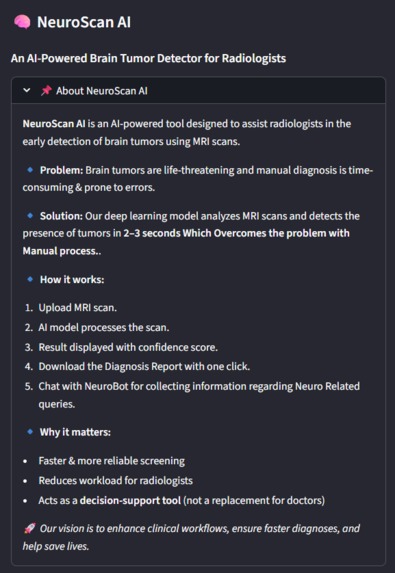
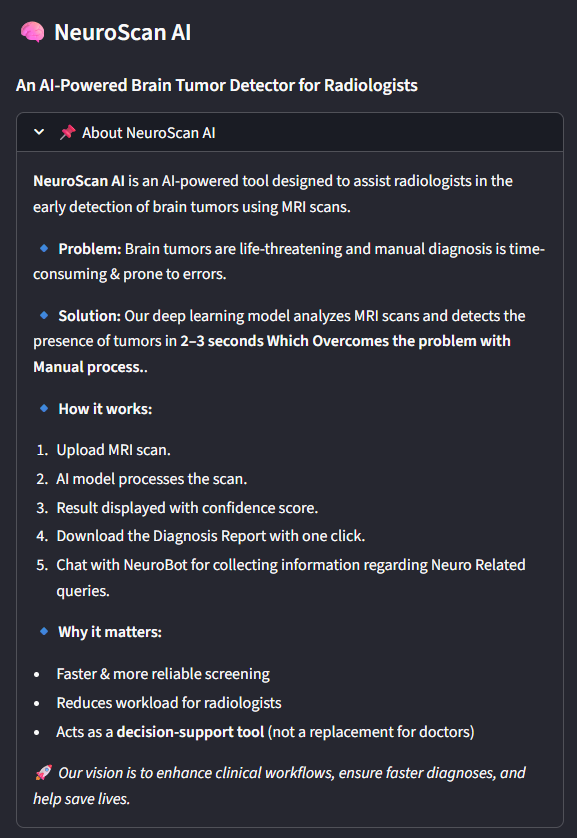
“NeuroScan AI sidebar explaining the problem, AI-driven solution, workflow steps, and clinical impact for radiologists.”
-
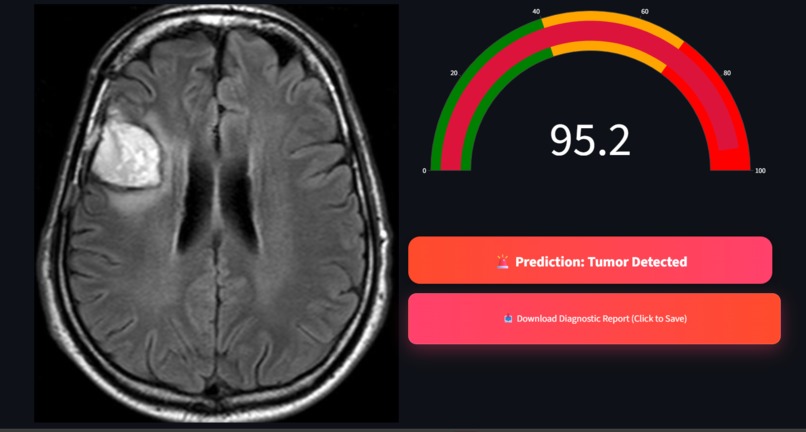
“Result view showing MRI image, tumor probability gauge, clear ‘Tumor Detected’ label, and one-click diagnostic report download.”
-
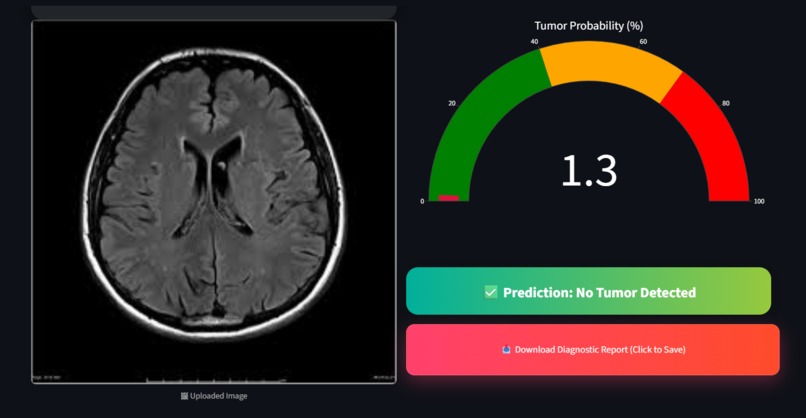
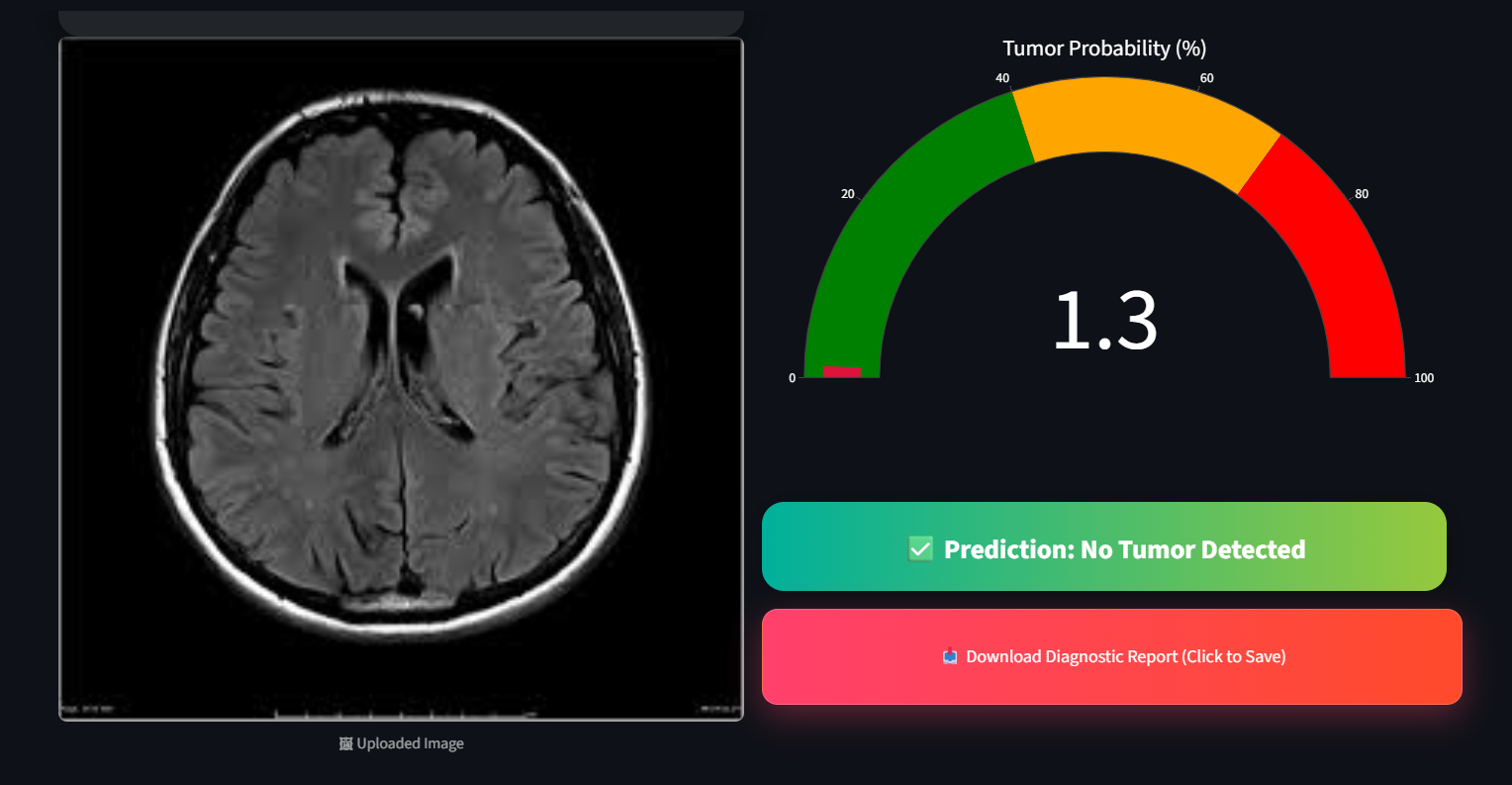
"Result view Showing that no tumor is detected"
-
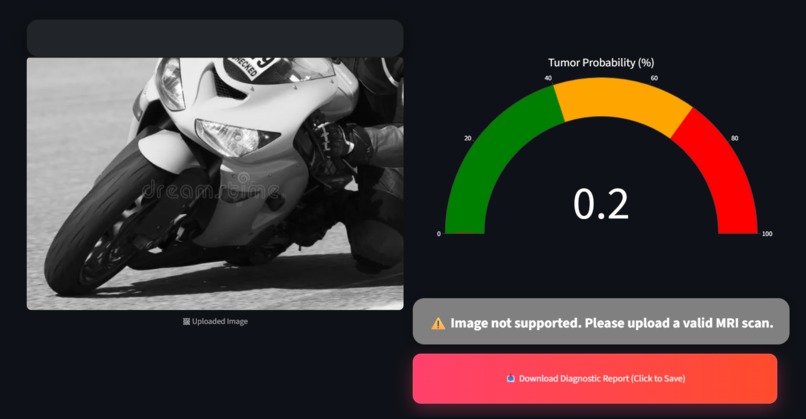
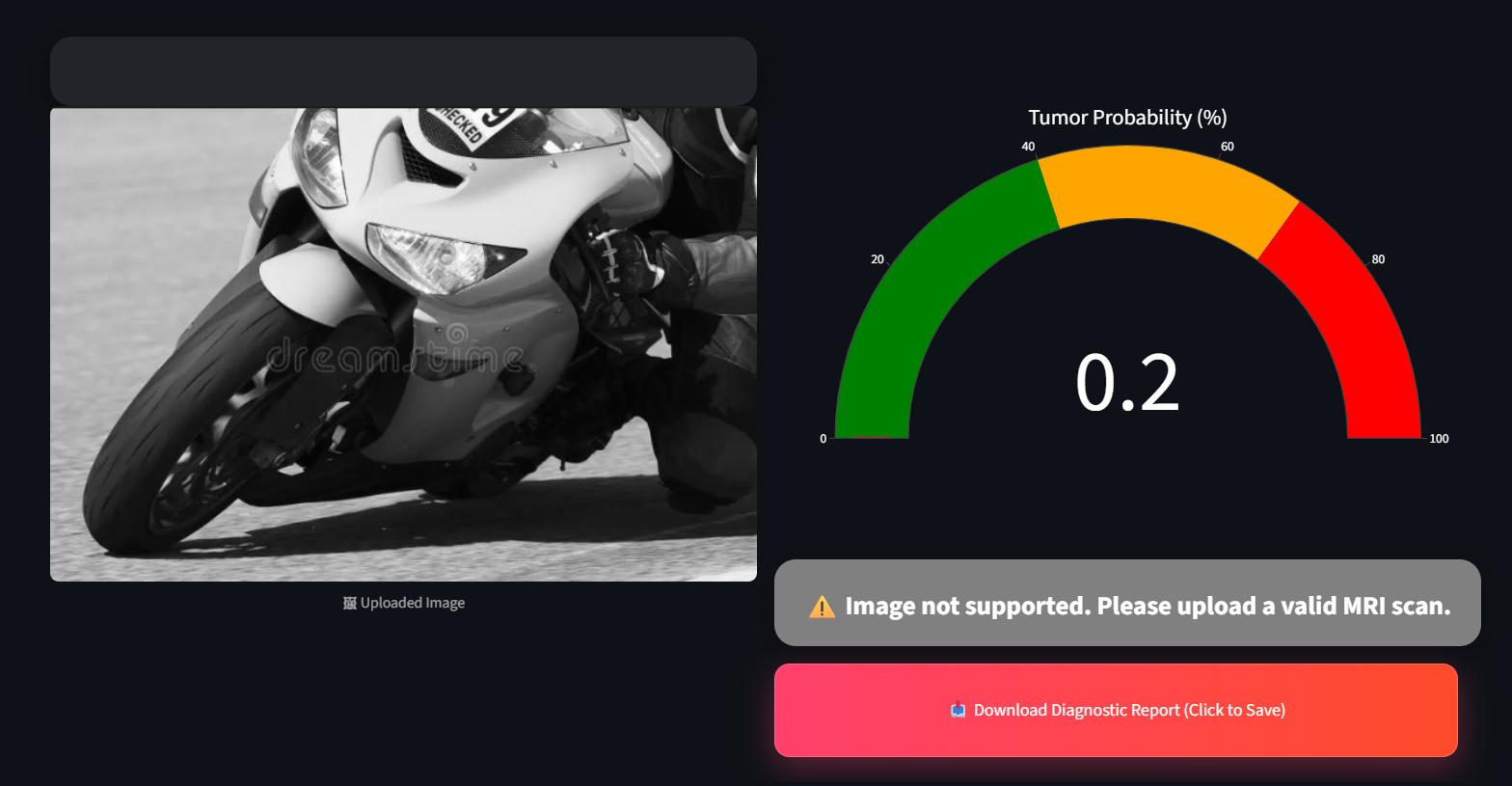
this messages whenever the uploaded image is different than MRI Scan

Inspiration:-
Brain tumors are life-threatening and often difficult to detect early. We were inspired to use AI to assist radiologists by providing faster, more accurate brain tumor detection from MRI scans, aiming to reduce diagnostic errors and improve patient outcomes.
What it does:-
NeuroScan AI uses deep learning to analyze MRI brain scans and automatically detect the presence of tumors within seconds. It provides radiologists with a confident, visual tumor probability, supporting faster diagnosis and decision-making. After detecting the Tumor it allows Radiologists to download the Diagnosis report
How we built it:-
We collected and preprocessed a dataset of labeled MRI images, then trained a convolutional neural network (CNN) model to differentiate tumor presence. The app was developed with Streamlit for an interactive, user-friendly interface. We integrated a chatbot for neuroscience-related questions to complement the tool.
Challenges we ran into:-
Handling limited labeled data and ensuring the model’s accuracy across diverse MRI images required careful preprocessing and data augmentation. Balancing model complexity while keeping inference fast was also challenging. Integrating smooth user experience and deploying the AI reliably in the app demanded iterative debugging.
Accomplishments that we're proud of:-
We built an AI model capable of detecting tumors with strong accuracy in just 2–3 seconds per scan. The NeuroScan AI app was recognized with 2nd prize in our college competition for its practical impact and clear, intuitive design. We also successfully integrated an AI-powered neuroscience chatbot for added user support.
What we learned:-
We deepened our understanding of convolutional neural networks, medical image preprocessing, and the challenges of real-world AI deployment. We gained experience building end-to-end AI applications, combining backend ML models with user interfaces, and addressing UX considerations for healthcare tools.
What's next for NeuroScan AI:-
We plan to expand the dataset with more diverse MRI images and unsupported scans to improve model robustness. Adding tumor localization and segmentation features will allow more precise diagnosis. We also want to explore clinical trials and partner with hospitals to validate and deploy NeuroScan AI in real medical settings.
Accuracy:-
Accuracy of NeuroScan AI is 90.10

Log in or sign up for Devpost to join the conversation.