-
-
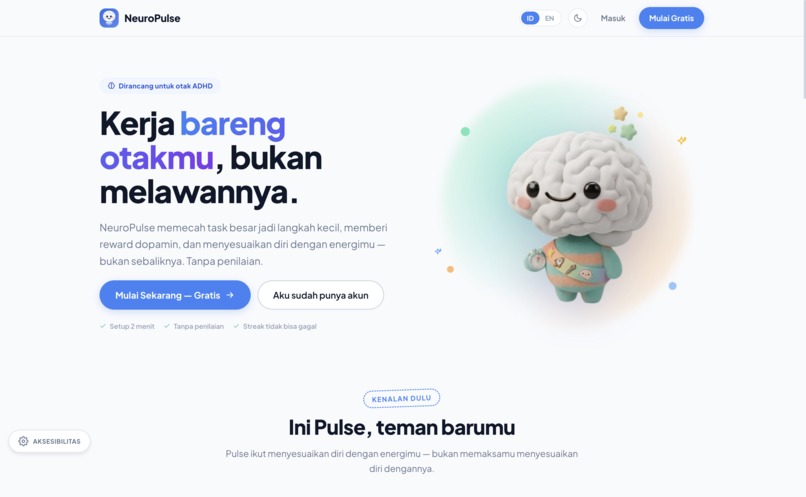
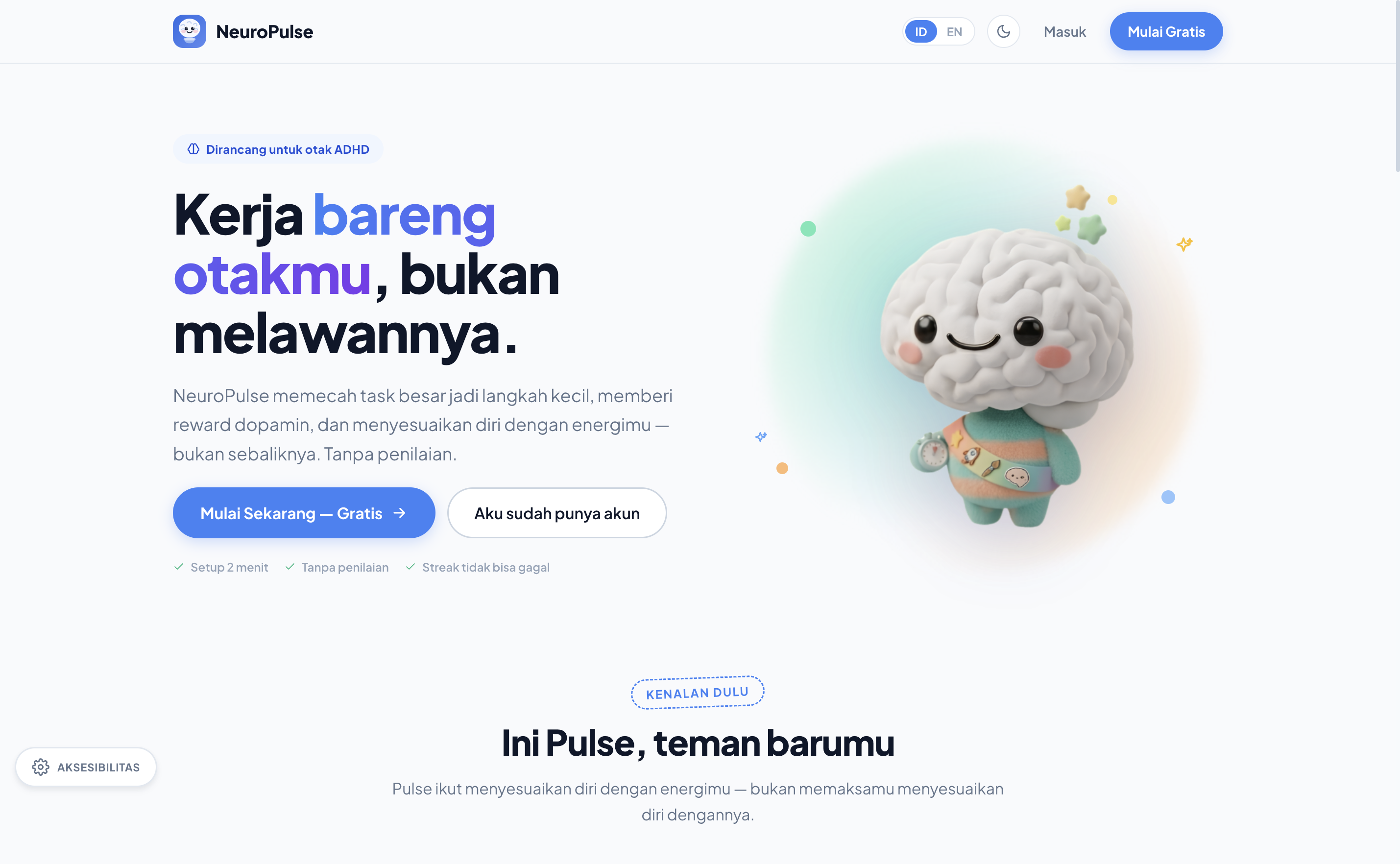
landing page
-
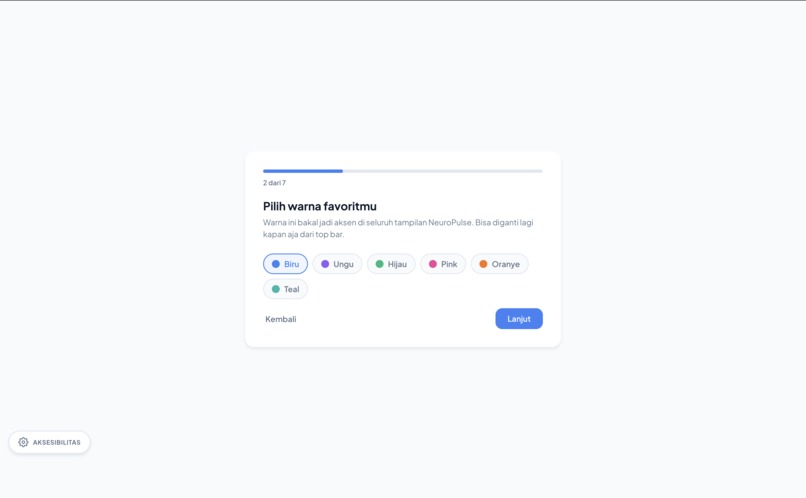
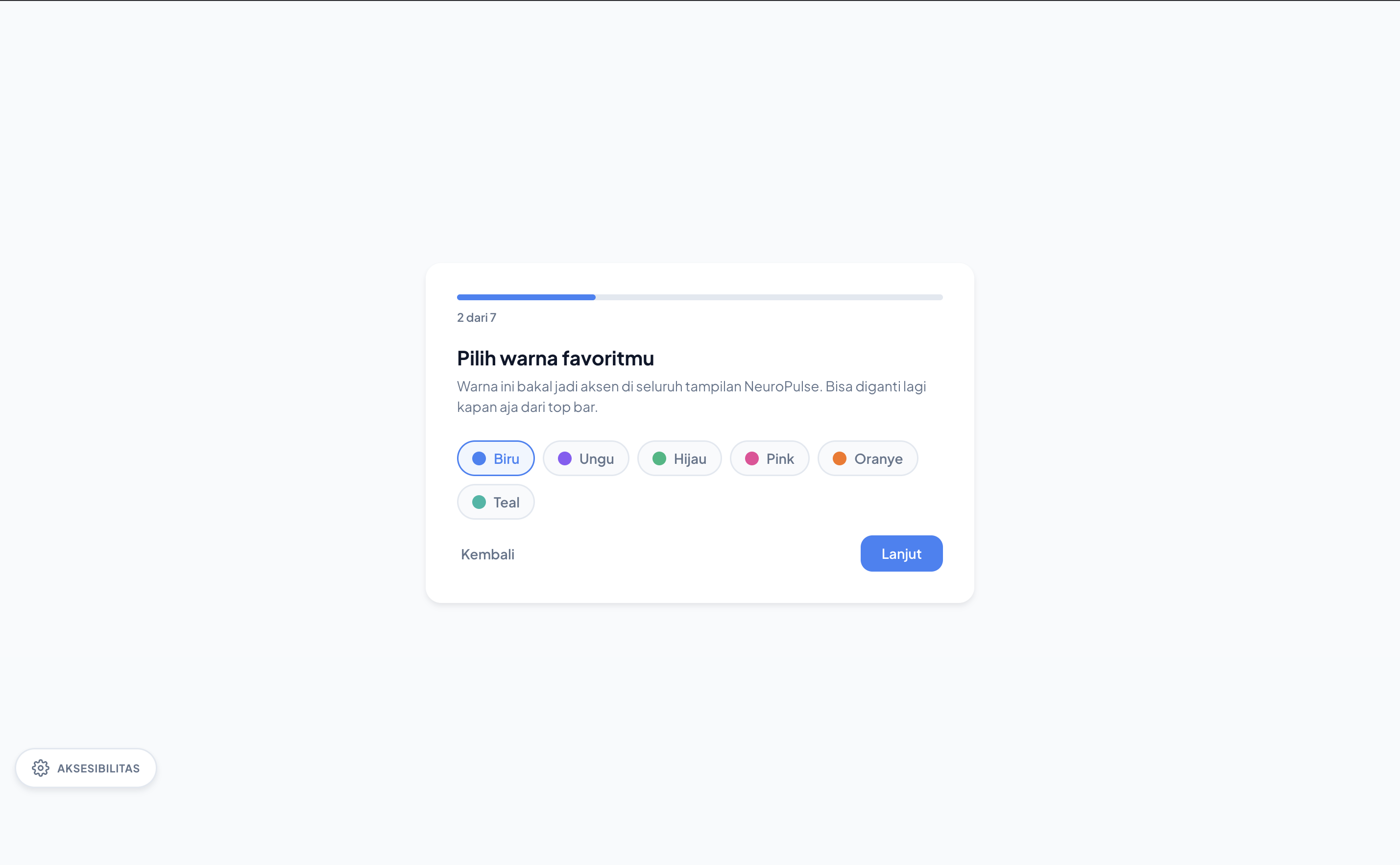
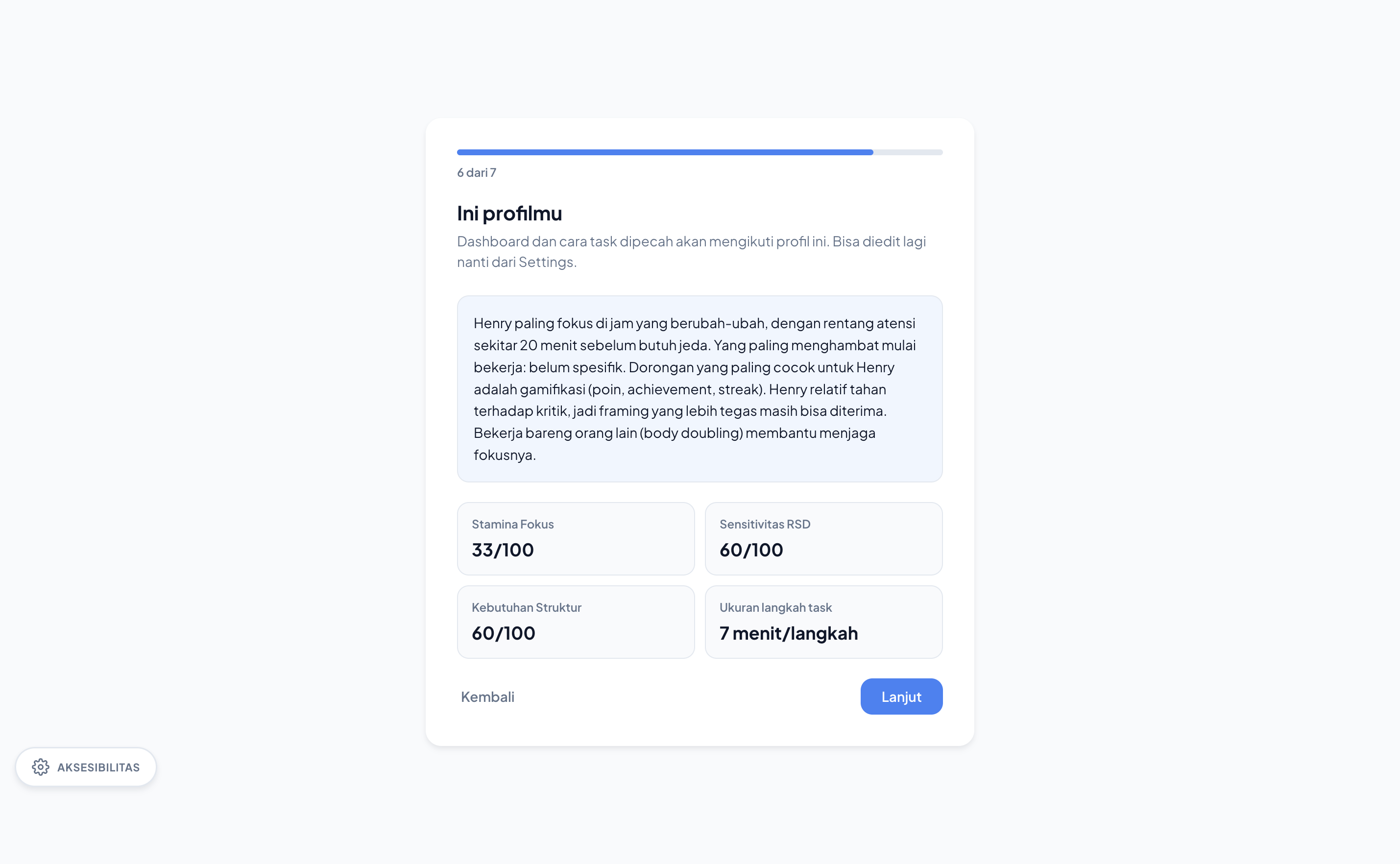
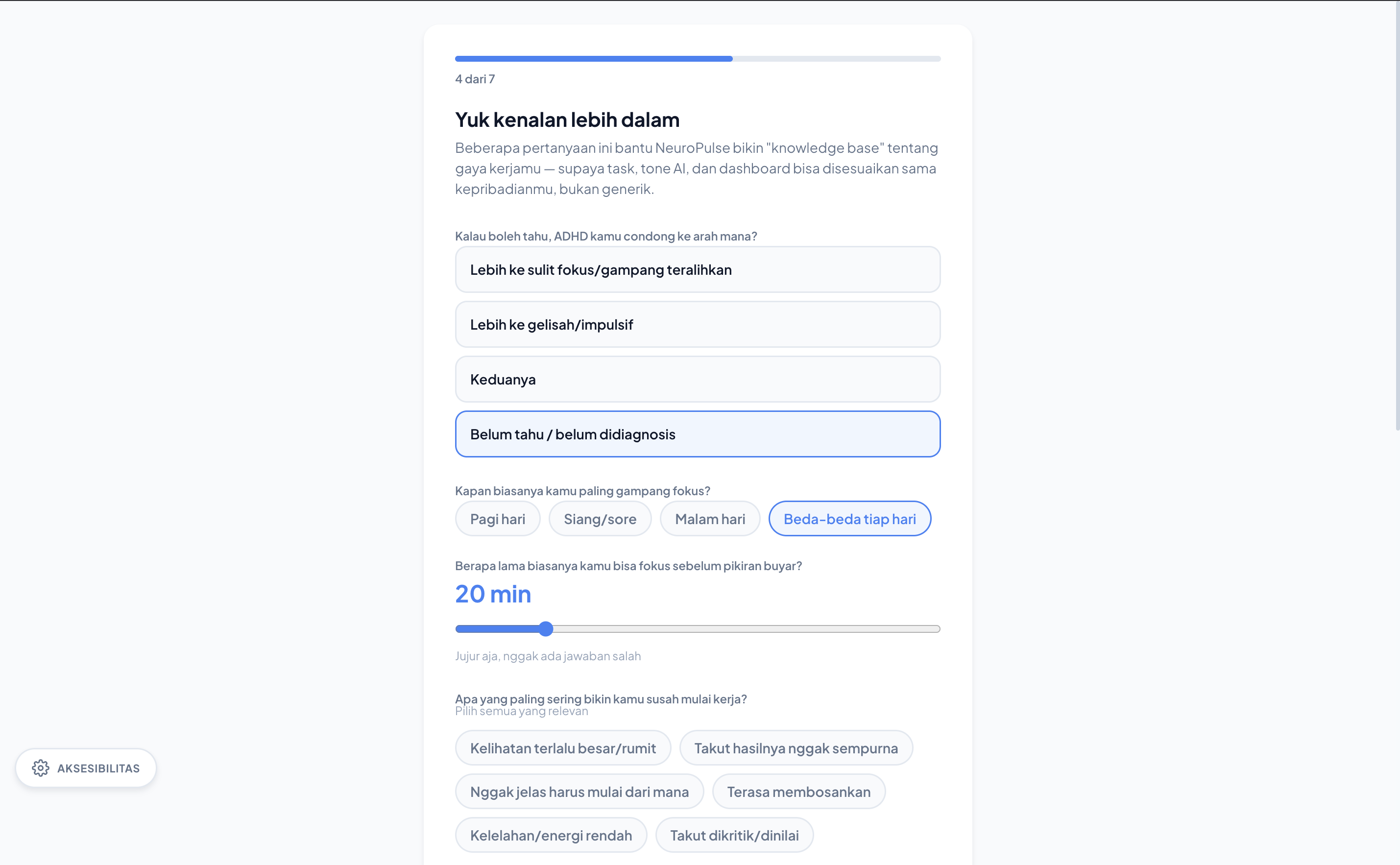
onboarding 1
-
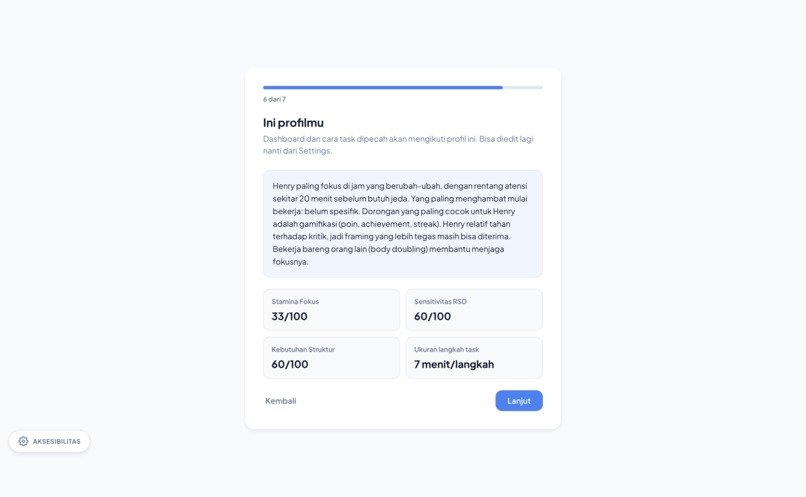
onboarding 2
-
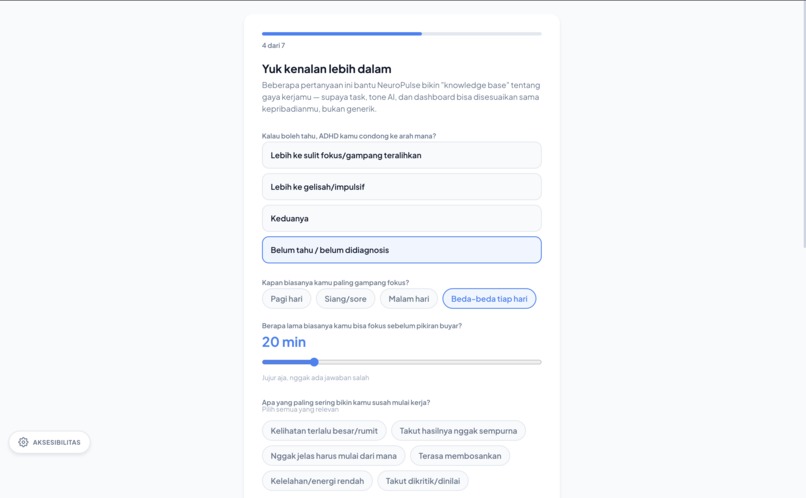
onboarding 3
-
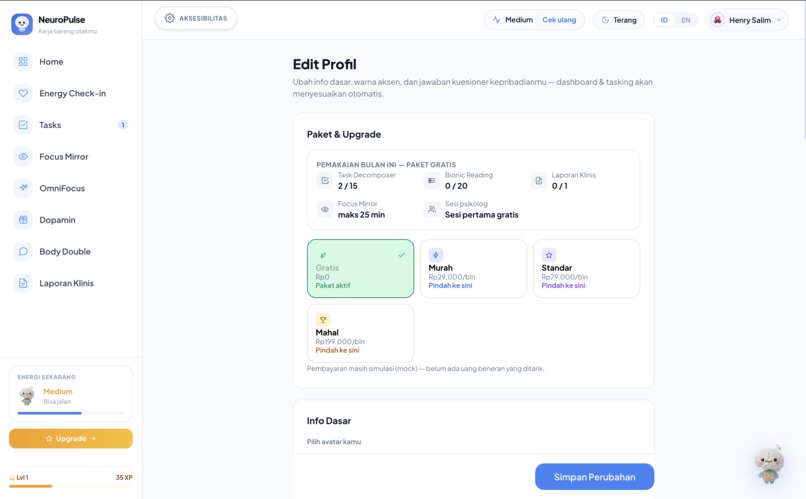
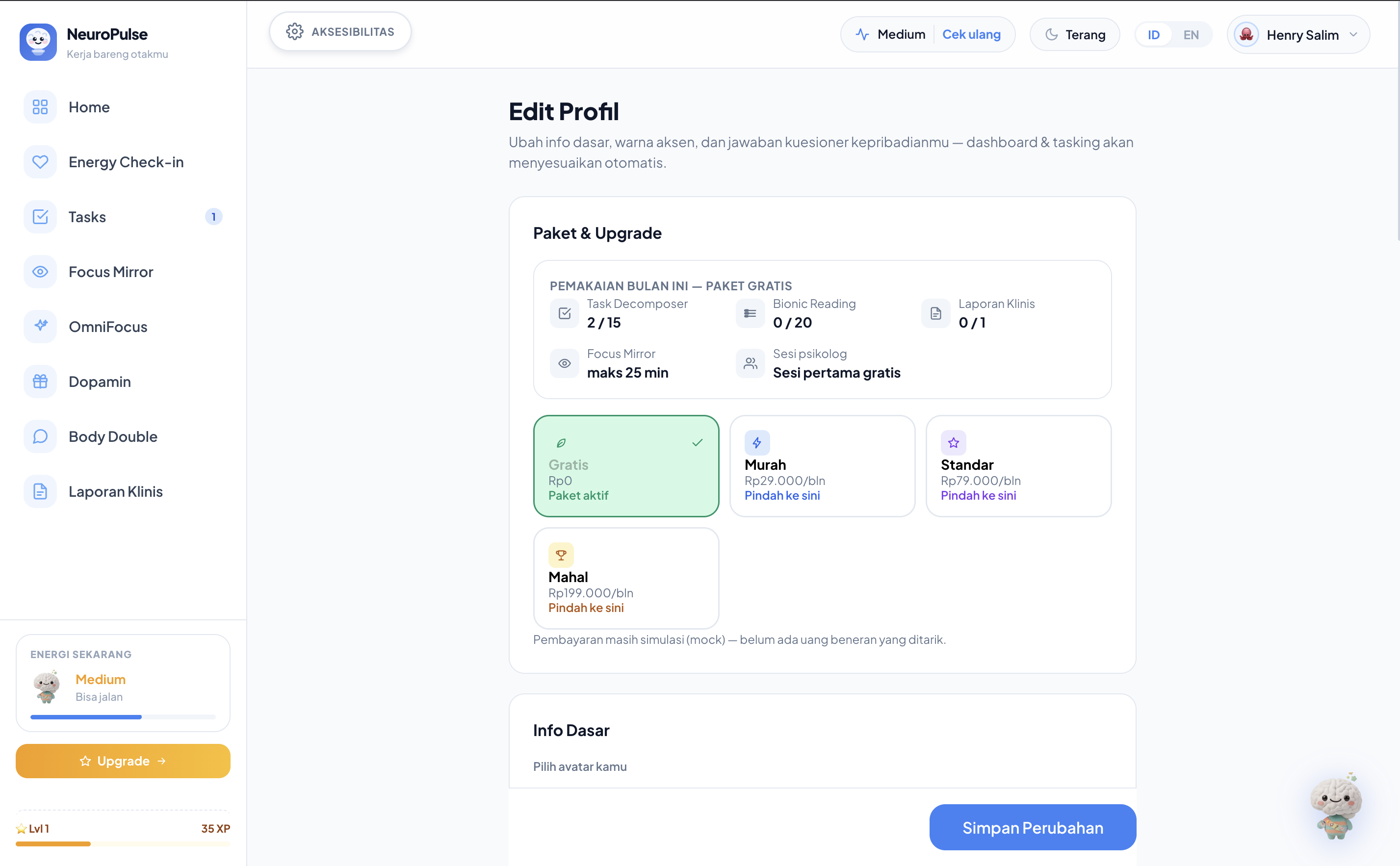
edit profile
-
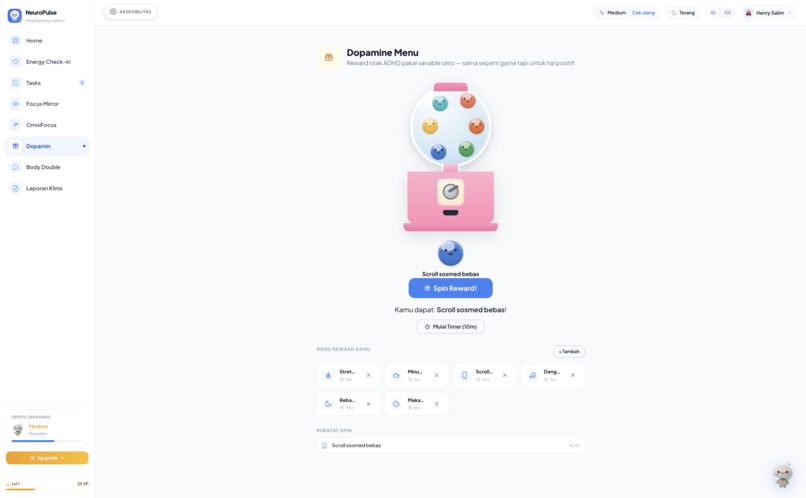
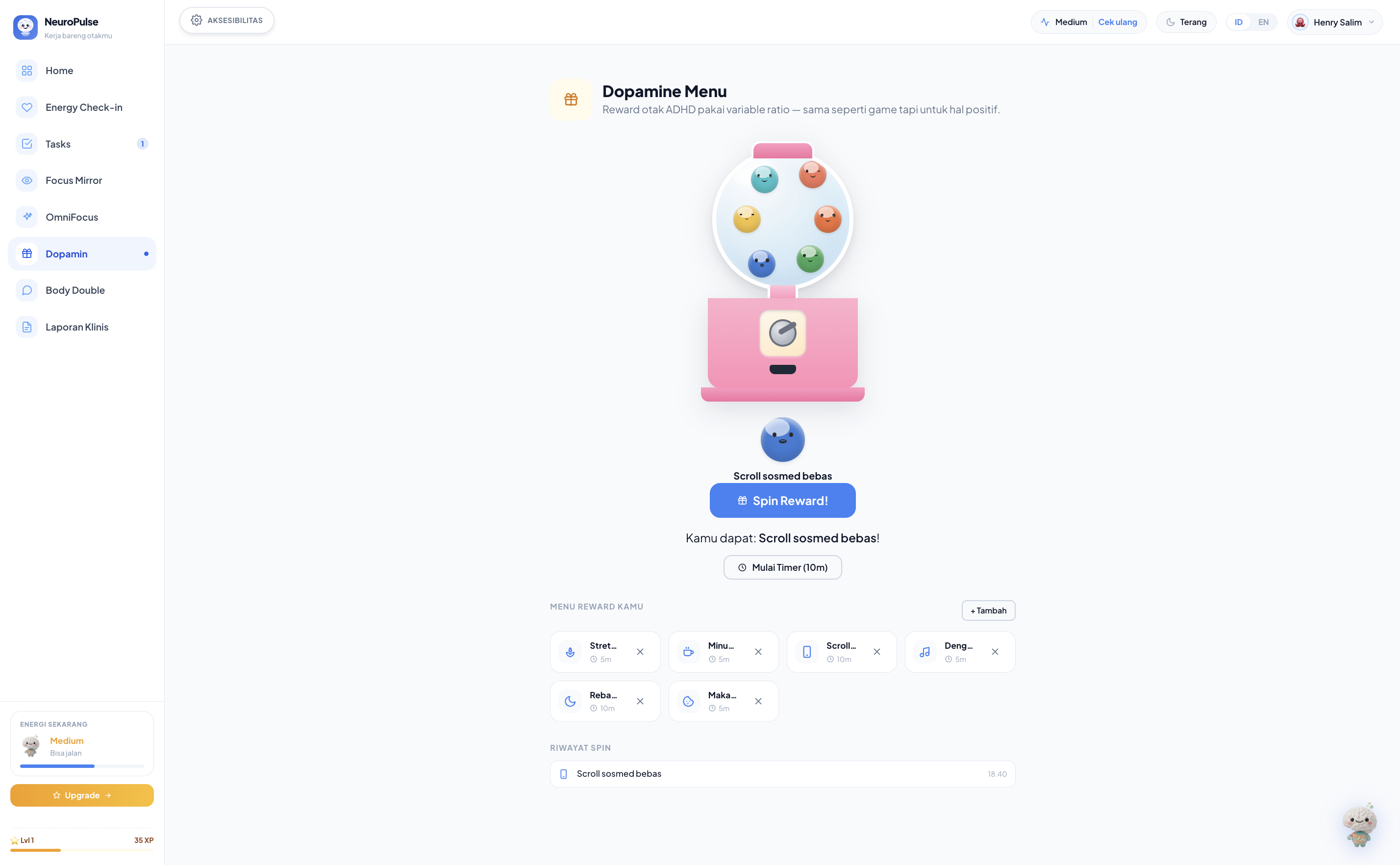
dopamine
-
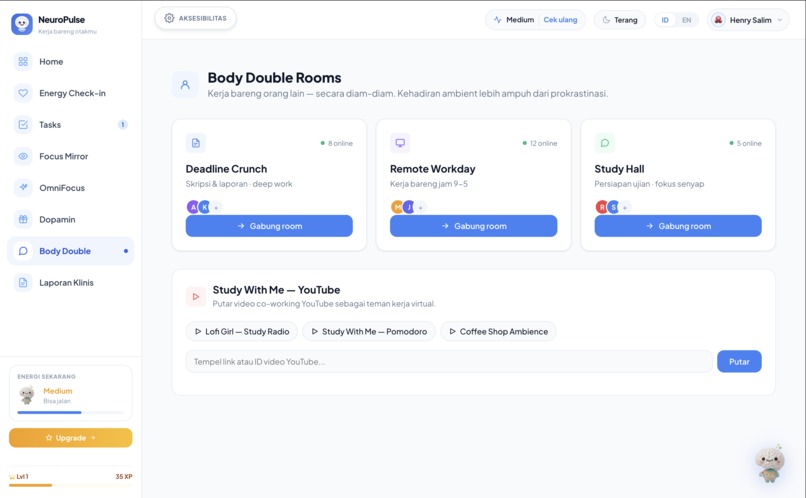
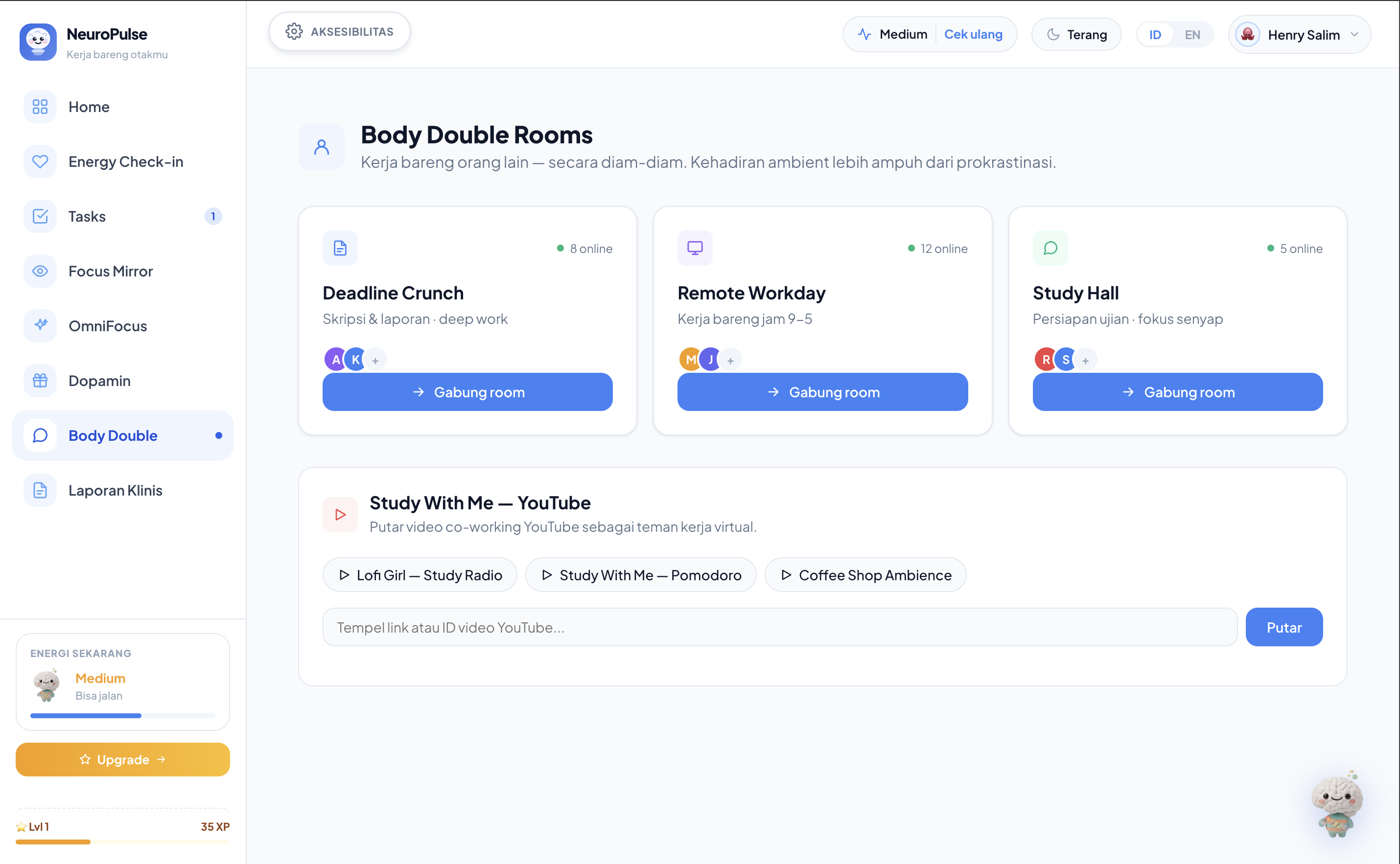
body double
-
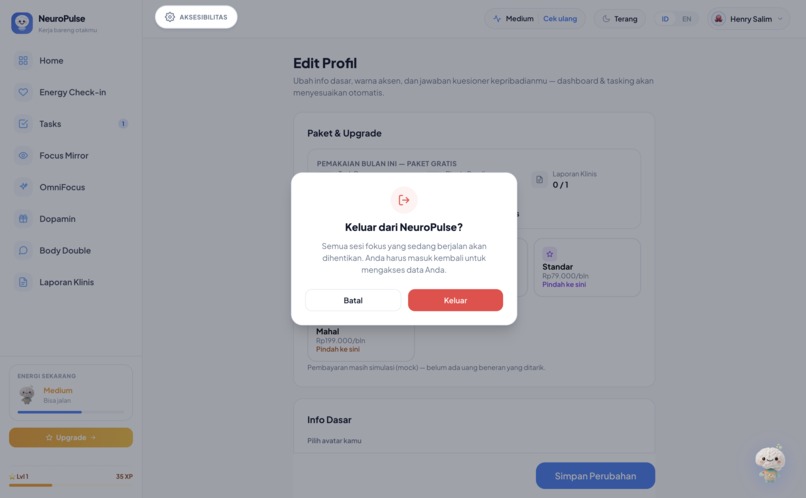
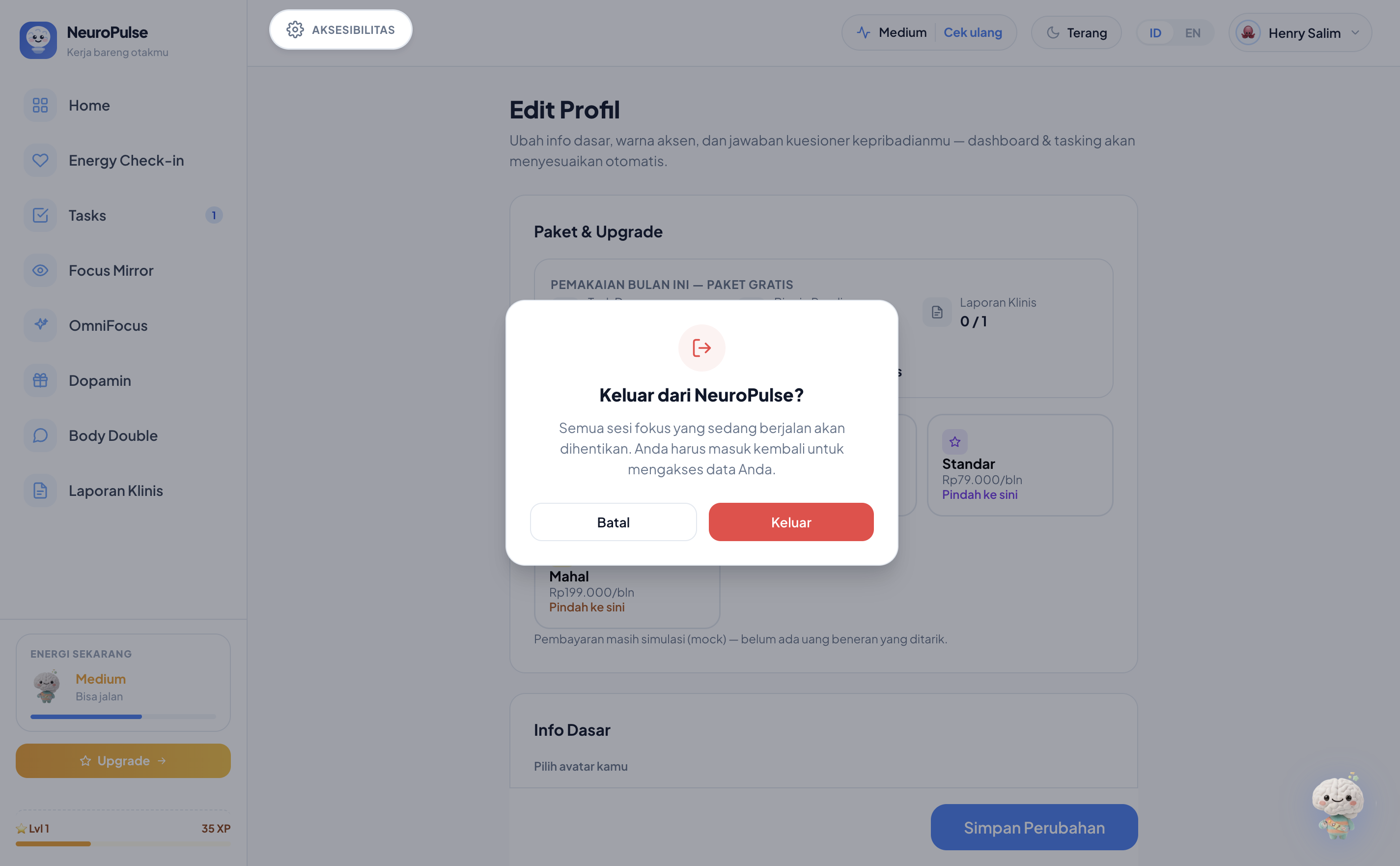
logout confirmation
-
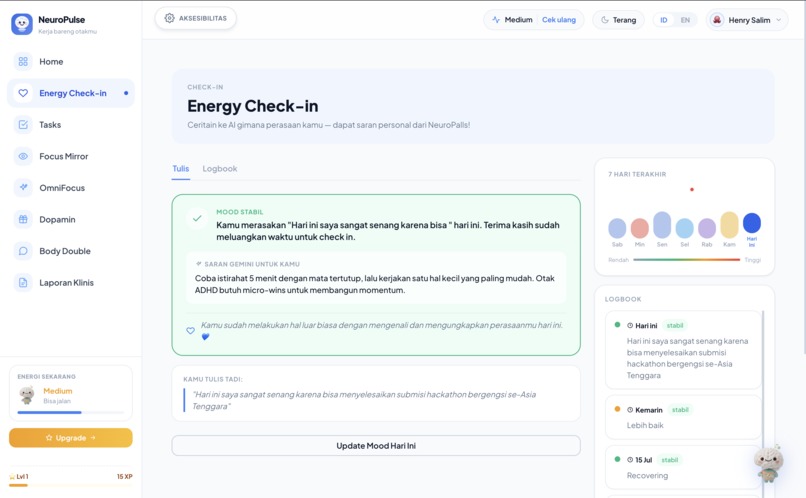
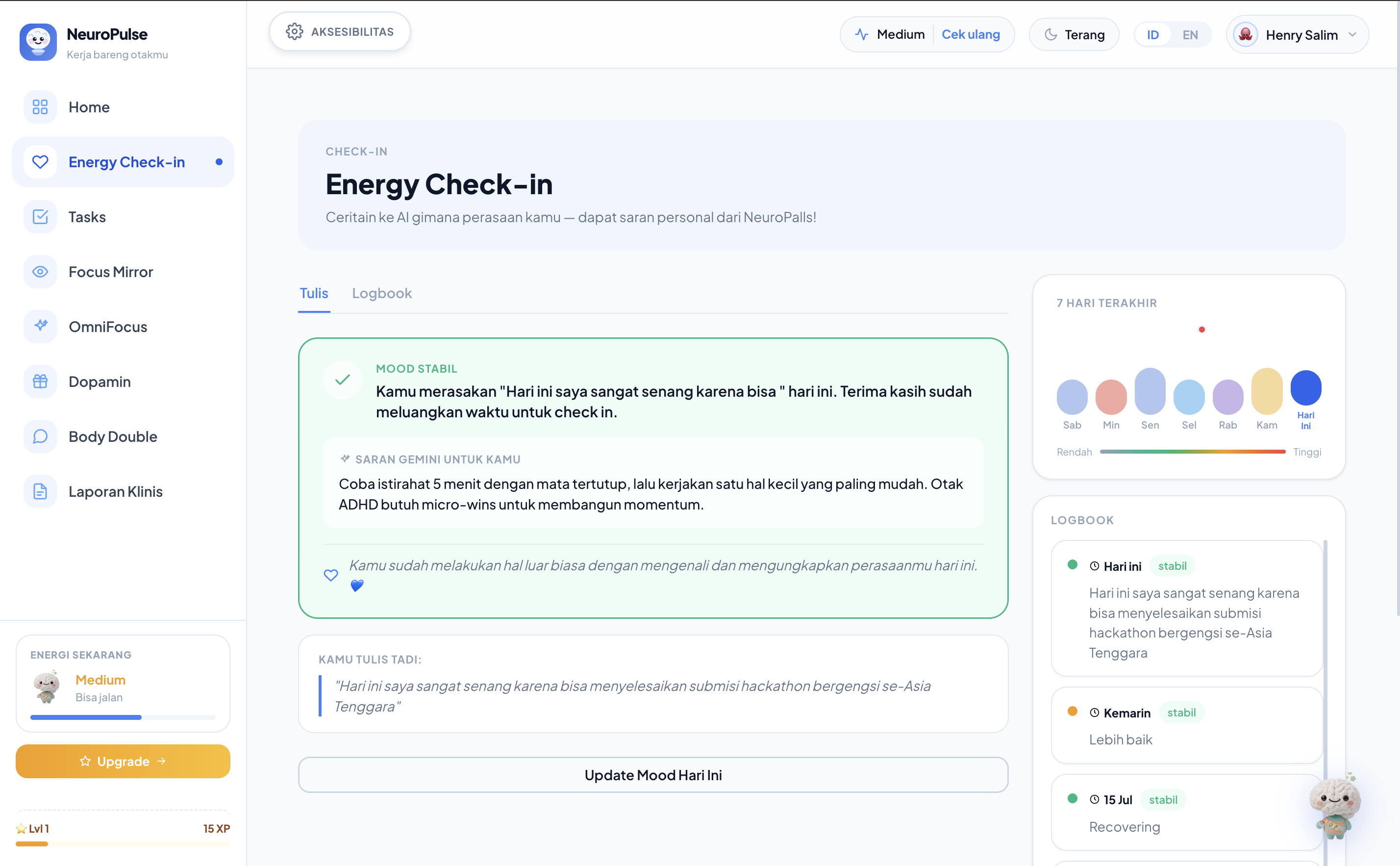
energy check-in
-
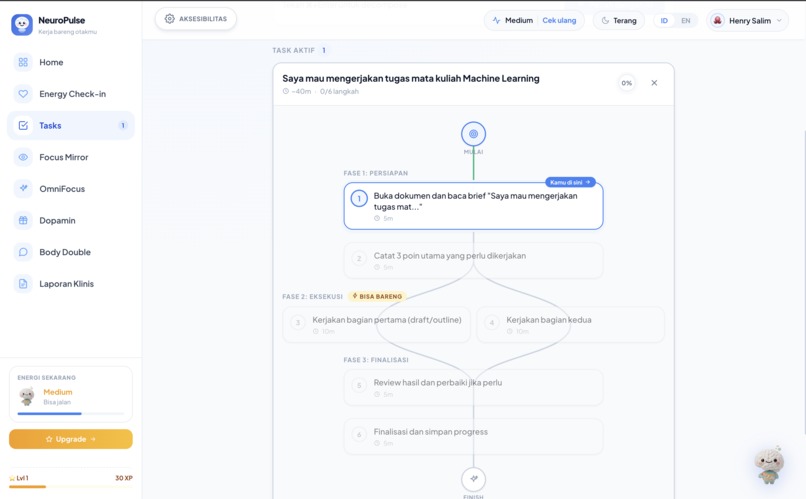
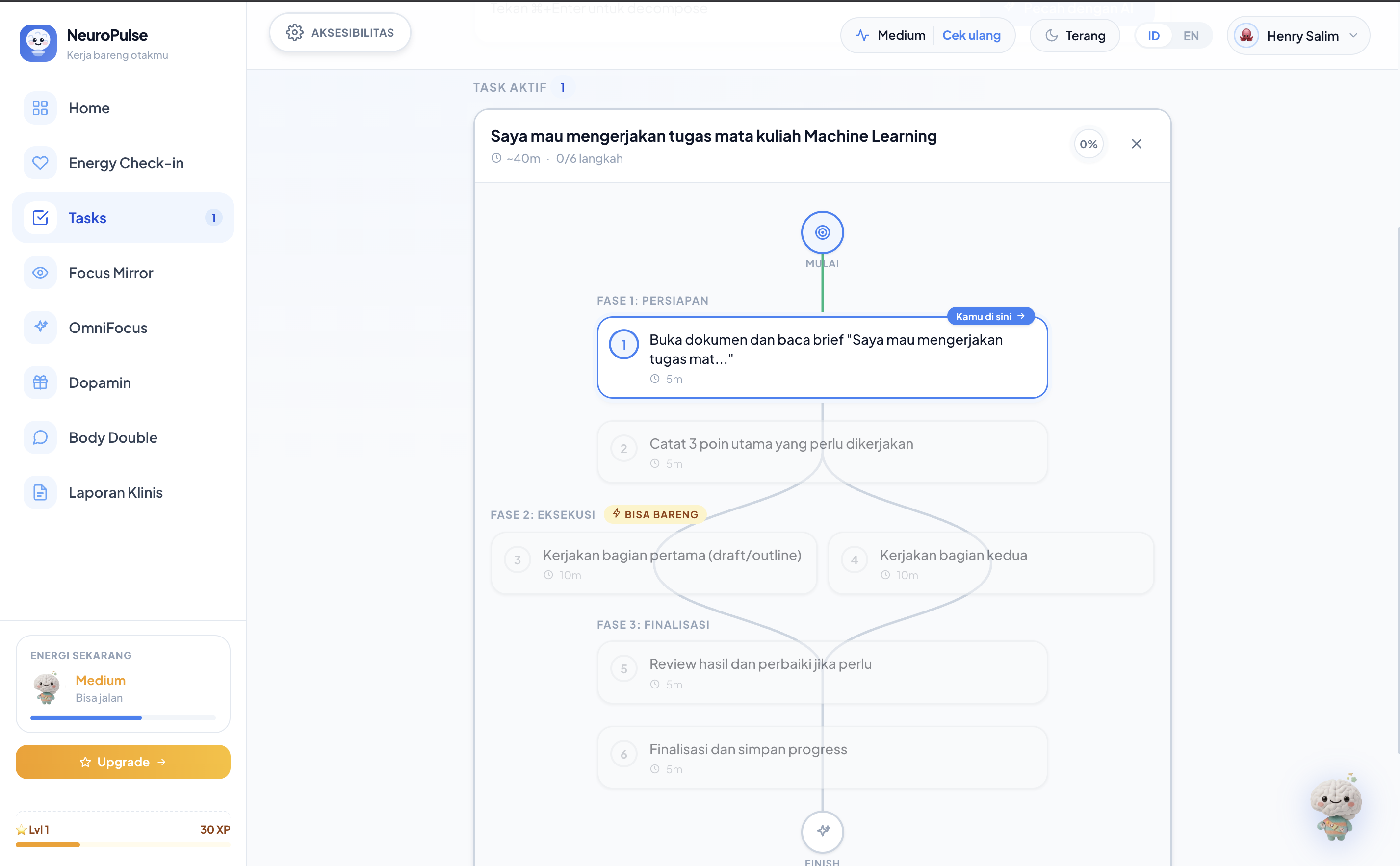
task decomposer
-
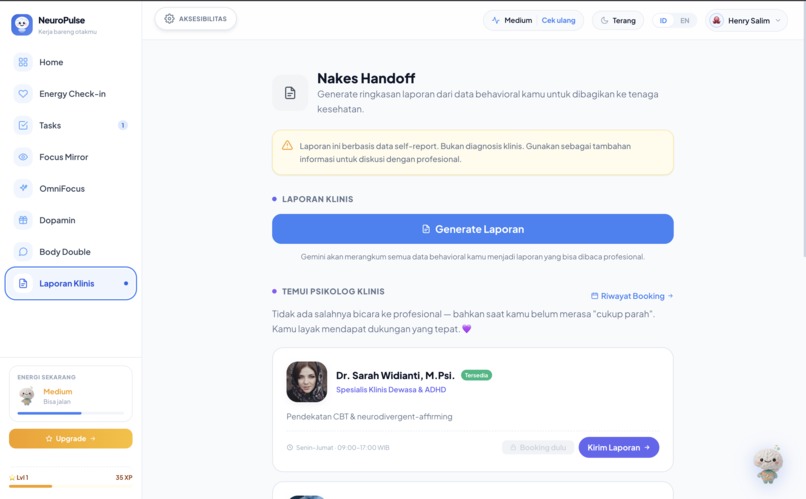
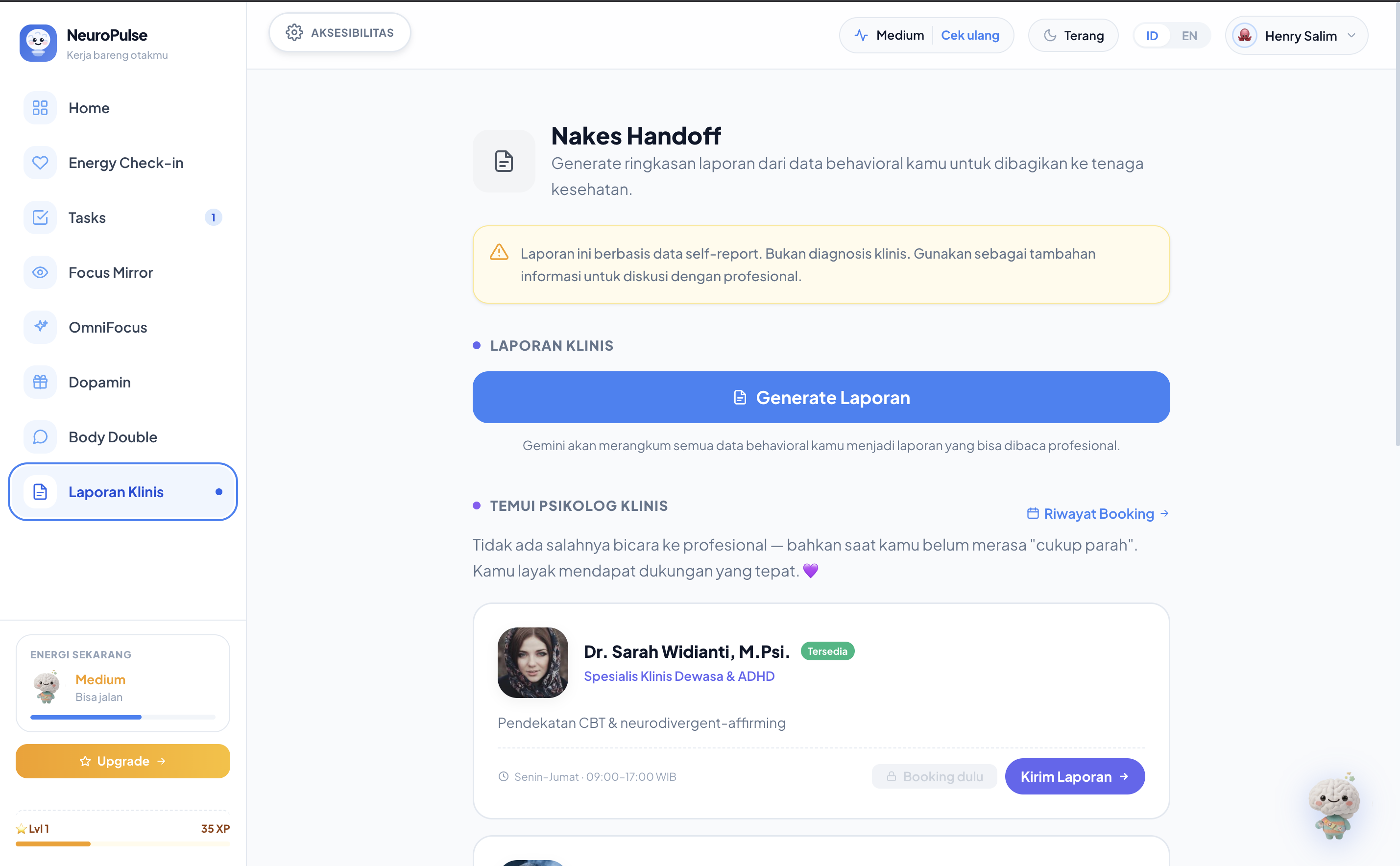
clinical report
-
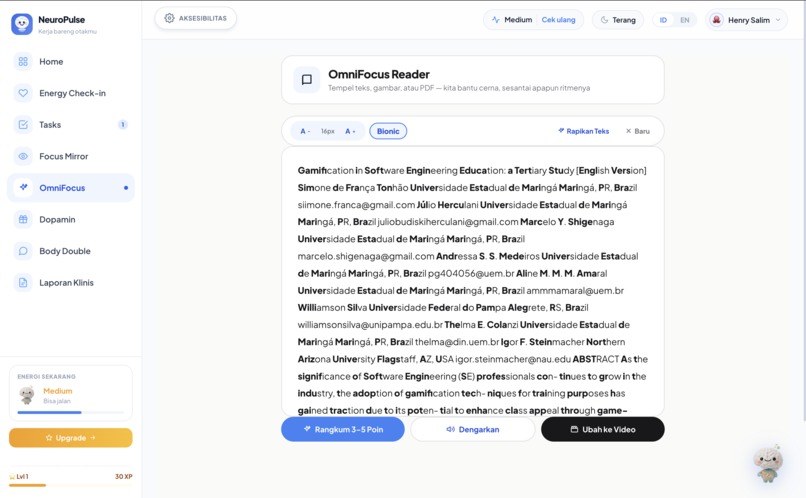
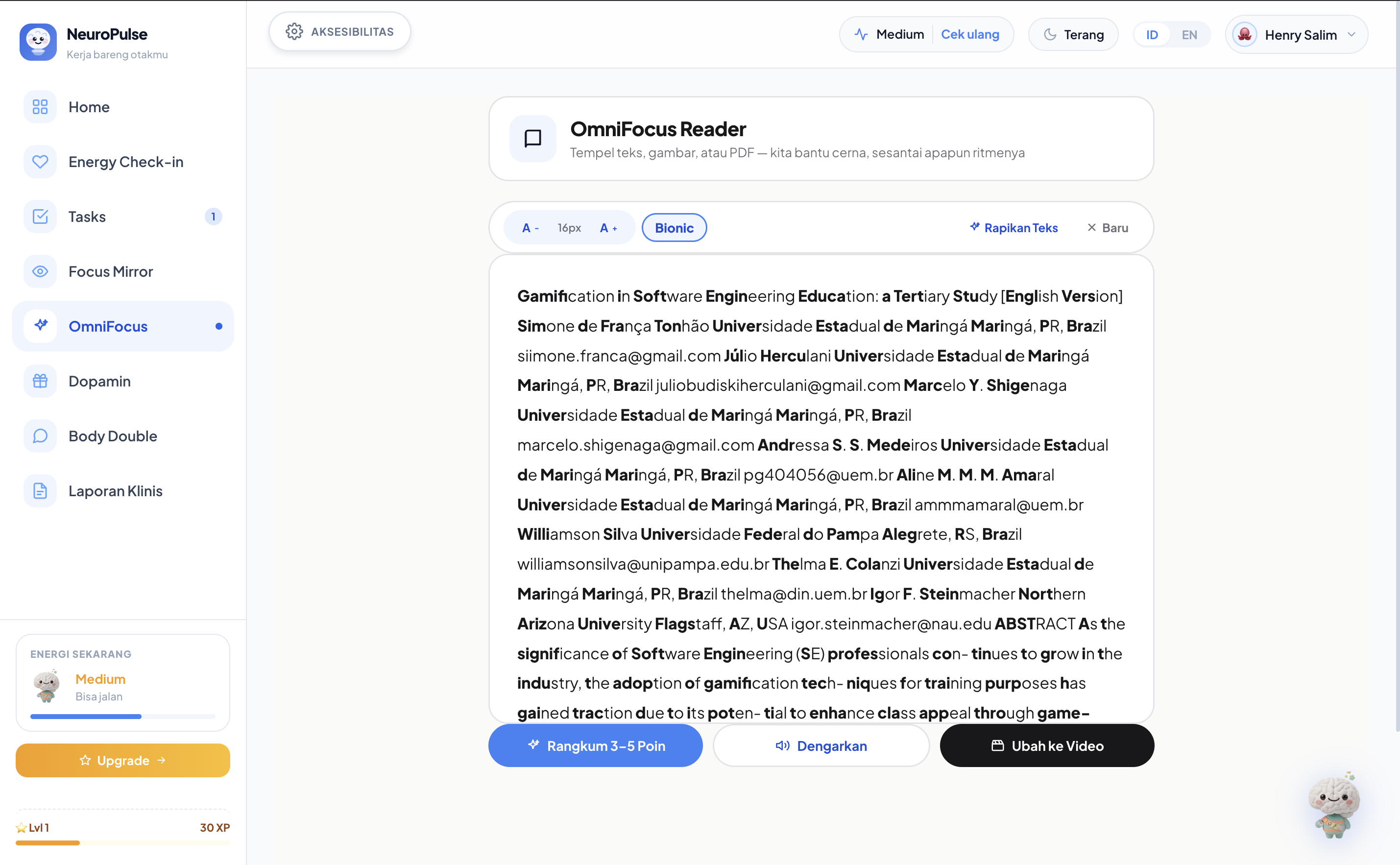
OmniFocus
-
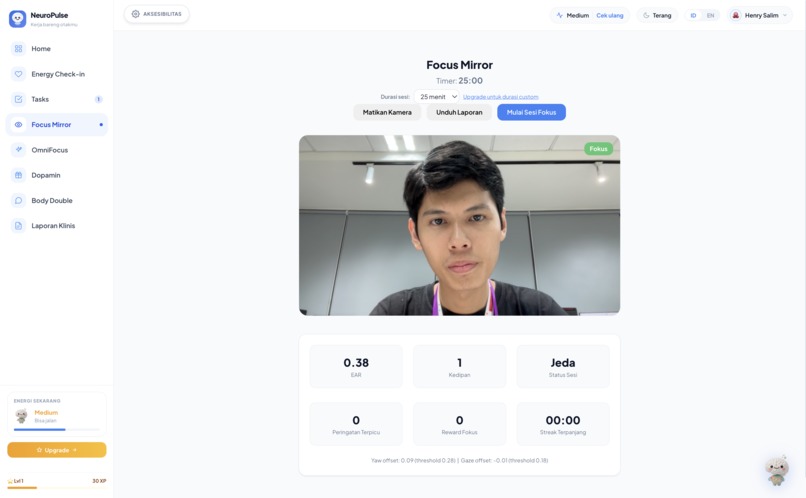
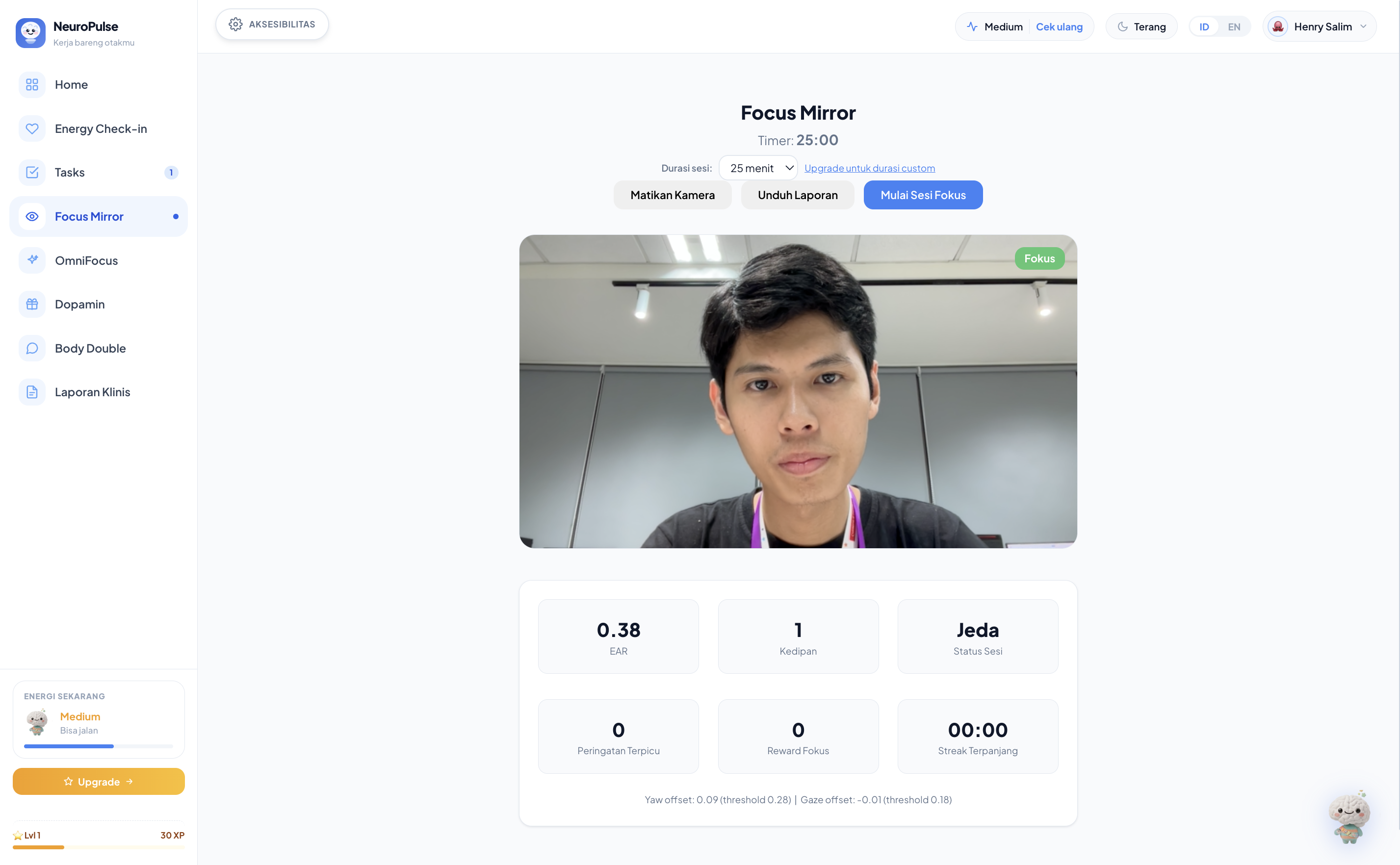
Focus Mirror (focused)
-
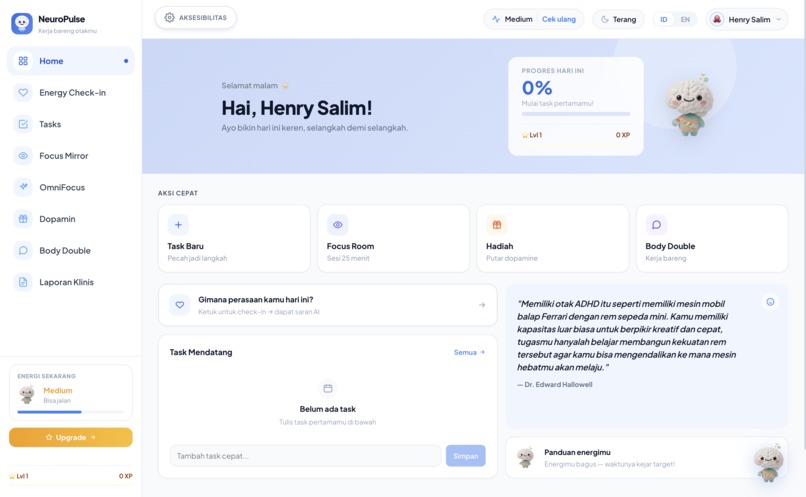
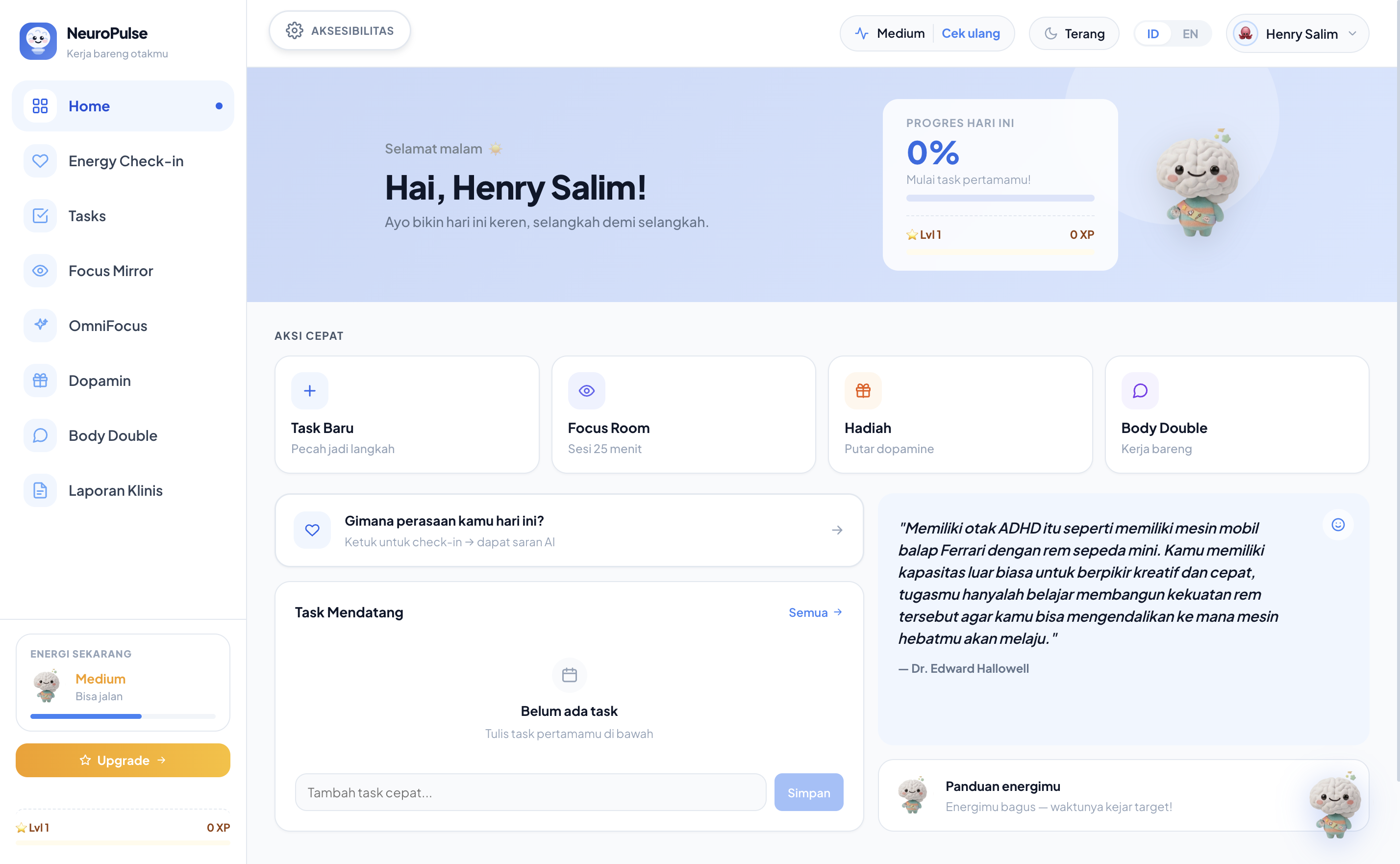
Dashboard
-
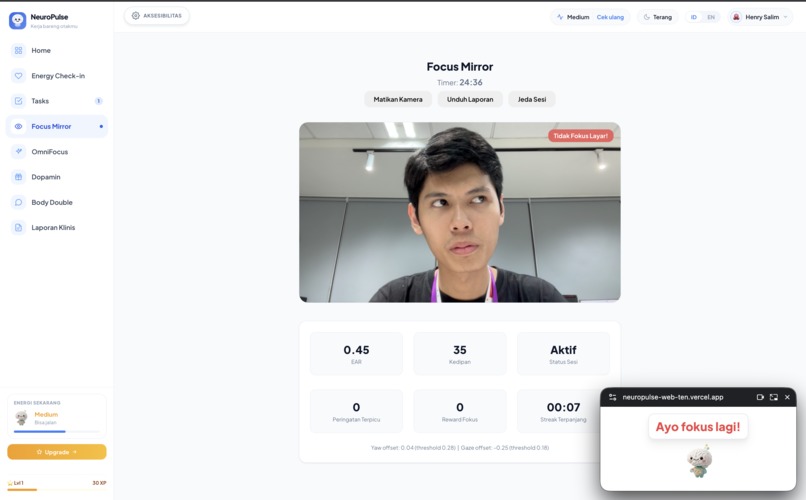
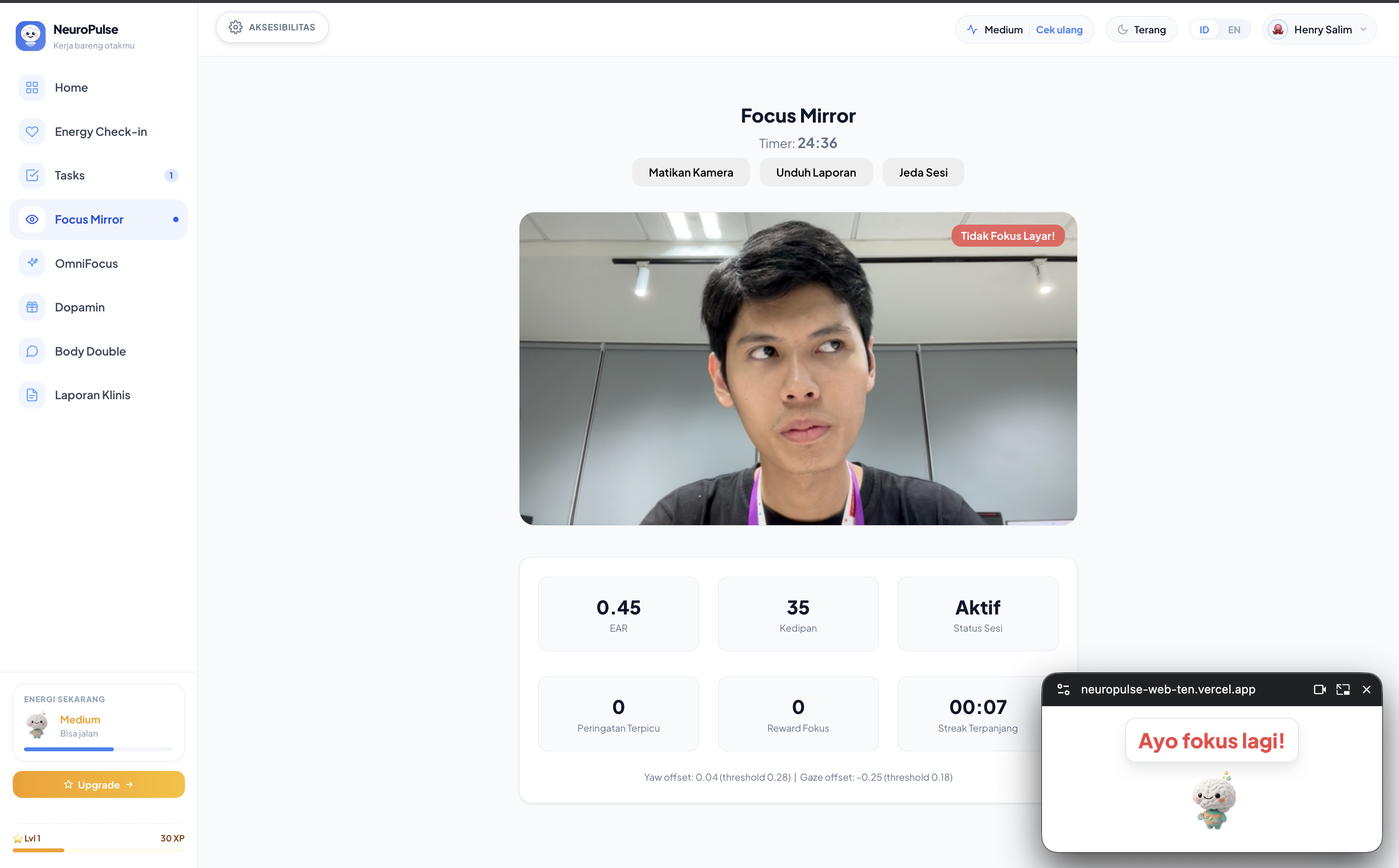
Focus Mirror (not focused)
NeuroPulse: Productive ADHD Companion Web
Inspiration
For people with ADHD, the hardest part of a task is rarely the task itself, it's starting it. A single email can sit untouched for days because the brain sees one giant, shapeless wall instead of a first step, and every failed start quietly chips away at self-worth. Mainstream productivity apps make this worse: they're built for neurotypical brains, punishing missed streaks and presenting long, guilt-inducing to-do lists. We asked ourselves, what if a tool stopped demanding more discipline and instead worked with how an ADHD brain already works: craving novelty, momentum, and small wins? That question became NeuroPulse.
What it does
NeuroPulse is a bilingual (ID/EN) web companion for people with ADHD that covers the full loop from "I can't start" to "I did it":
- AI Task Decomposition type or speak an overwhelming task, and AI breaks it into 4–6 micro-tasks of 2–10 minutes each, visualized as a game-style quest path.
- Interest Reframing micro-tasks are retitled using the user's own interests: a budget report becomes an anime arc, a thesis chapter becomes a boss fight.
- Focus Mirror camera-based, real-time focus tracking (MediaPipe face landmarks) with a live focus score — all processed on-device.
- Body Double a virtual co-working room with study-with-me videos, ambient audio, and a pomodoro timer.
- OmniFocus Reader ADHD-friendly reading mode: Bionic Reading, PDF extraction, image analysis, messy-text cleanup, summaries, and text-to-speech.
- Energy Check-in & Pulse daily mood/energy logging with an empathetic AI summary and crisis-level detection, plus a context-aware companion chatbot available on every page.
- Clinical Report & Psychologist Marketplace behavioral summaries that can be handed to a professional, and a directory of ADHD-specialized psychologists with session booking.
- Gamification & Dopamine Machine XP, 8 levels, streaks, and a gachapon machine filled with rewards the user defines themselves.
How we built it
NeuroPulse is a Turborepo monorepo: a Next.js 16 (App Router) + TypeScript frontend, a FastAPI (Python) backend foundation, and shared UI/config packages. Supabase handles auth, database, and session middleware. All LLM traffic goes through server-side Route Handlers only the client never sees an API key. The AI pipeline uses Google Gemini as the primary model, automatically fails over to xAI Grok when Gemini reports rate limits, and falls back to an offline mock as a last resort, so the app always responds. Vision features combine Gemini Vision (image analysis) with MediaPipe Tasks Vision running fully in-browser for the Focus Mirror. Reading and speech features are powered by pdf.js, Google TTS, and the Web Speech API. Onboarding answers (chronotype, focus span, procrastination triggers, RSD sensitivity) are synthesized by AI into a personal knowledge base that flavors every later interaction. We worked as a team on parallel feature branches, integrating through pull requests, and deployed the frontend to Vercel.
Challenges we ran into
- LLM reliability under free-tier rate limits. Gemini would hit
429 RESOURCE_EXHAUSTEDat the worst moments. We engineered a three-layer pipeline Gemini → automatic Grok failover → offline mock fallback because for an ADHD user, a tool that hesitates is a tool that gets abandoned. - API key security. Our early build called LLM providers straight from the browser. We refactored everything into server-side Route Handlers so no key ever enters the client bundle.
- Taming multilingual LLM output. The models would randomly reply in the wrong language or leak stray CJK characters into Indonesian text. We added language guardrails and output sanitization on both providers.
- Real-time face tracking in the browser. Getting MediaPipe face landmarks to run smoothly on ordinary laptops without sending any video off-device took several iterations of the Focus Mirror.
- Monorepo deployment. Vercel + Turborepo + npm workspaces required careful root/install configuration before builds went green.
- Designing for ADHD without being patronizing. Every screen went through the same filter: does this reduce friction, or add it? That meant cutting features we liked, calming animations, and keeping every action one tap away.
Accomplishments that we're proud of
- An AI pipeline that has never shown a user a dead end every request gets a response.
- A privacy-first Focus Mirror: real-time focus scoring with zero video leaving the device.
- Shipping a genuinely broad, coherent product task decomposition, emotional support, reading aids, gamification, and clinical reporting that feels like one calm app, not a feature pile.
- Accessibility as a first-class citizen: two languages, light/dark mode, font scaling, high contrast, reduced motion, global Bionic Reading, and TTS on every page.
- Turning our own and our friends' lived ADHD frustrations into concrete mechanics like Friction Buster and Task Decay detection.
What we learned
- Designing for neurodivergence means subtracting friction, not adding features the best ADHD feature is often the one that requires zero willpower to use.
- LLMs are a dependency, not a guarantee. Production AI needs failover, guardrails, and graceful degradation from day one.
- Secrets belong on the server and retrofitting that is far more painful than starting there.
- Empathy is a spec: writing prompts for an AI companion that is warm but never dismissive taught us as much about tone as about engineering.
- How to move fast as a team on a monorepo: parallel branches, small PRs, and merging often beats big-bang integration.
What's next for NeuroPulse: Productive ADHD Companion Web
- Real psychologist partnerships verified professionals, real payments, and teleconsultation built into the marketplace.
- Deeper personalization let the onboarding knowledge base learn continuously from behavior (best focus hours, decay patterns) to time interventions proactively.
- Clinical validation collaborate with ADHD specialists to validate the clinical report format and measure real-world outcomes.
- Richer energy signals optional wearable integration to correlate sleep and activity with the daily energy check-in.
Built With
- claude
- fastapi
- gemini-vision
- geminiapi
- google-tts
- grokapi
- mediapipe/tasks-vision
- next.js
- pdfjs-dist
- speech-to-text
- supabase

Log in or sign up for Devpost to join the conversation.