🌌 Inspiration
Inspired by the "Jarvis" interface from Iron Man, I wanted to build an AI that doesn't just talk, but actually operates. My goal was to bridge the gap between high-level LLM reasoning and local system execution, creating a true digital wingman that lives on your desktop.
🤖 What it does
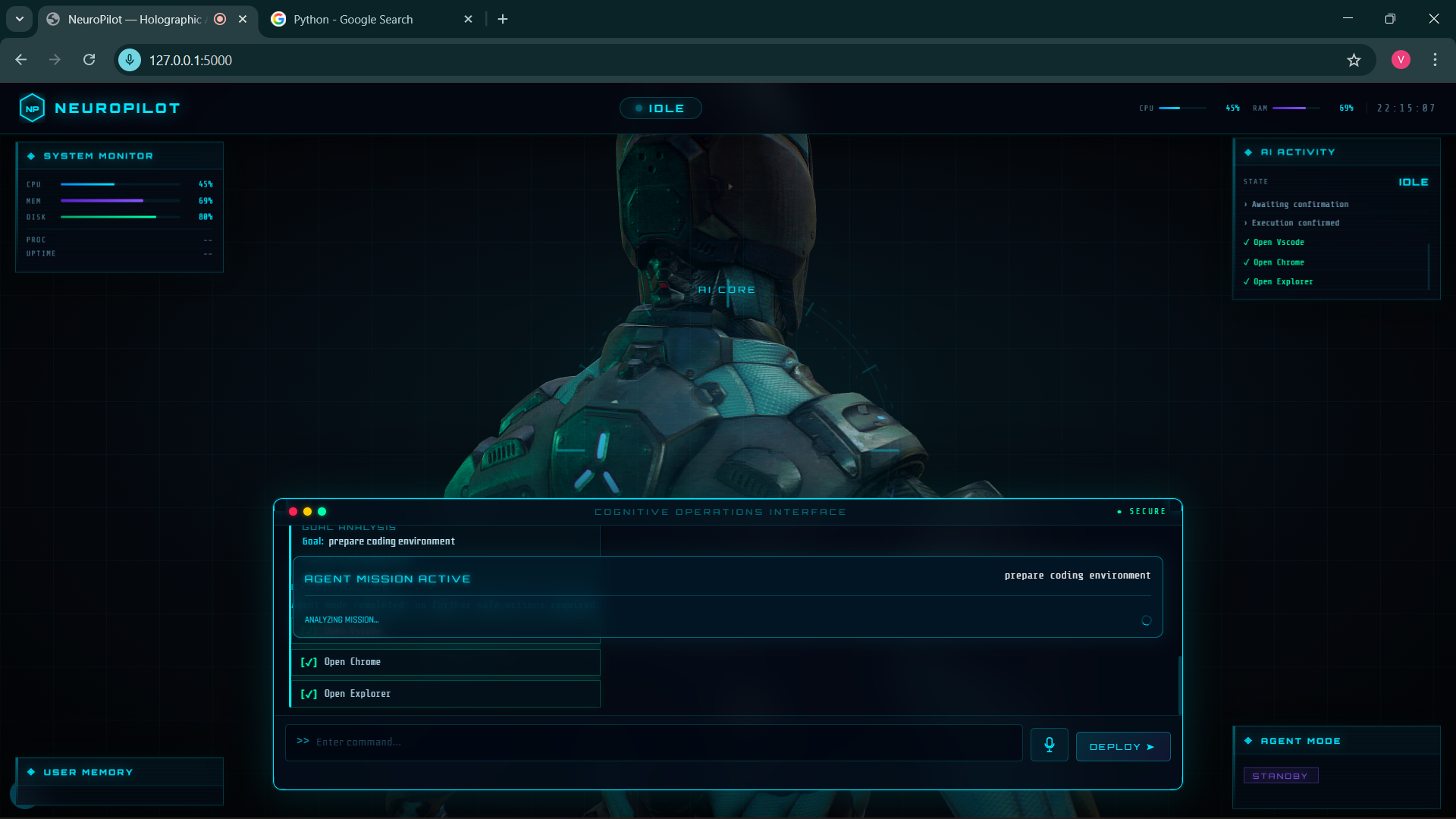
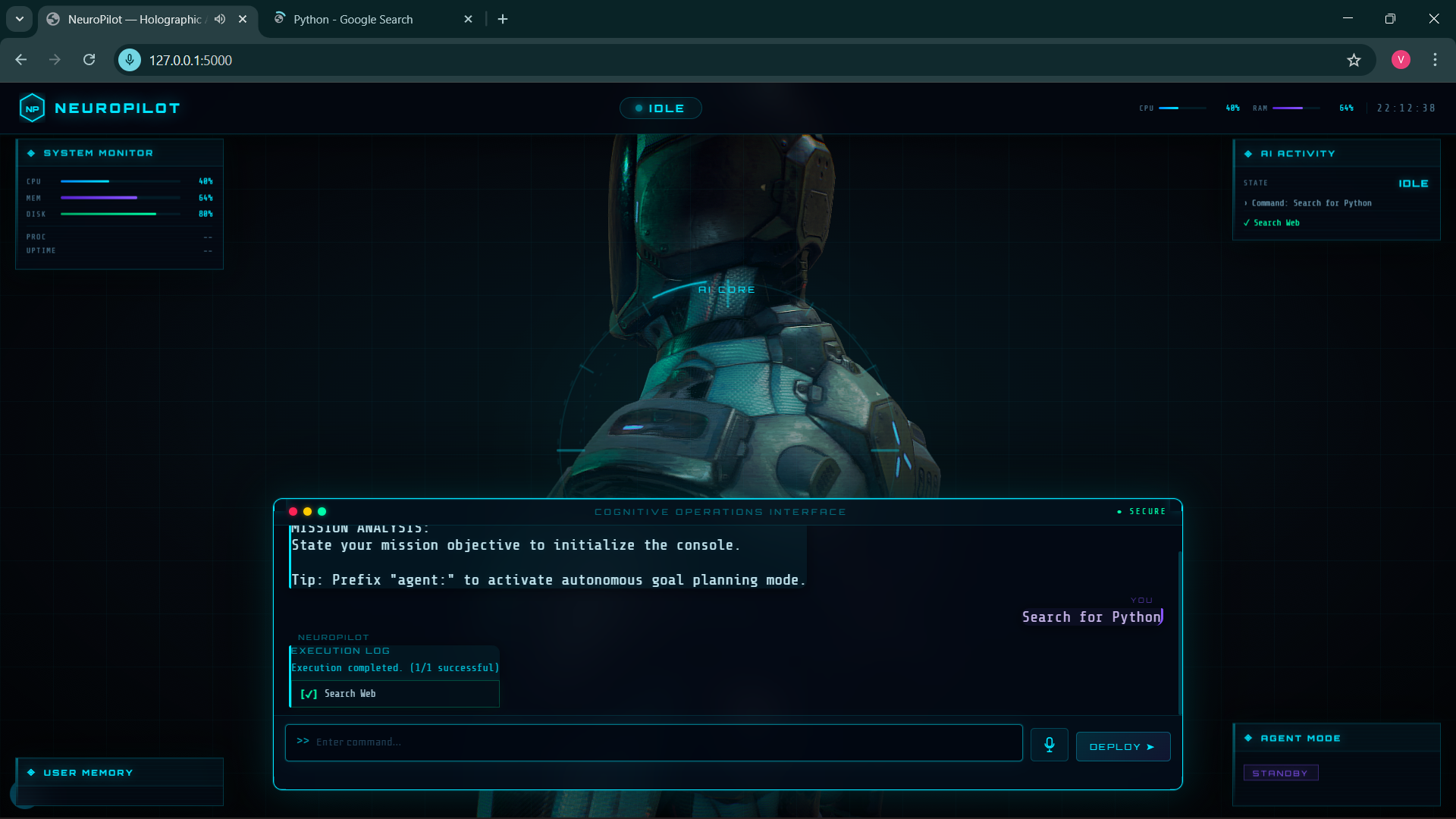
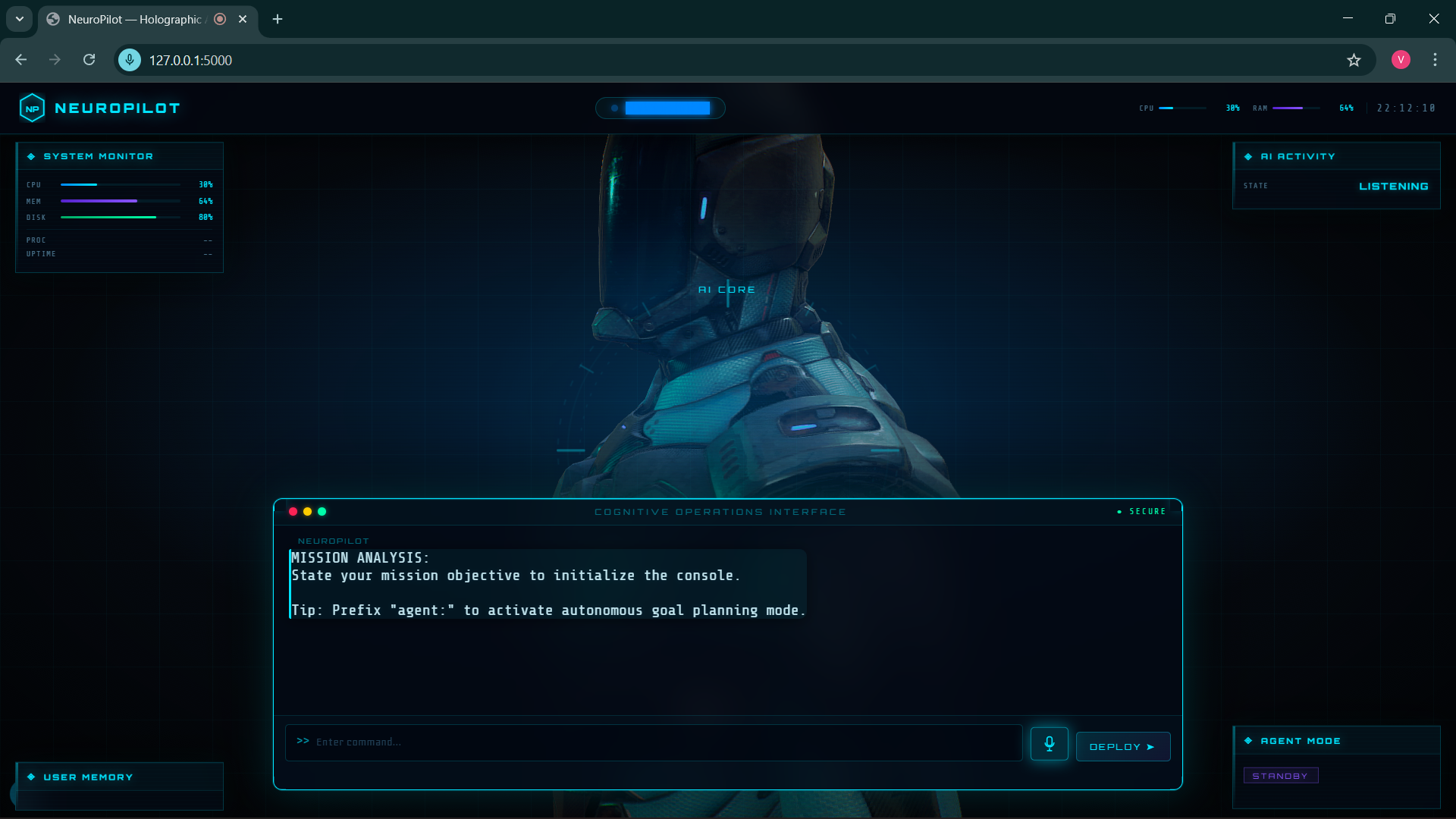
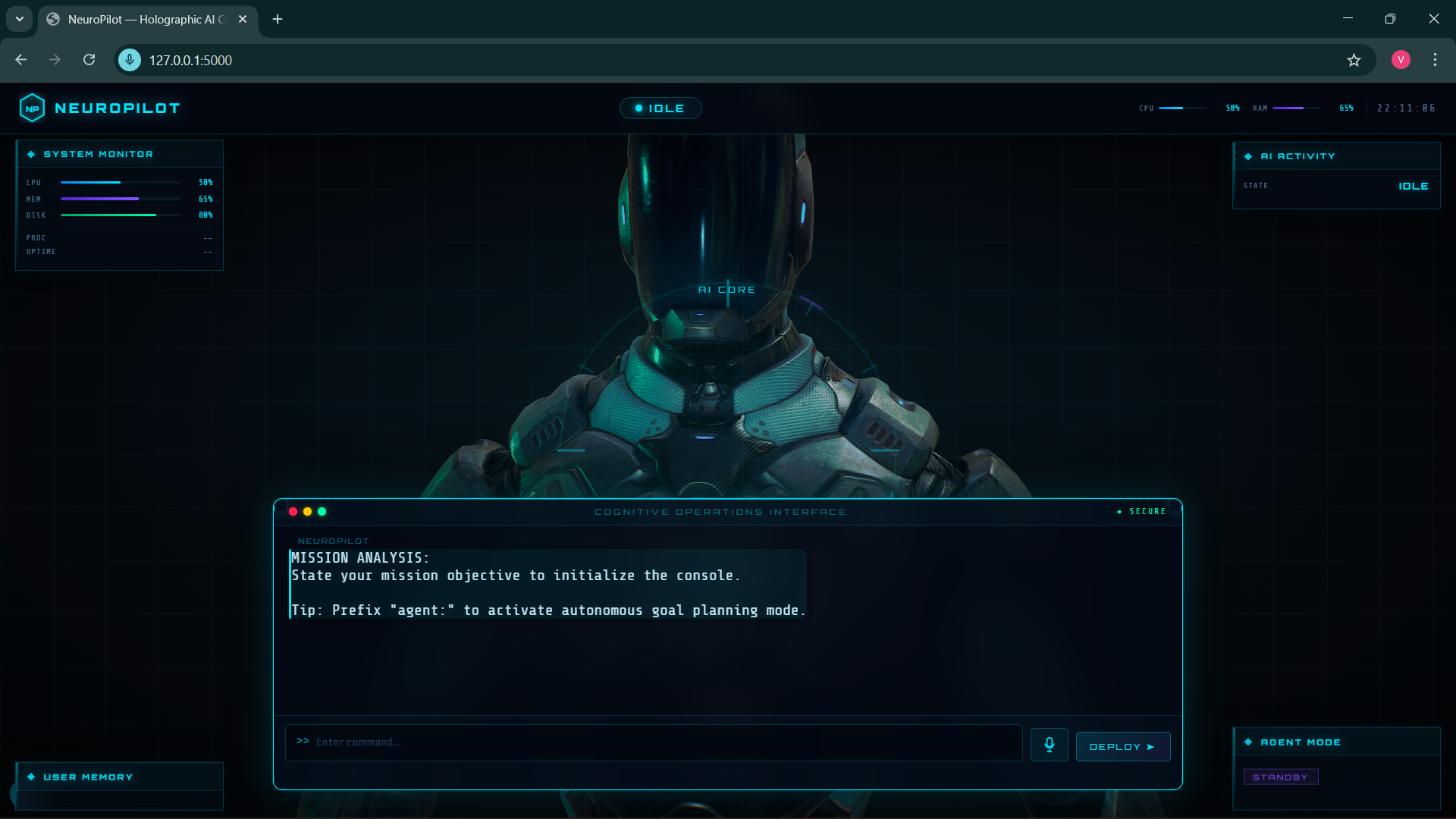
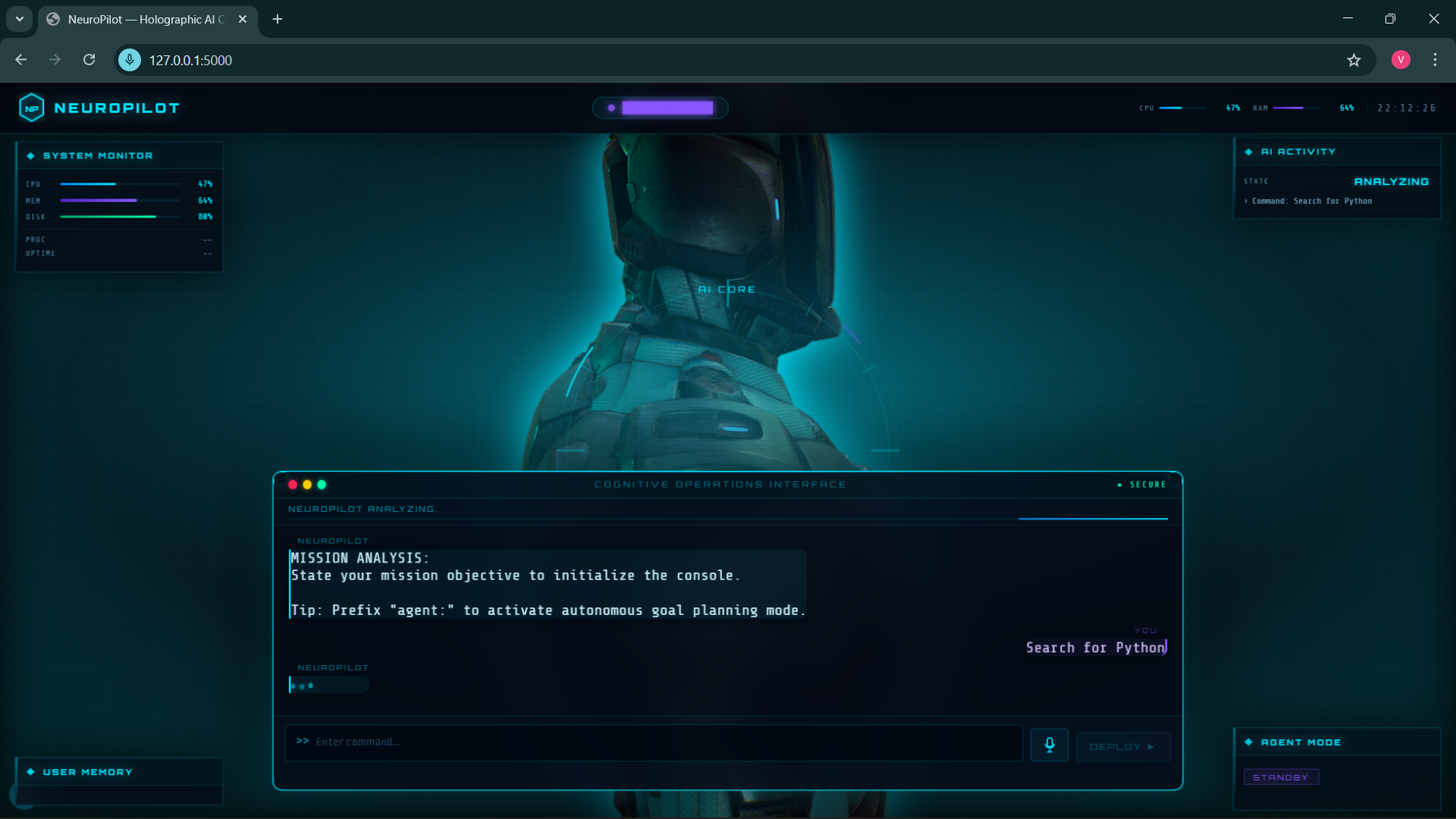
NeuroPilot is an autonomous agent that sits behind a futuristic holographic HUD. It monitors your system telemetry while executing complex goals. Key capabilities include:
- Autonomous Goal Mode: Decomposes high-level requests into multi-step executable plans.
- Computer Control: Hands-free application launching and keyboard automation via pyautogui.
- Web Intelligence: Real-time web search with AI-powered summarization briefings.
- Bi-Directional Voice: Seamless interaction using Web Speech API and Wake-Word detection.
- Secure File Assistant: Intelligent file management with built-in path protection and risk-confirmation layers.
🛠️ How we built it
The "brain" is Google Gemini 2.5 Flash, leveraging its superior speed and reasoning for real-time planning.
- Backend: Flask (Python 3.12) managing the execution engine and automation services.
- Frontend: A high-performance Vanilla JS and CSS3 overlay with 3D Sketchfab integration for the holographic robot.
- Automation: Powered by
pyautoguifor system interaction andpsutilfor live telemetry.
🧠 Challenges we ran into
The primary challenge was balancing power with safety. We implemented a "Risk Confirmation Layer" that ensures the AI never performs dangerous actions (like deleting files or typing) without explicit user approval via the HUD.
⭐ Accomplishments that we're proud of
Successfully creating a "Zero-Glass" holographic UI where the 3D robot and floating telemetry panels feel like a single, cohesive AR experience. Watching the agent analyze a complex goal and generate a multi-step plan in real-time is truly rewarding.
📖 What we learned
We learned how to effectively use Gemini's JSON mode to drive a local system execution pipeline, and the importance of low-latency feedback in voice-controlled interfaces.
Built With
- beautifulsoup4
- css3
- flask
- gemini-2.5-flash
- javascript
- psutil
- pyautogui
- python
- webspeeechapi


Log in or sign up for Devpost to join the conversation.