-
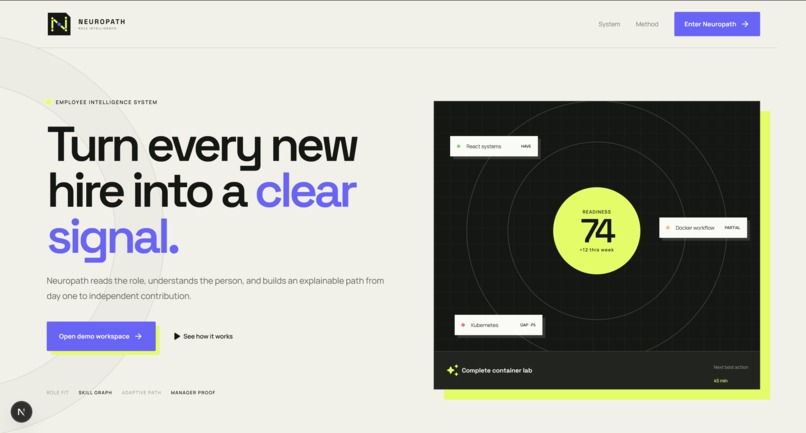
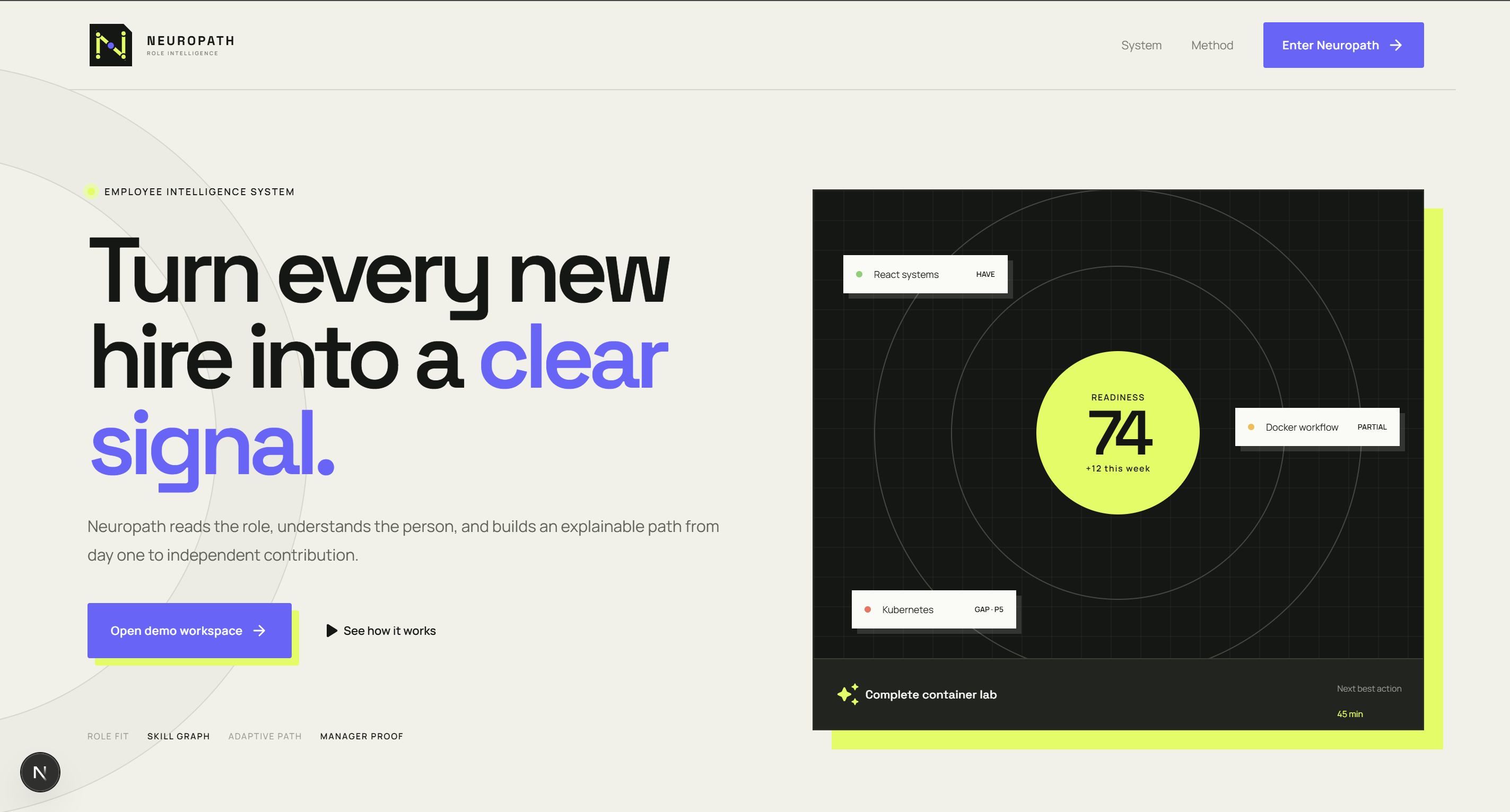
Neuropath’s landing page introduces an employee intelligence system that turns role requirements into clear readiness signals.
-
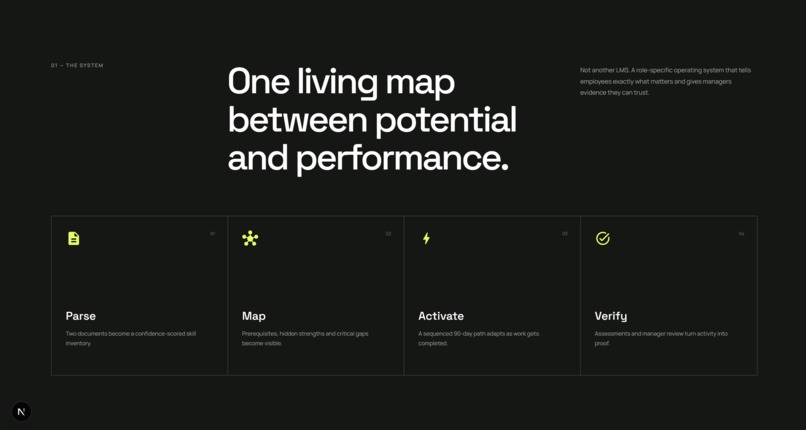
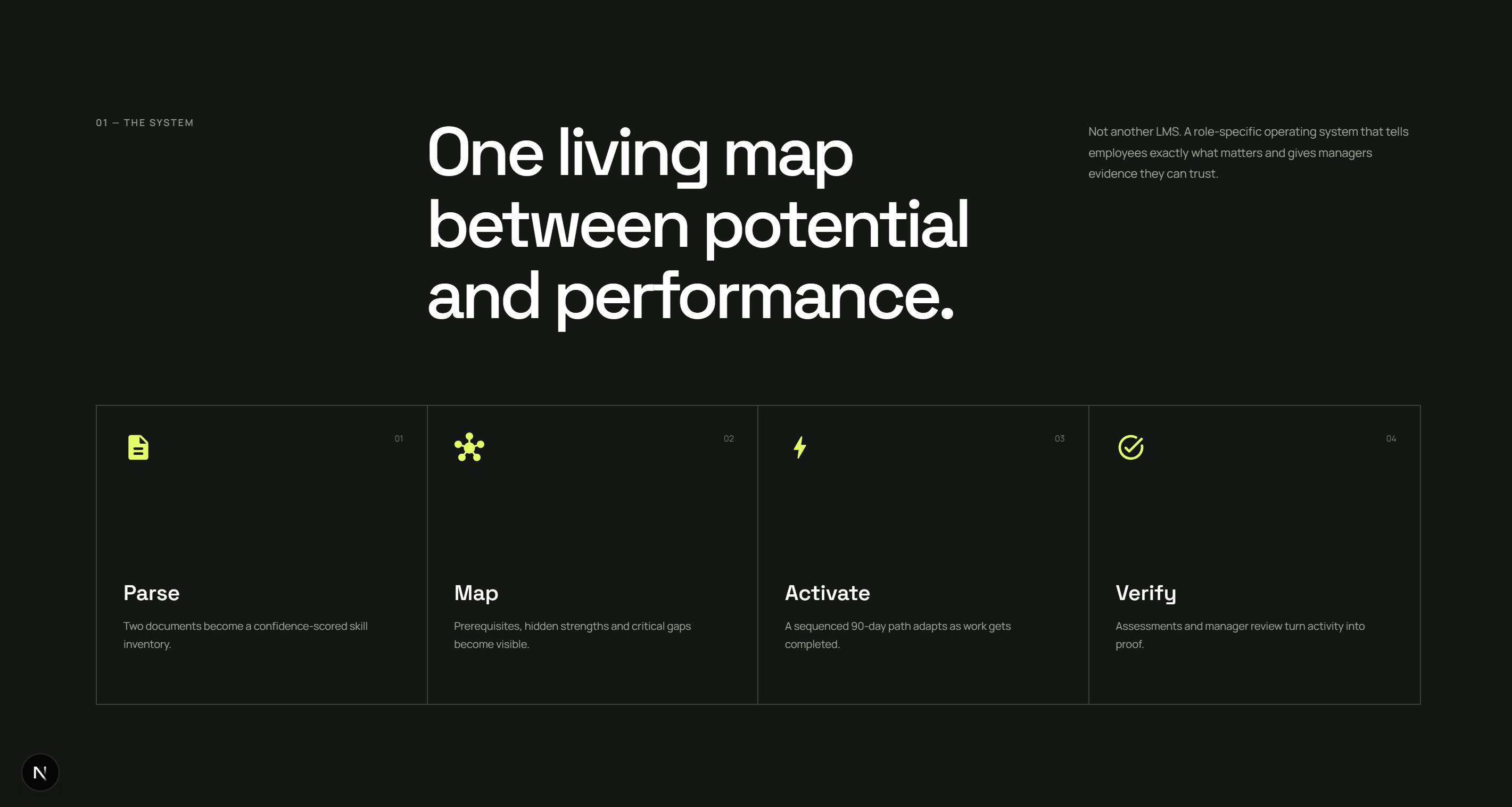
The platform’s core loop: Parse the role, Map the gaps, Activate the pathway, and Verify progress.
-
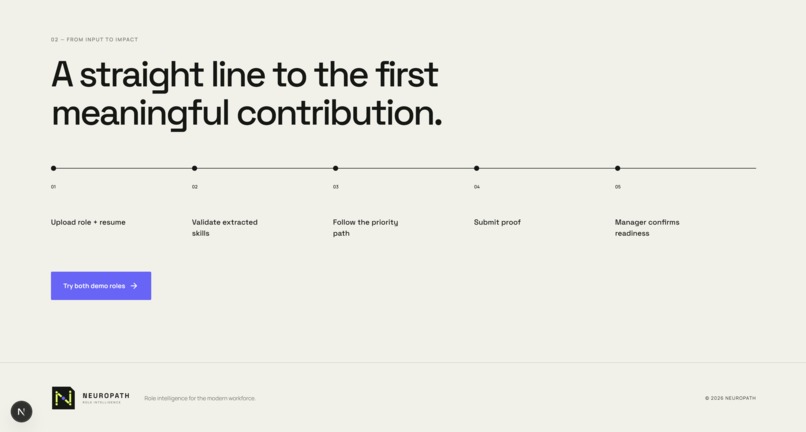
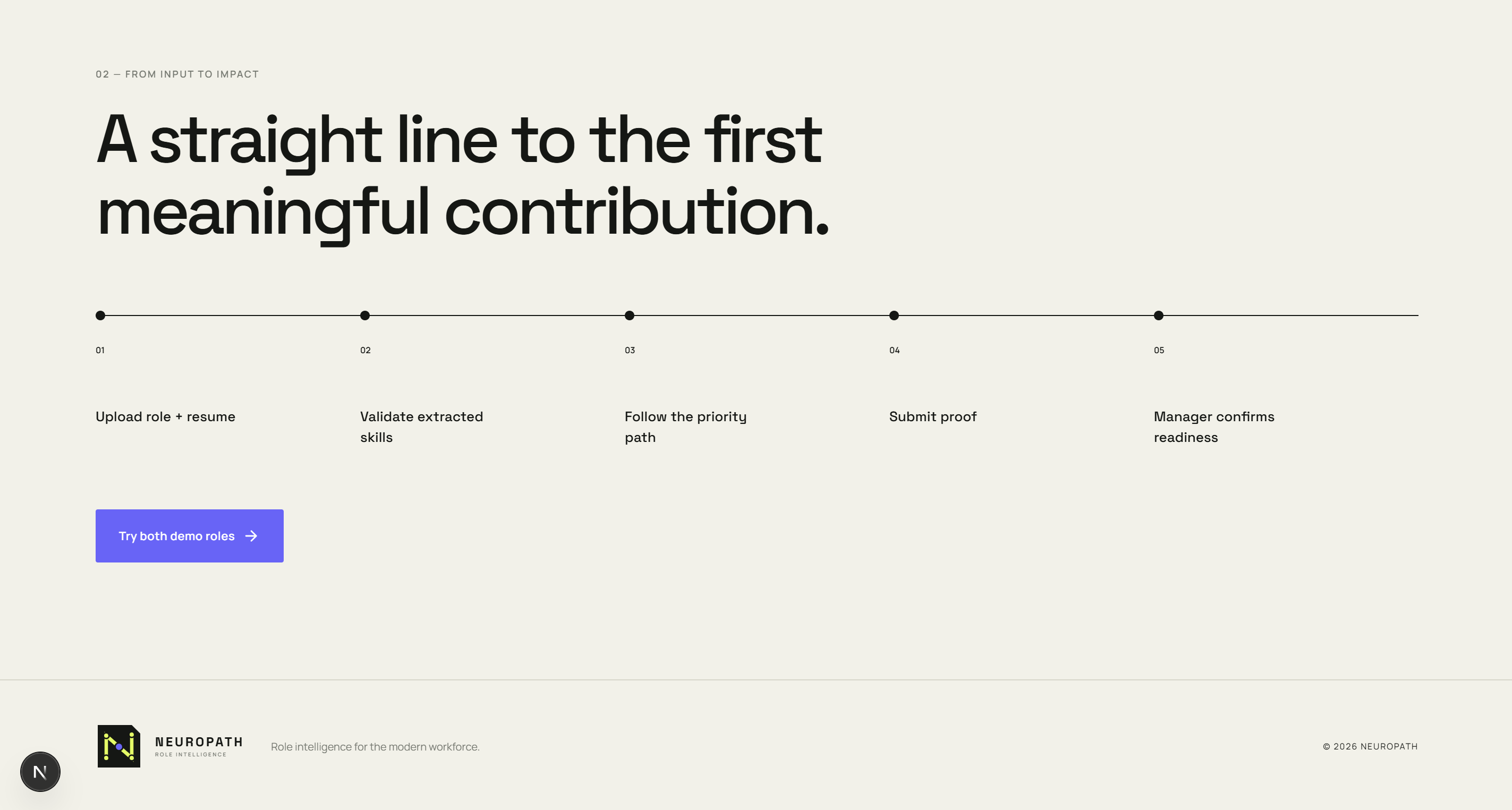
The onboarding journey moves from uploading a role and profile to manager-confirmed readiness.
-
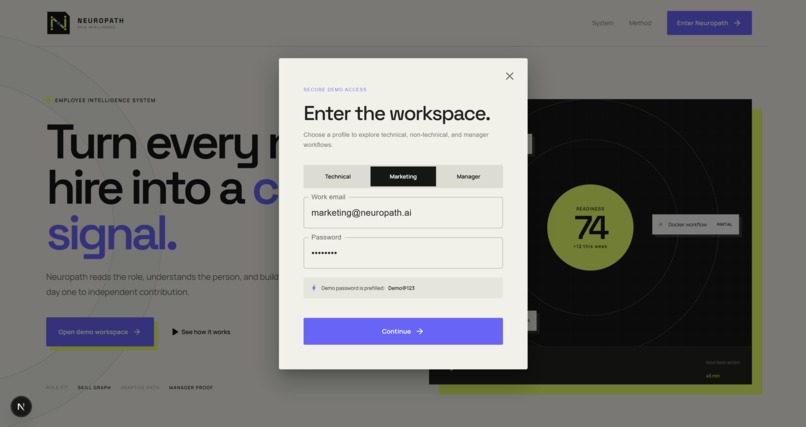
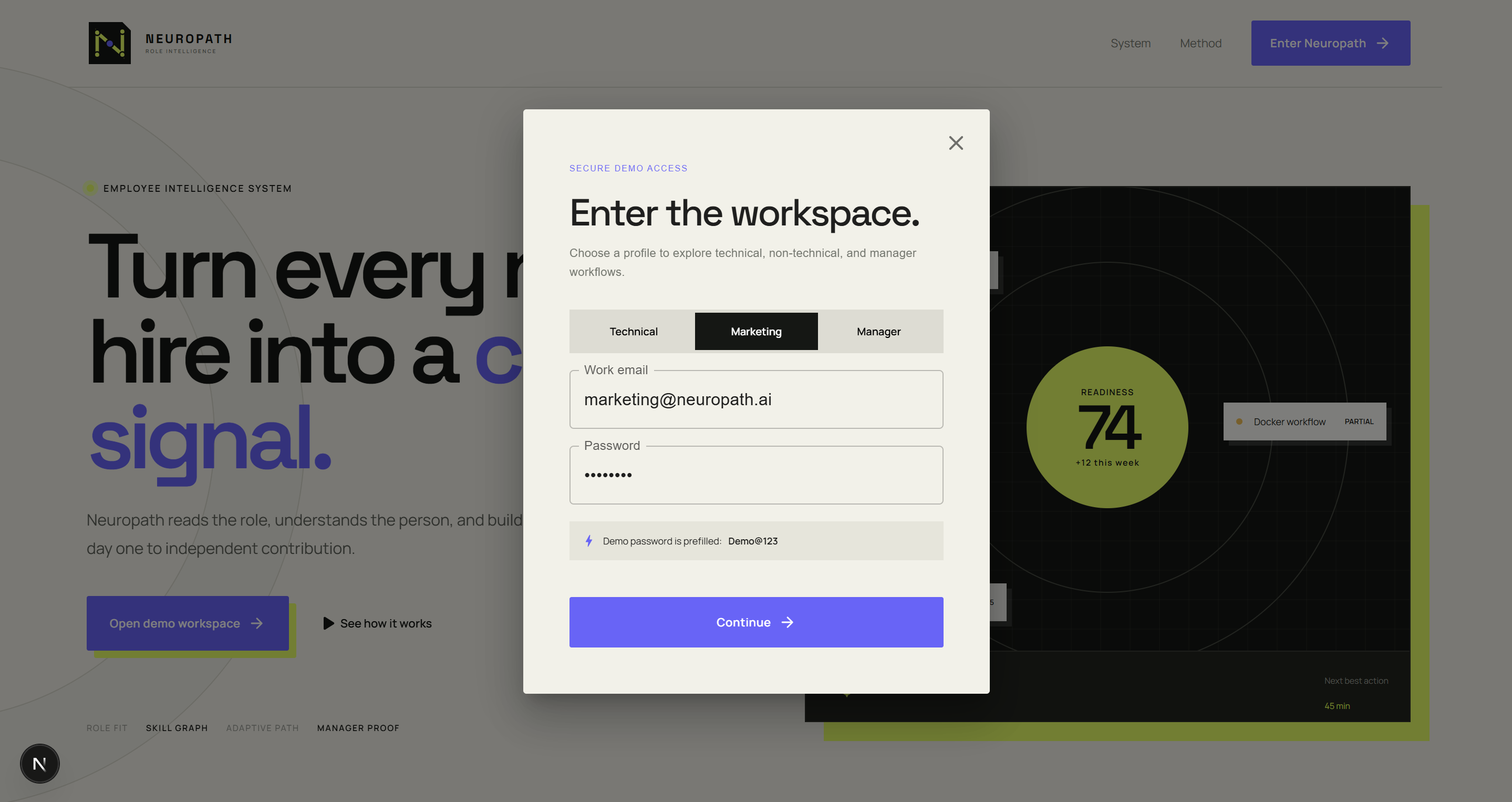
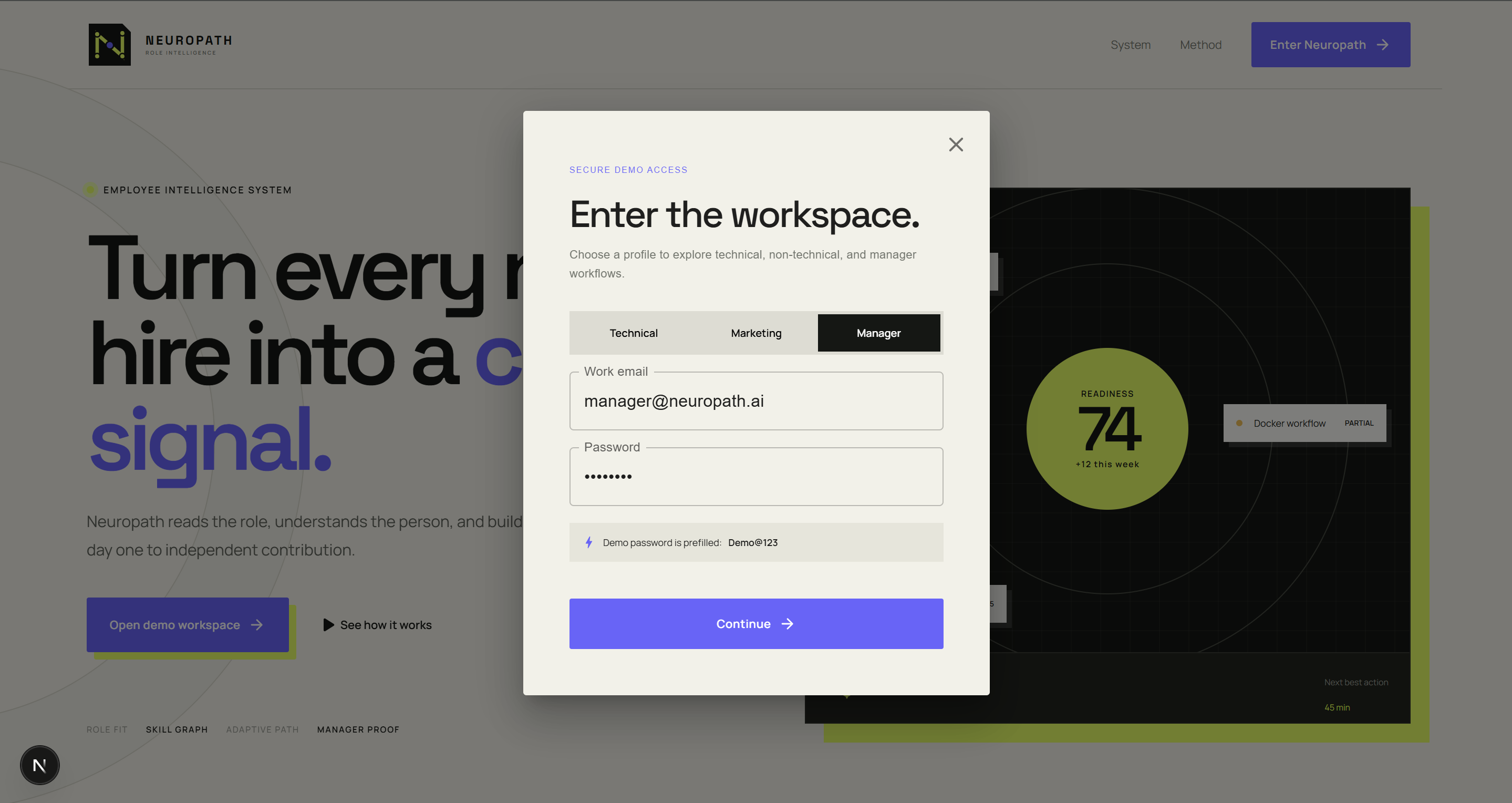
Secure demo access lets users explore Technical, Marketing, or Manager workflows.
-
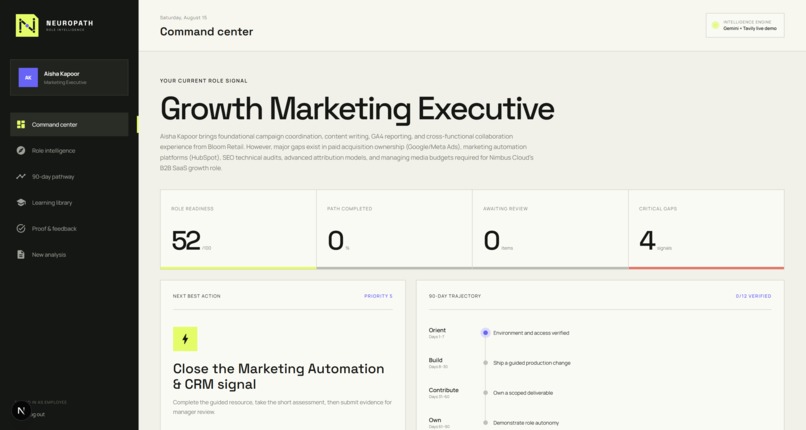
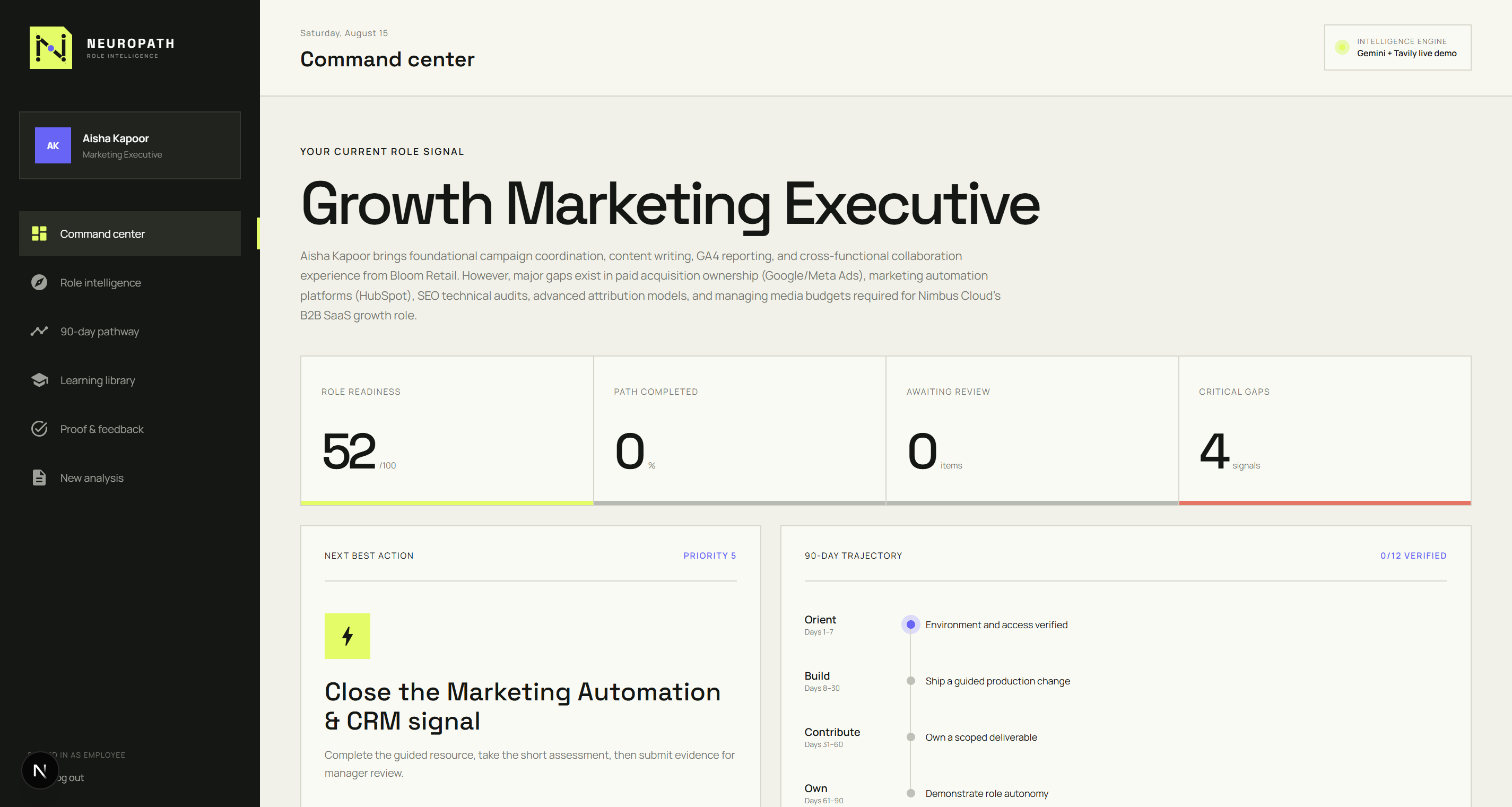
The Marketing Executive command center highlights readiness, critical gaps, progress, and the next best action.
-
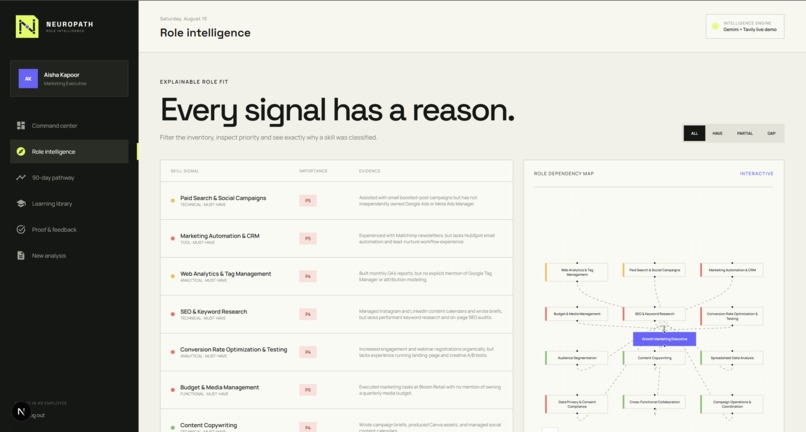
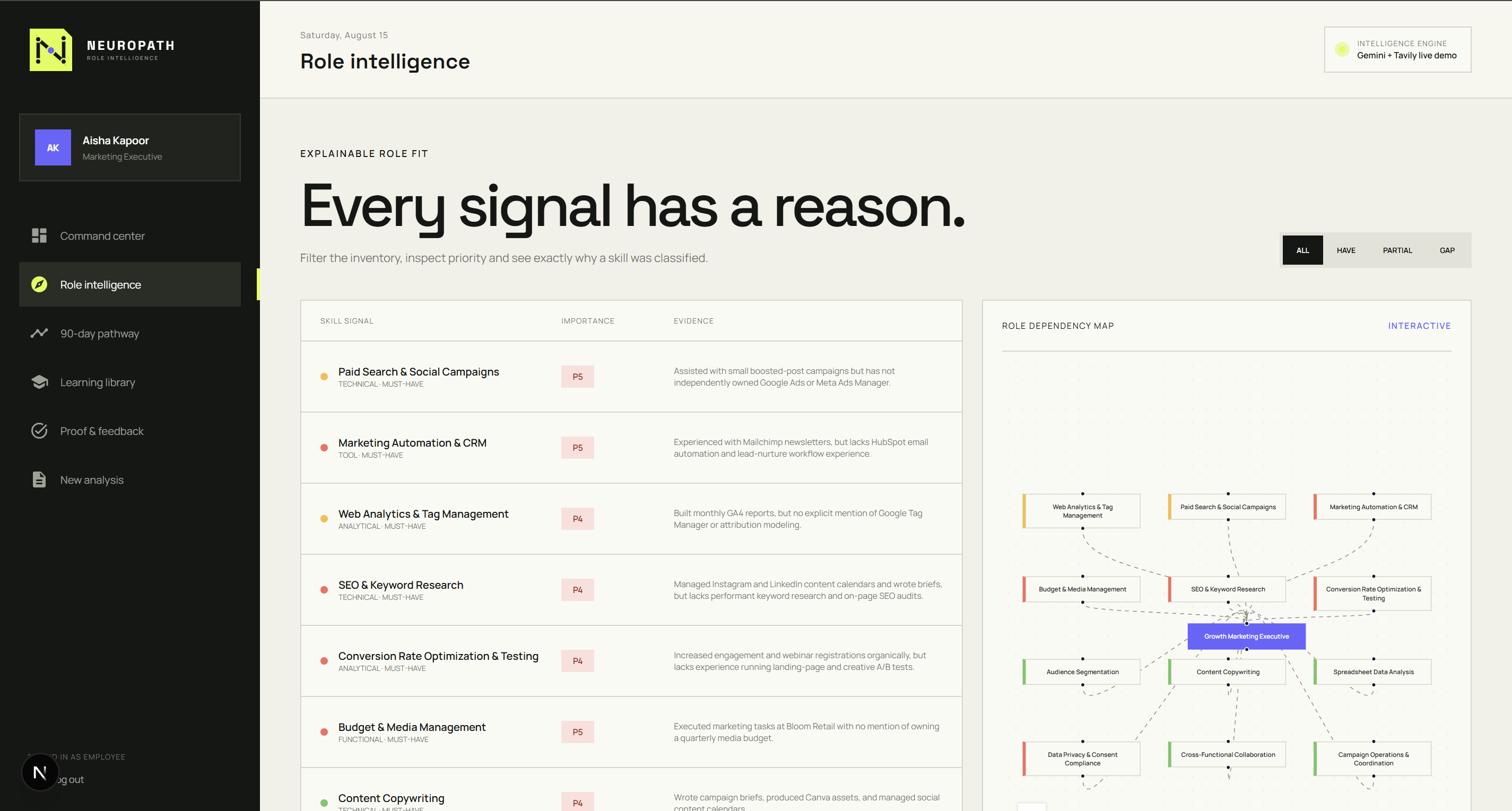
Explainable Role Intelligence separates existing, partial, and missing skills with priorities, evidence, and a dependency graph.
-
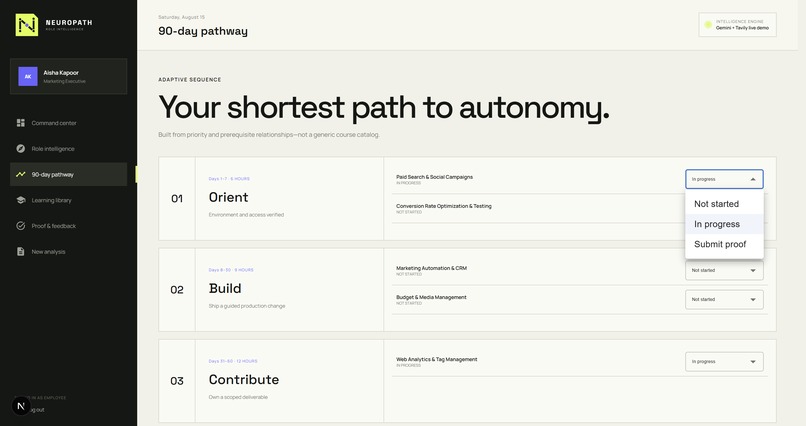
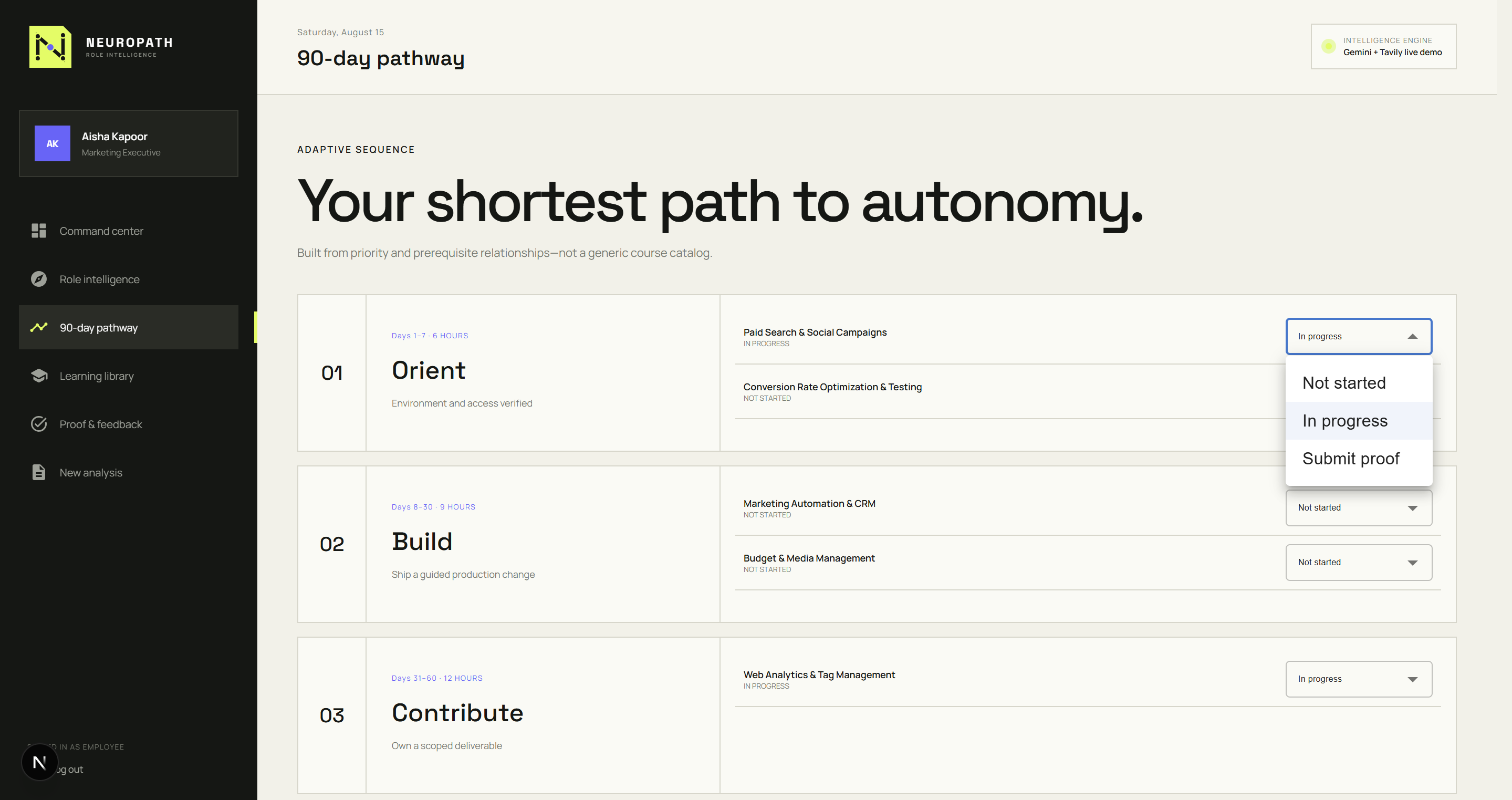
The adaptive 90-day pathway turns skill gaps into sequenced milestones with editable progress states.
-
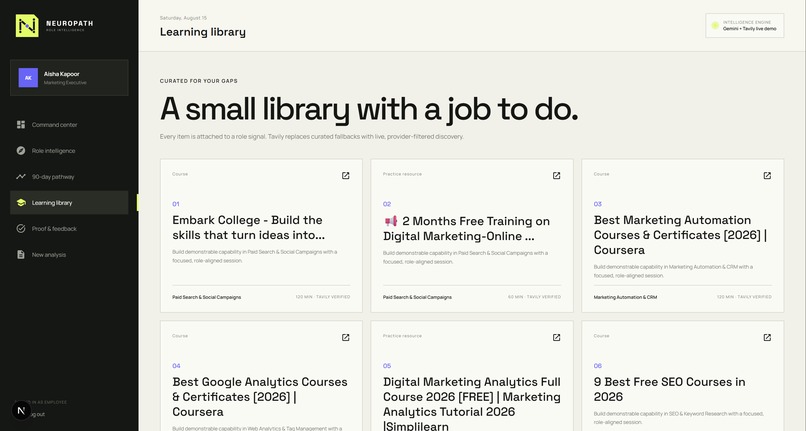
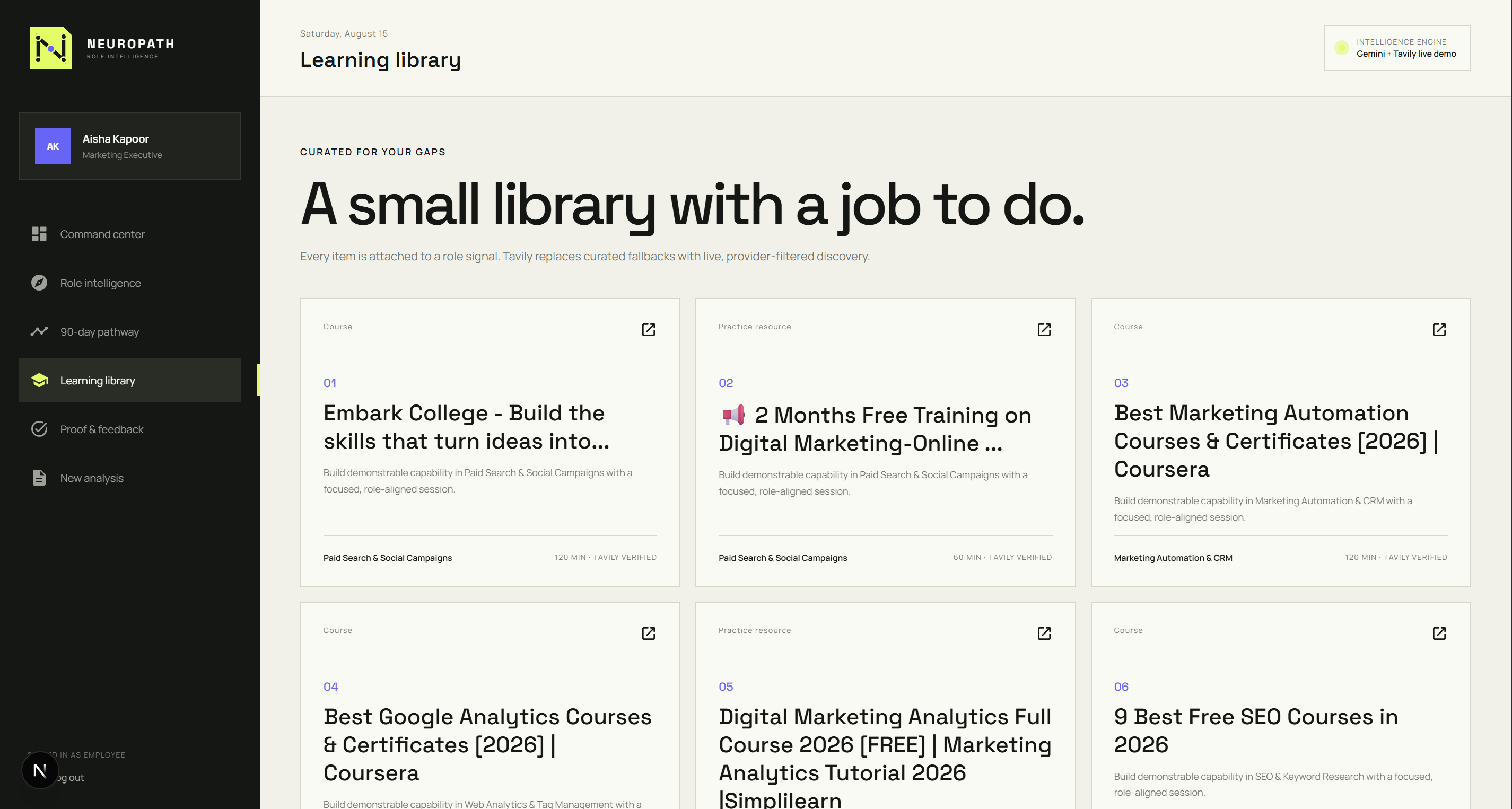
The learning library curates targeted resources linked directly to each role-specific gap.
-
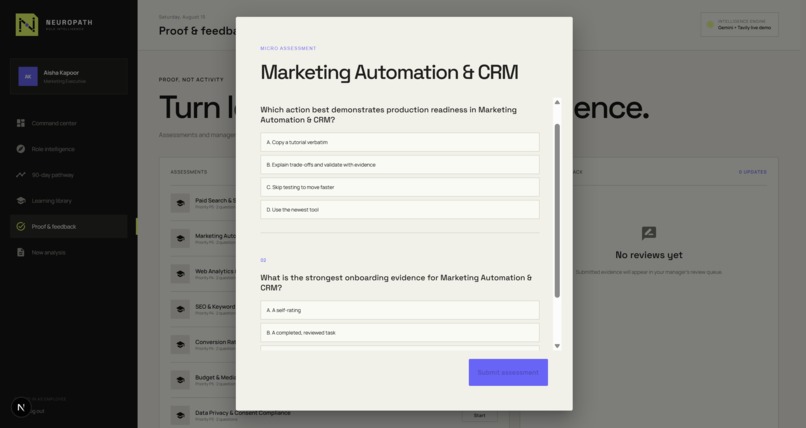
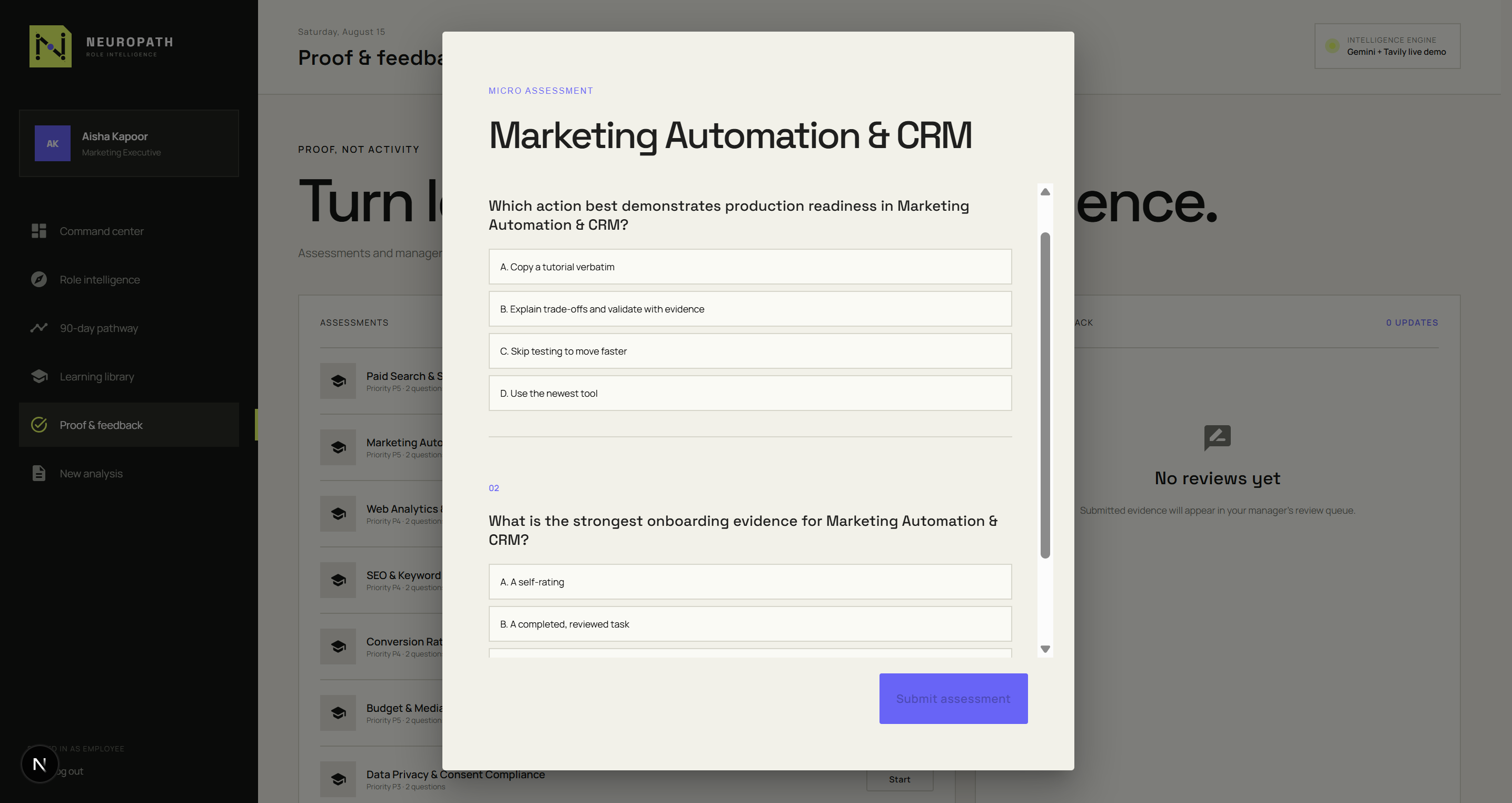
Micro-assessments convert learning activity into measurable evidence for Marketing Automation and CRM readiness.
-
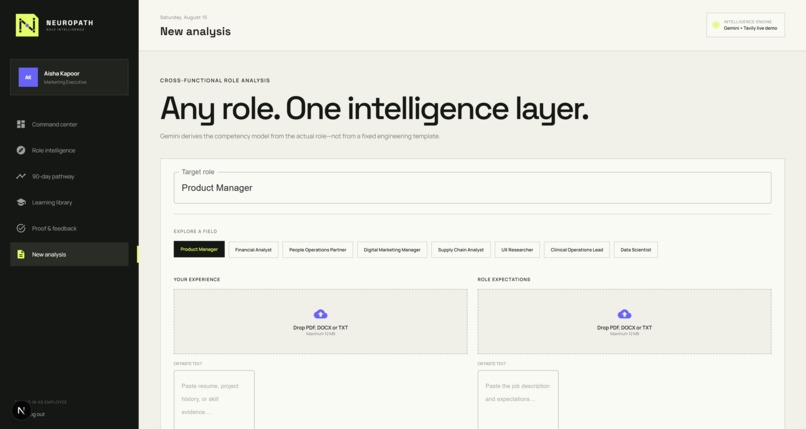
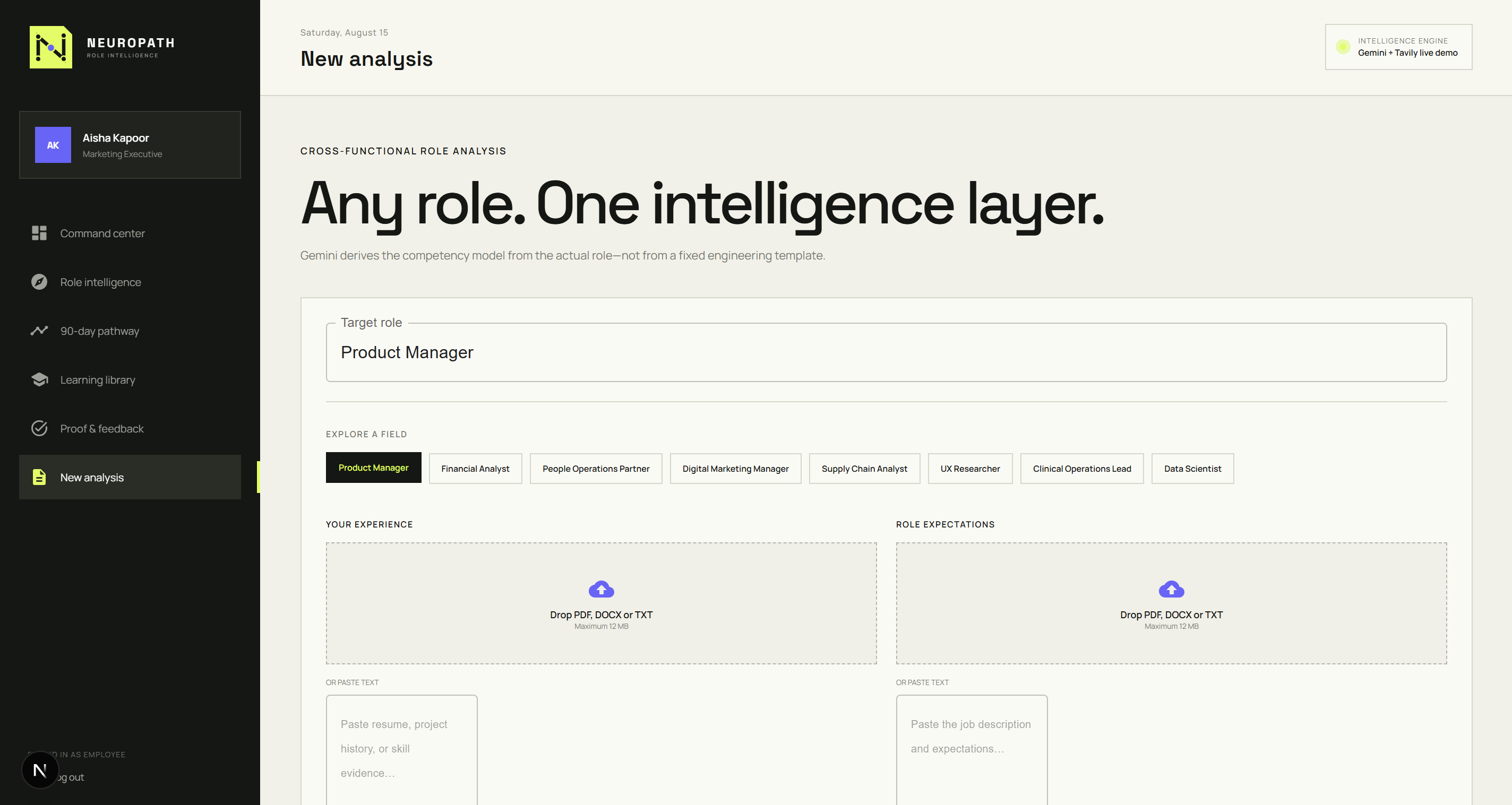
New Analysis accepts a role, profile, resume, or job description to create a cross-functional competency model.
-
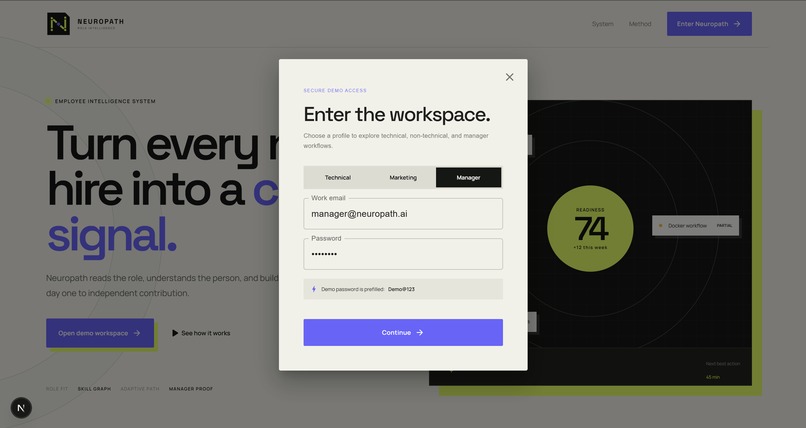
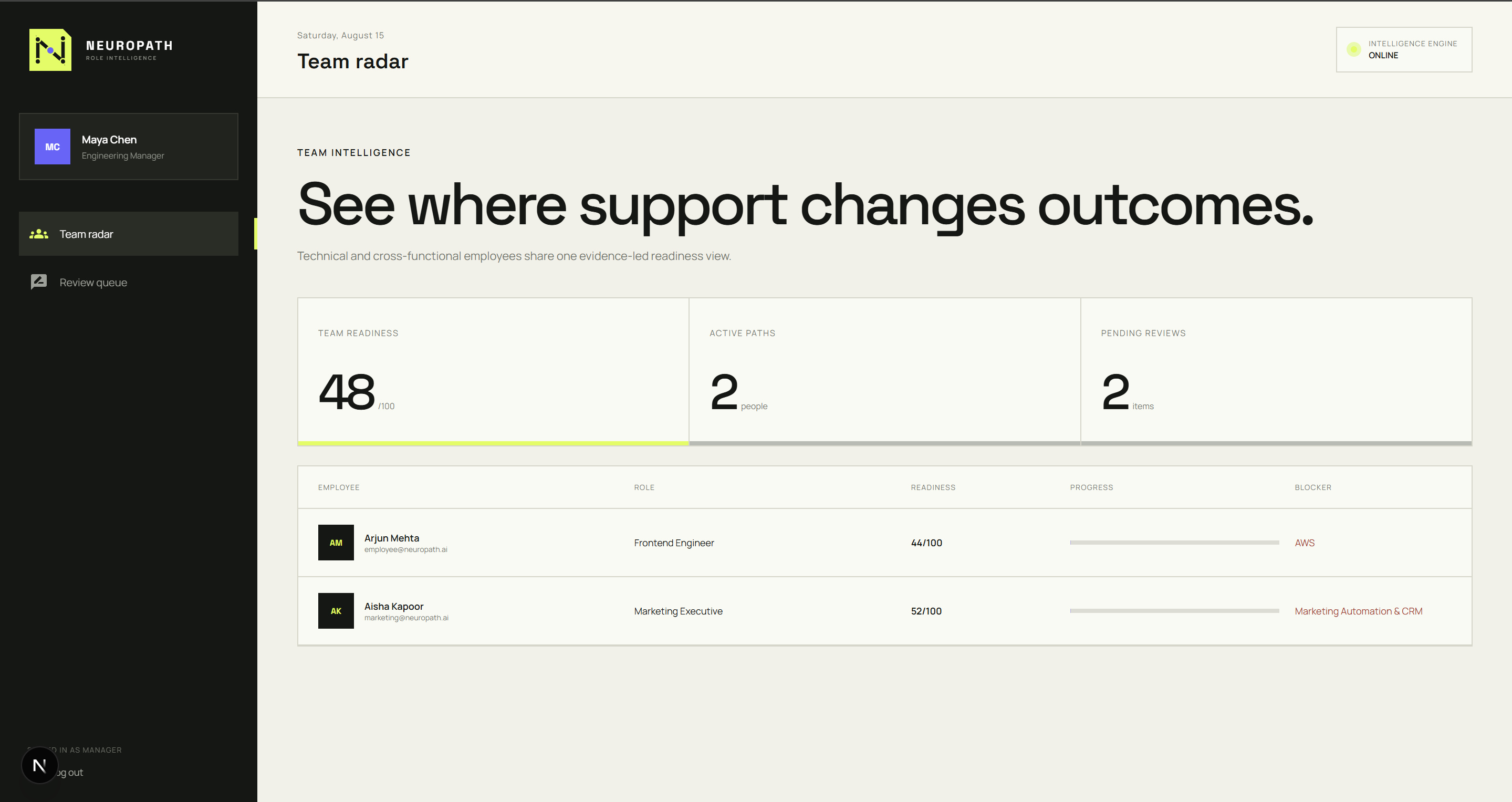
Managers enter a dedicated workspace to oversee employee onboarding and evidence review.
-
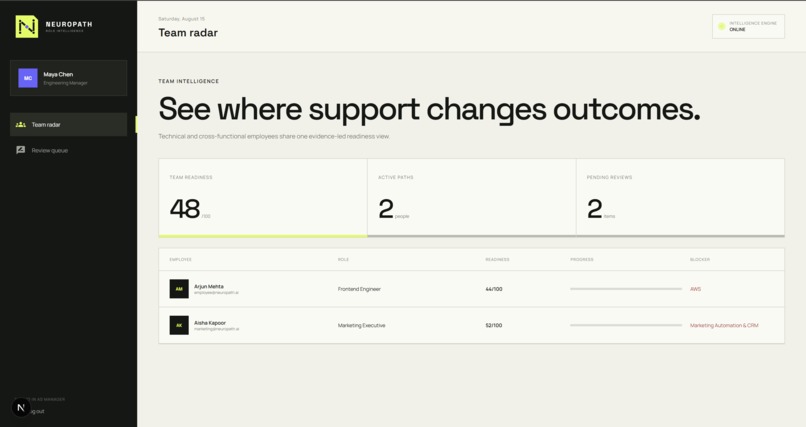
Team Radar compares employee readiness, active pathways, progress, and blockers in one view.
-
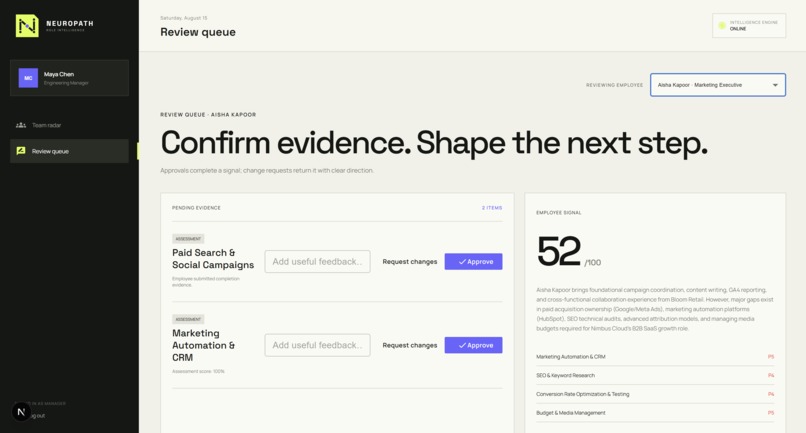
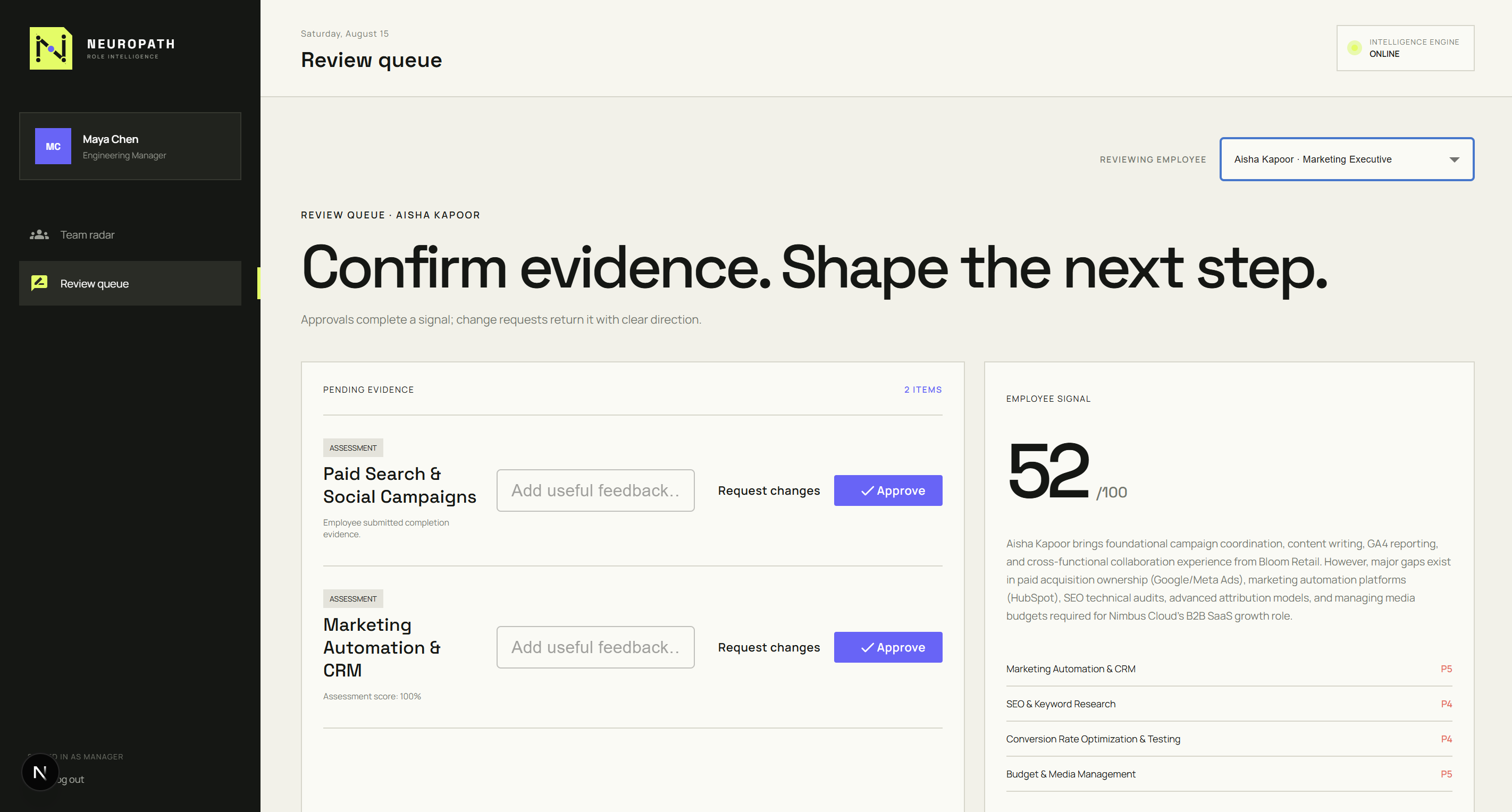
The Review Queue gives managers the context and controls to approve evidence or request changes.
-
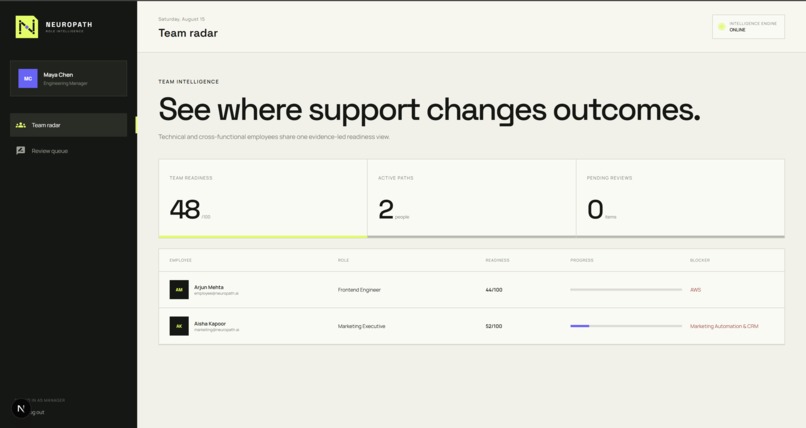
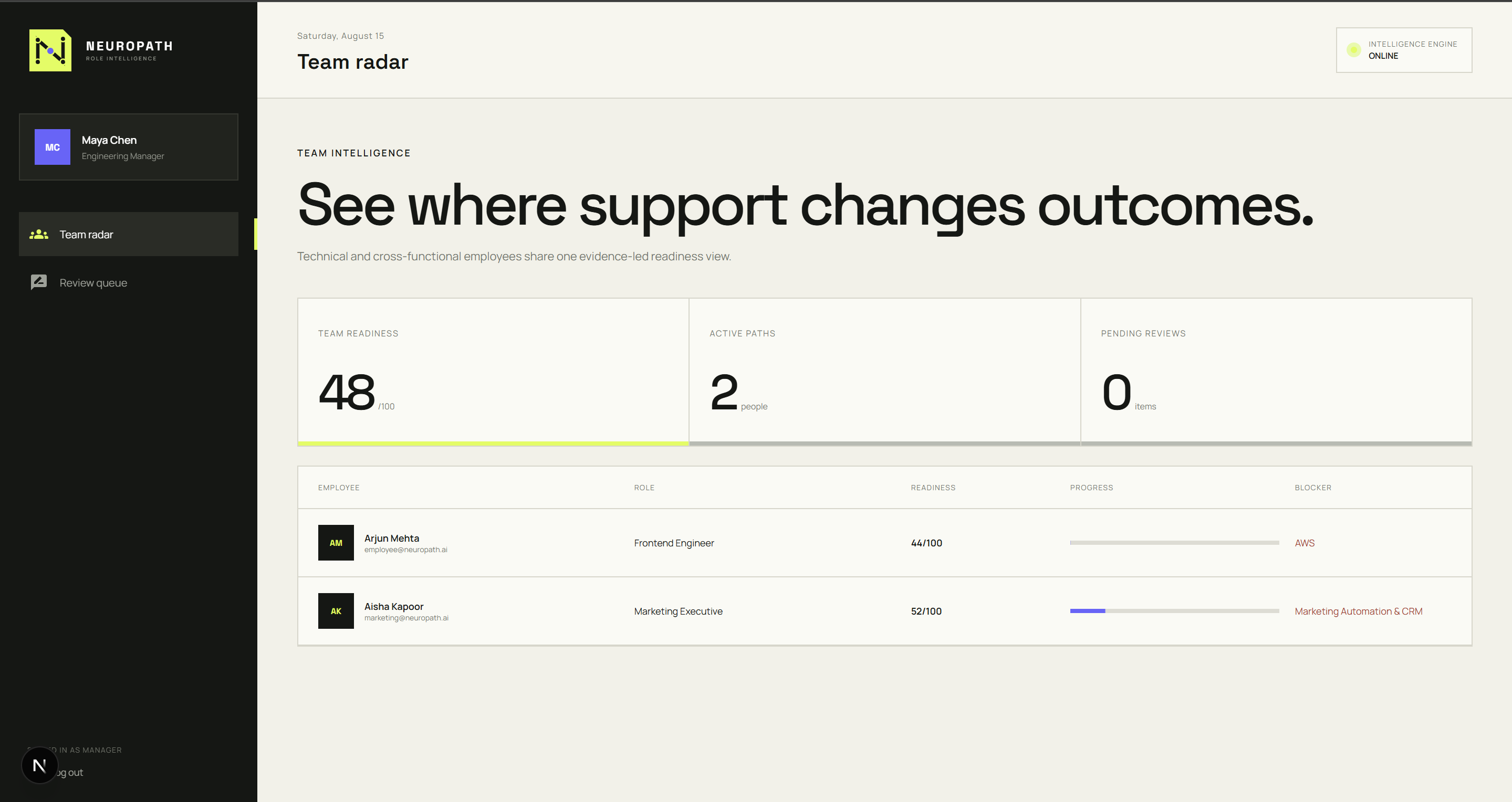
Team Radar reflects the latest onboarding state after manager actions, keeping readiness visibility current.
Inspiration
Starting a new job often feels like being handed a large checklist with no clear sense of priority. Employees do not always know which skills matter first, while managers struggle to distinguish real progress from completed activity.
We built Neuropath to make onboarding measurable, explainable, and role-specific. Instead of giving every employee the same generic learning plan, Neuropath begins with the role requirements and the employee’s current capabilities, then creates a focused path toward independent contribution.
What Neuropath does
Neuropath is an employee intelligence and onboarding engine that:
- Extracts competencies from technical and non-technical job descriptions.
- Compares role requirements with an employee’s current profile.
- Identifies matched, partial, transferable, and missing skills.
- Prioritizes gaps by importance.
- Generates a personalized 90-day onboarding pathway.
- Recommends resources connected to specific skill gaps.
- Uses assessments and submitted evidence to measure progress.
- Gives managers a review queue for approvals and change requests.
- Supports both technical employees and roles such as Marketing Executive.
The goal is to turn onboarding into a continuous feedback loop:
$$ \text{Role Requirements} \rightarrow \text{Skill Gap} \rightarrow \text{Action} \rightarrow \text{Evidence} \rightarrow \text{Manager Confidence} $$
How we built it
The frontend is built with Next.js, React, TypeScript, Material UI, React Flow, and Motion. It includes a landing page, role-specific employee workspaces, a manager workspace, animated transitions, an interactive skill dependency graph, pathway controls, assessments, and evidence review.
The backend is a Flask API with session-based authentication and SQLite persistence. It stores employee profiles, analyses, pathway progress, assessment scores, and manager feedback.
The intelligence layer is intentionally resilient:
- Gemini can enrich role modeling and competency extraction.
- Tavily can discover current learning resources for priority gaps.
- Ollama can generate local assessment questions using
qwen2.5:3b. - Deterministic extraction, matching, scoring, pathway generation, and review workflows provide a reliable fallback when AI services are unavailable.
This architecture lets the product demonstrate real AI value without making the core onboarding workflow dependent on a single external provider.
What we learned
We learned that useful AI products need more than generated text. The most important part is the surrounding system: structured outputs, explainable decisions, persistence, role-based permissions, and actions that move the user forward.
We also learned that onboarding is a cross-functional problem. A technical employee and a Marketing Executive need different competency models and resources, but both need the same fundamentals: clarity, prioritization, feedback, and proof of progress.
Challenges
One challenge was making the system work across very different roles without hard-coding an engineering-only taxonomy. We solved this by treating the job description as the source of truth and combining AI-assisted extraction with deterministic normalization and matching.
Another challenge was reliability. External APIs can be slow, unavailable, or rate-limited during a demo. We designed provider fallbacks so the application remains usable with no API keys and still preserves the same user experience.
We also had to balance employee autonomy with manager accountability. Employees can update progress and submit evidence, but final verification remains visible to and controlled by the manager.
Why it matters
Neuropath helps companies move from passive onboarding checklists to evidence-backed role readiness. Employees get a clear next action. Managers get a trustworthy view of progress. Organizations get a repeatable onboarding system that can adapt across departments.
Future roadmap
Future versions could add:
- SSO and HRIS integrations.
- LMS and calendar integrations.
- Organization-specific role templates.
- Notifications and manager nudges.
- Deeper portfolio and GitHub evidence.
- Team-level skill heatmaps.
- Multi-tenant analytics and benchmarking.

Log in or sign up for Devpost to join the conversation.