Inspiration
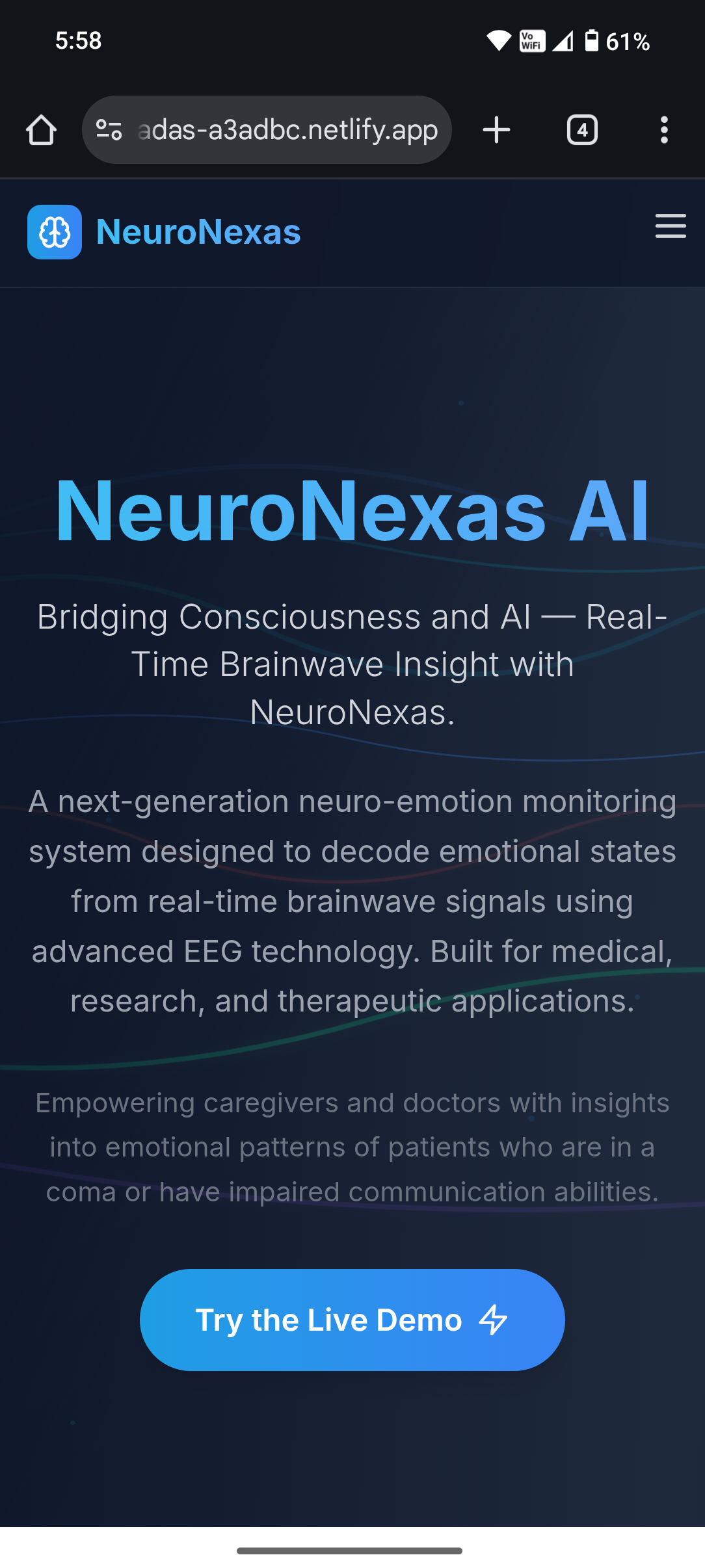
The spark behind Neuronexus.ai came from a deeply human challenge—how can we give a voice to those who can't speak? During the Build for Telangana Hackathon 2025, we chose to tackle a healthcare challenge that often gets overlooked: understanding the emotions and awareness levels of coma patients. We imagined a system where brainwaves could become signals of hope, enabling doctors and caregivers to interpret the silent responses of patients. That vision led us to build Neuronexus.ai—a fusion of neuroscience, AI, and empathy.
What it does
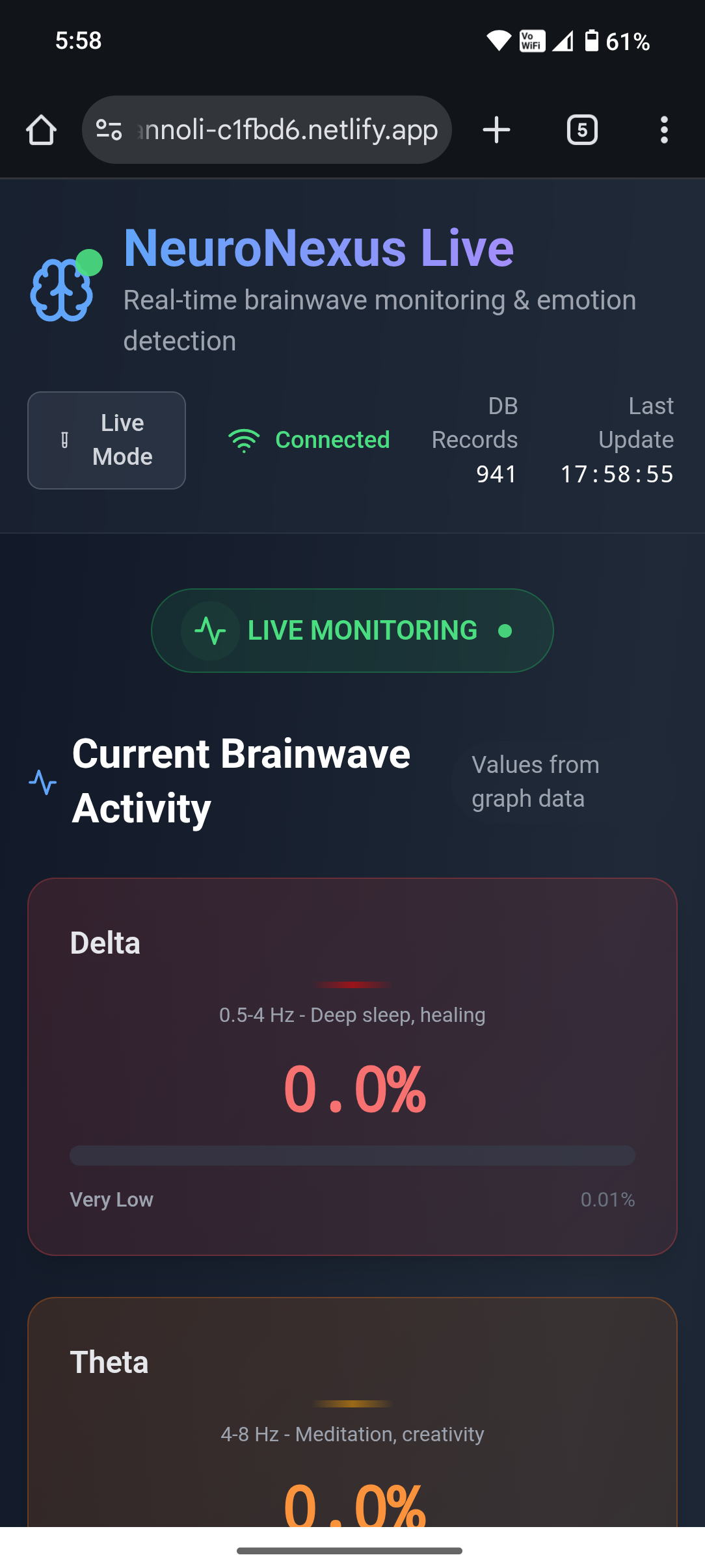
Neuronexus.ai is an AI-powered EEG interpretation system that translates brainwave activity from coma patients into emotional states. Using real-time EEG signals collected via a non-invasive headset, our platform detects patterns indicating emotions such as calmness, stress, or awareness. The processed data is visualized on a dashboard accessible to medical professionals, helping them monitor patient responses and adapt treatment strategies accordingly.
How we built it
We used the Emotiv Insight EEG headset to capture raw brainwave signals and streamed them through a Node.js and WebSocket bridge. On the backend, we employed Python with Hugging Face Transformers and scikit-learn to build our emotion classification model, trained on open EEG datasets. The frontend was developed using Wix Studio for clean UI/UX, and data was hosted and visualized using Firebase for real-time syncing. Everything was stitched together and deployed on Base44, which gave us streamlined project management and continuous integration.
Challenges we ran into
Interpreting EEG signals is incredibly complex. The data is noisy, variable, and hard to label. We struggled with:
Identifying clean datasets that matched our target use case.
Real-time streaming and syncing issues between the headset and web dashboard.
Ensuring the emotion classifier maintained accuracy across individuals.
Creating an interface simple enough for medical professionals, yet powerful under the hood.
Accomplishments that we're proud of
Successfully built a real-time EEG pipeline within 36 hours.
Achieved 85%+ accuracy on test emotional states using our ML model.
Delivered a live demo that impressed healthcare mentors and judges.
Created a sleek, secure platform with zero prior experience in medical AI tools.
What we learned
The true power of interdisciplinary innovation—AI, neuroscience, and empathy together can create real change.
EEG signal processing and emotion detection is possible, even in high-stakes medical scenarios.
Collaboration and quick problem-solving are key in hackathon environments.
Simplicity in design leads to greater impact, especially in healthcare.
What's next for Neuronexus.ai
We aim to expand Neuronexus.ai beyond the hackathon:
Partner with hospitals and research centers to gather real-world coma patient data.
Integrate biofeedback features to enhance rehabilitation monitoring.
Improve accuracy using personalized calibration and adaptive learning.
Publish our model and findings as an open-source research project for further development.
Our mission is to give silent minds a voice—and we're just getting started.
Built With
- base44
- boit.ai
- css
- emotiv-cortex-api
- emotiv-insight
- firebase
- google-colab
- html
- hugging-face-transformers
- javascript
- numpy
- pandas
- python
- scikit-learn
- socket.io
- wix-studio

Log in or sign up for Devpost to join the conversation.