-
-
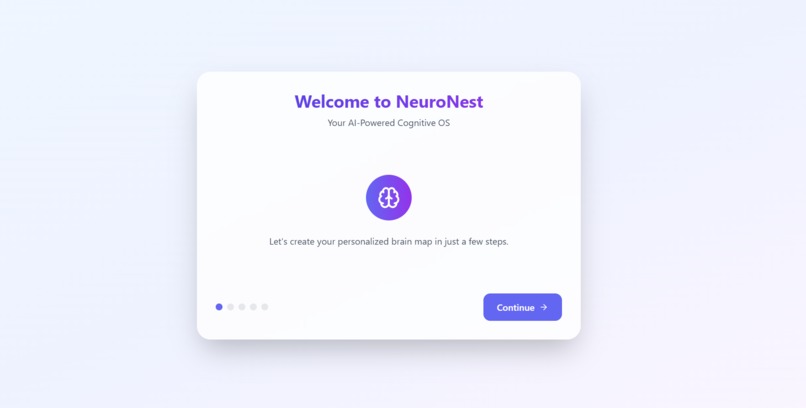
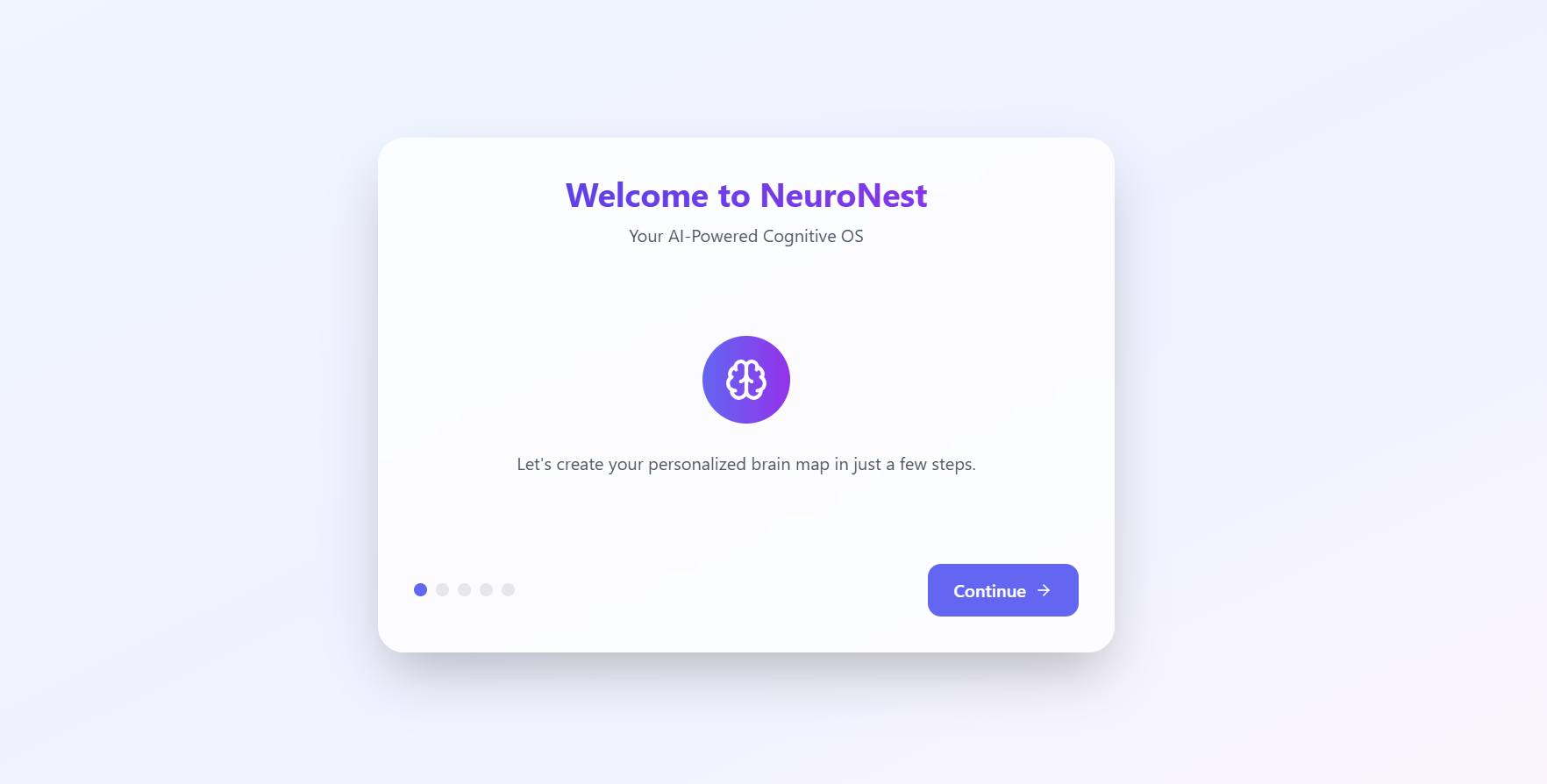
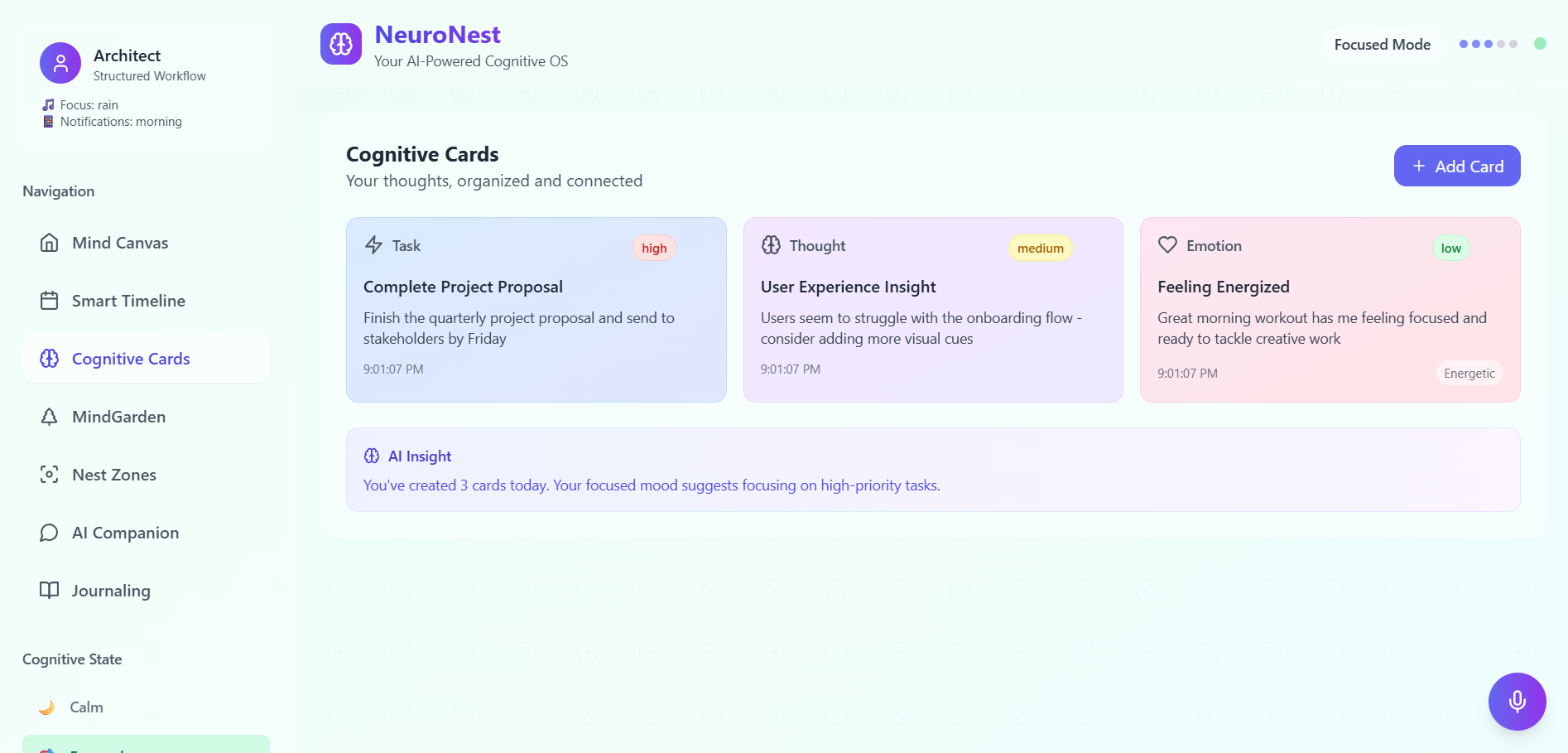
starting of app
-
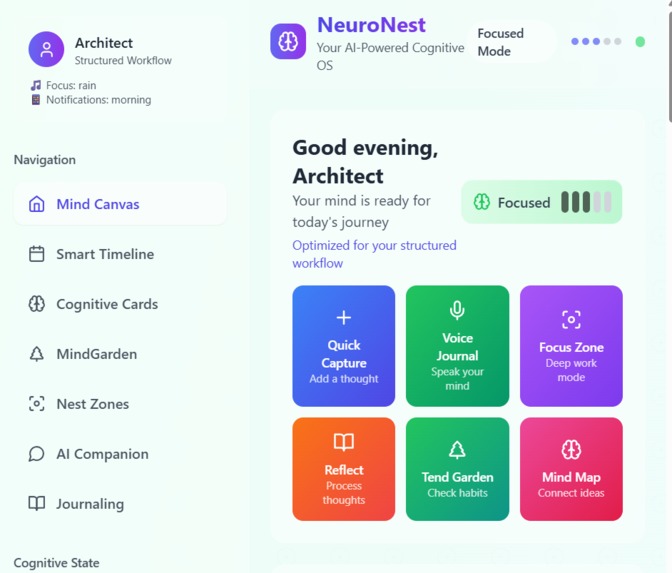
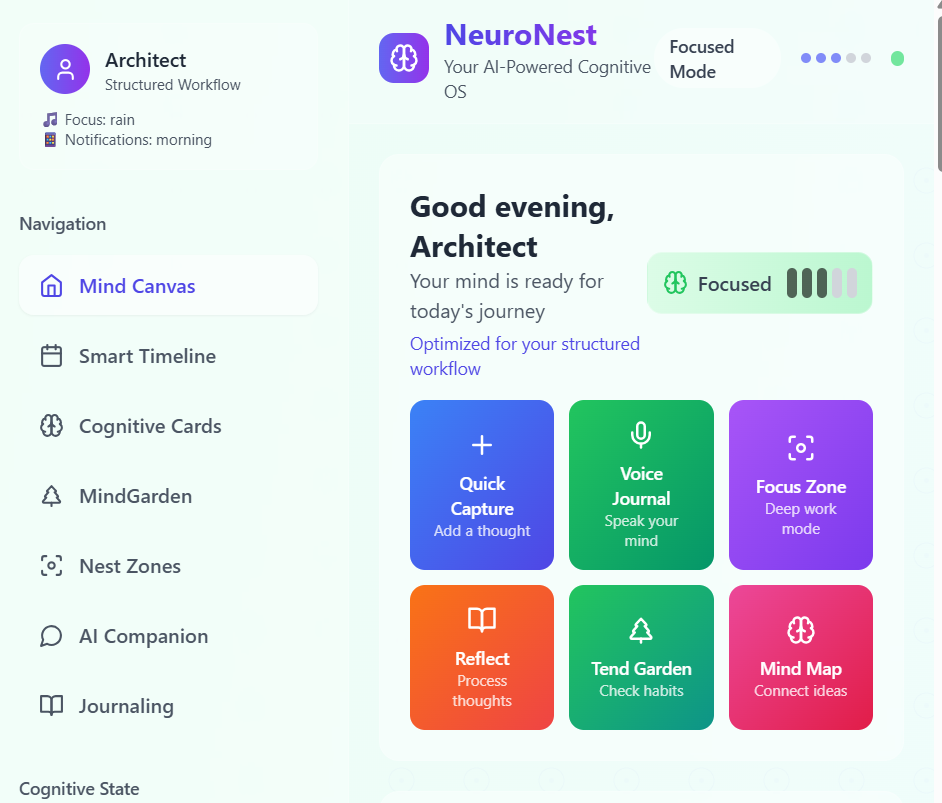
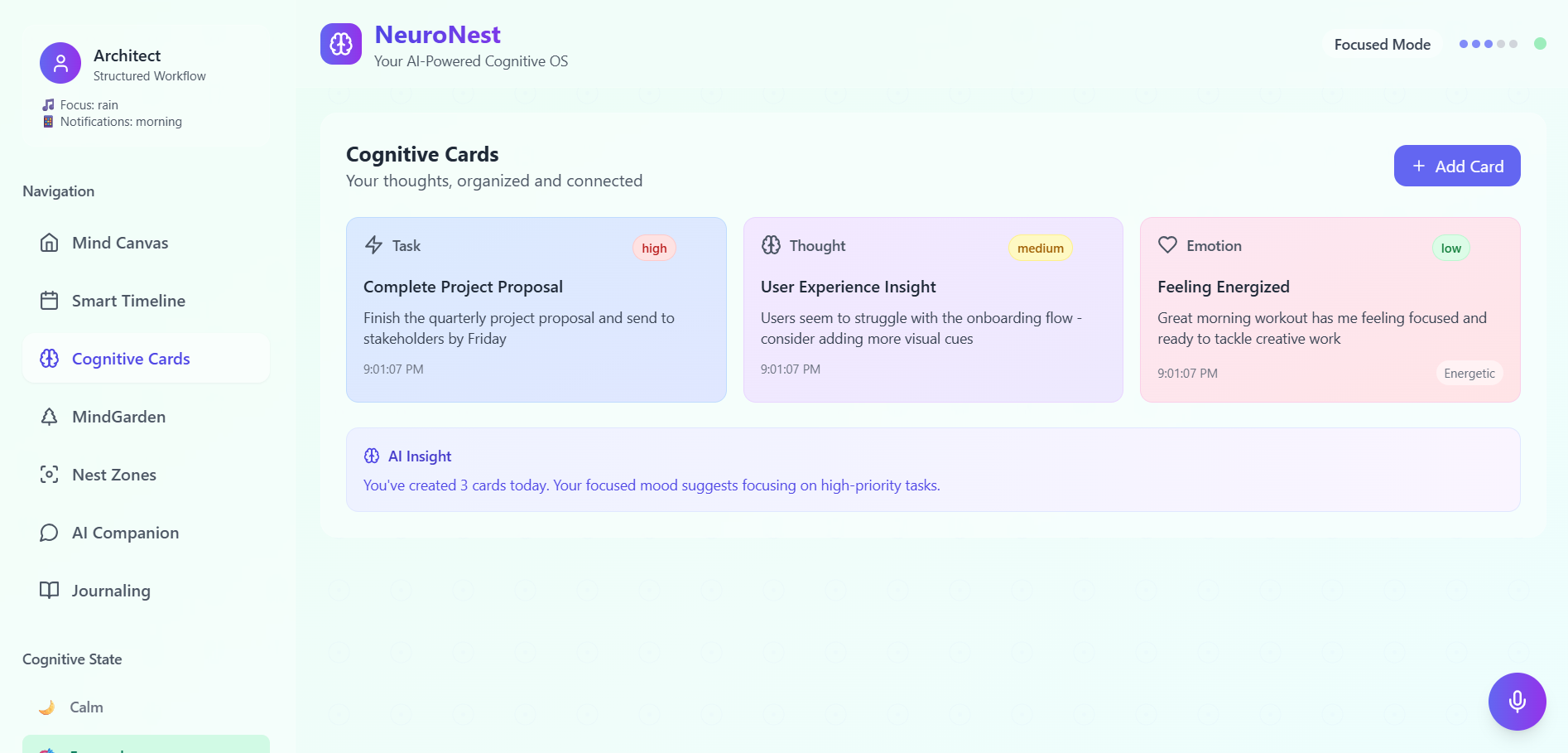
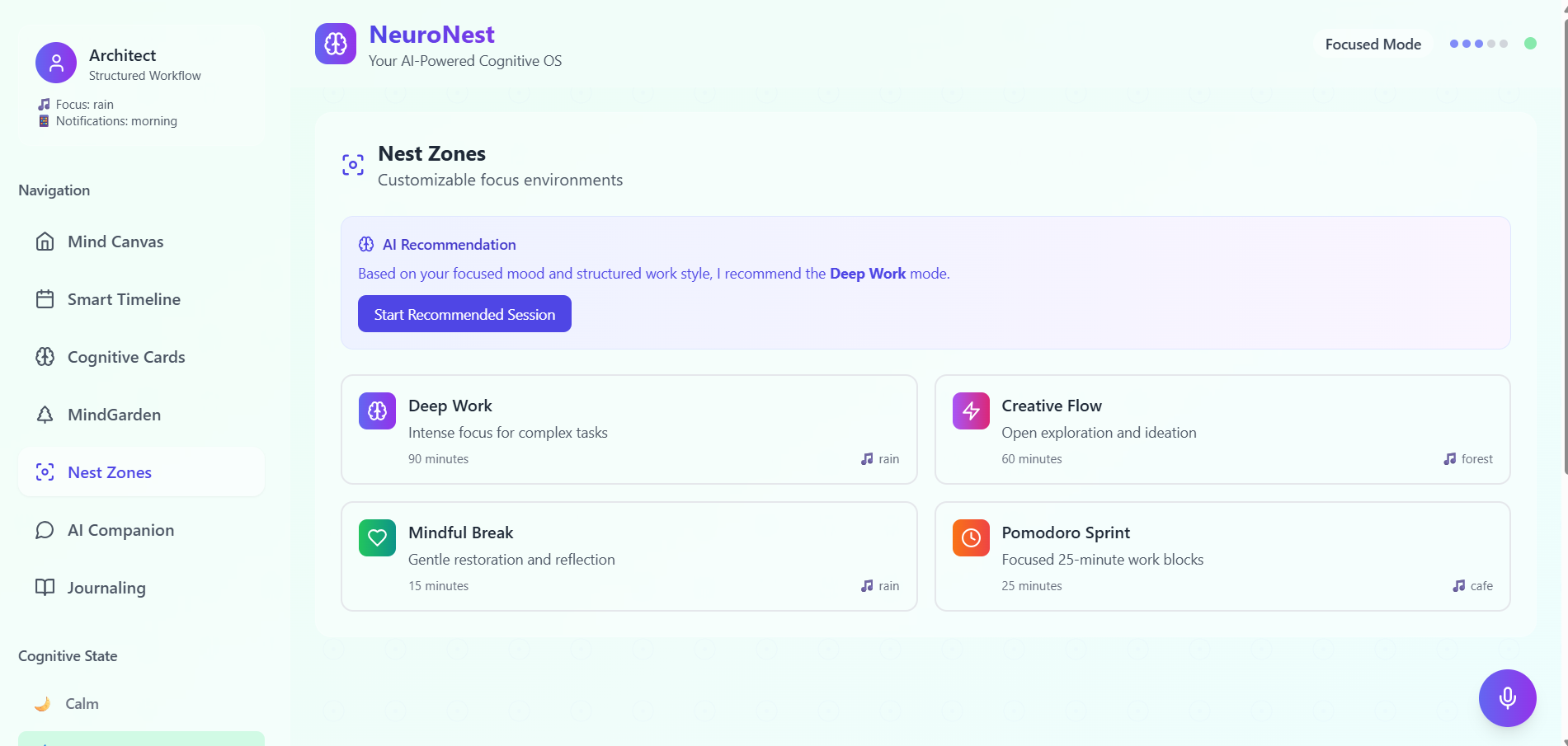
main featuesa and ui of app
-
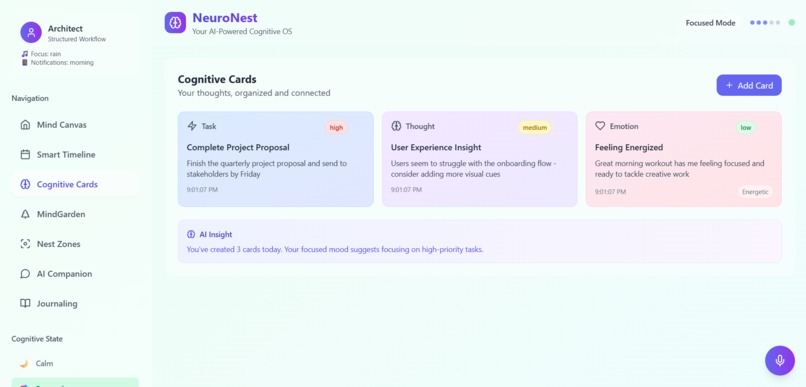
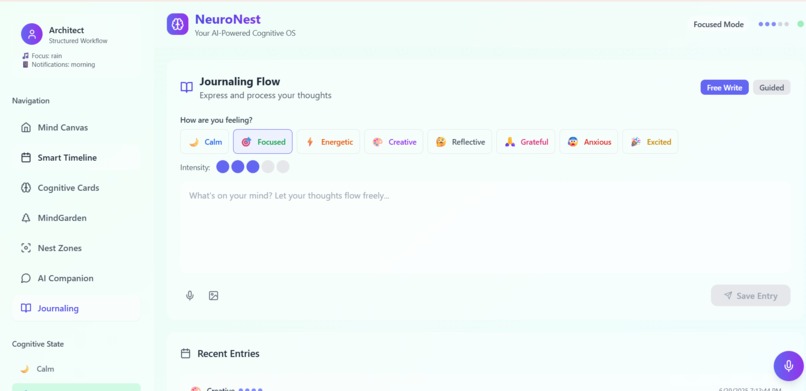
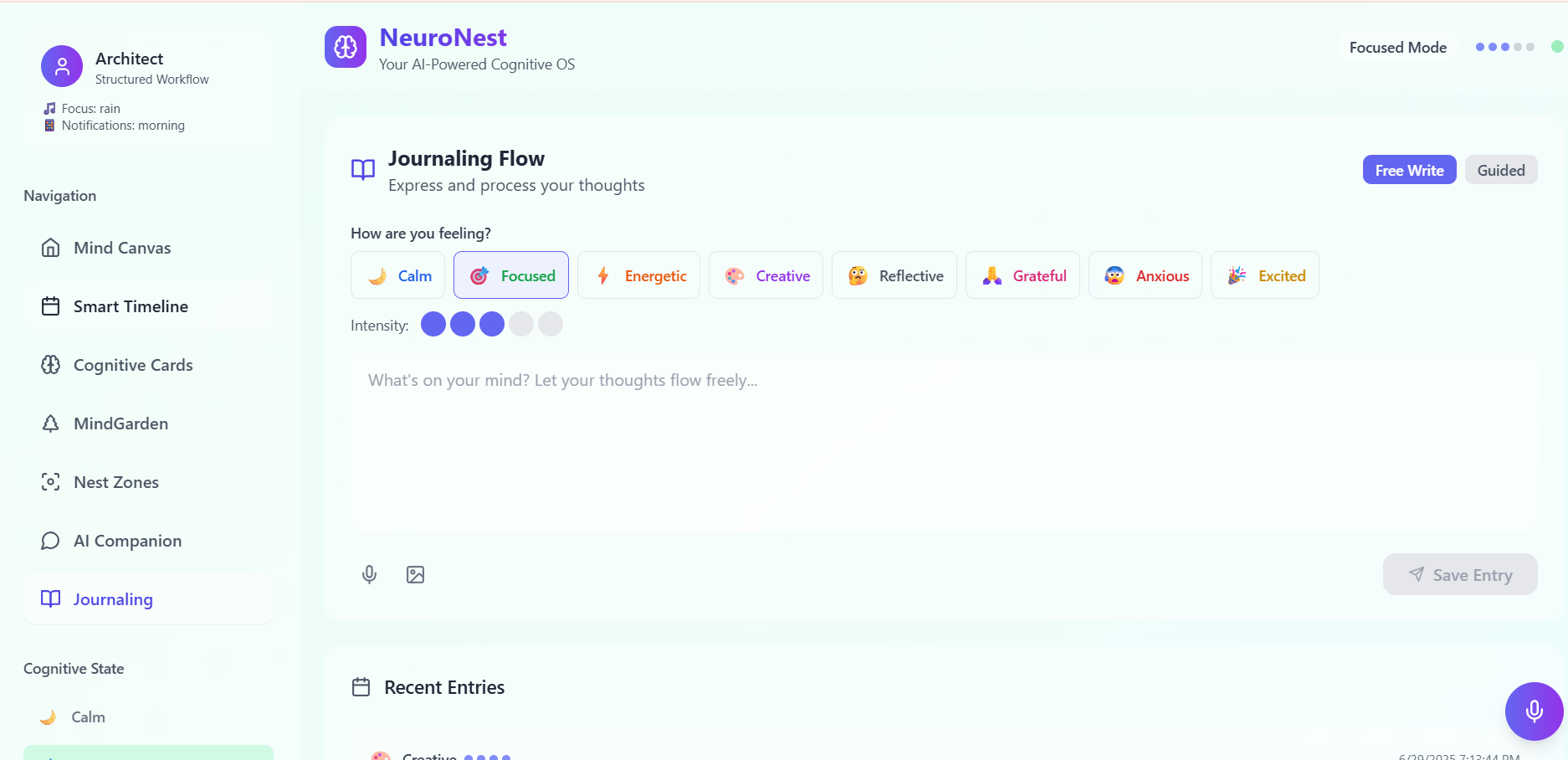
jounling feature of app
-
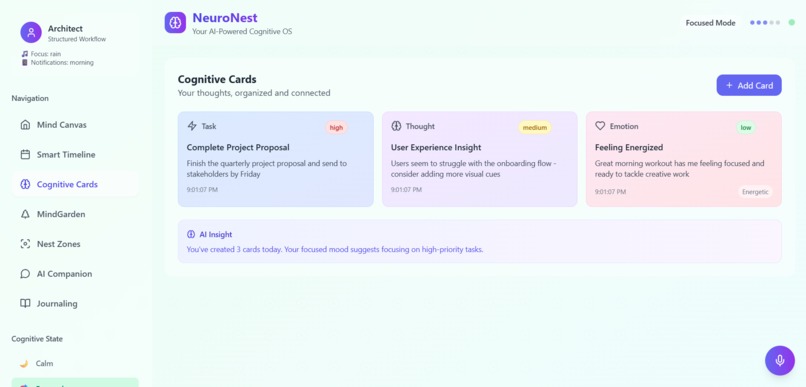
-
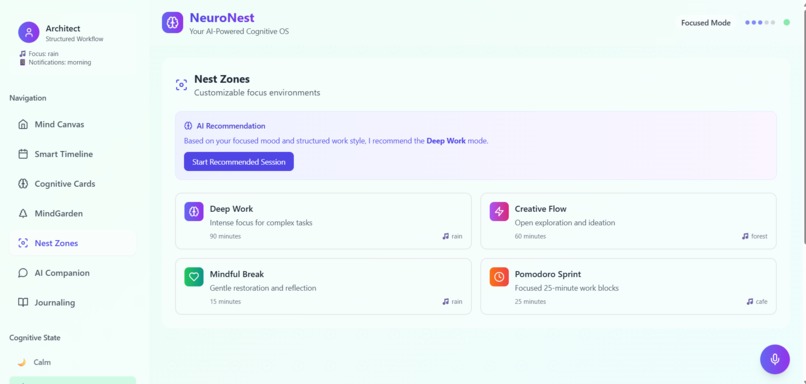
recording feature for calm mind
-
ai chat feature of app
InspirationNeuroNest — Project Story
🚀 About the Project NeuroNest is an AI-powered cognitive operating system designed to help users organize their thoughts, emotions, and daily goals—all in one intelligent, emotionally adaptive interface. The goal was to create a single space that supports not just productivity, but also mental wellness, especially for people with ADHD, anxiety, burnout, and creative overwhelm.
Inspired by the frustration of juggling multiple tools (task apps, journals, calendars, therapy notes), NeuroNest brings it all together, using AI to create personalized, mindful, and flexible cognitive workflows.
🌟 What Inspired Us We noticed a rising number of creators, students, and neurodivergent individuals struggling with fragmented systems and burnout. Despite using to-do lists, journals, mood trackers, and AI tools—nothing felt truly connected to the way their brains worked.
This inspired us to ask: What if your tools could adapt to you instead of the other way around? That question became the heart of NeuroNest.
🧩 How We Built It Frontend: Built with React Native + Expo, leveraging Framer Motion for fluid animations and a calming "mind canvas" UI.
Backend: Designed with Node.js (API Gateway) and Django (NLP/AI logic). We used PostgreSQL + TimescaleDB for structured + time-series data.
AI Models: Integrated OpenAI GPT‑4o for the mental coach, journaling insights, and adaptive planning. Voice-to-thought conversion was powered by Whisper.
Emotion Engine: A cognitive load estimator and emotion predictor were built in Python to personalize daily plans and detect burnout.
Security: All journaling and emotional data was AES-256 encrypted, with biometric login enabled.
We also created a semantic memory engine that links past journals to current tasks, ensuring no insight gets lost in the noise.
🔧 What We Learned Prompt engineering matters — We had to carefully craft GPT‑4o prompts for tone, empathy, and contextual awareness.
Emotional design is hard but powerful — Building interfaces that feel right based on mood data required experimentation with gradients, animations, and interaction models.
AI ≠ Everything — Users wanted transparency and control, so we added explainable-AI features to build trust.
Voice input adds magic — Whisper integration gave users a seamless way to offload thoughts instantly.
🧱 Challenges We Faced Real-time emotional UX syncing: Making mood changes reflect immediately across UI and planner logic was difficult but worth it.
Memory overload: Storing and linking semantic insights across hundreds of notes and tasks pushed us to optimize backend queries and model latency.
Balancing mental health ethics: We made deliberate design decisions to avoid triggering perfectionism, addiction, or over-dependence.
Time constraints: Our full vision was big—so we focused our MVP on 5 core features (Tasks, Mood, Thought Cards, AI Coach, Timeline).
🎯 Closing Note NeuroNest isn’t just an app—it’s a companion for your mind. It learns with you, grows with you, and adapts to the way you think. We’re proud to contribute to the future of mindful AI and cognitive-first tools.
Let your mind rest, grow, and fly—inside your NeuroNest. 🕊️💡
What it does
How we built it
Challenges we ran into
Accomplishments that we're proud of
What we learned
What's next for NeuroNest “Your AI-Powered Cognitive Operating System”
Built With
- django-restful-api-design-gpt?4o-prompt-engineering-and-mastery-kafka
- expo-mobile-ui-node.js
- react-native
- redis-real?time-data-pipelines-behavioral-design-cbt-techniques

Log in or sign up for Devpost to join the conversation.