-
-
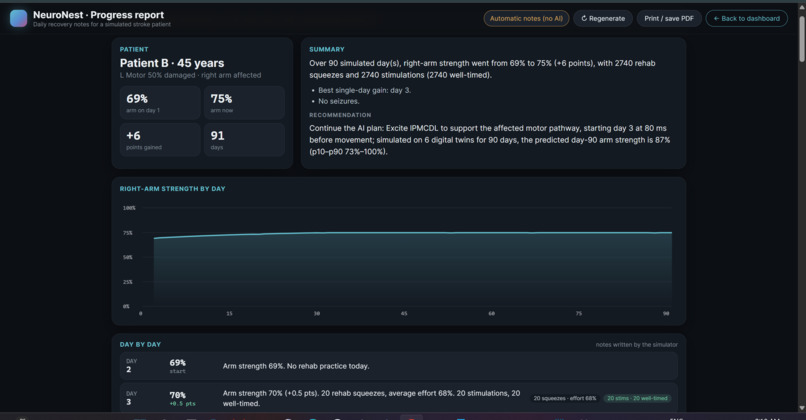
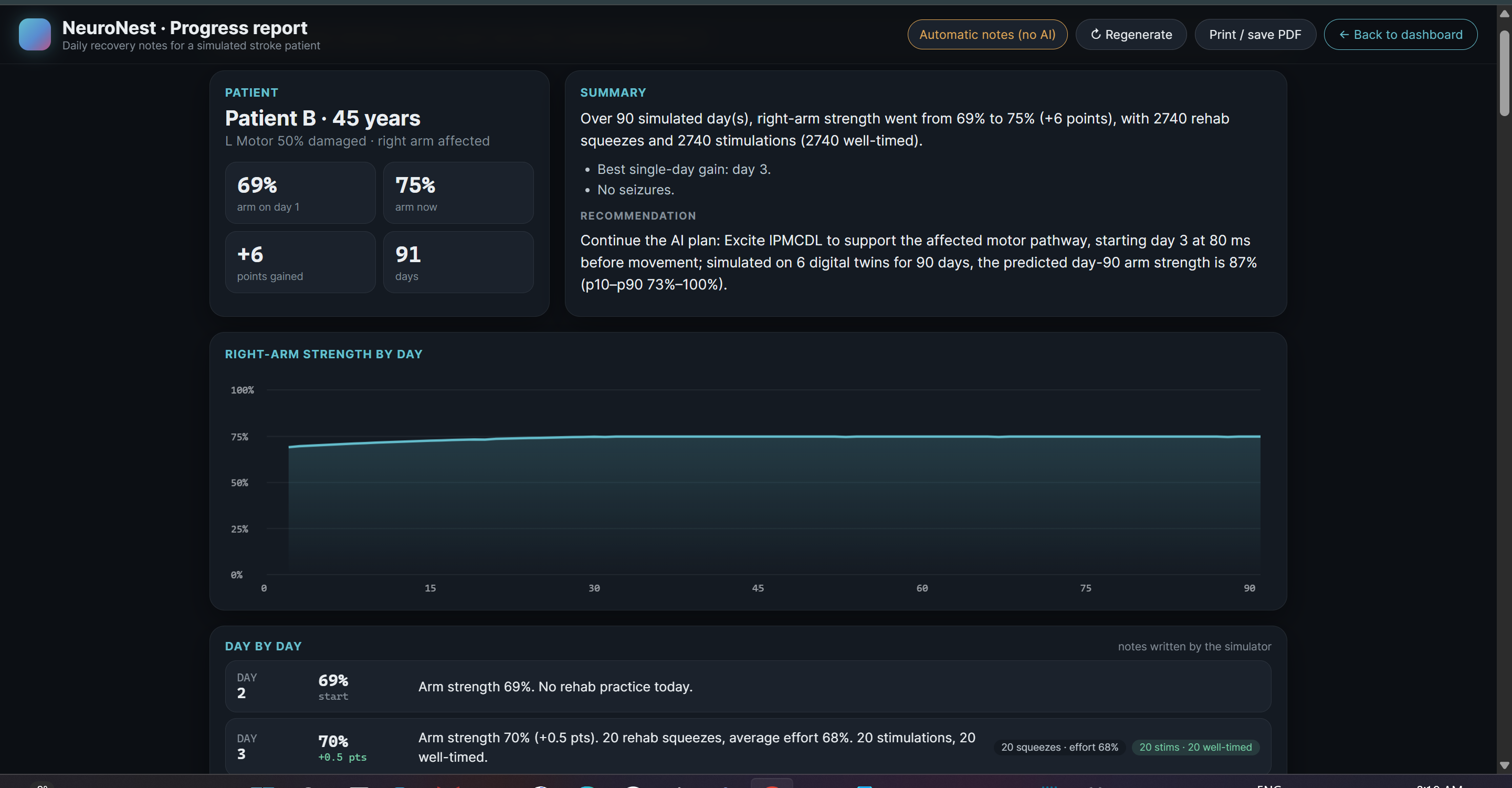
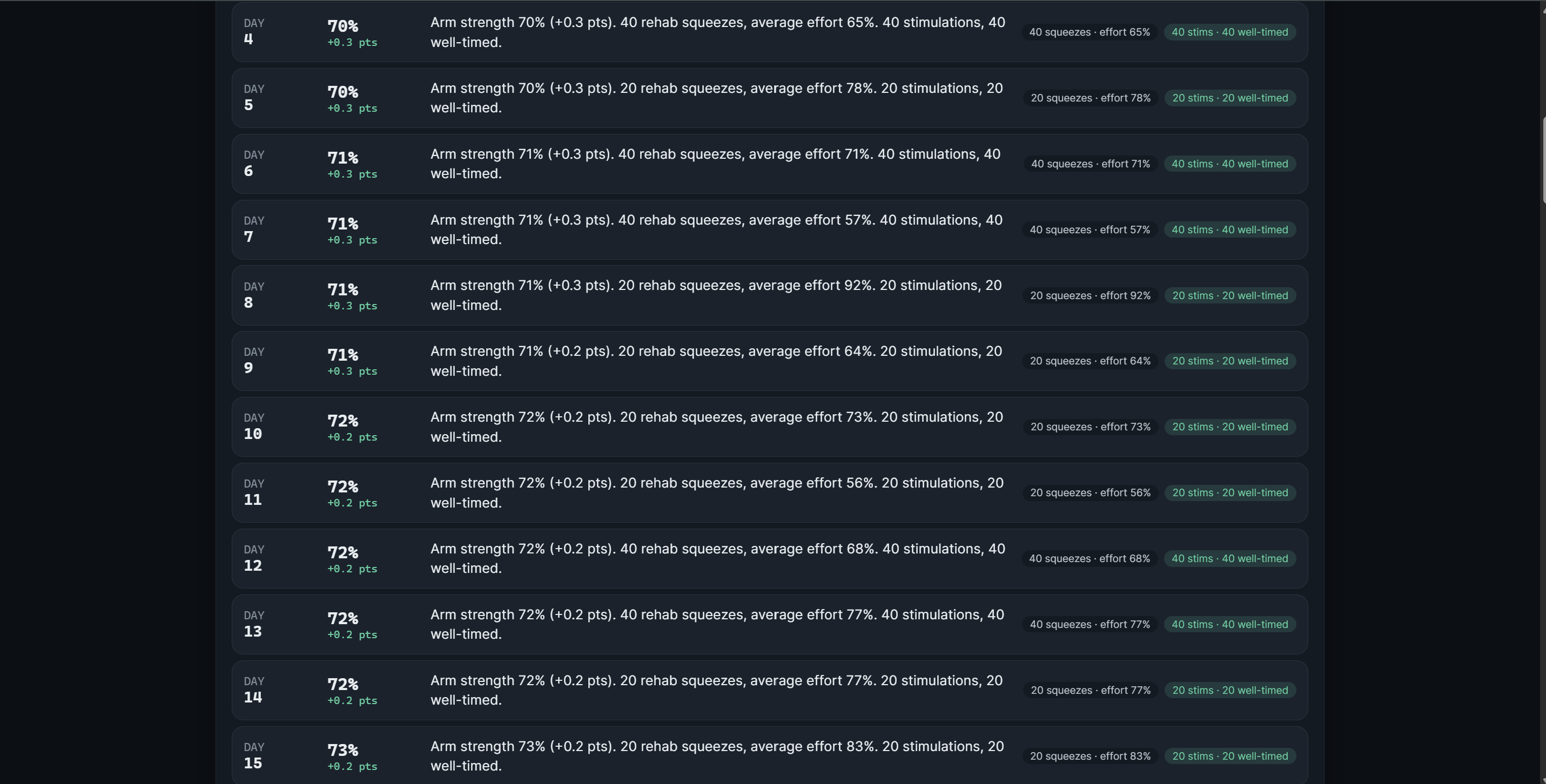
Progress report
-
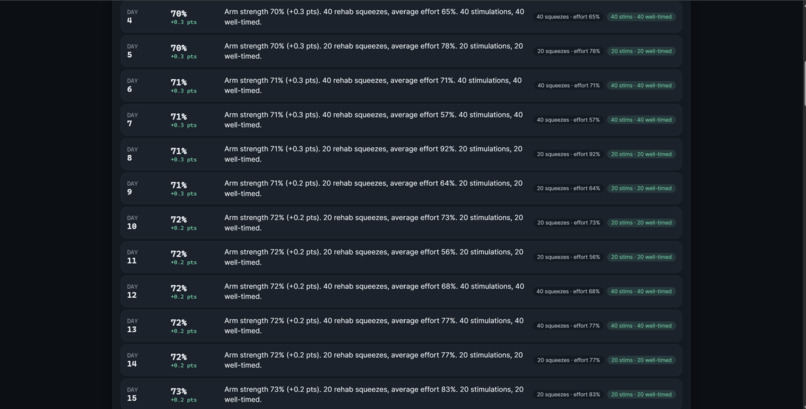
progress report daily details
-
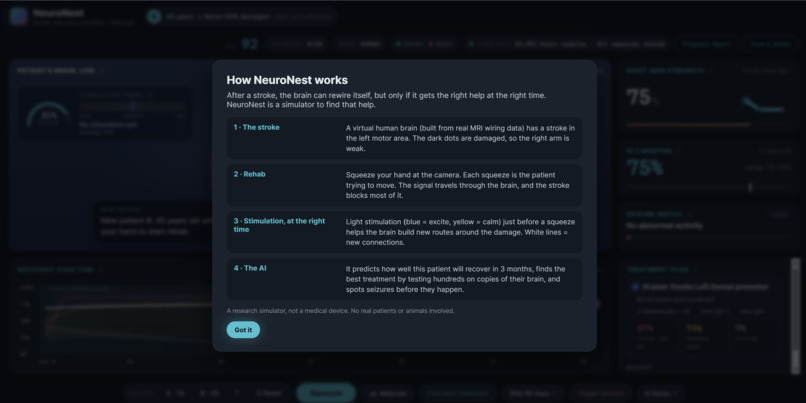
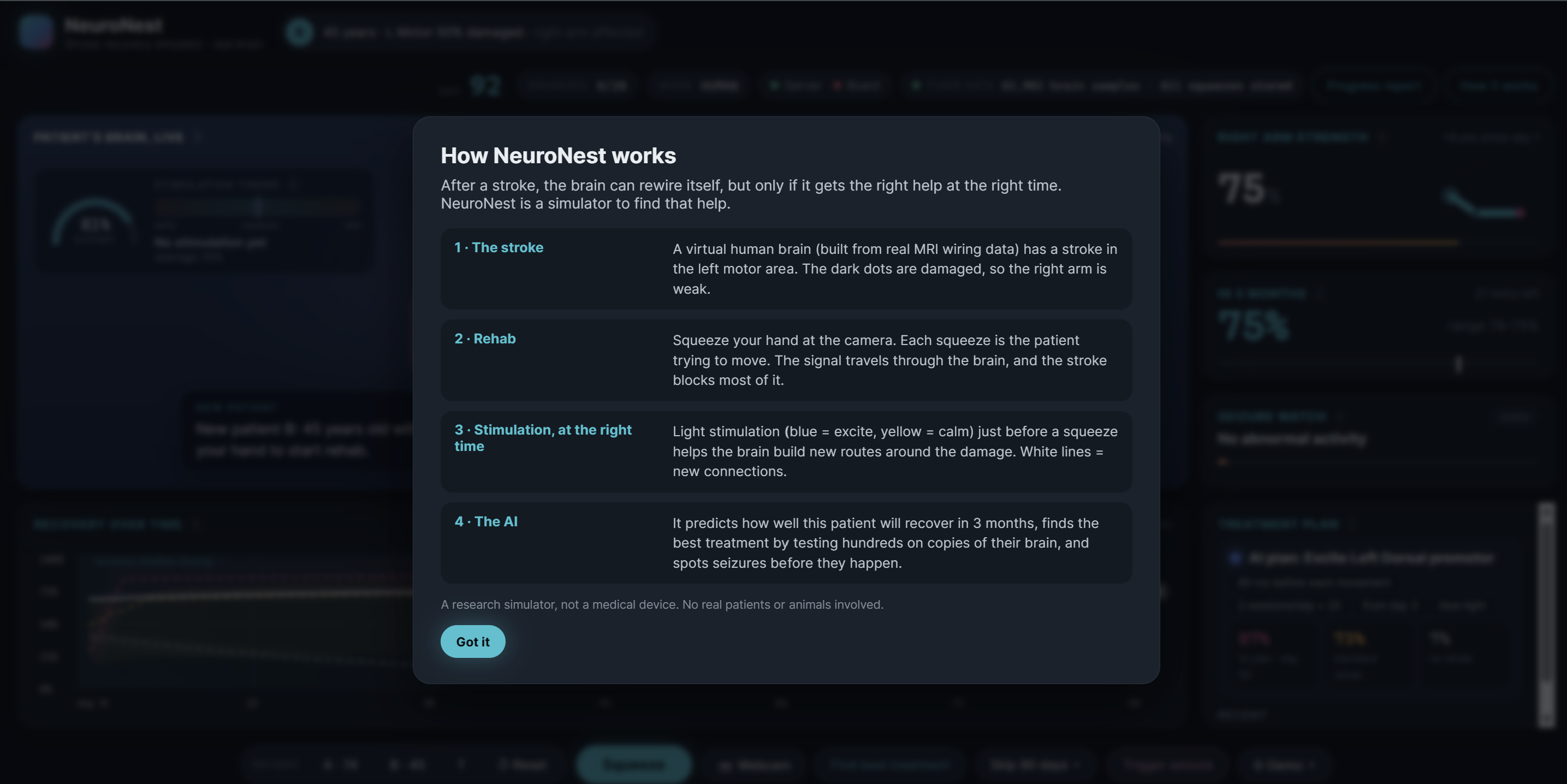
how it works
-
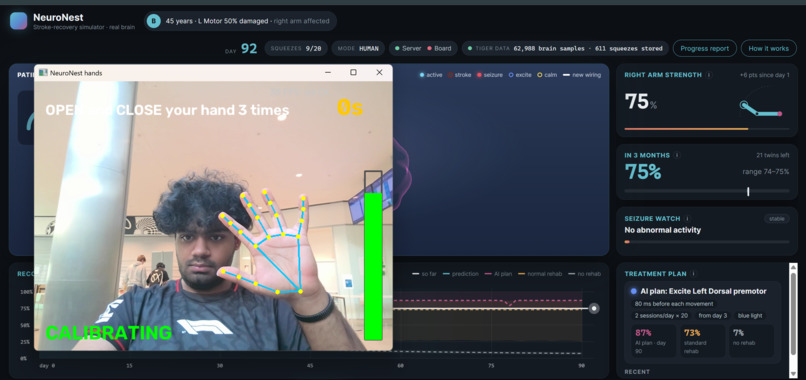
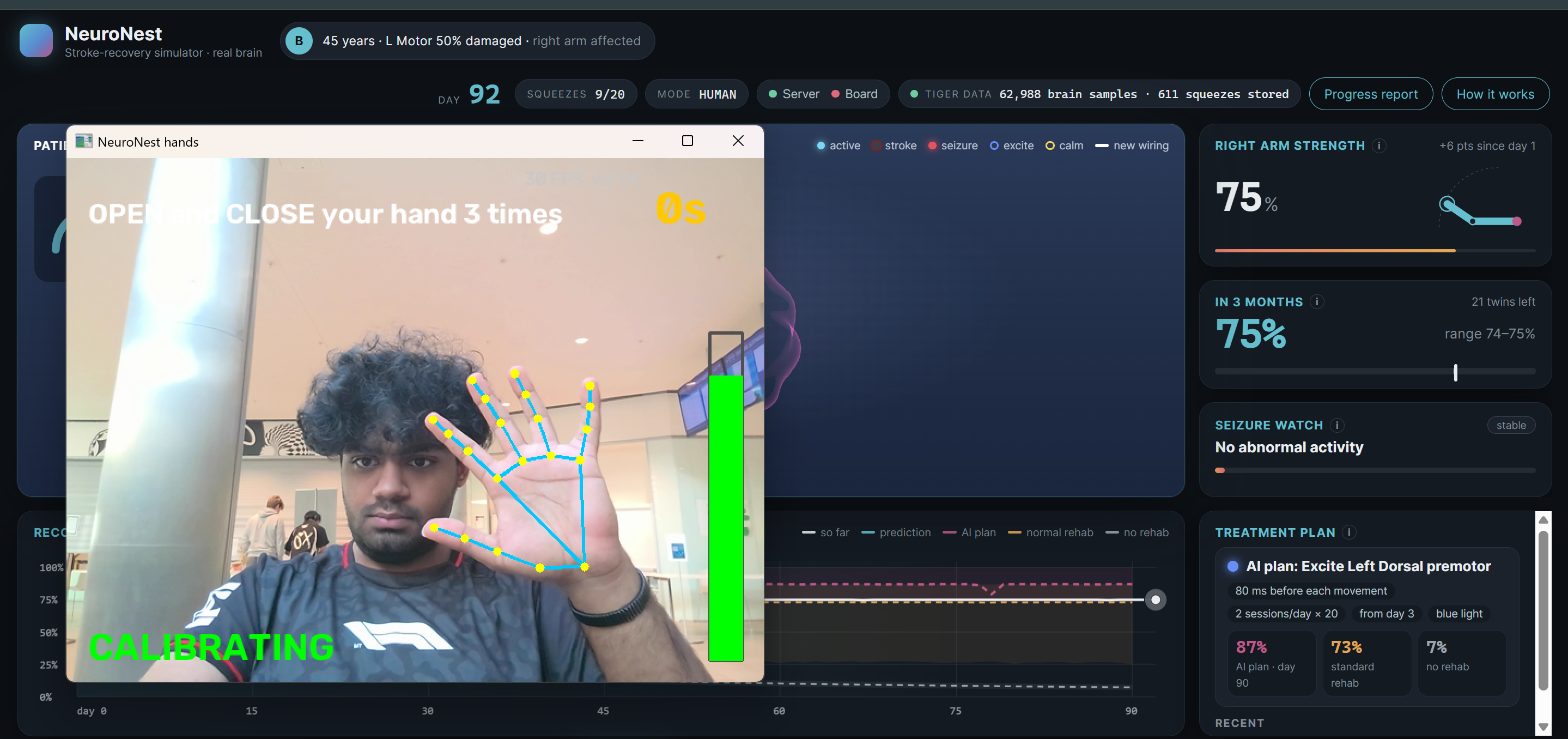
actual camera hand squeezing
-
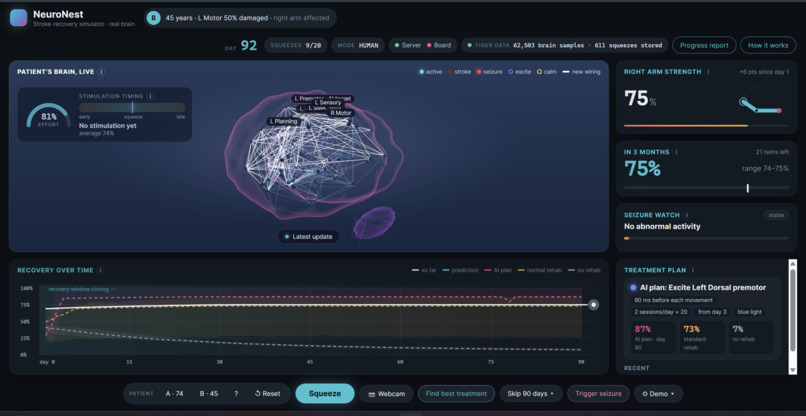
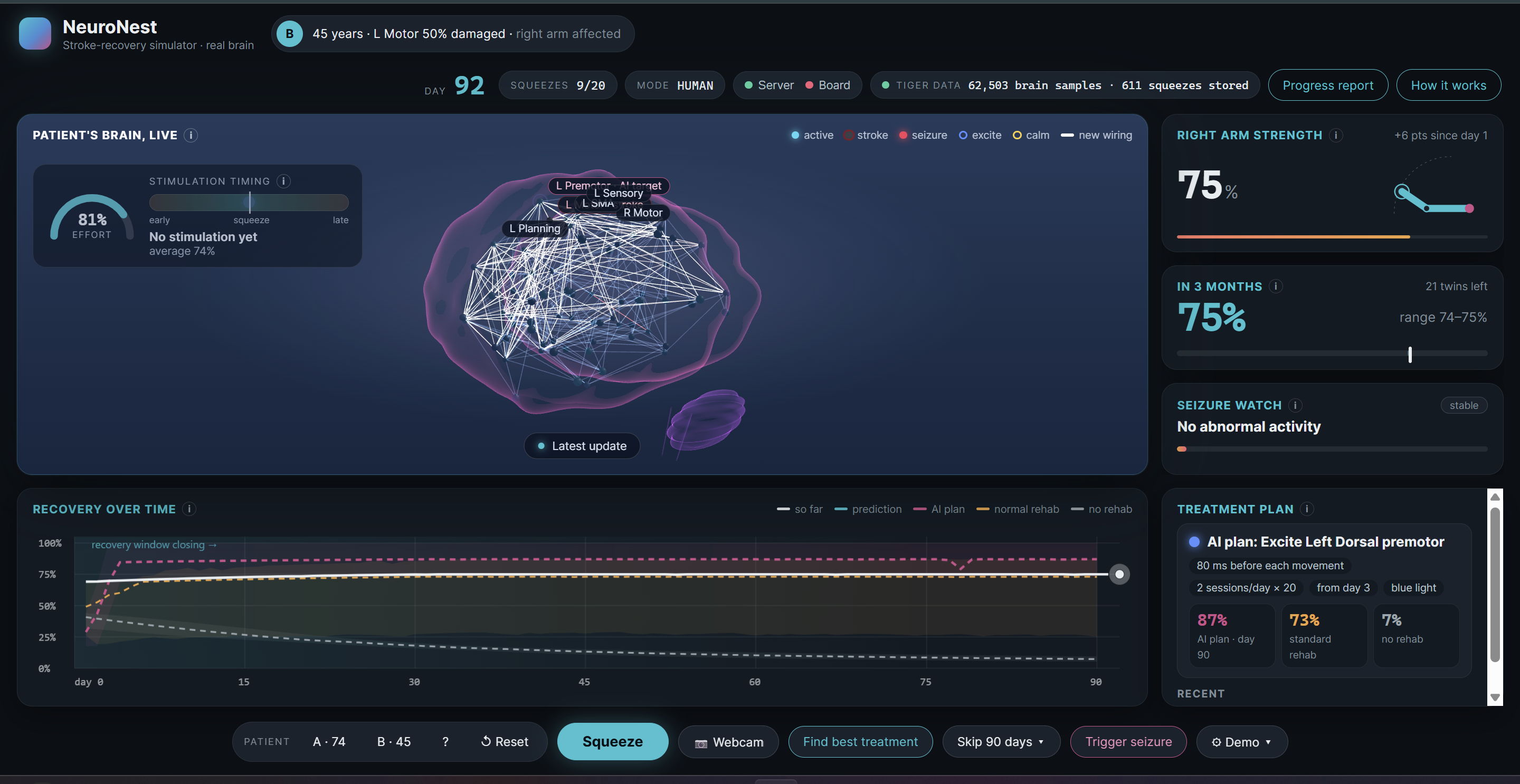
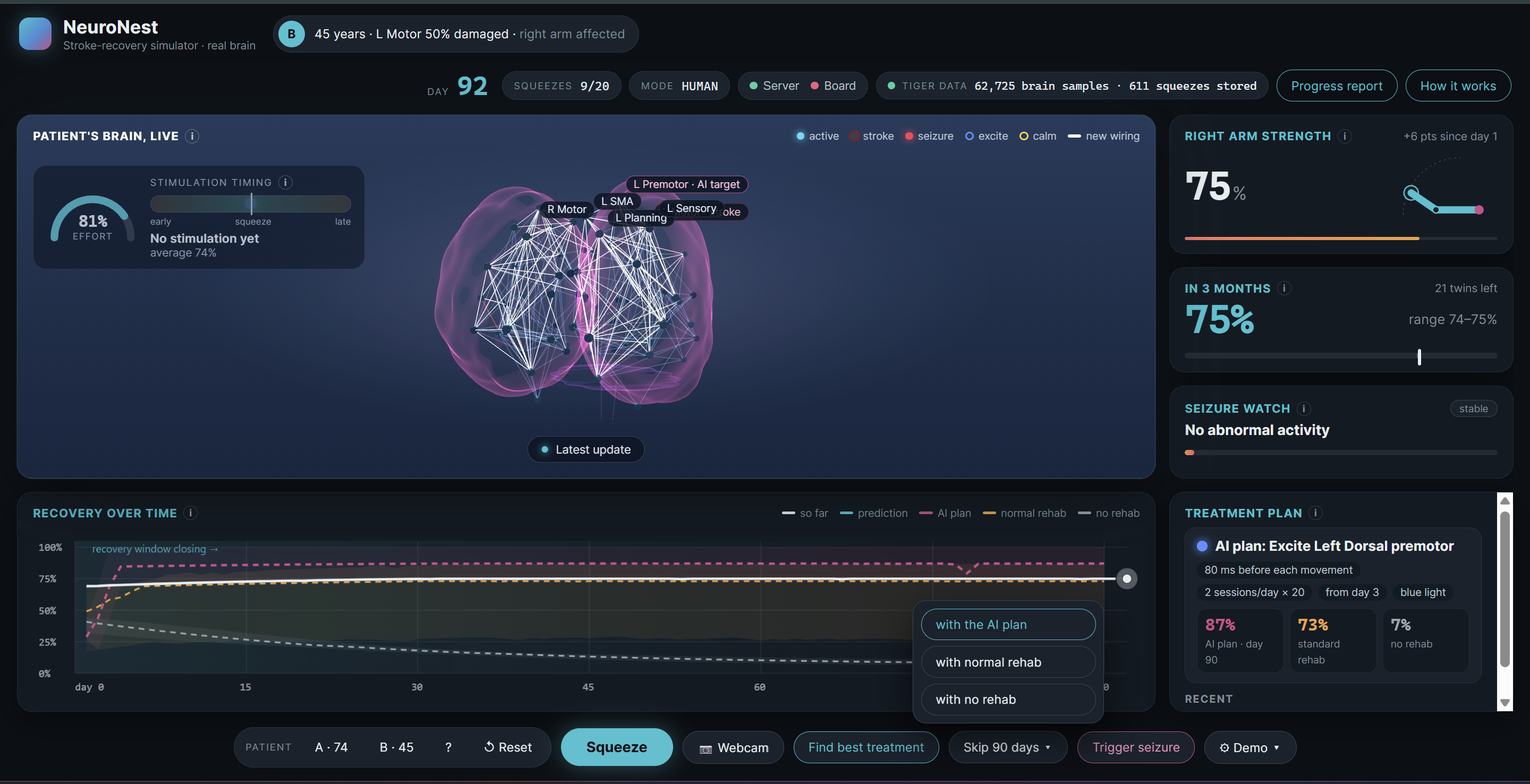
dashboard
-
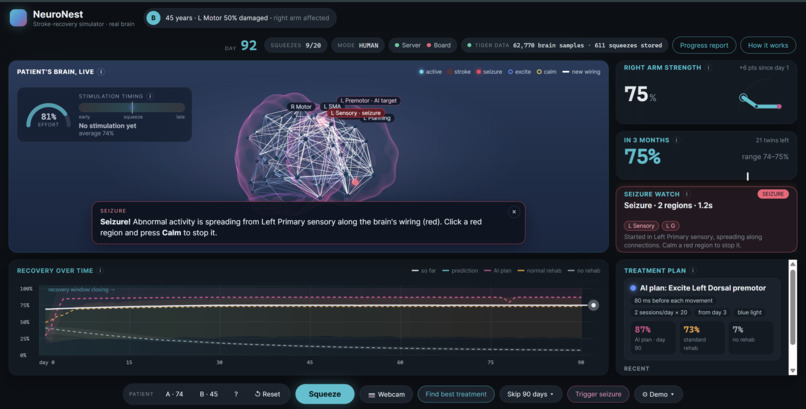
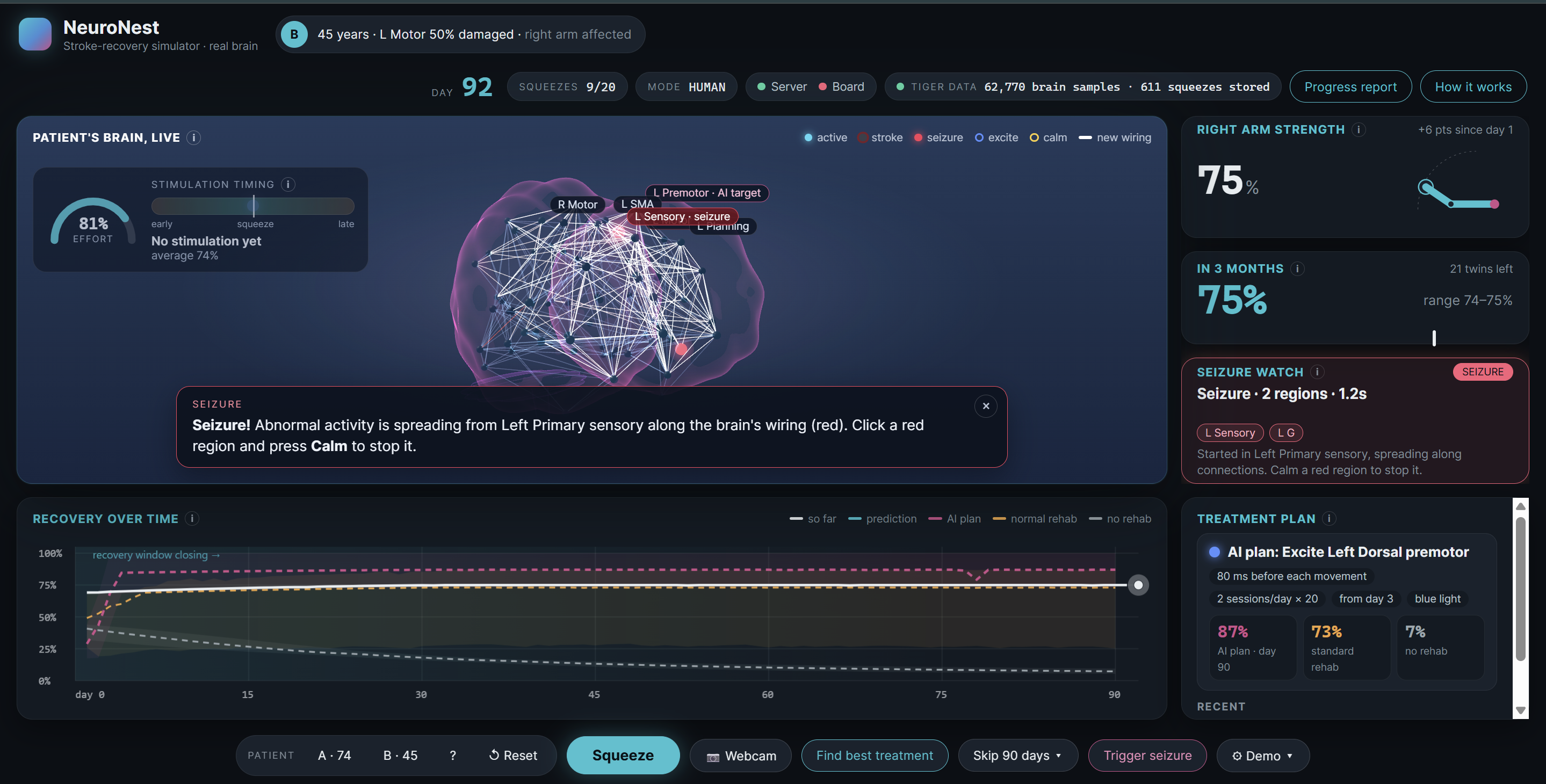
Seizure in progress
-
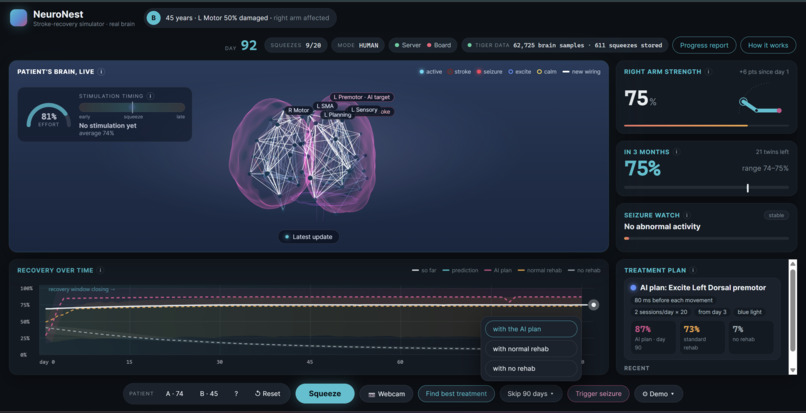
Demo options
Inspiration
100,000 patients suffer from stroke every year. It can leave people with permanent damages to their nervous system, including paralysis. We wanted to help create a system that prevents long term damage by helping healthcare professionals find the best solution.
What it does
It creates digital twins of the affected brain and uses past patients' data to decide the most optimal solutions for each patient. It tests the recovery time by measuring the level of recovery and amount of effort exerted in the patient's arms to check for motor neurone pathways, strengthening the connections between neurons. It uses the in-built camera on the laptop to check for brain stimulation by asking the patient to squeeze their hand. It also aims to protect patients from further damage by predicting and warning about seizures ~3 seconds before they develop. They can also use their phone to control the simulations, and get a detailed overview along with audio descriptions about the current progress.
How we built it
We used an Arduino Uno Q board, a servo motor and a Grove LCD display to show the impact of our project. Other technical tools included using Gemini API to create a detailed analysis report at the end of the simulation; ElevenLabs API for the voice feature; and TigerData to host our database. The actual brain itself was virtual and was gotten from an open-source platform called The Virtual Brain, which we then made twins/copies of to aid in our simulation and research.
Challenges we ran into
Some of the hardware turned out to be faulty which initially caused a setback as we ended up spending some time trying to fix it. Another obstacle was trying to switch between the manual and automatic stimulation (done by the person squeezing their arm in front of the camera) seamlessly.
Accomplishments that we're proud of
We were able to showcase the relevant part of the brain being stimulated on screen as it happened in real time. Furthermore, the algorithm takes into consideration each individual's personal journey as well as other contributing factors such as age as they recover to determine a realistic recovery rate by the end of 3 months. Being able to incorporate aspects of computer vision by using the device's camera was another major accomplishment.
What we learned
We learnt how to use Arduino boards; implement real-time healthcare systems; incorporate other input devices into our programs; and learned how connections in the human brain are formed.
What's next for NeuroNest
We hope to be able to expand our project and use it on a wider scale throughout the industry. If we had more time, we may have also considered adding a stroke prevention feature, and we would like to use real-time brain data collected from EEGs


Log in or sign up for Devpost to join the conversation.