-
-
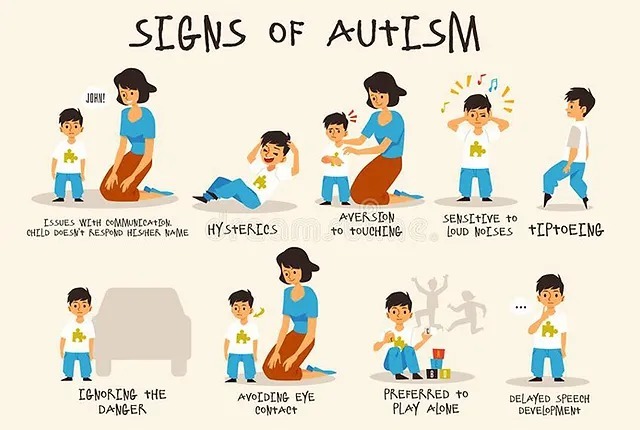
Early Autism Detection
-
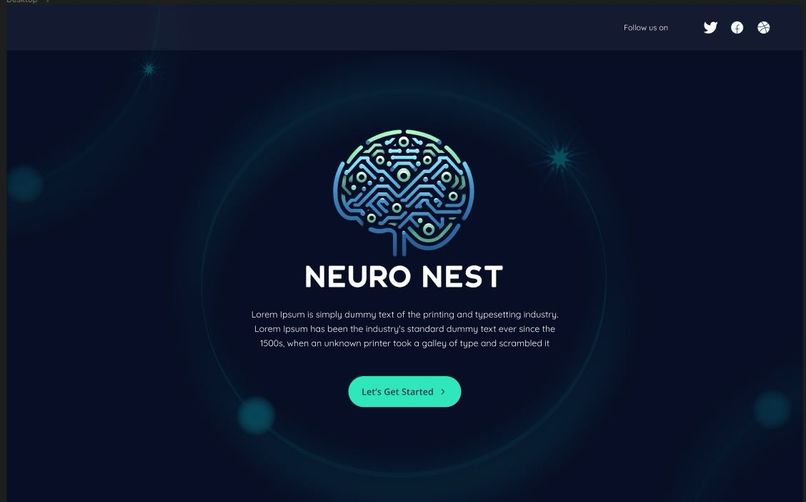
NeuroNest, an app that identifies early stage Autism in toddlers, with a vast future impact such as for Alzheimers, Dementia, etc
-
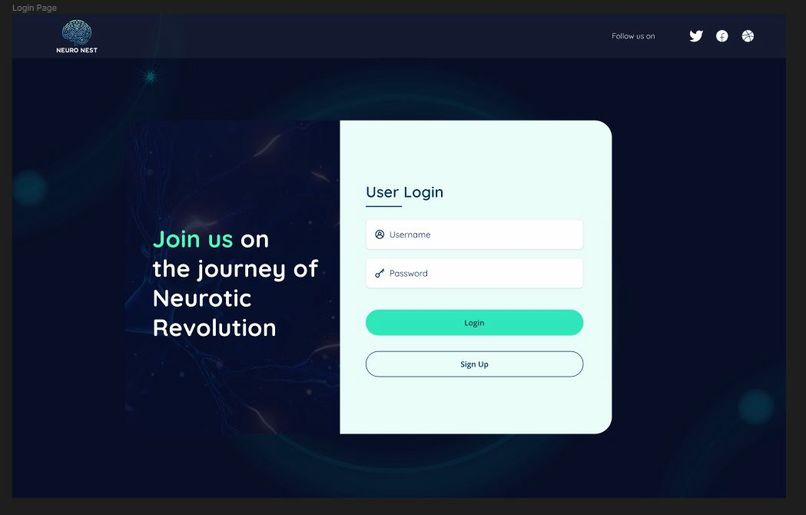
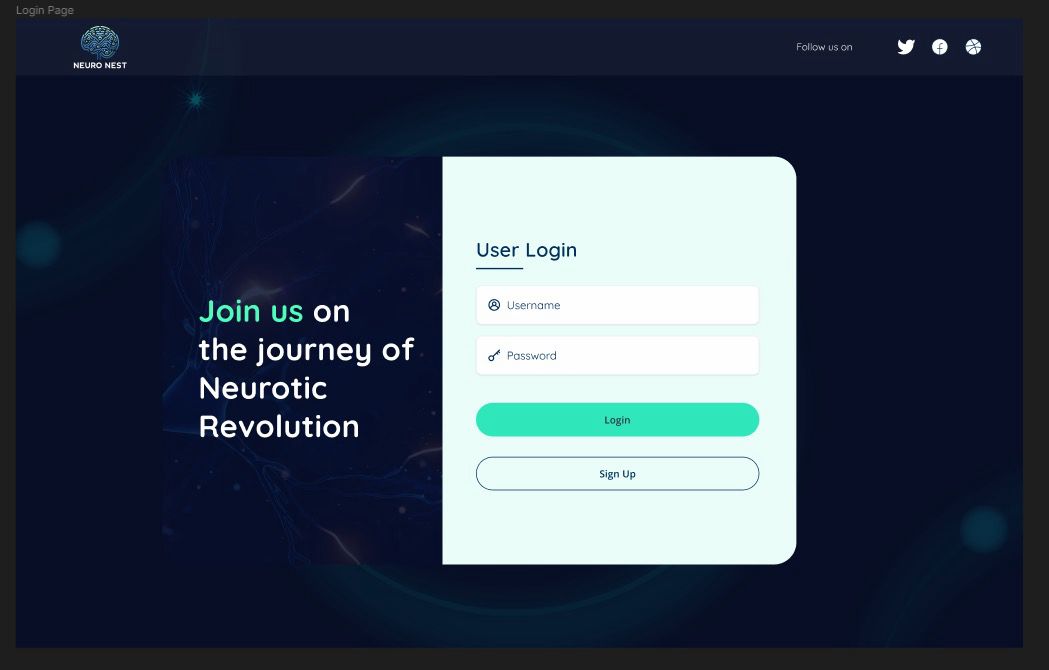
User Login Page
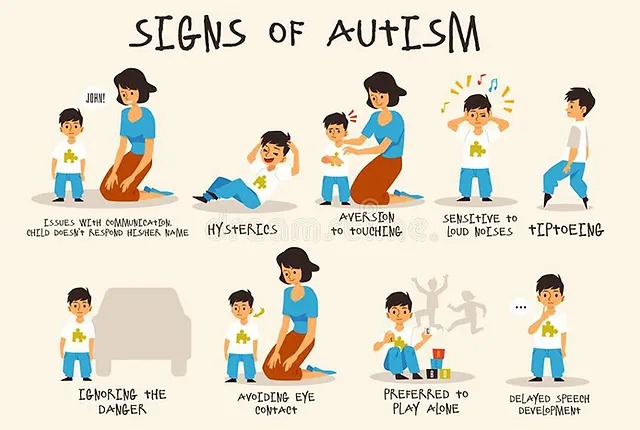
Inspiration
Our journey began with a personal story. One of our team members has a younger brother living with Autism. Witnessing his challenges and experiences firsthand ignited our passion to make a difference in the neuro disorder space. We realized that early detection and intervention could profoundly impact the lives of individuals with neuro disorders and their families. This understanding became the cornerstone of NeuroNest, driving us to develop a solution that not only aids in early detection but also provides valuable insights for ongoing care and management.
What We Learned
Throughout this project, we delved deep into the realms of artificial intelligence (AI) and machine learning (ML), learning how these technologies can be harnessed to predict and manage neuro disorders. We also gained insights into the complexities of conditions like autism, Alzheimer's, and ADHD. The interdisciplinary nature of NeuroNest taught us the importance of integrating technological innovation with compassionate healthcare.
How We Built It
NeuroNest was built on a foundation of cutting-edge AI and ML algorithms. We started by aggregating and analyzing extensive datasets, including behavioral patterns and genetic information, to develop predictive models. Our approach combines technical expertise with inputs from medical professionals to ensure accuracy and ethical compliance. We also focused on creating a user-friendly interface, making the technology accessible to non-specialists.
Challenges Faced
Our journey was not without challenges. One major hurdle was ensuring the accuracy and reliability of our predictive models, a crucial factor in healthcare applications. Navigating the ethical and privacy aspects of handling sensitive health data was another significant challenge. Also, one of the major challenges was to scrape out the data for autism in terms of text and image for our application, which ultimately helped us finalize the topic. Additionally, we had to meticulously scan out the data visualization tools to understand the data, data preprocessing to confine our dataset to a fixed dimension (in terms of image data) and one hot encode features (in terms of textual data), and ultimately choosing algorithms, hyperparameters, testing our model on the trained data and deploy the saved model to our react app.
Conclusion
NeuroNest is more than just a project for us; it's a mission to transform the way neuro disorders are detected and managed. With a blend of technology, empathy, and innovation, we are committed to enhancing healthcare and making a positive impact in the lives of those affected by neuro disorders.

Log in or sign up for Devpost to join the conversation.