-
-
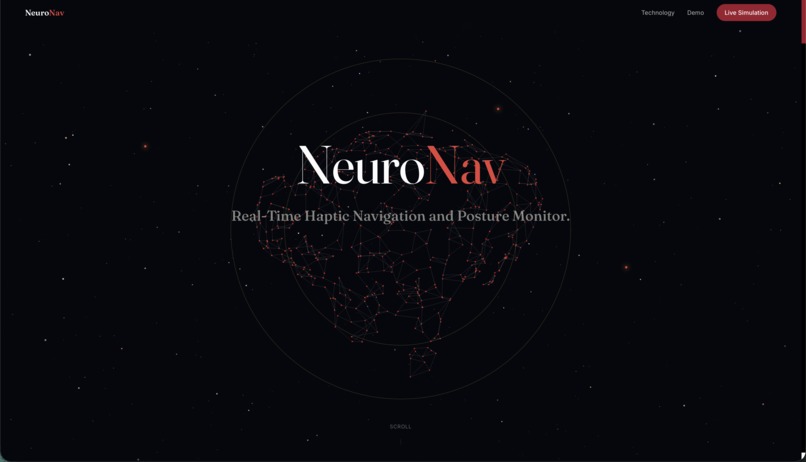
NeuroNav Landing Page
-
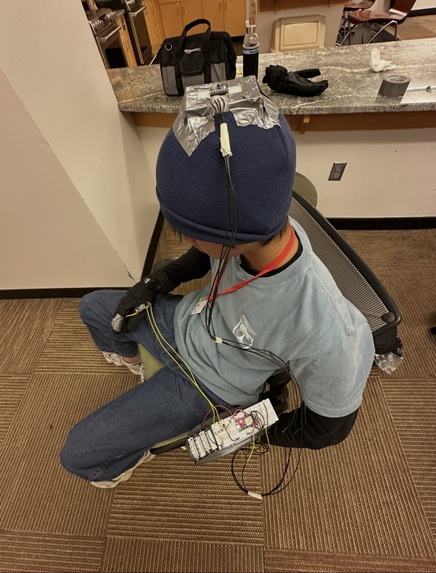
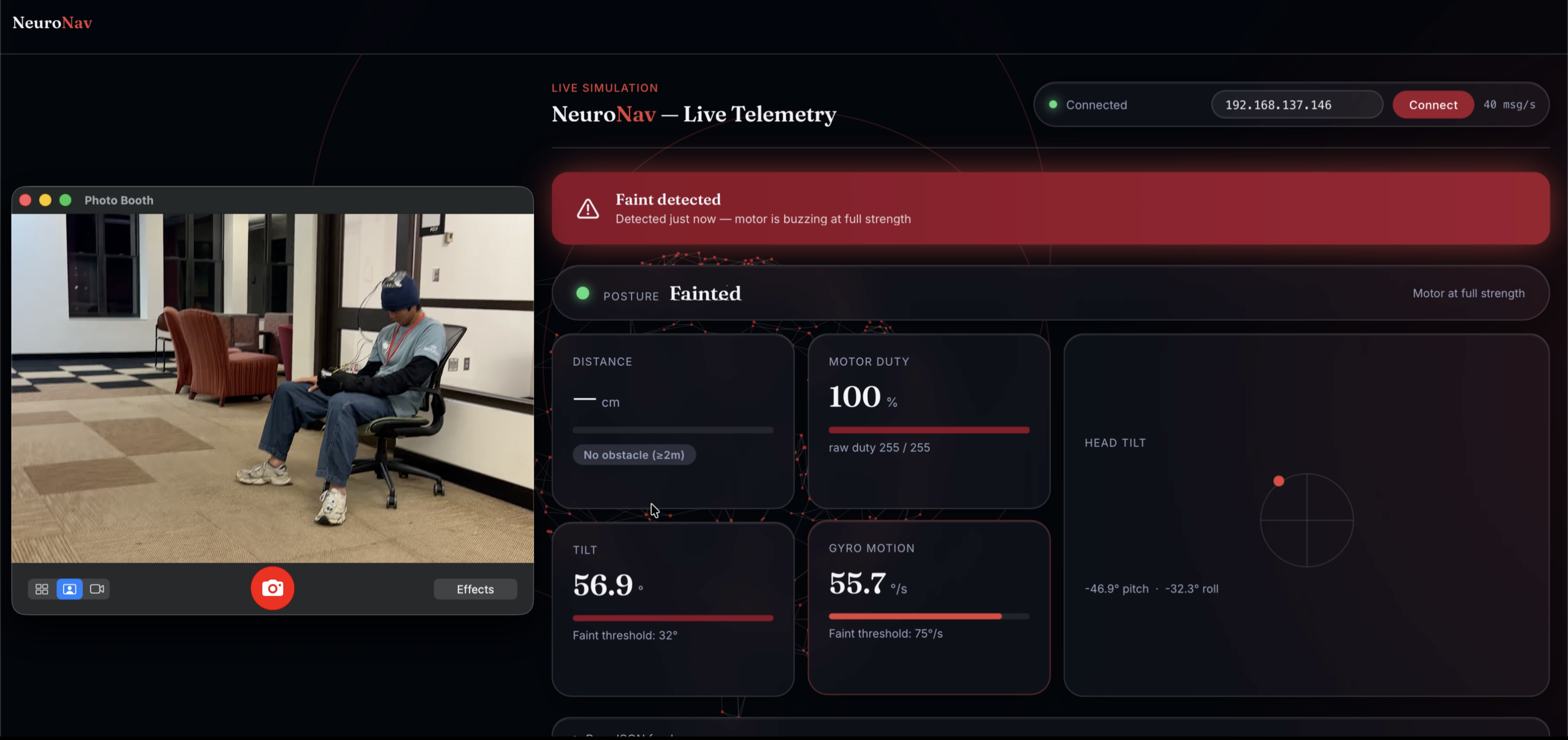
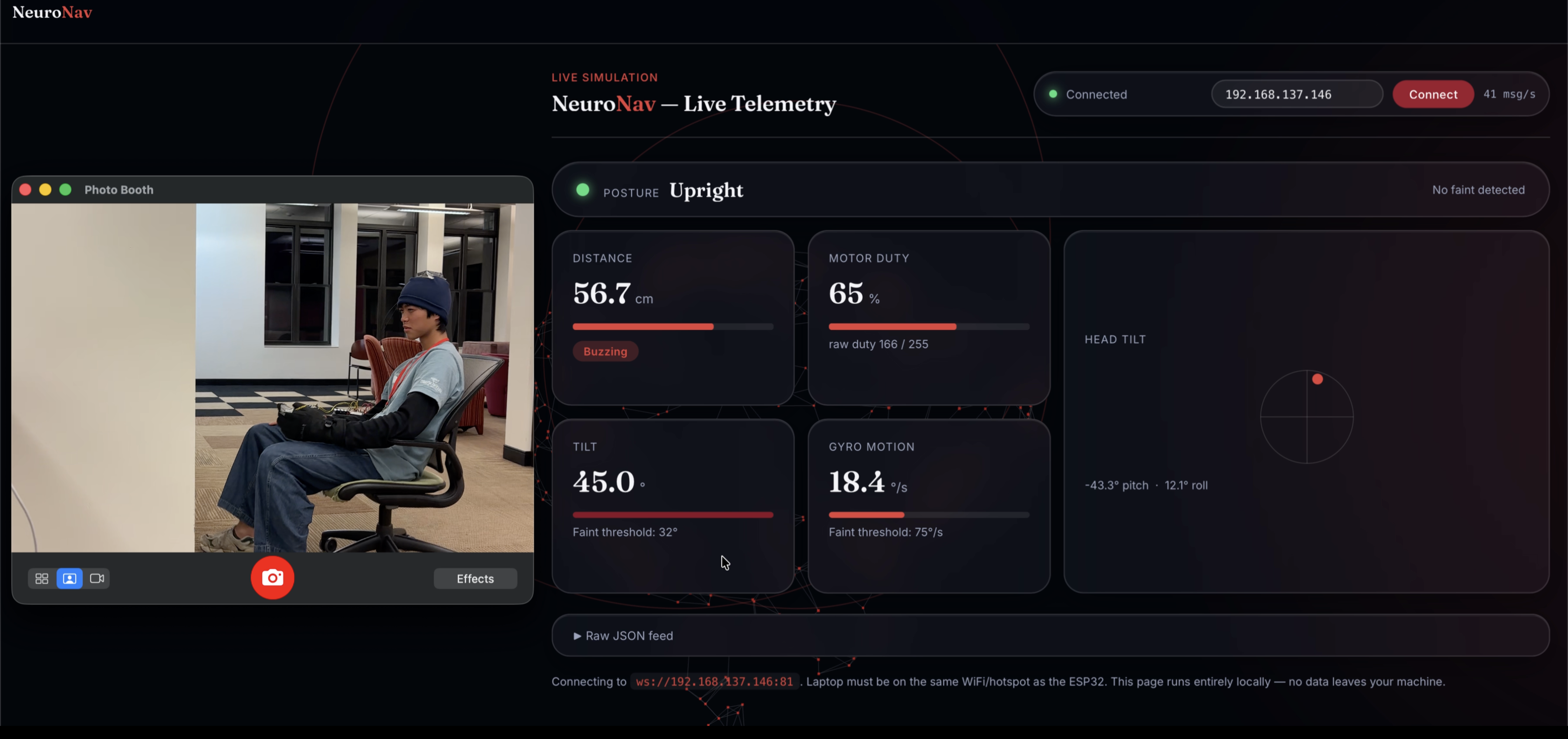
Demo with person
-
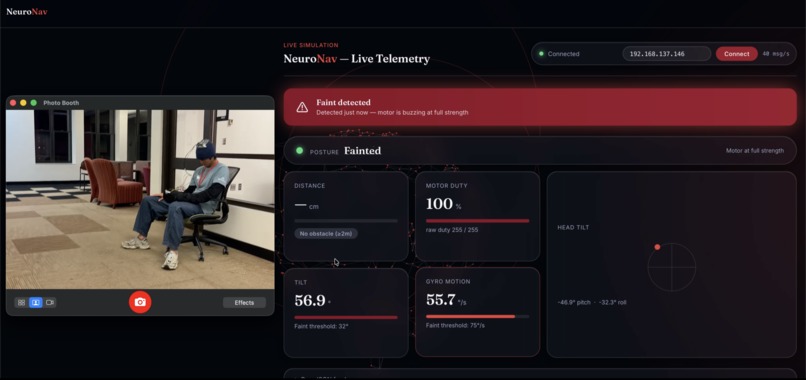
Caregiver Dashboard with Fatigue Detected
-
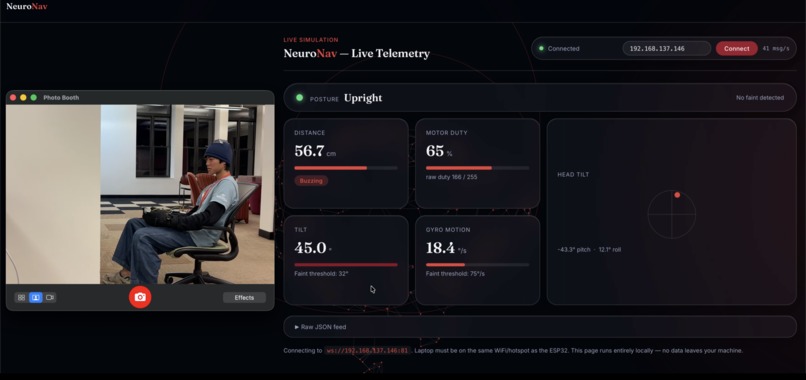
Caregiver Dashboard
-
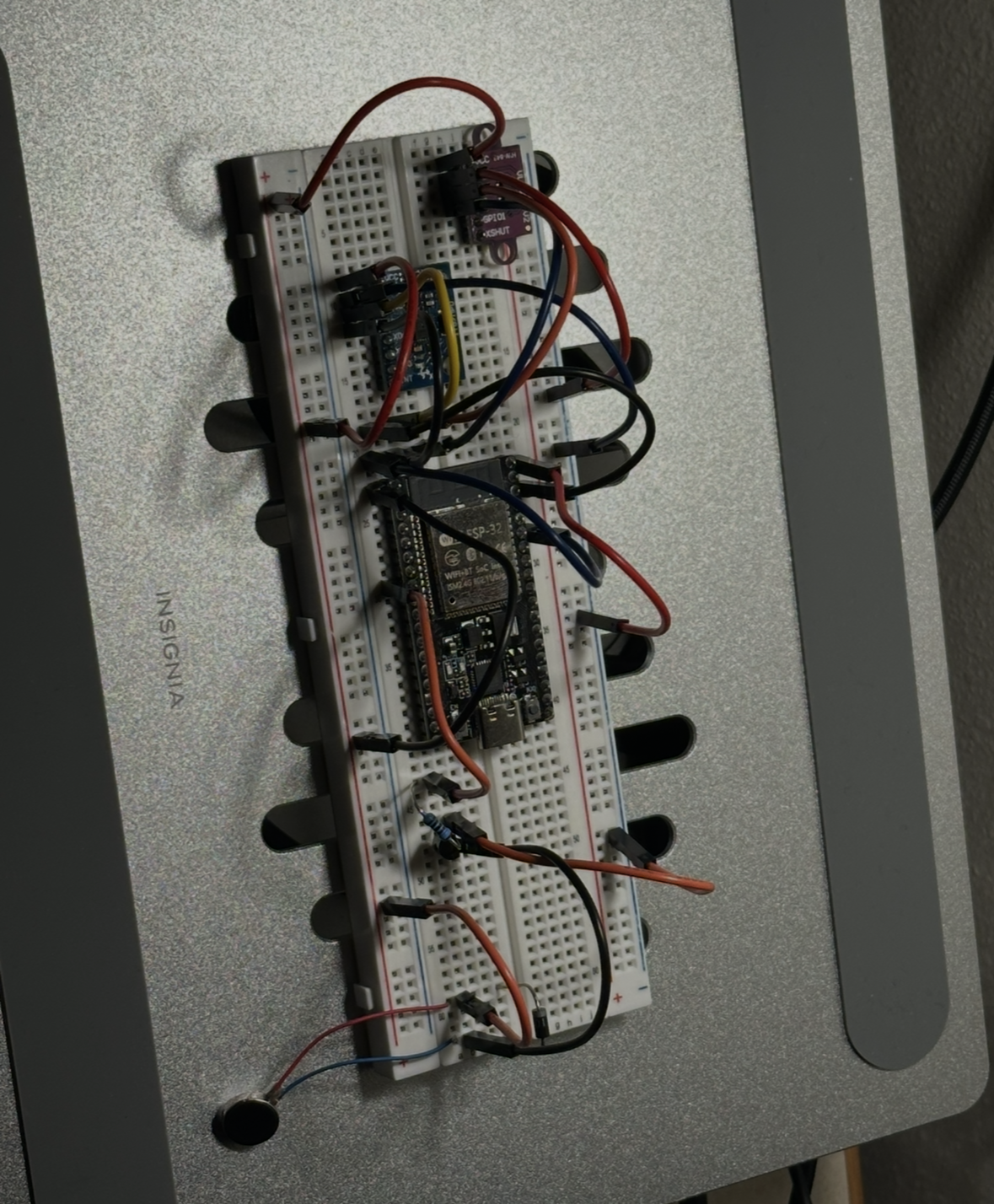
Breadboard Simplified
-
Logo
Inspiration
We were inspired by the challenge of bringing accessibility to people with neurodegenerative diseases. Many people think that these diseases impair only motor skills, but those with diseases like ALS, Multiple Sclerosis, and Alzheimer's also struggle with fainting and vision. We wanted to build an alternative to the $350 to $750 standard fall detection with a sub $50 suite compatible with any wheelchair allowing for fainting detection and haptic feedback through LiDAR obstacle vision.
What it does
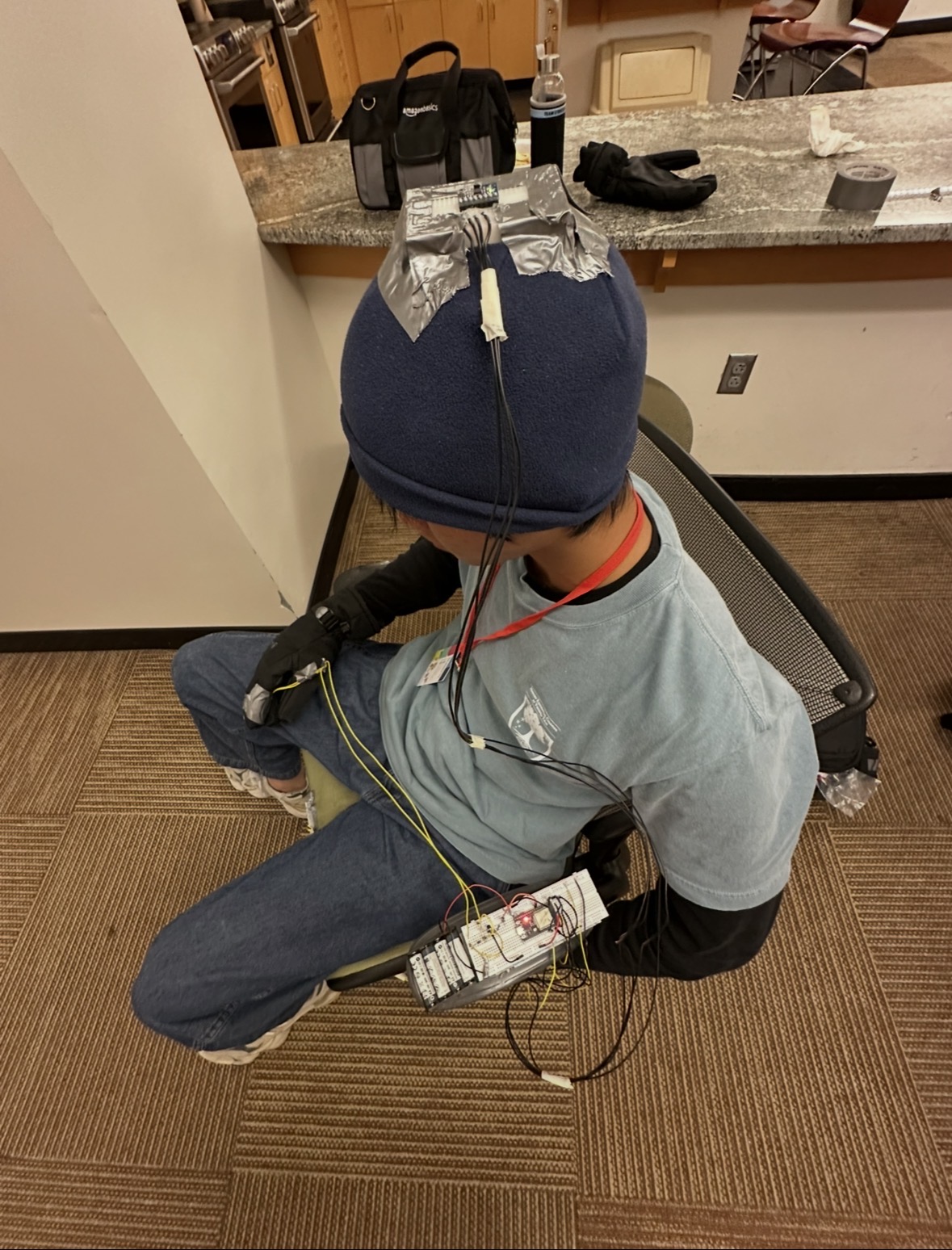
NeuroNav is a real-time haptic navigation and posture monitoring system. It uses embedded sensors to track spatial orientation and proximity, converting environmental data into a matrix of tactile haptic responses. Paired with a live web dashboard, it allows users, and authorized caretakers to monitor spatial awareness and posture indicators seamlessly in real time.
How we built it
We built NeuroNav within a 36-hour window by combining embedded hardware with a modern web stack:
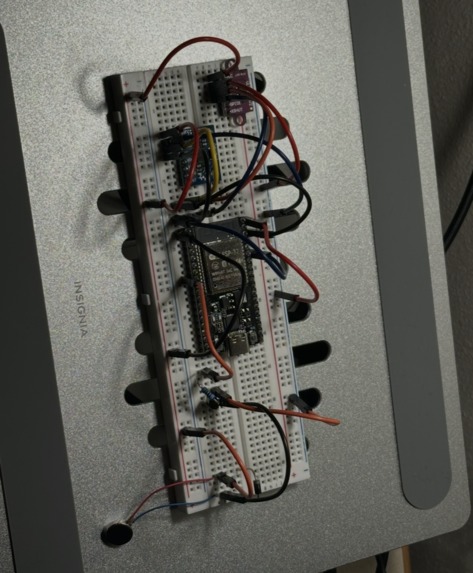
- Hardware: Powered by an ESP32 microcontroller integrated with an MPU-6050 IMU for tilt/orientation tracking and VL53L0X Time-of-Flight laser distance sensors.
- Haptics: A custom arrangement of 12 haptic vibration motors delivering directional feedback signals.
- Software & Communication: Real-time telemetry is streamed via WebSockets at a poll rate of 40 Hz to ensure ultra-low latency.
- Frontend: A responsive dashboard built using Next.js for monitoring live posture and spatial metrics.
Challenges we ran into
- Sensor Noise & Calibration: Filtering high-frequency noise from the IMU and smoothing out laser distance readings to prevent jittery haptic triggers.
- Hardware Integration: Managing power delivery and pin constraints on the ESP32 while driving multiple haptic motors simultaneously.
- Time Constraints: Building, wiring, soldering, and coding a complete end-to-end hardware-to-software pipeline within 36 hours.
Accomplishments that we're proud of
- Achieving a stable 40 Hz sensor polling loop with minimal communication latency.
- Successfully routing and driving motor haptic feedback matrix synchronized with live spatial orientation data.
- Shipping a fully functional prototype from scratch, complete with a live monitoring web interface.
What we learned
- Hardware programming and optimizing interrupt routines on embedded microcontrollers.
- Managing real-time bidirectional data flow over WebSockets between edge hardware and web applications.
- The importance of modular circuit design and rapid hardware debugging under tight hackathon deadlines.
What's next for NeuroNav
- Scale: Switch to 3d printed or injection molded parts in order to scale product and aid more HCPs and those with neurodegenerative diseases all around the world.
- Miniaturization: Redesigning the circuit layout into a compact, ergonomic wearable form factor (Custom PCB).
- Advanced Mapping: Integrating obstacle-prediction algorithms using lightweight machine learning models running on the edge.
- Expanded Telemetry: Enhancing the web dashboard with long-term posture analytics and customizable alert thresholds.


Log in or sign up for Devpost to join the conversation.