-
-
AI THAT MAKE LIFE TASKS EASY
-
NeuroNav Make it Possible
-
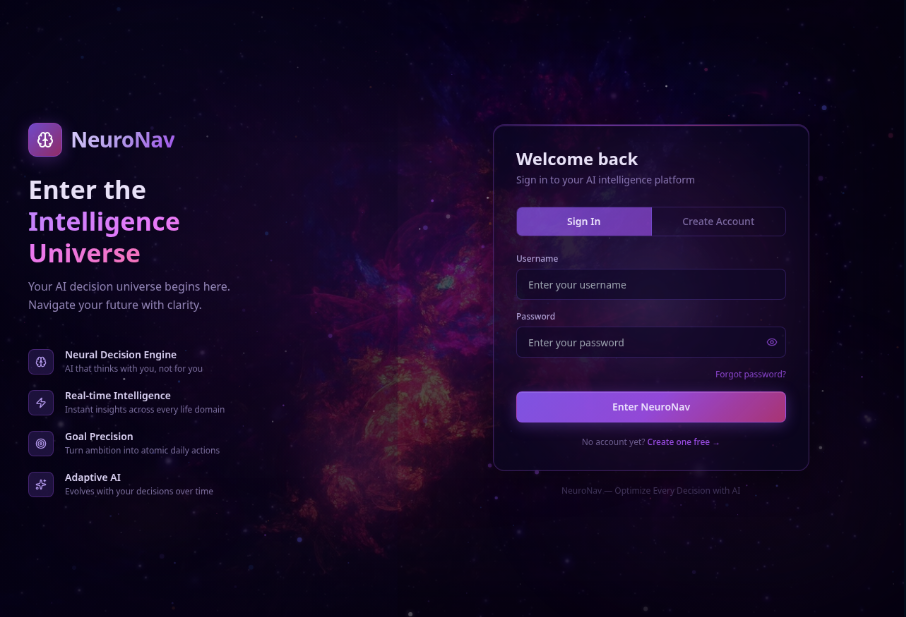
Login/Signup page
-
-
-

-
-
-
-
-
-
-
-
-
-
-
-

End

Inspiration
NeuroNav was born from a simple but urgent insight: modern decision-making is broken. People are overwhelmed by options, conflicting priorities, uncertainty, and constant information overload—whether they are choosing a career move, planning finances, setting goals, managing a business, or evaluating public policy. Existing tools help with isolated tasks, but they rarely understand the bigger picture: personal values, long-term goals, trade-offs, emotional context, and real-world constraints.
We envisioned NeuroNav as something more than a dashboard or chatbot. It is designed to be an adaptive decision intelligence system—an AI co-pilot that helps users think clearly, act faster, and make decisions with greater confidence. Instead of forcing users into rigid workflows, NeuroNav learns from behavior, preferences, feedback, and outcomes to deliver support that becomes more useful over time.
What it does
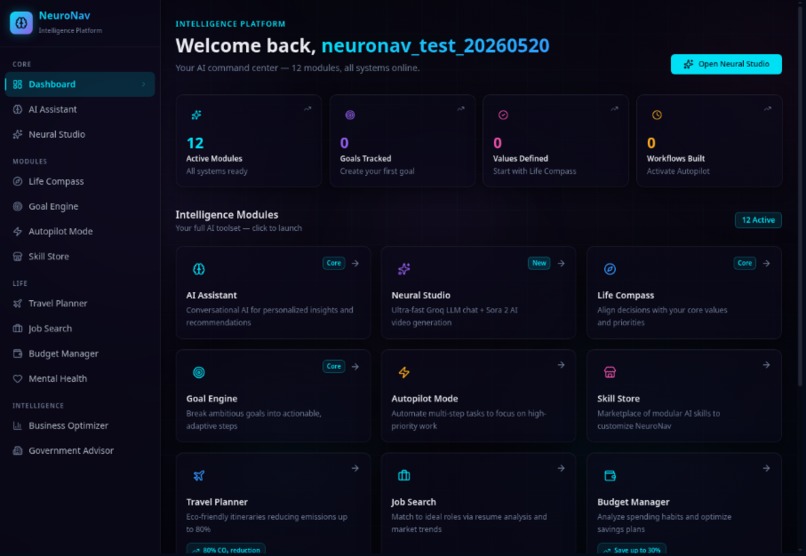
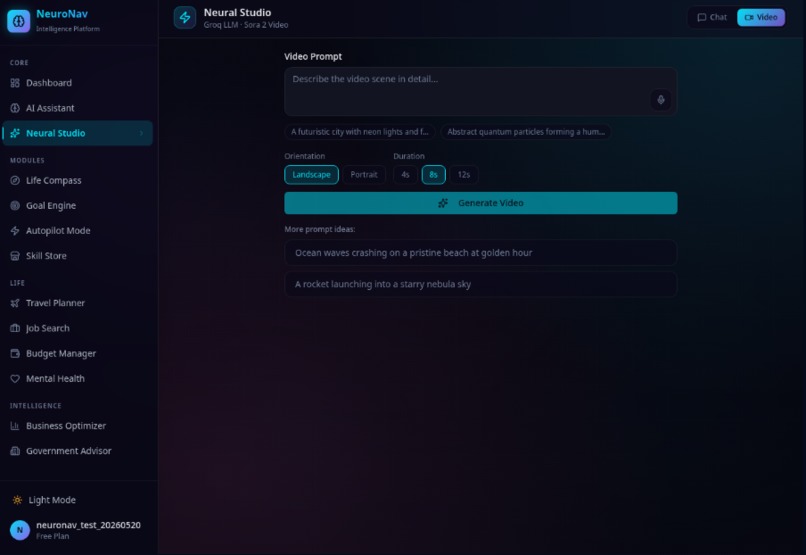
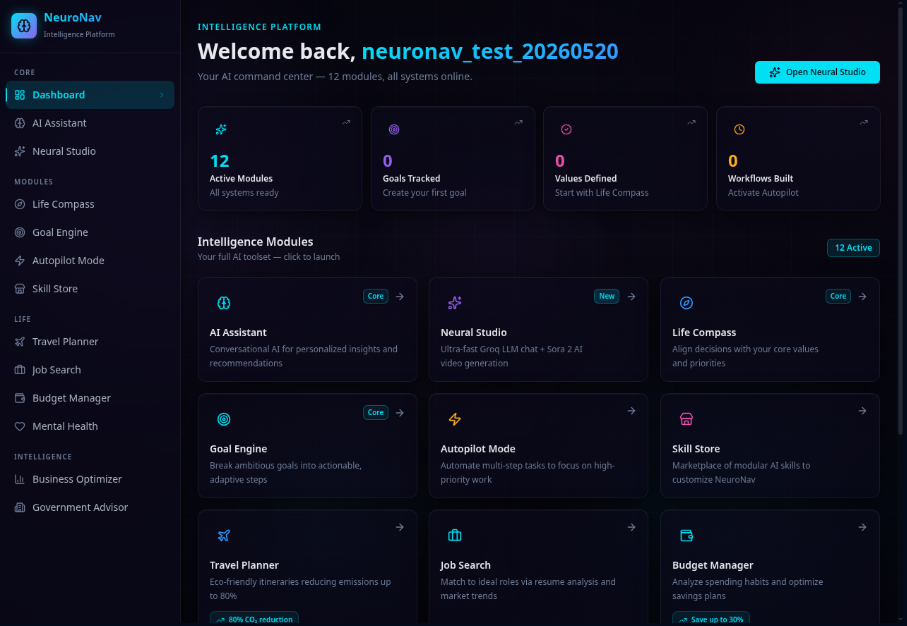
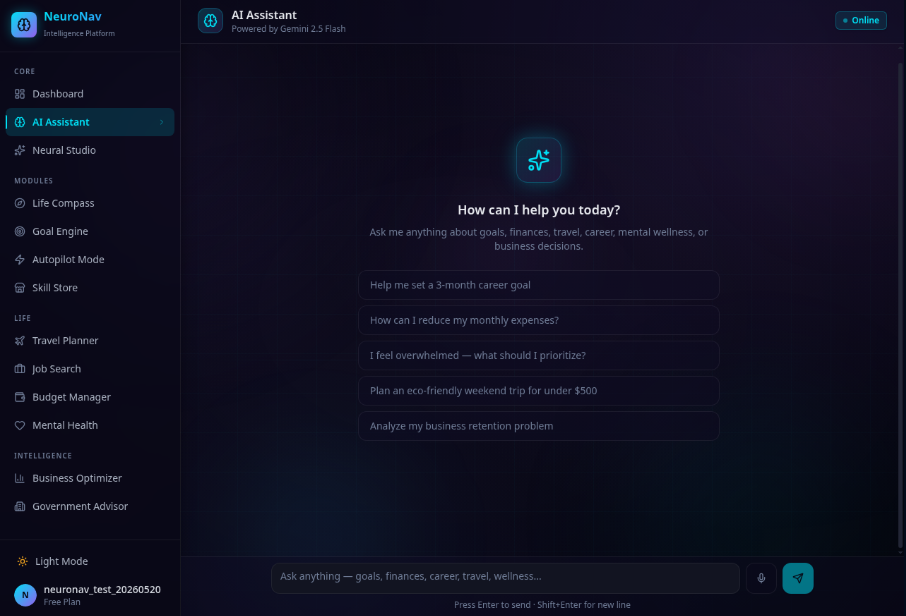
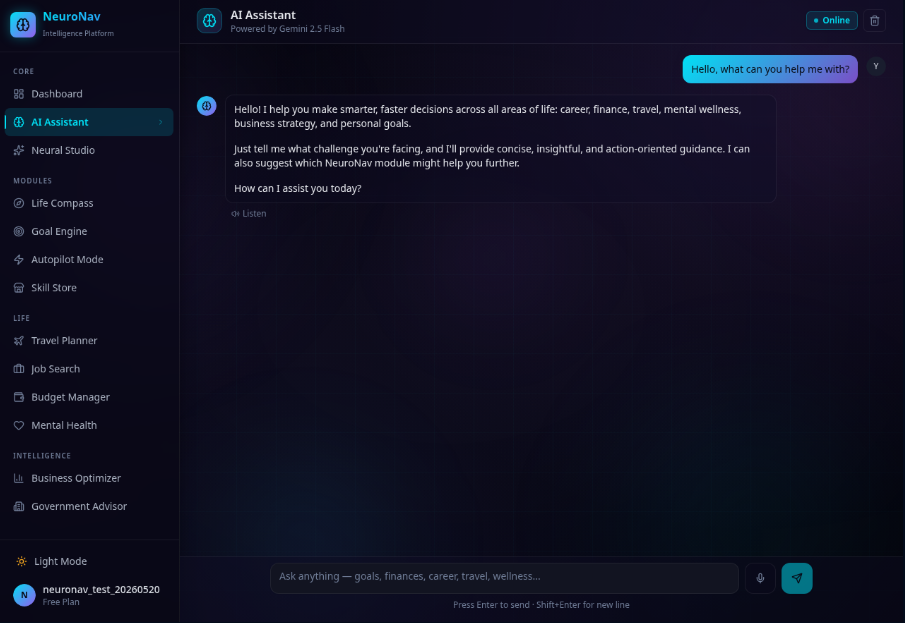
NeuroNav is an AI-powered decision optimization platform that helps users make smarter choices across life, work, finance, wellness, and strategy. It combines conversational intelligence, planning systems, automation tools, and personalized recommendations into a single adaptive environment.
Its core capabilities include:
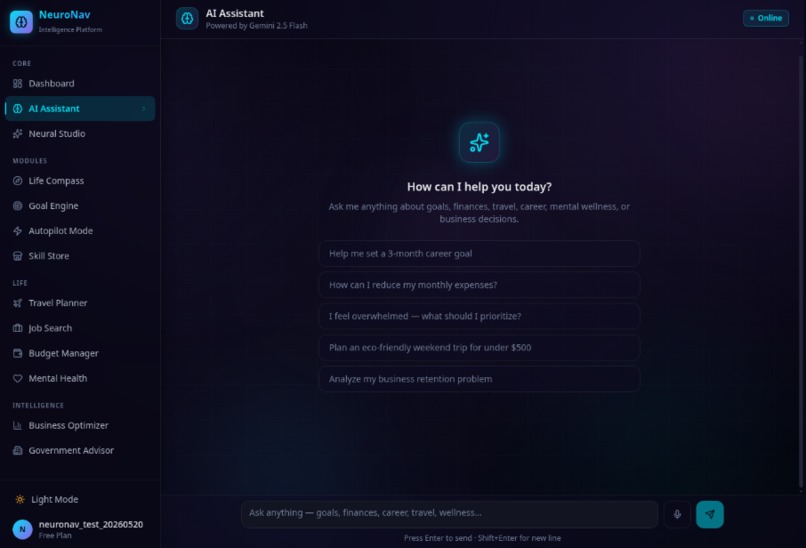
. AI Assistant for context-aware guidance and recommendations.
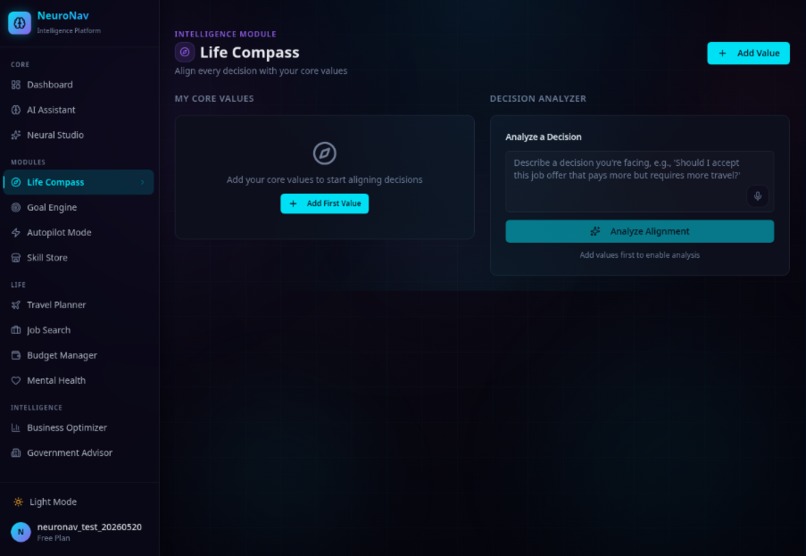
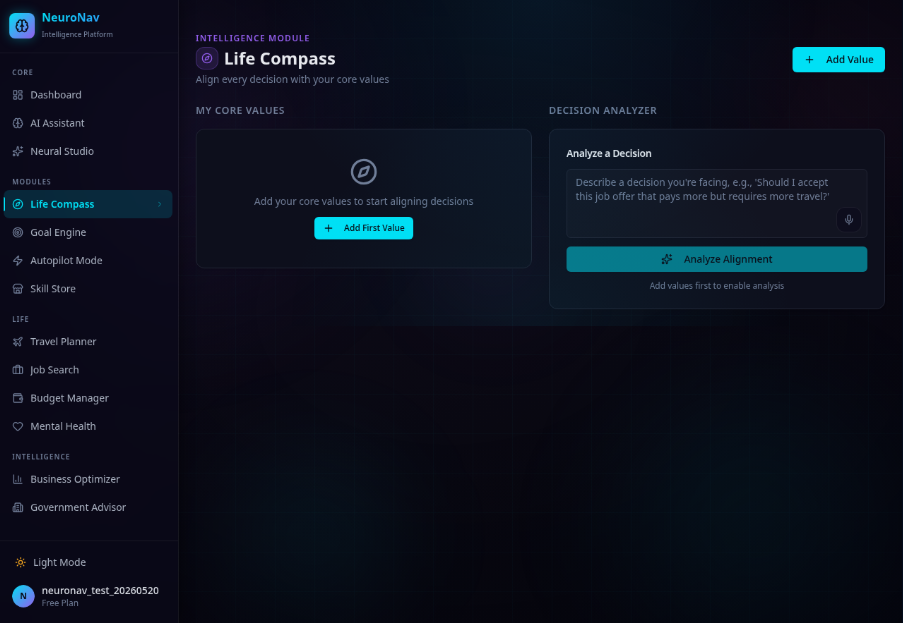
. Life Compass for aligning decisions with personal values and priorities.
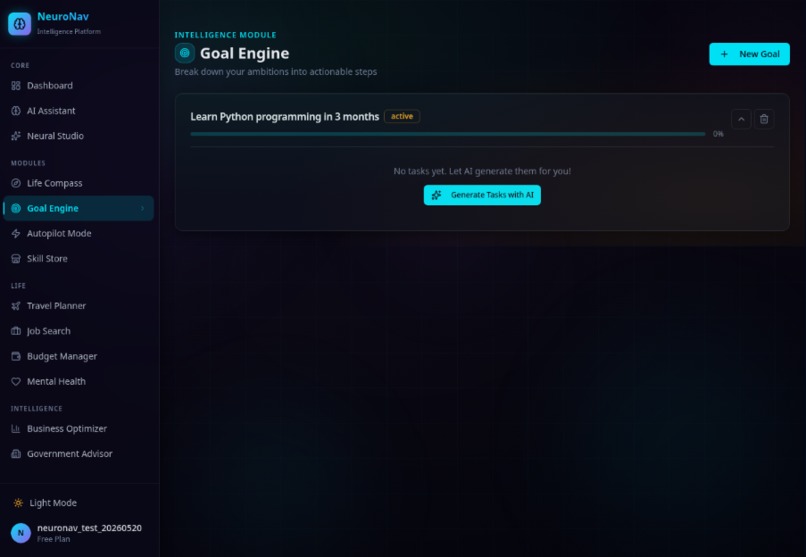
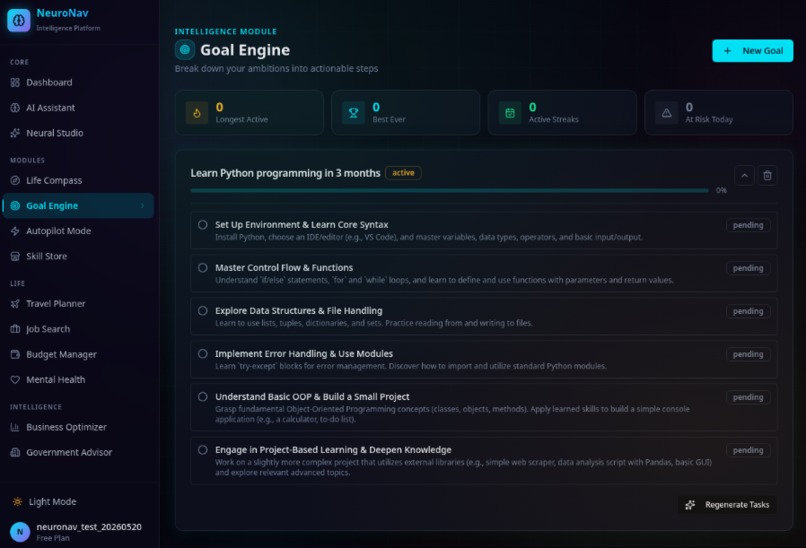
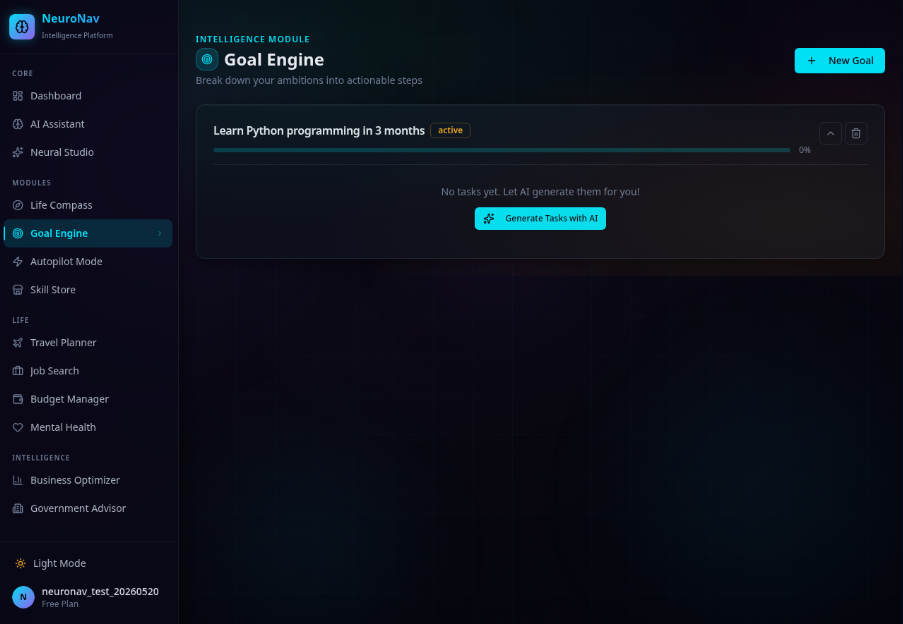
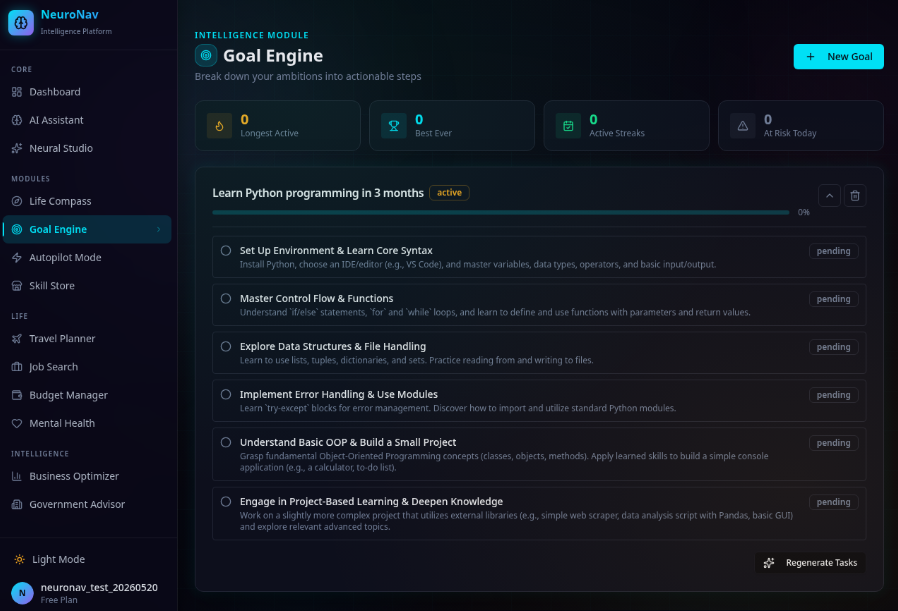
. Goal Engine for turning ambitions into actionable plans with progress and streak tracking.
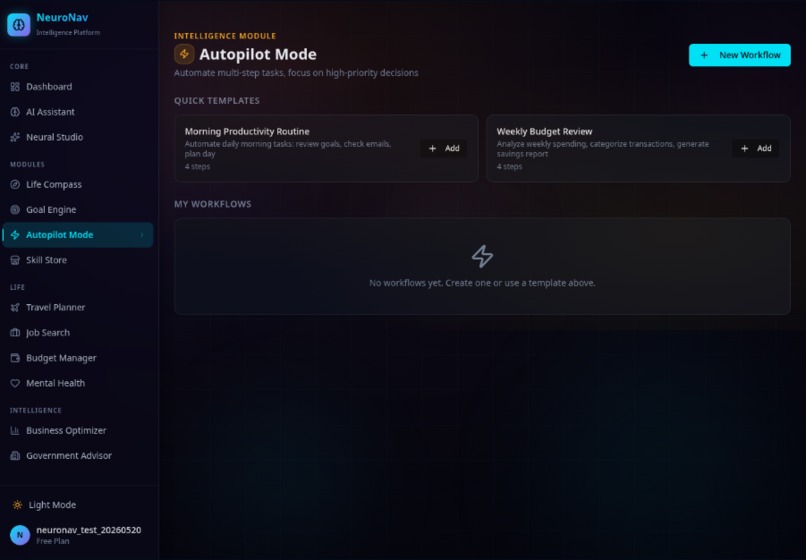
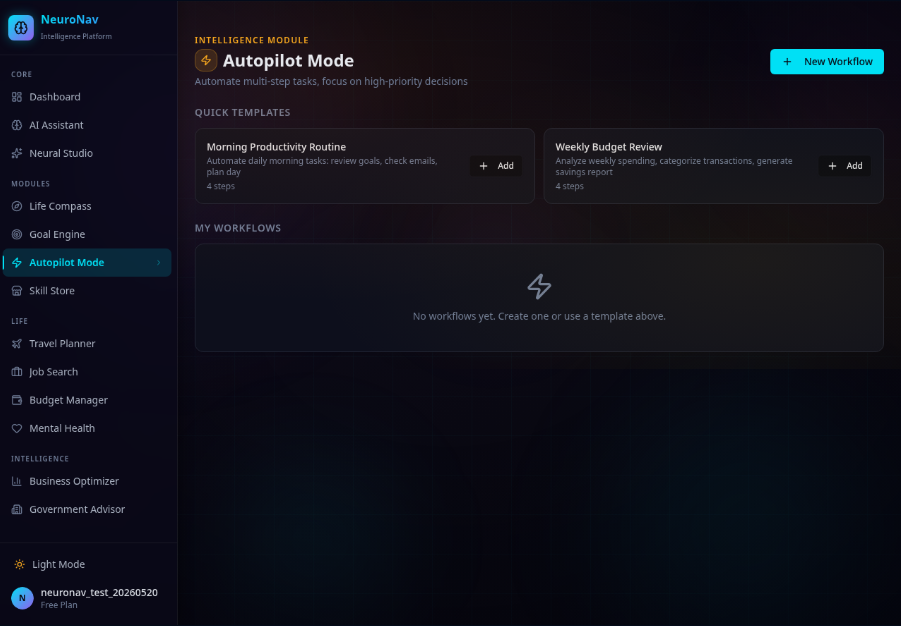
. Autopilot Mode for automating multi-step workflows.
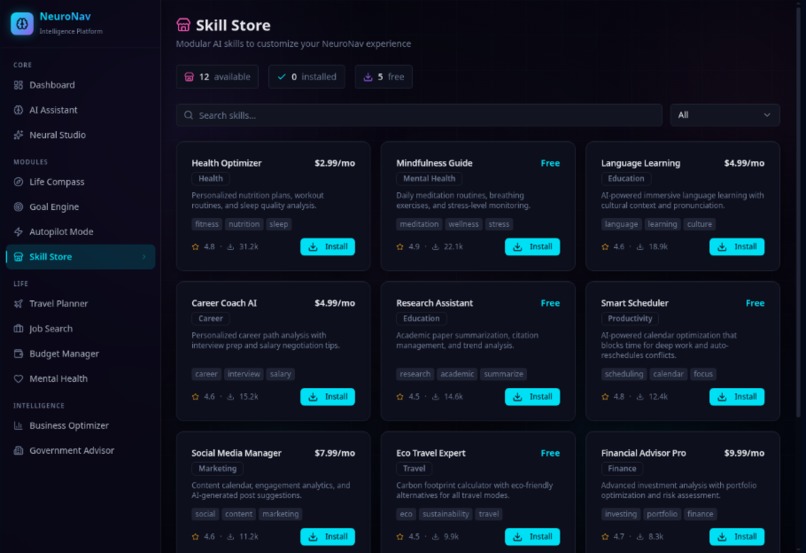
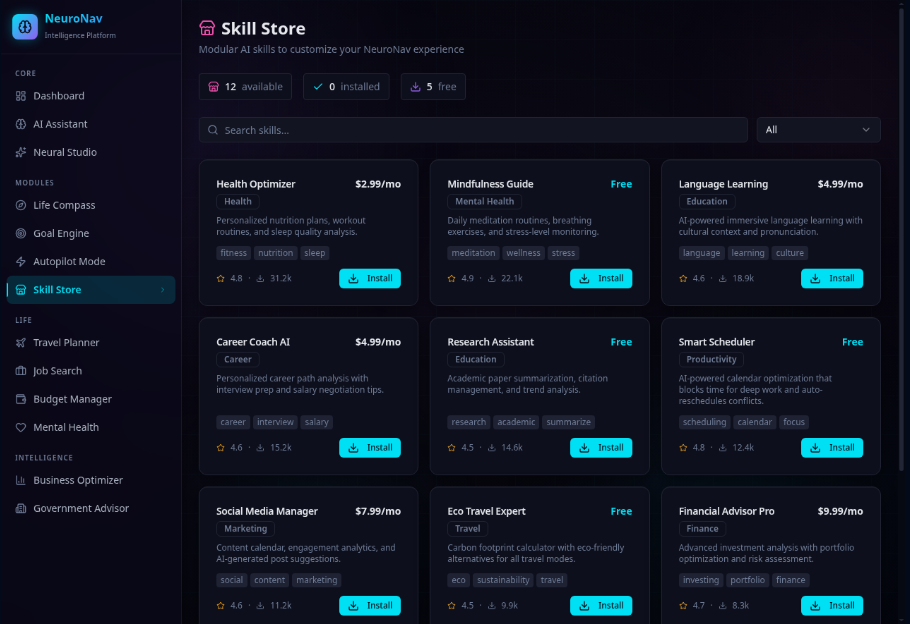
. Skill Store for extending the platform with modular AI capabilities.
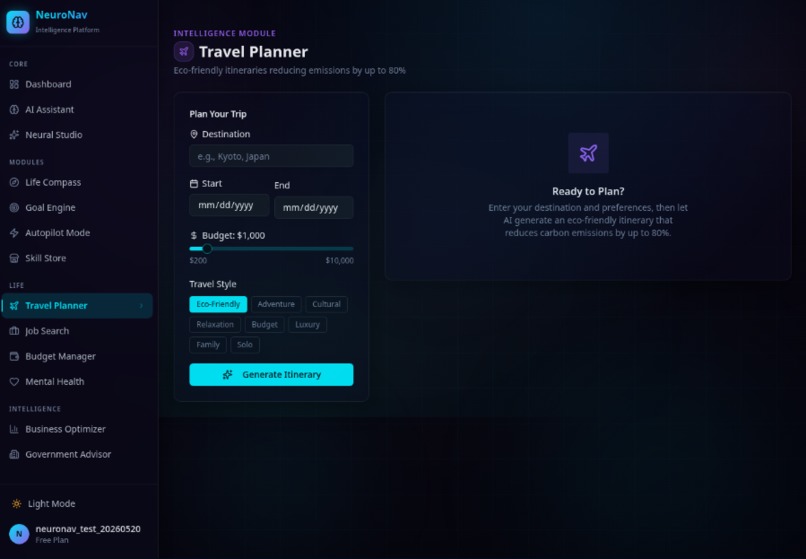
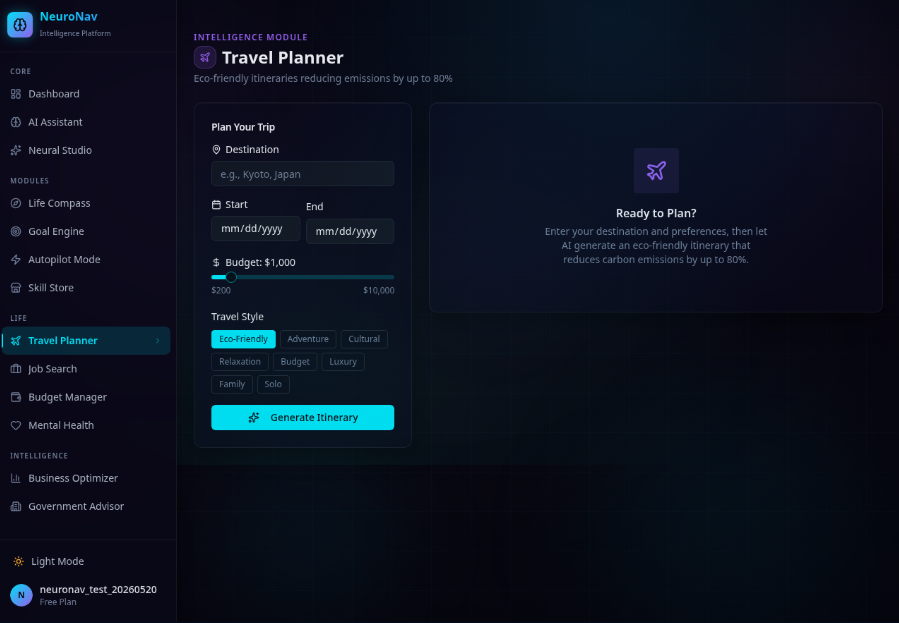
. Travel Planner for generating cost-aware, lower-emission itineraries.
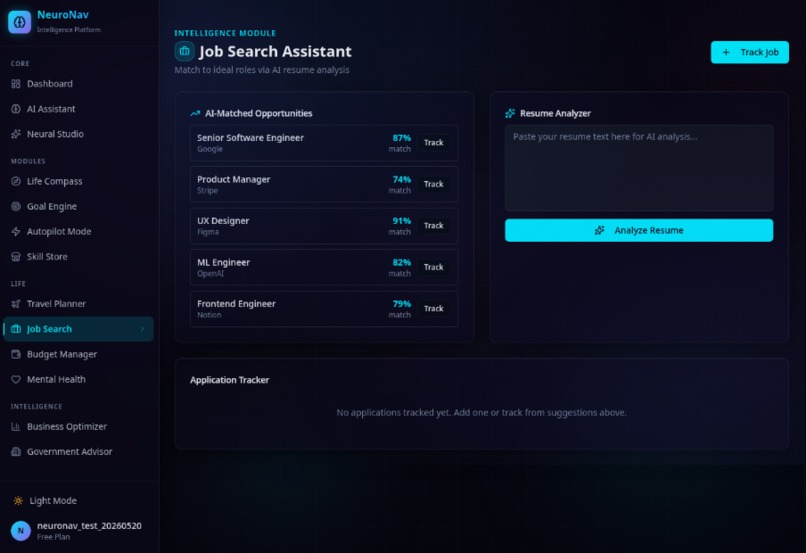
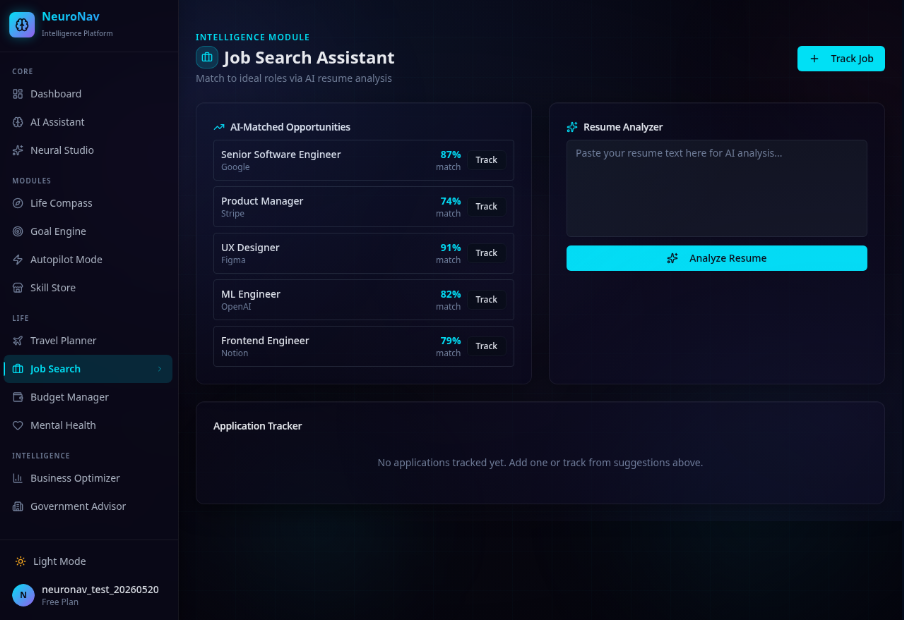
. Job Search Assistant for resume-based role matching and career support.
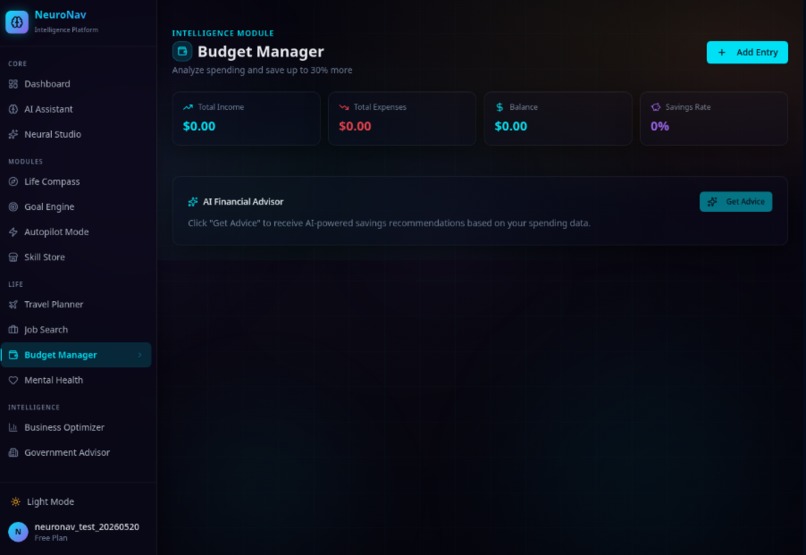
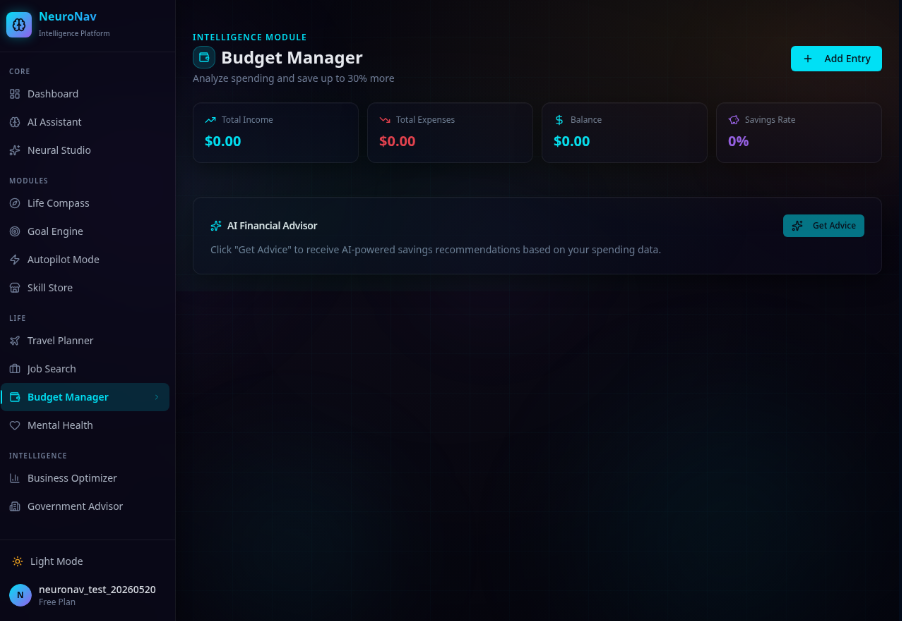
. Budget Manager for spending analysis and savings optimization.
. Mental Health Support for compassionate AI guidance and resource discovery.
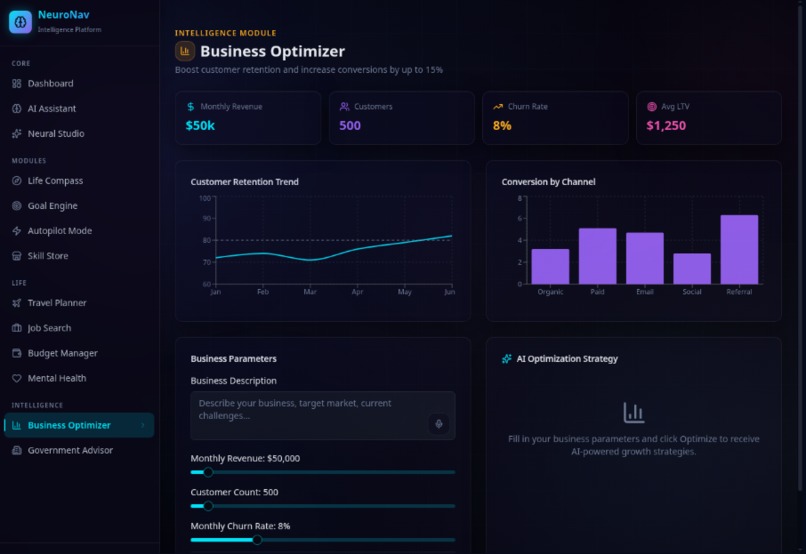
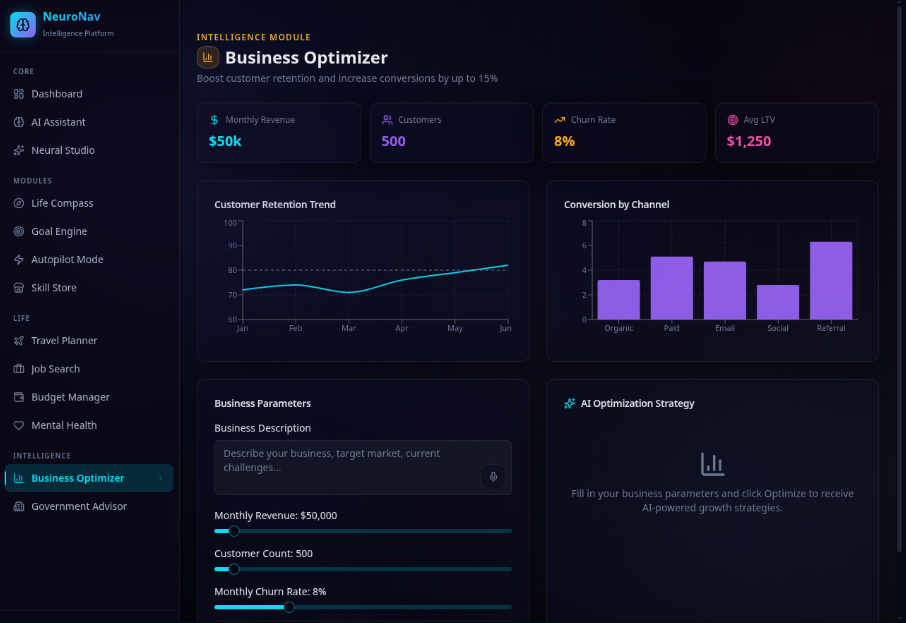
. Business Optimizer for improving pricing, retention, and strategic performance.
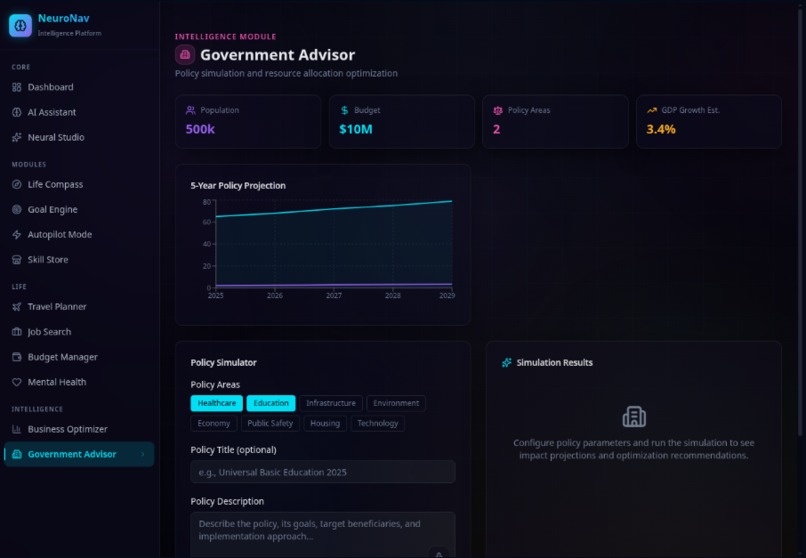
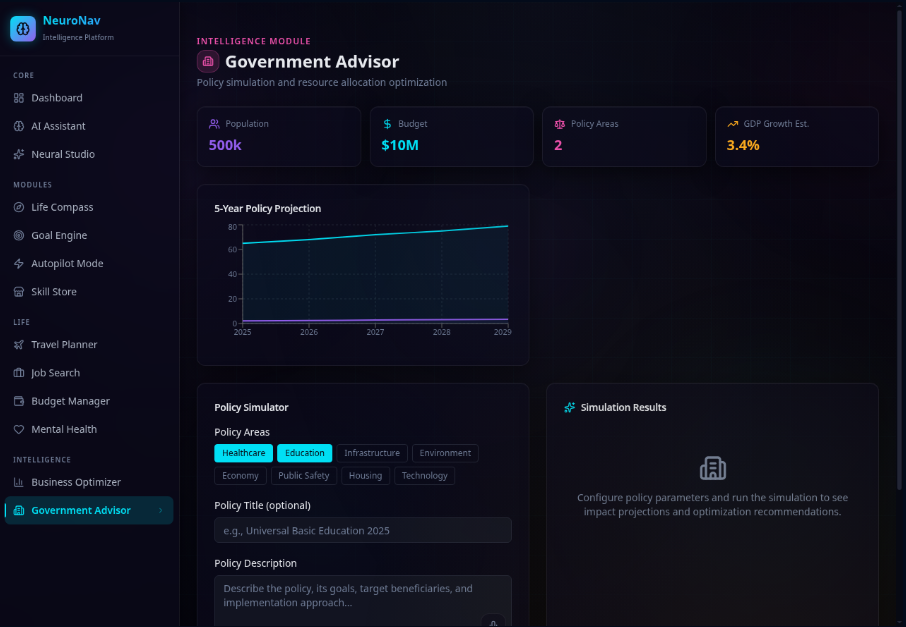
. Government Advisor for scenario modeling, policy simulation, and resource allocation.
At its core, NeuroNav is built to evolve with its users, refining recommendations through interaction, feedback, and observed outcomes.
How we built it
NeuroNav is built as a full-stack AI product focused on speed, adaptability, and real-world usability. The frontend uses React, TypeScript, and modern UI architecture to create a responsive, high-performance interface with a premium product experience. Tailwind CSS supports a flexible design system, while Framer Motion powers the animation layer and cinematic transitions across the platform.
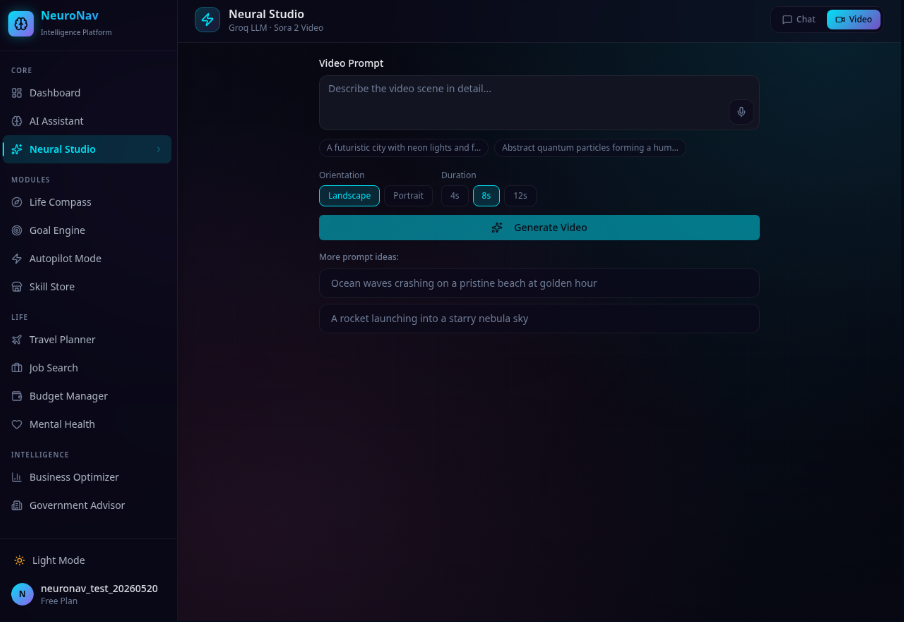
On the backend, Supabase powers authentication, database workflows, and real-time updates, with Row Level Security used to isolate user data securely. Stripe handles subscription billing and plan management. AI functionality is powered through a combination of large language model integrations for reasoning, recommendations, planning, and conversational assistance, while voice capabilities are supported through modern speech interfaces and premium voice APIs where needed.
The platform is designed with modularity in mind, making it possible to expand feature depth over time while maintaining a unified system for decision intelligence.
Challenges we ran into
One of the biggest challenges was combining many ambitious product ideas into one coherent platform without making the experience feel fragmented. NeuroNav touches personal productivity, finance, career, wellness, business, and public-sector strategy, so the challenge was not just technical—it was architectural and experiential.
We also had to balance intelligence with speed. AI systems are powerful, but users expect fast, fluid interactions, especially in a product that is meant to reduce friction rather than create more of it. On top of that, designing personalization, automation, and future learning systems in a privacy-conscious way required careful decisions around data structure, security, and performance.
Another major challenge was visual design. We wanted NeuroNav to feel premium, cinematic, and futuristic without sacrificing readability, usability, or responsiveness. That meant treating motion, theming, and interface depth as part of the product system, not just decoration.
Accomplishments that we’re proud of
We’re proud that NeuroNav has grown into more than a collection of AI features. It is becoming a unified decision intelligence platform with a strong product identity, a broad use-case surface, and a clear long-term vision.
Some of the accomplishments we’re most excited about include:
Building a multi-module AI platform within one coherent ecosystem.
Creating a system that supports both personal and professional decision workflows.
Designing a product direction that blends intelligence, automation, planning, and personalization.
Establishing a strong visual identity for NeuroNav as a premium, next-generation AI experience.
Laying the groundwork for adaptive systems that improve through user interaction and feedback.
What we learned
Building NeuroNav reinforced that decision support is not just a technical problem—it is a human problem. The best systems do more than generate answers; they help people navigate ambiguity, prioritize effectively, and move forward with confidence.
We also learned that ambitious AI products need strong orchestration. It is not enough to connect models and APIs; the real value comes from designing how intelligence appears, when it intervenes, and how it adapts to context. We saw firsthand that product clarity, trust, speed, and emotional experience matter just as much as model capability.
What’s next for NeuroNav
The next phase of NeuroNav is focused on deeper personalization, stronger automation, and a more immersive product experience. We plan to expand adaptive recommendation systems, improve voice and multimodal interaction, and strengthen the platform’s ability to learn from user feedback and long-term behavioral patterns.
We also see major opportunities in team and enterprise workflows, richer analytics, more advanced planning engines, and broader support for decision-making across industries. Over time, NeuroNav aims to become a true operating layer for smarter choices—helping individuals, organizations, and institutions navigate complexity with more intelligence, clarity, and control.
Built With
- axios
- biome
- cytoscape.js
- date-fns
- deno
- embla-carousel
- framer-motion
- groq
- languages:-javascript-sql-typescript
- lucide-react
- medo
- openai
- platforms:-vite-(rolldown)
- postgresql-(via-supabase)
- python-frameworks:-react-18
- react-hook-form
- react-router-dom-v7
- recharts
- shadcn/ui-(radix-ui)
- stripe
- supabase
- supabase-auth
- supabase-edge-functions
- supabase-storage
- tailwind-css-v3
- vaul


Log in or sign up for Devpost to join the conversation.