-
-
-
-
-
-
-
-
-
-
-
-
-
-
-
End
Inspiration
Life is a series of interconnected decisions, yet the tools we use to make them are fragmented. Career choices affect finances, daily habits influence long-term goals, and business decisions involve trade-offs that are rarely considered in isolation. While AI can answer questions, turning those answers into the right decisions and consistent action remains a challenge.
We built NeuroNav around a simple idea: what if AI could help people navigate decisions, understand their options, and move toward their goals with greater clarity? Rather than creating another chatbot, we envisioned an AI-powered decision intelligence platform that connects personal context, practical planning, and meaningful action in one unified experience.
What it does
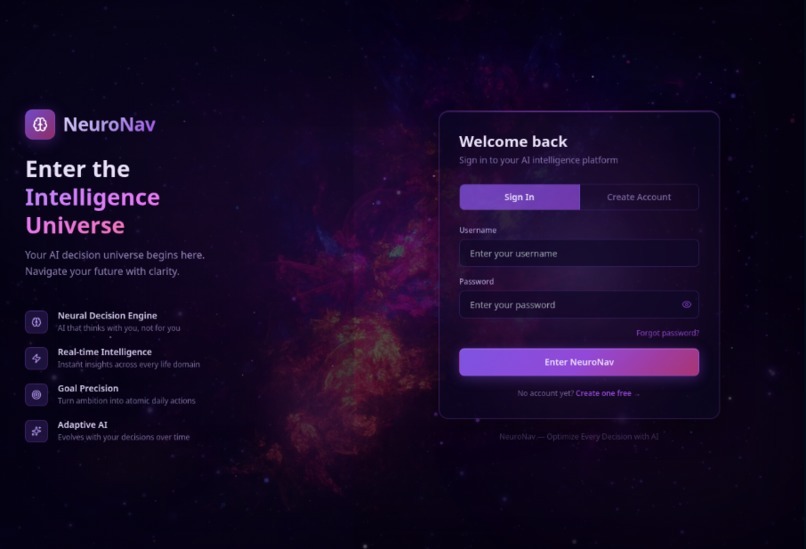
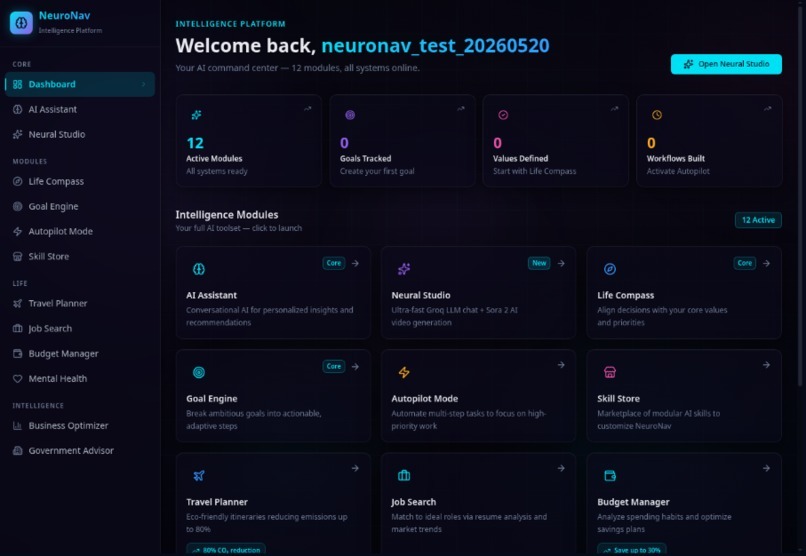
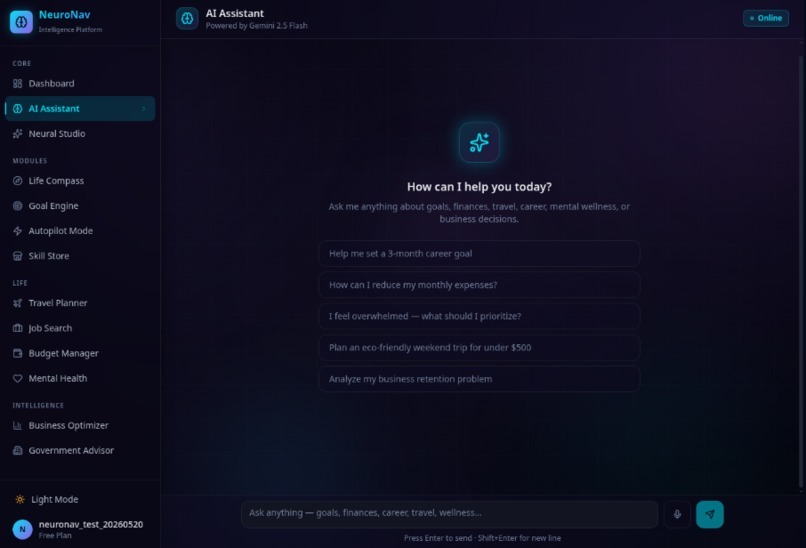
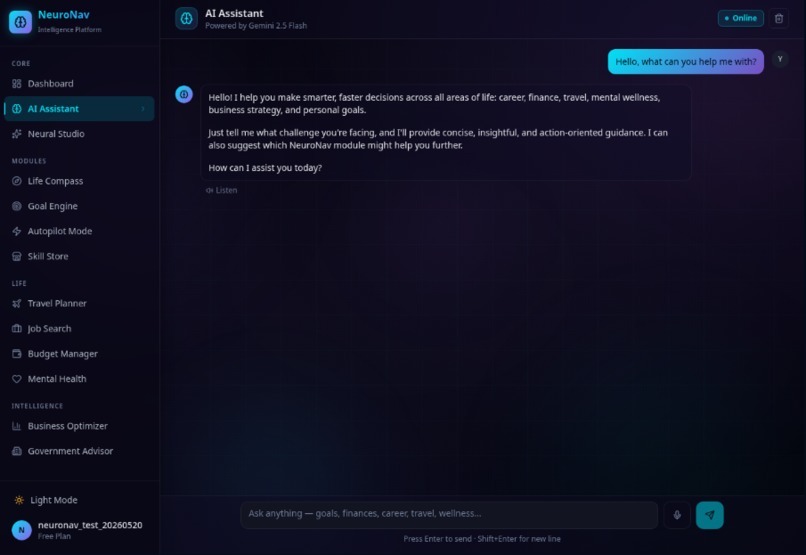
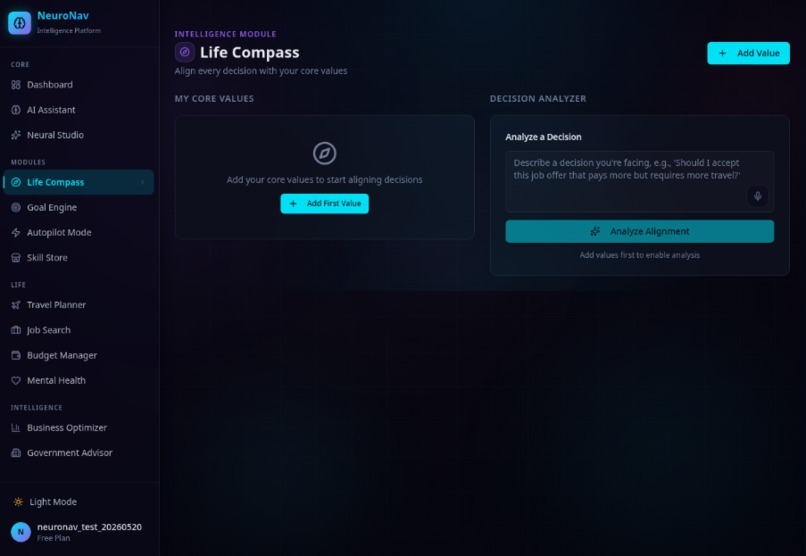
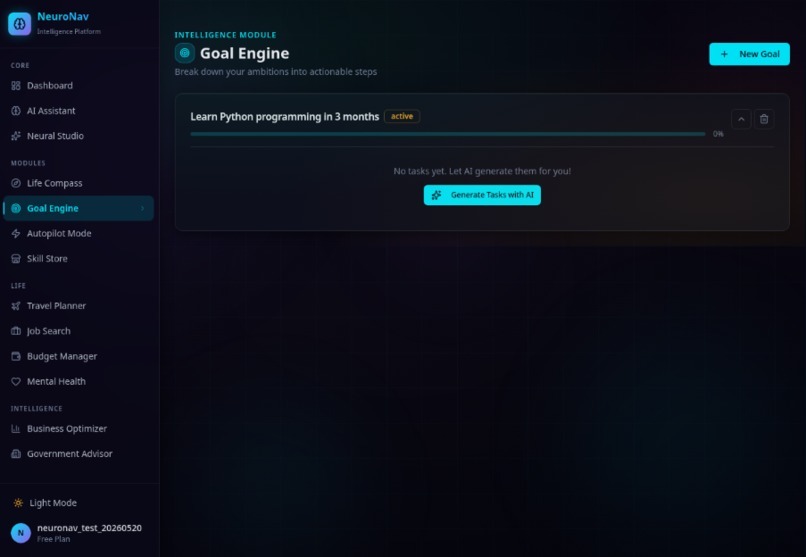
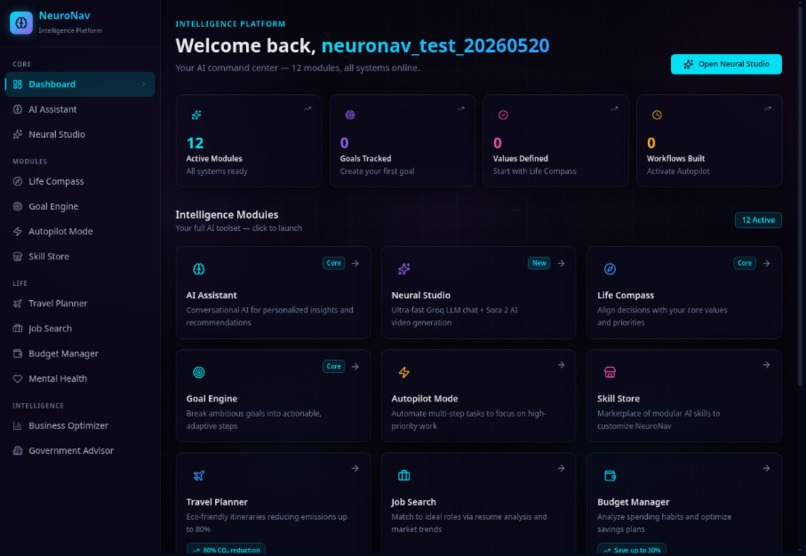
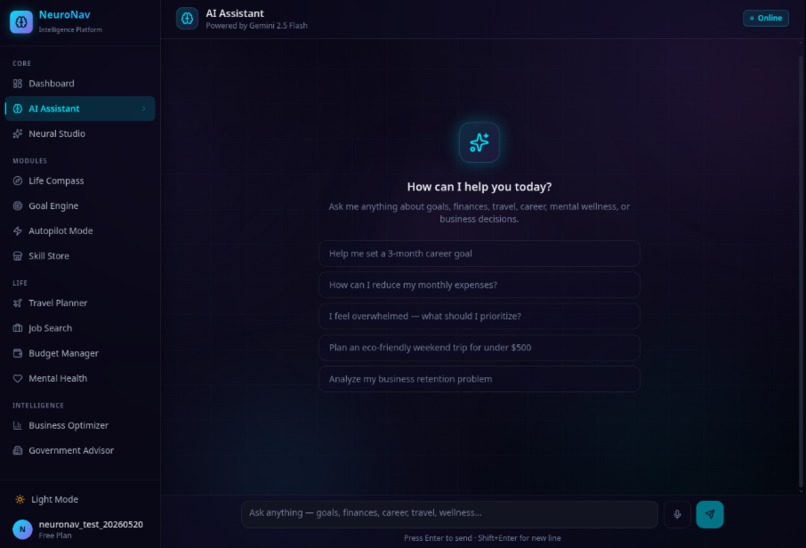
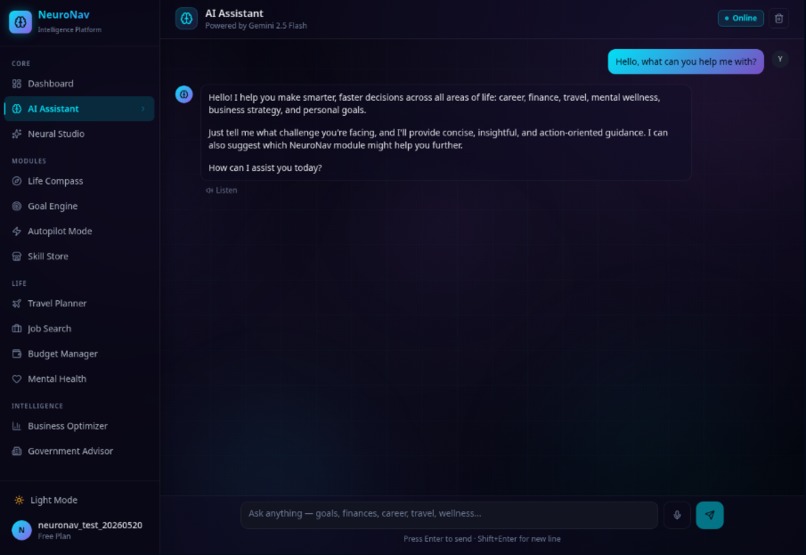
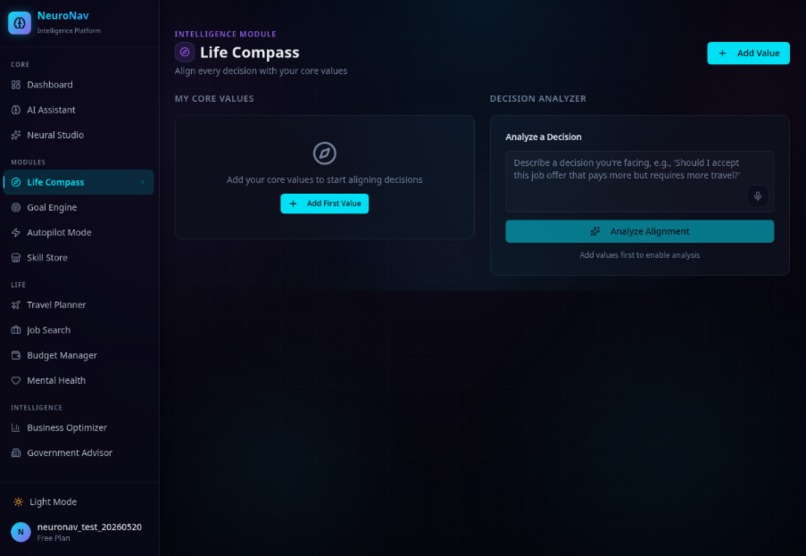
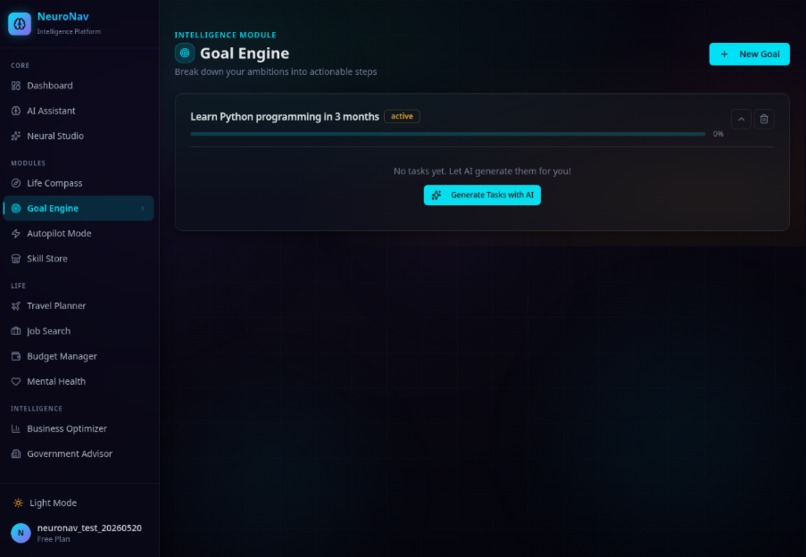
NeuroNav helps users navigate complex decisions across personal life, career, finance, productivity, and business. Its AI assistant provides contextual guidance, while the Life Compass helps align choices with personal priorities and the Goal Engine turns ambitions into actionable plans with milestones and progress tracking.
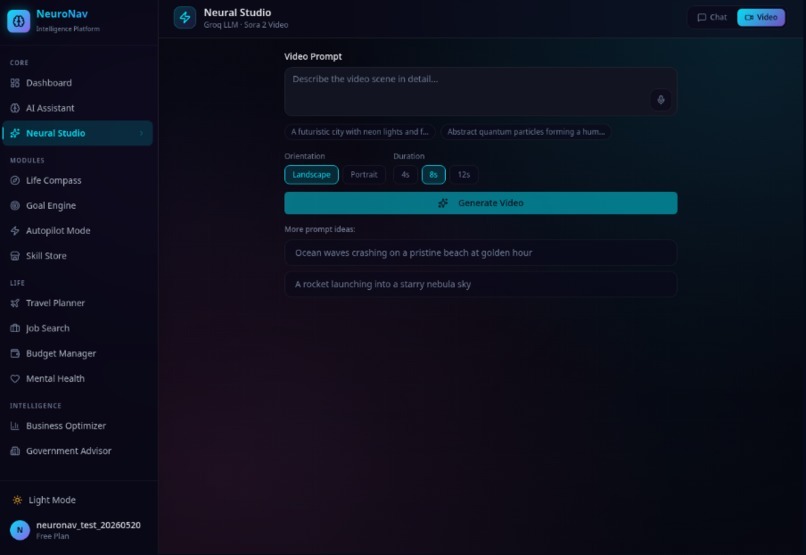
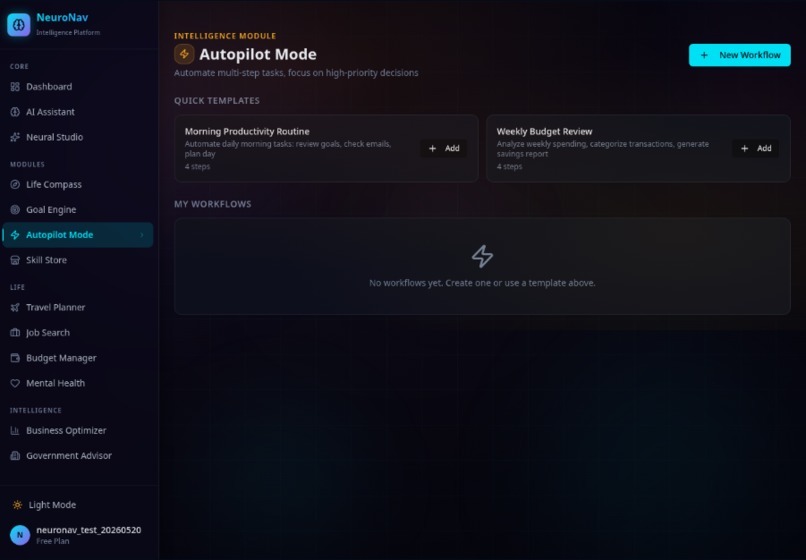
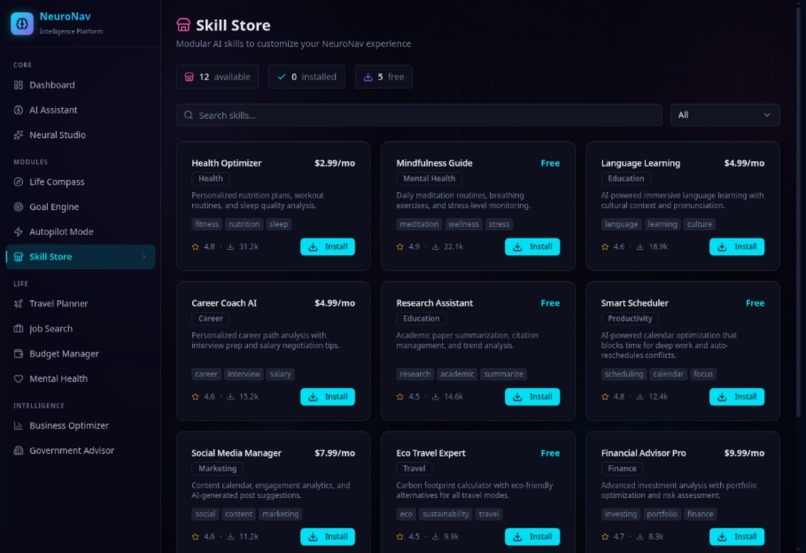
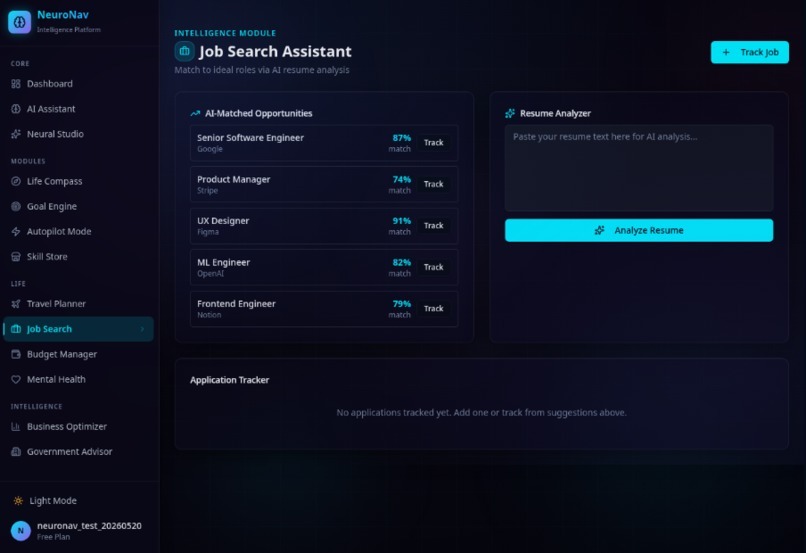
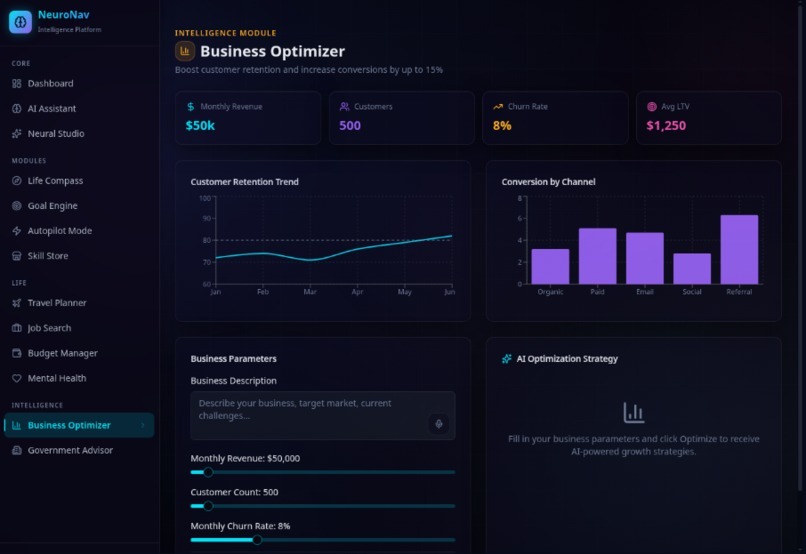
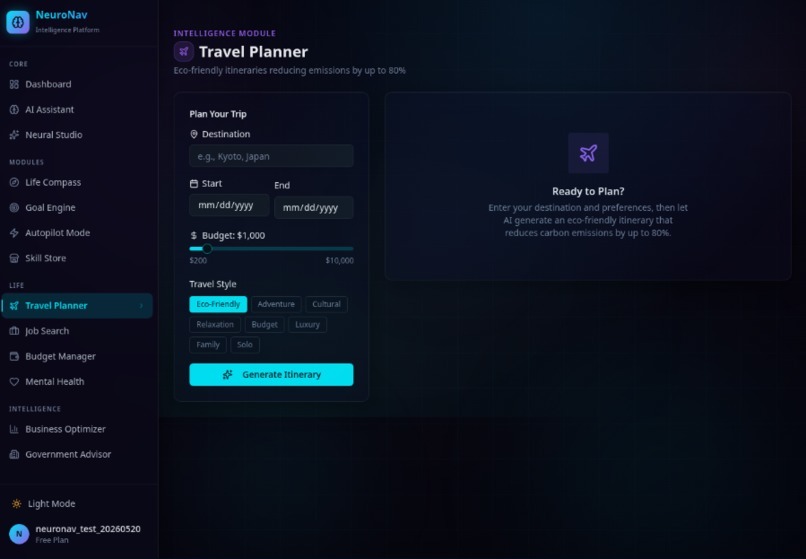
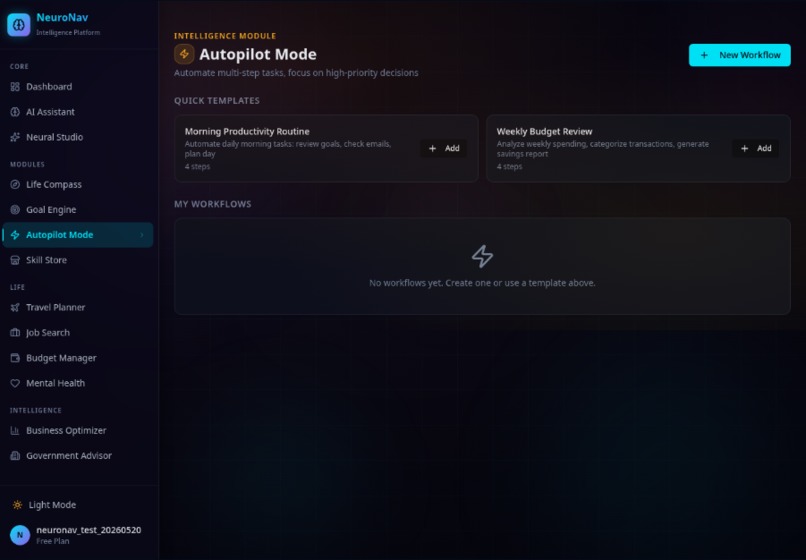
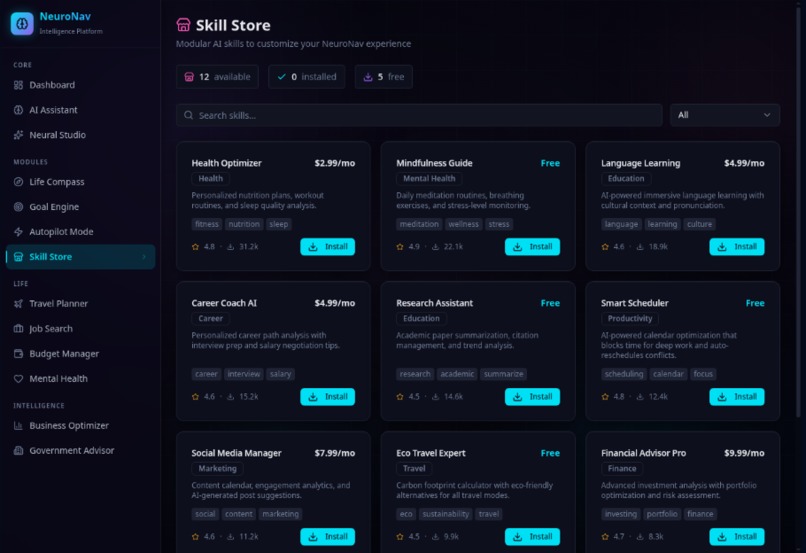
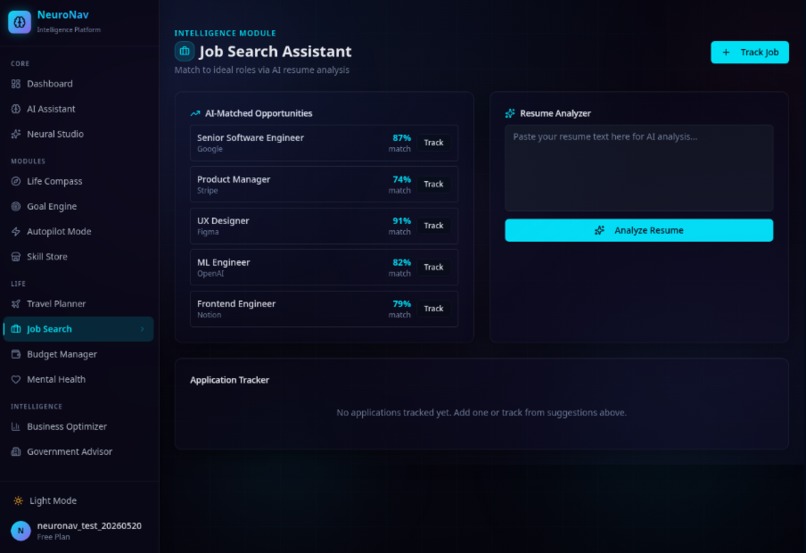
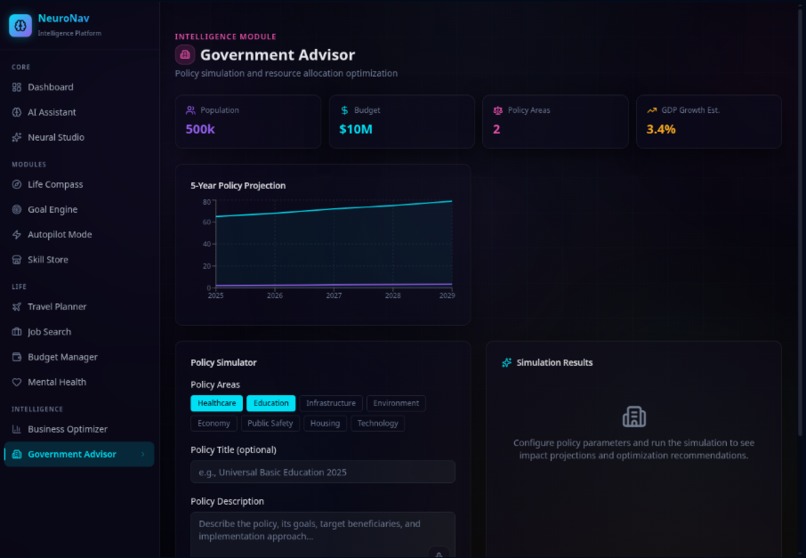
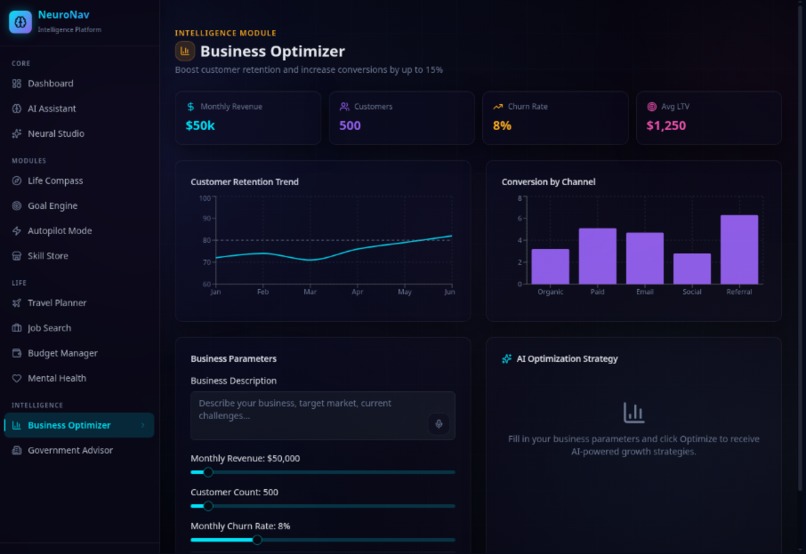
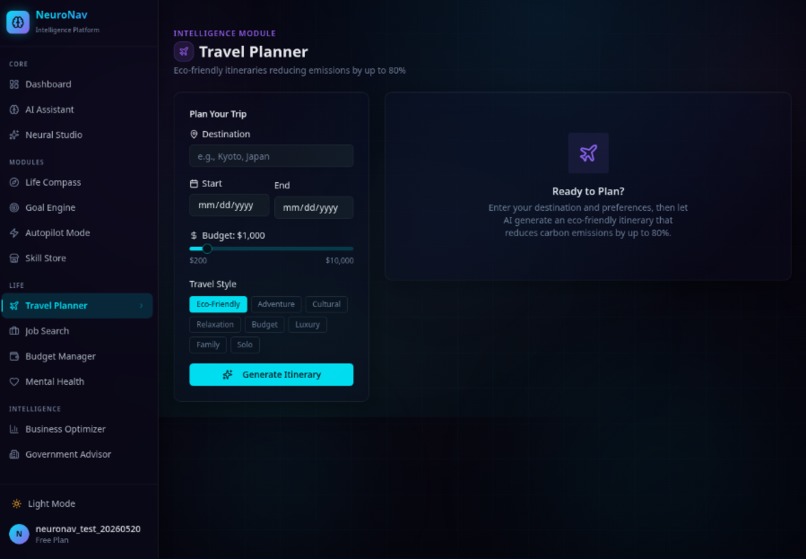
The platform also brings together specialized capabilities, including a Job Search Assistant, Budget Manager, Travel Planner, Business Optimizer, and Autopilot Mode for multi-step workflows. A modular Skill Store provides a foundation for expanding its capabilities.
The goal is to connect the entire journey: from understanding a challenge and exploring possible choices to creating a practical plan and tracking progress.
How we built it
We built NeuroNav as a modular, full-stack AI application designed to bring multiple decision-support experiences into one coherent platform. The frontend uses React 18, TypeScript, Vite, and Tailwind CSS, with Framer Motion supporting fluid animations and a responsive, modern interface.
Supabase provides the backend foundation for authentication, PostgreSQL data storage, and supporting services, with Row Level Security helping protect user data. AI integrations using OpenAI and Groq support conversational assistance, reasoning, and recommendation workflows. We also incorporated tools such as Stripe for subscription management, Recharts for data visualizations, and React Router for application navigation.
A key architectural principle was modularity: each capability serves a distinct purpose while contributing to a shared NeuroNav experience.
Challenges we ran into
Our biggest challenge was bringing together such different problem spaces without turning NeuroNav into a disconnected collection of tools. Career planning, budgeting, personal goals, and business strategy each require different information and workflows, yet the platform needs to feel consistent and intuitive.
We also faced the challenge of balancing AI capability with usability. Intelligent recommendations are only valuable when users can understand them and turn them into concrete actions. At the same time, building a polished interface meant balancing visual depth and animation with accessibility, responsiveness, and performance.
These challenges pushed us to think beyond individual features and focus on how the complete product should work together.
Accomplishments that we're proud of
We are proud to have developed NeuroNav into a unified platform concept with a working application foundation, a modular architecture, and a clear product identity. Instead of limiting the experience to a single AI interaction, we brought together decision support, planning, specialized assistants, and automation within one ecosystem.
We are particularly proud of the direction behind the Life Compass and Goal Engine: helping connect what users care about with what they actually do. We also established a technical foundation that can support new capabilities as the product evolves.
Most importantly, NeuroNav represents our effort to make AI useful beyond generating responses—to help people think through choices and translate intentions into action.
What we learned
Building NeuroNav taught us that useful AI is not just about model capability. It depends on context, product design, reliable workflows, and the user's ability to act on the result. A sophisticated recommendation has limited value if it ignores real-world constraints or leaves the user unsure what to do next.
We also learned the importance of architectural discipline when building ambitious products. Modularity, privacy-conscious data handling, clear interaction patterns, and a consistent user experience are essential when multiple capabilities must work together.
The biggest lesson was that the value of AI is not only in the answer it provides, but in the decision and action it helps make possible.
What's next for NeuroNav AI
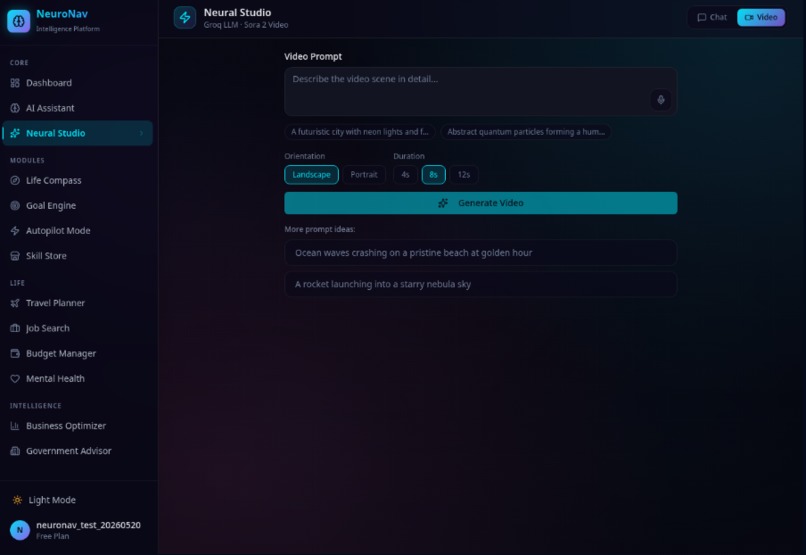
Our next step is to make NeuroNav more personalized, reliable, and action-oriented. We plan to strengthen context-aware recommendations, connect goals with ongoing progress, expand voice and multimodal interactions, and improve multi-step automation with appropriate user control.
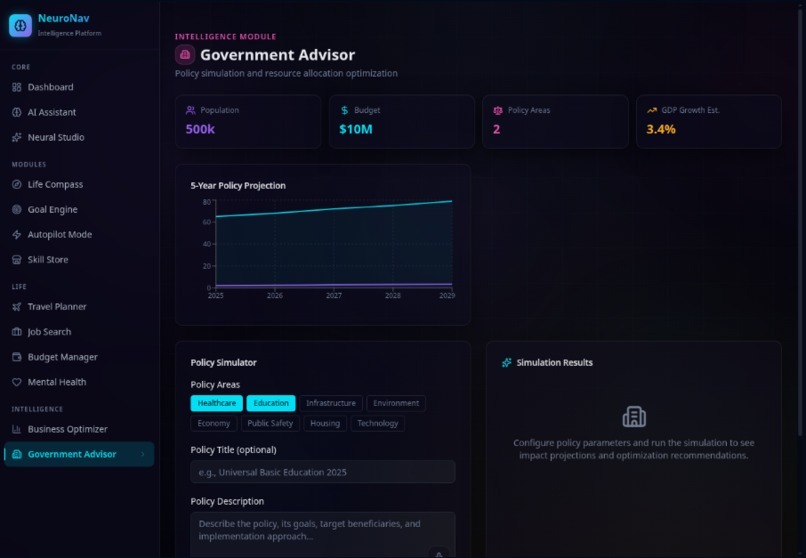
We also see opportunities to extend NeuroNav into team and enterprise decision workflows, where people need to compare scenarios, coordinate priorities, and make informed choices using shared information.
Our long-term vision is to build an adaptive decision intelligence layer for everyday life and work—one that helps people navigate complexity, understand trade-offs, and move forward with greater clarity and confidence.
Built With
- axios
- biome
- cytoscape.js
- date-fns
- deno
- embla-carousel
- framer-motion
- groq
- languages:-javascript-sql-typescript
- lucide-react
- medo
- openai
- platforms:-vite-(rolldown)
- postgresql-(via-supabase)
- python-frameworks:-react-18
- react-hook-form
- react-router-dom-v7
- recharts
- shadcn/ui-(radix-ui)
- stripe
- supabase
- supabase-auth
- supabase-edge-functions
- supabase-storage
- tailwind-css-v3

Log in or sign up for Devpost to join the conversation.