Inspiration
Timely identification of Alzheimer’s continues to be one of the greatest obstacles in neurology. The majority of AI models solely categorize MRI scans according to disease stages — they do not forecast potential changes in a patient’s brain over time. I aimed to create a digital mirror — a means for clinicians and patients to visualize potential future scenarios before symptoms escalate.
What it does
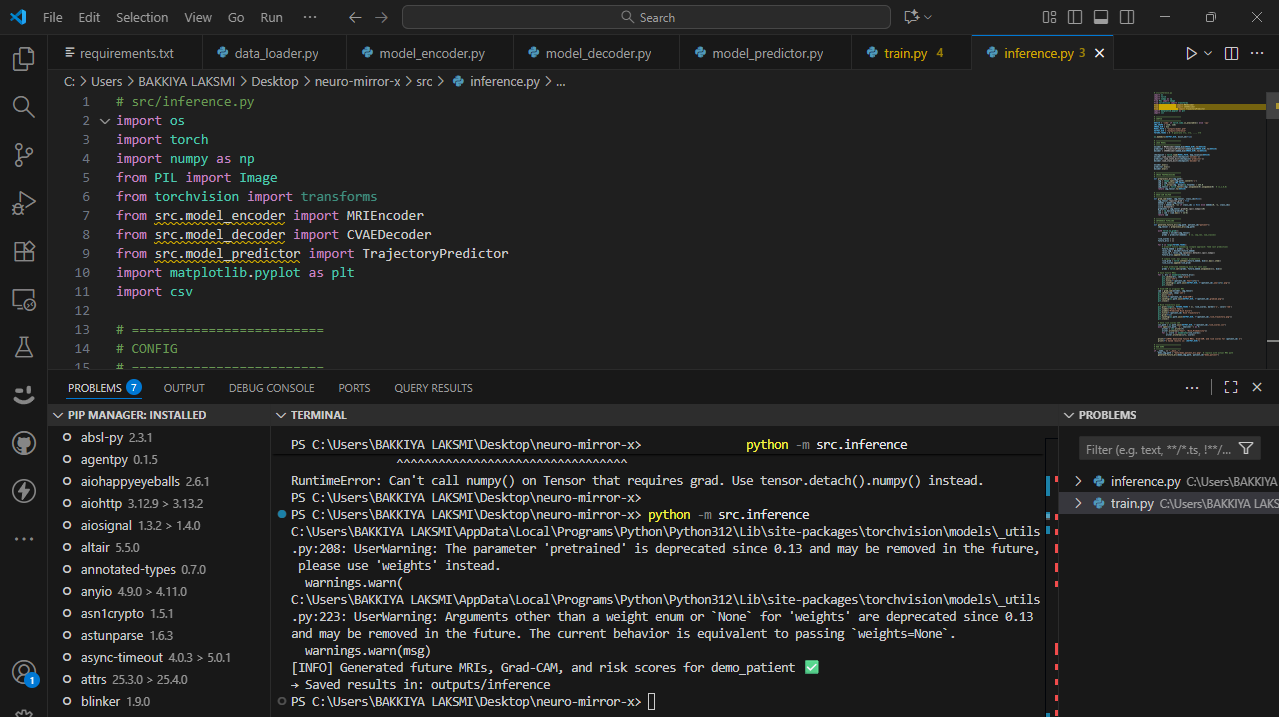
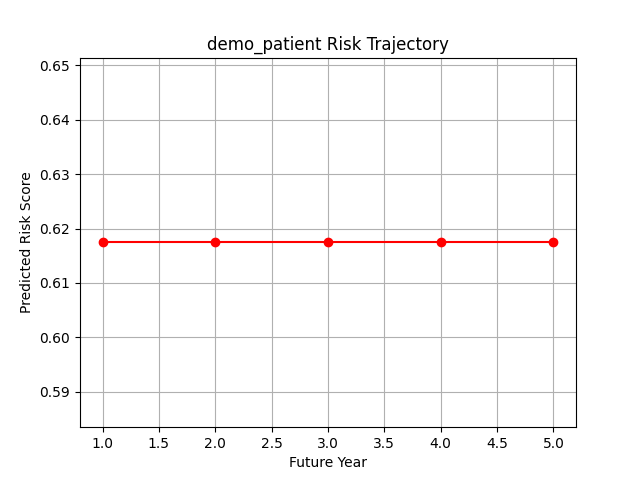
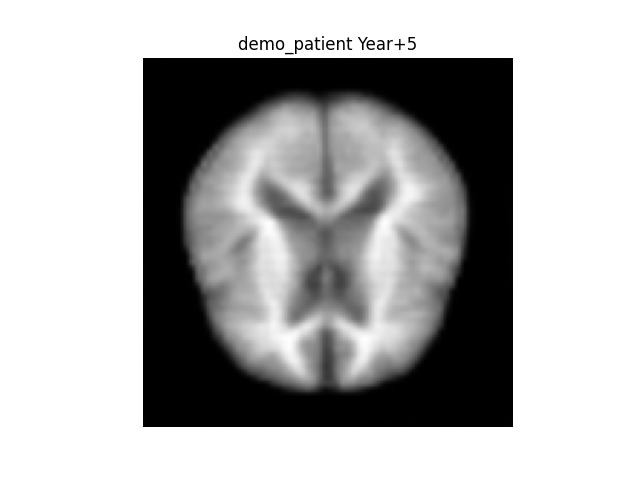
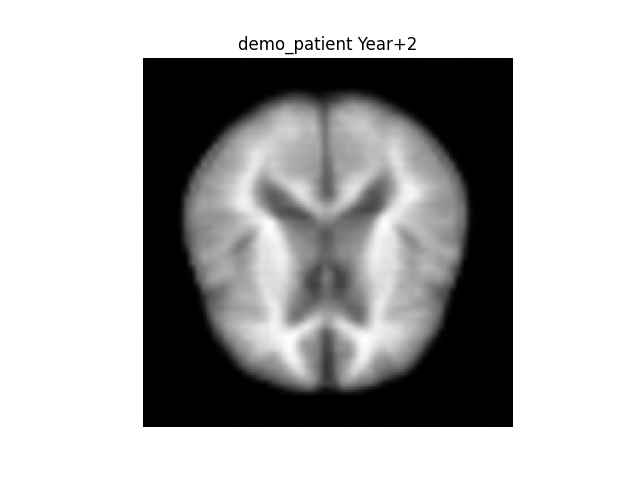
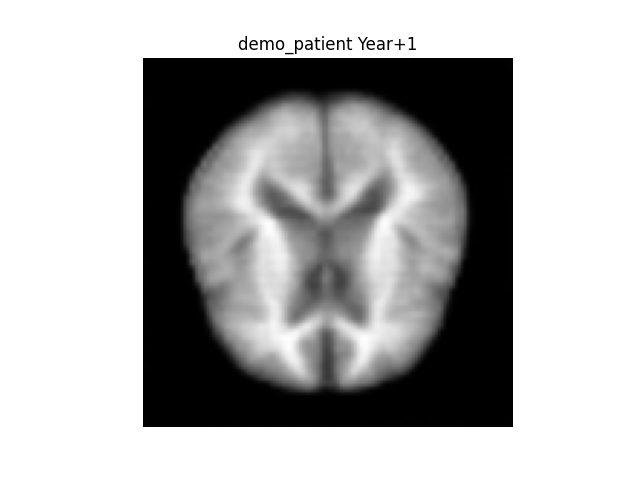
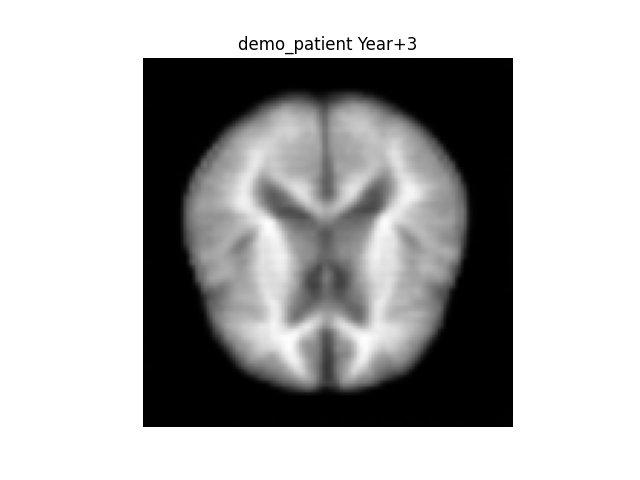
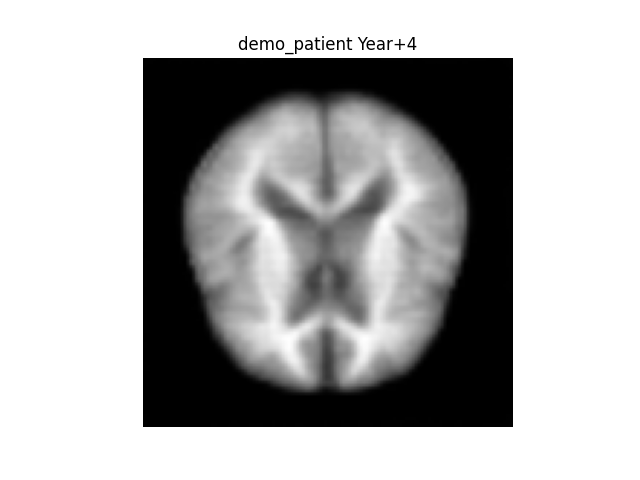
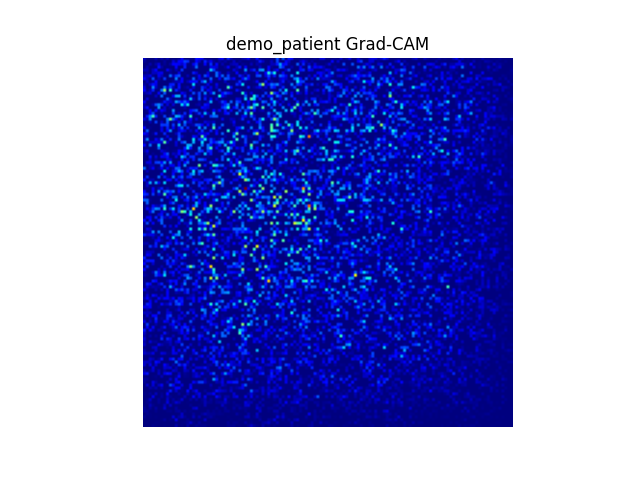
NeuroMirror-X generates a customized digital replica of the patient's brain from a single MRI scan. It: Transforms the MRI into a latent representation utilizing a CNN encoder. Employs a trajectory prediction network (CVAE + Transformer) to model the evolution of that embedding over time. Translates the forecasted embeddings into synthetic future MRI images (t+1 to t+5 years). Produces individualized Alzheimer’s risk assessments and Grad-CAM heatmaps that emphasize at-risk brain areas. This enables physicians and scientists to observe disease advancement and recognize early indicators for treatment.
How we built it
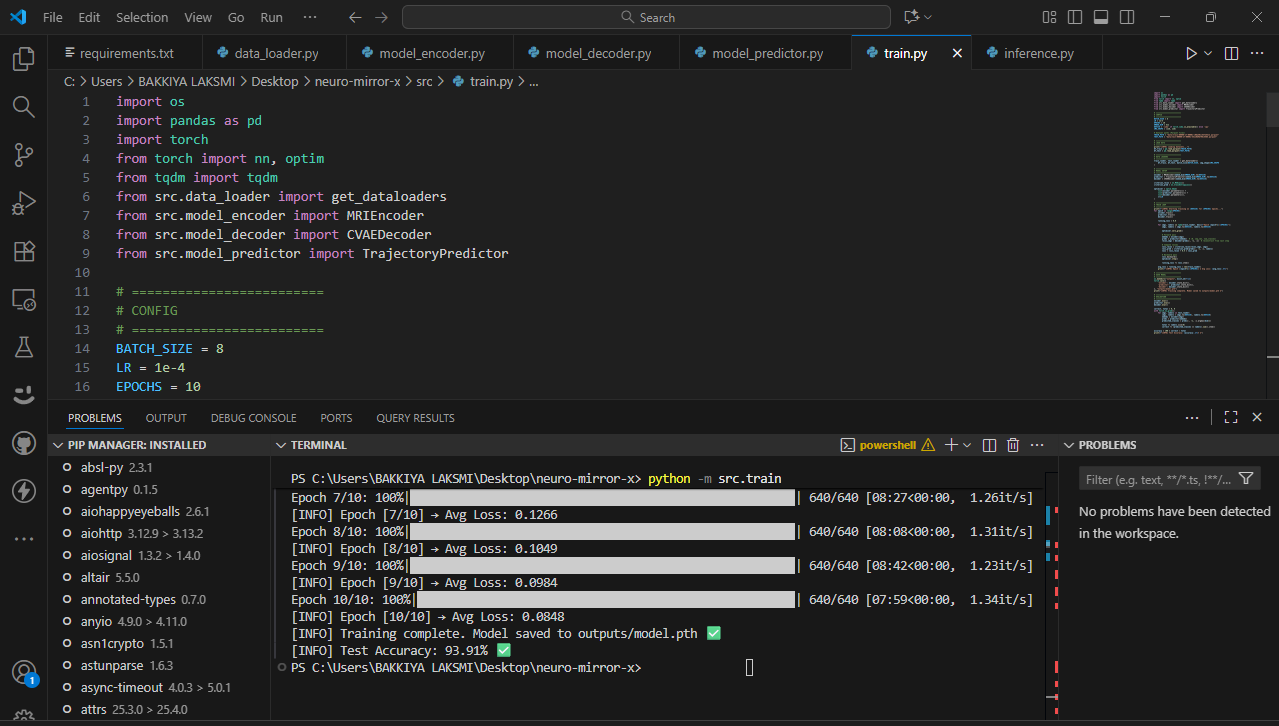
Languages & Frameworks: Python, PyTorch, TorchVision, NumPy, Matplotlib, MONAI. Training Process: Processed Hack4Health MRI dataset. Developed a CNN encoder to produce concise embeddings. Employed a Conditional Variational Autoencoder (CVAE) for forecasting upcoming states. Incorporated a Transformer-based trajectory predictor to model multi-year MRI development. Decoded embeddings to regenerate upcoming MRI scans and calculate risk probabilities. Visualization: Grad-CAM for interpretability and Matplotlib for risk trend graphs. Environment: Completely replicable in VS Code, training enabled with CUDA.
Challenges we ran into:
Achieving accurate MRI data preprocessing (rescaling, standardization, grayscale transformation). Addressing training instability in the generative decoder (CVAE). Creating a feedback mechanism linking the predictor and decoder for authentic MRI generation. Applying Grad-CAM for Explainability while maintaining model performance.
Accomplishments that we're proud of:
Developed a comprehensive predictive MRI pipeline from the ground up. Obtained consistent reconstruction and understandable outcomes on unfamiliar test data. Created a clinically significant concept — a visual predictive biomarker tool for Alzheimer’s disease. Developed a completely local VS Code project capable of training, inferring, and visualizing results.
What we learned:
Methods for integrating deep generative models (CVAE) with temporal forecasting networks. The significance of transparent AI in healthcare applications. Ways to effectively handle MRI datasets and display spatial risk maps. Collaboration between AI and research in healthcare across multiple disciplines
What's next for NeuroMirror-X:
Combine multi-modal data (cognitive assessments, speech, genetics) for enhanced precision. Launch as a clinical web application utilizing Streamlit or FastAPI. Refine using actual longitudinal MRI datasets (ADNI, OASIS). Work together with neurologists for early clinical validation and research dissemination.


Log in or sign up for Devpost to join the conversation.