-
-
-
-
-
-
-
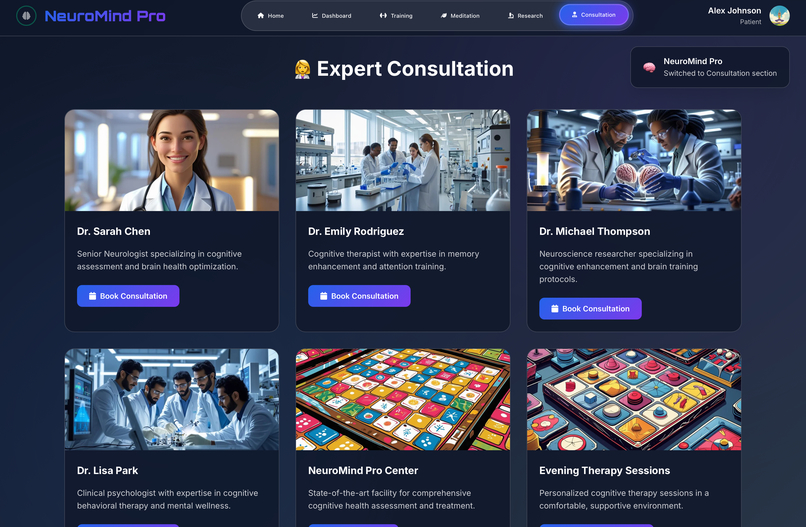
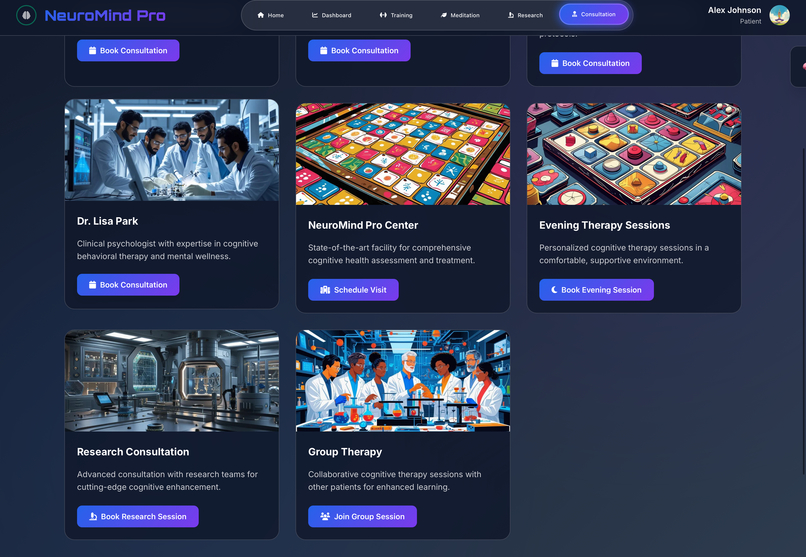
Note: The consultation booking screens and related features are interactive prototypes designed to illustrate the user experience.
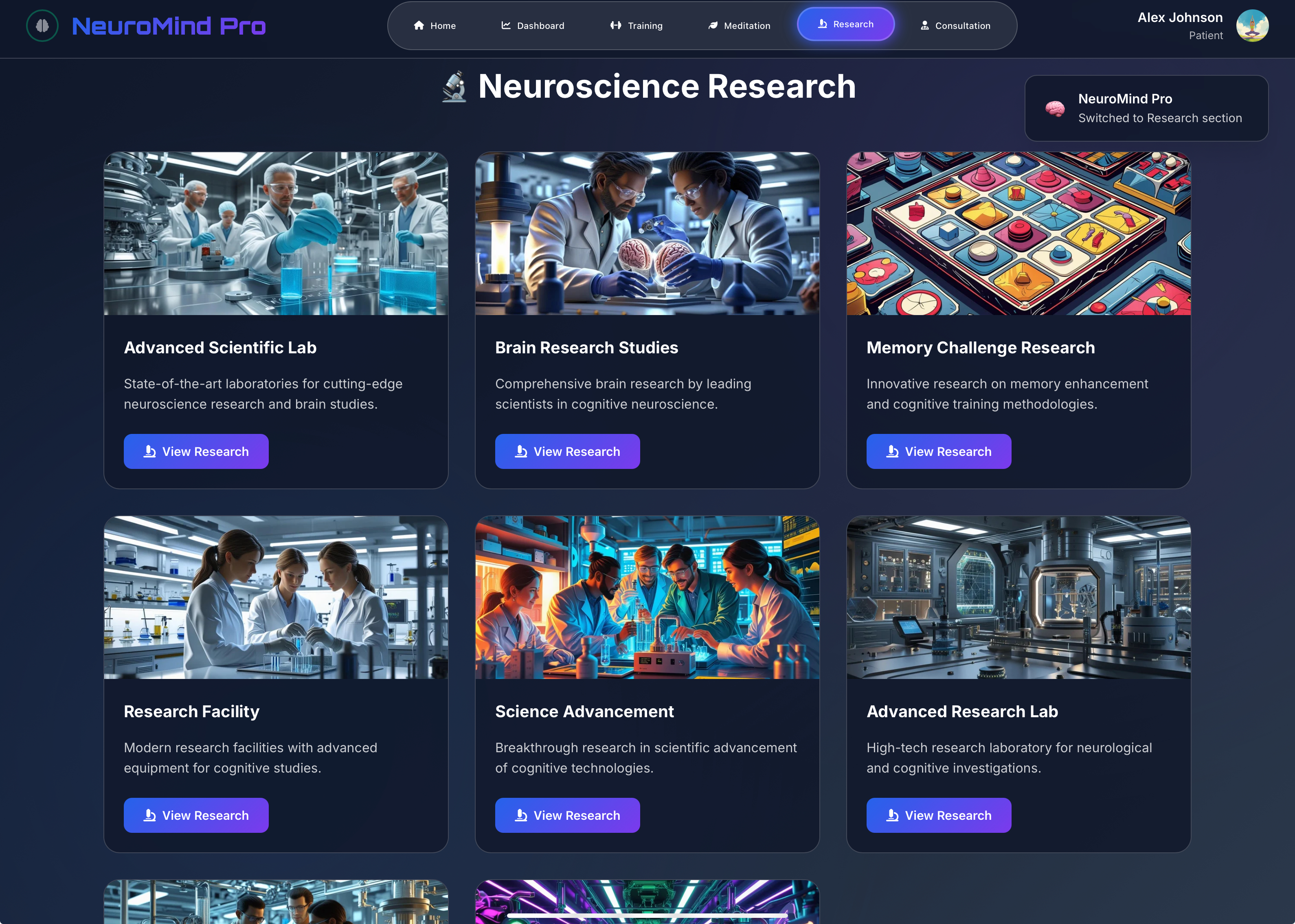
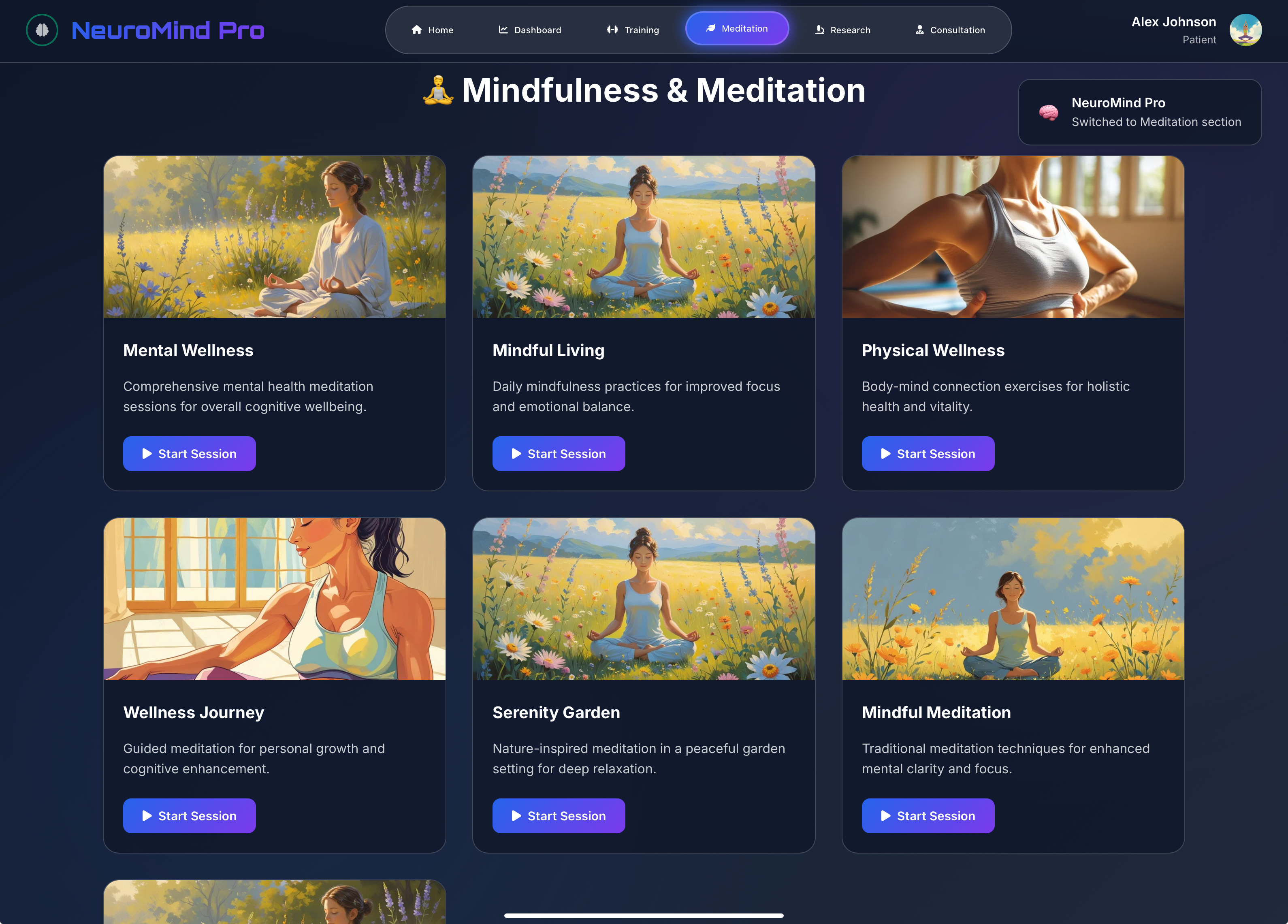
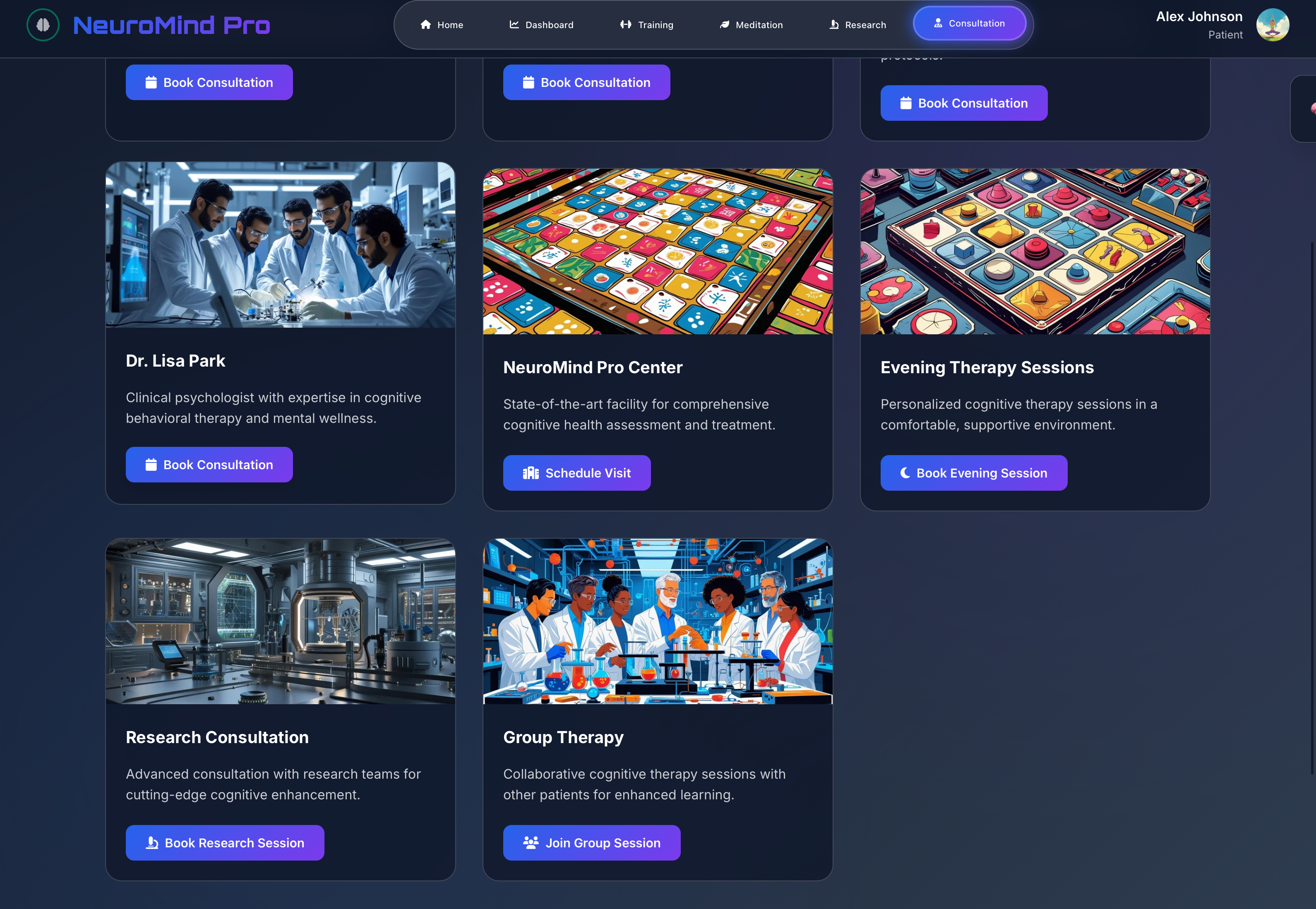
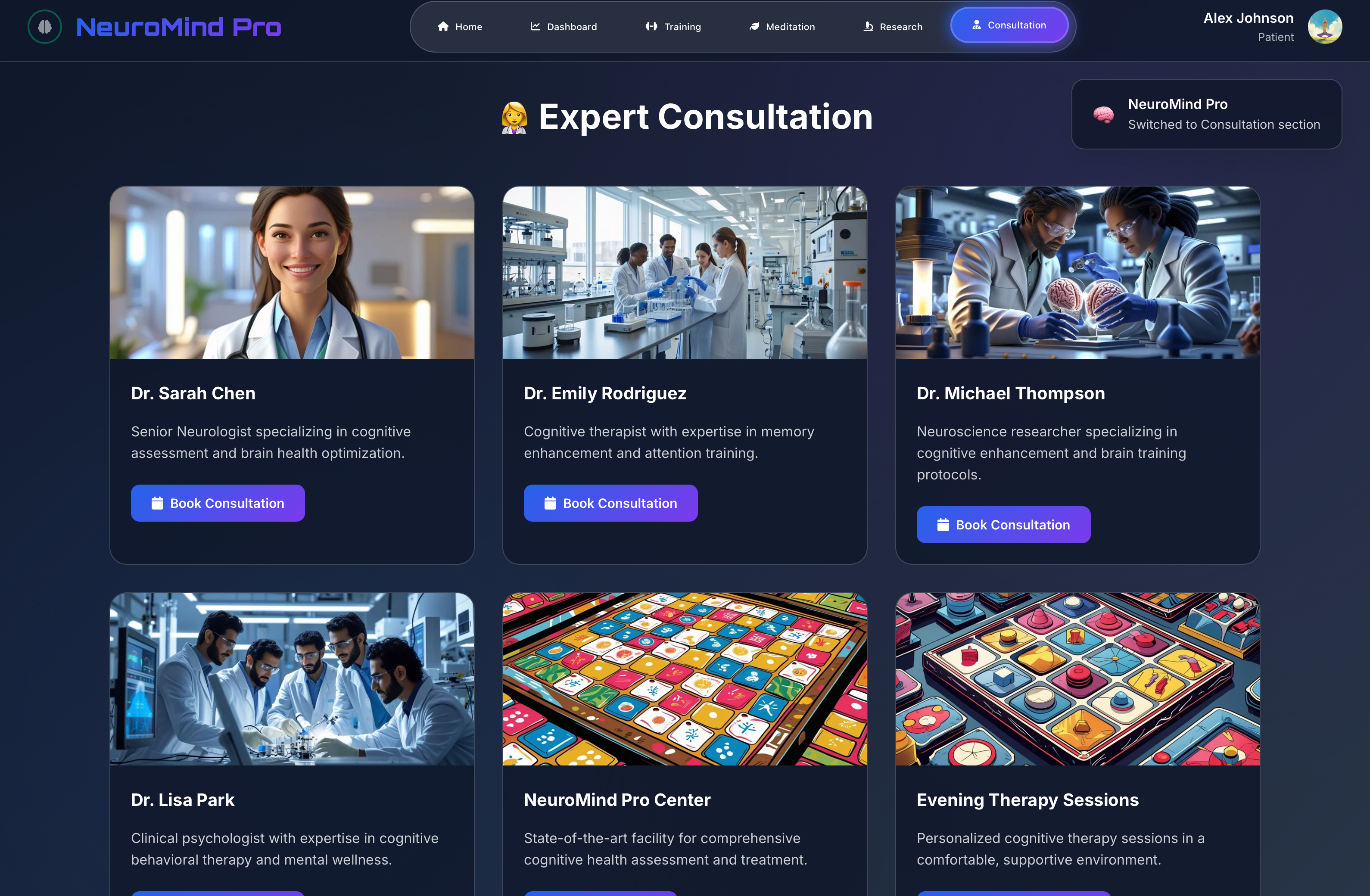
🧠 Inspiration
Mental health is often invisible — especially in teens — until it becomes too late. As a student, I’ve experienced stress, cognitive fatigue, and burnout firsthand. But I also discovered that our brains reveal those signals before we even notice them.
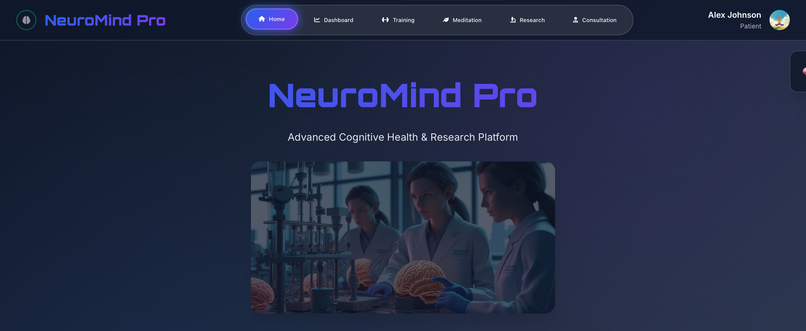
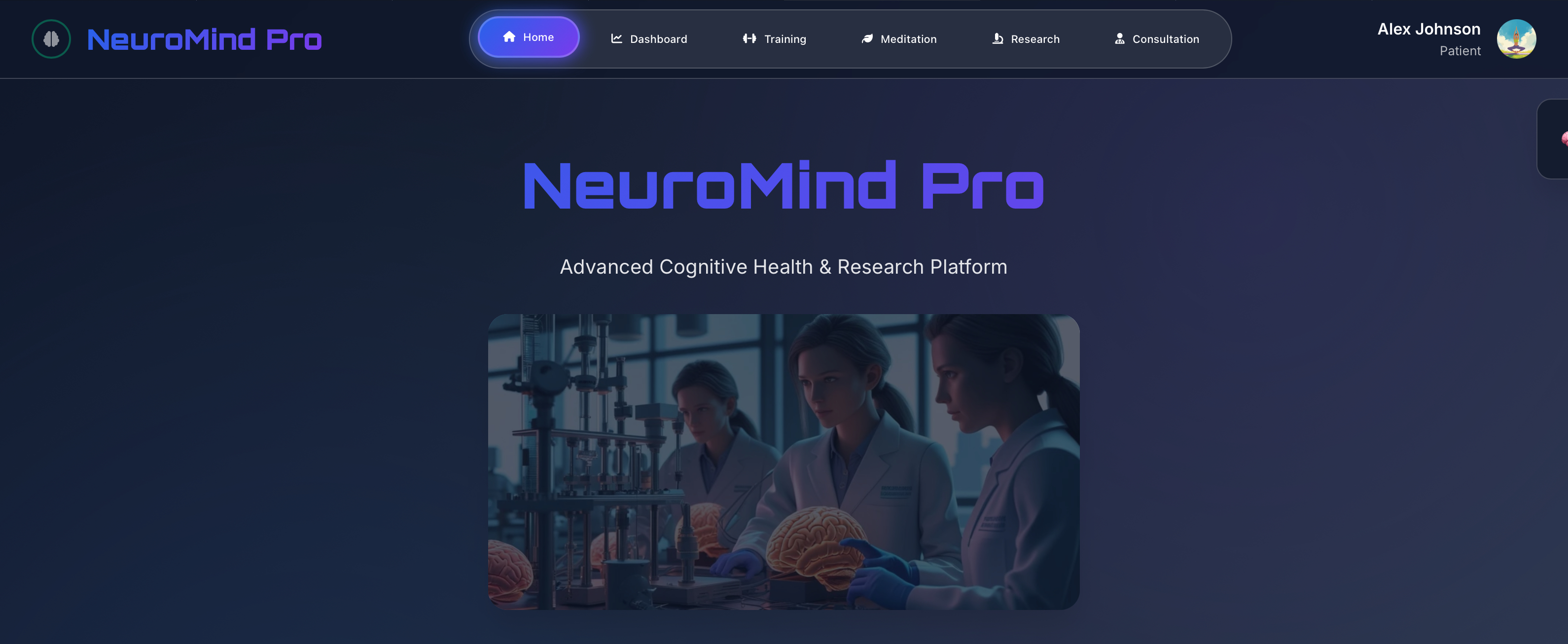
Inspired by neuroscience and the power of brain-computer interfaces, I created NeuroMind Pro: a project that transforms raw EEG (brainwave) data into live cognitive feedback, helping users detect early signs of mental overload, stress, and fatigue.
What if your brain could warn you before it crashes?
That’s what NeuroMind Pro is all about.
🚀 What It Does
NeuroMind Pro reads brainwave signals from EEG data and uses machine learning to detect changes in your cognitive state — such as fatigue, stress, and focus loss — before those changes show up in your behavior.
It features:
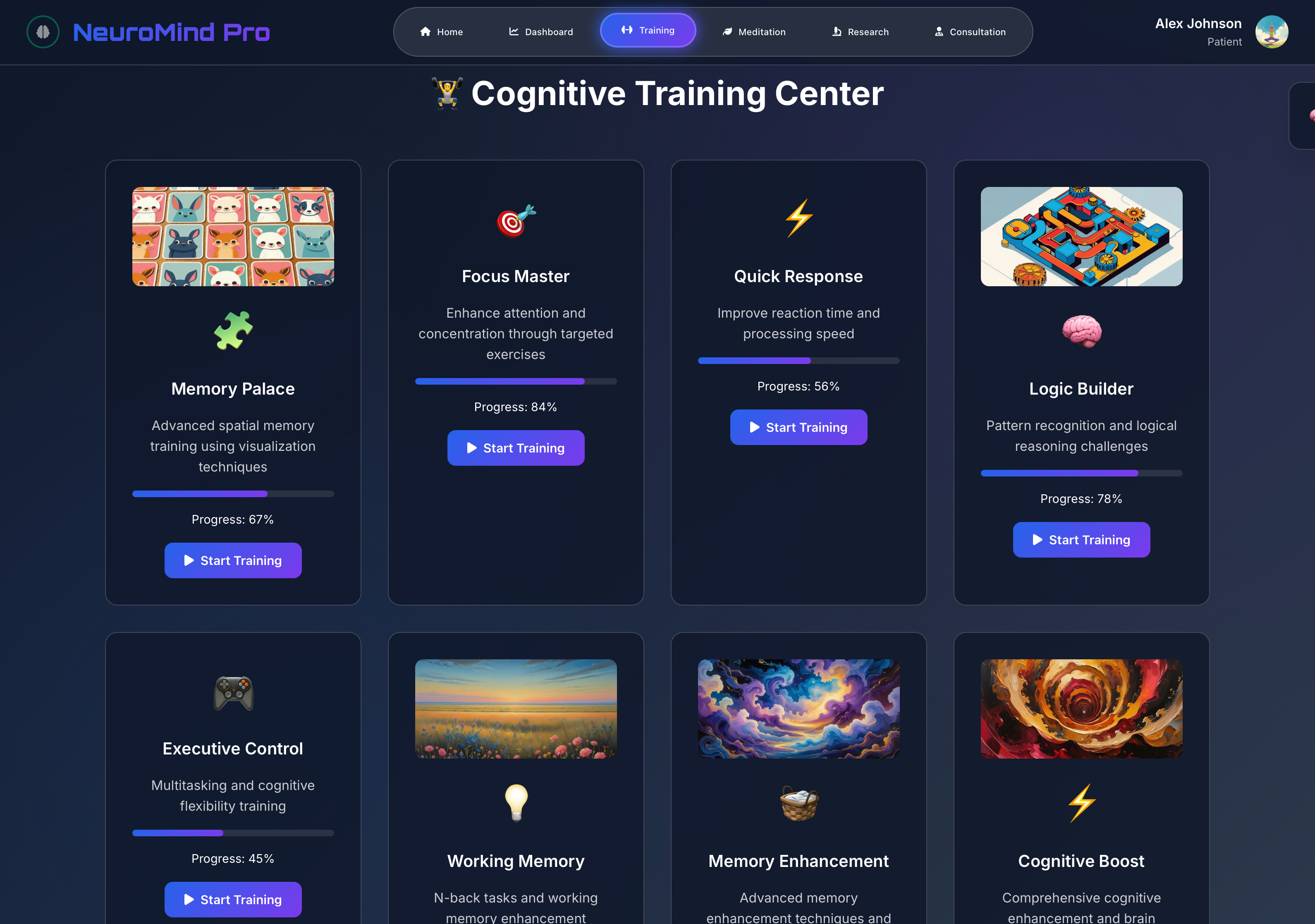
- 📊 MindGraph: A real-time dashboard that visualizes brain states (focused, tired, stressed)
- 🧹 NeuroClean (concept): A noise-removal module that filters artifacts from raw EEG
- 💡 Use Cases: Mental fatigue detection for students, drivers, surgeons, and pilots
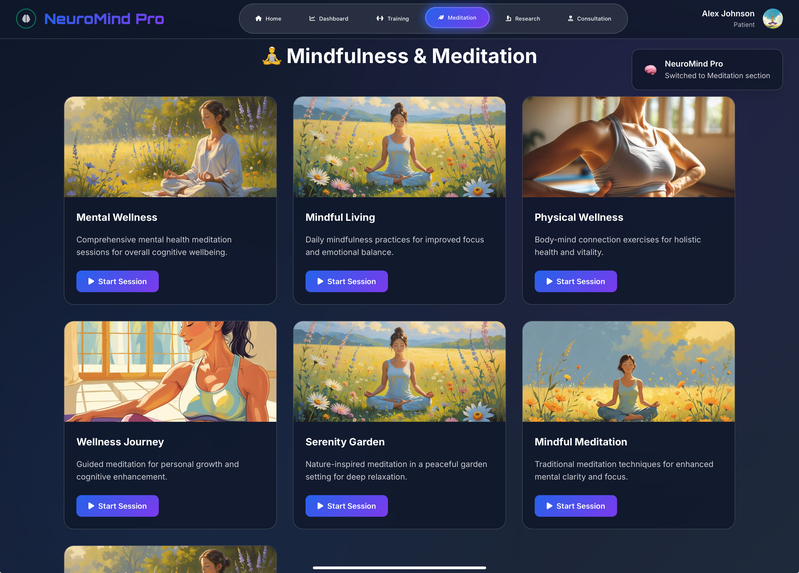
Whether you're studying for hours or working on a critical task, NeuroMind Pro gives your brain a voice — so you know when it’s time to rest or reset.
🔧 How I Built It
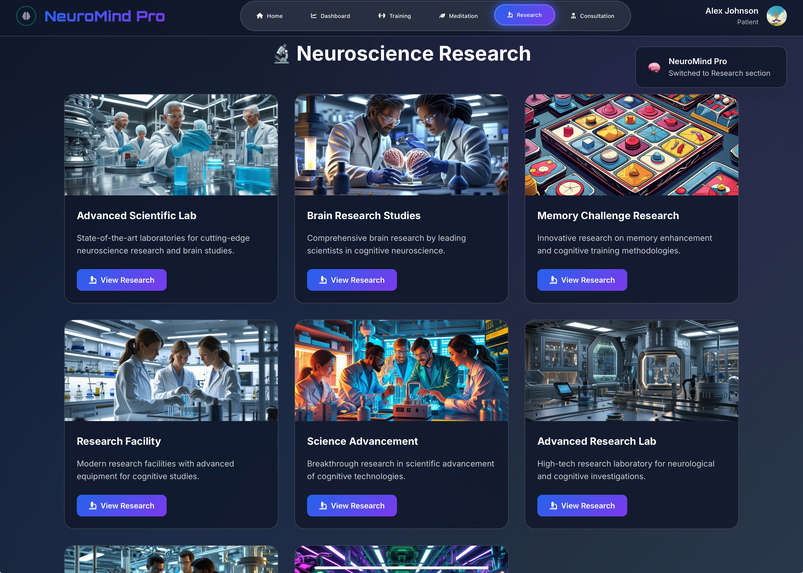
EEG Research
I studied how brainwaves like Alpha, Beta, and Theta reflect focus, relaxation, and fatigue.Data Collection
I used open-source EEG datasets from PhysioNet focused on cognitive tasks.Signal Processing
Extracted features such as:- $\alpha/\beta$ ratio (focus vs. drowsiness)
- $\theta$ coherence (mental effort)
- Phase-Amplitude Coupling (stress markers)
- $\alpha/\beta$ ratio (focus vs. drowsiness)
Machine Learning
Built a basic prototype in Python to classify cognitive states based on signal patterns.Visualization Layer
Designed an interactive dashboard (MindGraph) to display live brain state feedback in an intuitive interface.
🧗 Challenges I Ran Into
- 🧠 Understanding EEG complexity: Brain signals are noisy, high-dimensional, and hard to interpret.
- 💻 Doing it solo: Managing research, coding, design, and presentation alone was tough — but rewarding.
- 🎨 Making it intuitive: Visualizing neuroscience in a way that feels useful and not overwhelming.
- ⚖️ Avoiding overfitting: EEG signals vary greatly between individuals, which made training ML models challenging.
🏆 Accomplishments That I'm Proud Of
- Created a working prototype that uses real EEG data to infer mental states.
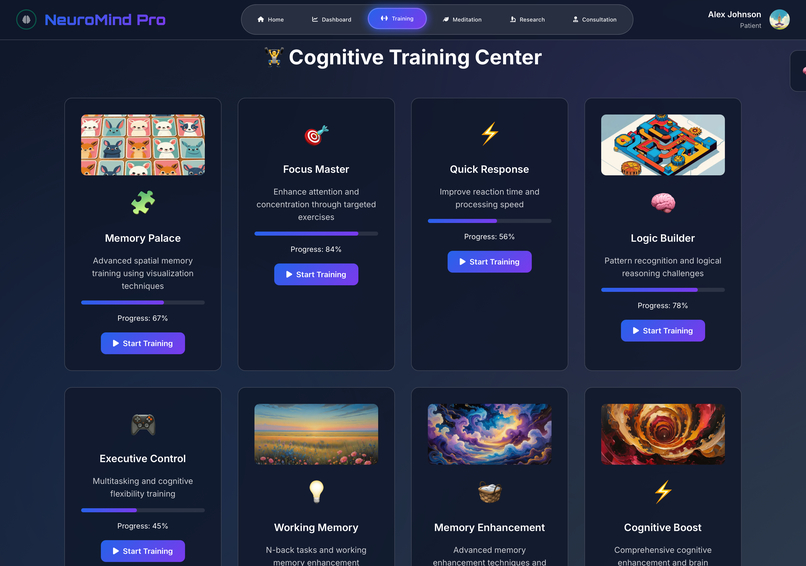
- Designed a responsive and user-friendly dashboard for live brain feedback.
- Taught myself EEG processing, machine learning, and UI/UX — as a solo developer.
- Built a healthcare-focused project that empowers teens to manage stress and mental fatigue.
📚 What I Learned
- How to clean, process, and analyze EEG data from real-world sources.
- That neuroscience and machine learning can be accessible — even for high schoolers.
- How to translate raw data into meaningful, actionable insights for everyday users.
- That mental health tools can be proactive, not just reactive — and that’s a game changer.
🔮 What’s Next for NeuroMind Pro
- 🔌 Connect to live EEG devices like Muse or OpenBCI for real-time signal streaming
- 🧠 Expand features to detect emotional state, attention span, or ADHD-related patterns
- 📱 Develop a mobile version of the
MindGraphdashboard - 💬 Collaborate with schools and counselors to pilot the tool with student groups
- 🌐 Open-source the project to empower other students and researchers to build on it
Ultimately, I want NeuroMind Pro to help:
- Detect fatigue in students and teens before burnout hits
- Aid ADHD or anxiety management through passive brain tracking
- Make neuroscience feel relevant and empowering to young people
- Turn mental health into something you can actually see and act on
Mental health shouldn’t be a mystery.
NeuroMind Pro makes it measurable.
Built With
- datasets
- git
- html
- javascript
- mne`
- netlify
- numpy`
- physionet
- python
- scipy`
- typescript


Log in or sign up for Devpost to join the conversation.