-
-
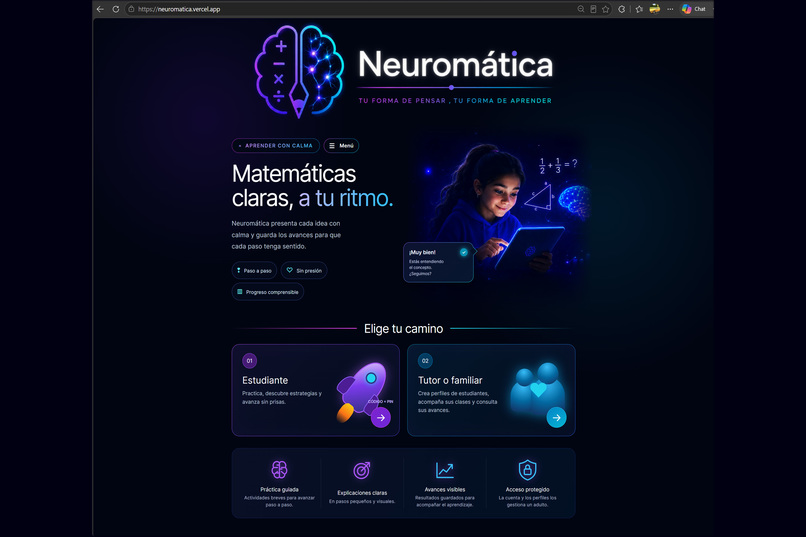
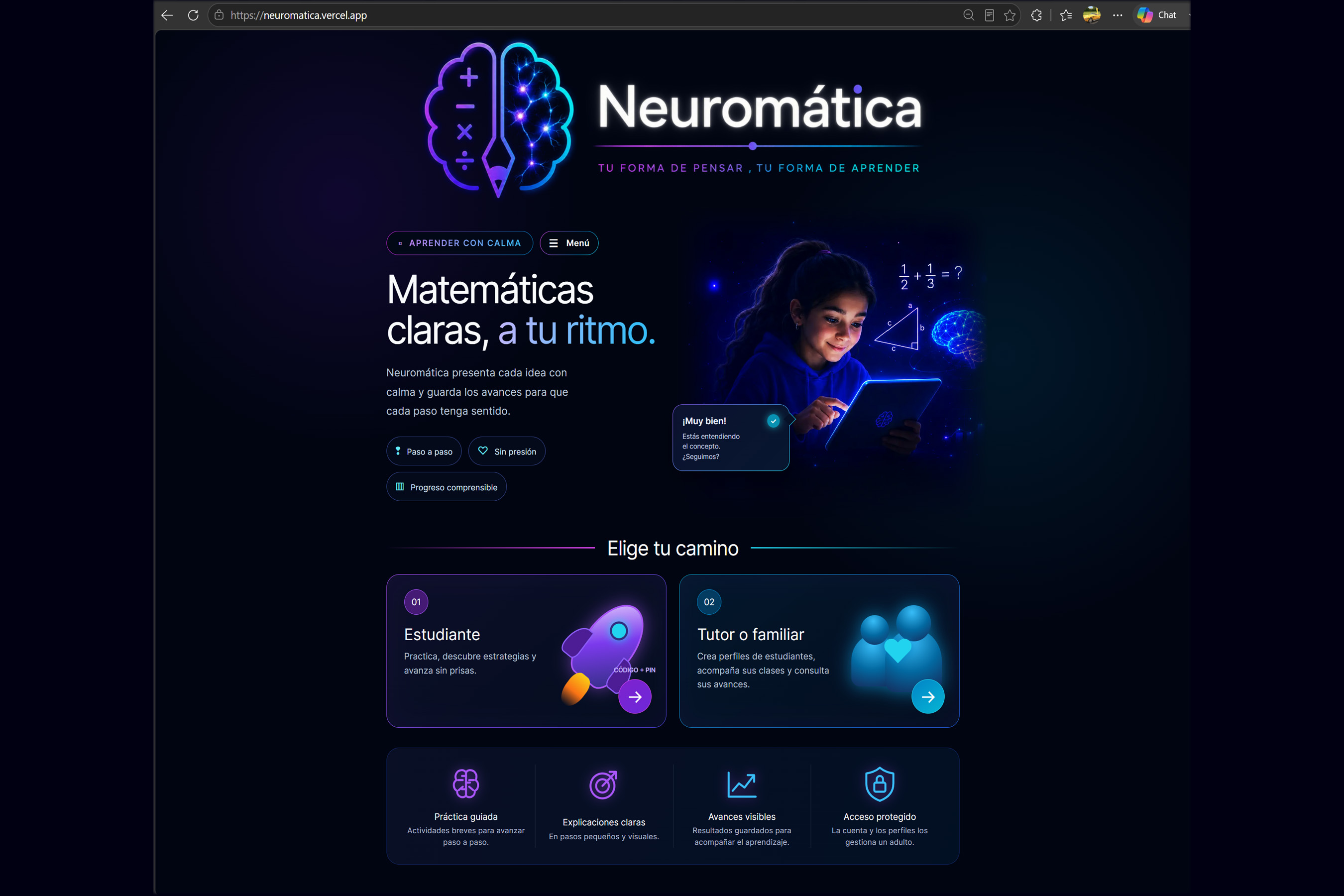
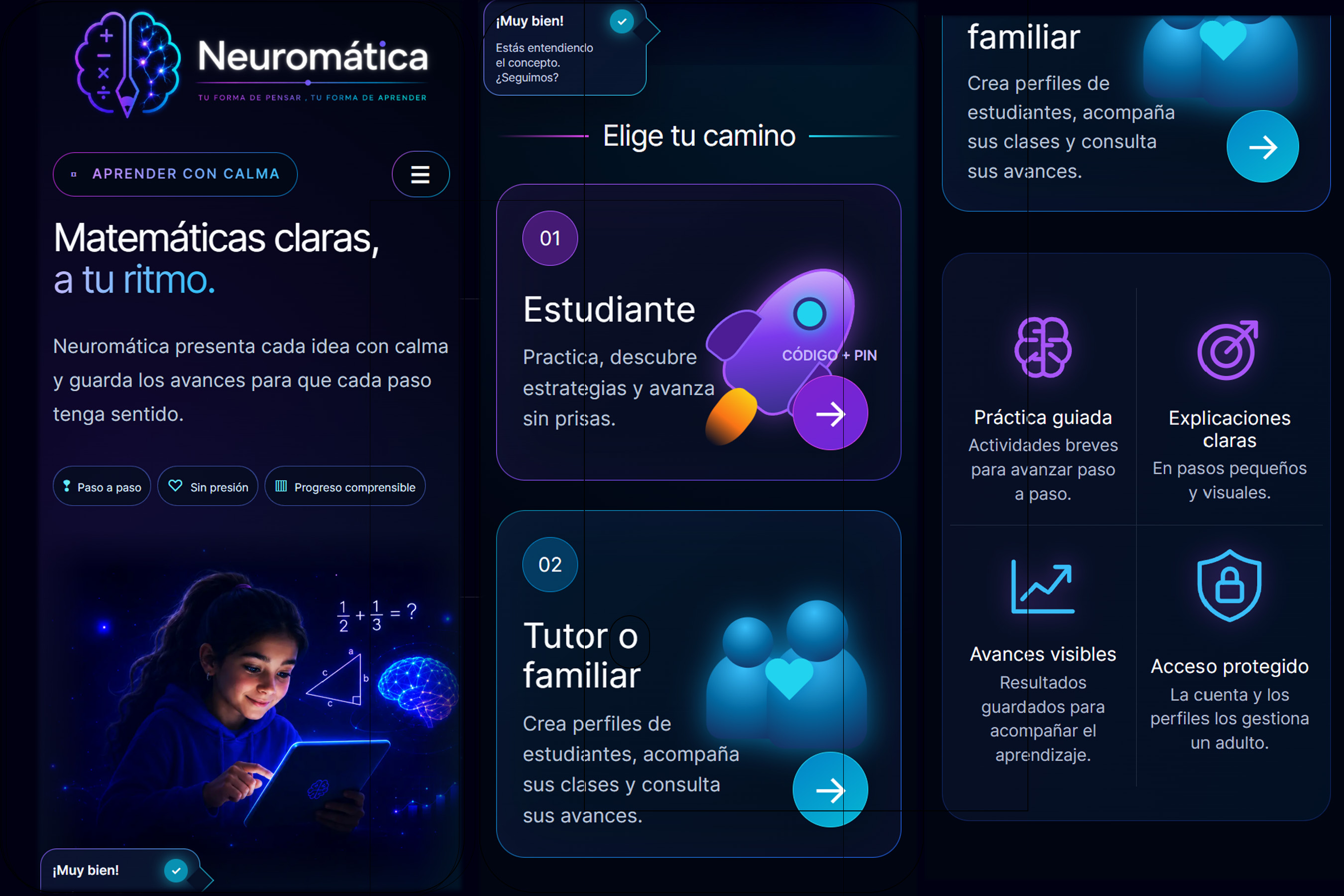
Desktop
-
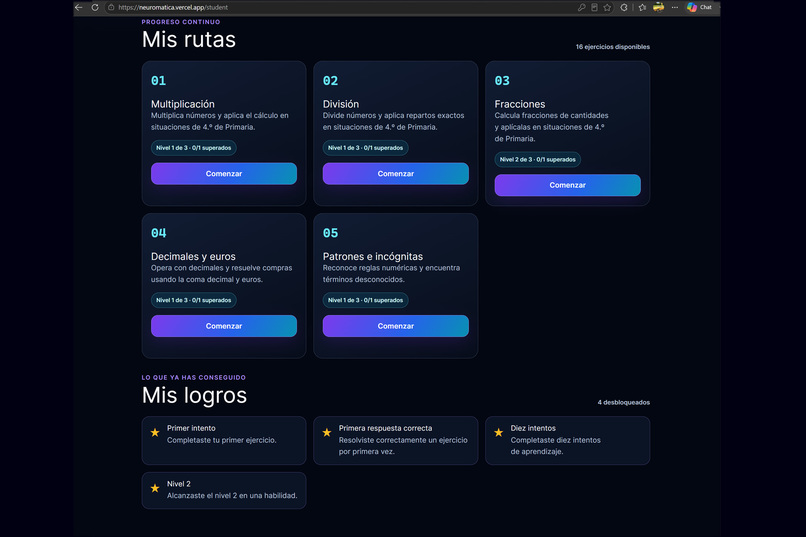
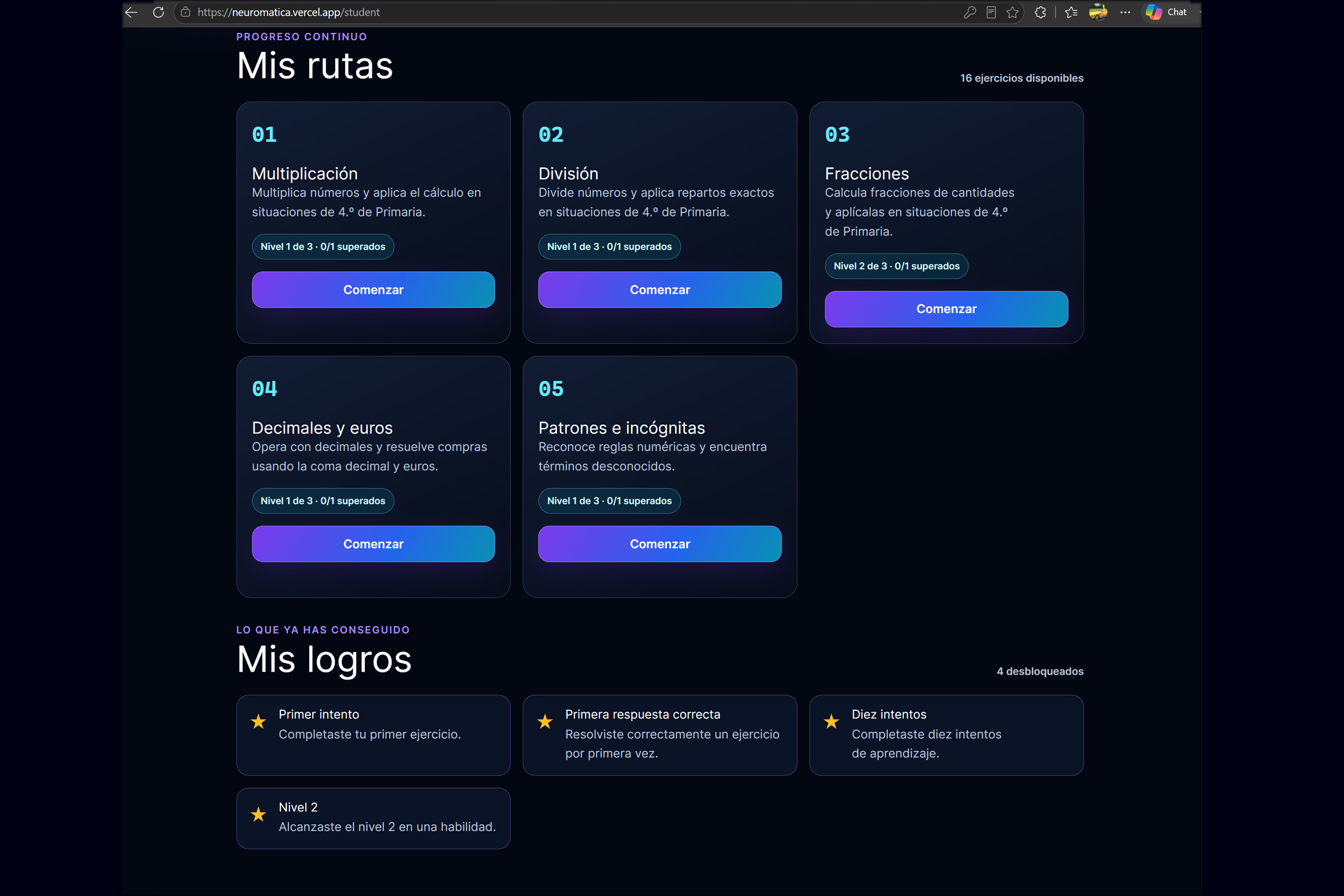
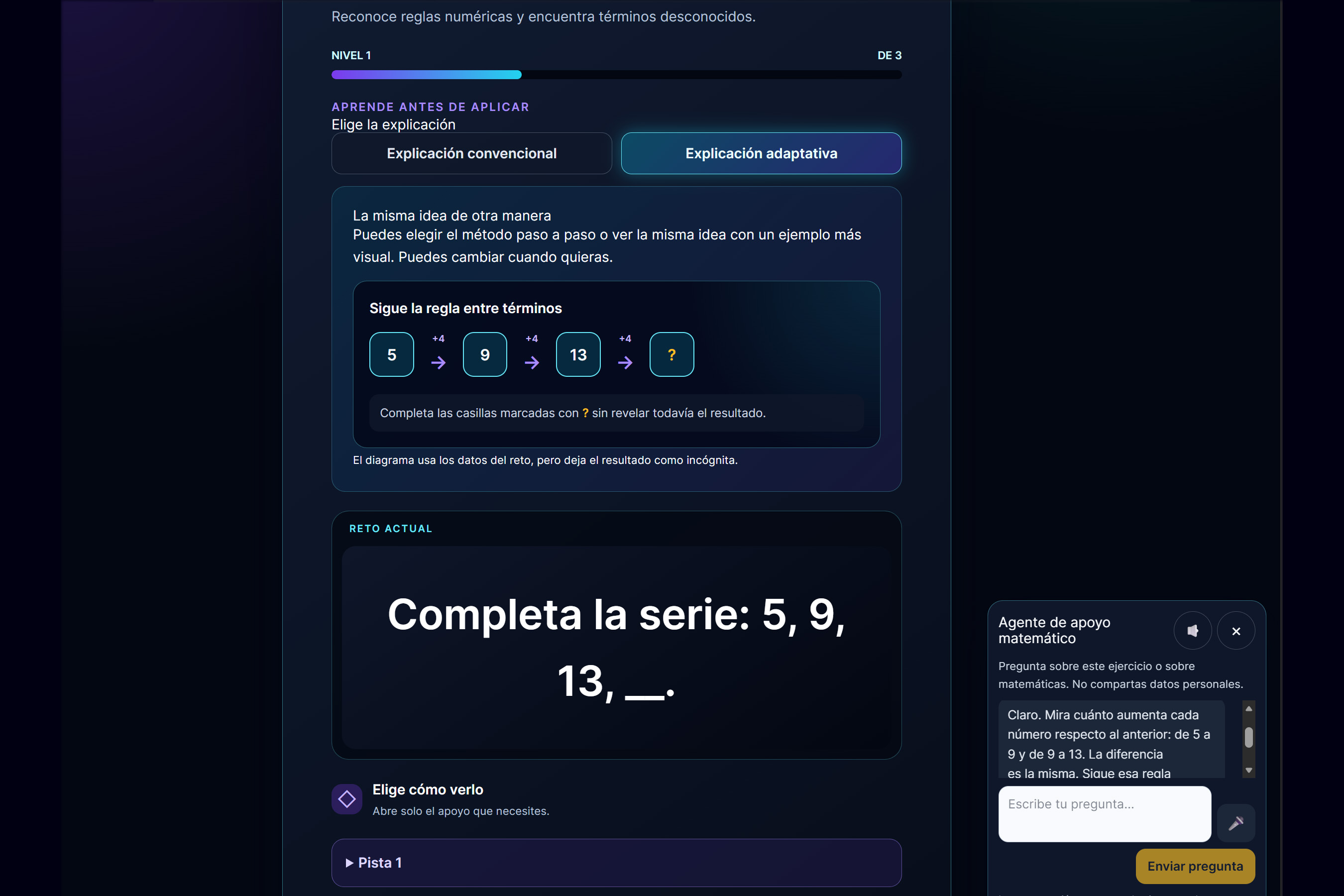
Ejercicios
-
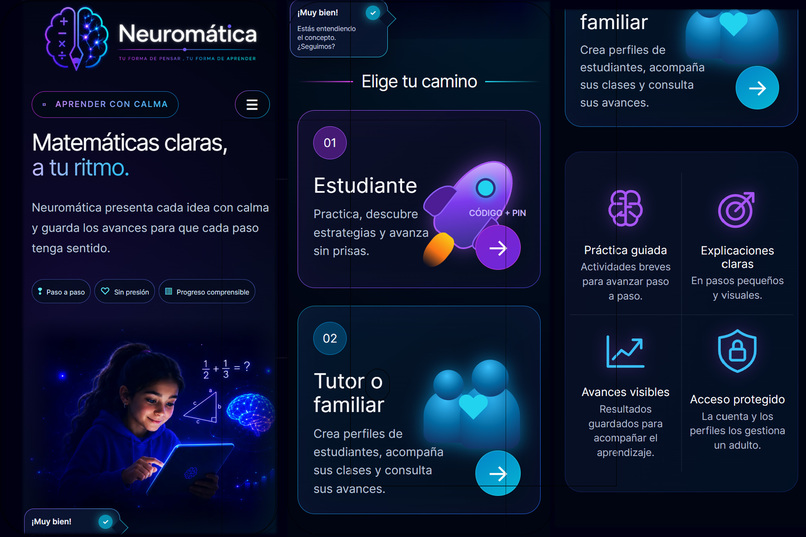
Movil
-
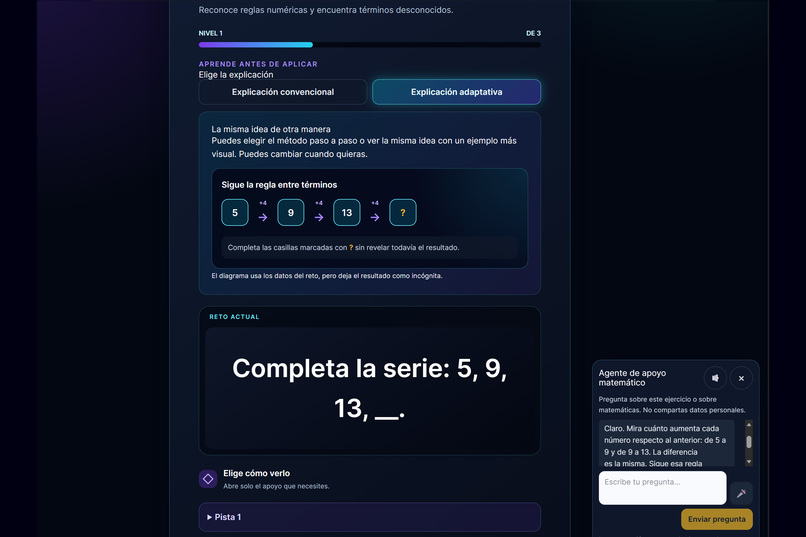
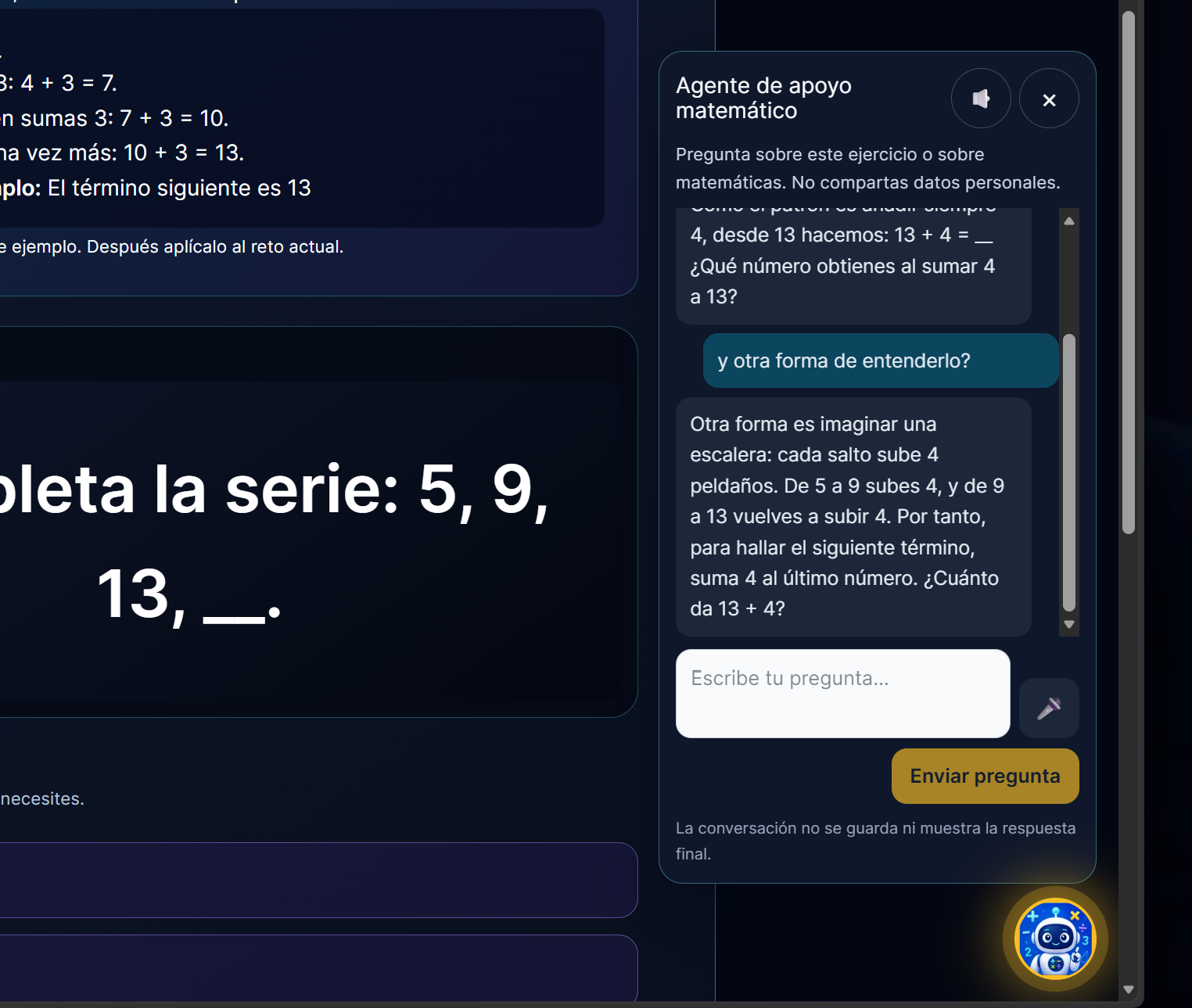
Ejemplos con ayuda de agente
-
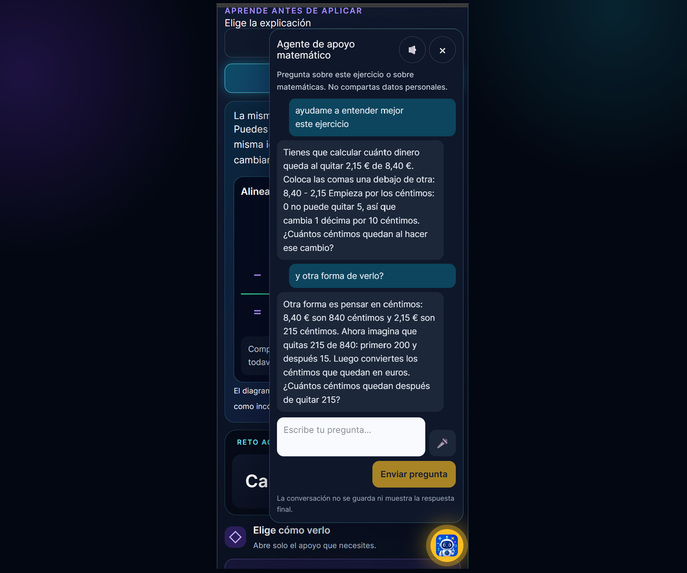
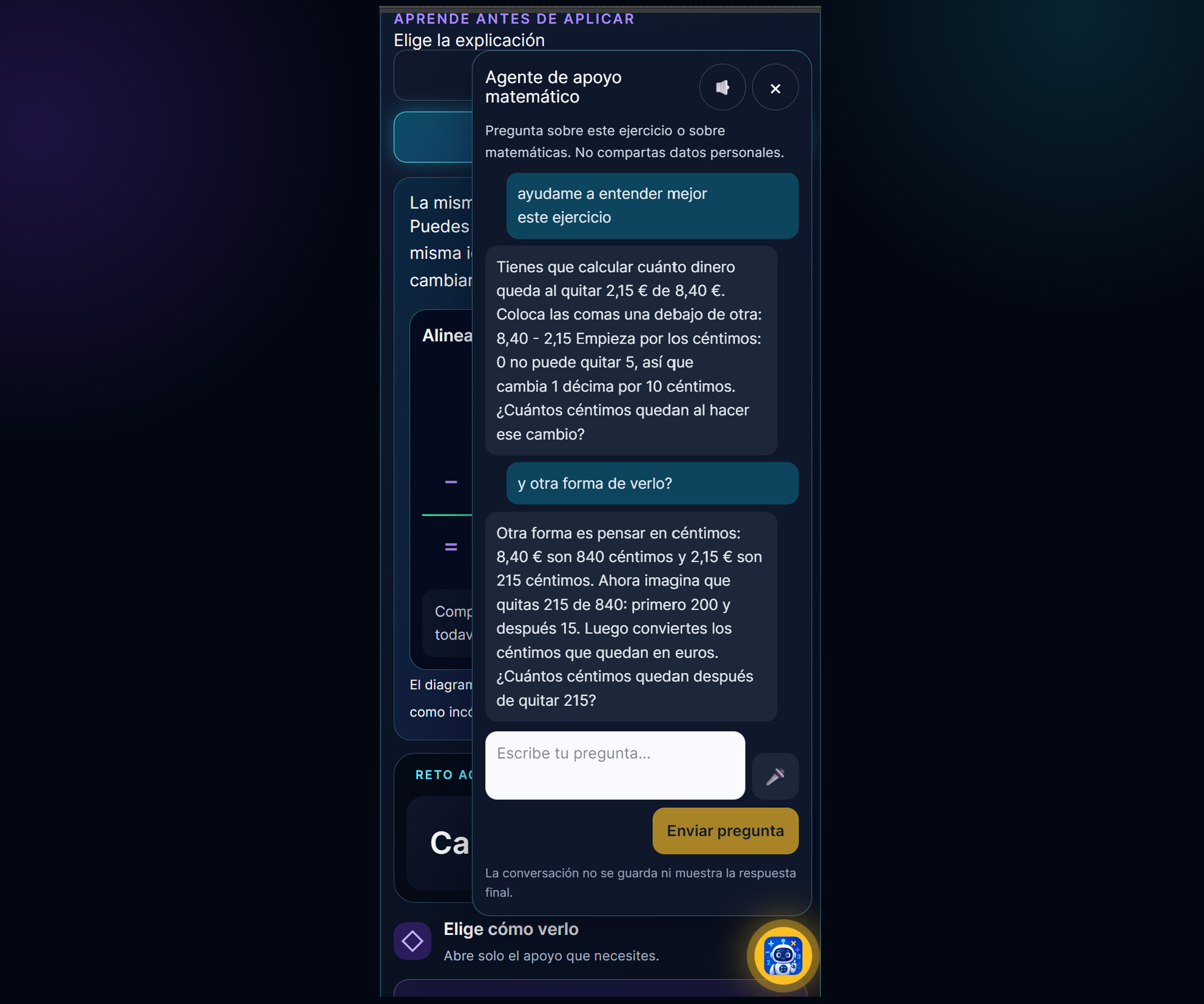
Agente en movil
-
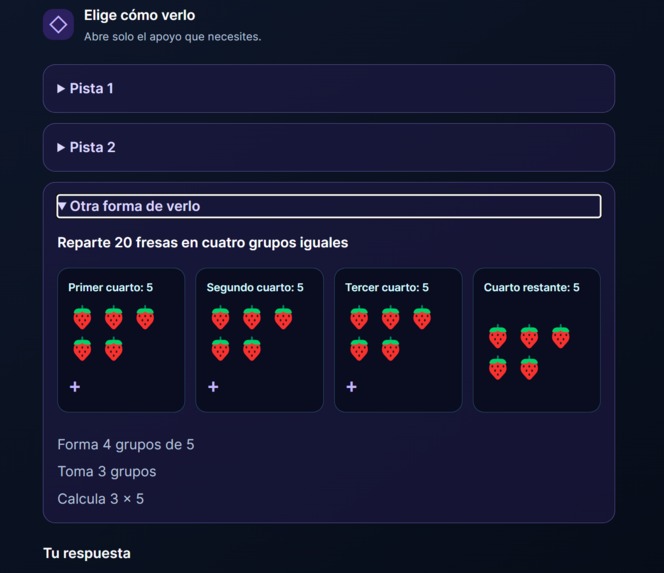
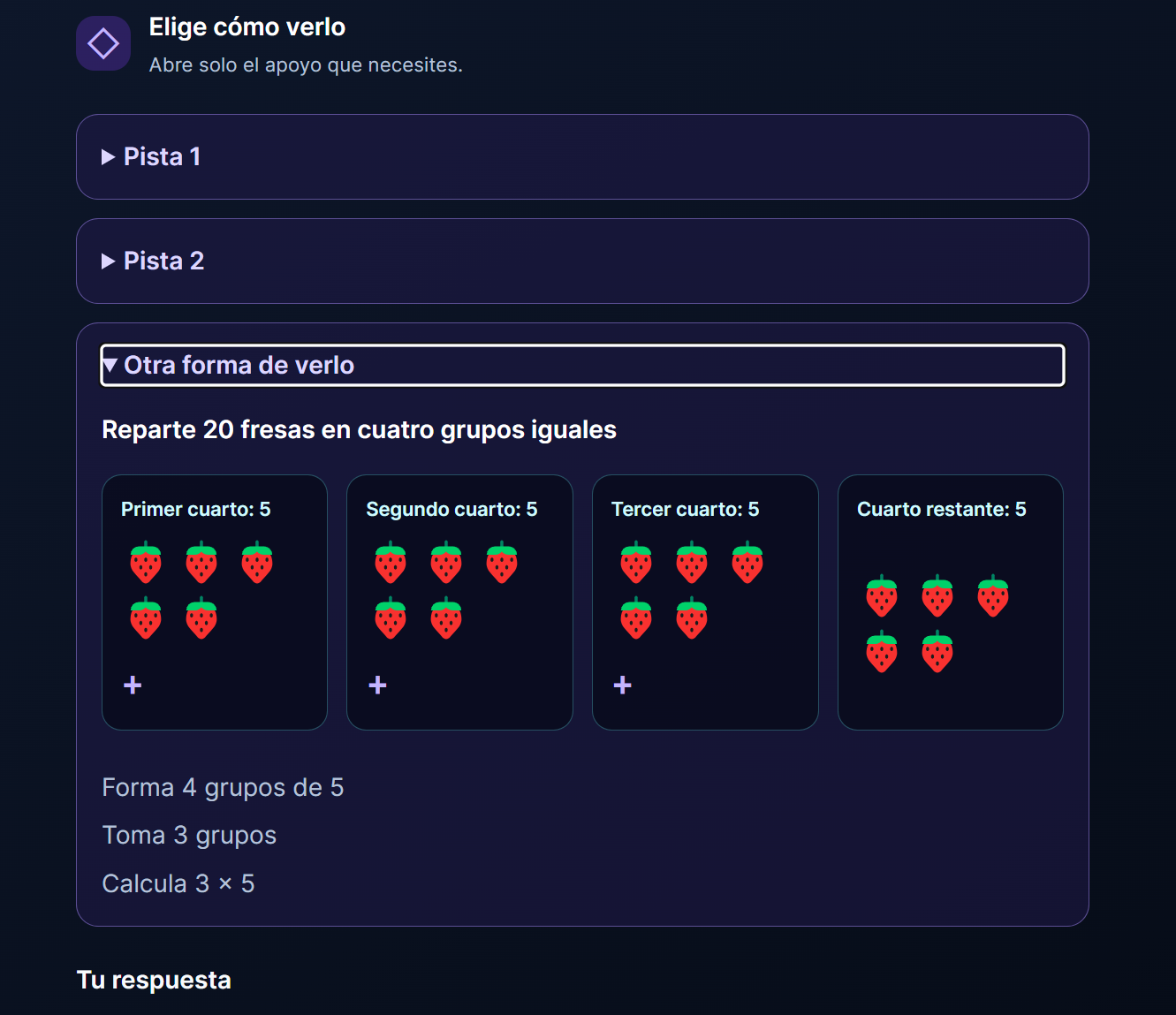
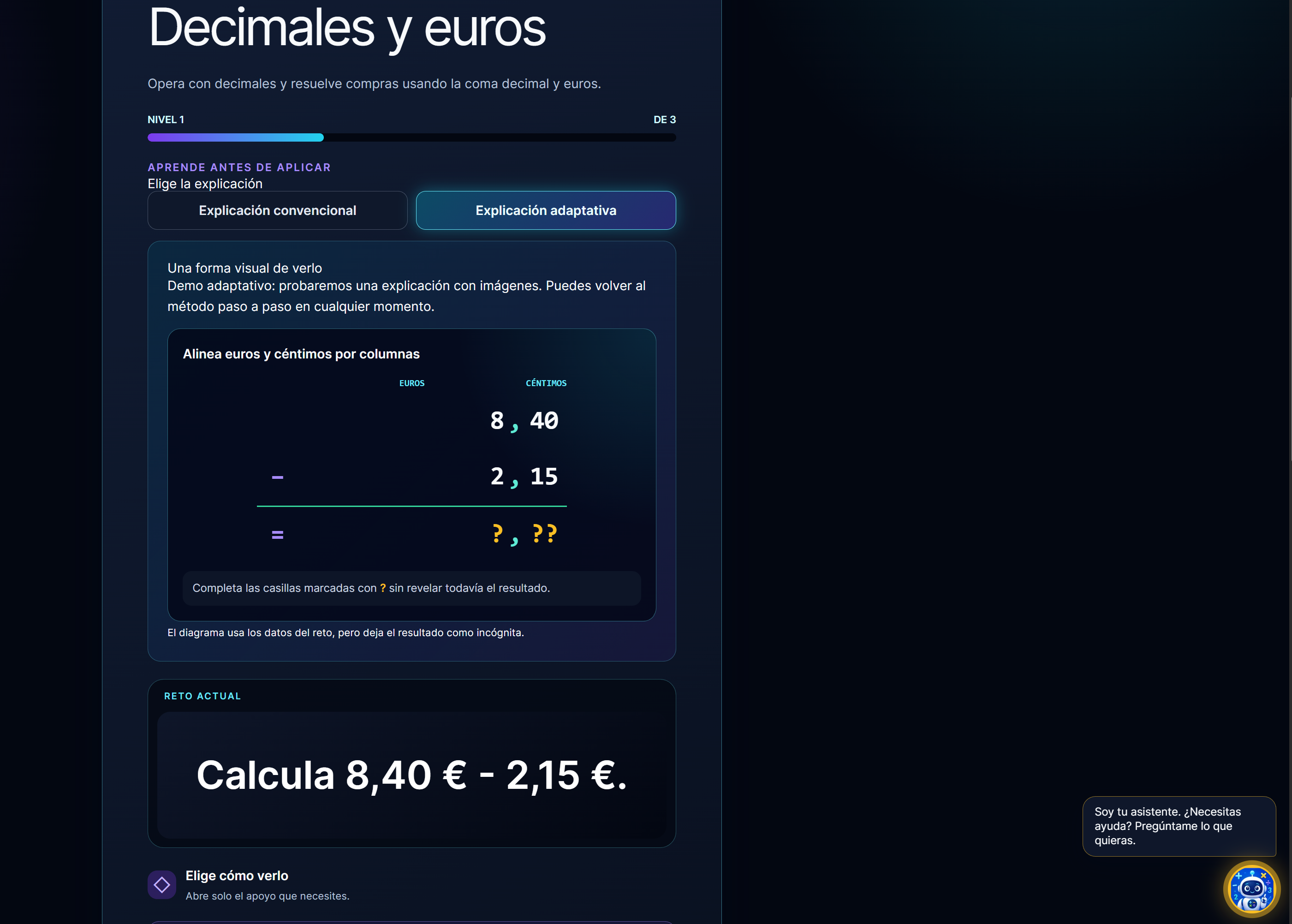
Ejemplos visuales alternativos
-
Tu asistente personal IA
-
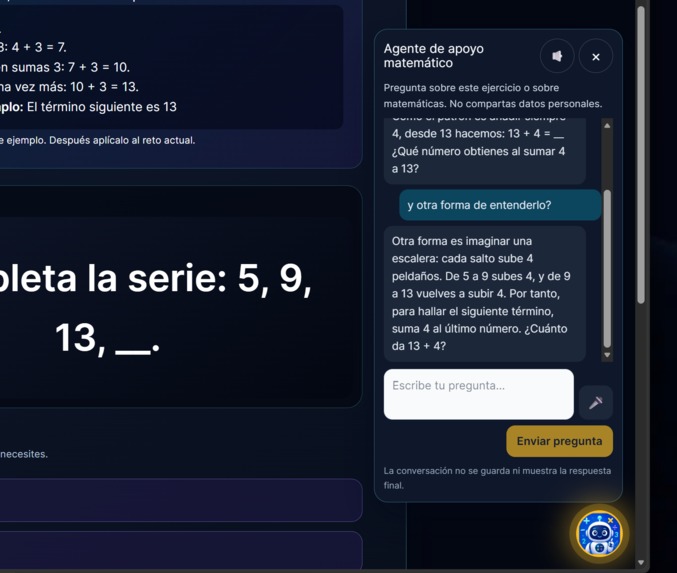
-
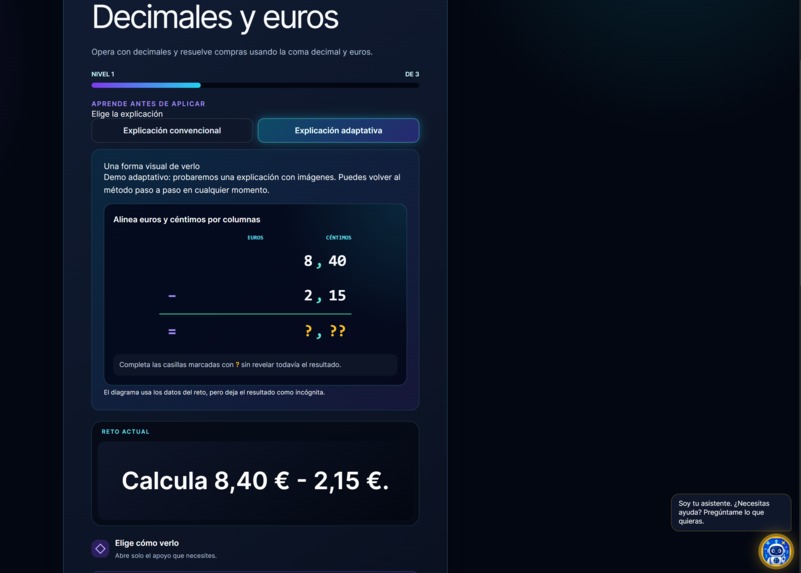
ejemplo
-
Inspiration
From personal experience, I have observed that neurodivergent students are expected to adapt to the education system. Neuromatica emerged from a different idea: the education system should learn to change for them.
Neuromatica was born from a personal experience. I do not work in education; I simply thought about using AI development to help, by creating an application designed around this concept. The reason is the following:
My niece is a neurodivergent child diagnosed with Asperger syndrome and dyscalculia. Watching her learn made me realize that the real challenge rarely lies in the student’s ability to learn. The challenge is that education is still delivered as if every brain learned in the same way, but that is not the case.
Neurodivergent students often process information, make connections, and understand concepts differently. However, most educational platforms continue to offer the same explanations to every student.
This led me to ask a simple question:
What if Artificial Intelligence could understand how neurodivergent students learn and continuously adjust its teaching, instead of expecting students to adapt to a fixed educational model?
I did not want to create another AI capable of solving mathematical problems.
I wanted to create an AI that learned how each student learns.
My vision was an application with an AI process capable of recognizing how each student understands mathematical concepts and continuously adjusting explanations, learning pace, visual resources, and teaching strategies.
I do not intend to create an AI that thinks like a neurodivergent person. My goal is to develop an AI that understands these cognitive profiles and adapts its teaching to each student’s unique way of learning. As I said, despite not being a teacher, I believe this is the true future of AI in education.
It is not about teaching everyone in the same way, but about understanding how each individual learns and adapting education accordingly.
What it does
From personal experience, I have observed that neurodivergent students are expected to adapt to the education system. Neuromatica emerged from a different idea: the education system should learn to change for them.
Neuromatica was born from a personal experience. I do not work in education; I simply thought about using AI development to help, by creating an application designed around this concept. The reason is the following:
My niece is a neurodivergent child diagnosed with Asperger syndrome and dyscalculia. Watching her learn made me realize that the real challenge rarely lies in the student’s ability to learn. The challenge is that education is still delivered as if every brain learned in the same way, but that is not the case.
Neurodivergent students often process information, make connections, and understand concepts differently. However, most educational platforms continue to offer the same explanations to every student.
This led me to ask a simple question:
What if Artificial Intelligence could understand how neurodivergent students learn and continuously adjust its teaching, instead of expecting students to adapt to a fixed educational model?
I did not want to create another AI capable of solving mathematical problems.
I wanted to create an AI that learned how each student learns.
My vision was an application with an AI process capable of recognizing how each student understands mathematical concepts and continuously adjusting explanations, learning pace, visual resources, and teaching strategies.
I do not intend to create an AI that thinks like a neurodivergent person. My goal is to develop an AI that understands these cognitive profiles and adapts its teaching to each student’s unique way of learning. As I said, despite not being a teacher, I believe this is the true future of AI in education.
It is not about teaching everyone in the same way, but about understanding how each individual learns and adapting education accordingly.
What it does
Neuromatica is an AI-powered adaptive learning platform focused on mathematics, designed especially for neurodivergent students, although it can also be useful for any student who benefits from personalized education.
Instead of offering static lessons, the AI continuously adjusts the learning experience according to each student’s progress and cognitive profile.
Neuromatica can:
Personalize explanations. Adjust the learning pace. Generate visual learning resources. Detect learning difficulties. Modify teaching strategies in real time. Monitor long-term progress. Provide tutors with valuable information about the learning process.
The goal is simple:
To teach mathematics in the way each student learns best.
How we built it
Neuromatica is being built with a modern, secure, and scalable structure.
The project is being developed using:
OpenAI Codex GPT-5.6 Sol, GPT-5.6 Luna React TypeScript Supabase Vercel OpenAI API Supported by OpenCode Some reviews with Fable 5 to reinforce ideas using GPT-5.6 Sol
Codex + GPT-5.6 Sol have been my main development partner throughout the project, helping me design the structure, generate components, solve complex problems, and accelerate development.
From the beginning, I designed the platform around four priorities:
Child privacy Scalability Modular structure AI-powered adaptive education
Challenges we ran into
The greatest challenge was not creating an AI capable of solving mathematical problems.
The real challenge has been designing an AI that adapts its teaching to different cognitive profiles.
Every neurodivergent student learns in their own way.
A teaching strategy that works perfectly for one student may completely fail for another.
Building a system capable of continuously understanding those differences and adapting its teaching has been the most difficult and exciting part of the project.
Another major challenge has been balancing personalization with privacy, especially because the platform is designed for children. For now, all users are fictional and used only in DEMO mode. I am leaving the issue of data protection law pending confirmation by specialists.
Accomplishments that we're proud of
The accomplishment I am most proud of is transforming a personal experience into a project that could improve the education of thousands of neurodivergent students.
I am also proud to propose a new vision for educational AI, despite not working in the field, simply because AI and application development with Codex “have given me the scissors to become the best hairdresser.”
Instead of building an AI that simply answers questions, I am building one that continuously learns how to teach better.
What we learned
Throughout this project, I learned that educational innovation is not only about adding Artificial Intelligence.
It is also about understanding people.
Technology becomes truly valuable when it adapts to human diversity instead of forcing everyone to follow the same learning model.
I also learned that personalization is far more important than simply adding more educational content.
What's next for Neuromatica
This is only the beginning.
My goal is to turn Neuromatica into the world’s leading AI-powered adaptive learning platform for neurodivergent education.
Future developments include:
New school subjects. Advanced AI personalization. Automatic generation of visual content. Dashboards for families and teachers. Learning analytics. Continuous improvement of the adaptive AI model.
My long-term vision is clear:
Every student deserves an education that adapts to the way they learn.
Built With
- accessibility
- adaptiveai
- ai
- authentication
- backend
- children
- codex
- edtech
- education
- frontend
- gpt-5.6
- learning
- mathematics
- neurodiversity
- openai
- personalization
- postgresql
- react
- rls
- supabase
- tailwind
- typescript
- vercel
- webapp

Log in or sign up for Devpost to join the conversation.